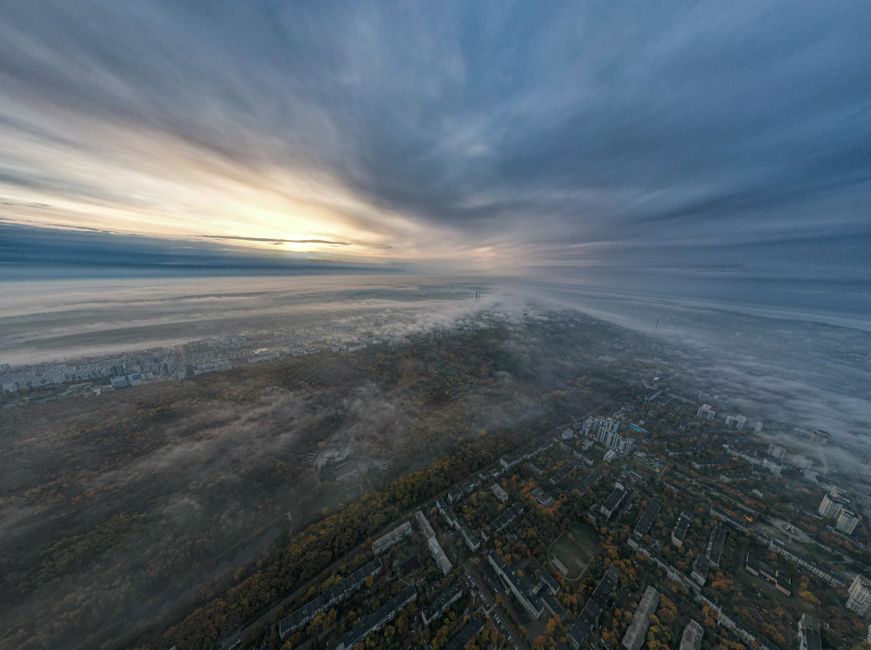
Chișinău is Moldova’s capital and by far its largest city, a green and easy-going place of wide boulevards, leafy parks and Orthodox churches, with a lively café and wine scene and prices well below those of Western Europe. It is not a city of grand sights; it was badly damaged in the Second World War and an earthquake, and much of it was rebuilt in Soviet times. But it is a pleasant, walkable base, with good museums, a busy central market, and some of the world’s largest wine cellars a short drive away. Spend two days in the city, and two or three more on day trips to Cricova, Mileștii Mici, Orheiul Vechi and the Codri monasteries.
Right now in Chișinău
- Wed 10–23°C 51–74°F Partly cloudy
- Thu 12–24°C 53–74°F Mostly clear
- Fri 13–24°C 56–76°F Cloudy
Weather: MET Norway (CC BY 4.0) · Air quality: OpenAQ
Top tours in Chișinău
See all tours for Chișinău →
From local operators, with prices and reviews; you check availability and book on Viator, our partner. We may earn a commission at no extra cost to you. How we earn money
Chișinău at a glance
- Population: 720,100 in the municipality of Chișinău, which includes surrounding towns and villages, at the 2024 census: almost 30% of Moldova’s people.
- Setting: on low hills on both sides of the small Bîc river, in the centre of the country, a few hours by road or rail from the Romanian city of Iași.
- Language: Romanian is official; Russian is widely spoken in the city. Many younger people speak English.
- Currency: the Moldovan leu (MDL); about 20 lei to the euro and 18 to the US dollar in early October 2026.
- Time zone: Eastern European Time (UTC+2, UTC+3 in summer).
- Airport: Chișinău International Airport, 13 km south-east of the centre.
- Emergency number: 112.
A short history of Chișinău
Chișinău is first mentioned in a document of 1436, as a village in the Principality of Moldavia. It remained a small market town until 1812, when the Russian Empire annexed Bessarabia and made Chișinău its capital. The town grew quickly on a planned grid of straight streets: the poet Alexander Pushkin lived here in exile from 1820 to 1823, the Cathedral of the Nativity and the Triumphal Arch were built in the 1830s and 1840s, and by 1900 the city had a large Jewish community, which suffered a notorious pogrom in 1903. From 1918 to 1940 Chișinău belonged to Romania. It was badly damaged by an earthquake in 1940 and then in the Second World War, and was rebuilt as the capital of Soviet Moldavia, with wide avenues, apartment blocks and modernist landmarks. Since 1991 it has been the capital of independent Moldova.
Chișinău, area by area
The city centre (Centru) is compact: most sights lie along or just off Ștefan cel Mare și Sfînt Boulevard, the main avenue, between the Central Market in the east and the National Art Museum and Valea Morilor park in the west. Around them:
- Centru: the cathedral park, Stephen the Great Central Park, the main museums, government buildings, theatres, most hotels, restaurants and bars.
- The old town (Orașul Vechi): the area north-east of the centre around the Central Market and Mazarache Church, Chișinău’s oldest surviving church, with older, lower houses.
- Botanica and Rîșcani: large residential districts with Soviet apartment blocks; Botanica, in the south, is on the way to the airport and has the botanical garden.
- Valea Morilor and Buiucani: west of the centre, around the lake park of Valea Morilor (“Valley of the Mills”).
Top things to see in Chișinău
Chișinău’s sights are close together, and you can see the centre comfortably on foot in a day.
The Cathedral of the Nativity and the Triumphal Arch
The city’s main Orthodox cathedral, built in the 1830s in a Neoclassical style with a columned portico and dome, stands in a park in the heart of the city. Its separate bell tower was blown up in Soviet times and rebuilt in the 1990s. Facing Ștefan cel Mare Boulevard is the Triumphal Arch (Arcul de Triumf, also called the Holy Gates), built in 1840 to mark Russia’s victory over the Ottoman Empire in the war of 1828–29. Across the boulevard is the Government House, and on the square in front of it, the Great National Assembly Square, the city holds its festivals, concerts and National Wine Day.
Stephen the Great Central Park
Chișinău’s oldest park, laid out in the early 19th century, is a shady square of lime and chestnut trees with fountains, benches and chess players. At its corner stands the bronze statue of Stephen the Great, prince of Moldavia from 1457 to 1504, holding a cross; the statue, by Alexandru Plămădeală, has become the symbol of the city. Inside the park, the Alley of Classics lines up busts of Romanian and Moldovan writers.
The National Museum of History of Moldova
Housed in a former 19th-century boys’ school, the museum tells the story of the land between the Prut and the Dniester from prehistory, through the Dacian and Roman periods and the medieval Principality of Moldavia, to the 20th century. A copy of the Capitoline Wolf stands outside. Tickets cost 50 lei for adults, 20 lei for students and pensioners and 10 lei for schoolchildren; it opens 10:00 to 18:00 in summer and 10:00 to 17:00 in winter and closes on Mondays. In 2026 the main entrance on 31 August 1989 Street was temporarily closed for street works, with entry from Mitropolit Gavriil Bănulescu-Bodoni Street.
The National Art Museum
Founded in 1939, the National Art Museum on 31 August 1989 Street holds more than 40,000 works, from Moldovan icons and folk art to Moldovan, Romanian, Russian and Western European painting. It is open Tuesday to Sunday, 10:00 to 18:00.
The National Museum of Ethnography and Natural History
One of the oldest museums in the region, founded in 1889, it occupies an eye-catching building in a Moorish-revival style on Mihail Kogălniceanu Street. Its large diorama halls cover Moldova’s nature, and its ethnographic collection shows village life, costumes and crafts. The skeleton of a dinotherium, a prehistoric relative of the elephant found in Moldova, is the star exhibit.
The Central Market
The Central Market (Piața Centrală), at the eastern end of the boulevard, is one of the biggest and busiest markets in the region: halls and streets full of fruit and vegetables, cheese, honey, meat, pickles, flowers and household goods. Go in the morning, and watch your pockets.
Valea Morilor park
West of the centre, this large park surrounds a lake, with a long stone staircase (the “Cascade”), a lakeside promenade, rowing boats and a summer beach. It is where locals go for walks, running and evening strolls.
The Eternitate memorial complex
On a hill south of the centre, the Eternitate (Eternity) memorial, built in 1975, commemorates the Soviet soldiers who died in the Second World War with five tall stone rifles meeting over an eternal flame. Next to it is a memorial to those who died in the 1992 conflict on the Dniester.
Churches, houses and the Organ Hall
Mazarache Church, built in 1752 on the site of an old fortification, is the city’s oldest surviving church. The small Pushkin House Museum shows where the poet lived in exile. The Organ Hall, in an elegant early 20th-century former bank building on the boulevard, is the home of the National Centre of Academic Music, with organ, chamber and orchestral concerts. Lovers of Soviet modernism should look out for the 1970s “Gates of the City” towers on the airport road and the Hotel Cosmos.
Wine bars, cafés and Chișinău nights
Chișinău is a good place to drink Moldovan wine without leaving town. Wine bars and restaurants in the centre serve local whites such as Fetească Albă and reds such as Fetească Neagră and Rară Neagră by the glass, at prices well below Western Europe. The city has a busy café culture, summer terraces in the parks and along the boulevard, a handful of craft-beer bars and clubs, and an active classical music and opera scene at the National Opera and Ballet Theatre and the Organ Hall. National Wine Day, on the first weekend of October, fills the Great National Assembly Square with stalls from dozens of wineries; in 2026 it was held on 3 and 4 October.
Day trips from Chișinău
Many of Moldova’s highlights are within an hour or two. Local agencies and hotels organise tours with transport, which is the easiest option, as public transport to wineries and monasteries is limited.
- Cricova (15 km north): a vast underground “wine city” in old limestone quarries, in use since 1952, kept at a steady 10 to 12 °C. The standard “Underground City” tour lasts 1 hour 10 minutes and costs 400 lei; longer tasting packages cost from 700 to 3,100 lei. A 100-lei supplement applies from 16:00, at weekends and on public holidays. Book ahead.
- Mileștii Mici (20 km south): one of the world’s largest underground wine galleries, with more than two million bottles in a collection recognised by Guinness World Records. The 50-minute winery tour costs 350 lei and longer tours with a meal 800 to 2,200 lei, with a 100-lei supplement at 17:00, at weekends and on holidays; children under 10 go free.
- Orheiul Vechi (60 km north): a cave monastery in the cliffs of a deep loop of the Răut river, with archaeological remains, hiking trails and traditional guesthouses in the village of Butuceni.
- The Codri monasteries (40–60 km west): Căpriana, linked to Stephen the Great, and the 19th-century Curchi monastery near Orhei, in wooded hills.
- Purcari (about 120 km south-east): one of Moldova’s most famous wine estates, near the Dniester, with tastings, a restaurant and rooms. The route passes close to Transnistria, a breakaway region with its own checkpoints; stay on roads on the government-controlled side.
- Soroca (about 160 km north): a round 16th-century fortress on the Dniester, and on the way, the cliff monasteries of Saharna and Țipova.
Nearby destinations
- Danube Delta209 km
- Brașov291 km
Getting to Chișinău
By air: Chișinău International Airport, 13 km south-east of the centre, has flights to many European cities and to Turkey and the Middle East. Bus 165 and trolleybus 30 run between the airport and the city centre, and a taxi takes about 25 minutes and costs around 80 lei; order one by phone or app, or use the official desk.
By train: the state railway, CFM, runs international trains from Chișinău’s railway station to Iași and Bucharest in Romania. Check times and buy tickets on the CFM website.
By bus or car: coaches link Chișinău with Romanian and other European cities, and the road from Iași crosses the border at Sculeni or Leușeni. If you bring a car, you must declare it to customs on entry.
Getting around Chișinău
The centre is compact and best seen on foot. For longer distances:
- Trolleybuses: the city’s trolleybus network, run by RTEC, is cheap and extensive. A single ticket costs 7 lei (from 31 March 2026), bought on board; a monthly pass costs 273 lei. Travelling without a ticket brings a 50-lei on-the-spot fine.
- Tourist trolleybus: RTEC also runs a sightseeing trolleybus around the main landmarks (suspended for National Wine Day in early October 2026 and back on its normal schedule from 10 October).
- Buses and minibuses: municipal buses and private minibuses (rutiere) fill the gaps; pay the driver in cash.
- Taxis: plentiful and cheap; a ride across the city usually costs the equivalent of €3 to €5. Order by phone or app rather than hailing a car in the street.
When to go and how long to stay
Chișinău has a moderate continental climate. The best months are May and June, when the parks are in full leaf, and September and October, the harvest and wine season. July and August are hot and sunny; winters are cold and grey, with some snow. The table uses the official 1991–2020 averages for Chișinău that Moldova’s State Hydrometeorological Service submitted to the World Meteorological Organization.
| Season | Average daily high | Average nightly low | Rain per month | What it’s like |
|---|---|---|---|---|
| Winter (Dec–Feb) | 1.1–3.4 °C | −4.2 to −2.6 °C | 31–40 mm | Cold and grey, sometimes snowy; Christmas markets and cellar tours |
| Spring (Mar–May) | 9.2 °C rising to 22.4 °C | 0.8 °C rising to 11.8 °C | 36–53 mm | Blossom and green parks; terraces open from April |
| Summer (Jun–Aug) | 26.2–28.5 °C | 15.8–17.9 °C | 49–67 mm | Hot and sunny, with storms; lake and park life at Valea Morilor |
| Autumn (Sep–Nov) | 22.4 °C falling to 8.1 °C | 12.5 °C falling to 2.2 °C | 42–49 mm | Harvest season and National Wine Day; golden parks in October |
Chișinău gets about 550 mm of rain and around 2,280 hours of sunshine a year.
Chișinău in 2 days
Day 1: walk Ștefan cel Mare Boulevard from the Central Market to the cathedral park and the Triumphal Arch, visit the National Museum of History and Stephen the Great Central Park, and end with dinner and Moldovan wine in the centre. Day 2: the Ethnography and Natural History Museum and the National Art Museum in the morning, Mazarache Church and the old town, then an evening walk around the lake at Valea Morilor or a concert at the Organ Hall.
Chișinău in 4 days
Add a morning at Cricova and an afternoon at the Căpriana or Curchi monastery on day 3, and on day 4 a trip to Orheiul Vechi with lunch in Butuceni, or a tour of Mileștii Mici with a long tasting lunch.
Where to stay in Chișinău
- Centru: the best base for a first visit, within walking distance of the boulevard, the parks, museums and restaurants. Most mid-range and upmarket hotels are here.
- Near Valea Morilor: quieter, greener, and still a short taxi or trolleybus ride from the centre.
- Botanica: convenient for the airport and less expensive, but a trolleybus ride from the sights.
- A winery stay: several estates near the city and in the south, such as Purcari, have rooms, so you can combine Chișinău with a night among the vineyards.
Safety
Chișinău is a calm city for visitors, and crime against them is mostly petty: watch for pickpockets in crowded places and on transport. Political demonstrations take place regularly in central Chișinău; they are usually small and peaceful, but stay away from them. Unexploded ordnance remains in some rural areas, including parts of the Chișinău municipality, so stay on paths in fields and forests. An energy emergency declared in December 2024 can mean managed power cuts. Moldova borders Ukraine, where an armed conflict is ongoing.
Transnistria, the breakaway region along the Dniester east of the city, is not controlled by the Moldovan government. It has its own checkpoints and currency, consular access there is extremely limited and most travel insurance does not cover it. Standard travel insurance covers Chișinău, and many countries, including the UK and the US, have embassies in the city.
Practical tips for Chișinău
- Cash and cards: cards are widely accepted in the city, but carry lei for markets, minibuses and churches. Change euros or dollars at banks or licensed exchange offices.
- Pavements: streets can be uneven and poorly lit at night; wear sturdy shoes and carry a torch or use your phone light.
- Demonstrations: political protests are held in the centre from time to time; avoid them.
- Churches: women usually cover their heads, and shorts are not appropriate.
- Water: drink bottled or boiled water.
- Photography: don’t photograph government or military buildings or the airport.
- Roaming: EU mobile plans work at home prices in Moldova since 1 January 2026; others should check roaming charges or buy a local SIM.
- Plugs: European type C and F, 230 V; see our guide to travel adapters.
What to pack for Chișinău
Pack comfortable walking shoes, a warm layer for the cellars, which stay at around 10 to 12 °C even in summer, a scarf for church visits, sun protection and a hat in summer and a warm coat and boots in winter. See our guide to rain jackets for spring and autumn showers.
Chișinău travel FAQ
Is Chișinău safe to visit?
Yes, for most visitors with normal care. Watch for pickpockets in crowded places, avoid political demonstrations, and stay on paths in rural areas, where some unexploded ordnance remains. See the safety section above.
How do I get from Chișinău Airport to the city centre?
Take bus 165 or trolleybus 30, or a taxi, which takes about 25 minutes and costs around 80 lei. Order a taxi by phone or app, or at the official desk, rather than accepting offers in the arrivals hall.
How much is a trolleybus ticket in Chișinău?
7 lei for a single journey, since 31 March 2026. A monthly pass costs 273 lei.
How much does a Cricova tour cost?
The standard 70-minute “Underground City” tour costs 400 lei, and longer packages with tastings and meals range from 700 to 3,100 lei. There is a 100-lei supplement from 16:00, at weekends and on public holidays.
How many days do you need in Chișinău?
Two days are enough for the city itself. Add two or three days for day trips to the wine cellars of Cricova and Mileștii Mici, Orheiul Vechi and the monasteries.
Can I pay by card in Chișinău?
Yes, in most hotels, restaurants and shops in the city, but carry some lei in cash for markets, minibuses and smaller places, and keep an eye on your card when you pay.
When is National Wine Day?
On the first weekend of October, in the Great National Assembly Square in the centre of Chișinău. The 2026 edition took place on 3 and 4 October.
Can I take a day trip from Chișinău to Tiraspol?
Tiraspol is the main town of Transnistria, a breakaway region not controlled by the Moldovan government. The region has its own checkpoints, where passports are checked but not stamped, and its own currency, the Transnistrian ruble; foreign cards do not work there, consular access is extremely limited and most travel insurance does not cover it.
Sources and last review
Researched and last reviewed on 4 October 2026. Safety information from GOV.UK foreign travel information (updated 10 December 2025) and the US State Department’s country information (6 July 2026); population from Moldova’s National Bureau of Statistics (2024 census); exchange rates from the National Bank of Moldova; trolleybus fares, the tourist trolleybus and National Wine Day dates from RTEC and Chișinău City Hall; museum prices and hours from the National Museum of History and the National Art Museum; tour prices from Cricova and Mileștii Mici; climate from the official 1991–2020 normals Moldova submitted to the World Meteorological Organization; roaming from the European Commission. Airport bus and trolleybus routes, the airport taxi fare, city taxi fares, the Ethnography Museum details, sight histories and plug types come from secondary sources or general knowledge and are flagged for checking. Prices and timetables change, so check the official sites before you go.
Plan your trip
Partner links: TravelerCenter may earn a commission if you book, at no extra cost to you.
🇷🇴 Useful Romanian phrases for Chișinău
All 38 Romanian phrases: restaurant, hotel, emergencies, romance (printable) →