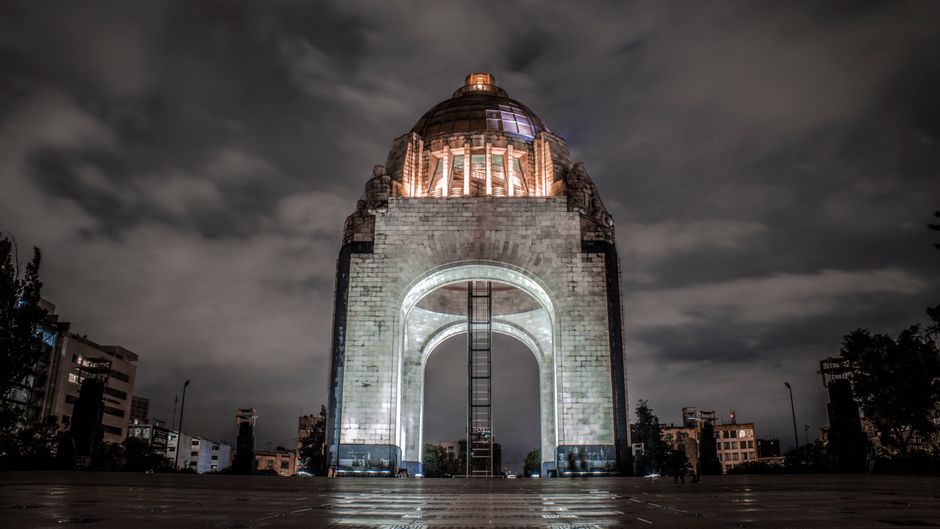
Mexico packs a continent’s worth of trips into one country: the museums, markets and food of Mexico City, one of the biggest cities in the world; the white sand, reefs and cenotes of the Caribbean coast around Cancún, Playa del Carmen and Tulum; the Maya cities of Chichén Itzá and Uxmal near colonial Mérida; the cooking, mezcal and festivals of Oaxaca; silver-mining towns such as San Miguel de Allende; Guadalajara, home of mariachi and tequila; and the Pacific resorts of Puerto Vallarta and Los Cabos. Most visitors need no visa, and the entry paperwork is now largely digital, but plan for a few small tourist fees, a peso economy where cash still matters, and the seasons: November to April is dry almost everywhere, and June to November is the hurricane season on both coasts. Give a first trip 10 days to two weeks for one or two regions.
Right now in Mexico
- Tue 13–23°C 56–74°F 2 mm Showers
- Wed 14–24°C 58–74°F 1 mm Light showers
- Thu 14–21°C 56–70°F Cloudy
Weather: MET Norway (CC BY 4.0) · Rates: ECB
Key facts
| Currency | Mexican peso (MXN, $); the same $ sign as the dollar, so check which currency a price is inSource: banxico.org.mx · Last reviewed 4 Oct 2026 |
|---|---|
| Languages | Spanish; 68 Indigenous languages such as Nahuatl, Maya and Zapotec are also national languages; English common in big resortsSource: inali.gob.mx · Last reviewed 4 Oct 2026 |
| Plugs and voltage | Type A and B · 127 V, 60 HzSource: wikidata.org · Last reviewed 4 Oct 2026 |
| Emergency number | 911 (all emergencies); 089 anonymous crime reports; 078 tourist assistanceSource: gob.mx · Last reviewed 4 Oct 2026 |
| Driving side | On the right; Mexican liability insurance required (US/Canadian policies not valid); 078 for Ángeles Verdes roadside helpSource: gob.mx · Last reviewed 4 Oct 2026 |
| Tap water | Not safe to drink: use bottled or purified waterSource: gov.uk · Last reviewed 4 Oct 2026 |
| Tipping | Customary: 10-15% in restaurants; a few pesos for baggers and attendants; not for taxisSource: gob.mx · Last reviewed 4 Oct 2026 |
| Payments | Cards widely taken in cities and resorts; cash (pesos) still needed for markets, street food, taxis and colectivos; choose to be charged in pesosSource: banxico.org.mx · Last reviewed 4 Oct 2026 |
| Calling code | +52 (dial 00 for international calls)Source: wikidata.org · Last reviewed 4 Oct 2026 |
| Time zones | Mostly UTC−6 all year (Mexico City); Quintana Roo UTC−5; Baja California Sur and the northwest UTC−7; no summer time except on the US borderSource: data.iana.org · Last reviewed 4 Oct 2026 |
| Entry summary | Visa-free for the US, Canada, UK, EU and many others; up to 180 days as stamped; DNR fee usually in the air fare; VISITAX MXN 293 in Quintana RooSource: gob.mx · Last reviewed 4 Oct 2026 |
| SIM and eSIM | Local SIM/eSIM (Telcel, AT&T, Movistar) must be registered with your passport since January 2026; many US/Canadian plans include MexicoSource: gob.mx · Last reviewed 4 Oct 2026 |
Multi-day tours of Mexico
Multi-day tours from local operators. You check dates and book on Viator, our partner; we may earn a commission at no extra cost to you. How we earn money
Mexico at a glance: 32 states, one country
Mexico is a federal republic of 31 states plus Mexico City, the capital. It stretches more than 3,000 km (1,900 miles) from the US border at Tijuana to Guatemala and Belize, between the Pacific Ocean and the Gulf of Mexico and the Caribbean Sea, and about 132 million people live here. Spanish is the national language, alongside 68 Indigenous languages such as Nahuatl, Maya and Zapotec; English is widely spoken in the big resorts, less so elsewhere.
Geography shapes every trip. Mexico City and the colonial cities of the center sit on a high plateau, at about 1,500 to 2,300 m (5,000 to 7,500 ft), so they are springlike rather than tropical, with cool nights. The coasts and the Yucatán Peninsula are hot all year. Distances are large: Mexico City to Cancún is about a two-and-a-half-hour flight, and the drive from the US border to Los Cabos is more than 1,600 km (1,000 miles).
Time zones: Mexico abolished daylight saving time in 2022, except in some municipalities on the US border, under its time zones law. Most of the country, including Mexico City, Guadalajara, Oaxaca, San Miguel de Allende, Mérida and Puerto Vallarta, uses Central time (UTC−6 all year). Quintana Roo, home to Cancún, Tulum, Playa del Carmen, Cozumel and Isla Mujeres, uses Southeast time (UTC−5), an hour ahead. Baja California Sur (Los Cabos) and the northwest coast use Pacific time (UTC−7), and Baja California (Tijuana) is UTC−8, with summer time like California’s.
Mexico’s regions
- Mexico City and the center: the capital and its pyramids at Teotihuacan, plus Puebla, Taxco, Cuernavaca and the volcano country around them.
- The Yucatán Peninsula and the Mexican Caribbean: Cancún, the Riviera Maya, Tulum, Cozumel and Isla Mujeres on the coast; Mérida, Valladolid, Campeche and the great Maya cities inland; cenotes everywhere.
- The colonial heartland (the Bajío): San Miguel de Allende, Guanajuato, Querétaro and Morelia, old silver and colonial cities in the highlands north-west of the capital.
- Jalisco and the central Pacific: Guadalajara and Tequila inland, Puerto Vallarta and the Bay of Banderas on the coast, plus Nayarit’s surf towns.
- The south: Oaxaca, with its food, crafts and Zapotec ruins, the surf and beach towns of the Oaxaca coast, and Chiapas, with San Cristóbal de las Casas and Palenque.
- Baja California: Los Cabos and La Paz at the southern tip, desert and whale lagoons in the middle, Tijuana and the Valle de Guadalupe wine country next to San Diego.
- The north: Monterrey, the Copper Canyon and its railroad, and long desert distances, visited by fewer tourists.
Regions
- Aguascalientes
- Baja California
- Baja California Sur
- Campeche
- Chiapas
- Chihuahua
- Coahuila
- Colima
- Durango
- Guanajuato
- Guerrero
- Hidalgo
- Jalisco
- Michoacán
- Morelos
- Nayarit
- Nuevo León
- Oaxaca
- Puebla
- Querétaro
- Quintana Roo
- Riviera Maya
- Riviera Nayarit
- San Luis Potosí
- Sinaloa
- Sonora
- State of Mexico
- Tabasco
- Tamaulipas
- Tlaxcala
- Veracruz
- Yucatán
- Zacatecas
Where to go: cities, beaches and Maya ruins
Most first trips combine a city with a beach. The classic pairs are Mexico City with Oaxaca, Cancún or the Riviera Maya with Mérida and the Maya sites, and Guadalajara with Puerto Vallarta. Domestic flights are cheap and frequent, so it is easy to add one region to another; see our separate guides to each of the places below.
Mexico City
The capital is one of the great cities of the world: the Aztec Templo Mayor beside the cathedral on the Zócalo, the National Museum of Anthropology in Chapultepec Park, Frida Kahlo’s Blue House in Coyoacán, the canals of Xochimilco, leafy Roma and Condesa, street tacos and some of the best restaurants in the Americas. The pyramids of Teotihuacan are an easy day trip. Give it at least four days.
Cancún and the Riviera Maya
Mexico’s busiest resort coast runs south from Cancún’s Hotel Zone through Puerto Morelos, Playa del Carmen and Akumal to Tulum, whose Maya ruins stand on a cliff above the sea. Add the islands of Isla Mujeres and Cozumel, famous for diving, swimming in cenotes, and family theme parks such as Xcaret and Xel-Há. Sargassum seaweed can wash up from spring to fall; see below.
Mérida and the Yucatán
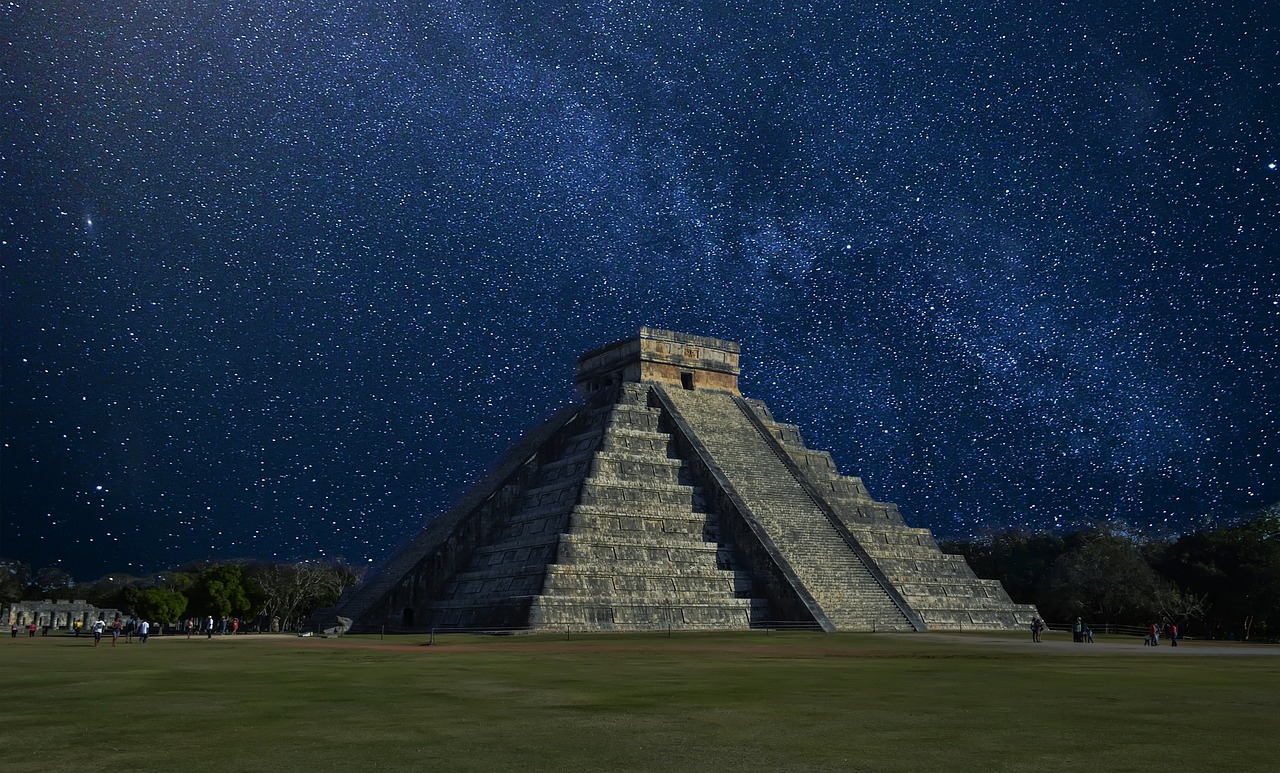
Mérida, the elegant capital of Yucatán, is the base for Chichén Itzá, Uxmal and dozens of cenotes, the flamingos of Celestún and the yellow town of Izamal. Valladolid, between Mérida and Cancún, is a smaller colonial stop near Chichén Itzá and Ek Balam.
Oaxaca
Oaxaca City, in a valley in the southern mountains, is famous for its seven moles, mezcal, markets and craft villages, the hilltop Zapotec city of Monte Albán, the Guelaguetza festival in July and Day of the Dead at the start of November.
San Miguel de Allende and Guadalajara
San Miguel de Allende is a beautifully preserved colonial town of cobbled streets, galleries and rooftop bars, about three to four hours by road north-west of Mexico City, with Guanajuato nearby. Further west, Guadalajara, Mexico’s second city, is the home of mariachi and the gateway to the blue-agave fields and distilleries of Tequila.
Puerto Vallarta and Los Cabos
On the Pacific, Puerto Vallarta combines an old town and a seafront malecón with jungle-covered mountains and the whale-watching waters of the Bay of Banderas. At the tip of the Baja California peninsula, Los Cabos (Cabo San Lucas and San José del Cabo) is a resort area of desert, golf courses and big seas, with the rock arch of El Arco, sport fishing and whale watching in winter; it is a short flight from California, see our San Diego and Los Angeles guides.
Acapulco Travel Guide
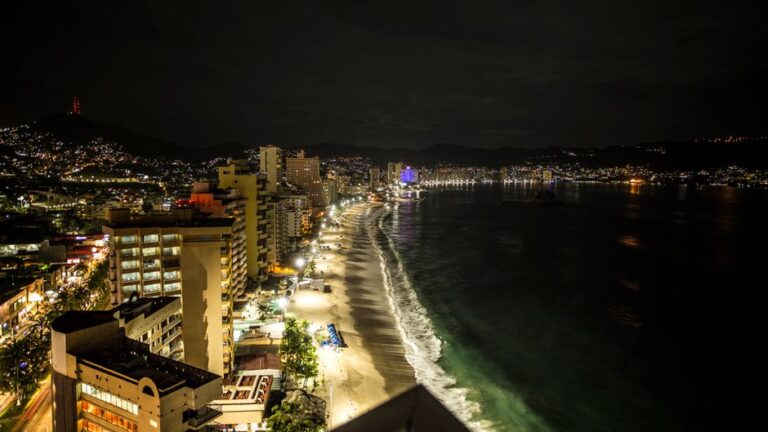
Plan a trip to Acapulco: the bay's beaches and three tourist zones, La Quebrada's cliff divers, the Fuerte de San Diego museum with INAH's…
Bacalar Travel Guide
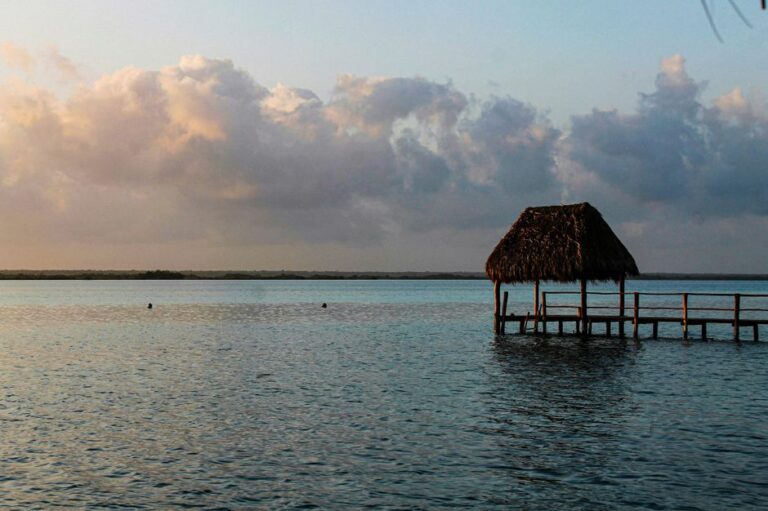
Plan a trip to Bacalar: the lagoon of seven colors, the stromatolites and Los Rápidos, Cenote Azul, the Canal de los Piratas, the Fuerte…
Cancún Travel Guide
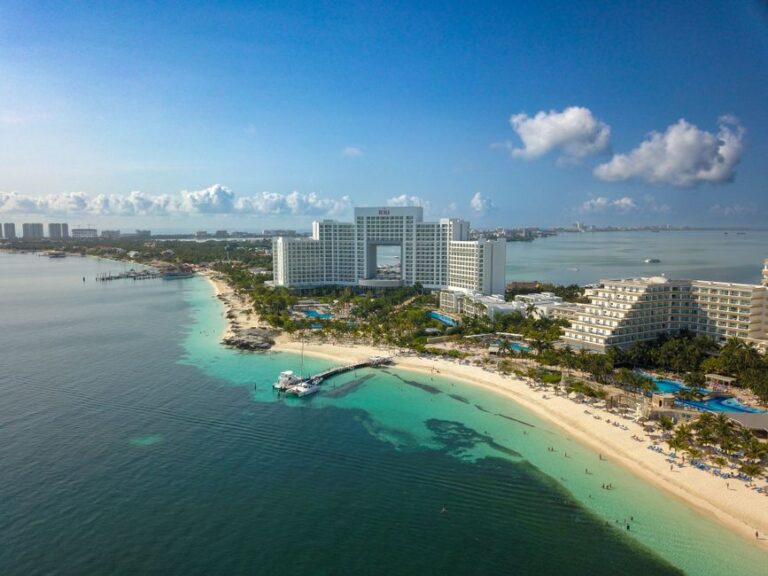
Plan a trip to Cancún: the Hotel Zone, downtown and Costa Mujeres, beaches and sargassum, MUSA's underwater sculptures, the Maya Museum, El Rey and…
Copper Canyon Travel Guide
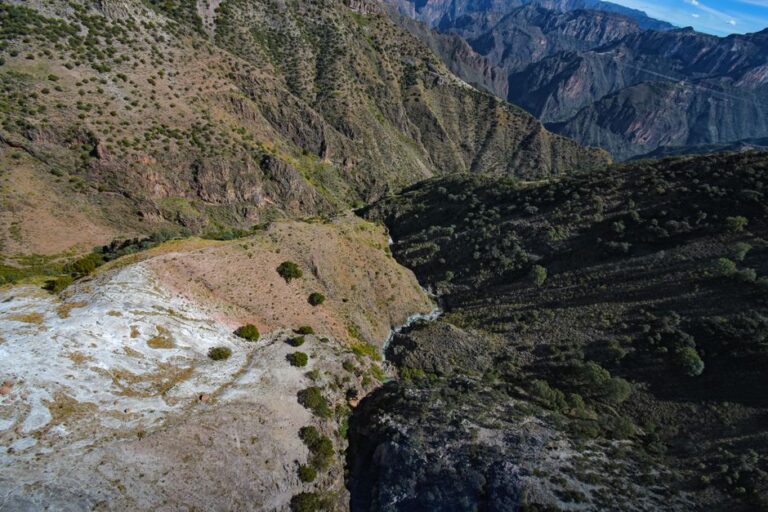
Plan a trip to Mexico's Copper Canyon (Barrancas del Cobre): the Chepe Express and Chepe Regional trains with the 2026 timetable, Divisadero, Creel, El…
Cozumel Travel Guide
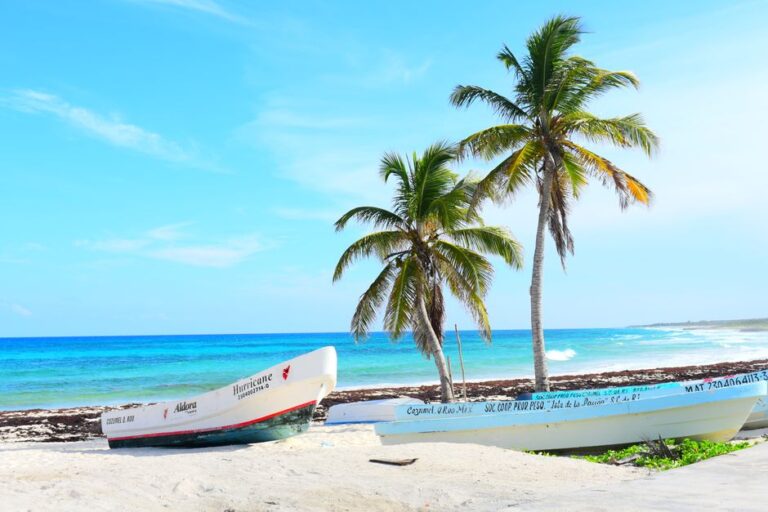
Plan a trip to Cozumel: the reef national park and CONANP fee, drift diving and snorkeling, Chankanaab and Punta Sur prices and hours, San…
Guadalajara Travel Guide
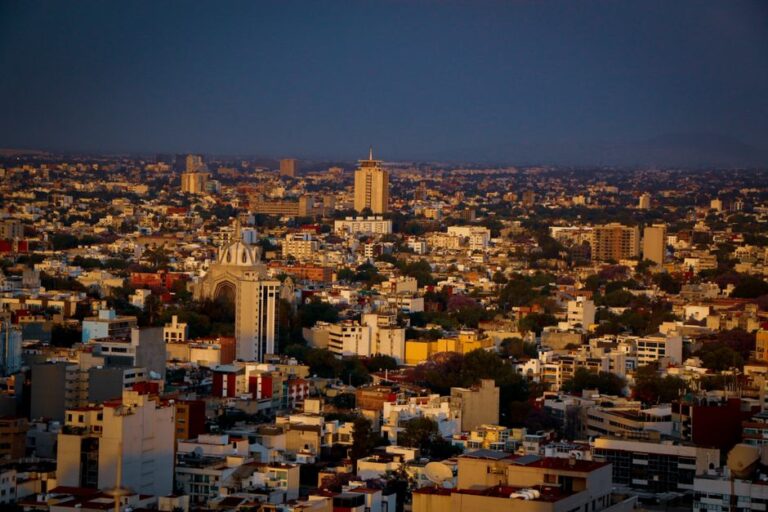
Plan a trip to Guadalajara: the cathedral and plazas, Orozco's murals at the Hospicio Cabañas, mariachi, San Juan de Dios market, Tlaquepaque and Tonalá,…
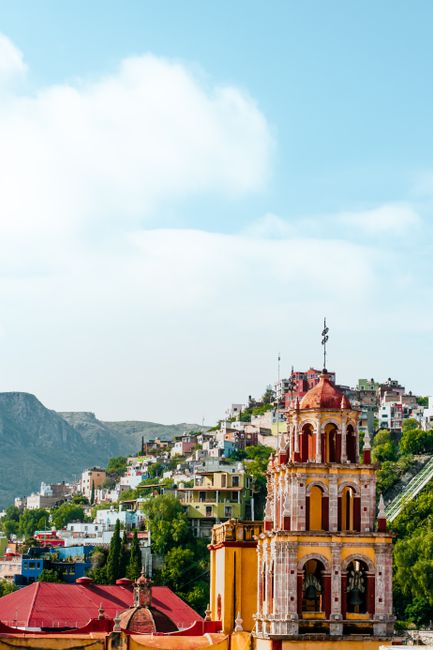
Guanajuato Travel Guide
Plan a trip to Guanajuato: the UNESCO-listed silver city's alleys and tunnels, the Callejón del Beso, Teatro Juárez and the basilica, the Alhóndiga de…
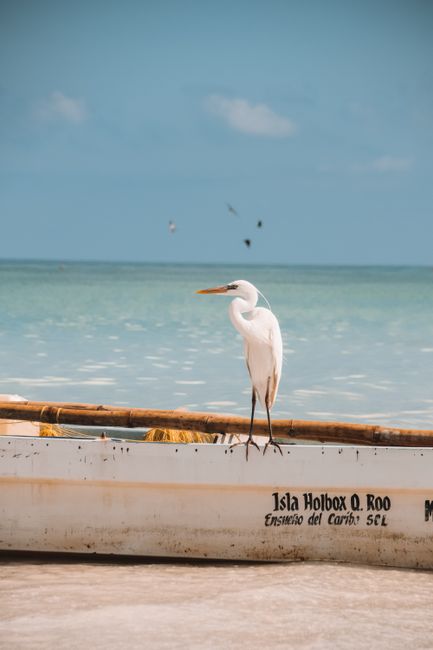
Holbox Travel Guide
Plan a trip to Isla Holbox: the car-free village and beaches, Punta Mosquito and Punta Cocos, swimming with whale sharks (official 2026 season), Yum…
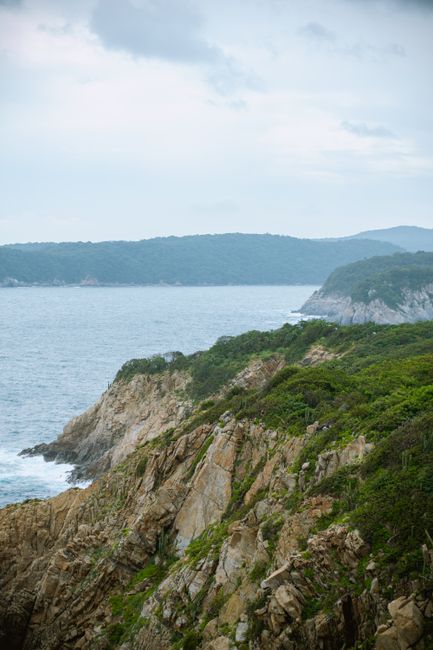
Huatulco Travel Guide
Plan a trip to Huatulco: the bays and beaches, La Crucecita, Santa Cruz and Tangolunda, Huatulco National Park with the 2026 CONANP fee, the…
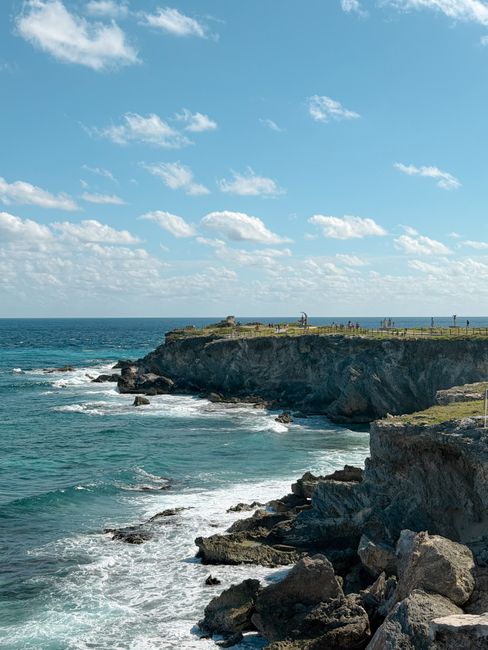
Isla Mujeres Travel Guide
Plan a trip to Isla Mujeres: Playa Norte, Punta Sur, golf carts, snorkeling at Garrafón and MUSA, Isla Contoy and whale sharks with CONANP…
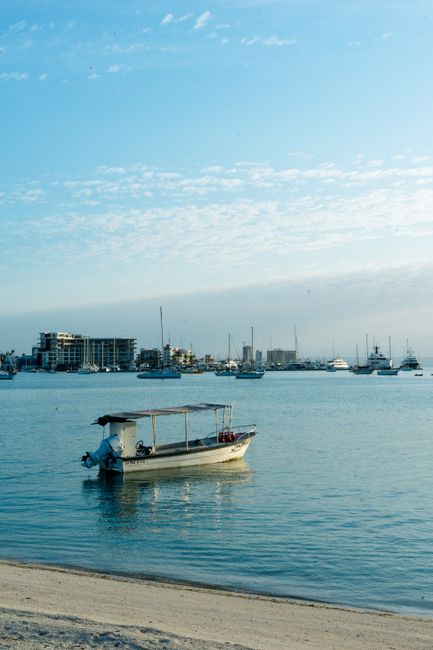
La Paz Travel Guide
Plan a trip to La Paz, Baja California Sur: the malecón, Balandra beach with CONANP's 2026 shifts and fee, Espíritu Santo's sea lions, whale…
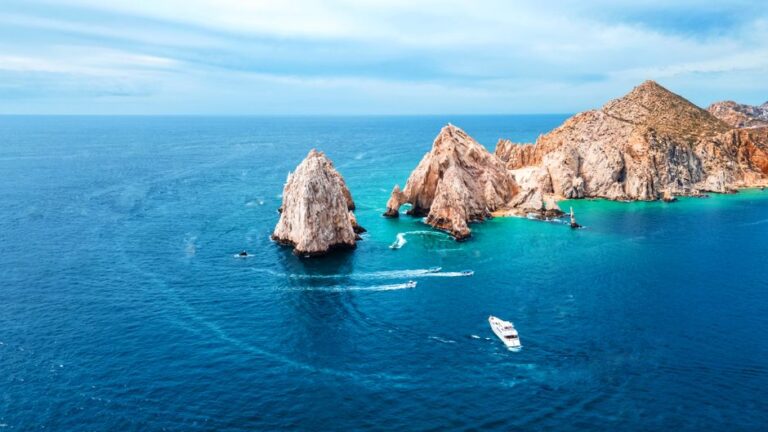
Los Cabos Travel Guide
Plan a trip to Los Cabos: Cabo San Lucas, the Corridor and San José del Cabo, El Arco and Lover's Beach with the CONANP…
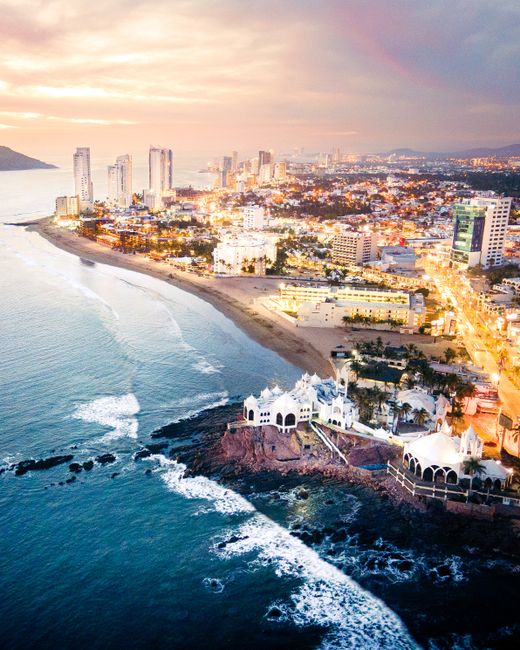
Mazatlán Travel Guide
Plan a trip to Mazatlán: the historic center and Teatro Ángela Peralta, the malecón and El Faro lighthouse, the Golden Zone beaches, Isla de…
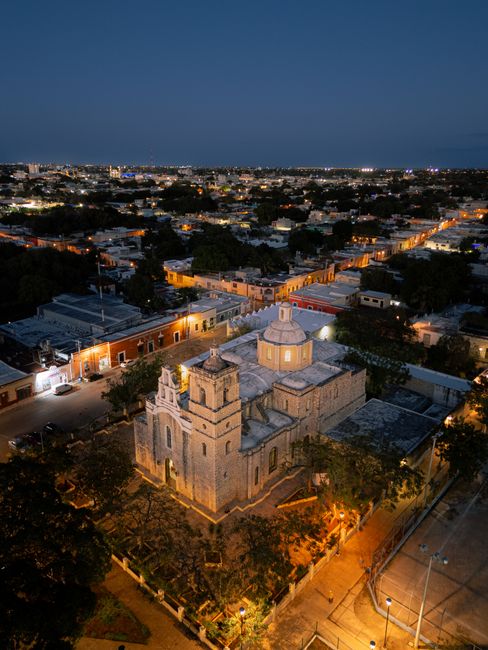
Mérida Travel Guide
Plan a trip to Mérida: the Plaza Grande, Paseo de Montejo and the Palacio Cantón, the Gran Museo del Mundo Maya, Chichén Itzá and…
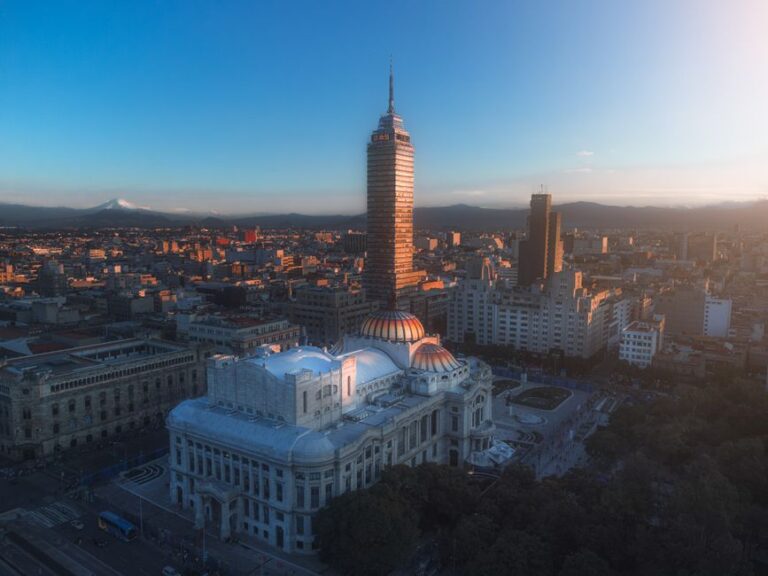
Mexico City Travel Guide
Plan a trip to Mexico City: the Zócalo and Templo Mayor, the National Museum of Anthropology, Chapultepec Castle, the Frida Kahlo Museum (online tickets…
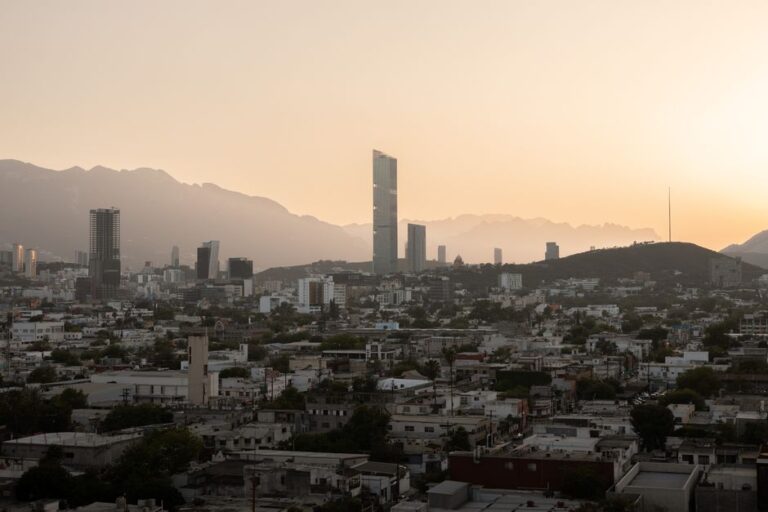
Monterrey Travel Guide
Plan a trip to Monterrey: the Macroplaza, Barrio Antiguo and Paseo Santa Lucía, Parque Fundidora and Horno 3, the Museo de Historia Mexicana and…
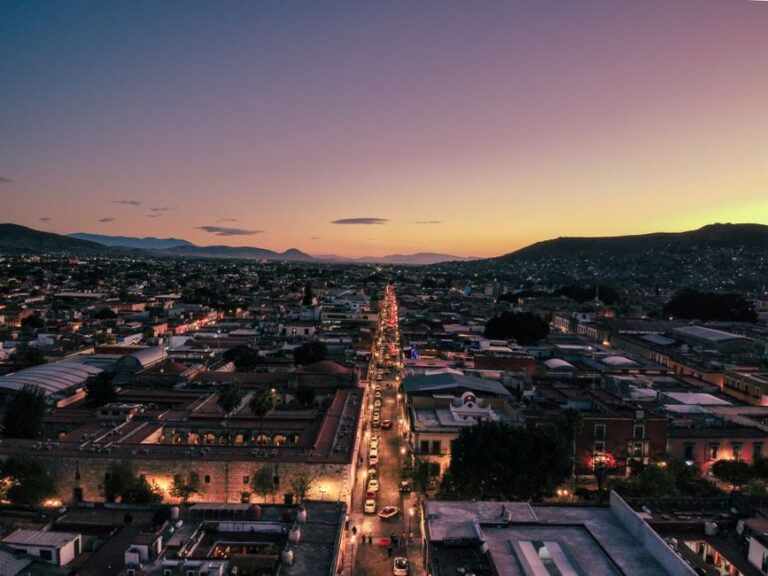
Oaxaca Travel Guide
Plan a trip to Oaxaca: Monte Albán, Santo Domingo and the Museo de las Culturas, the Benito Juárez and 20 de Noviembre markets, Mitla,…
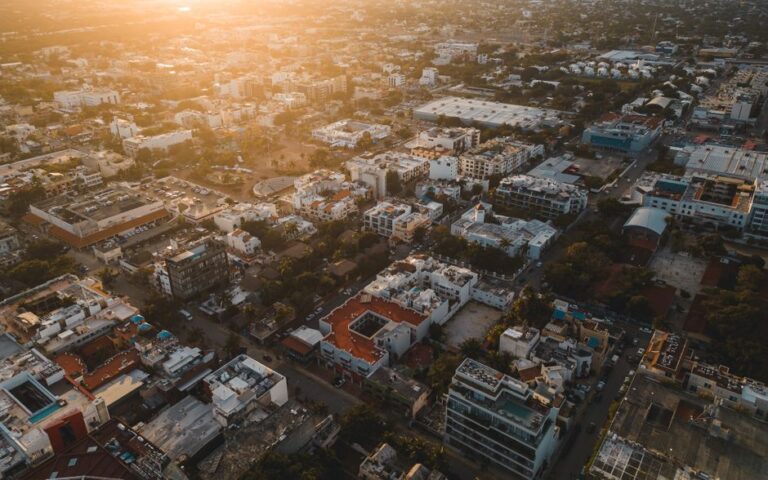
Playa del Carmen Travel Guide
Plan a trip to Playa del Carmen: Quinta Avenida, Playacar and the beaches, cenotes, Xcaret-type parks, diving and bull sharks, ferries to Cozumel with…
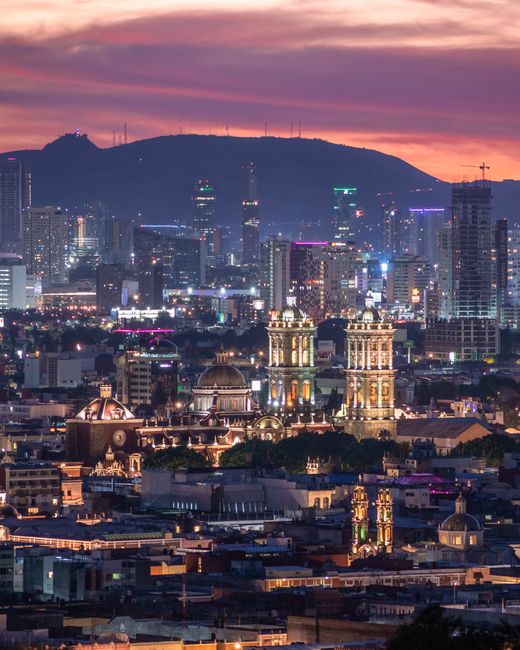
Puebla Travel Guide
Plan a trip to Puebla: the UNESCO-listed historic center, the cathedral and Capilla del Rosario, the Biblioteca Palafoxiana, Museo Amparo with 2026 hours and…
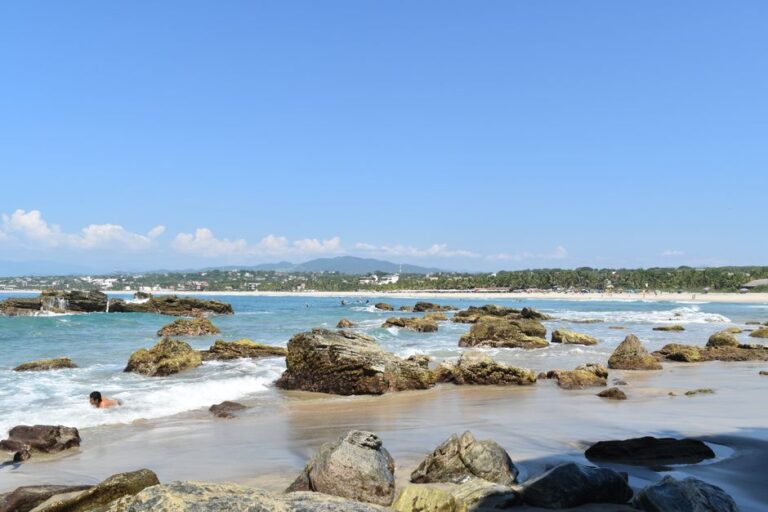
Puerto Escondido Travel Guide
Plan a trip to Puerto Escondido: Zicatela's big waves and La Punta's surf schools, Carrizalillo and Puerto Angelito coves, turtle releases, Manialtepec lagoon and…
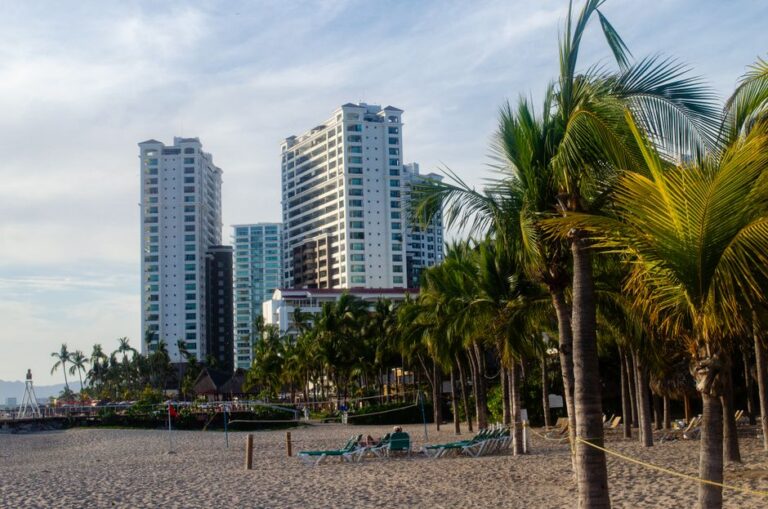
Puerto Vallarta Travel Guide
Plan a trip to Puerto Vallarta: the Malecón and Zona Romántica, Los Arcos, the Marietas Islands with CONANP's 2026 fee and days, whale season,…
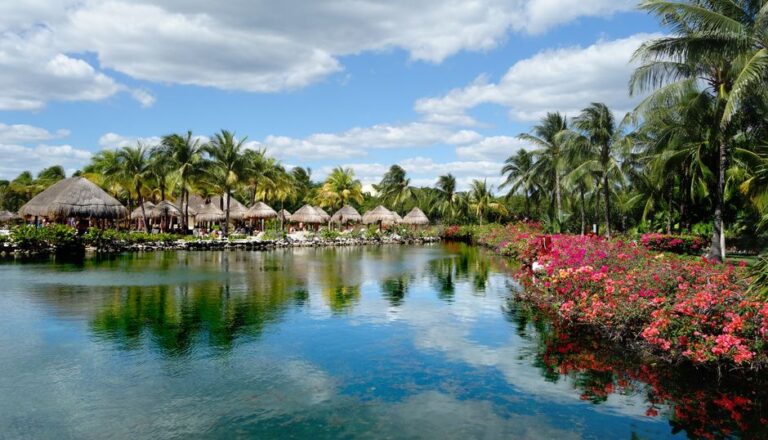
Riviera Maya Travel Guide
Plan a trip to the Riviera Maya: Puerto Morelos, Playa del Carmen, Akumal and Tulum, the Puerto Morelos reef and CONANP fees, cenotes, Akumal's…
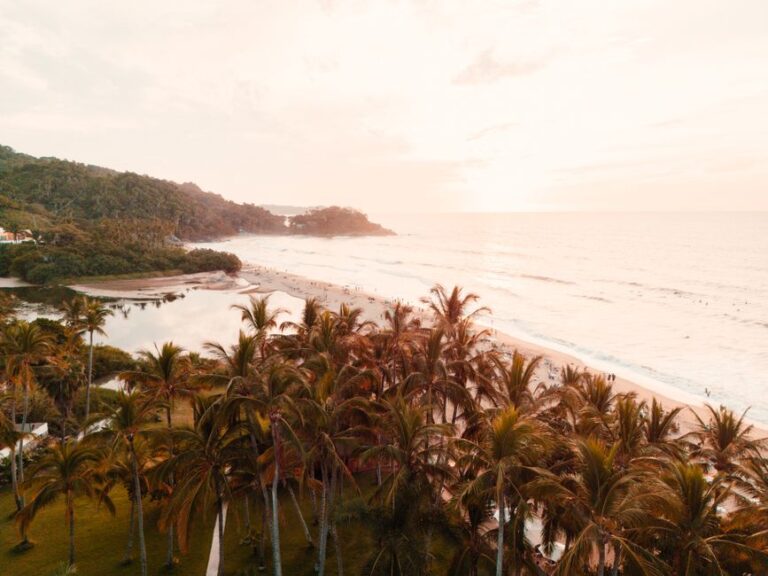
Riviera Nayarit Travel Guide
Plan a trip to the Riviera Nayarit: Nuevo Vallarta, Bucerías, Punta de Mita, Sayulita, San Pancho, Guayabitos and San Blas, the Marietas Islands and…
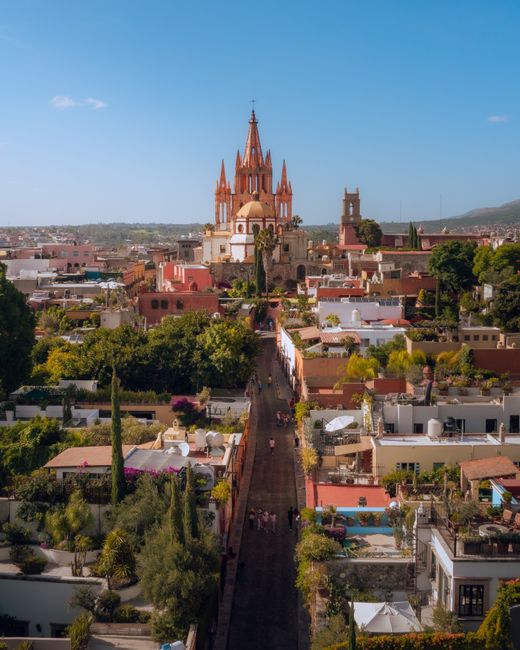
San Miguel de Allende Travel Guide
Plan a trip to San Miguel de Allende: the pink Parroquia and El Jardín, Bellas Artes, Fábrica La Aurora, El Charco del Ingenio, the…
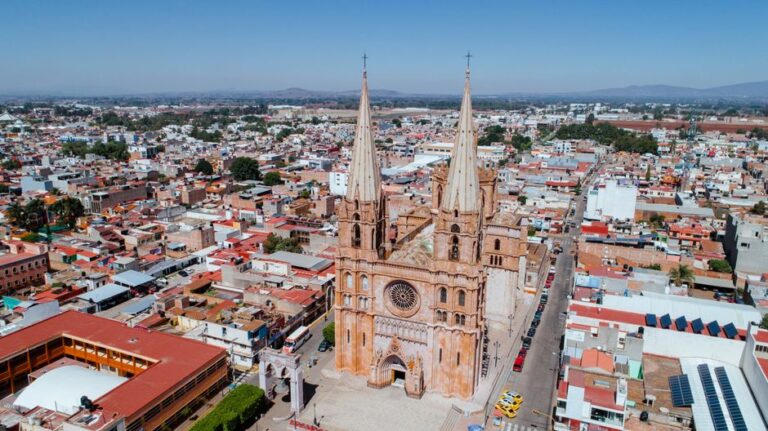
Tequila Travel Guide
Plan a trip to Tequila, Jalisco: the UNESCO-listed blue agave landscape, distillery tours, the town square, church and tequila museum, Amatitán and El Arenal,…
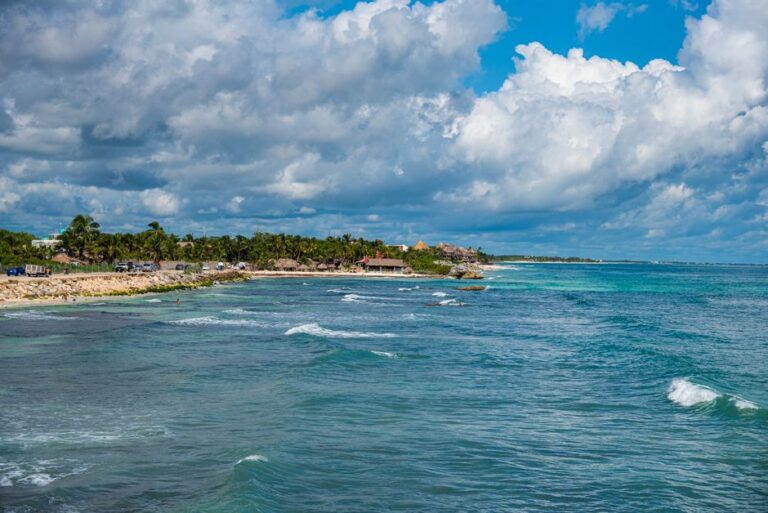
Tulum Travel Guide
Plan a trip to Tulum: the ruins and the Jaguar National Park with the July 2026 fees, beaches, cenotes, Cobá, Muyil and Sian Ka'an,…
Best time to visit Mexico, region by region
Mexico has two seasons rather than four: a dry season from about November to April or May, and a rainy season from about June to October, when most days bring a heavy afternoon shower. Altitude matters more than latitude: Mexico City is mild all year, while the coasts are hot. The table shows rounded average daily highs and yearly rainfall at one weather station per region, from the 1991–2020 climate normals of Mexico’s National Meteorological Service (SMN-Conagua), or 1981–2010 where newer figures are not published.
| Region (SMN station) | Spring highs (Mar–May) | Summer highs (Jun–Aug) | Fall highs (Sep–Nov) | Winter highs (Dec–Feb) | Rain a year |
|---|---|---|---|---|---|
| Mexico City (Tacubaya observatory, 2,309 m) | 26–28 °C (79–82 °F) | 25–26 °C (76–78 °F) | 24 °C falling to 23 °C (75 to 73 °F) | 22–24 °C (72–76 °F) | about 850 mm (33 in) |
| Cancún and the Caribbean coast (Cancún) | 32–34 °C (89–94 °F) | 34–35 °C (93–95 °F) | 34 °C falling to 30 °C (94 to 87 °F) | 29–30 °C (84–86 °F) | about 1,370 mm (54 in) |
| Mérida and the Yucatán (Mérida observatory, 1981–2010) | 34–37 °C (93–99 °F) | 35–36 °C (95–96 °F) | 34 °C falling to 31 °C (93 to 88 °F) | 30–32 °C (86–90 °F) | about 980 mm (39 in) |
| Oaxaca (Oaxaca, 1,594 m) | 33–35 °C (92–95 °F) | 30–31 °C (86–88 °F) | 29 °C (84–85 °F) | 29–31 °C (84–88 °F) | about 850 mm (34 in) |
| Guadalajara and the Bajío (Guadalajara observatory, 1,551 m) | 30–33 °C (85–92 °F) | 28–31 °C (83–88 °F) | 28 °C falling to 26 °C (82 to 79 °F) | 25–27 °C (77–81 °F) | about 950 mm (37 in) |
| Puerto Vallarta and the central Pacific (El Cuale) | 27–30 °C (81–85 °F) | 30–32 °C (87–89 °F) | 31 °C falling to 30 °C (88 to 86 °F) | 27 °C (80–81 °F) | about 1,780 mm (70 in) |
| Los Cabos and Baja California Sur (San José del Cabo) | 30–33 °C (85–91 °F) | 34–35 °C (94–96 °F) | 35 °C falling to 32 °C (94 to 89 °F) | 28 °C (82–83 °F) | about 360 mm (14 in) |
Mexico City’s nights are cool, about 8 °C (47 °F) in January, and its rainy season brings short, heavy storms almost every afternoon from June to September. In Puerto Vallarta, nearly all of the rain falls from June to October. April and May are the hottest months inland and in the Yucatán; on the Pacific coast, summer is hot and humid and the sea is warmest. Baja California is dry, with very little rain outside late summer and fall.
Hurricane season and sargassum
According to NOAA’s National Hurricane Center, the Atlantic hurricane season, which affects the Caribbean coast, the Yucatán and the Gulf, runs from June 1 to November 30, and the eastern Pacific season, which affects Los Cabos, Puerto Vallarta and the Oaxaca coast, from May 15 to November 30; both peak from about August to October. Most days, even in season, are fine, but a storm can close airports and ports and cut power for days. Follow Mexico’s National Meteorological Service (SMN) and the National Hurricane Center, keep your plans flexible and consider travel insurance that covers weather.
Sargassum, a floating brown seaweed that drifts in from the Atlantic, washes up on the Caribbean coast in large amounts in many years. It usually builds from about April or May, peaks in summer and eases in late fall and winter, but amounts vary enormously from year to year, week to week and beach to beach; 2026 has been a heavy year. It is harmless in small amounts but smells when it rots on the sand, and hotels and towns rake it away each morning. The Mexican Navy (SEMAR) publishes a daily sargassum bulletin with satellite detections, a 24- to 48-hour forecast of arrivals for beaches from Cancún, Puerto Morelos and Playa del Carmen to Akumal, Tulum, Cozumel and Mahahual, and a traffic-light level; Quintana Roo’s state monitoring network also maps conditions beach by beach. In July 2026 the federal government announced a plan with the Navy to collect more sargassum at sea. Beaches facing west or sheltered by islands, such as Isla Mujeres’ Playa Norte, Cozumel’s west coast and the northern Hotel Zone beaches of Cancún, are usually less affected. The Pacific coast and the Gulf beaches of the Yucatán don’t get the Caribbean’s sargassum.
Crowds and prices through the year
- Mid-December to early January: the busiest and most expensive time on the coasts, when North Americans escape winter and Mexican families travel for the holidays. Book flights and beach hotels months ahead.
- January to April: dry, sunny high season, with spring break crowds in Cancún and Los Cabos in March. Semana Santa (Holy Week, around Easter; March 21–28 in 2027) and the following week are national school holidays, and beaches and buses fill with Mexican families.
- May and June: hot, with lower prices; a good time for Mexico City and the highlands before the rains settle in.
- July and August: Mexican and European summer holidays bring a second, smaller peak, especially on the beaches; afternoon rain is normal.
- September to mid-November: the quietest and cheapest months on the coasts, with the highest hurricane risk, then the run-up to Day of the Dead, when Oaxaca, Mexico City and Mérida fill up.
Festivals and events through the year
- January to March: Three Kings’ Day on January 6, when families share a ring-shaped rosca de reyes; Mérida’s birthday festival in January; Carnival in February or March, biggest in Mazatlán and Veracruz; and the spring equinox at Chichén Itzá around March 21.
- April to June: Semana Santa processions, above all in Taxco, San Miguel de Allende and Oaxaca.
- July and August: the Guelaguetza, Oaxaca’s great festival of regional dance, on the last two Mondays of July.
- September: Independence, with the “Grito” at 11 p.m. on September 15 in every main square, led by the president from the National Palace on Mexico City’s Zócalo, and parades on the 16th.
- October and November: Day of the Dead (Día de Muertos) on November 1 and 2, with altars, marigolds and candlelit cemeteries; Mexico City’s big parade is usually on the weekend before, and in the Yucatán the Maya version is called Hanal Pixán.
- December: the feast of the Virgin of Guadalupe on December 12, when millions of pilgrims go to her basilica in Mexico City, then the posadas, Christmas parties held from December 16 to 24.
Mexico co-hosted the FIFA World Cup in June and July 2026, with matches in Mexico City, Guadalajara and Monterrey; the stadiums and new transport links built for it remain.
Public holidays
Mexico’s Federal Labor Law sets seven national rest days a year, three of them moved to Mondays to make long weekends (“puentes”). Banks and government offices close; most shops, restaurants and sights stay open, but buses, flights and beach hotels are busy. Holy Thursday and Good Friday, November 2 and December 12 are not official rest days but are widely observed. The next ones, from October 2026:
| Holiday | Date | Good to know |
|---|---|---|
| Revolution Day | Monday, November 16, 2026 | Marks November 20, 1910; a long weekend |
| Christmas Day | Friday, December 25, 2026 | Peak beach season begins around it |
| New Year’s Day | Friday, January 1, 2027 | Nationwide |
| Constitution Day | Monday, February 1, 2027 | Marks February 5 |
| Benito Juárez’s Birthday | Monday, March 15, 2027 | Marks March 21; a long weekend close to the equinox |
| Labor Day | Saturday, May 1, 2027 | Nationwide |
| Independence Day | Thursday, September 16, 2027 | Celebrations start on the night of the 15th |
Weather month by month
Averages from SMN normals 1991–2020, Tacubaya (Mexico City) · Last reviewed 4 Oct 2026
How long to stay: sample itineraries
Mexico rewards slow travel. Fly between regions rather than spending days on buses, and allow a day to adjust to the altitude in Mexico City.
5 days: Mexico City
The historic center and the Templo Mayor, the National Museum of Anthropology and Chapultepec, Coyoacán and the Frida Kahlo Museum, a day at Teotihuacan, and evenings eating in Roma and Condesa.
7–10 days: the Yucatán loop
Fly into Cancún, spend three or four days on the coast between Playa del Carmen and Tulum, then head inland to Valladolid, Chichén Itzá and Mérida, with Uxmal and the cenotes, by car, bus or Tren Maya. Add Isla Mujeres or Cozumel for the reefs.
10–14 days: Mexico City, Oaxaca and a beach
Four or five days in Mexico City, a short flight to Oaxaca for four days of food, markets and Monte Albán, then a few days on the beach: on the Oaxaca coast, or in Cancún or Puerto Vallarta, both a short flight from the capital.
2–3 weeks: from the highlands to the Pacific
Mexico City, then north-west by bus or car to Querétaro, San Miguel de Allende and Guanajuato, on to Guadalajara and Tequila, and finish with a week in Puerto Vallarta. Fly home from Puerto Vallarta to avoid backtracking.
Entry, money and costs
Entry: visas, the passport stamp and the FMM (last reviewed October 2026)
Citizens of the United States, Canada, the UK, the European Union, Australia, Japan and many other countries can visit Mexico as tourists without a visa. Many other nationalities who would normally need a Mexican visa are exempt if they hold a valid US, Canadian, UK, Japanese or Schengen visa or residence permit; check with a Mexican consulate before you book. Your passport must be valid for the length of your stay.
- Arriving by air: there is no longer a paper tourist card. The National Migration Institute (INM) officer records your entry digitally and stamps your passport with the number of days you are allowed to stay, up to a maximum of 180; you are not automatically given 180, so check the stamp before you leave the desk. Afterwards you can download your digital multiple migration form (FMMd) once, using the QR code shown at the immigration desk or the INM’s online portal, if you need proof of your status; some airports also have automated e-gates for eligible passport holders.
- Arriving by land: fill in the FMM online on the INM’s site before you cross, pay the visitor fee if you are staying more than seven days, and have your passport stamped at the INM office at the crossing. The FMM is valid for one entry and up to 180 days. Without a stamp you may be fined or held up when you leave.
- What officers may ask: according to the UK government, you may need to show a return or onward ticket and enough money for your stay; hotel bookings help. Visitors cannot work, and immigration officers decide how long you can stay.
Tourist fees: the DNR, VISITAX and the cruise passenger fee
- The DNR (non-resident fee): Mexico’s federal fee for visitors entering as tourists, the “derecho de no residente”, is MXN 983 (about US$54) in 2026, according to the INM’s 2026 fee table. If you fly in on a commercial flight, it is almost always already included in your air fare, so you pay nothing extra. Visitors who enter by land and stay no more than seven days are exempt under the Federal Law of Fees (Ley Federal de Derechos); visitors staying longer pay it as part of the online FMM process. A rise for 2027 has been proposed in the federal budget but is not law.
- VISITAX (Quintana Roo only): every foreign visitor to Quintana Roo, the state of Cancún, the Riviera Maya, Tulum, Isla Mujeres and Cozumel, must pay this state fee, set by state law at 2.5 times Mexico’s daily UMA reference unit: MXN 293 (about US$16) per person as of October 2026, including children and babies. Pay only on the official site, visitax.gob.mx, before you leave the state, and keep the QR receipt. Mexicans and residents don’t pay it.
- The cruise passenger fee: since July 1, 2025, foreign cruise passengers who come ashore in Mexico pay the DNR too, but a federal decree published on June 30, 2025 cuts it to the peso equivalent of US$10 per passenger from August 1, 2026 to June 30, 2027 (it was US$5 until July 31, 2026), rising to US$15 in July 2027 and US$21 from August 2028. It is charged once per cruise and collected by the cruise lines, so it appears on your cruise bill. Cruises calling in Quintana Roo (Cozumel, Mahahual) also add a state charge of US$5 per passenger, which replaces VISITAX for cruise visitors.
Arriving: customs and what not to bring
Mexico’s customs agency (ANAM) checks bags with a red-or-green “traffic light” system at airports. Declare large sums of cash and anything beyond normal personal belongings. Three things catch visitors out: e-cigarettes and vapes, which are illegal to bring in, buy or sell and are confiscated, with fines for vaping in public; firearms and ammunition, even a single bullet left in a bag, which can lead to arrest and prison; and fresh fruit, vegetables and meat. Carry prescription medicines in their original packaging with a copy of the prescription.
Money and cards
The currency is the Mexican peso (MXN), written with the same “$” sign as the dollar, so check which currency a price is in; on 2 October 2026 the Bank of Mexico’s FIX rate was about MXN 18.2 to the US dollar. Cards, including contactless, are accepted in hotels, chain restaurants, supermarkets and most shops in cities and resorts, but markets, street food, small restaurants, taxis, colectivo vans, cenotes and village shops often take cash only. Use ATMs inside banks or shopping centers in daylight; expect a fee of a few dollars per withdrawal on top of your own bank’s charge, and when an ATM or card machine offers to charge you in your home currency, choose pesos. US dollars are accepted in some resort areas, but at a poor rate. Carry small notes and coins: change for a MXN 500 note can be hard to find.
Tipping
- Restaurants: 10–15% for table service, left in cash or added on the card machine (servers will often ask, “¿Con propina?”). Check the bill for a service charge (“servicio incluido”), which some tourist restaurants add.
- Hotels: about MXN 20–50 (US$1–3) per bag for porters and per night for housekeeping; more at all-inclusive resorts if you like the service.
- Tours and guides: about 10–15% of the tour price, plus something for the driver.
- Small tips: a few pesos for supermarket baggers (often older volunteers), gas station attendants who clean your windshield and the “viene viene” men who guide you into parking spaces. Taxi drivers don’t expect a tip.
Taxes and hotel taxes
Mexico’s value-added tax (IVA) is 16%, and shop and menu prices normally include it. Hotel bills add a state lodging tax on top of IVA: for example 3.5% in Mexico City, or 5% when the stay is booked through a platform such as Airbnb that collects the payment, according to the city’s tax code; 5% in Quintana Roo (6% through platforms); 5% in Jalisco; and 4.5% in Yucatán. Hotel quotes, especially in resorts, are sometimes shown before tax, so check the total; our destination guides list each place’s lodging tax. On top, many beach towns charge a municipal environmental sanitation fee (derecho de saneamiento ambiental) per room per night, collected by the hotel: in Cancún, for example, MXN 85.40 (about US$4.70) as of 2026. Remember the VISITAX in Quintana Roo too.
Typical travel costs
Mexico can be very good value away from the big resorts, where prices for hotels, tours and drinks are close to those in the United States. Cancún, Tulum and Los Cabos are the most expensive places; Oaxaca, Mérida and the colonial cities the cheapest. These estimates, per person per day, are a planning guide as of October 2026:
| Style | Estimated cost per day | What that looks like |
|---|---|---|
| Budget | about MXN 1,000–1,600 (US$55–90) | Hostel bed or simple guesthouse, market meals and street food, city buses and metro, first-class buses between cities, free or cheap museums |
| Mid-range | about MXN 2,500–4,500 (US$140–250) | Comfortable hotel room shared by two, restaurant meals, a tour or entry fees each day, taxis or app rides, domestic flights booked early |
| High-end | about MXN 9,000+ (US$500+) | Boutique or beach resort, fine dining, private guides and drivers, all-inclusive or luxury stays in Tulum or Los Cabos |
Expect higher prices around Christmas, New Year and Semana Santa. The figures are our estimates, not official statistics.
Getting there and getting around
Arrival airports
- Mexico City: Mexico City International (MEX, also called AICM), close to the center, with two terminals linked by a free airport train (Aerotrén) for passengers with a boarding pass, Metrobús Line 4 and Metro to the center, and authorized taxis. Felipe Ángeles International (NLU, also called AIFA), north of the city in the State of Mexico, handles a growing number of domestic and some international flights; since April 26, 2026 the Tren Felipe Ángeles, an extension of the Suburbano commuter railway, has linked it with Buenavista station in about an hour, for an introductory fare of MXN 45 (about US$2.50).
- Cancún (CUN): the busiest gateway for international tourists, run by ASUR, with four terminals. ADO buses run to the Hotel Zone, downtown Cancún, Playa del Carmen and Tulum, and the Tren Maya’s Cancún Aeropuerto station is nearby.
- Tulum (TQO): the Felipe Carrillo Puerto International Airport opened on December 1, 2023, about 20 km (12 miles) south-west of Tulum, run by a company of the defense ministry, with flights from Mexico City and some US and Canadian cities and its own Tren Maya station.
- The Pacific and the west: Guadalajara (GDL), Puerto Vallarta (PVR) and Los Cabos (SJD), all run by the GAP group, with many flights from the United States and Canada.
- Others: Monterrey (MTY), Mérida (MID), Oaxaca (OAX), Cozumel (CZM) and Huatulco (HUX). From San Diego, the Cross Border Xpress bridge lets passengers walk straight into Tijuana airport (TIJ) for cheap domestic flights; see our San Diego travel guide.
Domestic flights
Flying is the practical way to cover Mexico’s distances. Aeroméxico, Volaris and Viva link dozens of cities, with low fares if you book ahead; low-cost fares often exclude checked bags and even large carry-ons, so compare total prices. Many routes between regions connect through Mexico City, Guadalajara or Monterrey. Arrive two hours early, and carry your passport: it is your ID on domestic flights.
The Tren Maya and other trains
The Tren Maya is a federal passenger railway that runs in a loop around the Yucatán Peninsula through 34 stations in Chiapas, Tabasco, Campeche, Yucatán and Quintana Roo, including Palenque, Campeche, Mérida, Izamal, Chichén Itzá, Valladolid, Cancún airport, Puerto Morelos, Playa del Carmen, Tulum, the Tulum airport, Bacalar, Chetumal and Calakmul. According to the operator, it had carried about 2.7 million passengers by July 2026. Services are few, so plan around the timetable. As of October 2026:
- Mérida–Cancún: five or six trains a day each way, about 3 hours 10 minutes to 3 hours 40 minutes, the most useful route for visitors.
- Cancún–Playa del Carmen: resumed on August 15, 2026 after a suspension, with four trips a day (two each way) of about 49 minutes, stopping at Puerto Morelos.
- Cancún–Chetumal: two trains a day each way, about 5 hours 15 minutes, via Tulum and Bacalar; other trains link Mérida and Campeche with Palenque, and Chetumal with Escárcega and Palenque.
- Fares and tickets: all foreign nationals pay the international fare, which is higher than Mexican and local fares and varies with the date and demand. Buy on the official booking site (reservas.ventaboletostrenmaya.com.mx), the Tren Maya app or at stations, carry your passport, and arrive at least 15 minutes before departure. Trains include the regular Xiinbal, the long-distance P’atal and the Janal restaurant train.
Elsewhere, Mexico has few passenger trains: the Tren Felipe Ángeles to the AIFA airport, the Chepe through the Copper Canyon in the north, and tourist trains to Tequila from Guadalajara.
Long-distance buses
Mexico’s long-distance buses are comfortable and cover the whole country. First-class and luxury lines such as ADO (in the south and the Yucatán), ETN and Primera Plus (in the center and west) have reclining seats, toilets and air conditioning, travel on toll roads and leave from city bus terminals (centrales de autobuses); buy tickets online or at the terminal, with your passport. The UK government recommends first-class buses on toll roads, which have fewer incidents than second-class services. Bring a sweater: the air conditioning is strong.
Taxis, ride-hailing and city transport
At airports, use only the authorized taxis sold at official desks inside the terminal, or app rides where they are allowed. In cities, use sitio taxis from official ranks, taxis your hotel or restaurant calls, or ride-hailing apps such as Uber and DiDi, rather than hailing cabs in the street, especially at night. In Cancún and other resort areas, taxi unions have sometimes protested against app drivers, so the hotel’s taxi or a pre-booked shuttle can be simpler. Mexico City has a cheap metro, the Metrobús and other networks, which our Mexico City guide explains, and Guadalajara, Monterrey and Mérida have growing transit systems. In smaller places, white colectivo vans run fixed routes for a few pesos.
Driving: rules, insurance and road trips
A car is the easiest way to explore the Yucatán, Baja California and the colonial heartland. Mexicans drive on the right, distances are in kilometers and speed limits in km/h. Your home license is generally accepted for tourists, but an International Driving Permit is a useful backup. Rental prices online often exclude the compulsory Mexican third-party liability insurance, which is added at the counter; US and Canadian car insurance is not valid in Mexico, so buy a Mexican policy for your own car.
- Toll roads: use the faster, safer toll highways (autopistas de cuota) where you can; pay in cash or by card at the booths. Free roads (libres) are slower and run through every village.
- Topes: speed bumps, often unmarked, guard every village and many city streets.
- Night driving: avoid it on rural roads, where animals, unlit vehicles and potholes are common.
- Gas stations: attendants fill the tank; make sure the pump starts at zero and pay in pesos.
- Help on the road: dial 078, the tourism ministry’s free tourist assistance line, which sends the Ángeles Verdes (Green Angels) roadside assistance trucks along major highways from 8 a.m. to 6 p.m. every day. For emergencies, call 911.
- Bringing your own car: beyond the border zone, the Baja California peninsula and parts of Sonora, foreign-plated cars need a temporary import permit from Banjercito, the army bank, which you can request online before you go, with a refundable deposit; check the current rules on Banjercito’s site.
Ruins, nature reserves and theme parks: what you pay
- Archaeological sites and museums: run by the National Institute of Anthropology and History (INAH), most open daily from about 8 a.m. to 5 p.m. As of October 2026, foreign visitors pay MXN 210 (about US$12) at top sites such as Teotihuacan, Monte Albán and the National Museum of Anthropology. In Yucatán, a separate state fee is charged on top of the INAH ticket: at Chichén Itzá, foreigners pay MXN 105 plus MXN 592, MXN 697 (about US$38) in all. Sundays are free only for Mexicans and residents. Many sites no longer let visitors climb the pyramids.
- Tulum: under a federal decree in force since July 20, 2026, foreign visitors pay MXN 100 to enter the Jaguar National Park (free for Mexicans) and MXN 165 for the archaeological zone and national park together: MXN 265 (about US$15) in all. The park’s beaches are free.
- Protected areas: the national protected areas commission (CONANP) charges a daily conservation wristband at many reserves and marine parks, for example MXN 125 per day at the Ría Celestún reserve; tour and dive operators usually collect it. Its annual Pasaporte de la Conservación, MXN 3,760, covers all federal protected areas except the remote Revillagigedo islands.
- Theme parks and cenotes: the Xcaret group’s parks on the Riviera Maya (Xcaret, Xel-Há, Xplor and others) sell date-based tickets and packages online, and buying ahead is usually cheaper than at the gate. Most cenotes are run by families, cooperatives or private parks and charge their own entry fees, often in cash; many ban sunscreen in the water.
Culture, food and everyday etiquette
Mexican cooking is listed by UNESCO as part of the world’s intangible cultural heritage, and it changes from region to region: tacos al pastor and tamales in Mexico City, moles, tlayudas and mezcal in Oaxaca, cochinita pibil in the Yucatán, birria, tortas ahogadas and tequila in Jalisco, chiles en nogada in Puebla in late summer, and fish tacos and seafood on every coast. The main meal, comida, is eaten from about 2 to 4 p.m., and dinner is lighter and later. Street food is part of the experience; choose busy stalls where the food is cooked in front of you.
Water and alcohol: don’t drink tap water; hotels and restaurants serve purified water, and ice in restaurants is normally made from it. The legal drinking age is 18. Drinking in the street is banned in most cities. Watch your drink, and stick to sealed bottles and reputable bars: the UK government reports illness and deaths from drinks contaminated with methanol.
Laws to know
Penalties for possessing or trafficking drugs are severe, up to 25 years in prison, so don’t buy or carry them, despite what you may be offered in resort areas. Vapes and e-cigarettes are illegal. Smoking is banned in enclosed public places and on many beaches. Carry your passport, or a copy with your entry stamp, at all times. Foreigners may not take part in political activity, including demonstrations.
Everyday etiquette
Mexicans are warm and courteous, and a little Spanish goes a long way: greet people with “buenos días” or “buenas tardes” before asking for anything, say “con permiso” to get past, and “provecho” to people eating. Dress is casual, but cover shoulders and knees in churches, and swimwear belongs on the beach. Bargaining is fine at craft markets, not in shops. Life runs to a relaxed clock socially, but tours, buses and flights leave on time. Ask before photographing people, especially in Indigenous communities and churches; some, such as San Juan Chamula in Chiapas, ban photos inside.
Safety, health, accessibility and connectivity
Safety
Millions of visitors travel around Mexico every year without problems, and the main tourist areas are busy and well policed, often by tourist police. Cartel-related violence is real but concentrated in certain states and areas, largely away from the places in our guides, and it rarely targets visitors. Practical precautions go a long way:
- Use authorized airport taxis, sitio taxis, hotel-booked cars or ride-hailing apps, not cabs hailed in the street at night.
- Withdraw cash inside banks or malls in daylight; keep phones and wallets out of sight on the metro and in crowds.
- Travel by day between cities, by toll road or first-class bus.
- Be wary of scams: fake police asking for on-the-spot fines (ask for ID and a written ticket) and “virtual kidnapping” phone calls claiming a relative has been taken.
- Stay out of the drug trade: it fuels most of the violence, and buyers are easy targets.
Nature is the bigger risk for many visitors. Rip currents are strong on many Pacific beaches and some Caribbean ones; not all beaches have lifeguards, so obey the warning flags. Crocodiles live in lagoons and mangroves, including in Cancún. Mexico has frequent earthquakes, especially in the south and center; Mexico City has a public seismic alert (SASMEX) with loudspeakers and phone alerts, so learn your hotel’s evacuation route. The Popocatépetl volcano, south-east of Mexico City, is on yellow alert (phase 2) according to Mexico’s disaster prevention center, CENAPRED, as of October 2026; ash occasionally closes Mexico City and Puebla airports for a few hours. For any emergency, call 911.
Health and insurance
No vaccines are required to enter Mexico, but make sure your routine vaccinations are up to date. Dengue, spread by mosquitoes, is common on the coasts in the rainy season, so use repellent and cover up at dawn and dusk. Mexico City is at about 2,240 m (7,350 ft): take it easy on the first day, drink plenty of water, and watch for air-quality alerts in the dry season. Private hospitals in the big cities and resorts are good but expensive, and expect payment or proof of insurance up front, so buy travel insurance with medical cover and evacuation. Pharmacies are everywhere, and many have a doctor’s office next door for minor problems.
Accessibility
Big resort hotels, new museums and airports are usually accessible, but historic centers have narrow, uneven sidewalks, high curbs and cobblestones, and many older buildings and archaeological sites have steps and no elevators. Mexico City’s Metrobús is more accessible than its metro. Ask hotels for specific details, and book taxis or vans with ramps in advance.
Connectivity and power
Wi-Fi is free in most hotels, cafés and restaurants. For mobile data, check your home plan’s roaming (many US and Canadian plans include Mexico), or buy a local SIM or eSIM from Telcel, which has the widest coverage, AT&T or Movistar. Under rules from Mexico’s telecom regulator (CRT), since January 9, 2026 every Mexican mobile line must be registered to its user’s identity; foreign visitors register with their passport when they buy the line, and unregistered lines can be suspended. Mexico uses 127 V and type A and B sockets, the same flat-pin plugs as the United States and Canada, so visitors from Europe, the UK and Australia need an adapter.
Things to do: beaches, snorkeling, diving, city sightseeing and boat trips
- Beaches: the white sand and turquoise water of Cancún, Playa del Carmen, Tulum and Isla Mujeres; the Pacific beaches of Puerto Vallarta, Los Cabos and the Oaxaca coast, where the surf is bigger and swimming is not always safe.
- Snorkeling and diving: the Mesoamerican Reef off Cozumel, Puerto Morelos and Isla Mujeres, swimming with whale sharks off Isla Mujeres and Holbox in summer, cenote diving near Tulum, and the Sea of Cortés off Baja California, including Cabo Pulmo.
- City sightseeing: Mexico City’s museums and neighborhoods, the colonial centers of Oaxaca, Mérida, San Miguel de Allende, Guanajuato, Puebla and Guadalajara.
- Boat trips: whale watching in the Bay of Banderas and off Los Cabos from about December to March, flamingo trips in Celestún, the trajineras of Xochimilco and catamarans to Isla Mujeres.
- Surfing: Puerto Escondido on the Oaxaca coast, Sayulita and Punta de Mita near Puerto Vallarta, and the Pacific side of Los Cabos; for experienced surfers.
- Hiking: the volcano slopes around Mexico City, the Copper Canyon, the mountains of Oaxaca and the desert trails of Baja California.
What to pack
Pack for altitude as well as the beach. For the coasts, light, breathable clothes, swimwear, a hat, sunglasses and biodegradable, reef-friendly sunscreen (some parks and cenotes ban other kinds), water shoes and insect repellent. For Mexico City and the highlands, layers and a warm sweater or jacket for evenings, which can be chilly all year, and a compact umbrella for summer afternoons. Bring comfortable walking shoes for cobblestones and ruins, a refillable water bottle to fill from purified-water dispensers, a copy of your passport and entry stamp, your VISITAX receipt for Quintana Roo, some US dollars as a backup, and travel insurance documents. Plugs are the same as in the US.
Mexico travel FAQ
When is the best time to visit Mexico?
November to April, the dry season, is best almost everywhere. Mexico City is pleasant all year, and May to October brings rain and, on the coasts, hurricane season.
Do I need a visa to visit Mexico?
Not if you are a citizen of the US, Canada, the UK, the EU, Australia, Japan or many other countries, or hold a valid US, Canadian, UK, Japanese or Schengen visa. The immigration officer stamps the number of days you may stay, up to 180.
Do I still need to fill in an FMM tourist card?
Not when you fly in: entry is recorded digitally and your passport is stamped. If you arrive by land, complete the FMM online on the INM’s website and get your passport stamped at the border.
How much is the Mexico tourist tax in 2026?
The federal non-resident fee (DNR) is MXN 983 in 2026 and is normally included in your air fare. In Quintana Roo you also pay VISITAX, MXN 293 per person as of October 2026, online.
Do cruise passengers pay a fee in Mexico?
Yes. As of October 2026, foreign cruise passengers pay the equivalent of US$10 once per cruise, collected by the cruise line, rising to US$15 in July 2027. Quintana Roo ports add a US$5 state charge.
Should I pay in pesos or dollars?
Pesos. Dollars are accepted in some resorts but at poor rates, and when a card machine or ATM offers to charge you in your home currency, choose pesos.
How much should I tip in Mexico?
About 10–15% in restaurants, MXN 20–50 a bag or a night for hotel staff, 10–15% for guides, and a few pesos for baggers and gas station attendants.
Can I drink the tap water in Mexico?
No. Drink bottled or purified water, which hotels and restaurants provide; ice in restaurants is normally made from purified water.
Is the Tren Maya worth taking?
Yes, for routes such as Mérida–Cancún (about 3 to 3.5 hours via Chichén Itzá and Valladolid) and Cancún–Bacalar–Chetumal. There are only a few trains a day, so check the timetable and book ahead; foreigners pay the international fare.
When is sargassum season in Mexico?
On the Caribbean coast it usually builds from about April or May, peaks in summer and eases in late fall and winter, but it varies by year and beach. Check the Navy’s (SEMAR) daily bulletin before you go; the Pacific coast doesn’t get it.
When is hurricane season in Mexico?
June 1 to November 30 on the Caribbean and Gulf coasts, and May 15 to November 30 on the Pacific, with the peak from about August to October.
Can I bring a vape to Mexico?
No. E-cigarettes and vapes are illegal to bring in, buy or sell in Mexico; customs confiscates them, and vaping in public can be fined.
Can I use my phone in Mexico?
Yes: many US and Canadian plans include Mexico. A local SIM or eSIM must be registered with your passport under rules in force since January 2026.
Is Mexico safe for tourists?
Most visits are trouble-free. Violence is concentrated in certain states, largely away from the main tourist areas. Use authorized taxis or apps, travel by day and watch for petty theft, scams and strong currents.
What plug adapter do I need for Mexico?
None if you are from the US or Canada: Mexico uses 127 V and type A and B plugs. Visitors from Europe, the UK and Australia need an adapter.
Sources
- Natural Earth · Public domain · fetched 4 Oct 2026
- © OpenStreetMap contributors · ODbL · fetched 4 Oct 2026
- Wikidata · CC0 · fetched 4 Oct 2026
Sources and last review
Researched and last reviewed on 4 October 2026. Entry rules and the digital FMM: Mexico’s National Migration Institute (INM) and the UK government’s entry requirements for Mexico; the 2026 DNR amount: the INM’s 2026 fee table and the Ley Federal de Derechos; the cruise passenger fee: the federal decree published in the Diario Oficial de la Federación on June 30, 2025; VISITAX and the Quintana Roo cruise charge: the Quintana Roo fees law (Ley de Derechos) and the official VISITAX site; exchange rate: the Bank of Mexico’s FIX rate; lodging taxes: the tax laws of Mexico City, Quintana Roo, Jalisco and Yucatán; holidays: the Federal Labor Law and the labor ministry (STPS); time zones: the Ley de los Husos Horarios; Tren Maya routes, timetables and fares: Tren Maya; airports: AICM, AIFA, ASUR and GAP; archaeological fees: INAH; Tulum fees: the federal decree of July 17, 2026; protected areas: CONANP; sargassum: the Mexican Navy’s (SEMAR) daily bulletins and the federal government; hurricane seasons: NOAA’s National Hurricane Center; Popocatépetl: CENAPRED; mobile line registration: the telecom regulator (CRT); roadside assistance: the tourism ministry (Sectur); climate: SMN-Conagua normals; vapes, drink safety, taxis and buses: the UK government’s Mexico pages. Tipping customs, daily costs, the typical sargassum season, the number of Indigenous languages, rental insurance and driving tips, festival dates and some airport details come from secondary sources or general knowledge and are flagged for checking; daily costs are our estimates. Prices and entry rules change, so check the official sites before you travel. For border crossings from California, see our United States travel guide.
Plan your trip
Partner links: TravelerCenter may earn a commission if you book, at no extra cost to you.
🇪🇸 Useful Spanish phrases for Mexico
All 38 Spanish phrases: restaurant, hotel, emergencies, romance (printable) →