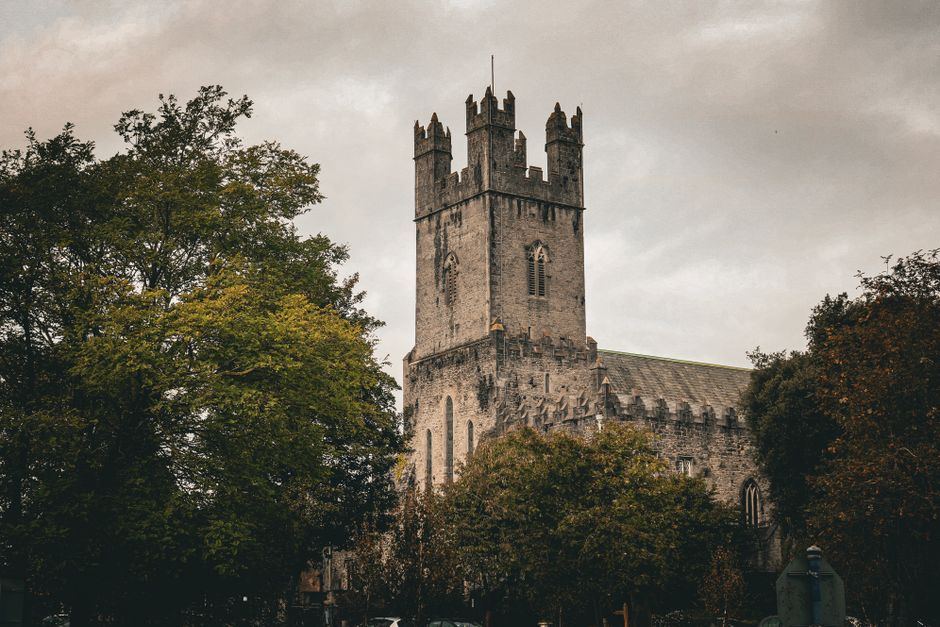
Ireland is small enough to cross in a morning, yet it holds a great deal: Dublin’s Georgian squares, museums and pubs; the cliffs, beaches and mountains of the Wild Atlantic Way; the lakes and peaks of Kerry around Killarney; the stone walls and bog roads of Connemara; medieval Kilkenny and the monastic ruins of the Midlands; and lively, musical small cities such as Galway and Cork. The weather is mild and changeable all year, the welcome is famously warm. May, June and September are the sweet spots. Give it a week for a first trip, two weeks to see the west coast properly.
Right now in Ireland
- Wed 6–13°C 43–55°F Partly cloudy
- Thu 6–12°C 43–54°F 4 mm Rain
- Fri 11–15°C 53–58°F 3 mm Partly cloudy
Weather: MET Norway (CC BY 4.0) · Rates: ECB
Key facts
| Currency | Euro (EUR, €); Northern Ireland uses sterling; cards and contactless widely acceptedSource: ireland.com · Last reviewed 4 Oct 2026 |
|---|---|
| Languages | Irish and English are both official; English is spoken everywhere, Irish is the community language of the Gaeltacht (Connemara, Dingle)Source: irishstatutebook.ie · Last reviewed 4 Oct 2026 |
| Plugs and voltage | Type G · 230 V, 50 HzSource: ireland.com · Last reviewed 4 Oct 2026 |
| Emergency number | 112 or 999 (Gardaí, ambulance, fire, Coast Guard, mountain rescue)Source: ireland.com · Last reviewed 4 Oct 2026 |
| Driving side | On the left; limits in km/h (120 motorways, 80 national roads, 60 secondary roads, lower in towns); M50 toll paid online by 8 pm next daySource: ireland.com · Last reviewed 4 Oct 2026 |
| Tap water | Safe to drink (99.8% of microbiological tests met the standards in 2025); follow any local boil water noticeSource: epa.ie · Last reviewed 4 Oct 2026 |
| Tipping | Not required; 10-15% in restaurants unless service is included; none at the pub barSource: ireland.com · Last reviewed 4 Oct 2026 |
| Calling code | +353 (dial 00 for international calls)Source: ireland.com · Last reviewed 4 Oct 2026 |
| Time zones | GMT (UTC+0) in winter, Irish Standard Time (UTC+1) from the last Sunday in March to the last Sunday in October, the same as LondonSource: data.iana.org · Last reviewed 4 Oct 2026 |
| Entry summary | EU, not Schengen: Ireland has its own border control and visas. Visa-free visitors can stay under 90 days; EES and ETIAS do not apply. A UK ETA is needed to cross into Northern Ireland.Source: irishimmigration.ie · Last reviewed 4 Oct 2026 |
Multi-day tours of Ireland
Multi-day tours from local operators. You check dates and book on Viator, our partner; we may earn a commission at no extra cost to you. How we earn money
Ireland at a glance: one island, two jurisdictions
The island of Ireland is shared by two places. This guide covers the Republic of Ireland (in Irish, Éire), an independent country and member of the European Union that covers about five-sixths of the island, with 26 counties, Dublin as its capital and the euro as its currency. The six counties of the north-east form Northern Ireland, which is part of the United Kingdom, uses the pound sterling and has its own entry rules for visitors (see below). The border between them is open and mostly invisible, and many trips combine both: see our Belfast guide for the Titanic Quarter and the Giant’s Causeway, and our United Kingdom guide for the rest of the UK.
According to the Central Statistics Office (CSO), the Republic’s population reached about 5.53 million in April 2026, with nearly 1.6 million people living in the Dublin region. Outside Dublin, Ireland is a country of small cities and towns: Cork, Limerick, Galway and Waterford are the largest, and much of the west is thinly populated, with farms, bogs, mountains and long empty beaches. No place in the Republic is more than a few hours’ drive from Dublin.
Ireland has two official languages, Irish (Gaeilge) and English. Everyone speaks English, but road signs are bilingual and you will hear Irish spoken as an everyday language in the Gaeltacht areas, mostly along the west coast in Donegal, Connemara, the Aran Islands, the Dingle Peninsula and parts of Cork and Waterford. In the Gaeltacht, signs may be in Irish only: Dingle, for example, is officially An Daingean.
Time zone: Ireland uses Greenwich Mean Time (UTC+0) in winter and Irish Standard Time (UTC+1) from the last Sunday in March to the last Sunday in October, the same as the UK and Portugal and one hour behind France, Germany and Spain.
Ireland’s regions
- Dublin and the East: the capital and its seaside suburbs (Howth, Dún Laoghaire, Dalkey), the Wicklow Mountains and the monastic valley of Glendalough, the prehistoric passage tombs of Brú na Bóinne (Newgrange and Knowth) in the Boyne Valley, and the castles and abbeys of Meath and Louth. Fáilte Ireland markets this part of the country as “Ireland’s Ancient East”, stretching south to Kilkenny, Waterford and Wexford.
- The Wild Atlantic Way: a signposted coastal touring route of about 2,500 km from the Inishowen Peninsula in Donegal to Kinsale in County Cork. It links nearly all of the west coast’s highlights: Slieve League, the Cliffs of Moher, the Burren, Connemara, Achill Island, the Dingle Peninsula and the Ring of Kerry.
- Kerry, Cork and the south-west: Ireland’s most visited holiday region, with Killarney National Park, the Ring of Kerry and the Skellig Ring, the Dingle Peninsula, the Beara Peninsula, the harbour town of Kinsale, colourful West Cork villages and the food city of Cork.
- The West: Galway, Clare, Connemara and Mayo: Galway city’s music and festivals, the limestone pavements of the Burren and the Cliffs of Moher in Clare, the Aran Islands, the mountains, lakes and bogs of Connemara, Kylemore Abbey, Westport, Croagh Patrick and Achill Island.
- The Midlands: sometimes called “Ireland’s Hidden Heartlands”: the River Shannon and its lakes (Lough Ree and Lough Derg), the monastic site of Clonmacnoise, Birr Castle, cruising and canal towpaths, bog walks and quiet market towns such as Athlone and Carrick-on-Shannon.
- The north-west: Donegal, Sligo and Leitrim: wild and lightly visited, with Glenveagh National Park, the sea cliffs of Slieve League, Malin Head (the island’s northernmost point), long surf beaches at Bundoran and Strandhill, and the Yeats country around Sligo and Benbulben.
Regions
- Connemara
- County Carlow
- County Cavan
- County Clare
- County Cork
- County Donegal
- County Dublin
- County Galway
- County Kerry
- County Kildare
- County Kilkenny
- County Laois
- County Leitrim
- County Limerick
- County Longford
- County Louth
- County Mayo
- County Meath
- County Monaghan
- County Offaly
- County Roscommon
- County Sligo
- County Tipperary
- County Waterford
- County Westmeath
- County Wexford
- County Wicklow
- Dingle Peninsula
Where to go: cities, coast and countryside
Most first trips start in Dublin and head west: across the country to Galway, then south through the Burren and the Cliffs of Moher to Kerry and Cork, before returning to Dublin by train or motorway. This loop takes a week; with more time, add Connemara and Mayo, Donegal, Kilkenny or Belfast.
Dublin
Ireland’s capital is a compact, walkable city on the River Liffey, close to the sea and the Wicklow Mountains. See the ninth-century Book of Kells at Trinity College, the Georgian squares and doors around Merrion Square and St Stephen’s Green, Dublin Castle and the Chester Beatty library, the two medieval cathedrals, the free National Museum and National Gallery, the Guinness Storehouse and the sobering history of Kilmainham Gaol and the EPIC emigration museum. Temple Bar is the busiest pub district, but the city’s best pubs are spread all over the centre. The DART coastal train runs to Howth and Dalkey for cliff walks and seafood.
Galway and Connemara
Galway is the west’s lively, creative small city: street musicians on Shop Street, traditional music in pubs every night, the Spanish Arch and the seafront promenade at Salthill. It is the base for day trips to the Cliffs of Moher and the Burren, and the ferries to the Aran Islands leave from Rossaveal, west of the city, with seasonal sailings from Doolin. North-west of Galway, Connemara is wild and beautiful: the Twelve Bens and Maumturk mountains, Connemara National Park and the Diamond Hill walk, Kylemore Abbey on its lake, the fishing harbour of Roundstone and the little town of Clifden, all linked by the Sky Road and the bog roads of the coast.
The Cliffs of Moher and the Burren
In County Clare, the Cliffs of Moher rise up to about 214 m above the Atlantic and run for some 8 km, with O’Brien’s Tower and puffins on the ledges in early summer. Visits run through the official visitor centre; gate prices are €15 for adults as of October 2026, with cheaper timed tickets online, and the site opens from 08:00 most of the year. Arrive early or late to avoid the coach crowds of 11:00 to 16:00, or walk in along the coastal path from Doolin. Inland, the Burren is a strange, beautiful limestone plateau with wildflowers in May and June, ancient tombs such as Poulnabrone dolmen, caves and the village of Doolin, known for traditional music.
Killarney and the Ring of Kerry
Killarney is Ireland’s classic holiday town, at the edge of Killarney National Park: lakes, oak woods, Muckross House and Abbey, Ross Castle, Torc Waterfall and the jaunting cars (horse-drawn carts) that take you through the Gap of Dunloe. Ireland’s highest mountain, Carrauntoohil (1,039 m), rises in the MacGillycuddy’s Reeks nearby. The Ring of Kerry is a scenic loop of about 180 km around the Iveragh Peninsula, through Killorglin, Cahersiveen, Waterville, Sneem and Kenmare; tour buses drive it anticlockwise, so many independent drivers go clockwise to avoid being stuck behind them. From Portmagee, boats go out to the Skellig Islands; landings on Skellig Michael, with its sixth-century monastery high on the rock, are limited each day and run only from about mid-May to the end of September, weather permitting.
Dingle
North of the Ring, the Dingle Peninsula is quieter, wilder and many people’s favourite: the Slea Head Drive past beehive huts, Dunmore Head and views of the Blasket Islands; the Gallarus Oratory; the Conor Pass, one of Ireland’s highest roads; and the long beach at Inch. Dingle town itself is a colourful fishing port with music pubs, seafood restaurants, a craft distillery and an Irish-speaking hinterland.
Cork and West Cork
Cork, Ireland’s second city, is proud, friendly and food-loving: the covered English Market, the bells of Shandon, cafés and pubs along the River Lee, and a jazz festival every October. Nearby are Blarney Castle and its famous stone, the harbour town of Cobh (the Titanic’s last port of call and the departure point for millions of emigrants), and Kinsale, a pretty harbour town with a star-shaped fort and many restaurants. West Cork has colourful villages such as Clonakilty, Baltimore and Skibbereen, islands, sheltered coves and the Mizen Head and Beara peninsulas.
Kilkenny and the south-east
Kilkenny is a small medieval city with a grand castle, St Canice’s Cathedral and round tower, narrow lanes (“slips”), craft shops and good pubs; it makes an easy stop between Dublin and Cork or Waterford. Nearby are the hilltop Rock of Cashel in Tipperary and Waterford, Ireland’s oldest city, founded by the Vikings. The Waterford Greenway, a 46 km cycle path on an old railway line, and the sandy beaches of Wexford are good for slower days.
Wicklow, Glendalough and the Boyne Valley
Two of Ireland’s best day trips start in Dublin. South of the city, the Wicklow Mountains have moorland passes, waterfalls, Powerscourt House and Gardens and the early Christian monastic settlement of Glendalough, set between two lakes with walking trails above them. North of the city, the Boyne Valley holds Brú na Bóinne, a UNESCO World Heritage Site whose passage tombs at Newgrange and Knowth are older than the pyramids of Giza; visits are by guided tour from the visitor centre only and are best booked ahead in summer.
Mayo, Sligo and Donegal
The north-west rewards those who make the journey. In Mayo, Westport is a handsome Georgian town at the foot of Croagh Patrick, the holy mountain climbed by pilgrims, and the Great Western Greenway cycle path runs from Westport to Achill Island and its beaches. Sligo has Benbulben’s table-top mountain, the grave of W. B. Yeats at Drumcliff and surf at Strandhill. Donegal has some of Europe’s highest sea cliffs at Slieve League, Glenveagh National Park and its castle, the Inishowen Peninsula and Malin Head, and a strong Irish-speaking tradition. Donegal borders Northern Ireland, so it combines well with Derry and the Causeway Coast.
Across the border: Belfast and the Causeway Coast
Belfast is about two hours from Dublin by train or bus, with Titanic Belfast and its murals, and the Giant’s Causeway on the Antrim coast beyond. Northern Ireland is in the UK: prices are in pounds, speed limits in miles, and many visitors need a UK ETA (see the entry section). Read our Belfast guide for the details.
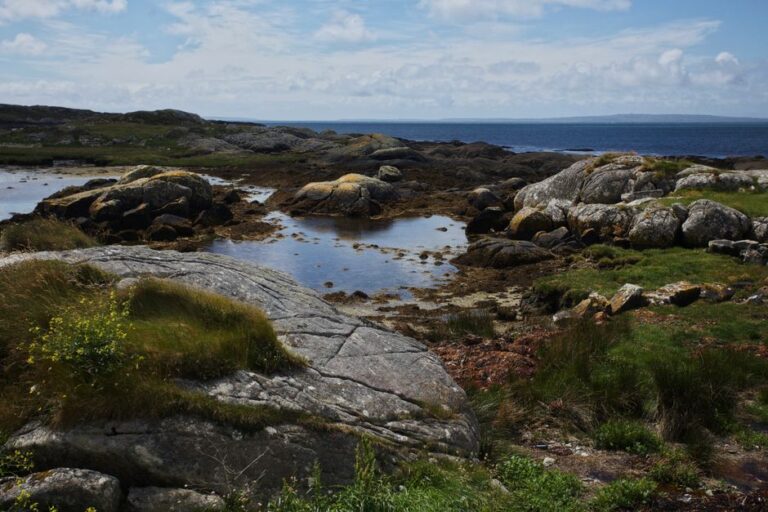
Connemara Travel Guide
Plan a trip to Connemara: Kylemore Abbey and its Victorian Walled Garden, Connemara National Park and the Diamond Hill trails (free, visitor centre hours),…
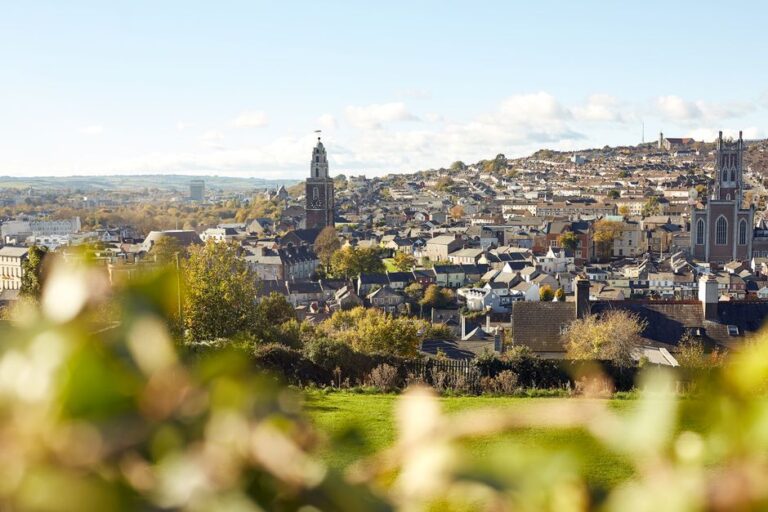
Cork Travel Guide
Plan a trip to Cork: the English Market, ringing the Shandon Bells, St Fin Barre's Cathedral, Cork City Gaol and Elizabeth Fort, Blarney Castle…
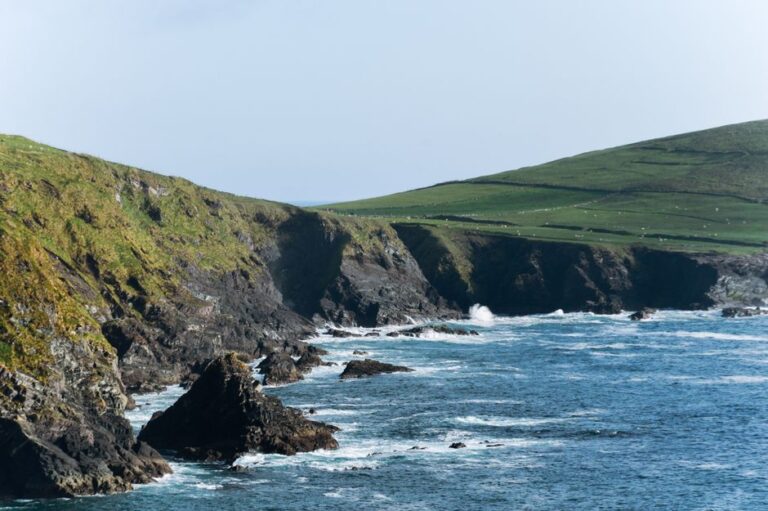
Dingle Peninsula Travel Guide
Plan a trip to the Dingle Peninsula: Dingle town, the Slea Head Drive (clockwise), Dunquin and the Blasket Centre's 2026 season, Blasket Island ferries…
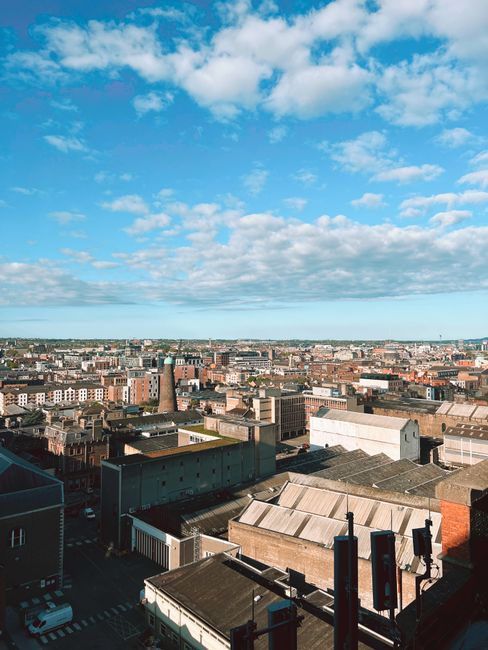
Dublin Travel Guide
Plan a trip to Dublin: Book of Kells Experience tickets and the Old Library works (Long Room open until the end of 2027), Kilmainham…
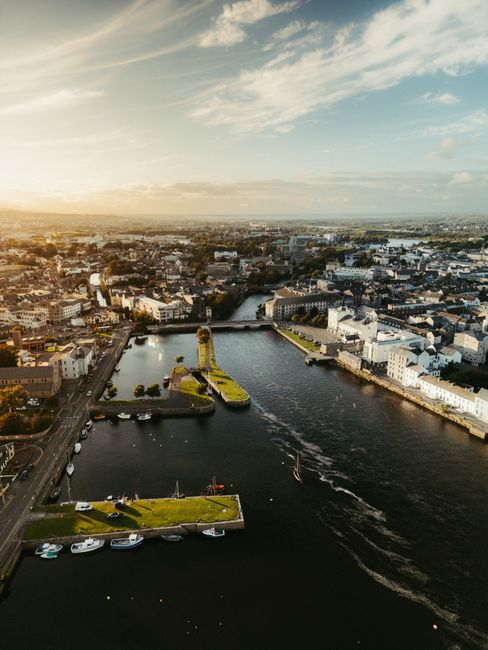
Galway Travel Guide
Plan a trip to Galway: the Latin Quarter, Spanish Arch, Eyre Square, Galway Cathedral and the Salthill prom, traditional music sessions, Galway International Arts…
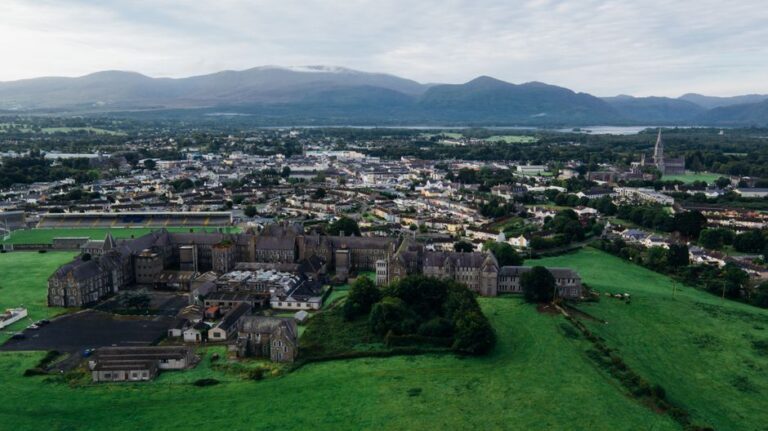
Killarney Travel Guide
Plan a trip to Killarney: Killarney National Park, Muckross House and Gardens (2026 prices and hours), Ross Castle's 2026 season, Torc Waterfall, the Gap…
Best time to visit Ireland, region by region
Ireland has a mild, damp, oceanic climate shaped by the Atlantic and the Gulf Stream: winters are rarely freezing, summers are rarely hot, and it can rain on any day of the year, often in short showers between sunny spells. The west and south-west are the wettest and windiest, and the mildest in winter; the east, around Dublin, is drier and gets about half the rain of the Kerry coast. The table shows rounded average daily highs and rainfall at Met Éireann’s main weather stations, from the official 1991–2020 averages.
| Region (Met Éireann station) | Spring highs (Mar–May) | Summer highs (Jun–Aug) | Autumn highs (Sep–Nov) | Winter highs (Dec–Feb) | Rain a year | Days with 1 mm+ of rain |
|---|---|---|---|---|---|---|
| Dublin and the East (Dublin Airport) | 10–15 °C | 18–20 °C | 17 °C falling to 10 °C | 8–9 °C | about 770 mm | about 137 |
| Inland east, towards the Midlands (Casement Aerodrome, west Dublin) | 10–15 °C | 18–20 °C | 17 °C falling to 10 °C | 8–9 °C | about 780 mm | about 136 |
| Cork and the south (Cork Airport) | 10–15 °C | 17–19 °C | 17 °C falling to 10 °C | 8–9 °C | about 1,240 mm | about 162 |
| Kerry coast (Valentia Observatory) | 11–15 °C | 17–18 °C | 17 °C falling to 12 °C | 10 °C | about 1,650 mm | about 203 |
| Clare, Limerick and the Shannon (Shannon Airport) | 11–16 °C | 18–20 °C | 18 °C falling to 11 °C | 9 °C | about 1,020 mm | about 169 |
| Mayo and the west coast (Belmullet) | 11–15 °C | 16–18 °C | 17 °C falling to 11 °C | 9 °C | about 1,240 mm | about 201 |
| Donegal and the north-west (Malin Head) | 9–13 °C | 15–17 °C | 16 °C falling to 11 °C | 8–9 °C | about 1,140 mm | about 190 |
The Midlands have no station in Met Éireann’s published set of station averages; expect summer days much like the inland east, with slightly colder nights and more frost in winter. The driest, sunniest months are usually April, May and June: May averages more than six hours of sunshine a day at Dublin Airport and Malin Head, against under two hours in December. Days are long in summer, with light until about 22:00 in late June, and short in winter, when it is dark soon after 16:00. Atlantic gales, mainly from October to March, can close coastal paths and cancel ferries.
Crowds and prices through the year
- April to early June: one of the best times to go: often the driest weeks of the year, long days, wildflowers in the Burren, lambs in the fields and moderate prices.
- July and August: peak season, with the warmest weather, festivals and the busiest roads. The Ring of Kerry, the Cliffs of Moher, Dingle, Killarney and Galway are crowded and hotels in Dublin, Galway and Kerry are expensive; book well ahead and start sightseeing early.
- September and early October: excellent: the sea is at its warmest, the crowds thin out after the schools go back at the end of August, and festivals continue. Some seasonal boat trips, island ferries and small attractions close from the end of September or October.
- Late October to March: quiet, cheap and atmospheric, with cosy pubs and turf fires, but short, often wet and windy days. Some west-coast restaurants and guesthouses close for the winter, and island and Skellig boats stop running.
- Around St Patrick’s Day (17 March): Dublin hotels fill up and prices rise for the festival week; book months ahead.
Festivals and events: late 2026 and 2027
Confirmed dates for the next big ones, as published by the organisers:
| Event | Dates | Good to know |
|---|---|---|
| Wexford Festival Opera | 15–31 October 2026 | The 75th edition of a famous festival of rarely performed operas |
| Guinness Cork Jazz Festival | 22–26 October 2026 | Hundreds of gigs in venues and pubs across Cork over the October bank holiday weekend |
| Irish Life Dublin Marathon | Sunday 25 October 2026 | Roads in south Dublin close for the morning |
| Halloween | 31 October 2026 | Halloween grew out of the ancient Irish festival of Samhain; look for parades, bonfires and events in Dublin, Meath and elsewhere |
| St Patrick’s Festival, Dublin | 13–17 March 2027 | The national parade is on Wednesday 17 March 2027; parades and céilís take place in every town |
- November and December: Christmas markets and lights in Dublin, Galway, Cork, Belfast and other towns from mid- or late November to just before Christmas; the Christmas Day swim at the Forty Foot in Sandycove and in seaside towns around the coast.
- January to March: traditional music festivals and the build-up to St Patrick’s Day; St Brigid’s Day celebrations on and around 1 February.
- April to June: literary festivals, including Listowel Writers’ Week; Bloomsday on 16 June, when Dubliners dress in Edwardian clothes to follow the route of James Joyce’s Ulysses.
- July and August: the Galway International Arts Festival and the Galway Races, the Rose of Tralee, the ancient Puck Fair in Killorglin (10–12 August), traditional music at the Fleadh Cheoil, and the All-Ireland hurling and Gaelic football finals at Croke Park in Dublin.
- September and October: the Lisdoonvarna matchmaking festival in Clare, the Galway International Oyster and Seafood Festival, and the Dublin Theatre Festival.
Public holidays
Ireland has ten public holidays a year. Most are Mondays (“bank holidays”), which make long weekends when hotels, ferries and popular coastal towns fill up with Irish visitors. Shops, pubs and most attractions stay open on bank holidays, but banks and offices close and public transport runs a Sunday or reduced timetable. Almost everything closes on Christmas Day. Good Friday is not a public holiday, though some businesses close. The next ones, from October 2026:
| Holiday | Date |
|---|---|
| October bank holiday | Monday 26 October 2026 |
| Christmas Day and St Stephen’s Day | Friday 25 and Saturday 26 December 2026 |
| New Year’s Day | Friday 1 January 2027 |
| St Brigid’s Day | Monday 1 February 2027 |
| St Patrick’s Day | Wednesday 17 March 2027 |
| Easter Monday | 29 March 2027 |
| May, June and August bank holidays | 3 May, 7 June and 2 August 2027 |
| October bank holiday | Monday 25 October 2027 |
Weather month by month
Averages from Met Éireann normals 1991–2020, Dublin Airport · Last reviewed 4 Oct 2026
How long to stay: sample itineraries
Distances in Ireland look short on the map, but country roads are narrow and winding, so plan on an average of 50–60 km an hour away from the motorways. Trains and coaches link Dublin with Galway, Cork, Killarney, Limerick, Westport and Sligo, but the coast, Connemara and the peninsulas are much easier by car or on a small-group tour. A good pattern is to explore Dublin without a car, then pick up a hire car when you leave the city.
5 days: Dublin plus the west in a hurry
Spend two days in Dublin (Trinity College and the Book of Kells, the museums, Kilmainham Gaol, an evening of pub music), with a half-day on the DART to Howth or a tour to Glendalough or Newgrange. On day three, take the train to Galway (about two and a half hours). Day four: the Cliffs of Moher and the Burren by tour or hire car. Day five: Connemara or the Aran Islands, then the train back to Dublin, or fly out from Shannon.
7 days: the classic loop
Two nights in Dublin, then drive or take the train west to Galway for two nights (Connemara day trip). Drive south through the Burren and the Cliffs of Moher, crossing the Shannon estuary on the Tarbert–Killimer car ferry, to Killarney for two nights to see the national park and the Ring of Kerry or Dingle. Return via the Rock of Cashel and Kilkenny.
10 days: Dublin, the west and the south-west
Follow the seven-day loop at a gentler pace, adding a night in Dingle, a night in Kinsale or Cork with a visit to Cobh, and a stop in Kilkenny on the way back to Dublin. If you prefer the north, swap Cork for Westport and Achill Island, then return via Sligo.
14 days: the island tour
Dublin, Kilkenny and Waterford, Cork and West Cork, Killarney and the Ring of Kerry, Dingle, Clare and the Cliffs of Moher, Galway and Connemara, Westport and Donegal, then cross the border to Derry, the Causeway Coast and Belfast before the train back to Dublin. Ireland also combines easily with Britain: flights and ferries link Dublin with Liverpool, Holyhead, London and Edinburgh, and from Belfast the ferry crosses to Scotland for the Highlands and the Isle of Skye.
Entry, money and costs
Entry: not Schengen, and the Common Travel Area (last reviewed October 2026)
Ireland is in the European Union but not in the Schengen area. It runs its own passport controls and shares a Common Travel Area (CTA) with the United Kingdom, the Isle of Man and the Channel Islands, in which Irish and British citizens travel freely.
- Who needs a visa: citizens of the EU, the European Economic Area, Switzerland and the UK need only a passport or national ID card (British citizens arriving from the UK are usually asked only for photo ID by airlines). Many other nationalities, including the United States, Canada, Australia and New Zealand, can visit without a visa for up to 90 days; the immigration officer decides how long you may stay and stamps your passport. Citizens of visa-required countries need an Irish short-stay “C” visa; under the British Irish Visa Scheme, some (including citizens of China and India) can use a UK visitor visa marked “BIVS” for both countries.
- The EU Entry/Exit System (EES) does not apply to Ireland. The EU’s new biometric border system, fully running at Schengen borders since April 2026, is not used in Ireland, which keeps manual passport checks. Your days in Ireland do not count towards the Schengen 90-in-180-day limit, but you will register with EES when you fly on to France, Spain or another Schengen country. The planned ETIAS travel authorisation will not apply to Ireland either.
- At the airport: because flights from the UK are not separated from other arrivals, you may be asked where you have flown from. EU, EEA and Swiss adults can use the eGates at Dublin Airport. On the way home, travellers to the United States clear US immigration and customs at Dublin or Shannon airport before boarding (US preclearance), so allow extra time.
- Crossing into Northern Ireland: there are no passport checks on the land border, but Northern Ireland is part of the UK, and the UK rules apply there. As of October 2026, visitors who need a UK Electronic Travel Authorisation (ETA) to visit the UK also need one to enter Northern Ireland from the Republic, even for a day trip by car, bus or train. An ETA costs £20, is applied for online or in the UK ETA app, and allows multiple visits over two years. British and Irish citizens are exempt, and so are non-visa nationals who legally live in Ireland, if they carry proof of residence. Visa nationals need a UK visa. Ireland itself has no ETA requirement.
Rules change, so check the official pages before you travel: Ireland’s Immigration Service Delivery (irishimmigration.ie), the UK government’s ETA pages on gov.uk and your own government’s travel information.
Language
English is spoken everywhere. A few Irish words you will see: fáilte (welcome), sláinte (cheers), craic (fun, a good time), Gardaí (police), An Lár (city centre) on buses, and Fir (men) and Mná (women) on toilet doors.
Money: euro, cards and cash
The Republic uses the euro (€); Northern Ireland uses the pound sterling (£), and euros are only sometimes accepted there, at a poor rate. Contactless cards and phone payments work almost everywhere, including pubs, taxis and most car parks. Carry a little cash for small rural shops, some B&Bs, honesty boxes at car parks and walks, and tips. ATMs are widely available; avoid “dynamic currency conversion” and choose to be charged in euros.
Tipping
Tipping is appreciated but less fixed than in North America. In restaurants with table service, leave about 10% (12.5% for great service) if no service charge has been added; check the bill, as many restaurants add a service charge of about 10–12.5% for larger groups, and then nothing more is expected. You don’t tip for drinks ordered at the bar in a pub. Round up taxi fares, and tip tour guides and drivers on day tours a few euros each if you enjoyed it.
VAT, tax-free shopping and the 9% rate
Prices in shops and restaurants include VAT. The standard rate is 23%. Since 1 July 2026, food and catering in restaurants, cafés and pubs (but not alcohol or soft drinks) is taxed at a lower 9% rate, while hotels and other accommodation remain at 13.5%. Visitors who live outside the EU (including Great Britain, but not Northern Ireland) can claim back VAT on goods they take home through the Retail Export Scheme: ask for a tax-free form in participating shops, spend more than €75 in total on the forms, have them stamped by customs as you leave the EU within three months, and claim the refund through the shop or its refund agent (they keep a fee). Revenue does not pay refunds itself.
Typical travel costs
Ireland is one of the more expensive countries in the EU, especially for accommodation in Dublin and in summer on the west coast; eating out and a pint of beer (often €6–8 in Dublin) also cost more than in most of Europe. Rural B&Bs, self-catering cottages and the off-season are much better value. These estimates, per person per day, are a planning guide as of October 2026:
| Style | Estimated cost per day | What that looks like |
|---|---|---|
| Budget | about €80–120 | Hostel dorm or a shared room outside the centre, supermarket breakfasts and picnics, pub lunches, buses and the Leap Card, free museums |
| Mid-range | about €160–260 | Double room in a 3- or 4-star hotel or a good B&B shared by two, restaurant dinners, a couple of paid sights a day, a share of a small hire car |
| High-end | about €400+ | Castle or country-house hotel, fine dining, private guides and drivers, golf |
Add more for hotels in Dublin on big concert, rugby and festival weekends and around St Patrick’s Day. Car hire, including the extra insurance most companies require, is a big item: budget for it separately. The figures are our estimates, not official statistics.
Getting there and getting around
Airports
- Dublin (DUB): by far the busiest airport, with flights from across Europe and North America and two terminals. There is no train; express coaches run to the city centre in about 30–45 minutes: Dublin Express, Aircoach and Airlink Express (routes 747 and 757, now run by the private operator DoDublin, whose site also sells the other coaches’ tickets), with single adult fares of around €10 as of October 2026, plus cheaper Dublin Bus routes such as the 16 and 41. Coaches also run directly from the airport to Belfast, Galway, Cork, Limerick and other towns. Leap Visitor Cards are sold in the arrivals halls.
- Shannon (SNN): near Limerick and handy for Clare, Galway and Kerry, with transatlantic flights and US preclearance.
- Cork (ORK): for Cork, West Cork and Kerry, with flights mainly from the UK and Europe.
- Kerry (KIR): a small airport at Farranfore, between Killarney and Tralee, with flights from Dublin, the UK and some European cities.
- Ireland West Airport Knock (NOC): in County Mayo, for the north-west, with flights mostly from the UK.
Belfast’s two airports are another option for the north, and Dublin Airport’s coaches to Belfast make open-jaw trips easy.
Ferries from Britain and France
From Wales, Irish Ferries and Stena Line sail from Holyhead to Dublin (about 3.5 hours), and there are crossings from Fishguard and Pembroke to Rosslare in County Wexford. From England, ferries run from Liverpool to Dublin, and from Scotland to Belfast and Larne in Northern Ireland. From France, Brittany Ferries sails from Cherbourg to Rosslare and, seasonally from spring to autumn, from Roscoff to Cork, while Irish Ferries sails from Cherbourg to Dublin; these are overnight crossings of roughly 16–19 hours. Schedules change by season, so check the ferry companies’ timetables before you book.
Trains: Irish Rail
Irish Rail (Iarnród Éireann) runs Intercity trains from Dublin’s two main stations: from Heuston to Cork (about 2.5 hours, roughly hourly), Limerick, Killarney and Tralee (changing at Mallow), Galway (about 2.5 hours), Westport and Waterford; from Connolly to Sligo, Wexford and Rosslare, and to Belfast on the cross-border Enterprise (about 2 hours 15 minutes). Booking online in advance is usually cheaper than buying at the station, and seats can be reserved. There is no Intercity train along the west coast itself, apart from the line between Limerick and Galway. In Dublin, the DART electric trains run along the coast from Malahide and Howth to Bray and Greystones.
Buses: Bus Éireann and private coaches
Buses reach many more places than trains. Bus Éireann runs Expressway coaches between cities and local and town services, and private companies such as Citylink, Dublin Coach and others run fast coaches between Dublin (often including the airport), Galway, Limerick, Cork and other cities. In the countryside, TFI Local Link buses connect villages, though often only a few times a day. Coaches are often cheaper than trains. For remote places, including much of Connemara, Kerry and Donegal, a car or a small-group tour gives far more freedom.
TFI Leap Card and the 90-minute fare
The TFI Leap Card is a rechargeable smart card that gives cheaper fares than cash on buses, trams and trains in Dublin, Cork, Galway, Limerick, Waterford and on many other services. In Dublin, the TFI 90 Minute Fare lets you change between Dublin Bus, Go-Ahead Ireland, the Luas tram, the DART and commuter rail within 90 minutes for one fare: €2 for adults with a Leap Card as of October 2026. Visitors can also buy a Leap Visitor Card with unlimited travel for 1, 3 or 7 days on Dublin’s public transport (check which airport coaches it covers); it is sold at Dublin Airport and at shops in the city. On Dublin Bus, pay with a Leap Card or exact coins, as drivers can’t give change.
Driving: on the left, and the M50 toll
A car is the best way to explore the west coast, but driving in Ireland takes some getting used to.
- Drive on the left, overtake on the right and give way to traffic already on a roundabout, which comes from the right. Most hire cars are manual; book an automatic early.
- Speed limits are in km/h: 120 on motorways, 100 on national roads, 80 on regional roads, 50 in towns (30 in many urban streets), and, since February 2025, 60 km/h by default on rural local roads. Northern Ireland uses miles per hour, so watch the signs when you cross the border. Speed cameras are common. The drink-driving limit is 0.5 g per litre of blood (0.2 for learners and professional drivers); the safe choice is not to drink at all.
- Narrow roads: many rural roads, including parts of the Ring of Kerry, the Conor Pass and Slea Head, are single-track with stone walls or hedges on both sides. Pull in to let others pass, watch for sheep, cyclists and tour buses, and allow far longer than the map suggests.
- The M50 toll: Dublin’s ring road has a barrier-free toll between junctions 6 and 7, with no booth. Cameras read your number plate, and if you have no tag or account you must pay online (eflow.ie), by phone or at Payzone shops by 20:00 the following day. For a car without an account, the toll was €3.80 as of October 2026; late payment adds penalties that quickly reach more than €50. Many hire cars have a tag or the hire company pays and recharges you, so ask when you pick up the car.
- Other tolls: several motorways (including stretches of the M1, M3, M4, M6, M7, M8 and the Limerick Tunnel) and the Dublin Port Tunnel have toll plazas where you pay by card or cash as you pass, typically a couple of euros for a car.
- Licences and insurance: EU licences are valid, and visitors from the US, Canada and many other countries can drive on their national licence. Hire companies often require drivers to be at least 25 and charge extra for collision damage cover; some credit-card insurance is not accepted in Ireland, so read the terms before you travel. If you plan to drive into Northern Ireland, tell the hire company.
Taxis, bikes and island ferries
Taxis are metered nationwide, and apps such as FreeNow and Uber book licensed taxis. Ferries serve inhabited islands such as the Aran Islands, Inishbofin, Cape Clear and Arranmore; some sail all year, others only in summer, and all depend on the weather.
Culture, pubs, food and everyday etiquette
The pub is the centre of Irish social life, more a living room than a bar: families eat there at lunchtime, neighbours meet there in the evening, and the best ones host traditional music sessions (seisiún), where local musicians play fiddle, flute, tin whistle, bodhrán and concertina around a table. Sessions are informal: sit nearby, keep your voice down during slow airs and songs, don’t use flash, and only join in if you are invited. Galway, Doolin, Dingle, Ennis, Westport and Dublin’s older pubs are good places to find one; ask locally, as session nights change.
In a pub, order and pay at the bar; there is usually no table service for drinks. In a group, people take turns buying a round for everyone, and it is bad form to leave before buying yours. A pint of Guinness takes a couple of minutes to pour properly, so be patient. Pubs generally close around 23:30 to 00:30 depending on the day, and smoking is banned inside all pubs, restaurants and workplaces. You must be 18 to buy alcohol.
Irish food has been transformed in the past twenty years, built on excellent ingredients: grass-fed beef and lamb, seafood (oysters, mussels, crab, smoked salmon, chowder), farmhouse cheeses, soda bread and creamy butter. Try a full Irish breakfast, Irish stew, bacon and cabbage, boxty (potato pancakes) and fish and chips by the sea. Whiskey distilleries and craft breweries offer tours across the country.
The Irish are famously friendly and chatty, and being polite, modest and good-humoured goes a long way. Seeing a hurling or Gaelic football match, even a local one, is a great experience. Avoid talking casually about Northern Ireland’s politics or calling Ireland part of the “British Isles”, which many people dislike.
Safety, health, accessibility and connectivity
Safety
Ireland is a safe country to visit. In Dublin, watch for pickpockets in busy areas such as Temple Bar and O’Connell Street and on public transport, and don’t leave valuables visible in parked cars at viewpoints and trailheads. The biggest dangers are natural: cliff edges at the Cliffs of Moher, Slieve League and elsewhere are often unfenced and slippery, and Atlantic waves and rip currents are powerful. Swim only at lifeguarded beaches in summer, and on mountains check the forecast, carry waterproofs and turn back if cloud comes down.
Emergency numbers: 112 or 999 for police (Gardaí), ambulance, fire service, and coast and mountain rescue.
Health
EU and EEA visitors should bring their European Health Insurance Card (EHIC), and UK residents their UK Global Health Insurance Card (GHIC) or EHIC, for necessary public healthcare. Everyone else needs travel insurance, as visits to a family doctor (GP) and hospital care are charged, and going to a hospital emergency department without a GP referral costs a fixed fee. Pharmacies in every town can advise on minor problems. Tap water is safe to drink. In summer, midges can be a nuisance in the west on still evenings, and ticks live in long grass and bracken.
Accessibility
Newer museums, hotels and visitor centres, the Luas trams and most city buses are accessible, and Irish Rail offers assistance if you book ahead. Older pubs, castles, B&Bs and island ferries can be harder, and many coastal paths are rough.
Connectivity and power
EU mobile plans work in Ireland at home prices. UK plans may charge for roaming in the Republic, so check before you go, and remember that near the border your phone can switch networks between Ireland and Northern Ireland. Others can buy an eSIM or a prepaid SIM from Three, Vodafone or Eir. Coverage is patchy in mountain valleys. Ireland uses 230 V and type G sockets, the same three rectangular pins as in the UK; you need an adapter for European, US and Australian plugs. See our guide to travel adapters.
Things to do: hiking, sightseeing, surfing, cycling and boat trips
- Hiking: Ireland’s mountains are modest in height but wild and often trackless: Carrauntoohil and the MacGillycuddy’s Reeks, Croagh Patrick, Diamond Hill in Connemara, Benbulben, the Wicklow Way long-distance trail and the Spinc above Glendalough. Coastal walks include the Cliffs of Moher path from Doolin, the Howth Head loop near Dublin and the Kerry Way and Dingle Way.
- City sightseeing: Dublin’s museums, Trinity College and Georgian streets, medieval Kilkenny, Viking Waterford, Galway’s Latin Quarter, Cork’s markets and Cobh’s emigration history.
- Surfing: the Atlantic coast has some of Europe’s most consistent waves: Bundoran in Donegal, Strandhill and Easkey in Sligo, Lahinch in Clare, Inch and Brandon Bay in Kerry. Surf schools run from spring to autumn; a thick wetsuit is needed all year, as the water rarely tops 16 °C.
- Cycling: traffic-free greenways on old railway lines, including the Waterford Greenway (46 km) and the Great Western Greenway from Westport to Achill, plus the quiet lanes of the Burren, the Aran Islands (bikes are rented by the pier on Inis Mór) and Killarney National Park.
- Boat trips: ferries to the Aran Islands and the Blaskets, boat trips to the Skellig Islands from Portmagee, cruises below the Cliffs of Moher from Doolin, whale and dolphin watching off West Cork, and cruising on the River Shannon and Lough Derg.
- Beaches: long, empty sandy beaches with clear water: Keem Bay on Achill, Inch and Derrynane in Kerry, Dog’s Bay near Roundstone, Portsalon and Tramore. Swimming is bracing, but sea swimming all year round is a beloved Irish habit.
What to pack
The Irish saying is that there is no bad weather, only the wrong clothes. Whatever the season, pack a good waterproof jacket with a hood (see our guide to rain jackets) and layers: a fleece or warm jumper is useful even in July on the west coast. Bring comfortable, waterproof walking shoes or hiking shoes for wet grass, muddy paths and cobbles, and proper boots if you plan to climb mountains. In summer, add sunglasses and sunscreen, as the sun can burn on breezy days, and insect repellent for midges. For surfing or long sea swims, bring or rent a thick wetsuit. Don’t forget a type G plug adapter, a refillable water bottle and a small bag for wet clothes.
Ireland travel FAQ
When is the best time to visit Ireland?
May, June and September are the best all-round months: long days, often the driest weather of the year and fewer crowds than in July and August. Summer is warmest and liveliest but busiest and most expensive. Winter is mild but wet and dark, good for city breaks and pubs rather than the coast.
How many days do you need in Ireland?
Five days covers Dublin and a quick visit to Galway and the Cliffs of Moher. A week lets you do the classic loop of Dublin, Galway, Clare and Kerry, and ten days to two weeks gives time for Dingle, Cork, Connemara, Donegal or a trip across the border to Belfast.
Is Ireland part of the Schengen area?
No. Ireland is in the EU but not in Schengen, so it runs its own passport checks, a Schengen visa is not valid for Ireland, and days spent in Ireland don’t count towards the Schengen 90-day limit. The EU’s Entry/Exit System (EES) and the future ETIAS do not apply to trips to Ireland.
Do I need a UK ETA to visit Northern Ireland from Dublin?
Yes, if you are a visitor who needs an ETA for the UK, as of October 2026. There are no checks at the land border, but the requirement still applies, even on a day trip to Belfast or the Giant’s Causeway. British and Irish citizens don’t need one, nor do non-visa nationals legally living in Ireland who carry proof of residence. The ETA costs £20 and covers multiple visits for two years; apply only through gov.uk or the official UK ETA app.
Do I need a visa for Ireland?
EU, EEA, Swiss and UK citizens don’t, and nor do visitors from many countries including the United States, Canada, Australia and New Zealand, who can usually stay up to 90 days. Others need an Irish short-stay “C” visa, or, for some nationalities, a UK visa issued under the British Irish Visa Scheme. Check irishimmigration.ie for your nationality.
Can I get around Ireland without a car?
Yes, for the main towns: trains and coaches link Dublin with Galway, Cork, Killarney, Limerick, Westport, Sligo and Belfast, and day tours from Dublin, Galway and Killarney reach the Cliffs of Moher, Connemara, the Ring of Kerry and Dingle. For remote coasts, islands and small villages, a car or a multi-day small-group tour is far easier.
How do I pay the M50 toll?
There is no booth: cameras read your plate between junctions 6 and 7. If the car has no tag or video account, pay online at eflow.ie, by phone or at a Payzone outlet by 20:00 the day after your trip (€3.80 for a car as of October 2026). Hire companies often handle it and charge your card, sometimes with an admin fee, so ask at the desk.
What is the Leap Card, and should visitors get one?
The TFI Leap Card is Ireland’s public transport smart card. It gives cheaper fares than cash and, in Dublin, the €2 adult TFI 90 Minute Fare across buses, Luas, DART and commuter trains. For a few days in Dublin, a 1-, 3- or 7-day Leap Visitor Card, sold at the airport, is often the simplest choice.
Do you tip in Ireland?
In restaurants, about 10–12.5% if service isn’t already included; nothing for drinks at the bar in a pub; round up taxi fares; and a few euros for a good tour guide or driver.
What plug type does Ireland use?
Type G, the British three-pin plug, at 230 V. Visitors from mainland Europe, North America and Australia need an adapter, and devices that don’t support 230 V need a converter.
When is St Patrick’s Day 2027, and is it worth being in Dublin?
St Patrick’s Day is Wednesday 17 March 2027, and Dublin’s St Patrick’s Festival runs from 13 to 17 March 2027, with the national parade at midday on the 17th. It is a great party but very busy and expensive; book accommodation months ahead, or enjoy a smaller-town parade instead.
Can I combine Ireland with Britain or France?
Easily. Short flights and ferries link Ireland with Britain: see our United Kingdom guide, including London and Edinburgh. Overnight ferries sail from Rosslare, Dublin and Cork to Cherbourg and Roscoff, a good start to a trip around France.
Sources
- Natural Earth · Public domain · fetched 4 Oct 2026
- © OpenStreetMap contributors · ODbL · fetched 4 Oct 2026
- Wikidata · CC0 · fetched 4 Oct 2026
Sources and last review
Researched and last reviewed on 4 October 2026. Population from the Central Statistics Office (CSO); climate from Met Éireann’s official 1991–2020 station averages; entry rules from Ireland’s Immigration Service Delivery, the UK government’s ETA pages and Tourism Northern Ireland; VAT rates and the Retail Export Scheme from Revenue; Cliffs of Moher prices and hours from the visitor centre; festival dates from the organisers and Cork’s official tourism site; public holidays from the statutory rules. The 9% hospitality VAT rate, the M50 toll amount, the TFI 90 Minute Fare, airport coach fares, ferry routes, Skellig landing dates and train journey times come partly from press reports, operators’ booking pages or general knowledge and are flagged for checking. Daily costs are estimates. Prices, timetables and entry rules change, so check the official links before you travel.
Plan your trip
Partner links: TravelerCenter may earn a commission if you book, at no extra cost to you.