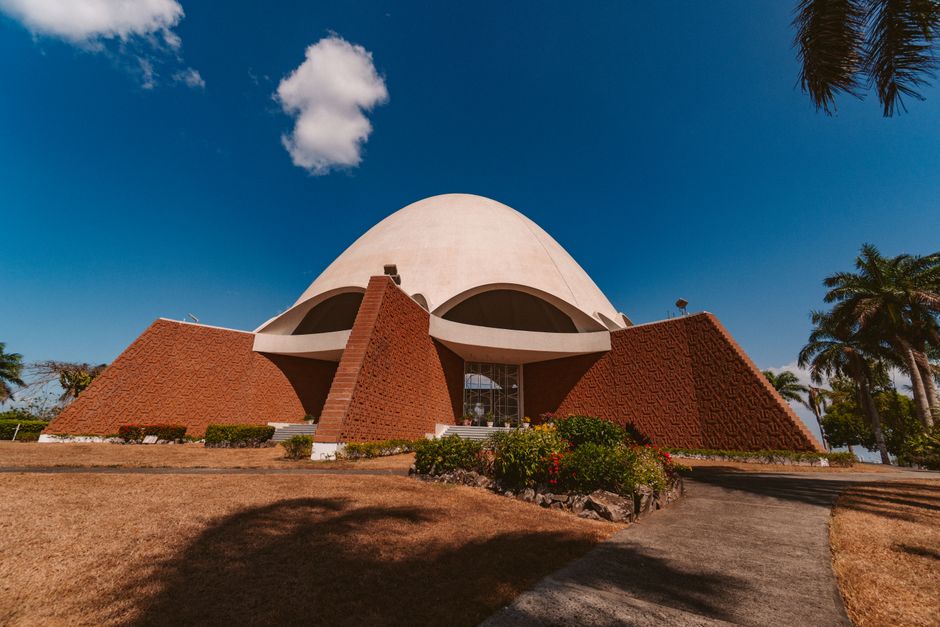
The Dominican Republic fills the eastern two-thirds of Hispaniola, the Caribbean’s second-largest island, and packs a surprising amount into a country about the size of Vermont and New Hampshire combined. There are the long white beaches and all-inclusive resorts of Punta Cana and Bávaro; Santo Domingo’s Zona Colonial, the oldest European-founded city still standing in the Americas; the Victorian old town, cable car and cruise piers of Puerto Plata; Casa de Campo and the stone village of Altos de Chavón near La Romana; and the wild green Samaná Peninsula, where humpback whales gather from January to March. Inland rise the Caribbean’s highest mountains. Before you go, fill in the free e-ticket form for both arrival and departure, budget for the 18% tax and 10% service charge added to most hotel and restaurant bills, and think about the season: December to April is dry, breezy and busiest; June to November is hotter, cheaper and hurricane season. A first trip of 7 to 10 days lets you combine a beach with a day or two in the capital.
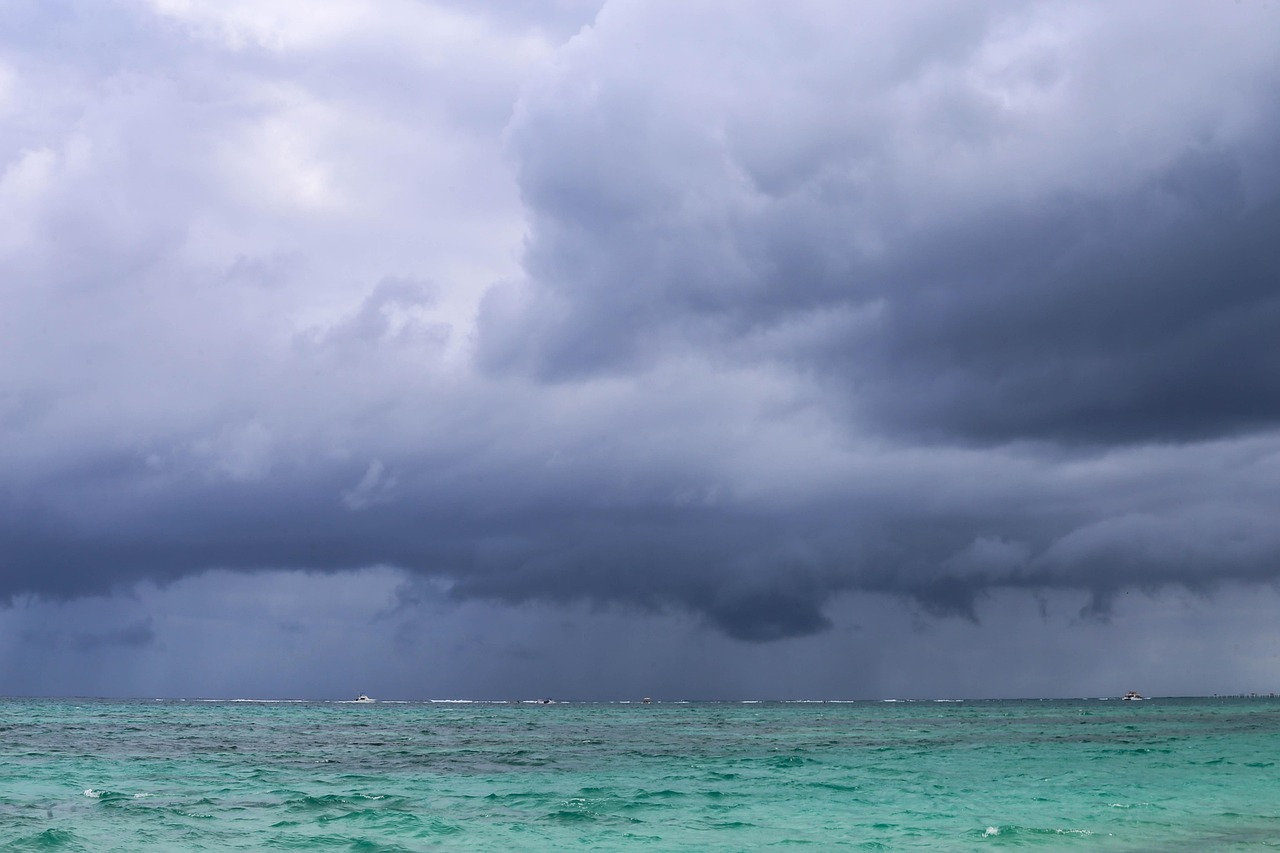
Right now in Dominican Republic
- Tue 24–31°C 74–88°F Mostly clear
- Wed 24–30°C 75–85°F 14 mm Rain
- Thu 23–29°C 74–84°F 3 mm Showers
Weather: MET Norway (CC BY 4.0)
Multi-day tours of Dominican Republic
Multi-day tours from local operators. You check dates and book on Viator, our partner; we may earn a commission at no extra cost to you. How we earn money
The Dominican Republic at a glance: one island, many coasts
The Dominican Republic (República Dominicana, often just “the DR”) shares Hispaniola with Haiti to the west. It covers about 18,800 square miles (48,700 km²) and has about 11 million people, most of them in and around Santo Domingo, the capital, and Santiago de los Caballeros in the Cibao valley. Spanish is the official language; English is spoken widely in resort areas and less so elsewhere, so a few words of Spanish go a long way. The coastline runs to roughly 1,000 miles (1,600 km), with the Atlantic Ocean on the north and east coasts and the Caribbean Sea on the south.
The country has 31 provinces plus the National District (Santo Domingo). Most visitors arrive on direct flights from North America and Europe to Punta Cana, and it is also a major cruise destination.
Time zone: the whole country is on Atlantic Standard Time (UTC−4) all year, with no daylight saving time. That means it shares New York’s clock from March to early November and is one hour ahead of New York in winter (from November 1, 2026).
The Dominican Republic’s regions
- The east coast (La Altagracia): Punta Cana, Bávaro, Cap Cana, Macao and Uvero Alto, a nearly continuous run of palm-lined Atlantic beaches with most of the country’s big resorts, plus the pilgrimage city of Higüey.
- The southeast (La Romana and Bayahibe): Casa de Campo, Altos de Chavón, the fishing-village-turned-dive-center of Bayahibe and the boat trips to Saona and Catalina islands in Cotubanamá National Park.
- Santo Domingo and the south coast: the capital and its UNESCO-listed Zona Colonial, the city beaches of Boca Chica and Juan Dolio to the east, and further west the quieter, drier Barahona and Pedernales coast.
- The north coast (Amber Coast): Puerto Plata, Sosúa and Cabarete, the country’s kitesurfing capital, with Playa Dorada’s resorts, Amber Cove and Taíno Bay cruise ports, and the waterfalls of Damajagua.
- The Samaná Peninsula: Las Terrenas, Las Galeras and Samaná town, wild beaches, El Limón waterfall, Los Haitises National Park and the whale-watching season in Samaná Bay.
- The mountains (Cordillera Central): Jarabacoa and Constanza, with rivers, coffee farms, cool nights and Pico Duarte, at about 10,100 feet (3,087 m) the highest peak in the Caribbean.
Where to go: beaches, colonial history and the wild north
Most first trips pair a beach base such as Punta Cana or La Romana with a day or two in Santo Domingo. The north coast and Samaná have smaller hotels and a more local feel.
Punta Cana and Bávaro
The country’s best-known beach destination stretches along the eastern tip of the island, from Cap Cana in the south through Punta Cana and Bávaro to Macao and Uvero Alto. Expect long, gently shelving white-sand beaches, coconut palms, turquoise water inside the reef, golf courses and some of the Caribbean’s biggest all-inclusive resorts. Add catamaran trips, snorkeling, the Hoyo Azul sinkhole at Cap Cana and surfing at Macao; see our Punta Cana travel guide.
Santo Domingo
Founded by the Spanish in the 1490s, the capital’s Zona Colonial (Ciudad Colonial) holds the first cathedral, the first hospital and the first university founded in the Americas, along with the fortress of Ozama and the Alcázar de Colón, the palace of Christopher Columbus’s son Diego. Around it spreads a busy Caribbean capital with a seafront Malecón, museums, a metro, winter baseball and lively nightlife. Give it at least two full days; see our Santo Domingo travel guide.
Puerto Plata and the Amber Coast
Puerto Plata on the north coast mixes a Victorian old town of colorful wooden “gingerbread” houses with a 16th-century fortress, a long Malecón, and a cable car to the top of Pico Isabel de Torres. Nearby are Playa Dorada’s resorts, Sosúa’s sheltered bay, Cabarete’s kitesurfing beaches and the 27 Waterfalls of Damajagua. See our Puerto Plata travel guide.
La Romana, Casa de Campo and Bayahibe
La Romana is a sugar town on the southeast coast best known for Casa de Campo, a 7,000-acre resort with three Pete Dye golf courses, including Teeth of the Dog, and Altos de Chavón, a stone village in Mediterranean style above the Chavón River with an amphitheater, galleries and an archaeology museum. Nearby Bayahibe is the departure point for boat trips to Saona Island and Catalina Island, two of the country’s most popular day trips. See our La Romana travel guide.
The Samaná Peninsula
Samaná is the country’s green, mountainous northeast corner. Las Terrenas has a relaxed, international beach-town feel with cafés and small hotels; Las Galeras, at the end of the road, has the remote beaches of Playa Rincón and Playa Frontón; and Samaná town looks out over the bay where humpback whales gather to breed and give birth from mid-January to March. Boat trips cross the bay to the mangroves, limestone islets and cave paintings of Los Haitises National Park. See our Samaná travel guide.
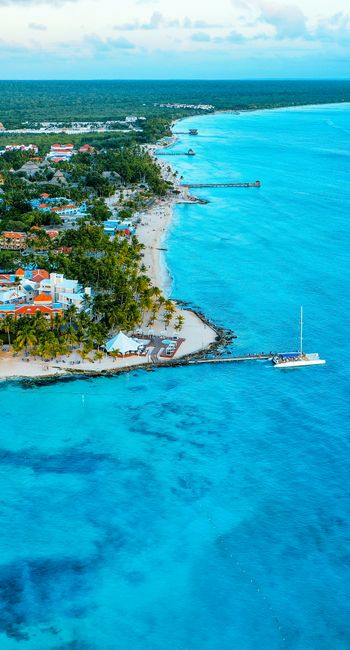
La Romana Travel Guide
Plan a trip to La Romana: Casa de Campo and Teeth of the Dog golf, Altos de Chavón and its amphitheater, Bayahibe and Dominicus,…
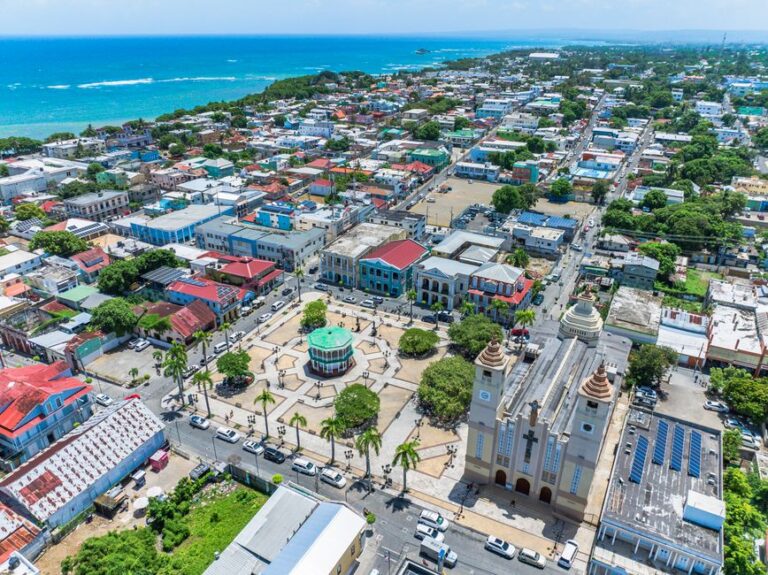
Puerto Plata Travel Guide
Plan a trip to Puerto Plata: the Victorian old town, Fortaleza San Felipe, the Malecón, the cable car to Pico Isabel de Torres, the…
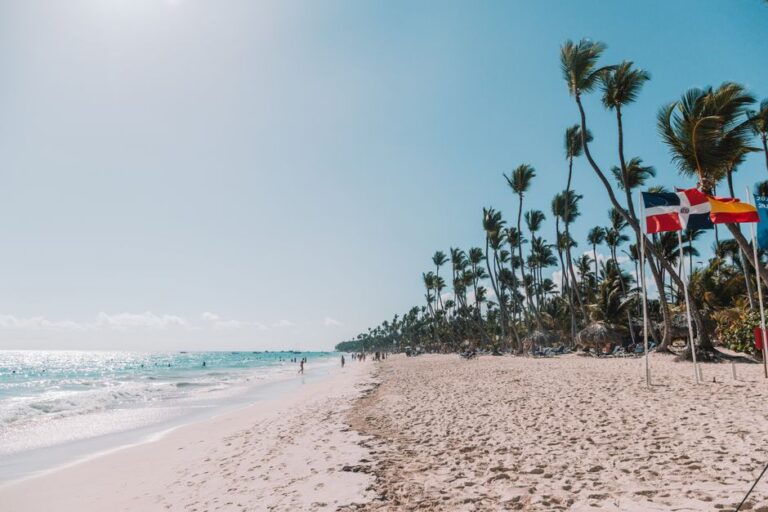
Punta Cana Travel Guide
Plan a trip to Punta Cana: Bávaro, Cap Cana, Cabeza de Toro, Uvero Alto and Macao beaches, Hoyo Azul, the Indigenous Eyes reserve, catamaran…
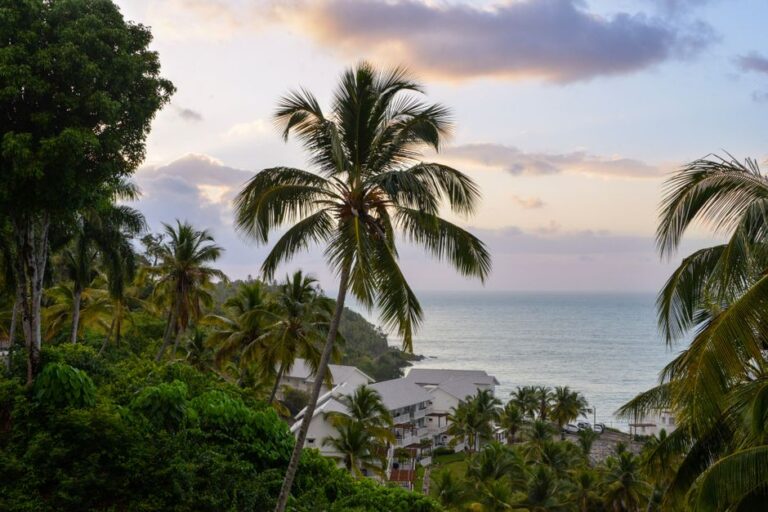
Samaná Travel Guide
Plan a trip to the Samaná Peninsula: Las Terrenas, Las Galeras and Samaná town, humpback whale-watching from mid-January to March, Los Haitises National Park,…
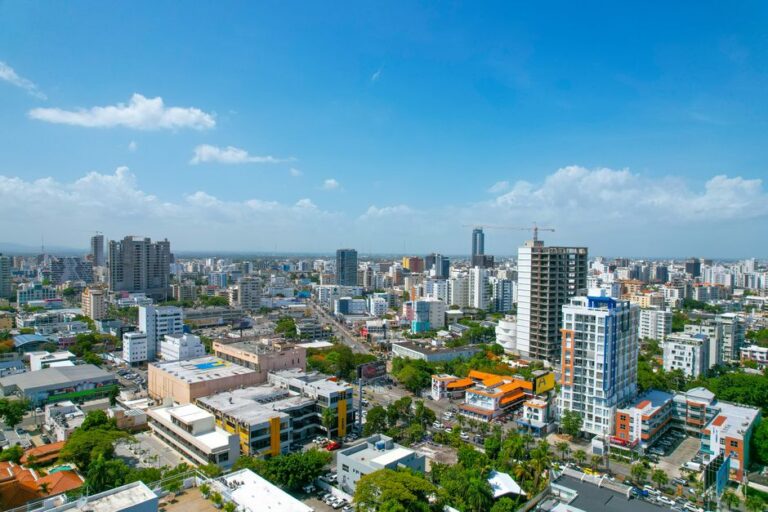
Santo Domingo Travel Guide
Plan a trip to Santo Domingo: the UNESCO-listed Zona Colonial, the Catedral Primada, Alcázar de Colón, Ozama Fortress and Calle El Conde, Los Tres…
Best time to visit the Dominican Republic
The Dominican Republic is warm all year, with daytime highs in the 80s °F (around 28–33 °C) and little difference between summer and winter; the trade winds and sea breezes make the heat bearable on the coast. The big differences are rain, humidity and storms. The table shows average daily highs and lows by season and the average rain a year at four official weather stations, from the 1991–2020 climate normals that the national weather service submitted to the World Meteorological Organization (WMO).
| Region (weather station) | Winter (Dec–Feb) | Spring (Mar–May) | Summer (Jun–Aug) | Fall (Sep–Nov) | Rain a year |
|---|---|---|---|---|---|
| Punta Cana (Punta Cana airport) | highs 83–85 °F (28–29 °C), lows 70–71 °F (21–22 °C) | highs 84–87 °F (29–30 °C), lows 71–74 °F (22–24 °C) | highs 88–90 °F (31–32 °C), lows 76 °F (24 °C) | highs 89 °F falling to 87 °F (32 to 30 °C), lows 75 °F falling to 73 °F (24 to 23 °C) | about 46 in (1,160 mm) |
| Santo Domingo (Santo Domingo and Las Américas stations) | highs 86–87 °F (30–31 °C), lows 68–69 °F (20–21 °C) | highs 87–88 °F (30–31 °C), lows 68–72 °F (20–22 °C) | highs 89–90 °F (32 °C), lows 74 °F (23–24 °C) | highs 90 °F falling to 88 °F (32 to 31 °C), lows 74 °F falling to 71 °F (24 to 22 °C) | about 58 in (1,480 mm) |
| Puerto Plata (A. La Unión, Puerto Plata airport) | highs 84–85 °F (29–30 °C), lows 66–68 °F (19–20 °C) | highs 85–89 °F (30–32 °C), lows 67–71 °F (20–22 °C) | highs 92 °F (33 °C), lows 73 °F (23 °C) | highs 92 °F falling to 87 °F (33 to 31 °C), lows 73 °F falling to 71 °F (23 to 21 °C) | about 65 in (1,660 mm) |
| Samaná (Arroyo Barril) | highs 86–87 °F (30–31 °C), lows 68–69 °F (20–21 °C) | highs 88–89 °F (31–32 °C), lows 70–72 °F (21–22 °C) | highs 90 °F (32 °C), lows 73 °F (23 °C) | highs 90 °F falling to 88 °F (33 to 31 °C), lows 73 °F falling to 71 °F (23 to 22 °C) | about 85 in (2,170 mm) |
Rain mostly falls in short, heavy showers, and the pattern differs by coast. The south and east (Santo Domingo, Punta Cana, La Romana) are driest from December to April and wettest from May to November, peaking in September and October. The north coast is the opposite: Puerto Plata’s wettest months are November to January, and its summers are relatively dry. Samaná is the wettest of the four, green all year, with its driest weather in February and March. The mountains around Jarabacoa and Constanza are much cooler.
Hurricane season: according to NOAA’s National Hurricane Center (NHC), the Atlantic hurricane season runs from 1 June to 30 November, with most activity from mid-August to mid-October. The Dominican Republic sits in the path of many storms, and even storms that pass offshore can bring days of heavy rain, flooding and landslides. In late October 2025, Hurricane Melissa, which hit Jamaica as a Category 5 storm, passed south of Hispaniola; the NHC’s report records several days of heavy rain in the Dominican Republic, with up to about 20 in (507 mm) in Greater Santo Domingo, 823 flooded homes and 29 water systems out of service for about 250,000 people, although government officials reported no deaths. As of 4 October 2026, the 2026 season had produced eight tropical storms and no hurricanes; the remnants of Tropical Storm Dolly and a tropical wave flooded about 100 homes in San Pedro de Macorís and a dozen near Santo Domingo around 1 September 2026, with no deaths or injuries reported. If you travel between June and November, follow the NHC and the Dominican Institute of Meteorology (INDOMET), watch the alerts of the Emergency Operations Center (COE), and buy travel insurance that covers hurricane disruption.
Crowds and prices through the year
- Mid-December to April: high season, with the driest weather on the south and east coasts and the North American winter escape in full swing. Christmas, New Year, Carnival weekends in February and Easter (Semana Santa) are the busiest and most expensive; book flights and resorts early.
- May to August: hotter and more humid, with good deals outside July and August, when Dominican and European families travel. Calm, warm seas suit diving and snorkeling, but sargassum seaweed is most likely on east-facing beaches from about April to September.
- September to November: the cheapest time, at the peak of hurricane season and the wettest on the south coast, with some smaller hotels closing for a few weeks. November is often a good-value shoulder month once the storm risk eases.
- Mid-January to March: humpback whale season in Samaná Bay, the highlight of the year on the peninsula.
Festivals and holidays
- January 21: Our Lady of Altagracia, the country’s patron saint, with a huge pilgrimage to the basilica in Higüey.
- February: Carnival, with costumed parades every Sunday all month in towns across the country, peaking around Independence Day on February 27; La Vega’s carnival is the most famous.
- March or April: Semana Santa (Holy Week), when Dominicans head to the beaches and rivers; expect full hotels and busy roads.
How long to stay: sample itineraries
Roads can be slow, so pick one or two bases rather than moving every night.
5 days: a beach break
Fly into Punta Cana and stay put: two lazy days on the beach, a catamaran snorkeling trip, a day trip to Saona Island from Bayahibe, and an afternoon at Hoyo Azul or the Indigenous Eyes Ecological Reserve. Short and simple, with airport transfers of 15 to 45 minutes.
7–10 days: beach and colonial city
Four or five nights in Punta Cana or La Romana, then two or three nights in Santo Domingo’s Zona Colonial, about two to three hours west by road, with a day trip to Boca Chica or Los Tres Ojos. Fly home from Santo Domingo’s Las Américas airport, or return east for a last beach night. La Romana makes a good middle base, with Altos de Chavón, Bayahibe and Catalina Island close by.
10–14 days: the wild north
Start with two nights in Santo Domingo, drive the Autopista del Nordeste to the Samaná Peninsula for four nights (Las Terrenas plus a whale-watching or Los Haitises boat trip), then continue along the north coast to Cabarete and Puerto Plata for three or four nights of beaches, kitesurfing and the Damajagua waterfalls. Add a night in the mountains at Jarabacoa on the way, and fly home from Puerto Plata.
Entry, money and costs
Entry: passports, the tourist card and how long you can stay (last reviewed October 2026)
Citizens of the United States, Canada, the UK, the EU and many other countries do not need a visa to visit the Dominican Republic as tourists; check the Ministry of Foreign Affairs (MIREX) list if you are from elsewhere. The official rule is that your passport must be valid for at least six months. However, as of October 2026, a special measure runs until 31 December 2026 for citizens of the EU, the UK, Canada, the United States, Brazil, Chile, Argentina, Colombia and Ecuador: they may enter for tourism with a passport that is simply valid for the whole stay and their departure. If you travel in 2027 or later, check whether the measure has been extended, or make sure your passport has six months left. You also need a return or onward ticket and the address where you will stay.
Tourists are normally admitted for 30 days. Visitors who stay longer pay an extra fee to the General Directorate of Migration (DGM) when they leave, on a sliding scale by length of stay; longer stays can be extended up to about 120 days in total.
The tourist card (tarjeta de turista) costs US$10 and is valid for one entry. According to the tax authority (DGII), since 25 April 2018 it has been included in the price of all air tickets issued outside the Dominican Republic, so air travelers no longer buy it at the airport. Visitors arriving by sea or land buy it at the DGII’s sales points on arrival. Some groups are exempt, including Dominican citizens, legal residents and holders of Dominican visas.
The e-ticket: required for arrival and departure
All passengers, Dominican and foreign, entering or leaving the country on commercial flights must fill in the free electronic entry and exit form, the e-ticket, at eticket.migracion.gob.do. It replaced the old paper immigration, customs and health forms in 2021. You complete one form for your arrival and a separate one for your departure; one form can cover up to seven members of the same family, and children skip the customs section. At the end you get a QR code to show, on paper or on your phone, at check-in and on arrival. The tourism ministry says to complete it before you reach the airline counter. The service is free: ignore look-alike websites that charge a fee. According to the official tourism site, cruise passengers do not need the e-ticket.
Departure tax and other fees
The Dominican Republic charges a US$20 departure tax, which, according to the official tourism site, is already included in your airline ticket. Together with the tourist card, that means a normal air traveler pays no entry or exit fees in person. Travelers carrying the equivalent of US$10,000 or more in cash must declare it on entry and exit, through the e-ticket’s customs section.
If you are flying home to the United States, remember that US entry rules apply when you return; see our United States travel guide.
Money and cards
The currency is the Dominican peso (DOP), written RD$. On 2 October 2026 the Central Bank’s reference rate was about RD$60 to US$1 (buying 60.17, selling 60.69), so RD$1,000 is about US$16.50. US dollars are widely accepted in resort areas, by tour operators and for taxi fares quoted in dollars, but usually at a poor rate; pay in pesos for better value in towns, shops and local restaurants. Cards work in hotels, resorts and most restaurants; carry cash for colmados (corner stores), street food, tips and rural areas. Use ATMs inside banks, malls or hotels, ideally in daylight, and choose to be charged in pesos when a machine or card terminal offers your home currency.
Taxes, the service charge and tipping
Most prices carry two extras. The ITBIS, the Dominican value-added tax, is 18% and applies to most goods and services, including hotel rooms and restaurant meals. Restaurants, bars and hotels also add a 10% legal service charge (propina legal), shared among the staff. On a hotel or restaurant bill that adds up to 28% on top of the listed price, when prices are quoted before tax. Resort and package prices sold abroad usually include them, but check before you book, and look for “+ITBIS” or “impuestos no incluidos” on menus and rate cards.
Tipping on top of the 10% charge is customary for good service. The official tourism site suggests leaving about an extra 10% in restaurants. Typical amounts as of 2026:
- Restaurants and bars: an extra 10% in cash for good service, given directly to your server.
- All-inclusive resorts: tips are included in theory, but small cash tips, about US$1–2 or RD$50–100 a drink or a day, are common for bartenders, servers and housekeeping.
- Tour guides and drivers: about US$5–10 per person for a day trip; more for a private guide.
- Taxis: not expected, unless the driver helps with bags or goes out of the way.
Typical travel costs
The Dominican Republic can be very affordable outside the resort zones, and prices for all-inclusive packages vary widely by season. These estimates per person per day, as of October 2026, are a planning guide only:
| Style | Estimated cost per day | What that looks like |
|---|---|---|
| Budget | about US$50–80 (RD$3,000–4,800) | Guesthouse or simple hotel, comedor lunches with the plato del día (about RD$250–450), guaguas and shared rides, beaches and free sights |
| Mid-range | about US$120–220 (RD$7,200–13,200) | Comfortable hotel or mid-range all-inclusive shared by two, restaurant dinners with tax and service, a guided day trip, Uber or taxis |
| High-end | about US$350+ (RD$21,000+) | Luxury resort or villa, private transfers, catamaran charters, golf at Casa de Campo or Cap Cana |
The figures are our estimates, not official statistics.
Getting there and getting around
Arrival airports
- Punta Cana International (PUJ): the busiest airport, privately run by Grupo Puntacana, with two terminals (A and B) and direct flights from dozens of US, Canadian, European and Latin American cities. Most resorts are 15 to 45 minutes away. Authorized taxis and Uber pick-up areas are at both terminals.
- Las Américas International (SDQ), Santo Domingo: the main gateway to the capital, about 19 miles (30 km) east of the Zona Colonial, run by Aerodom. Handy for La Romana and Boca Chica too.
- Gregorio Luperón International (POP), Puerto Plata: the north coast’s airport, between Puerto Plata and Sosúa, also run by Aerodom.
- La Romana (LRM): a smaller international airport next to Casa de Campo, with seasonal flights from the US and Canada and private jets.
- Samaná El Catey (AZS): the Samaná Peninsula’s international airport, run by Aerodom, about 40 minutes from Las Terrenas, with mostly seasonal flights.
- Santiago Cibao (STI): the airport for Santiago and the mountains, with many flights from New York, Miami and Puerto Rico.
From the United States, the DR is a short hop: about 2 hours from Miami or Fort Lauderdale and under 4 hours from New York, with many daily nonstop flights to Punta Cana, Santo Domingo, Santiago and Puerto Plata.
Cruise ports
The DR is a regular stop on Eastern and Southern Caribbean cruises from Florida, New York and San Juan:
- Puerto Plata: two terminals. Amber Cove, on Maimón Bay about 10 miles (16 km) west of the city, opened in 2015 and is a Carnival Corporation port of 25 acres; Taíno Bay is in Puerto Plata’s own harbor, within reach of the old town. According to the Dominican Port Authority, Taíno Bay received about 800,700 visitors and Amber Cove about 700,600 cruise passengers from January to August 2026, and on one day in September 2026 the two ports handled four ships with 16,714 passengers.
- Santo Domingo: the Don Diego and Sans Souci cruise terminals, run by the Port Authority on either bank of the Ozama River’s mouth, about half a mile (under 1 km) from the city center. Don Diego is right below the Zona Colonial.
- La Romana: a cruise terminal at the mouth of the Río Dulce, close to Casa de Campo and the boats to Catalina Island.
- Samaná: ships anchor in Samaná Bay and bring passengers ashore by tender; Cayo Levantado and whale-watching (January to March) are the favorite excursions.
Driving: rules, rentals and road trips
Dominicans drive on the right. According to the official tourism site, a valid foreign driver’s license can be used for the length of your legal stay. The main highways are good, four-lane toll roads: the Autovía del Este and the Coral Highway from Santo Domingo to La Romana and Punta Cana; the Autopista del Nordeste and the Boulevard Turístico del Atlántico to Samaná and Las Terrenas; and the Autopista Duarte north to Santiago, with roads on to Puerto Plata. Santo Domingo to Punta Cana takes about 2.5 to 3 hours, to Las Terrenas about 2.5 hours and to Puerto Plata about 3.5 to 4 hours. Tolls are paid in pesos or with a Paso Rápido tag.
Driving takes care. Traffic in Santo Domingo is heavy and chaotic, motorbikes (motoconchos) weave around cars, many vehicles drive without lights, and animals and potholes appear on rural roads. The tourism ministry itself calls driving here nerve-wracking and suggests avoiding driving at night. Many visitors prefer transfers, private drivers or taxis instead.
Buses, taxis and ride apps
Air-conditioned intercity buses, run by companies such as Caribe Tours and Metro Tours, link Santo Domingo with Santiago, Puerto Plata, Samaná and other towns; Expreso Bávaro runs between the capital and Punta Cana. They are cheap, comfortable and safe. Local minibuses (guaguas) and shared taxis (carros públicos) are cheaper and more chaotic. In Santo Domingo, the two-line metro and the cable car are the fastest way across the city. Uber works in Santo Domingo, Santiago, Punta Cana and Puerto Plata; elsewhere, use taxis called by your hotel and agree the fare before you get in.
Culture, food and everyday etiquette
Dominican culture is warm, loud and social. The national dances are merengue and bachata, both born here and both on UNESCO’s list of intangible cultural heritage; you will hear them in every colmado, bus and bar. Baseball is close to a religion.
The everyday lunch is la bandera (“the flag”): rice, red beans and stewed meat with salad. Try mangú (mashed green plantains, often with fried salami, cheese and eggs for breakfast), sancocho (a rich meat and root-vegetable stew), tostones (fried green plantains), fresh fish with coconut sauce in Samaná, and chicharrón in Villa Mella near Santo Domingo. Drink Presidente beer, very cold, local rum from Brugal or Barceló, fresh tropical juices and Dominican coffee. Dominican cigars, larimar (a blue stone found only here) and amber from the north are the classic souvenirs; buy from reputable shops.
Everyday etiquette
- Greet people with “buenos días” or “buenas tardes” before asking for anything; it makes a difference.
- Beachwear belongs on the beach and at the pool. Cover up in towns, and cover shoulders and knees in churches, including the cathedral in Santo Domingo.
- Ask before photographing people.
Safety, health, accessibility and connectivity
Safety
Millions of people visit the Dominican Republic every year, and most trips are trouble-free, especially in the resort areas. The main problems for visitors are petty crime and opportunistic theft: bag and phone snatching, sometimes by thieves on motorbikes, pickpocketing in crowds, and theft from cars and hotel rooms. Keep valuables in the room safe, don’t use your phone at the curb, use ATMs inside banks or malls, take registered taxis or ride apps at night, and be wary of unofficial guides.
The country has a dedicated tourist police, CESTUR (Cuerpo Especializado de Seguridad Turística), with officers and posts in the main tourist areas. For any emergency, including police, fire and ambulance, call 911. Road accidents are a bigger risk than crime: wear a seat belt, avoid motoconchos without a helmet, and avoid driving at night.
The sea can be dangerous. Atlantic beaches on the north and east coasts can have strong surf and rip currents, especially in winter swells; swim where there are lifeguards or calm reef-protected water, follow red flags and local warnings, and never swim alone or after drinking. Choose licensed operators for boat trips, diving and excursions, with life jackets on board. In hurricane season, follow the alerts of the COE and your hotel’s instructions.
Health and water
Do not drink the tap water; the tourism ministry advises bottled water at all times, and it is provided in resorts. Ice in hotels and good restaurants is made from purified water. Mosquito-borne dengue occurs, more often in the rainy season, so use repellent and cover up at dusk. The sun is strong all year: use high-factor, reef-safe sunscreen, a hat and plenty of water. Private hospitals and clinics in Santo Domingo, Santiago, Punta Cana and Puerto Plata are good but expensive for visitors, and many ask for payment or proof of insurance first, so buy travel insurance with medical evacuation cover.
Accessibility
Large resorts, newer hotels and airports generally have step-free access and adapted rooms. Elsewhere, access is limited: the Zona Colonial’s sidewalks are narrow and cobbled, few beaches have ramps, and buses and boats rarely take wheelchairs. Ask before you book.
Connectivity and power
The main mobile networks are Claro and Altice, with good 4G and growing 5G coverage in cities and resort areas, weaker signal in the mountains and remote coasts. Visitors can buy a prepaid SIM with a passport, or an eSIM before they go; check your home plan’s roaming prices first. Wi-Fi is standard in hotels and common in cafés. The DR uses 110 V and type A and B plugs, like the United States and Canada, so North American visitors need no adapter; visitors from Europe and the UK need an adapter, and appliances that only work at 220–240 V need a converter.
Things to do: beaches, snorkeling, diving, surfing and boat trips
- Beaches: Bávaro and Macao on the east coast, Juanillo at Cap Cana, Saona Island’s sandbars, Playa Rincón and Playa Frontón in Samaná, Playa Cosón and Playa Bonita at Las Terrenas, Sosúa’s sheltered bay and the wild beaches of Bahía de las Águilas in the southwest.
- Snorkeling: catamaran trips along the Bávaro reef, the coral garden off Catalina Island, Sosúa Bay, and the natural pools off Saona.
- Diving: Bayahibe and Catalina Island on the south coast, with walls, wrecks and an underwater museum of colonial-era cannons and anchors; Sosúa on the north coast; and the protected underwater park of La Caleta near Santo Domingo.
- Surfing: Encuentro beach near Cabarete, Macao near Punta Cana and the north coast in winter swells; Cabarete is also one of the world’s top spots for kitesurfing and windsurfing, with steady trade winds in summer.
- Boat trips: catamarans and speedboats to Saona Island, whale-watching in Samaná Bay from mid-January to March, the mangroves and caves of Los Haitises, and sunset cruises in Punta Cana.
- Hiking: the waterfalls of El Limón and Damajagua, the trails around Jarabacoa, and the two- to three-day trek to the summit of Pico Duarte.
- City sightseeing: Santo Domingo’s Zona Colonial, Puerto Plata’s Victorian center and the Monument to the Heroes of the Restoration in Santiago.
- Cycling: bike tours in Santo Domingo’s Zona Colonial and mountain biking around Jarabacoa and Cabarete.
What to pack
Pack light, breathable clothes, swimwear, a rash vest, flip-flops and water shoes for rocky beaches and waterfalls, and a light rain jacket or umbrella from May to November. Bring high-factor, reef-safe sunscreen, a hat, sunglasses, insect repellent and any medicines you need, as they cost more in resorts. For towns and churches, add something that covers shoulders and knees; for smart resort restaurants, long pants for men and a dressier outfit. Mountain trips to Jarabacoa or Constanza need a fleece for cool nights. Remember a type A/B plug adapter if you come from outside North America, a printed or downloaded copy of your e-ticket QR code, and a little cash in small pesos for tips.
Dominican Republic travel FAQ
Do I need a visa to visit the Dominican Republic?
Not if you are a citizen of the US, Canada, the UK, the EU or many other countries visiting as a tourist. You are normally allowed 30 days, and you need a return ticket, the address where you will stay and a completed e-ticket.
How long must my passport be valid for the Dominican Republic?
The standard rule is six months. Until 31 December 2026, citizens of the EU, the UK, Canada, the US, Brazil, Chile, Argentina, Colombia and Ecuador may enter as tourists with a passport valid for the whole stay. For trips in 2027, check whether the measure has been extended.
Is the tourist card included in my airfare?
Yes, if you fly. The US$10 tourist card has been included in all air tickets issued outside the country since April 2018. Travelers arriving by sea or land buy it from the tax authority on arrival.
What is the Dominican Republic e-ticket and does it cost anything?
It is the free, mandatory entry and exit form at eticket.migracion.gob.do for everyone on commercial flights. Fill in one for arrival and another for departure, and keep the QR code on your phone. Sites that charge for it are not official.
Is there a departure tax in the Dominican Republic?
Yes, US$20, but it is already included in airline tickets, so you don’t pay it at the airport. Visitors who overstay their 30 days pay an extra fee to Migration when leaving.
What currency should I use in the Dominican Republic?
The Dominican peso (RD$). In October 2026, US$1 was worth about RD$60. US dollars are accepted in resort areas, but you usually get a better deal paying in pesos.
Are taxes and tips included in Dominican prices?
Often not. Hotels and restaurants add 18% ITBIS and a 10% service charge, 28% in total, unless the price says it includes them. An extra 10% tip in cash for good service is customary.
When is the best time to visit the Dominican Republic?
December to April for the driest, least humid weather on the south and east coasts, and mid-January to March for whales in Samaná. May, June and November are good-value shoulder months. September and October are the wettest and the peak of hurricane season.
When is hurricane season in the Dominican Republic?
From 1 June to 30 November, with most activity from mid-August to mid-October. The 2026 season had brought eight tropical storms and no hurricanes by early October, but storms passing nearby can still cause flooding.
Is there sargassum seaweed in Punta Cana?
Sometimes. Sargassum arrives mostly between about April and September and hits the east-facing beaches hardest. The University of South Florida’s monitoring called 2026 one of the largest sargassum years on record, though amounts were falling by late September.
Can you drink the tap water in the Dominican Republic?
No. Drink bottled or purified water, which hotels and resorts provide.
Is the Dominican Republic safe for tourists?
Most visits are trouble-free. Watch out for petty theft and phone snatching, use registered taxis or ride apps at night, take care on the roads and in rough surf, and call 911 or the CESTUR tourist police if you need help.
Do I need a plug adapter in the Dominican Republic?
Not if you come from the US or Canada: sockets are type A and B at 110 V. Visitors from Europe, the UK and Australia need an adapter.
Sources and last review
Researched and last reviewed on 4 October 2026. E-ticket rules from the Dominican Presidency, the Ministry of Tourism (godominicanrepublic.com) and Punta Cana International Airport; the tourist card from the tax authority (DGII); the passport measure, departure tax, tipping, tap water, electricity and 911 from the Ministry of Tourism; ITBIS from the DGII; the exchange rate from the Central Bank; cruise ports from the Dominican Port Authority and Amber Cove; airports from Aerodom and Punta Cana International Airport; climate from the WMO 1991–2020 normals for Dominican stations; hurricanes from NOAA’s National Hurricane Center and the Pan American Health Organization; sargassum from the University of South Florida’s Sargassum Watch. The CESTUR number, the 120-day extension limit, distances, driving times, festivals, tipping amounts and daily costs come from foreign government pages, general references or our estimates and are flagged for checking. Fees and entry rules change, so check the official sites before you travel.
Plan your trip
Partner links: TravelerCenter may earn a commission if you book, at no extra cost to you.
🇪🇸 Useful Spanish phrases for Dominican Republic
All 38 Spanish phrases: restaurant, hotel, emergencies, romance (printable) →