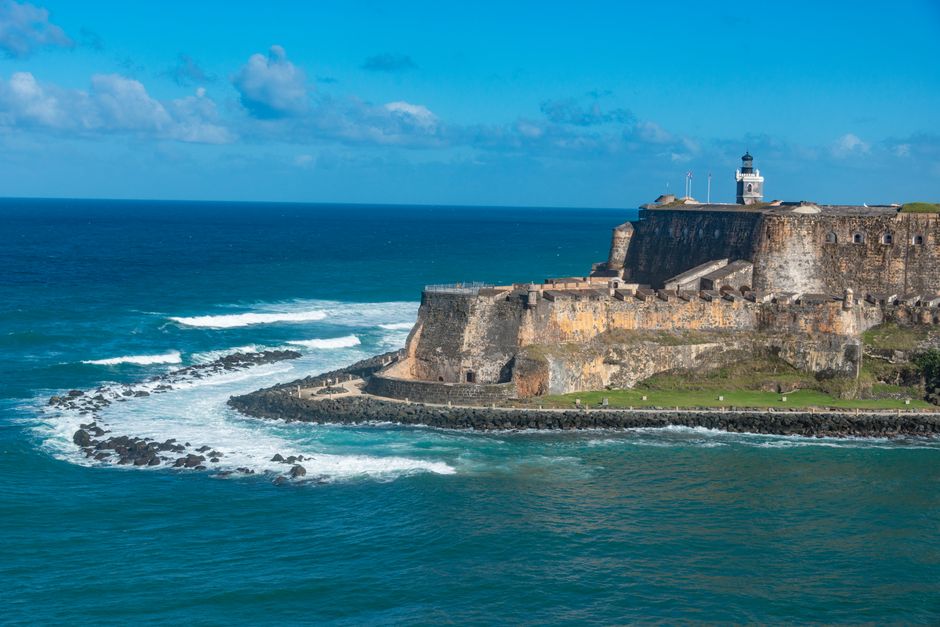
Puerto Rico packs a lot into an island of about 100 by 35 miles (160 by 56 km): the blue cobblestones, pastel houses and Spanish forts of Old San Juan; El Yunque, the only tropical rainforest in the US national forest system; glowing bioluminescent bays; the surf breaks and sunsets of Rincón; coffee country in the mountains; and the quiet beaches of Vieques and Culebra, a short ferry or flight off the east coast. It is a US territory, so US citizens fly in on a domestic flight with no passport, pay in US dollars and use their phones as at home, while international visitors follow the same entry rules as for the rest of the United States. Spanish is the everyday language, and the food, music and festivals are proudly Caribbean. December to April is the driest and most popular season; June to November is hotter, wetter and hurricane season. Give a first trip a week: a few days in San Juan, a day in El Yunque and a few nights on Vieques or the west coast.
Right now in Puerto Rico
- Tue 25–31°C 77–88°F 4 mm Showers
- Wed 24–31°C 75–88°F 5 mm Showers
- Thu 24–31°C 76–88°F 2 mm Light rain
- Mon 12 Oct Columbus Day (Día de la Raza / Descubrimiento de América)
Weather: MET Norway (CC BY 4.0) · Air quality: OpenAQ · Holidays: Nager.Date
Multi-day tours of Puerto Rico
Multi-day tours from local operators. You check dates and book on Viator, our partner; we may earn a commission at no extra cost to you. How we earn money
Puerto Rico at a glance: a US territory with a Caribbean soul
Puerto Rico is an unincorporated territory of the United States, officially the Commonwealth of Puerto Rico, at the eastern end of the Greater Antilles between the Dominican Republic and the US Virgin Islands. Puerto Ricans are US citizens, and US federal law, the US Postal Service and US dollars all apply. The territory is made up of the main island and the smaller island municipalities of Vieques and Culebra, plus uninhabited Mona, Desecheo and Caja de Muertos. About 3.3 million people live here, and the capital, San Juan, is by far the biggest metro area.
Spanish and English are both official languages. According to Discover Puerto Rico, the island’s official destination marketing organization, only about 20% of Puerto Ricans speak English fluently, but most people working in hotels, restaurants and tours in San Juan and the main resort areas are bilingual.
Time zone: Puerto Rico uses Atlantic Standard Time (UTC−4) all year and does not change its clocks. That means it is one hour ahead of New York in winter and the same time as New York while US daylight saving time is in force (from March to early November). Road signs are in Spanish and distances are in kilometers, but speed limits are in miles per hour and gas is sold by the liter.
Puerto Rico’s regions
- San Juan and the metro area: Old San Juan’s forts and colonial streets, the beach districts of Condado, Ocean Park and Isla Verde, Santurce’s murals and food scene, and the main airport and cruise port.
- The east coast: El Yunque National Forest, Luquillo Beach and its food kiosks, the marinas and bioluminescent lagoon of Fajardo, and the ferry port at Ceiba.
- The Spanish Virgin Islands: Vieques, with its wild horses, empty beaches and Mosquito Bay, and Culebra, home of Flamenco Beach.
- The west coast (Porta del Sol): the surf towns of Rincón, Isabela and Aguadilla, the beaches and cliffs of Cabo Rojo and the fishing village of La Parguera.
- The south: Ponce, the island’s second city, with its Museo de Arte and firehouse, and the dry forest and calm beaches around Guánica.
- The central mountains: coffee farms, waterfalls and roadside pork stands along the winding Ruta Panorámica, with cooler air and very few visitors.
Where to go: San Juan, the rainforest, the islands and the surf coast
Most visitors spend a few days in San Juan and add one more area, east or west. Roads are slow, so allow about 45 minutes to an hour from San Juan to El Yunque or Fajardo, and about two and a half hours to Rincón.
San Juan
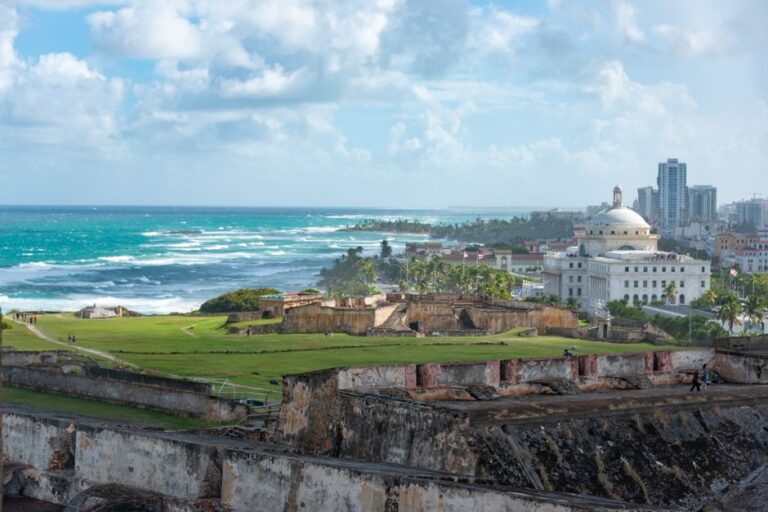
The capital is two cities in one. Old San Juan, founded in the early 1500s, is a walled town of cobbled lanes, balconies and plazas guarded by Castillo San Felipe del Morro and Castillo San Cristóbal, which make up San Juan National Historic Site. To the east, the Condado and Isla Verde beach strips have the big hotels, casinos and nightlife, and Santurce is the place for street art, the Plaza del Mercado and late-night bars. See our San Juan travel guide.
El Yunque National Forest
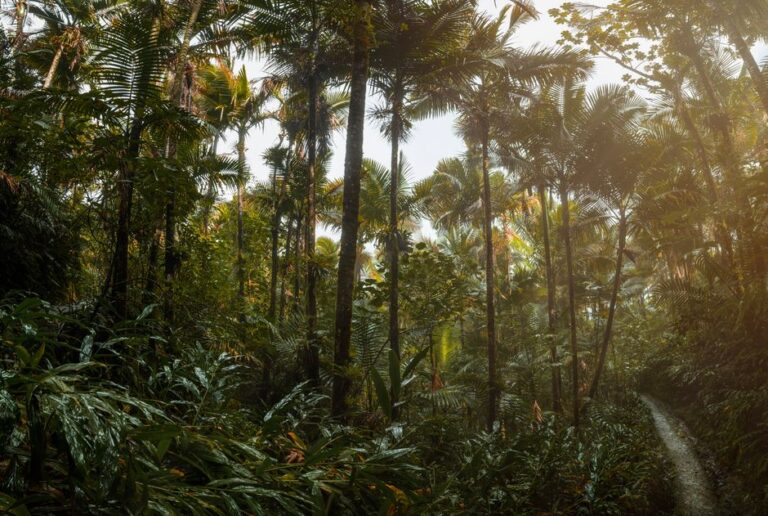
Less than an hour east of San Juan, this rainforest of about 29,000 acres climbs from lowland valleys to cloud-wrapped peaks of more than 3,000 feet (900 m). Most visitors drive up the PR-191 north road from Río Grande, past La Coca Falls, the Yokahú observation tower and short trails through giant ferns. As of October 2026 entry to the PR-191 corridor is free and no reservations are needed. See our El Yunque National Forest travel guide.
Vieques and Culebra
These two small islands, about 8 and 17 miles (13 and 27 km) off the east coast, feel a world away from San Juan. Vieques has a large national wildlife refuge on former US Navy land, wild horses wandering the roads, dozens of empty beaches and Mosquito Bay, recognized by Guinness World Records in 2006 as the brightest bioluminescent bay in the world. Culebra is smaller and sleepier, famous for Flamenco Beach and snorkeling. Both are reached by a cheap public ferry from Ceiba or a short flight. See our Vieques travel guide.
Rincón and the west coast
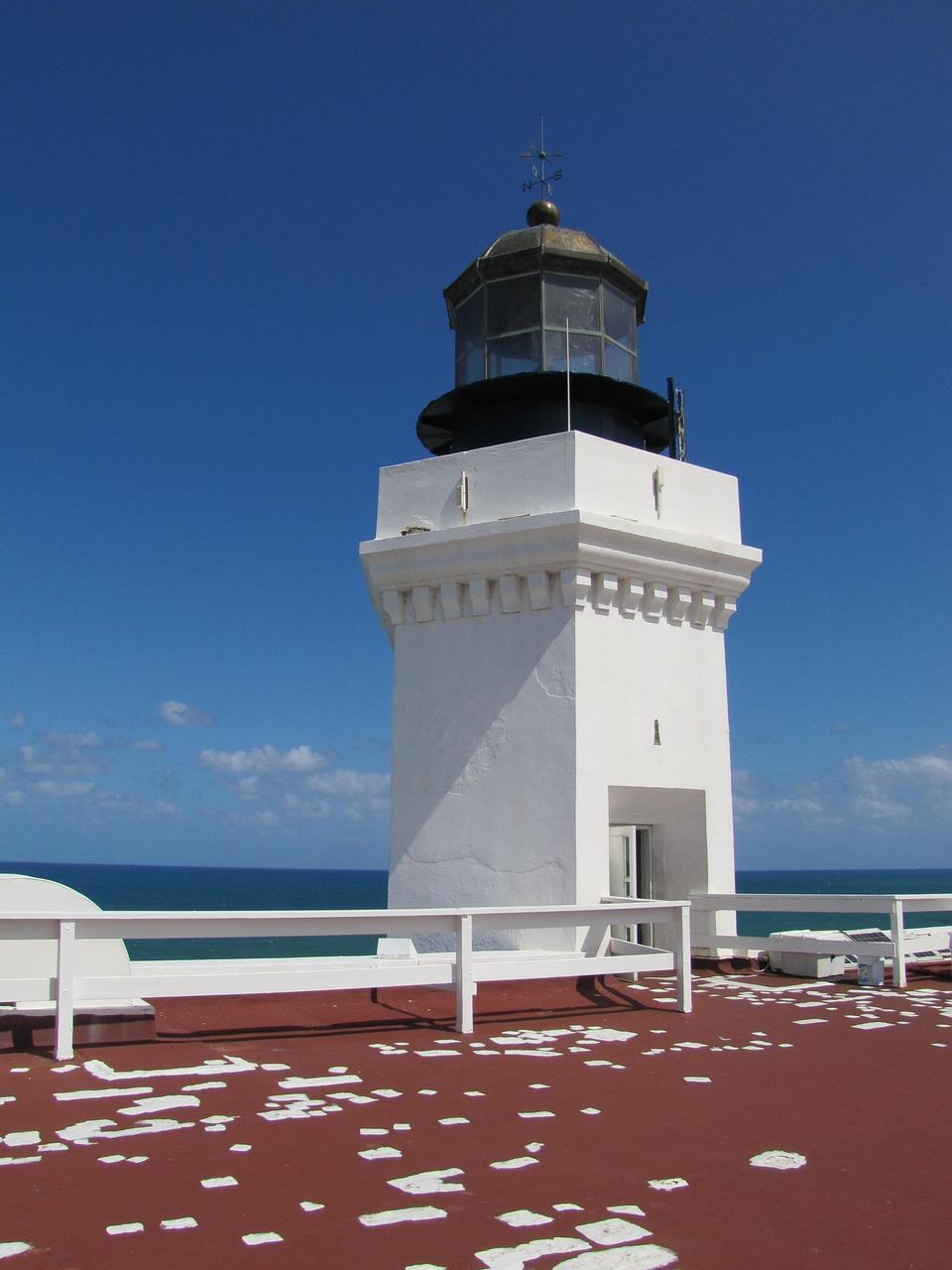
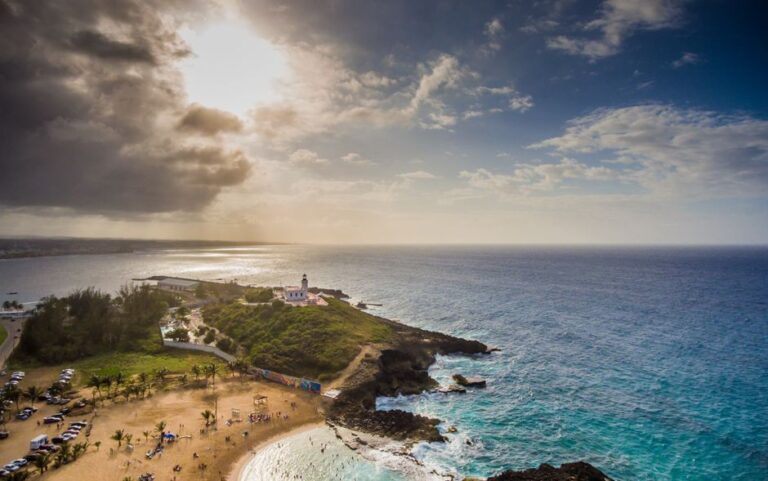
On the island’s western tip, Rincón is Puerto Rico’s surf town, with powerful winter waves at Domes, María’s and Tres Palmas, calm summer snorkeling in the Tres Palmas Marine Reserve, humpback whales offshore in winter and famous sunsets from the Punta Higüero lighthouse. Nearby Aguadilla and Isabela have more surf beaches, and further south Cabo Rojo has cliffs, salt flats and a lighthouse. See our Rincón travel guide.
Ponce and the south
Ponce, about 90 minutes south of San Juan, has a handsome plaza, the striped red-and-black Parque de Bombas firehouse and the Museo de Arte de Ponce. The south is drier and calmer than the north, with the Guánica dry forest, the mangroves and bioluminescent bay of La Parguera, and quieter beaches.
El Yunque National Forest Travel Guide
Plan a trip to El Yunque National Forest, Puerto Rico: no reservation needed and free entry to the PR-191 corridor in 2026, hours, El…
Rincón Travel Guide
Plan a trip to Rincón, Puerto Rico: surf at Domes, María's, Sandy Beach and Tres Palmas and when the waves come, winter whale watching…
San Juan Travel Guide
Plan a trip to San Juan, Puerto Rico: Old San Juan's streets and plazas, El Morro and San Cristóbal with the 2026 National Park…
Vieques Travel Guide
Plan a trip to Vieques, Puerto Rico: Mosquito Bay, the world's brightest bioluminescent bay, and how tours work, the wildlife refuge beaches and rules,…
Best time to visit Puerto Rico
Puerto Rico is warm all year, with highs in the 80s °F (high 20s to low 30s °C) on the coast, and the sea is warm enough to swim in every month. The seasons are about rain, not temperature: the drier months run from about January to April, and the wetter months from about May to November, when short, heavy afternoon showers are common. The mountains are cooler and much wetter. The table uses NOAA’s 1991–2020 climate normals: average daily highs and lows, and days with at least 0.10 in (2.5 mm) of rain at San Juan’s airport.
| Season | San Juan high / low | Rainy days a month (San Juan) | What it’s like | Good for |
|---|---|---|---|---|
| Winter (Dec–Feb) | 83–84 °F (28–29 °C) / 72–73 °F (22–23 °C) | 7–11 | Warm, breezy and the driest season on the north coast; big winter swells on north and west beaches | Sightseeing, El Yunque, surfing in Rincón, whale watching; peak prices |
| Spring (Mar–May) | 85–87 °F (29–31 °C) / 72–76 °F (22–24 °C) | 5–9 | March is the driest month; showers return in May | Beaches, snorkeling, Vieques and Culebra; good value after Easter |
| Summer (Jun–Aug) | 89 °F (32 °C) / 77–78 °F (25 °C) | 8–11 | Hot and humid, calm seas, short storms; sargassum seaweed most likely | Calm-water snorkeling and diving, local summer festivals, family trips |
| Fall (Sep–Nov) | 89 °F falling to 86 °F (32 to 30 °C) / 78 °F falling to 75 °F (25 to 24 °C) | 11–12 | Wettest months and peak hurricane season; November is the rainiest month in San Juan | Low prices and few crowds; flexible plans |
San Juan’s airport averages about 60 in (1,520 mm) of rain a year, from about 2.2 in (55 mm) in March to about 7.4 in (187 mm) in November. The west coast around Rincón gets a little more, about 65 in (1,650 mm) a year, and the El Yunque foothills about 100 in (2,550 mm). On El Yunque’s high peaks, average highs are only 66–72 °F (19–22 °C) at the Pico del Este station, at 3,448 feet (1,051 m).
Hurricane season: according to NOAA’s National Hurricane Center (NHC), the Atlantic hurricane season runs from 1 June to 30 November, with most activity between mid-August and mid-October. Puerto Rico has been hit hard in recent years. Hurricane Maria made landfall near Yabucoa on 20 September 2017 as a high-end Category 4 hurricane, the strongest to hit the island since 1928; it cut power to essentially all of the island’s 3.4 million people, and the Government of Puerto Rico estimates 2,975 deaths, direct and indirect. Hurricane Fiona came ashore in the southwest on 18 September 2022 as a Category 1 hurricane but dropped up to 32 in (823 mm) of rain near Ponce, causing catastrophic flooding and an island-wide power outage. In August 2025 Hurricane Erin passed about 100 nautical miles (185 km) north of the island; the NHC reports three people drowned in rip currents in Puerto Rico. As of 4 October 2026, the 2026 season has produced eight named storms, all tropical storms, with no hurricanes, according to the NHC. If you travel between June and November, buy travel insurance, follow the NHC and the National Weather Service in San Juan, and obey local emergency orders.
Crowds, prices and festivals
Peak season runs from mid-December to April, with the highest prices at Christmas, New Year and Easter. Summer is busy with families and local vacationers, and island ferries fill up at weekends. September to mid-November is the quietest and cheapest time.
- Christmas season (December to mid-January): the island’s longest party, with parrandas (carol gatherings), Three Kings Day on 6 January and the Octavitas that follow.
- Third week of January: the San Sebastián Street Festival (Fiestas de la Calle San Sebastián) fills Old San Juan with music, parades and crowds.
- February: the Ponce carnival, with its horned vejigante masks.
- 23–24 June: Noche de San Juan, when people walk backward into the sea at midnight for good luck.
How long to stay: sample itineraries
Driving times are longer than the distances suggest and ferry days take most of a day, so plan fewer moves and more nights in each place. For two weeks, add four nights on Vieques and Culebra to the 10-day loop.
4 days: San Juan and El Yunque
Day one, Old San Juan on foot: El Morro, San Cristóbal, the Paseo de la Princesa and dinner in the old town. Day two, a morning in El Yunque, then lunch at the Luquillo kiosks and a swim at Luquillo Beach. Day three, Santurce’s murals and market, an afternoon at Condado or Ocean Park beach, and an evening kayak tour of the Fajardo bio bay. Day four, the San Juan–Cataño ferry and a rum distillery tour, or a lazy beach day.
7 days: San Juan, El Yunque and Vieques
Spend three nights in San Juan with a day trip to El Yunque, then take the ferry or a short flight to Vieques for three nights: beaches in the wildlife refuge, a kayak tour of Mosquito Bay on a dark night, and the Malecón in Esperanza. Return to San Juan for your last night or fly straight home from San Juan.
10 days: around the island
Old San Juan (3 nights) and El Yunque; the drive west along the north coast to Rincón (3 nights) for surf, sunsets and, in winter, whales; south to Cabo Rojo and La Parguera (1 night); Ponce (1 night); then back to San Juan through the mountains on part of the Ruta Panorámica, stopping at Guavate for roast pork.
Entry, money and costs
Entry rules: US citizens and international visitors (last reviewed October 2026)
Puerto Rico is part of the United States for entry purposes, so the rules are the same as for the mainland:
- US citizens: no passport is needed to fly between the US mainland and Puerto Rico, which are domestic flights. You do need ID that the Transportation Security Administration (TSA) accepts: since 7 May 2025 that means a REAL ID-compliant driver’s license or state ID (marked with a star), a passport, a passport card or another accepted document. Since 1 February 2026, travelers without acceptable ID can pay a $45 TSA ConfirmID fee, with no guarantee of being cleared, so bring a passport if your license is not REAL ID compliant. Lawful permanent residents also travel without a passport but should carry their green card.
- International visitors: according to Discover Puerto Rico, visitors from other countries have the same visa and passport requirements as for the mainland United States. Citizens of the 42 Visa Waiver Program countries need an approved ESTA, which costs $40.27 as of early October 2026 and $40.62 from 16 October 2026; everyone else needs a US visa. You clear US Customs and Border Protection (CBP) at your first US airport, either at San Juan if you fly in from abroad or at a mainland airport if you connect there. Days in Puerto Rico count toward your 90 days under the Visa Waiver Program. Our United States travel guide explains the ESTA, visas, entry restrictions and arrival checks in detail.
Leaving Puerto Rico: the USDA agricultural inspection
There is no customs or passport control between Puerto Rico and the US mainland, but there is an agricultural check. According to the US Department of Agriculture’s Animal and Plant Health Inspection Service (APHIS), all passenger bags going from Puerto Rico to the US mainland are inspected at the airport before departure, because fruit, plants and meat can carry pests and diseases. Be ready to open your bags and declare any fruit, vegetables, plants, flowers, food and souvenirs made from plants or wood.
Pork and pork products are prohibited, so leave behind the pasteles, morcilla and lechón. Most fresh fruits and vegetables are prohibited too, with a list of exceptions that includes avocado, bananas, coconuts, citrus fruit, papaya and many root vegetables; roasted or green coffee is allowed in any quantity. According to APHIS, failing to declare items can mean delays and civil penalties of $100 to $1,000 per violation. There is no departure tax or exit form to fill in for flights to the mainland; taxes are included in your ticket.
Money and cards
The currency is the US dollar. Credit and debit cards are accepted almost everywhere in San Juan and the resort areas, and tap-to-pay works on most terminals. Carry some cash in small bills for beach kiosks, roadside food stands, small guesthouses, parking lots and the islands, where card machines sometimes fail when the power or the internet goes down. ATMs are common in towns; there are only a few on Vieques and Culebra.
Tipping
Tipping follows mainland US customs. In restaurants with table service, leave 15–20% of the bill, but check it first: some restaurants in tourist areas add a service charge (servicio) automatically, and then you don’t tip again. Tip bartenders $1–2 a drink, taxi drivers and tour guides 15–20%, porters $1–2 a bag and housekeeping a few dollars a night.
Sales tax, hotel taxes and resort fees
Most prices are shown before tax. Puerto Rico’s sales and use tax, the IVU (impuesto sobre ventas y uso), is 11.5% on most goods and services, according to the Puerto Rico Treasury Department (Hacienda): a 10.5% territorial rate plus a 1% municipal rate. It is added at the till and in restaurants.
Hotel rooms carry a separate room occupancy tax, set by Puerto Rico’s Room Occupancy Rate Tax Act and collected by the Tourism Company (also called the Tourism Office). As of October 2026 the rates in the law are:
- 9% for most hotels;
- 11% for hotels with a casino;
- 7% for paradores (small country inns), Posadas de Puerto Rico, certified bed and breakfasts, and short-term rentals such as Airbnb and Vrbo;
- 5% of the all-in price at all-inclusive hotels.
On top of that, many big hotels and resorts in San Juan, Isla Verde, Río Grande and Dorado charge a daily resort fee or service charge, often with parking extra. A Federal Trade Commission rule in force since May 2025 requires hotels and short-term rentals to include mandatory fees in the total price they advertise, though taxes can still be shown separately, so compare total prices when you book.
Typical travel costs
Puerto Rico costs about the same as Florida: hotels are expensive in winter, while kiosks, panaderías (bakeries) and local restaurants are good value. Estimates per person per day, as of October 2026:
| Style | Estimated cost per day | What that looks like |
|---|---|---|
| Budget | about $90–140 | Guesthouse or hostel, kiosks, bakeries and local cafeterias, buses and shared rides, beaches and free sights |
| Mid-range | about $200–350 | Mid-range hotel room shared by two, restaurant meals with tax and tip, a tour or bio bay trip, a rental car split between two |
| High-end | about $500+ | Beach resort with resort fee, fine dining, private tours, flights to Vieques or Culebra |
The figures are our estimates, not official statistics. Add more around Christmas, New Year and Easter.
Getting there and getting around
Airports
- San Juan (SJU), Luis Muñoz Marín International Airport: the main gateway, in Carolina, right next to Isla Verde and about 20 to 30 minutes by road from Old San Juan. It has nonstop flights from many US cities, including Miami, Fort Lauderdale, Orlando, New York, Philadelphia, Atlanta, Chicago and Boston, plus flights from Canada, Europe and Latin America. Flights from Miami take about two and a half hours.
- Aguadilla (BQN), Rafael Hernández International Airport: on the northwest coast, with some flights from the US mainland; the most convenient airport for Rincón, Isabela and Aguadilla.
- Ponce (PSE), Mercedita International Airport: a few commercial flights for the south coast.
- San Juan Isla Grande (SIG), Fernando L. Ribas Dominicci Airport: a small airport near Old San Juan for commuter flights; according to Discover Puerto Rico, flights to Vieques take about 25 minutes.
- Vieques (VQS) and Culebra (CPX): the Antonio Rivera Rodríguez and Benjamín Rivera Noriega airports, served by small planes from San Juan and from Ceiba’s José Aponte de la Torre Airport (NRR).
Cruise port
The Port of San Juan is one of the busiest cruise ports in the Caribbean, both for ships calling on Caribbean itineraries and for cruises that start and end here. According to the Puerto Rico Ports Authority, cruise ships use piers 1, 3 and 4 along the Old San Juan waterfront and the Pan American piers across the bay in Isla Grande. From the Old San Juan piers you can walk into town.
Ferries to Vieques and Culebra
The public ferries to the islands leave from the Ceiba terminal at the former Roosevelt Roads base on the east coast, about an hour’s drive from San Juan. They are run by the operator Puerto Rico Ferry on behalf of the Puerto Rico government’s Maritime Transport Authority (ATM). As of October 2026, according to the operator, a one-way adult ticket costs $2.00 between Ceiba and Vieques, $2.25 between Ceiba and Culebra and $2.00 between Vieques and Culebra; children aged 4–12 and adults aged 60–74 pay $1.00, and babies and people aged 75 and over travel free (their tickets are sold only at the terminal ticket windows). The crossing to Vieques takes about an hour. Extra items cost extra: for example $2 for a cooler, $1 for a beach chair and $6 for a surfboard. Rental cars and visitors’ vehicles cannot go on the ferry; only vehicles owned by residents of Vieques and Culebra are carried.
Tickets for visitors are limited: a share is sold in advance online and through the City Experiences app, and the rest at the terminal on the day of travel. Arrive at least an hour before departure, as boarding closes 10 minutes before the ferry leaves, and all sales are final. Weekend and holiday ferries sell out, and sailings are sometimes changed or cancelled for weather or vessel problems, so check the operator’s service alerts the day before. In San Juan, the same operator runs the short ferry across the bay to Cataño; its fare rose from $0.50 to $2.00 on 1 January 2026.
Driving and getting around
Outside San Juan, a rental car is the easiest way to get around; all the major US rental companies operate at SJU. A valid US driver’s license works as at home, and visitors from abroad can generally drive on their home license for a limited period; check with your rental company. Driving is on the right, distances are signed in kilometers and speed limits in miles per hour, and gas is sold by the liter. The main expressways around San Juan and to Ponce, Arecibo and Fajardo are toll roads with electronic tolls; rental cars usually come with a toll tag, and the rental company bills you later, so ask how it charges. Expect heavy traffic in the San Juan metro area at rush hour, potholes and narrow mountain roads, and drive defensively.
In San Juan, taxis, Uber and walking cover most needs; taxis from the airport and cruise piers to the tourist zones charge fixed fares, so ask the dispatcher first. The Tren Urbano metro line doesn’t reach Old San Juan, Condado or the airport, and buses are slow. On Vieques and Culebra, rent a jeep, a scooter or (on Culebra) a golf cart, or use the island taxis.
Culture, food and everyday etiquette
Puerto Rican culture mixes Taíno, Spanish and African roots with a strong dose of US influence. Music is everywhere, from salsa, bomba and plena to reggaetón. Most people are Catholic, and family and community matter, which shows in the long Christmas season and every town’s patron saint festival.
Try mofongo (mashed fried plantain with garlic, often stuffed with seafood or meat), arroz con gandules (rice with pigeon peas), lechón (spit-roast pork), fried snacks such as alcapurrias and bacalaítos from beach kiosks, and pastelón (a sweet plantain lasagna). Mountain coffee is excellent, rum is the local spirit and the piña colada the national drink. The legal drinking age is 18, though some bars and clubs only admit people aged 21 and over.
Everyday etiquette
- Greet people with buenos días or buenas tardes before asking for anything; it is noticed and appreciated.
- Dress is casual, but cover up beachwear away from the beach.
- Puerto Ricans are US citizens, and many are also proud of a distinct Puerto Rican identity; the island’s political status is a sensitive subject, so listen more than you debate, and don’t assume everyone speaks English.
- Respect protected areas: don’t take shells, coral or sand, and follow rangers’ rules in El Yunque and the wildlife refuges.
Safety, health, accessibility and connectivity
Safety
Most visits to Puerto Rico are trouble-free, and the main tourist areas of San Juan are busy and patrolled. Take the same care as in any US city: watch your belongings on beaches and in crowded nightlife areas, don’t leave anything in a parked car (break-ins are common at beaches and trailheads), stick to well-lit streets at night and use registered taxis or ride apps.
The sea and the weather are the bigger risks. Rip currents are common on north-facing beaches, especially in winter swells; swim at lifeguarded public beaches (balnearios) where you can and heed warning flags. Rivers in El Yunque and the mountains can rise in minutes after heavy rain upstream: get out of the water at once if it turns brown or starts to rise. Hurricanes and tropical storms are possible from June to November, and the south of the island had a series of earthquakes in early 2020, so know the tsunami evacuation signs along the coast. For any emergency, call 911 (police, fire and ambulance).
Power outages and water
Electricity cuts are more common in Puerto Rico than on the mainland. LUMA Energy has run the island’s power lines since 2021 and Genera PR its government-owned power plants since 2023; the grid is still being rebuilt after Hurricane Maria. The whole island lost power on New Year’s Eve 2024 and again on 16 April 2025, when most customers were restored within about two days, and local outages still happen, especially after storms. Many large hotels have generators, but smaller guesthouses and rentals may not, so ask when you book, and carry a power bank and a small flashlight.
According to Discover Puerto Rico, tap water is treated and safe to drink in most areas. After storms or long power cuts, follow any boil-water notices from the water authority (AAA), and buy bottled water if your accommodation advises it. Never drink from rivers or streams.
Health
Healthcare in Puerto Rico follows the US system, with good hospitals in San Juan and fewer services on Vieques and Culebra, where serious cases are flown to the main island. US health plans and Medicare generally work as in other US states, but check your plan’s network; international visitors should buy travel insurance with good medical cover, as US prices apply. Dengue fever, spread by mosquitoes, is present in Puerto Rico all year, with more cases in the rainy months: use insect repellent, especially at dawn and dusk, and see a doctor if you get a high fever.
Sargassum seaweed
Large mats of sargassum seaweed drift into the Caribbean from the Atlantic, mostly from spring to late summer, and can pile up on east- and south-facing beaches, where it smells as it rots and the gas it releases can bother people with breathing problems. According to the University of South Florida’s Sargassum Watch outlook for September 2026, 2026 is one of the largest sargassum years on record, with record-high amounts in the Caribbean in June; amounts declined in September and are expected to keep falling until about November, though beachings around the Caribbean continue. Beaches on the north and west coasts, and those protected by reefs, are usually less affected.
Accessibility
As a US territory, Puerto Rico follows the Americans with Disabilities Act, so newer hotels, the airport, shopping malls and public buildings generally have step-free access. Old San Juan is harder: its blue cobblestone streets are steep and uneven, sidewalks are narrow, and parts of the forts involve ramps and stairs.
Connectivity and power
US mobile plans work in Puerto Rico as at home, with no roaming charges for most mainland carriers, and coverage is good in cities and tourist areas but patchy in the mountains, in parts of El Yunque and on the islands. International visitors can buy a US eSIM or prepaid SIM. Puerto Rico uses 120 V and type A and B sockets, the same as the US mainland, so visitors from Europe, the UK and Australia need a plug adapter.
Things to do: beaches, snorkeling, surfing, hiking and boat trips
- Beaches: Luquillo, Flamenco on Culebra, the refuge beaches of Vieques, Condado and Ocean Park in San Juan, Crash Boat in Aguadilla and Playa Sucia near Cabo Rojo’s lighthouse.
- Snorkeling: the Tres Palmas Marine Reserve in Rincón in summer, Culebra’s Tamarindo and Carlos Rosario beaches, the cays off Fajardo by catamaran and Vieques’ south-coast bays.
- Diving: the wall off La Parguera on the south coast, Desecheo Island off Rincón, and reefs and wrecks around Fajardo and Culebra.
- Surfing: Rincón, Isabela and Aguadilla from about November to March for experienced surfers, with gentler beginner spots and surf schools all year; San Juan’s beaches catch smaller waves.
- Hiking: El Yunque’s open trails such as Mount Britton and El Yunque Peak (as far as Los Picachos), the Guánica dry forest and the Cañón San Cristóbal in the mountains, with a guide.
- Boat trips: kayak tours of the bioluminescent bays of Vieques, Fajardo and La Parguera; catamaran trips from Fajardo to Icacos and the other cays; whale watching off Rincón in winter.
- City sightseeing: Old San Juan’s forts, plazas and museums, Santurce’s street art, and Ponce’s historic center.
- Cycling: beachfront paths in San Juan and refuge trails on Vieques.
What to pack
Pack light summer clothes, swimwear, a rash guard, reef-friendly sunscreen, a hat, polarized sunglasses and sandals that can get wet. For El Yunque, bring a light rain jacket, quick-drying clothes and shoes with good grip for muddy, slippery trails, plus a change of clothes for the car. Add insect repellent for dengue-carrying mosquitoes and the sandflies at dusk, a small flashlight and a power bank for power cuts, and a dry bag for boat trips and the ferry. US travelers need a REAL ID or passport to fly; international visitors need their passport and ESTA or visa.
Puerto Rico travel FAQ
Do I need a passport to go to Puerto Rico?
Not if you are a US citizen flying from the US mainland: it is a domestic flight, and a REAL ID-compliant license or other TSA-accepted ID is enough. International visitors need a passport and an ESTA or US visa, exactly as for the mainland.
Do I need an ESTA for Puerto Rico?
Yes, if you are from a Visa Waiver Program country and don’t have a US visa. Puerto Rico follows US entry rules. The ESTA costs $40.27 as of early October 2026 and $40.62 from 16 October 2026.
What currency does Puerto Rico use?
The US dollar. Cards are widely accepted, but carry some cash for kiosks, parking, small guesthouses and the islands.
What is the hotel tax in Puerto Rico?
As of October 2026, the room tax is 9% at most hotels, 11% at hotels with casinos, 7% at paradores, bed and breakfasts and short-term rentals, and 5% of the all-in price at all-inclusive hotels. Many resorts add a daily resort fee.
What is the sales tax in Puerto Rico?
The IVU is 11.5% on most goods and services (10.5% territorial plus 1% municipal), added to the price at the till.
What can I take back from Puerto Rico to the mainland?
All bags are inspected by the USDA before departure. Pork products such as pasteles and lechón, and most fresh fruit and vegetables, are prohibited; coffee, avocados, bananas, coconuts and citrus are among the items allowed after inspection.
When is the best time to visit Puerto Rico?
December to April is the driest and most popular season. May to November is hotter and wetter, and June to November is hurricane season, with the biggest risk from mid-August to mid-October.
Do I need a reservation to visit El Yunque?
As of October 2026, no: entry to the PR-191 recreation corridor is free, first come, first served, from 8 a.m. to 5 p.m. The El Portal visitor center charges $8 for adults. The Forest Service has proposed new fees that could start no earlier than March 2027.
How do I get to Vieques?
Take the public ferry from Ceiba, about an hour each way and $2.00 for an adult as of October 2026, or a short flight from San Juan or Ceiba. Rental cars can’t go on the ferry, so rent a vehicle on the island.
Is the tap water safe to drink in Puerto Rico?
In most areas, yes; it is treated as on the mainland. Follow any boil-water notices after storms or long power cuts.
Are there still power outages in Puerto Rico?
Yes, more often than on the mainland. The whole island lost power in December 2024 and April 2025, and local outages still happen after storms. Bigger hotels usually have generators; ask smaller places.
Do people speak English in Puerto Rico?
Spanish is the everyday language, but English is also official, and most people working in tourism in San Juan and the resort areas speak it. Learn a few Spanish phrases for the rest of the island.
What plug adapter do I need for Puerto Rico?
The same as for the US mainland: type A and B sockets at 120 V. US travelers need nothing.
Sources and last review
Researched and last reviewed on 4 October 2026. Entry rules from Discover Puerto Rico (the island’s official destination marketing organization), US Customs and Border Protection and the Department of Homeland Security, with ESTA fees as on our United States guide; REAL ID and TSA ConfirmID from the TSA; the agricultural inspection from USDA APHIS; the IVU from the Puerto Rico Treasury Department (Hacienda); hotel room tax rates from the Room Occupancy Rate Tax Act (Act 272-2003, as amended); El Yunque access, fees and trail closures from the USDA Forest Service and the Federal Register; ferry fares and rules from Puerto Rico Ferry; airports and cruise piers from the Puerto Rico Ports Authority; San Juan National Historic Site from the National Park Service; hurricanes from NOAA’s National Hurricane Center; sargassum from the University of South Florida’s Sargassum Watch; climate from NOAA’s 1991–2020 normals; resort fees from the Federal Trade Commission. Blackout details, population, flight times, taxis, tolls and festival dates partly come from secondary sources and are flagged for checking. Daily costs are estimates. Prices, timetables and rules change, so check the official sites before you go. For US entry rules and general advice, see our United States travel guide.
Plan your trip
Partner links: TravelerCenter may earn a commission if you book, at no extra cost to you.
🇪🇸 Useful Spanish phrases for Puerto Rico
All 38 Spanish phrases: restaurant, hotel, emergencies, romance (printable) →