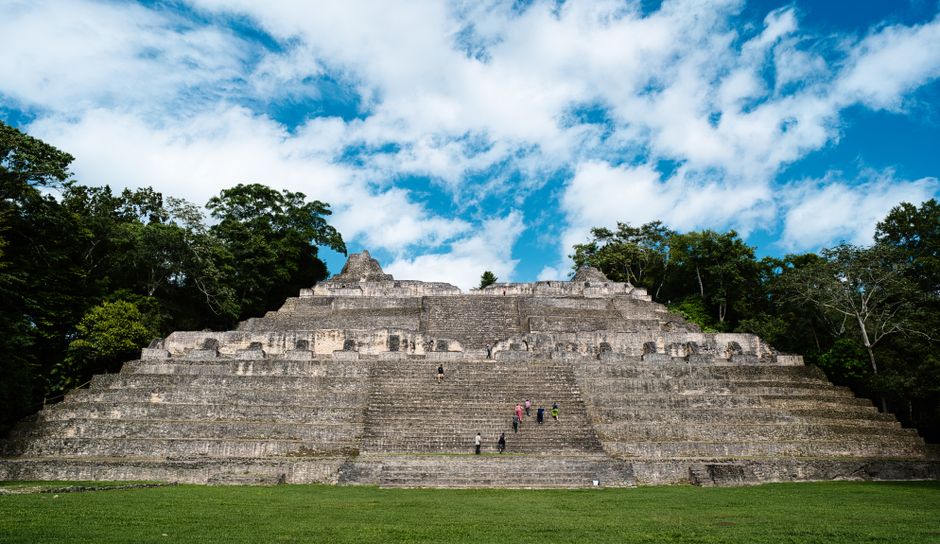
Belize is the only country in Central America where English is the official language, and one of the easiest to visit from North America: flights from the United States take two or three hours, the Belize dollar is fixed at two to the US dollar, and US dollars are accepted almost everywhere. Its great draw is the sea. The Belize Barrier Reef, part of the Mesoamerican Reef, runs the length of the coast, with more than 130 miles of protected water behind it, according to the Belize Tourism Board, and hundreds of cayes (small islands) scattered along it. Snorkel with nurse sharks and rays at Hol Chan off Ambergris Caye, dive the Great Blue Hole, or do nothing at all on Caye Caulker, where the motto is “go slow”. Inland are Maya temples at Caracol, Xunantunich and Lamanai, jungle rivers, caves and waterfalls, and a mix of Kriol, Mestizo, Maya, Garifuna and Mennonite cultures. Plan around the seasons, a dry season from about February to May and a wetter one from June to November, when hurricanes are possible.
Right now in Belize
- Tue 24–32°C 75–89°F 6 mm Rain
- Wed 24–31°C 75–88°F 1 mm Light showers
- Thu 24–32°C 74–90°F 5 mm Showers
- Mon 12 Oct Pan America Day · optional
Weather: MET Norway (CC BY 4.0) · Holidays: Nager.Date
Multi-day tours of Belize
Multi-day tours from local operators. You check dates and book on Viator, our partner; we may earn a commission at no extra cost to you. How we earn money
Belize at a glance: the reef, the cayes and the jungle
Belize is a parliamentary democracy and a member of the Commonwealth, with about 410,000 people, the smallest population in Central America, in six districts: Corozal, Orange Walk, Belize, Cayo, Stann Creek and Toledo. It borders Mexico to the north and Guatemala to the west and south, with the Caribbean Sea to the east. English is the official language, and Belizean Kriol and Spanish are widely spoken, along with Garifuna, Maya languages and Plautdietsch in Mennonite communities. Belmopan is the capital, but Belize City is the largest city and the transport hub. Belize uses Central Standard Time (UTC−6) all year with no daylight saving time.
Belize’s regions
- The northern cayes: Ambergris Caye and its town of San Pedro, and Caye Caulker, the most visited islands, close to the barrier reef.
- The atolls: Turneffe, Lighthouse Reef (with the Great Blue Hole and Half Moon Caye) and Glover’s Reef, offshore beyond the barrier reef, for diving and fishing.
- Belize City and the north: the old colonial port, the Belize Zoo, the Community Baboon Sanctuary, and Lamanai’s temples on the New River near Orange Walk.
- Cayo: the western hills around San Ignacio, with Xunantunich and Caracol, the Actun Tunichil Muknal cave, the Mountain Pine Ridge and the border crossing to Guatemala for Tikal.
- The south: the Placencia peninsula, the Garifuna towns of Dangriga and Hopkins, the Cockscomb Basin jaguar reserve, and Toledo’s Maya villages and rainforest.
Where to go: Ambergris Caye, Caye Caulker and Placencia
Most first trips combine a few nights on an island with a few days inland in Cayo, and perhaps a beach stay in the south. Water taxis and short flights make it easy.
Ambergris Caye
Belize’s largest and busiest island, with the town of San Pedro, resorts along sandy beaches, golf carts instead of cars, and the Hol Chan Marine Reserve and Shark Ray Alley a short boat ride away. It is about 1 hour 30 minutes from Belize City by water taxi. See our Ambergris Caye travel guide.
Caye Caulker
A small, car-free island 45 minutes from Belize City by water taxi, with sandy streets, colorful wooden houses, seafood shacks and the Split, a channel where everyone swims at sunset. It is cheaper and more laid-back than Ambergris. See our Caye Caulker travel guide.
Placencia
A village at the tip of a long, thin peninsula in the south, with a sandy footpath for a main street, beaches, and boat trips to the southern cayes, whale sharks in spring and the Monkey River. See our Placencia travel guide.
More places worth the trip
- San Ignacio and Cayo: the base for Xunantunich, Caracol, cave tubing, the Actun Tunichil Muknal cave with its Maya skeletons, and day trips to Tikal in Guatemala.
- The Great Blue Hole and Lighthouse Reef: a huge circular sinkhole about 300 m (1,000 ft) across, a famous day trip for divers and snorkelers, and from the air.
- Hopkins and Dangriga: Garifuna culture, drumming and food on the southern coast.
- Lamanai: Maya temples reached by a boat ride up the New River, with crocodiles and birds along the way.
- Cockscomb Basin Wildlife Sanctuary: jungle trails and waterfalls in the world’s first jaguar reserve.
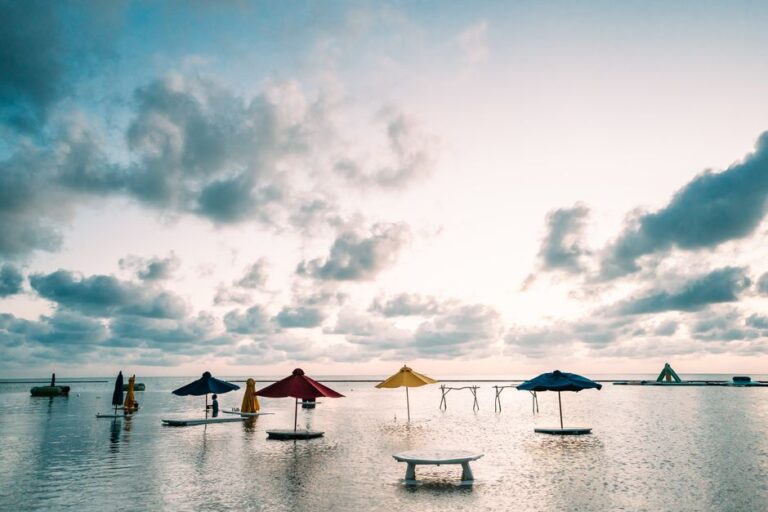
Ambergris Caye Travel Guide
Plan a trip to Ambergris Caye in Belize: San Pedro Town, Hol Chan Marine Reserve and Shark Ray Alley from the Fisheries Department, reserve…
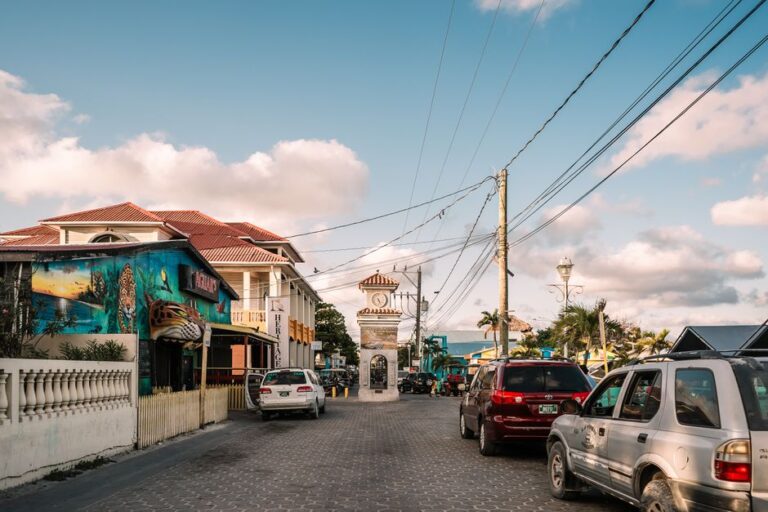
Caye Caulker Travel Guide
Plan a trip to Caye Caulker in Belize: the Split, the Caye Caulker Marine Reserve and its manatees from the Fisheries Department, snorkeling trips…
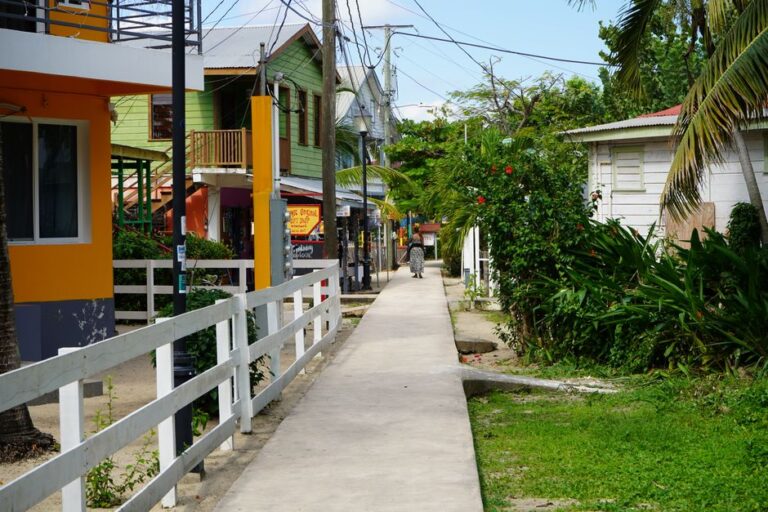
Placencia Travel Guide
Plan a trip to Placencia in southern Belize: the peninsula's beaches and the Sidewalk, Laughing Bird Caye and the southern cayes, whale sharks at…
Best time to visit Belize: dry and wet seasons
Belize is warm all year. The dry season runs from about February to May, with sunshine, calm seas and the best diving visibility; April and May are the hottest months. The wet season runs from about June to November, with heavy showers, especially in the south, and the risk of tropical storms. December and January are a cooler, transitional period with occasional cold fronts (“northers”) that bring wind and rain. The north and the cayes are drier than the south: Toledo can get three or four times as much rain as Corozal.
| Region | Driest months | Wettest months | Temperatures |
|---|---|---|---|
| The cayes (Ambergris, Caye Caulker) | February to May | September to November | About 27–31 °C (81–88 °F) by day; sea about 26–29 °C (79–84 °F) |
| Belize City and the north | February to May | June to October | Hot and humid, often above 30 °C (86 °F) |
| Cayo (San Ignacio) | February to May | June to November | Hot by day, cooler nights in the hills |
| The south (Placencia, Toledo) | March to May | June to November; much wetter than the north | Hot and humid |
Hurricanes: the Atlantic hurricane season runs from June 1 to November 30, according to NOAA’s National Hurricane Center and the UK government, with most storms from August to October. Belize has been hit by hurricanes in the past, and tropical storms can bring flooding inland, as Tropical Storm Sara did in western Belize in November 2024. Follow the National Meteorological Service of Belize and the National Emergency Management Organization (NEMO), and buy travel insurance that covers hurricane disruption.
Crowds, prices and events through the year
- Mid-December to April: the high season, busiest at Christmas, New Year and Easter; book island hotels and dive trips ahead.
- March to June: whale sharks visit Gladden Spit off Placencia around the full moons, and lobster season closes from February 15 to June 14.
- June: Lobsterfest celebrations on Caye Caulker, Ambergris Caye and Placencia when the season reopens.
- September: the “September Celebrations”, with St. George’s Caye Day on the 10th and Independence Day on the 21st.
- November 19: Garifuna Settlement Day, with drumming and reenactments in Dangriga and Hopkins.
Public holidays
Banks and government offices close on public holidays; when one falls on a weekend it is often moved to a Monday. The next ones, from October 2026:
| Holiday | Date | Good to know |
|---|---|---|
| Indigenous Peoples’ Resistance Day | Monday, October 12, 2026 | Formerly Pan-American Day |
| Garifuna Settlement Day | Thursday, November 19, 2026 | Celebrations in Dangriga and Hopkins |
| Christmas Day | Friday, December 25, 2026 | Nationwide |
| Boxing Day | Saturday, December 26, 2026 | Nationwide |
| New Year’s Day | Friday, January 1, 2027 | Nationwide |
| George Price Day | Friday, January 15, 2027 | Honors the father of independence |
| National Heroes and Benefactors Day | Tuesday, March 9, 2027 | Often observed on the nearest Monday |
| Good Friday to Easter Monday | March 26–29, 2027 | Busy travel weekend |
| Labor Day | Saturday, May 1, 2027 | Nationwide |
| Emancipation Day | Sunday, August 1, 2027 | Marks the end of slavery in 1834 |
| St. George’s Caye Day | Friday, September 10, 2027 | Start of the September Celebrations |
| Independence Day | Tuesday, September 21, 2027 | Independence from Britain in 1981 |
How long to stay: sample itineraries
Belize is small: San Ignacio is about two hours by road from Belize City, and island flights take 15–20 minutes.
7 days: cayes and jungle
Three nights on Caye Caulker or Ambergris Caye with a Hol Chan snorkeling trip, then three nights in San Ignacio for Xunantunich, a cave trip and a day at Tikal.
10 days: reef, ruins and the south
Add three nights in Placencia or Hopkins for beaches, the southern cayes and the Cockscomb jaguar reserve, flying between the regions to save time.
2 weeks: Belize and its neighbors
Combine Belize with Tikal and Flores in Guatemala, or with the Yucatán: water taxis link Ambergris Caye and Caye Caulker with Chetumal in Mexico, and buses cross to Bacalar and Tulum. See our Mexico travel guide and our guides to Bacalar and Tulum.
Entry, money and costs
Entry requirements (last reviewed October 2026)
Citizens of the United States, Canada, the UK and the European Union need no visa for a tourist stay of up to 30 days, according to Belize’s Immigration and Nationality Department and the Canadian and UK governments. What you need:
- A passport valid for more than three months after arrival under Belize’s rules, according to the UK government; some airlines want six months, and the Canadian government advises six months beyond departure, so six months is the safe choice.
- The free iDeclare e-form, Belize’s online arrival and departure immigration and customs declaration, which the authorities recommend completing before you travel; paper forms are still accepted during the move to a digital system.
- A return or onward ticket and proof of funds, which officers may ask to see, according to the Canadian government.
Extensions: to stay longer than 30 days, visit an immigration office before your time runs out and apply for a Visitor’s Permit Extension, which costs BZ$200 (US$100) for each extra 30 days, according to the Immigration and Nationality Department. Children under 18 traveling alone or with one parent should carry a notarized consent letter from the absent parent or parents.
Belize is not part of the CA-4 agreement: your Belize stay doesn’t count toward the shared 90 days of Guatemala, El Salvador, Honduras and Nicaragua.
The exit fee and departure tax
- Leaving by land or by water to Guatemala or Mexico: you pay a departure tax of BZ$40 or US$20 at the border, according to the UK government; the Belize Water Taxi company confirms the BZ$40 (US$20) fee, cash only, for its boats from San Pedro to Chetumal. The fee includes Belize’s PACT conservation fee, which funds protected areas.
- Leaving by air: departure taxes are usually included in your airfare.
Customs
Declare goods that may be restricted or taxed on the iDeclare form. Don’t take coral, turtle shell, or fish or lobster out of season.
Money: the Belize dollar
The Belize dollar (BZ$, BZD) is fixed at BZ$2 to US$1; the Central Bank of Belize has fixed its buying rate for US dollar instruments at that rate since June 1, 2023. US dollars are accepted almost everywhere, and change is often given in Belize dollars. Always check whether a price is in BZ$ or US$; hotels, dive shops and tours often quote in US dollars. Bring US cash in small notes. ATMs are found in Belize City, San Pedro, Caye Caulker, Placencia and San Ignacio, but are scarce in rural areas, and credit cards are accepted in towns but not everywhere. Exchanging money on the black market is illegal, according to the Canadian government.
Taxes and tipping
Hotels charge a 9% accommodation tax, which they collect on behalf of the government and pay to the Belize Tourism Board, according to the BTB. Most other goods and services carry 12.5% general sales tax (GST), according to Belize’s trade and investment agency, BELTRAIDE. Many restaurants add a 10% service charge; if not, tip about 10–15%. Tip guides, boat crews and dive masters for good service.
Typical travel costs
Belize is the most expensive country in Central America, closer to Caribbean islands than to Guatemala, especially on the cayes. These per-person, per-day estimates are a planning guide as of October 2026:
| Style | Estimated cost per day | What that looks like |
|---|---|---|
| Budget | about BZ$120–200 (US$60–100) | Hostel bed on Caye Caulker, street food and fry jacks, buses and water taxis |
| Mid-range | about BZ$400–700 (US$200–350) | Beachfront hotel room shared by two, restaurant meals, a snorkel or cave tour most days |
| High-end | about BZ$1,200+ (US$600+) | Island resorts and jungle lodges, private boats, domestic flights, diving |
Dive trips to the Blue Hole and the atolls cost extra. The figures are our estimates, not official statistics.
The reef and marine reserves: fees and rules
The Belize Barrier Reef Reserve System, made up of seven protected sites including the Blue Hole and Half Moon Caye, is a UNESCO World Heritage Site. Most snorkeling and diving trips visit a marine reserve or natural monument with its own visitor fee, which tour operators usually collect and add to your trip price; ask whether it is included.
| Site | Managed by | Visitor fee | Notes |
|---|---|---|---|
| Hol Chan Marine Reserve and Shark Ray Alley (Ambergris Caye) | Fisheries Department | About BZ$30 (US$15) per person, collected by operators | Belize’s first marine protected area (1987); about 4 miles south of San Pedro |
| Caye Caulker Marine Reserve | Fisheries Department | Reserve fee collected by operators | Established 1998; manatees in the north channel |
| Great Blue Hole Natural Monument (Lighthouse Reef) | Belize Audubon Society, with the government | About US$40 per person, collected by operators | Established 1999; open daily 8 a.m.–4:30 p.m. |
| Half Moon Caye Natural Monument | Belize Audubon Society, with the government | Separate fee; often combined with Blue Hole trips | Established 1982; red-footed booby colony |
According to the Fisheries Department, Hol Chan covers 102,400 acres (41,440 ha) of reef, seagrass and mangroves around a 23 m (75 ft) wide channel through the barrier reef, divided into eight zones; Shark Ray Alley, where snorkelers swim with nurse sharks and stingrays, was added in 1999. The Belize Audubon Society, which co-manages seven protected areas including the Blue Hole and Half Moon Caye, says its sites open every day, including weekends and holidays, from 8 a.m. to 4:30 p.m., and takes reservations and fee questions by phone (+501 223 5004) or email. We couldn’t confirm the current fee amounts on an official page, so check the latest figures with your operator or the managing body.
Reef rules: don’t touch or stand on coral, don’t feed or chase marine life, use reef-safe sunscreen, and choose licensed operators; there have been snorkeling and diving accidents caused by poor safety and bad weather, according to the UK government.
Getting there and getting around
Arrival airports
- Philip S. W. Goldson International (BZE): near Belize City, the only major international airport, with direct flights from US cities including Houston, Miami, Dallas, Atlanta, Los Angeles and others. It is about 25 minutes from the water taxi terminal in Belize City, according to the Belize Water Taxi company.
- By land: from Chetumal in Mexico at the Santa Elena border, and from Guatemala at Benque Viejo–Melchor de Mencos.
See our United States travel guide if you are connecting there; for Cancún flights and the drive south, see our Cancún travel guide.
Domestic flights
Small planes are the fastest and most popular way to get around, according to the BTB. Tropic Air flies hourly from Belize City to San Pedro and Caye Caulker, and daily to Placencia, Dangriga, Punta Gorda and Corozal; Maya Island Air flies similar routes. Flights leave from both the international airport and the municipal airstrip in Belize City. Following an incident on a domestic flight in April 2025, the Belize Airports Authority added security checks at municipal airstrips, so allow extra time, according to the UK government.
Water taxis and ferries
Scheduled water taxis are the main link between Belize City and the northern cayes, according to the BTB. The San Pedro Belize Express (Belize Water Taxi) runs several daily trips from the Belize Marine Terminal in Belize City; according to the company, crossings take about 45 minutes to Caye Caulker, 1 hour 30 minutes to San Pedro, and 30 minutes between the two islands. International boats link San Pedro and Caye Caulker with Chetumal, Mexico (about 1 hour 40 minutes to San Pedro), with immigration at both ends. In the south, a water taxi links Placencia with Independence (Mango Creek) across the lagoon. Use reliable companies, check the weather, and don’t board overcrowded boats.
Buses and driving
Buses, many of them old US school buses, connect Belize City with Orange Walk, Corozal, San Ignacio, Dangriga, Placencia (via connections) and Punta Gorda; they are cheap but slow. Rental cars are available in Belize City and tourist centers, according to the BTB. The main highways (Philip Goldson, George Price, Hummingbird and Southern) are paved, but roads can have potholes, no shoulders and no lighting, and temporary bridges flood in heavy rain, according to the UK government. You can drive on a valid foreign license for up to three months; drive by day. Use registered taxis, which have green license plates, and agree on the fare before you get in.
Culture, food and everyday etiquette
Belize blends Caribbean and Central American cultures. Kriol (Creole) culture shapes Belize City and the cayes; Mestizos, many with roots in Mexico and Guatemala, live in the north and west; Garifuna communities on the southern coast are known for drumming, punta dance and a UNESCO-recognized language and music; Maya villages in Toledo and Cayo keep their traditions; and Mennonite farmers produce much of the country’s food. Food to try: rice and beans with stewed chicken, fry jacks for breakfast, conch fritters and ceviche, lobster in season (June 15 to February 14), hudut (fish in coconut broth with mashed plantain) in Garifuna towns, and Marie Sharp’s hot sauce, made in Stann Creek.
Etiquette: island life is relaxed but polite: greet people, ask before taking photos, and cover up away from the beach. Respect the reef and marine reserve rules; taking coral or undersized seafood is illegal. Possession of illegal drugs can lead to a fine and prison.
Safety, health, accessibility and connectivity
Safety
Most visits to Belize are trouble-free, especially in the tourist areas. Belize City has serious gang-related crime, mostly in the area south of Haulover Creek known as Southside; tourists are not normally targeted, but follow your hotel’s advice and take taxis after dark, according to the UK government. Theft of cash, cards and phones affects visitors in San Pedro, Caye Caulker, Placencia and San Ignacio: keep valuables out of sight, use ATMs inside banks or businesses, and avoid dark, empty streets at night. Use a qualified guide for trips off the beaten track. In the remote forests near the Guatemalan border, Belize’s military patrols tourist sites such as Caracol; tours there often travel in convoy. Demonstrations in Belize City and Belmopan are usually peaceful.
At sea, use licensed operators, check the weather, and wear a life jacket; there have been accidents caused by inadequate safety precautions and bad weather. For emergencies, call 911 or 90.
Health and insurance
Medical facilities are limited, and serious cases are usually evacuated to the United States at the patient’s expense, according to the UK government, so buy travel insurance that covers evacuation, including for diving. Dengue, Zika, chikungunya and malaria occur; use insect repellent, especially at dusk, and bring something for sandflies on the cayes. Divers should check the location of the nearest hyperbaric chamber with their dive shop. Drink bottled or filtered water unless your hotel says otherwise.
Accessibility
Sand streets on the cayes, boats without ramps and uneven sidewalks make Belize challenging for wheelchair users. Some larger resorts on Ambergris Caye have accessible rooms; the water taxi company says wheelchairs are available and passengers who need help can board first if they tell the crew.
Connectivity and power
Mobile coverage from Digi and Smart is good in towns and on the main cayes, and patchy in the jungle and the far south. Belize uses 110/220 V; most outlets take US-style plugs, so visitors from the United States and Canada usually need no adapter.
Things to do: snorkeling, diving, beaches and Maya sites
- Snorkeling: Hol Chan and Shark Ray Alley off Ambergris Caye, the Caye Caulker reserve, and Laughing Bird Caye and Silk Caye off Placencia.
- Diving: the Great Blue Hole, the walls of Lighthouse Reef, Turneffe and Glover’s atolls, and whale sharks at Gladden Spit in spring.
- Boat trips: sailing between the cayes, manatee watching, river trips to Lamanai and the Monkey River.
- Beaches: the Placencia peninsula, Hopkins and the northern beaches of Ambergris Caye; many caye “beaches” are narrow, with seagrass offshore.
- Hiking: the Cockscomb Basin, the Mountain Pine Ridge’s waterfalls, and caves in Cayo.
- Maya sites: Xunantunich, Caracol, Lamanai, Altun Ha and Cahal Pech.
What to pack
Pack light, quick-dry clothes, swimwear, a rash guard, reef-safe sunscreen, a hat and sunglasses, sandals and water shoes, strong insect repellent (with something for sandflies), a light rain jacket from June to November, sturdy shoes and long trousers for jungle trips and caves, a dry bag for boats, and small US dollar notes. Plugs are usually the same as in the US.
Belize travel FAQ
When is the best time to visit Belize?
February to May, the dry season, for sunshine, calm seas and the best diving. June to November is wetter and is hurricane season.
Do I need a visa for Belize?
Not if you are from the US, Canada, the UK or the EU. You can stay 30 days, and extensions cost BZ$200 (US$100) for each extra 30 days.
How much is the Belize exit fee?
BZ$40 (US$20) when you leave by land or by boat to Mexico or Guatemala, paid in cash at the border. When you fly out, the departure tax is usually included in your ticket.
Is Belize part of the CA-4 agreement?
No. CA-4 covers Guatemala, El Salvador, Honduras and Nicaragua; time in Belize doesn’t count toward their shared 90 days.
Can I use US dollars in Belize?
Yes, almost everywhere. The Belize dollar is fixed at BZ$2 to US$1, and change is often given in Belize dollars.
What taxes are added to hotel bills in Belize?
A 9% hotel accommodation tax; most other goods and services carry 12.5% GST. Check whether quoted rates include tax and service.
How much does it cost to visit Hol Chan or the Blue Hole?
Operators usually collect the fees: about BZ$30 (US$15) for Hol Chan and about US$40 for the Blue Hole at the time of writing. Check the current amounts, as we couldn’t confirm them on an official page.
How do I get to Ambergris Caye and Caye Caulker?
By water taxi from Belize City, about 45 minutes to Caye Caulker and 1 hour 30 minutes to San Pedro, or by a 15–20 minute flight.
When is hurricane season in Belize?
From June 1 to November 30, with most storms from August to October.
Is Belize safe for tourists?
Most visits are trouble-free. Take care in Belize City, especially Southside, watch for petty theft on the cayes, and use licensed boat operators.
What language is spoken in Belize?
English is the official language; Kriol and Spanish are widely spoken.
Sources and last review
Researched and last reviewed on 4 October 2026. Visa-free stays, the visitor’s permit extension fee, the iDeclare form and passport rules for visa applicants: Belize’s Immigration and Nationality Department; the barrier reef’s protected waters, water taxis as the main link, domestic flights and rental cars: the Belize Tourism Board; the 9% hotel tax: the Belize Tourism Board; GST: BELTRAIDE; the exchange rate: the Central Bank of Belize; Hol Chan’s history, size, zones and channel, and the Caye Caulker reserve: the Fisheries Department; Blue Hole and Half Moon Caye establishment dates and hours: the Belize Audubon Society; water taxi times, the Chetumal route, the airport shuttle time, the exit fee for the Chetumal boat and wheelchair help: the Belize Water Taxi company (operator); domestic routes: Tropic Air (operator); hurricane season: NOAA’s National Hurricane Center; passport validity, the land and water departure tax, extensions, safety, the April 2025 airstrip security changes, driving, taxis, health care and emergency numbers: the UK government; onward tickets, funds and money rules: the Canadian government. The Hol Chan and Blue Hole fee amounts, population, cultures, rainfall by region, temperatures, holiday dates, lobster and whale-shark seasons, the PACT share of the exit fee, flight routes from the US, SIM providers, plugs and daily costs come from secondary sources or general knowledge and are flagged for checking; daily costs are our estimates. Prices and rules change, so check the official sites before you travel. For other trips in the region, see our Mexico, Costa Rica and Panama travel guides.
Plan your trip
Partner links: TravelerCenter may earn a commission if you book, at no extra cost to you.