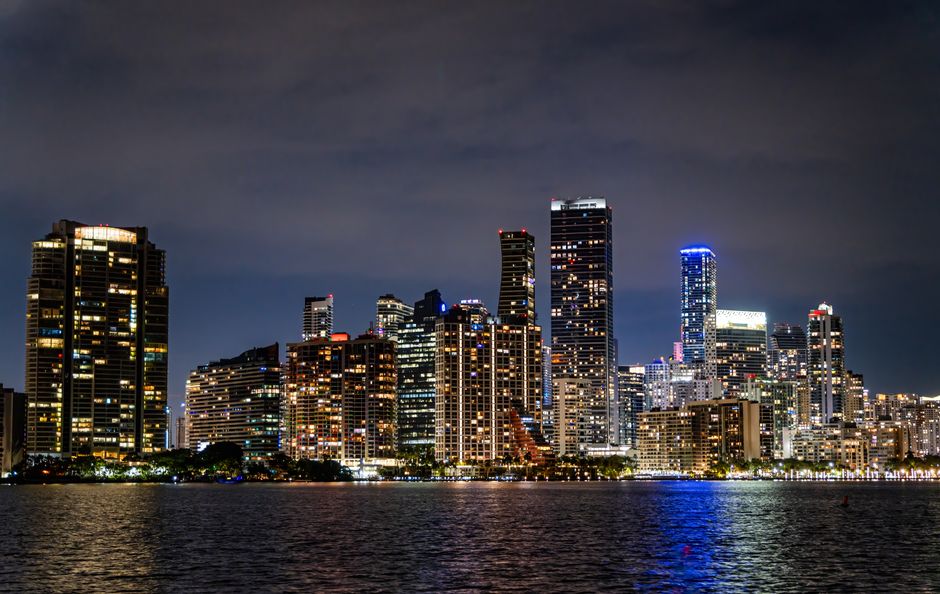
Miami is the big, bilingual, sun-soaked city at the bottom of Florida, a gateway between the United States, Latin America and the Caribbean. Downtown and Brickell rise in glass towers on Biscayne Bay, Little Havana smells of Cuban coffee and cigars, Wynwood’s warehouses are covered in murals, and the Italian Renaissance-style Vizcaya estate sits among gardens on the bay. Across the causeways lie the separate city of Miami Beach and the island beaches of Key Biscayne, and the Everglades and the Florida Keys are within a day’s drive. Winter is warm and dry and summer is hot, humid and stormy; the best months are November to April.
Right now in Miami
- Wed 25–31°C 77–87°F 3 mm Showers
- Thu 24–30°C 75–87°F 4 mm Showers
- Fri 25–29°C 76–84°F 3 mm Partly cloudy
- Mon 12 Oct Columbus Day
Weather: MET Norway (CC BY 4.0) · Sea temperature: NOAA CoastWatch · Air quality: OpenAQ · Holidays: Nager.Date
Top tours in Miami
See all tours for Miami →
From local operators, with prices and reviews; you check availability and book on Viator, our partner. We may earn a commission at no extra cost to you. How we earn money
Miami at a glance
- Best for: Latin food and culture, street art, contemporary art museums, waterfront skyline views, nightlife and easy trips to the beach, the Everglades and the Keys.
- How long: 3 days for the city itself; 5–7 days to add Miami Beach, Key Biscayne and a day in the Everglades or the Keys.
- Best time: November to April, with highs of 76–84 °F (25–29 °C) and about 4 rainy days a month. June to October is hot and wet, and hurricane season runs from June to November.
- Getting there: fly to Miami International Airport (MIA), linked to the city by the free MIA Mover and Metrorail’s Orange Line; Brightline trains run from Orlando and the Palm Beach and Fort Lauderdale areas.
- Getting around: the free Metromover downtown, Metrorail and Metrobus for $2.25 a ride, free city trolleys, ride apps and taxis. A car helps for day trips.
- Before you go: entry rules, money, driving and general safety are on our United States travel guide.
Miami’s neighborhoods and who each one suits
The City of Miami is only part of a huge metropolitan area in Miami-Dade County. Miami Beach, Coral Gables and Key Biscayne are separate towns with their own rules, but most visitors move between them without noticing.
Downtown and Brickell
The business heart of the city, a forest of towers along Biscayne Bay and the Miami River. Downtown has Bayfront Park, the Pérez Art Museum, the Frost Science museum and the Kaseya Center arena; Brickell, just south, is the financial district, packed with rooftop bars and restaurants. Both are served by the free Metromover, so they make a practical, car-free base. Quieter at weekends, except around the bars.
Little Havana
West of Brickell, the neighborhood that Cuban exiles made their own from the 1960s. Calle Ocho (SW 8th Street) is its main street, with cafecito windows, cigar shops, fruit stands, the old men’s dominoes park and live Latin music in the evenings. Great for food lovers and anyone curious about Miami’s Cuban story; most visitors come for an afternoon or evening rather than to stay.
Wynwood and the Design District
Wynwood, north of downtown, is a former warehouse district turned open-air gallery, with huge murals on almost every wall, craft breweries, galleries and late-night bars. Next door, the Design District is the opposite: luxury fashion houses, design showrooms and public art. Both suit art lovers and night owls; Wynwood is busiest on weekend evenings.
Coconut Grove and Coral Gables
Coconut Grove is Miami’s leafy, bohemian old village by the bay, with marinas, sidewalk cafés and Vizcaya on its edge. Coral Gables, a planned 1920s city of Mediterranean-style buildings and banyan-shaded streets, is calmer and more residential, with the historic Biltmore Hotel and the Miracle Mile shopping street. Both suit couples and families who prefer a slower pace.
Top things to see in Miami
Prices and hours below were checked on the official sites in October 2026, unless we say otherwise; check again before you go.
Vizcaya Museum and Gardens
Built in the 1910s as the winter home of the industrialist James Deering, Vizcaya is an Italian Renaissance-style villa on Biscayne Bay, filled with European art and antiques and surrounded by formal gardens, fountains, grottoes and a stone barge in the bay. Allow two to three hours. As of October 2026 Vizcaya opens daily except Tuesdays, 9:30 a.m. to 4:30 p.m. Buy tickets on Vizcaya’s own website, which also lists any areas closed for ongoing restoration work. The Vizcaya Metrorail station is a short walk away.
Pérez Art Museum Miami (PAMM) and Museum Park
PAMM’s building by Herzog & de Meuron, with its hanging gardens and deep shaded veranda over the bay, is as much a draw as its modern and contemporary art from the Americas, Europe and Africa. As of October 2026 adult tickets cost $18, and $14 for seniors (62+), students and young people aged 7–18; children 6 and under go free. The museum lists opening hours of 11 a.m. to 6 p.m. on Mondays and Friday to Sunday, and 11 a.m. to 9 p.m. on Thursdays, with free entry after 5 p.m. that evening; it is closed on Tuesdays and Wednesdays. Next door in Museum Park, the Phillip and Patricia Frost Museum of Science has an aquarium and a planetarium.
Little Havana and Calle Ocho
Walk SW 8th Street between about 12th and 17th Avenues for the best of Little Havana: a Cuban coffee from a ventanita (street window), hand-rolled cigars, the dominoes tables of Máximo Gómez Park, the sidewalk stars of the Calle Ocho Walk of Fame, the Tower Theater and the Cuban Memorial Boulevard. Come hungry for croquetas, a Cubano sandwich and guava pastries, and stay for salsa in the evening. It is free to wander; guided food walks are widely available.
Wynwood’s street art
Murals cover warehouse walls across a grid of streets around NW 2nd Avenue, and most can be seen for free from the sidewalk. The best-known collection, the Wynwood Walls, is a ticketed private outdoor gallery. Go in the late afternoon, when the light is softer and the bars start to open, and take a ride app back at night rather than walking far.
Bayside, Biscayne Bay and the skyline
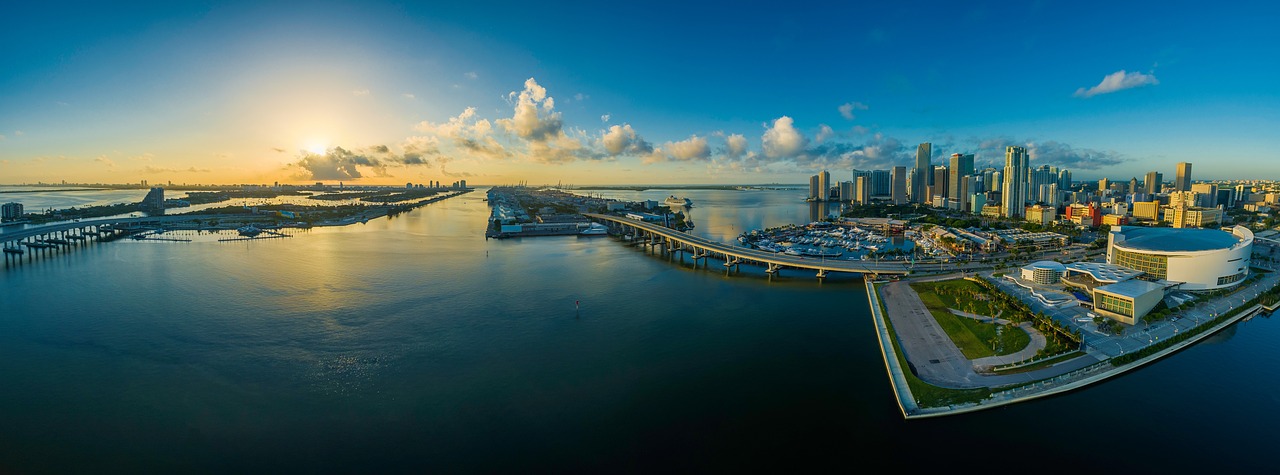
Bayside Marketplace, by Bayfront Park downtown, is the starting point for sightseeing cruises around Biscayne Bay, past the cruise ships of PortMiami and the waterfront mansions of the islands. The views of the skyline from the water at sunset are some of the best in Florida. For a free alternative, ride the Metromover’s Brickell and Omni loops, which run on elevated tracks above the streets.
More to see
- Coral Gables: the Biltmore Hotel, the Venetian Pool carved from a coral-rock quarry, and Miracle Mile.
- Fairchild Tropical Botanic Garden: palms, cycads and a butterfly house in Coral Gables.
- Zoo Miami: a large open-plan zoo in the south of the county, suited to the climate.
- The Design District: free public art and architecture among the boutiques.
- Coconut Grove: the waterfront, the marinas and the historic Barnacle house.
Other things to do in Miami
Beaches: Key Biscayne and Miami Beach
The City of Miami itself faces the bay, so for the ocean you cross a causeway. The Rickenbacker Causeway leads to Key Biscayne, with Crandon Park’s calm family beach and, at the island’s southern tip, Bill Baggs Cape Florida State Park, with its 1820s lighthouse, sea-grape-lined sand and bay views back to the city. Florida State Parks charges a per-vehicle entry fee, reported at about $8 for a car with two to eight people; check the official park page before you go. The causeway toll is electronic only (see “Driving, tolls and parking” below). Miami Beach, across the MacArthur and Julia Tuttle causeways, has miles of Atlantic sand; see our separate Miami Beach guide.
Beach safety: flags, rip currents and seaweed
Swim near a lifeguard. Florida beaches use a statewide warning flag system: green for low hazard, yellow for medium hazard, red for high surf or strong currents, a red flag with a crossed-out swimmer when the water is closed, and purple for dangerous marine life such as jellyfish. Rip currents are the main danger; if you are caught in one, swim parallel to the shore before heading back in. The Florida Department of Health samples beach water weekly through its Healthy Beaches program and posts swimming advisories, which are more likely after heavy summer rain. In spring and summer, sargassum seaweed can pile up on Atlantic beaches; according to the City of Miami Beach and the Florida Department of Health, the rotting weed smells of rotten eggs and the tiny creatures living in it can irritate the skin, but at beach levels it is not expected to harm health.
Food, music and sport
Miami’s food is its best souvenir: Cuban bakeries and lunch counters, Peruvian ceviche, Venezuelan arepas, Haitian griot in Little Haiti and stone crabs in season (mid-October to early May). Evenings bring Latin jazz and salsa in Little Havana, DJs in Wynwood and rooftop bars in Brickell. Sports fans can catch the Miami Heat at the Kaseya Center downtown, the Dolphins and the Hurricanes at Hard Rock Stadium, and Inter Miami’s soccer.
Day trips and onward travel
Everglades National Park
The “river of grass” begins at the city’s western edge. Shark Valley, on the Tamiami Trail (US 41) about 25 miles (40 km) west of Florida’s Turnpike, has a 15-mile (24 km) loop road into the sawgrass marsh that you can cycle or ride by tram, with alligators along the way and a lookout tower at the halfway point. There are no airboats at Shark Valley itself; the park lists three authorised airboat companies a few minutes east on the same road. The park’s main entrance, near Homestead, is about an hour south of downtown. As of October 2026 the National Park Service charges $35 per private vehicle for 7 days, plus $100 per person for non-US residents aged 16 and over unless they hold an annual or America the Beautiful pass. See our separate Everglades National Park guide.
The Florida Keys and Key West
Key Largo, at the top of the Keys, is about an hour and a half south of Miami by car, with coral-reef snorkelling at John Pennekamp Coral Reef State Park. Key West is a long day’s drive away along the Overseas Highway, so it is better as an overnight trip; see our Florida Keys and Key West guides. Fort Lauderdale, with its canals and beach, is an easy day out by Brightline or Tri-Rail.
Nearby destinations
- Miami Beach8 km
- Fort Lauderdale41 km
- Everglades National Park71 km
- Naples166 km
- Florida Keys186 km
- Key West209 km
- Sarasota291 km
- Nassau297 km
Getting there and getting around
From Miami International Airport
MIA is about 8 miles (13 km) west of downtown. From the third level of the terminal, the free MIA Mover train runs to the Miami Intermodal Center, for the rental car center, Metrorail and Tri-Rail. According to Miami-Dade County, on weekdays Orange Line Metrorail trains run straight from the MIA station to downtown and Brickell; at weekends a shuttle train runs every 15 minutes between MIA and Earlington Heights, where you change to the main line. Metrorail runs from 5 a.m. to midnight and, as of October 2026, a ride costs $2.25. For Miami Beach, Metrobus route 150 Miami Beach Airport Express runs every 30 minutes from 6 a.m. to 11:40 p.m. for the same fare. Taxis wait outside baggage claim and use the meter: according to the airport, $2.95 for the first sixth of a mile, a $15 minimum fare for trips from MIA, and a $2 airport fee. Ride-app pickups are on the arrivals and departures levels; ignore anyone offering rides inside the terminal.
Metrorail, Metromover, buses and trolleys
Miami-Dade Transit’s 25-mile (40 km) Metrorail line links MIA, Hialeah, the Civic Center, downtown, Brickell, Vizcaya, Coconut Grove, Coral Gables and Dadeland. You can tap a contactless bank card or phone at the gates, or use an EASY Card or the GO Miami-Dade Transit app; the gates do not take cash. As of October 2026, with contactless payment the fares stop at $5.65 a day, the price of a 1-day pass; a 7-day pass costs $29.25. The Metromover is free: three elevated loops serve 21 stations from Brickell to Omni, every 90 seconds at rush hour and every 3 minutes at other times, from 5:30 a.m. to 10 p.m. The City of Miami also runs free trolley routes through many neighborhoods.
Brightline and Tri-Rail
Brightline’s express trains leave from MiamiCentral station downtown, next to the Historic Overtown/Lyric Theatre Metrorail station, and call at Aventura, Fort Lauderdale, Boca Raton and West Palm Beach before running to Orlando International Airport. Fares vary by date and class (SMART and PREMIUM), so book ahead on Brightline’s site or app. Tri-Rail is the cheaper commuter train to Fort Lauderdale and West Palm Beach, with a stop at the Miami Intermodal Center by the airport.
Driving, tolls and parking
Traffic is heavy at rush hour, and many expressways are tolled. According to Florida’s Turnpike Enterprise, Miami’s toll roads and bridges, including the Turnpike, the Dolphin (SR 836) and Airport (SR 112) expressways, and the Rickenbacker and Venetian causeways, are cashless. Tolls are charged to a SunPass or a compatible transponder such as E-ZPass, or billed by TOLL-BY-PLATE to the car’s owner with an administrative fee. Rental cars cannot use TOLL-BY-PLATE: check your rental company’s toll program and its fees, or add the car’s plate to your own SunPass account for the rental dates. Downtown and Brickell hotels charge for parking, and street parking is paid by app.
When to go and how long to stay
Miami is tropical: warm all year, with a dry season from about November to April and a hot, humid wet season from May to October, when short, heavy afternoon thunderstorms are almost daily. The table uses NOAA’s 1991–2020 climate normals for the Miami International Airport weather station: average daily highs and lows, and days with at least 0.10 in (2.5 mm) of rain. The bayfront and the beaches are often a little cooler in summer and milder on winter nights.
| Season | Average high / low | Rainy days per month | What it’s like | Good for |
|---|---|---|---|---|
| Winter (Dec–Feb) | 76–78 °F (25–26 °C) / 61–64 °F (16–18 °C) | 4 | Warm, sunny and dry; the occasional cool front | Beaches, sightseeing, Art Week; peak prices |
| Spring (Mar–May) | 81–87 °F (27–30 °C) / 66–73 °F (19–23 °C) | 4–7 | Hot and mostly dry until the rains start in May | Beaches, festivals, boat trips |
| Summer (Jun–Aug) | 89–91 °F (32–33 °C) / 76–78 °F (25 °C) | 11–13 | Hot and humid, with daily afternoon storms | Lower hotel rates, museums, early-morning beach time |
| Autumn (Sep–Nov) | 89 °F falling to 81 °F (32 to 27 °C) / 77 °F falling to 68 °F (25 to 20 °C) | 13 in September, 5 in November | Wettest early on and the peak of hurricane season; fine by November | Deals in autumn, stone crab season from mid-October |
The airport averages about 67 in (1,712 mm) of rain a year, with June the wettest month at about 10.5 in (267 mm). Storms usually pass within an hour, so plan outdoor time for the morning.
Hurricane season: according to NOAA’s National Hurricane Center (NHC), the Atlantic hurricane season runs from 1 June to 30 November, with most activity between mid-August and mid-October. If you travel in these months, follow forecasts from the National Hurricane Center and the National Weather Service office in Miami, know your evacuation zone from Miami-Dade County emergency management, obey any evacuation orders, and consider travel insurance.
Events worth planning around
- Early December: Miami Art Week, centered on Art Basel Miami Beach (4–6 December 2026, with preview days on 2 and 3 December), with satellite fairs across Wynwood and downtown. Hotels fill early.
- March: the Calle Ocho street festival in Little Havana, the Miami Open tennis tournament and big music festivals; spring break crowds fill the beaches.
- Sports seasons: the Heat play from October to April, the Dolphins from September to January.
How long to stay: 3, 4 and 5 days
3 days: day one, downtown, PAMM and a bay cruise from Bayside, then Brickell for dinner; day two, Vizcaya and Coconut Grove in the morning and Little Havana in the afternoon and evening; day three, Wynwood’s murals and the Design District, then sunset on Key Biscayne.
4 days: add a beach day in Miami Beach and the Art Deco district. 5 days: add a day trip to Shark Valley in the Everglades, or drive to Key Largo for a reef snorkelling trip.
Where to stay in Miami and the hotel taxes
- Downtown and Brickell: high-rise hotels with bay views, the free Metromover and plenty of restaurants; the best car-free base.
- Coconut Grove and Coral Gables: quieter, greener and good for families, with Metrorail nearby.
- Wynwood and Midtown: boutique hotels and nightlife; noisy at weekends.
- Near MIA: practical for early flights or a cruise from PortMiami.
Prices peak from December to April and during Art Week. Florida prices are shown before tax. As of October 2026, a hotel room in the City of Miami carries Florida’s 6% sales tax plus Miami-Dade County’s 1% surtax, and a further 6% county tourist tax made up of a 3% convention development tax, a 2% tourist development tax and a 1% professional sports tax: 13% in all. Food and drink sold in hotels carry an extra 2%, and restaurants and bars that serve alcohol (if their sales are large) add a 1% homeless and domestic violence tax to the 7% sales tax. Miami Beach, Surfside and Bal Harbour have their own rates. Many hotels also add a resort or “destination” fee and charge for parking. Under the Federal Trade Commission’s fees rule in force since May 2025, mandatory fees like these must be included in the total price advertised for a stay; taxes may be shown separately. Compare total prices before you book.
Practical tips for Miami
- Tap to ride: a contactless card or phone works on Metrorail and Metrobus and caps your fares at $5.65 a day.
- Spanish helps: English is understood everywhere, but Spanish is spoken widely, especially in Little Havana.
- Tipping: 18–20% is usual in restaurants; check the bill, as some places add a service charge.
- Sun and heat: the sun is strong all year; drink plenty of water and plan walks for the morning.
- Night safety: stick to busy streets in Wynwood and downtown at night and use ride apps for longer trips.
- Emergencies: call 911.
What to pack for Miami
Pack light, breathable clothes, sandals and comfortable walking shoes, a swimsuit, a wide-brimmed hat, sunglasses and high-factor sunscreen. A compact umbrella or light rain jacket is useful from May to October, when afternoon downpours are almost daily. Bring a light layer for fierce air conditioning indoors and the odd cool evening between December and February, and smarter clothes for rooftop bars and restaurants. Insect repellent is essential for the Everglades or any evening near the mangroves.
Miami travel FAQ
How do I get from Miami airport to downtown?
Take the free MIA Mover to the Miami Intermodal Center and Metrorail’s Orange Line to downtown and Brickell, for $2.25 as of October 2026. At weekends, change at Earlington Heights. A taxi uses the meter, with a $15 minimum fare from the airport.
Is the Metromover free?
Yes. The Metromover is free and runs from 5:30 a.m. to 10 p.m. daily on three loops around downtown, Brickell and Omni. Check the Miami-Dade Transit site for weekend works.
Is Miami the same as Miami Beach?
No. Miami Beach is a separate city on a barrier island across Biscayne Bay, with South Beach and the Art Deco district. It is about 15 to 30 minutes from downtown Miami by car or bus, depending on traffic.
What is the hotel tax in Miami?
As of October 2026, 13% in the City of Miami: 7% sales tax plus 6% county tourist taxes. Resort fees and parking come on top, so compare total prices.
How much is Vizcaya and when is it open?
Vizcaya opens daily except Tuesdays, 9:30 a.m. to 4:30 p.m. Ticket prices and any restoration closures are on its official website, where you should book.
Can I take the train from Miami to Orlando?
Yes. Brightline runs from MiamiCentral downtown to Orlando International Airport, stopping in Aventura, Fort Lauderdale, Boca Raton and West Palm Beach. Fares vary by date and class, so book ahead.
When is hurricane season in Miami?
From 1 June to 30 November, according to NOAA’s National Hurricane Center, with most activity from mid-August to mid-October. Most trips are unaffected, but follow forecasts and county evacuation orders, and consider travel insurance.
Can I visit the Everglades from Miami without a car?
Only on a tour. There is no public transport to Shark Valley or the main park entrance, and the park warns that ride-app drivers are hard to find for the return trip. Join a guided tour or rent a car.
Do I need a SunPass in Miami?
Not necessarily, but toll roads are cashless. In a rental car, use the company’s toll program or add the plate to your own SunPass account; TOLL-BY-PLATE is not available for rental cars.
How many days do you need in Miami?
Three days covers downtown, Vizcaya, Little Havana and Wynwood. Allow five or more to add the beaches, the Everglades and a trip to the Keys.
Sources and last review
Researched and last reviewed on 4 October 2026. Airport transport and taxi rates: Miami International Airport; Metrorail, Metromover and bus fares and hours: Miami-Dade County Department of Transportation and Public Works; hotel and restaurant taxes: Miami-Dade County and the Florida Department of Revenue; Vizcaya hours: Vizcaya Museum and Gardens; PAMM prices and hours: Pérez Art Museum Miami; Everglades fees: National Park Service; tolls: Florida’s Turnpike Enterprise; beach flags and seaweed: City of Miami Beach Ocean Rescue and the Florida Department of Health; hurricane season: NOAA’s National Hurricane Center; resort fees: Federal Trade Commission; climate: NOAA’s 1991–2020 normals for Miami International Airport. The Bill Baggs park fee, event dates other than Art Basel and travel times are flagged for checking. Prices, hours and timetables change, so check the official sites before you go. For entry rules, money and general safety, see our United States travel guide.
Plan your trip
Partner links: TravelerCenter may earn a commission if you book, at no extra cost to you.