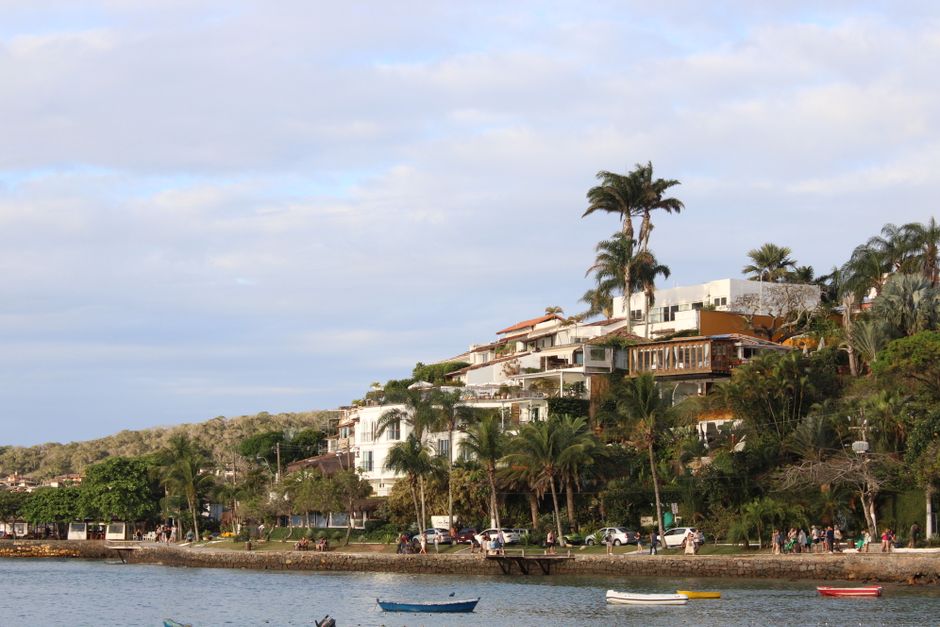
Armação dos Búzios, almost always just “Búzios”, is a small resort town on a hilly peninsula about 170 km (105 miles) east of Rio de Janeiro, with 23 beaches, according to the town’s tourism department, tucked into coves on both sides. A fishing village until the 1960s, it became famous when Brigitte Bardot stayed in 1964, and it has kept a glamorous, Mediterranean feel: boutique pousadas on the hillsides, the cobbled Rua das Pedras lined with restaurants, bars and shops, the Orla Bardot waterfront and schooners taking visitors from beach to beach. The coast here, the Região dos Lagos, is one of the driest and windiest in Brazil, so the sun shines on most days and the water is clear. Búzios has about 40,000 residents and fills up in summer and on holidays, when many visitors come from Argentina.
Right now in Armação dos Búzios
- Wed 22–29°C 72–83°F 4 mm Cloudy
- Thu 22–28°C 71–83°F Partly cloudy
- Fri 23–29°C 73–84°F Clear
- Mon 12 Oct Our Lady of Aparecida (Nossa Senhora Aparecida)
Weather: MET Norway (CC BY 4.0) · Sea temperature: NOAA CoastWatch · Holidays: Nager.Date
Top tours in Armação dos Búzios
See all tours for Armação dos Búzios →
From local operators, with prices and reviews; you check availability and book on Viator, our partner. We may earn a commission at no extra cost to you. How we earn money
Búzios at a glance
- Best for: beaches, boat trips, snorkeling, kitesurfing, dining and nightlife, and romantic breaks.
- How long: 3–4 days, or a long weekend from Rio.
- Best time: March to May and September to November for sunny, uncrowded days; December to February for summer heat and buzz.
- Getting there: about 3 hours by road from Rio de Janeiro, by car, bus or transfer; the nearest commercial airport is Cabo Frio.
- Getting around: walking, taxis, ride-hailing apps, beach shuttles, water taxis and schooners.
- Before you go: the e-visa, money and general safety are in our Brazil travel guide; for the city, see our Rio de Janeiro travel guide.
Búzios’s areas: where things are
The peninsula juts into the Atlantic, with the town center on its sheltered northern bay side and wilder beaches on the ocean side.
The center, Rua das Pedras and Orla Bardot
The cobbled Rua das Pedras and the waterfront walk of Orla Bardot, with the statue of Brigitte Bardot sitting on a suitcase, are the heart of town, packed with restaurants, bars, galleries and the boat piers.
The northern bay: Ossos, Azeda and João Fernandes
Calm, clear water in small coves just north of the center: the old fishing beach of Ossos, the pretty Azeda and Azedinha below a path, and João Fernandes and João Fernandinho, the best snorkeling beaches, lined with beach restaurants.
The south and east: Geribá, Ferradura and Tartaruga
Geribá is the long surf and party beach, with beach clubs; Ferradura is a horseshoe bay with calm water and resorts; Tartaruga has warm, sheltered water and kiosks.
Manguinhos and Rasa
On the mainland side, Manguinhos is the windiest beach, used for kitesurfing and windsurfing, and Rasa is a long, calm beach with islands offshore.
Other beaches worth the trip
Beyond the famous coves, José Gonçalves and Tucuns, on the south side of the peninsula, are long, quiet beaches with surf and few buildings; Praia Brava, below a steep road on the ocean side, is a favorite of surfers and has a small naturist corner nearby; and Olho de Boi, reached only by a short trail from Brava, is an official naturist beach where clothing is not allowed. Praia da Foca, beside Forno, is tiny and calm. Most of these are best reached by car, buggy or the local buses that run out from the center.
Búzios in brief: history and culture
The peninsula was a base for French pirates and, later, a whaling and fishing settlement; its name comes from the búzios, the sea shells found on its beaches. It stayed a quiet fishing village, part of the municipality of Cabo Frio, until Brigitte Bardot’s stays in 1964 put it on the international map, and the hippie and jet-set crowds of the 1960s and 1970s followed. The town became a municipality of its own in 1995. Many Argentines and Europeans settled here, which explains the cosmopolitan restaurants and the Spanish heard in the streets in summer.
Fishing hasn’t vanished: at dawn on Praia dos Ossos and Praia da Armação, you can still see the colorful wooden boats come in, and fresh fish is sold on the beach. The Orla Bardot also has the statue of the Three Fishermen, honoring the town’s origins.
Top things to see in Búzios
Schooner trip around the peninsula
The classic Búzios outing: a two- to three-hour trip on a wooden schooner (escuna) or glass-bottom boat stopping at several beaches and islands for swimming and snorkeling, leaving from the pier on Orla Bardot.
João Fernandes and João Fernandinho
Two small beaches with calm, clear water over rocks and seagrass, good for snorkeling with turtles and tropical fish.
Rua das Pedras and Orla Bardot
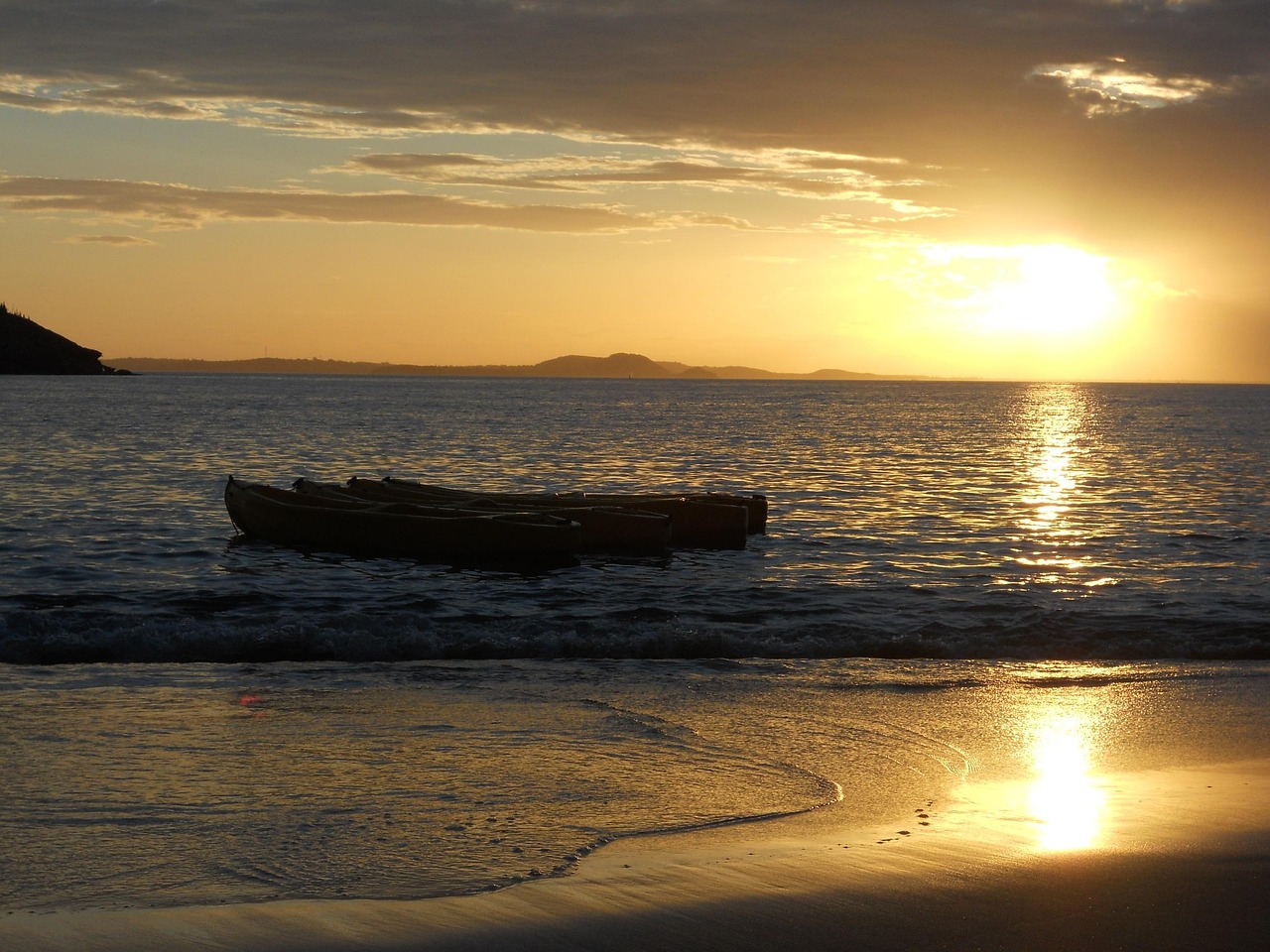
The town’s evening promenade: watch the sunset from the waterfront, then dine and browse the shops and galleries until late.
Mirante do Forno and Praia do Forno
A lookout and a short trail lead down to Forno, a beach of reddish sand and cool, clear water.
Ponta da Lagoinha
Volcanic rock formations and tide pools on the ocean side, with views of the open sea, good at sunset.
More to see
- Azeda and Azedinha: twin coves reached by a short path from the center.
- Tartaruga: a calm beach with kiosks, good for families.
- Ferradura lookout: views over the horseshoe bay.
- Arraial do Cabo: the clear-water beaches and boat trips of the neighboring town, about an hour away.
Beaches in Búzios
- Geribá: long, lively, with surf and beach clubs.
- Ferradura: calm water in a horseshoe bay.
- João Fernandes: clear water for snorkeling, with restaurants on the sand.
- Azeda and Azedinha: small and pretty, close to the center.
- Tartaruga: warm and calm.
- Manguinhos: wind sports.
- Forno: red sand, cool water, reached on foot.
Other things to do in Búzios
Diving and snorkeling
The cool, nutrient-rich water of the Cabo Frio upwelling brings good visibility and marine life to sites around the islands off Búzios and especially off Arraial do Cabo, a famous Brazilian dive spot.
Stand-up paddle, kayaks and glass-bottom boats
The calm bay beaches are good for stand-up paddleboarding and sea kayaking, with rentals at Ferradura, Manguinhos and Ossos, and you can paddle around the headlands to quieter coves. Glass-bottom boats and short trips to the Ilha Feia and the other islands off the peninsula show turtles and fish without getting wet, and the local fishermen offer private boat trips from the beaches of Armação and Ossos.
Kitesurfing and windsurfing
The steady winds of the Região dos Lagos make Manguinhos and Rasa good places to learn, with schools on the beach.
Food and nightlife
Búzios has an outsized restaurant scene for its size, from beachside grilled fish to French, Italian and Argentine-style dining, and bars and clubs along Rua das Pedras that stay busy late in high season.
Where to eat and drink
- Rua das Pedras and Orla Bardot: the main dining strip, from Argentine steakhouses and Italian trattorias to French bistros and sushi; book in high season.
- João Fernandes and Ferradura: beach restaurants serving grilled fish, shrimp and moqueca with your feet in the sand.
- Manguinhos: the Gourmet Street area, with quieter, sometimes cheaper restaurants.
- Ossos: waterfront bars for sunset drinks by the fishing boats.
Nightlife centers on Rua das Pedras, with bars, live music and clubs that stay open until dawn in summer; out of season, many places close early or on some weekdays.
Arraial do Cabo in more depth
The neighboring town, about an hour away by road, has some of the clearest, coolest water on the Brazilian coast, thanks to the upwelling of cold, nutrient-rich water off the cape. Boat trips from its harbor visit the Prainhas do Pontal do Atalaia, the Gruta Azul sea cave and the white beaches of the Ilha do Farol, which is in a federal marine extractive reserve with limited, regulated landings. Arraial is also one of Brazil’s most popular places for a first dive, with turtles and big shoals of fish. The town charges tour buses an environmental fee, and boat trips get very crowded in summer, so go early or on a weekday.
Day trips from Búzios
- Arraial do Cabo: beaches and boat trips to Prainhas do Pontal do Atalaia and the island of Cabo Frio, about an hour away.
- Cabo Frio: long beaches and dunes, about 30–40 minutes away.
- Rio de Janeiro: about 3 hours by road.
Nearby destinations
- Rio de Janeiro137 km
- Paraty295 km
Getting there and getting around
From Rio de Janeiro
Búzios is about 170 km (105 miles), roughly 3 hours, by road from Rio, longer in holiday traffic. Long-distance buses run from Rio’s Novo Rio bus station, and shared and private transfers run from Rio’s airports and hotels. The town’s tourism department sets rules for tour buses entering the town. Cabo Frio airport, about 30 km away, has some domestic flights, mostly in the high season.
Driving from Rio
The usual route crosses the Rio–Niterói Bridge, then follows the BR-101 and the Via Lagos toll road (RJ-124) toward the Região dos Lagos, before the RJ-106 to Búzios. Leave Rio early in the morning or after 8 p.m. to avoid bridge and holiday traffic, carry cash or a card for the tolls, and don’t leave valuables visible when you stop. From Rio’s Galeão airport, shared shuttle vans meet many flights and drop off at pousadas in Búzios.
In town
The center and the northern bay beaches are walkable; for the rest, use taxis, ride-hailing apps, local buses, beach shuttles, water taxis from the center, or rent a buggy or car. Parking is scarce in high season.
When to go and how long to stay
The Região dos Lagos is unusually dry for Brazil’s coast. According to INMET’s 1991–2020 normals for Iguaba Grande, the nearest official station, about 35 km (22 miles) west of Búzios, average highs reach 30–32 °C (86–90 °F) from December to February and 26–27 °C (79–80 °F) from June to August, and only about 890 mm (35 in) of rain falls a year, roughly a third of Rio’s mountain station. Constant sea breezes keep it pleasant, and the upwelling makes the sea cooler than elsewhere on the coast. Christmas to Carnival is the high season, when prices peak and the town is crowded; weekdays from March to June and August to November are quiet and good value.
Búzios’s weather month by month
The table shows INMET’s 1991–2020 averages for its Iguaba Grande station, about 35 km (22 miles) west of Búzios in the same dry coastal region.
| Month | Average high | Average low | Rain (Iguaba Grande) |
|---|---|---|---|
| January | 32 °C (89 °F) | 23 °C (74 °F) | 104 mm (4.1 in) |
| February | 32 °C (90 °F) | 24 °C (75 °F) | 61 mm (2.4 in) |
| March | 31 °C (88 °F) | 23 °C (74 °F) | 109 mm (4.3 in) |
| April | 29 °C (85 °F) | 22 °C (71 °F) | 65 mm (2.6 in) |
| May | 27 °C (81 °F) | 19 °C (67 °F) | 75 mm (2.9 in) |
| June | 26 °C (80 °F) | 18 °C (65 °F) | 41 mm (1.6 in) |
| July | 26 °C (79 °F) | 18 °C (64 °F) | 53 mm (2.1 in) |
| August | 26 °C (80 °F) | 18 °C (65 °F) | 36 mm (1.4 in) |
| September | 27 °C (80 °F) | 19 °C (67 °F) | 62 mm (2.4 in) |
| October | 28 °C (82 °F) | 20 °C (69 °F) | 65 mm (2.5 in) |
| November | 28 °C (83 °F) | 21 °C (70 °F) | 112 mm (4.4 in) |
| December | 30 °C (87 °F) | 23 °C (73 °F) | 112 mm (4.4 in) |
- December to February: hot and sunny, the high season, with the most nightlife, the highest prices and traffic on the road from Rio.
- March to May: warm, calm and much quieter, with sea still warm; many visitors’ favorite time.
- June to August: mild, breezy winter days of about 26 °C (79 °F), cooler water and the best rates; July school holidays are busier.
- September to November: spring, with steady winds for kitesurfing, sunny days and low prices before the summer rush.
2 to 3 days in Búzios
Day 1: walk the center and the northern bay beaches, and sunset on Orla Bardot. Day 2: a schooner trip in the morning and snorkeling at João Fernandes. Day 3: Geribá or Ferradura, and Ponta da Lagoinha at sunset.
4 to 5 days in Búzios
Add a kitesurfing lesson at Manguinhos, the Forno trail and a day trip to Arraial do Cabo.
Where to stay in Búzios
- The center: close to restaurants and nightlife; can be noisy late.
- Ossos and João Fernandes: pousadas with sea views and calm beaches within walking distance.
- Geribá and Ferradura: resorts and beach hotels, with a short ride into town.
- Manguinhos and Rasa: cheaper, quieter, good for wind sports.
What things cost in Búzios
Our estimates for planning, as of October 2026:
| Item | Typical price |
|---|---|
| Schooner trip of about 2.5 hours | about R$80–150 (US$15–30) per person |
| Water taxi to a nearby beach | about R$20–60 (US$4–12) per person |
| Beach chair and umbrella, or minimum spend at a beach restaurant | about R$40–150 (US$8–30) |
| Dinner for two on Rua das Pedras, with drinks | about R$300–550 (US$60–105) |
| Bus from Rio’s Novo Rio station | about R$90–130 (US$17–25) one way |
| Private transfer from Rio | about R$700–1,100 (US$135–210) per car |
| Double room, mid-range pousada | about R$400–800 (US$75–155) a night; much more at New Year and Carnival |
Búzios for families
Families do best on the calm bay beaches: Tartaruga, Ferradura, João Fernandes and Azeda have little surf and shallow water, and Ferradura and Geribá have resorts with kids’ clubs. Glass-bottom boats suit children better than long schooner trips, and the Rua das Pedras is lively but safe for an evening ice cream. In summer, the sun is intense from late morning, so plan beach time for the early morning and late afternoon.
Cabo Frio
Búzios’s larger neighbor, about 30 km (19 miles) away, has the wide white beach of Praia do Forte below the 17th-century São Mateus fort, the dunes of Peró and the Dama Branca, and a lively waterfront; its regional airport has some seasonal domestic flights.
Practical tips for Búzios
- Booking: reserve well ahead for New Year, Carnival and long weekends, when minimum stays apply.
- Money: cards and contactless are accepted almost everywhere; beach restaurants often charge for chairs or set a minimum spend.
- Sea conditions: ocean-side beaches such as Geribá can have strong surf; the bay beaches are calmer.
- Safety: Búzios is generally calm; take normal care with phones and valuables on busy beaches and at night, and don’t leave belongings unattended.
- Health: the CDC recommends yellow fever vaccination for travelers going to Rio de Janeiro state.
- Emergencies: call 190 for police, 192 for an ambulance and 193 for the fire department.
What to pack for Búzios
Pack swimwear, beach cover-ups, sandals, a hat, sunglasses and high-factor sunscreen, a light jacket for breezy evenings, and smart-casual clothes for dinner. Bring a snorkel mask if you have one, and a plug adapter for Brazil’s type N sockets.
Búzios travel FAQ
How do I get from Rio de Janeiro to Búzios?
By road, about 3 hours, by car, long-distance bus from the Novo Rio bus station, or shared or private transfer.
How many beaches does Búzios have?
The town’s tourism department counts 23.
What is the best beach in Búzios?
João Fernandes for snorkeling, Ferradura and Tartaruga for calm water, Geribá for surf and beach clubs.
When is the best time to visit Búzios?
March to May and September to November, for sunny, quieter days; December to February is hot and busy.
Is Búzios worth it for a day trip from Rio?
It is possible, but the six-hour round trip makes it rushed; spend at least two nights.
How many days do I need in Búzios?
Three or four days for the beaches, a schooner trip and a day in Arraial do Cabo.
What is there to do in Búzios at night?
Dinner on Rua das Pedras or Orla Bardot, then bars, live music and clubs, busiest from December to Carnival.
Is Búzios good for snorkeling?
Yes, at João Fernandes and João Fernandinho and on schooner trips to the islands; Arraial do Cabo, an hour away, has even clearer water.
When is the best time to visit Búzios on a budget?
From about April to June and August to November, outside the holidays, when pousada rates drop sharply.
Can I learn to kitesurf in Búzios?
Yes. Schools at Manguinhos and Rasa teach beginners, and the wind is most reliable from about September to March.
Sources and last review
Researched and last reviewed on 4 October 2026. The number of beaches and tour-bus rules: Búzios’s tourism department; climate: INMET’s 1991–2020 normals for Iguaba Grande; population: IBGE’s 2022 census; yellow fever: the US CDC; exchange rate: the Central Bank of Brazil. The town’s history, Brigitte Bardot’s visit, beach descriptions, schooner trips, diving and wind sports, distances, bus and airport details and day trips, plus the history and culture section, come from secondary sources or general knowledge and are flagged for checking. Check the official sites before you go. For entry rules and money, see our Brazil travel guide.
Plan your trip
Partner links: TravelerCenter may earn a commission if you book, at no extra cost to you.
🇵🇹 Useful Portuguese phrases for Armação dos Búzios
All 38 Portuguese phrases: restaurant, hotel, emergencies, romance (printable) →