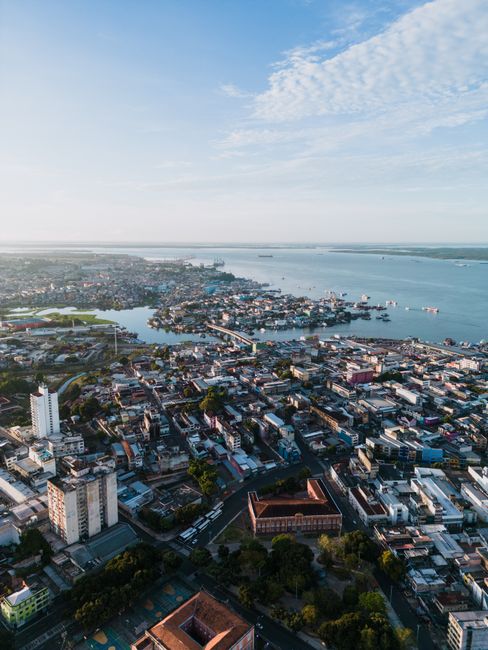
Manaus, the capital of Amazonas, is a city of about 2 million people in the middle of the world’s largest rainforest, 1,500 km (930 miles) up the Amazon from the Atlantic, reached by plane or boat; no road links it to the rest of Brazil except one long highway north to Venezuela. It is the main gateway to the Amazon for visitors: from here, boats and floatplanes head to jungle lodges, river cruises explore the flooded forest, and day trips visit the Meeting of the Waters, where the dark Rio Negro and the sandy Solimões flow side by side without mixing. The city itself grew rich on rubber around 1900, and its pink opera house, the Teatro Amazonas, is one of the most remarkable buildings in Brazil. It is hot and humid all year; the rivers rise and fall by about 10 m (33 ft) between the wet and dry seasons, changing the landscape completely.
Right now in Manaus
- Tue 28–35°C 83–95°F 1 mm Partly cloudy
- Wed 29–37°C 84–98°F 1 mm Partly cloudy
- Thu 27–37°C 81–99°F Cloudy
- Mon 12 Oct Our Lady of Aparecida (Nossa Senhora Aparecida)
Weather: MET Norway (CC BY 4.0) · Air quality: OpenAQ · Holidays: Nager.Date
Top tours in Manaus
See all tours for Manaus →
From local operators, with prices and reviews; you check availability and book on Viator, our partner. We may earn a commission at no extra cost to you. How we earn money
Manaus at a glance
- Best for: jungle lodges, river trips, wildlife, the Meeting of the Waters and rubber-boom architecture.
- How long: 1–2 days in the city plus 3–4 nights at a jungle lodge or on a river cruise.
- Best time: any time: from about May to July the rivers are high and canoes glide through the flooded forest; from about September to November they are low, with beaches and trails, and it is hotter and drier.
- Getting there: Eduardo Gomes International Airport (MAO), with flights from São Paulo, Brasília, Rio and other cities and some from abroad.
- Health: the CDC recommends yellow fever vaccination for Amazonas, and malaria occurs in the state; see a travel doctor before you go.
- Before you go: the e-visa, money and general safety are in our Brazil travel guide.
Manaus’s areas: where things are
Manaus spreads along the north bank of the Rio Negro, a few kilometers above its meeting with the Solimões, after which the river is called the Amazon in Brazil.
The historic center
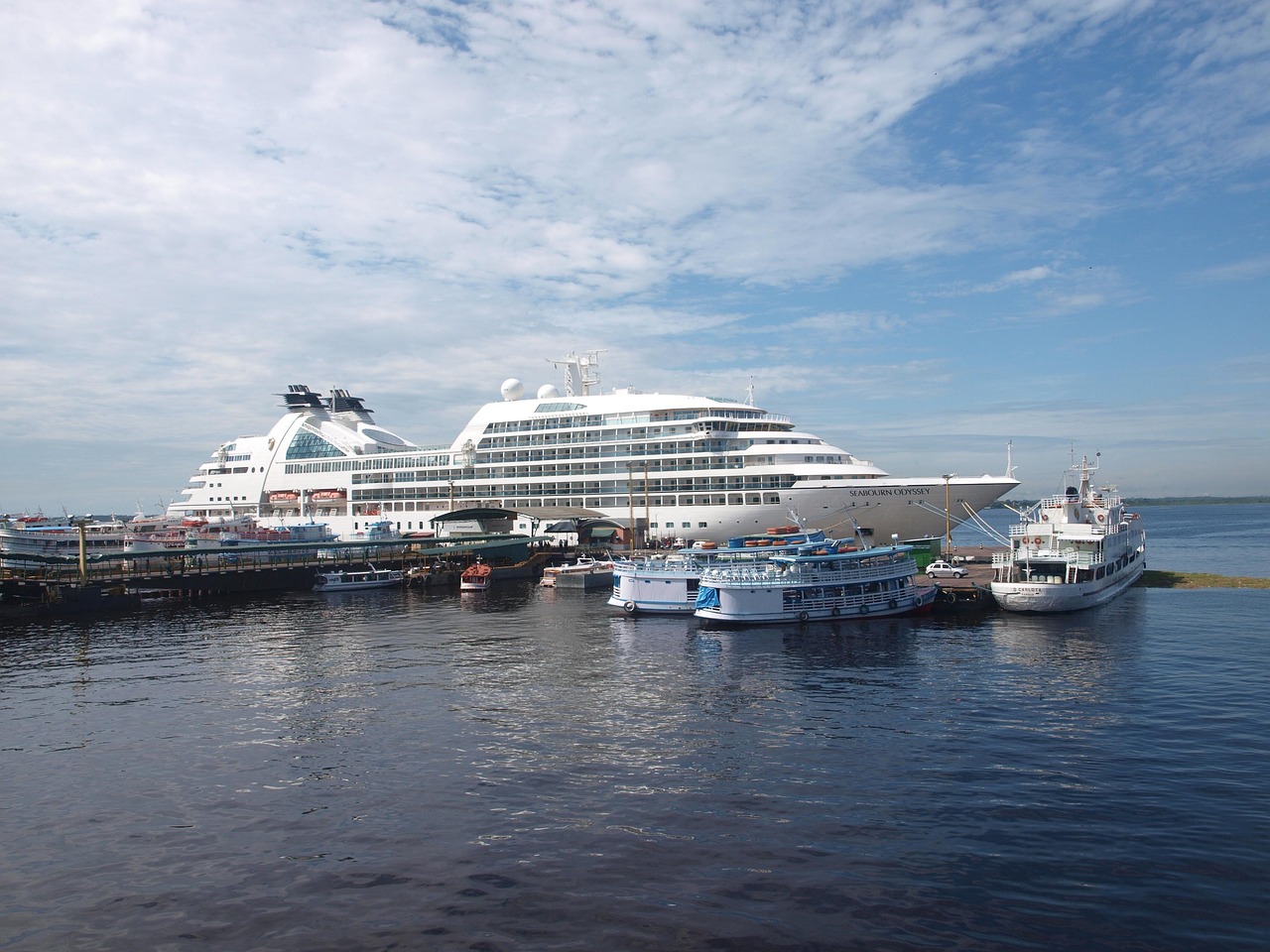
The Teatro Amazonas on the Largo de São Sebastião, the Palácio da Justiça, the iron-framed Adolpho Lisboa Market (modeled on Paris’s Les Halles), the customs house and the floating port, where river boats load for towns up and down the river.
Ponta Negra
A riverside district west of the center, with a promenade, a river beach in the dry season, hotels and restaurants, and views of the Rio Negro bridge.
The rivers around Manaus
Beyond the city, the Rio Negro, with its black, acidic water and fewer mosquitoes, holds the islands of Anavilhanas National Park upstream; the Solimões and the Amazon downstream have muddier, richer water and more wildlife along the banks.
Top things to see in Manaus
Teatro Amazonas
The opera house, inaugurated on December 31, 1896 at the height of the rubber boom, has a dome of colored tiles, a painted ceiling and a ballroom of Brazilian woods. Guided visits run from Tuesday to Saturday, 9 a.m. to 5 p.m., and on Sundays and holidays from 9 a.m. to 1 p.m.; as of October 2026 the full price is R$20 (about US$4), according to Amazonas state’s culture department. It hosts the Amazonas Opera Festival and many free concerts.
The Meeting of the Waters
About 10 km (6 miles) east of the center, the dark Rio Negro and the café-au-lait Solimões run side by side for several kilometers before mixing, because of differences in temperature, speed and density. Boat tours from the port or Ponta Negra visit it, often with a stop to see the giant water lilies and a riverside community.
Anavilhanas National Park
Upstream on the Rio Negro, one of the world’s largest freshwater archipelagos, about 400 islands protected in a national park of 350,470 hectares (866,000 acres), according to ICMBio, is visited from the town of Novo Airão, about three hours by road, or from lodges and cruises. Pink river dolphins gather near Novo Airão.
Adolpho Lisboa Market and the port
An 1883 market hall of wrought iron selling river fish, Amazon fruits, herbs and crafts, next to the bustle of the port.
More to see
- MUSA, the Museum of the Amazon: a forest reserve on the edge of the city with trails and a tall observation tower over the canopy.
- The Palácio Rio Negro and the Palácio da Justiça: rubber-boom palaces turned cultural centers.
- INPA’s Science Forest (Bosque da Ciência): trails with manatees, giant otters and other animals at the national Amazon research institute.
- The Rio Negro bridge: a cable-stayed bridge of about 3.6 km (2.2 miles), best seen at sunset from Ponta Negra.
Jungle lodges and river cruises
Most visitors spend three or four nights in the forest. Lodges, from simple to luxurious, are a boat and/or road ride of one to four hours from the city, mostly on the Rio Negro and its tributaries or on the Juma and Mamori lakes south of the Amazon. A typical stay includes canoe trips at dawn and dusk to look for monkeys, sloths, macaws, toucans and caimans, piranha fishing, a forest walk with a local guide, a visit to a riverside community and a night canoe ride. Riverboat cruises of three to seven days explore Anavilhanas and the lower Rio Negro in more comfort.
Choose operators registered with Brazil’s tourism ministry (Cadastur), ask what is included, and expect to pay in advance. Lodges near the Rio Negro have fewer mosquitoes; lodges on the Amazon side usually have more wildlife.
How to choose a jungle lodge or tour
- River and distance: lodges on the Rio Negro (black water) have fewer mosquitoes but less wildlife; those on the Amazon side (Juma and Mamori lakes, the Solimões) have more animals and more insects. Farther from the city usually means wilder forest.
- What’s included: check transfers, meals, drinking water, guided activities, park fees and drinks; most packages are full board.
- Guides: ask whether guides speak English and are local; small groups make for better wildlife sightings.
- Comfort: options range from hammocks in open-sided huts to air-conditioned bungalows and floating lodges; electricity may run only at certain hours.
- Ethics: avoid tours that offer holding sloths, caimans or other wild animals for photos, a practice that harms them.
- Riverboat cruises: expedition boats with cabins explore Anavilhanas and the lower Rio Negro for three to seven days, a comfortable alternative to lodges.
The rivers month by month
The flood pulse changes what you will see and do:
- December to February (rising water): rains set in and the rivers rise quickly; forest trails are still open and the river beaches disappear.
- March to May (high water rising to peak): the flooded forest (igapó on black-water rivers, várzea on white-water rivers) is reachable by canoe, with monkeys and birds at eye level.
- June and July (peak and start of the fall): the highest water usually comes around June; it is a little drier and very good for canoe trips; July is a Brazilian holiday month.
- August to November (falling to low water): the driest and hottest months; river beaches appear, trails and fishing are at their best, and in very dry years low water can close channels and strand boats.
Other things to do in Manaus
Food
Try river fish such as tambaqui (often grilled ribs) and pirarucu, tacacá (a hot broth with jambu leaves that make your mouth tingle), and Amazon fruits: açaí, cupuaçu, tucumã (in the local breakfast sandwich, the x-caboquinho) and guaraná.
Festivals
The Amazonas Opera Festival is held in the Teatro Amazonas, and in late June the island town of Parintins, downriver, holds the Boi-Bumbá festival, one of Brazil’s largest folk spectacles, reached by boat or flight from Manaus.
Day trips from Manaus
- The Meeting of the Waters and January Lake: a half- or full-day boat tour.
- Novo Airão and Anavilhanas: pink dolphins and island channels, about 3 hours by road.
- Presidente Figueiredo: waterfalls and caves in the forest, about 2 hours north by road.
Where to eat in Manaus
- The Adolpho Lisboa Market and the Manaus Moderna fair: fish, fruit and simple lunch counters near the port.
- The Largo de São Sebastião: cafés and tacacá stalls outside the Teatro Amazonas, lively in the evening.
- Ponta Negra: restaurants and bars on the riverfront promenade.
- Regional restaurants: look for grilled tambaqui ribs, pirarucu de casaca (layered salt pirarucu with banana and farofa) and caldeirada (fish stew), and desserts of cupuaçu and açaí.
Getting there and getting around
Arriving
Eduardo Gomes International Airport (MAO), about 15 km (9 miles) north of the center, has domestic flights from across Brazil; taxis and ride-hailing cars reach the center in about 30 minutes. Slow river boats, with hammock decks or cabins, link Manaus with Belém (about five days downriver) and towns along the rivers, for adventurous travelers with time.
River boats and ferries
Regional passenger boats (recreios) leave the Manaus Moderna and port areas for towns along the rivers, with hammock decks and a few cabins; bring your own hammock and rope, and keep valuables with you. Fast launches (lanchas) run to towns such as Parintins in a fraction of the time. Book cabin trips through the official port terminal or reputable agencies, and check that the boat carries life jackets.
Manaus in brief: history
Manaus began in 1669 as a small Portuguese fort, São José da Barra do Rio Negro, among the Manaós and other Indigenous peoples who gave the city its name. It boomed between about 1880 and 1912, when the Amazon was the world’s main source of rubber: the city got electric light and trams before many European cities, the opera house, the market and the customs house, built partly with materials shipped from Europe, while rubber tappers in the forest worked in harsh conditions. When plantations in Asia took over the market, Manaus declined, until the creation of the Manaus Free Trade Zone in 1967 brought industry and growth.
In the city
The historic center is walkable by day; use ride-hailing apps or taxis between the center and Ponta Negra and at night. Lodge and tour transfers are usually included in packages.
When to go and how long to stay
Manaus is hot and humid all year. According to INMET’s 1991–2020 normals, average highs range from 31 °C (88 °F) from January to May to 33–34 °C (92–93 °F) from August to October, and nights stay around 24 °C (75 °F). About 2,360 mm (93 in) of rain falls a year, most of it from December to May; July to September are the driest months. The rivers follow the rains with a lag: they usually rise from about November and peak around June, then fall to their lowest around October and November, and in drought years, such as 2023 and 2024, very low water can strand boats and close channels. On October 2, 2026, the Port of Manaus reported the Rio Negro falling. High water is best for canoeing through flooded forest; low water for trails, beaches and fishing.
Manaus’s weather month by month
The table shows INMET’s 1991–2020 averages for its Manaus station.
| Month | Average high | Average low | Rain (Manaus) |
|---|---|---|---|
| January | 31 °C (88 °F) | 24 °C (74 °F) | 306 mm (12.0 in) |
| February | 31 °C (88 °F) | 24 °C (74 °F) | 297 mm (11.7 in) |
| March | 31 °C (88 °F) | 24 °C (75 °F) | 321 mm (12.6 in) |
| April | 31 °C (88 °F) | 24 °C (75 °F) | 331 mm (13.0 in) |
| May | 32 °C (89 °F) | 24 °C (75 °F) | 233 mm (9.2 in) |
| June | 32 °C (89 °F) | 24 °C (75 °F) | 117 mm (4.6 in) |
| July | 32 °C (90 °F) | 24 °C (75 °F) | 67 mm (2.6 in) |
| August | 34 °C (92 °F) | 24 °C (75 °F) | 56 mm (2.2 in) |
| September | 34 °C (93 °F) | 24 °C (76 °F) | 79 mm (3.1 in) |
| October | 34 °C (93 °F) | 25 °C (76 °F) | 114 mm (4.5 in) |
| November | 33 °C (91 °F) | 24 °C (76 °F) | 188 mm (7.4 in) |
| December | 32 °C (90 °F) | 24 °C (75 °F) | 254 mm (10.0 in) |
4 to 5 days in Manaus and the jungle
Day 1: the Teatro Amazonas, the market and sunset at Ponta Negra. Days 2–4: three nights at a jungle lodge, with the Meeting of the Waters on the way. Day 5: MUSA’s canopy tower or INPA’s Science Forest before your flight.
A week or more
Add a riverboat cruise through Anavilhanas, or a trip to Novo Airão and Presidente Figueiredo.
Where to stay in Manaus
- The historic center: near the theater and port, good for one or two nights.
- Ponta Negra: riverside hotels away from the center, with sunset views.
- Jungle lodges: on the Rio Negro, Juma Lake or Mamori Lake, usually sold as packages with transfers, meals and excursions.
What things cost in Manaus
Official prices, as of October 2026, plus our estimates for planning:
| Item | Typical price |
|---|---|
| Teatro Amazonas guided visit | R$20 (about US$4) full price, official |
| Meeting of the Waters boat tour (half to full day) | about R$200–450 (US$40–85) |
| Jungle lodge, 3 nights full board with transfers and excursions | about R$2,500–8,000 (US$480–1,530) per person, depending on comfort |
| Riverboat cruise, 4 nights | from about R$8,000 (US$1,530) per person |
| Tacacá from a stall | about R$20–35 (US$4–7) |
| Ride-hailing from the airport to the center | about R$40–70 (US$8–13) |
| Double room, mid-range hotel in the center | about R$250–500 (US$50–95) a night |
Practical tips for Manaus
- Health: the CDC recommends yellow fever vaccination for Amazonas and lists malaria transmission in all areas of the state; talk to a travel doctor about prevention, use repellent and sleep under nets where provided. Dengue is common in the city.
- Money: cards are accepted in the city and at lodges; carry cash for small purchases and tips for guides.
- Tours: book jungle trips with registered operators, and agree what is included in writing; don’t buy tours from touts at the airport.
- Safety: the historic center empties after dark, so use ride-hailing apps or taxis at night; keep phones out of sight. In the forest, follow your guide and don’t swim where guides say not to.
- Emergencies: call 190 for police, 192 for an ambulance and 193 for the fire department.
What to pack for Manaus
Pack lightweight long-sleeved shirts and long trousers (light colors), a rain jacket, quick-drying clothes, closed shoes or boots for the forest and sandals for boats, a hat, sunscreen, strong insect repellent with DEET or picaridin, a headlamp, binoculars and a dry bag. Lodges often limit luggage on boats, so pack light. Bring your yellow fever certificate if vaccinated, any malaria medicine and a plug adapter for Brazil’s type N sockets.
Manaus travel FAQ
When is the best time to visit the Amazon from Manaus?
Any time. From about May to July the rivers are high, for canoeing through flooded forest; from about September to November they are low, with trails and beaches.
Do I need a yellow fever vaccine for Manaus?
It isn’t required to enter Brazil, but the CDC recommends it for all travelers aged 9 months or older going to Amazonas.
Is there malaria in Manaus?
The CDC lists malaria transmission in all areas of Amazonas, so ask a travel doctor about prevention, especially for jungle lodges.
How much does the Teatro Amazonas tour cost?
As of October 2026, R$20 for a guided visit, Tuesday to Saturday from 9 a.m. to 5 p.m. and Sundays and holidays from 9 a.m. to 1 p.m.
What is the Meeting of the Waters?
The place near Manaus where the dark Rio Negro and the muddy Solimões flow side by side for kilometers before mixing; boat tours visit it.
How many days do I need in Manaus?
One or two days in the city and three or four nights in the jungle.
Can you drive to Manaus?
Not easily: the only highway links north to Boa Vista and Venezuela. Most visitors fly in.
Rio Negro or Amazon side: which lodge is better?
Rio Negro lodges have fewer mosquitoes thanks to the acidic black water; Amazon-side lodges, such as those on Juma and Mamori lakes, usually see more wildlife.
Can you see pink river dolphins near Manaus?
Yes, on many lodge trips and at Novo Airão on the Rio Negro, where dolphins gather near the floating platform.
Is the river low in October?
Usually yes: October and November are the low-water months. On October 2, 2026, the Port of Manaus reported the Rio Negro falling.
Sources and last review
Researched and last reviewed on 4 October 2026. Teatro Amazonas hours, guided visits, prices and inauguration date: Amazonas state’s culture department; Anavilhanas National Park area: ICMBio; river level on October 2, 2026: the Port of Manaus; climate: INMET’s 1991–2020 normals for Manaus; population: IBGE’s 2022 census; yellow fever and malaria: the US CDC; exchange rate: the Central Bank of Brazil. The river seasons and range, the 2023–2024 droughts, the Meeting of the Waters, the number of islands, lodge areas, Cadastur, distances, boat links, Parintins, MUSA, INPA, the bridge and food come from secondary sources or general knowledge and are flagged for checking. Check the official sites before you go. For entry rules and money, see our Brazil travel guide.
Plan your trip
Partner links: TravelerCenter may earn a commission if you book, at no extra cost to you.
🇵🇹 Useful Portuguese phrases for Manaus
All 38 Portuguese phrases: restaurant, hotel, emergencies, romance (printable) →