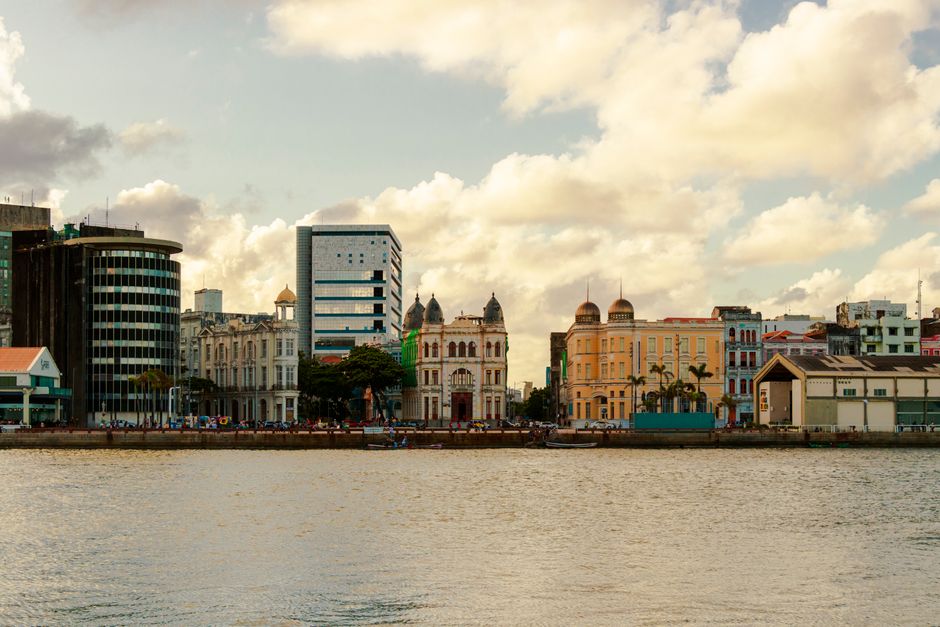
Recife, the capital of Pernambuco, is a city of rivers, bridges and canals on the north-east coast, with about 1.5 million people and a rich history as the center of the 17th-century sugar boom and, for a quarter of a century, of Dutch Brazil. It is the gateway to some of Brazil’s best beaches and to Fernando de Noronha, and it has one of the country’s great Carnivals, shared with the hilltop colonial town of Olinda next door. Come for the restored old quarter of Recife Antigo, the frevo and maracatu music, the art of the Brennand family, the long urban beach of Boa Viagem, Olinda’s churches and painted houses, and day trips to the reef pools of Porto de Galinhas. The weather is warm all year, with a rainy season from about April to July.
Right now in Recife
- Wed 26–29°C 78–84°F 2 mm Clear
- Thu 24–29°C 75–84°F 3 mm Clear
- Fri 25–28°C 77–82°F 2 mm Mostly clear
- Mon 12 Oct Our Lady of Aparecida (Nossa Senhora Aparecida)
Weather: MET Norway (CC BY 4.0) · Sea temperature: NOAA CoastWatch · Holidays: Nager.Date
Top tours in Recife
See all tours for Recife →
From local operators, with prices and reviews; you check availability and book on Viator, our partner. We may earn a commission at no extra cost to you. How we earn money
Recife at a glance
- Best for: Carnival, music, history and art, Olinda, beaches and reef pools nearby.
- How long: 2–3 days for Recife and Olinda; a week to add Porto de Galinhas or Maragogi, or Fernando de Noronha.
- Best time: September to March, the drier months; Carnival 2027 runs from February 6 to 10.
- Getting there: Recife/Guararapes International Airport (REC), close to Boa Viagem, with flights from across Brazil, Lisbon and some other international cities.
- Getting around: ride-hailing apps and taxis; the metro links the airport area with the center.
- Before you go: the e-visa, money and general safety are in our Brazil travel guide; for the islands offshore, see our Fernando de Noronha guide.
Recife’s areas: where things are
Recife Antigo (the old quarter)
An island at the mouth of the Capibaribe and Beberibe rivers, where the city began: the Marco Zero square, the Rua do Bom Jesus with the first synagogue in the Americas, the Paço do Frevo museum and restored warehouses full of bars and cultural centers.
Santo Antônio and São José
The historic center across the river, with Baroque churches, the Santa Isabel Theater, the Casa da Cultura craft market in a former prison, and the São José market.
Boa Viagem
A long beach neighborhood south of the center, lined with high-rise hotels and apartments, a beachfront promenade and kiosks, near the airport.
Olinda
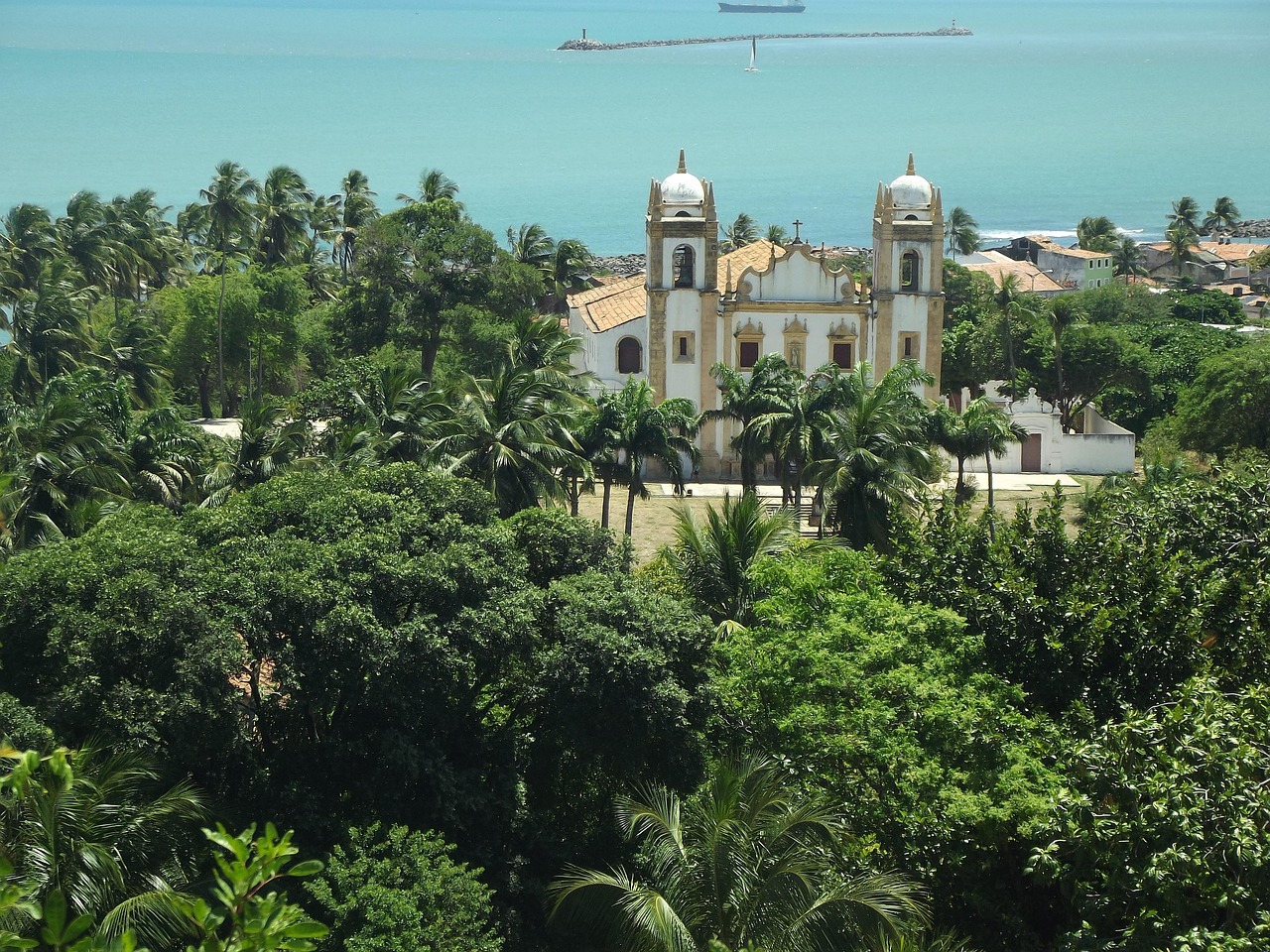
A separate town about 7 km (4 miles) north of central Recife, on hills above the sea, listed by UNESCO in 1982 for its colonial churches, convents and colorful houses.
Recife in brief: history and culture
Recife grew as the port of Olinda, the capital of Pernambuco, the richest sugar-producing captaincy in the Portuguese empire. In 1630 the Dutch West India Company seized the area, and under Count John Maurice of Nassau, from 1637 to 1644, Recife became the capital of Dutch Brazil, with bridges, palaces, a botanical garden, scientists and painters such as Frans Post and Albert Eckhout, and a Jewish community that built the synagogue on Rua do Bom Jesus. The Portuguese and Brazilians expelled the Dutch in 1654; many Jews left, and some of them went on to New Amsterdam, now New York.
The sugar plantations depended on enslaved Africans, whose descendants shaped Pernambuco’s culture: maracatu, with its drums and royal processions, the coco dance, and the capoeira traditions of the coast. Frevo, the frantic brass music and acrobatic umbrella dance of Recife’s Carnival, was born in the city’s streets around 1900. Recife is also a literary city, birthplace of writers and of the manguebeat movement of the 1990s, which mixed maracatu with rock and hip-hop.
Top things to see in Recife
Recife Antigo and Marco Zero
Start at Marco Zero, the city’s symbolic center, looking across the river to the Francisco Brennand sculpture park on the reef. Visit the Kahal Zur Israel Synagogue, founded during Dutch rule and considered the oldest in the Americas, and the Paço do Frevo, a museum of Recife’s high-energy Carnival dance and music, listed by UNESCO as intangible heritage.
Instituto Ricardo Brennand
A mock-medieval castle in parkland west of the center, with one of the world’s largest collections of medieval arms and armor, and the largest collection of paintings by the Dutch artist Frans Post, who painted Brazil in the 17th century.
Oficina Brennand
The studio and park of the ceramic artist Francisco Brennand, a vast, surreal complex of sculptures, tiles and courtyards in a former brickworks.
Olinda
Climb the steep streets of Olinda to the Alto da Sé for views of Recife’s skyline, and visit the São Francisco convent, the Monastery of São Bento with its gilded altar, and the artists’ studios. Olinda’s Carnival takes over every street, with giant puppets (bonecos gigantes).
Boa Viagem beach
An 8-km (5-mile) city beach with reef pools at low tide near Pina. Swimming is restricted along much of it because of shark incidents in the past: obey the warning signs and swim only inside the reef pools at low tide, or not at all.
More to see
- Casa da Cultura: crafts sold in the cells of a former prison.
- Santa Isabel Theater and the Capela Dourada: a 19th-century theater and a gold-covered Baroque chapel.
- The São José Market: Recife’s oldest iron-framed market.
- The Museum of the Man of the North-East (Museu do Homem do Nordeste): the region’s culture and history.
Other things to do in Recife
Carnival
Recife and Olinda have Brazil’s most traditional street Carnival, with frevo and maracatu instead of samba. In 2027 Carnival falls from Saturday, February 6 to Ash Wednesday, February 10; Recife’s Galo da Madrugada parade, one of the largest Carnival groups in the world, traditionally takes over the center on Carnival Saturday, February 6, 2027.
Reef pools and beaches nearby
South of the city, Porto de Galinhas is famous for natural pools in the reef, reached by jangada (sailing raft) at low tide, and Carneiros for a white chapel on a palm-lined beach; farther south, Maragogi, in Alagoas, has offshore reef pools called galés. Check tide tables: pool trips run only at low tide.
Museums and culture
Beyond the Brennand collections, the Cais do Sertão museum on the old port celebrates the culture of the Northeast’s interior and the music of Luiz Gonzaga, the king of baião, and the Paço do Frevo has exhibitions, a library and frevo classes. The Santa Isabel Theater hosts concerts and plays.
Food
Try bolo de rolo (a thin rolled cake listed as state heritage), tapioca, cartola (banana with cheese and cinnamon), sea crab, and the region’s sugarcane cachaça.
Where to eat and drink
- Recife Antigo: bars and restaurants in restored warehouses on Rua do Bom Jesus, with a Sunday craft fair and live music.
- Boa Viagem and Pina: seafood restaurants and beach kiosks; the Pina area has some of the city’s best-known regional restaurants.
- Casa Forte and Graças: leafy residential neighborhoods with contemporary restaurants and cafés.
- Olinda: tapioca stalls at the Alto da Sé and small restaurants in colonial houses.
- Markets: the São José market and the Boa Vista market, where locals drink and eat petiscos on weekend afternoons.
Look for carne de sol, macaxeira, buchada and sarapatel (offal stews) for the adventurous, sea crab and agulhinha fish, bolo de rolo and bolo Souza Leão cakes, and the region’s fine cachaças.
Porto de Galinhas in more depth
About 60 km (37 miles) south, Porto de Galinhas is Pernambuco’s most popular beach resort. At low tide, jangadas (traditional sailing rafts) take visitors to natural pools in the reef in front of the village, full of small fish; the tide must be about 0.5 m or lower, so trips run only at certain hours. The village has shops, pousadas and restaurants, and resorts line the beaches of Muro Alto and Cupe to the north, with calm water behind the reefs. Maracaípe, just south, is a surf beach and has a seahorse project in its mangrove estuary.
Day trips from Recife
- Olinda: 20 minutes away; worth a full day.
- Porto de Galinhas: about 60 km (37 miles), 1–1.5 hours south, for reef pools; better overnight.
- Praia dos Carneiros: about 1.5–2 hours south.
- Itamaracá: an island with Fort Orange, built by the Dutch, about an hour north.
More of the coast
- Maragogi and São Miguel dos Milagres: about 2–3 hours south, in Alagoas, with offshore reef pools (galés) and quiet palm-lined beaches on the Rota Ecológica.
- Tamandaré and Carneiros: calm beaches and a reef marine protected area, about 2 hours south.
- João Pessoa: the capital of Paraíba, about 2 hours north, with the easternmost point of the Americas at Ponta do Seixas.
- Caruaru: the inland capital of forró and the Festas Juninas, about 2 hours west, with a huge market.
Getting there and getting around
Arriving
Recife/Guararapes International Airport (REC) is about 3 km (2 miles) from Boa Viagem and 11 km (7 miles) from the old quarter, 15–30 minutes by taxi or ride-hailing car. The airport is also the main gateway to Fernando de Noronha, about an hour’s flight away, according to the island administration.
Getting around tips
Recife’s metro has two main lines, with a station at the airport, but it is more useful for commuters than for visitors’ sights; ride-hailing apps are cheap and the easiest way between Boa Viagem, the old quarter and Olinda. In Recife Antigo, the area around Marco Zero and Rua do Bom Jesus is pleasant on foot, especially on Sunday afternoons when streets close to traffic for the fair. Catamaran tours on the Capibaribe River show the bridges and colonial waterfront of the “Brazilian Venice”, as Recife is nicknamed.
In the city
Ride-hailing apps and taxis are easiest. The metro links the airport station with the center, and buses run along Boa Viagem. Walk within Recife Antigo and Olinda, but use a car after dark.
When to go and how long to stay
According to INMET’s 1991–2020 normals for Recife (Curado), average highs are about 30–31 °C (86–88 °F) from October to April and 28 °C (82 °F) from June to August, with nights of 21–23 °C (70–74 °F). About 2,160 mm (85 in) of rain falls a year, most of it from April to July, when June is the wettest month; from September to February it is much drier. Carnival is the busiest and most expensive time, followed by Christmas, New Year and July.
Recife’s weather month by month
The table shows INMET’s 1991–2020 averages for its Recife (Curado) station.
| Month | Average high | Average low | Rain (Recife Curado) |
|---|---|---|---|
| January | 31 °C (87 °F) | 23 °C (74 °F) | 107 mm (4.2 in) |
| February | 31 °C (88 °F) | 23 °C (74 °F) | 127 mm (5.0 in) |
| March | 31 °C (88 °F) | 23 °C (74 °F) | 197 mm (7.8 in) |
| April | 30 °C (87 °F) | 23 °C (73 °F) | 269 mm (10.6 in) |
| May | 30 °C (85 °F) | 22 °C (72 °F) | 317 mm (12.5 in) |
| June | 28 °C (83 °F) | 22 °C (71 °F) | 390 mm (15.4 in) |
| July | 28 °C (82 °F) | 21 °C (70 °F) | 315 mm (12.4 in) |
| August | 28 °C (82 °F) | 21 °C (69 °F) | 187 mm (7.4 in) |
| September | 29 °C (83 °F) | 22 °C (71 °F) | 93 mm (3.7 in) |
| October | 30 °C (85 °F) | 22 °C (72 °F) | 53 mm (2.1 in) |
| November | 30 °C (87 °F) | 23 °C (73 °F) | 39 mm (1.5 in) |
| December | 31 °C (87 °F) | 23 °C (73 °F) | 62 mm (2.4 in) |
- December to March: hot, sunny and mostly dry; high season, with New Year and Carnival.
- April to July: the rainy season, with heavy showers, especially in May, June and July; quieter and cheaper.
- August: rains ease, still some showers.
- September to November: dry, sunny and breezy, a very good time for beaches and reef pools.
2 days in Recife and Olinda
Day 1: Recife Antigo, Marco Zero, the synagogue, the Paço do Frevo and the São José market. Day 2: Olinda in the morning, the Instituto Ricardo Brennand in the afternoon, and dinner in Boa Viagem.
4 days in Recife and Olinda
Days 1–2 as above, then a day at the Oficina Brennand and the Museum of the Man of the North-East, and a day trip to Porto de Galinhas for the reef pools at low tide.
A week in Recife and the coast
Add the Oficina Brennand, then three or four nights at Porto de Galinhas or Carneiros, or fly to Fernando de Noronha.
Olinda in more depth
Olinda was founded in 1535 and was Pernambuco’s capital, burned by the Dutch in 1631 and rebuilt in the following decades. Its historic center climbs a series of hills: start at the Alto da Sé, with the cathedral and the craft and tapioca stalls, walk down past the Misericórdia church, the São Bento monastery and the São Francisco convent, the oldest Franciscan convent in Brazil, and browse the studios of the artists who live in the old houses. On Carnival days, its steep streets fill with frevo bands and the giant puppets of the bonecos gigantes, and Olinda’s own Carnival is free and famously crowded. Go by day and use a local guide registered with the town if you want history; avoid the quieter lanes after dark.
Where to stay in Recife
- Boa Viagem: most hotels, on the beach and near the airport, with restaurants.
- Recife Antigo and the center: a few boutique hotels near the sights; quiet at night.
- Olinda: charming pousadas in colonial houses; book early for Carnival.
- Porto de Galinhas: beach resorts for a longer stay.
What things cost in Recife
Our estimates for planning, as of October 2026:
| Item | Typical price |
|---|---|
| Instituto Ricardo Brennand entry | about R$40–80 (US$8–15) |
| Jangada ride to the reef pools at Porto de Galinhas | about R$30–50 (US$6–10) per person |
| Ride-hailing from the airport to Recife Antigo | about R$25–45 (US$5–9) |
| Dinner for two at a regional restaurant | about R$180–350 (US$35–65) |
| Tapioca at an Olinda stall | about R$10–20 (US$2–4) |
| Double room, mid-range hotel in Boa Viagem | about R$300–600 (US$60–115) a night; much more at Carnival |
Practical tips for Recife
- Sharks: follow the signs at Boa Viagem and Piedade; avoid swimming in open water there, especially at high tide, at dawn and dusk and near river mouths.
- Tides: plan reef-pool trips around low tide.
- Money: cards are accepted almost everywhere; carry small notes for Carnival and markets.
- Health: the CDC does not recommend yellow fever vaccination for travel limited to the city of Recife.
- Safety: the old quarter and center empty after dark, so use ride-hailing apps or taxis at night; keep phones out of sight, and take only essentials into Carnival crowds.
- Emergencies: call 190 for police, 192 for an ambulance and 193 for the fire department.
What to pack for Recife
Pack light clothes, swimwear, sandals and comfortable shoes for Olinda’s steep cobbles, a hat, high-factor sunscreen, insect repellent and a light rain jacket from April to July. For Carnival, bring light clothes you don’t mind ruining, a small cross-body bag and a cheap phone if you have one. Bring a plug adapter for Brazil’s type N sockets.
Recife travel FAQ
When is Carnival in Recife and Olinda in 2027?
From Saturday, February 6 to Ash Wednesday, February 10, 2027; the Galo da Madrugada parade is on Carnival Saturday.
Is it safe to swim at Boa Viagem?
Only where signs allow, inside the reef pools at low tide; parts of the beach have had shark incidents.
How do I get from Recife to Porto de Galinhas?
By road, about 60 km and 1–1.5 hours, by transfer, bus or taxi.
What is the best time to visit Recife?
September to March, the drier months. April to July is the rainy season.
Do I need a yellow fever vaccine for Recife?
No: the CDC does not recommend it for travel limited to the city of Recife.
How do I get to Fernando de Noronha from Recife?
By plane: daily flights of about an hour leave Recife’s airport.
How many days do I need in Recife?
Two or three days for Recife and Olinda, more to add the beaches.
Is Olinda worth visiting?
Yes: its UNESCO-listed hilltop center of churches, convents and painted houses is one of Brazil’s most beautiful colonial towns, 20 minutes from Recife.
When can you visit the natural pools at Porto de Galinhas?
Only at low tide, when the tide is about 0.5 m or lower; check the tide table and go early.
What is frevo?
Recife’s fast, brass-band Carnival music and acrobatic dance with small umbrellas, born around 1900 and listed by UNESCO as intangible heritage.
Sources and last review
Researched and last reviewed on 4 October 2026. Climate: INMET’s 1991–2020 normals for Recife (Curado); population: IBGE’s 2022 census; flights to Fernando de Noronha: the island’s district administration; Carnival dates: calculated from Easter, see our country guide; yellow fever: the US CDC; exchange rate: the Central Bank of Brazil. History, sights, museums, the UNESCO listings, shark warnings, beaches, Porto de Galinhas and day-trip distances, the Galo da Madrugada and food, plus the history and culture section, come from secondary sources or general knowledge and are flagged for checking. Check the official sites before you go. For entry rules and money, see our Brazil travel guide.
Plan your trip
Partner links: TravelerCenter may earn a commission if you book, at no extra cost to you.
🇵🇹 Useful Portuguese phrases for Recife
All 38 Portuguese phrases: restaurant, hotel, emergencies, romance (printable) →