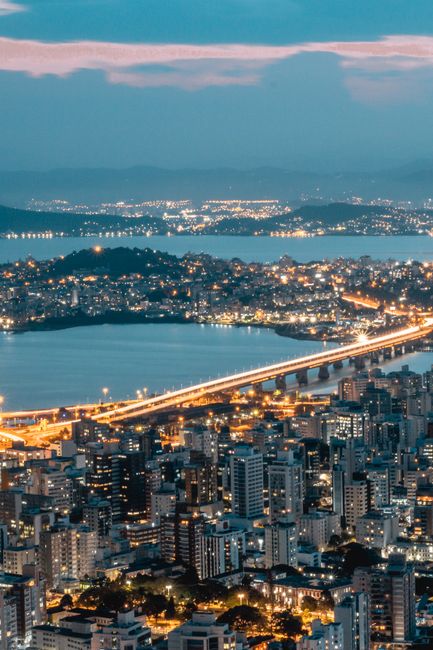
Florianópolis, the capital of Santa Catarina, spreads over a long, green island linked to the mainland by bridges, and it is southern Brazil’s favorite beach destination: more than 40 beaches, from the busy resort strips of the north to wild surf beaches and fishing villages in the south, plus sand dunes, a big lagoon, forested hills and Azorean colonial villages. Locals call it “Floripa” and themselves “manezinhos”. Come in summer for the beaches and nightlife, in winter and spring for southern right whales off the nearby coast, and any time for fresh oysters, which the island farms on a big scale. It is a city of about 540,000 people with a relaxed, outdoorsy feel, a good surf scene and easy hikes to empty beaches. Unlike most of Brazil, it has a real winter: from June to August, days are mild and nights cool.
Right now in Florianópolis
- Wed 18–23°C 64–73°F 1 mm Partly cloudy
- Thu 20–24°C 67–74°F Partly cloudy
- Fri 20–22°C 67–71°F 6 mm Rain
- Mon 12 Oct Our Lady of Aparecida (Nossa Senhora Aparecida)
Weather: MET Norway (CC BY 4.0) · Sea temperature: NOAA CoastWatch · Holidays: Nager.Date
Top tours in Florianópolis
See all tours for Florianópolis →
From local operators, with prices and reviews; you check availability and book on Viator, our partner. We may earn a commission at no extra cost to you. How we earn money
Florianópolis at a glance
- Best for: beaches, surfing, hiking, seafood, nightlife and whale watching nearby.
- How long: 4–5 days for the north, east and south of the island; a week to add the mainland beaches.
- Best time: December to March for beach weather; March, April, October and November for warm days and fewer crowds; July to November for whales on the coast to the south.
- Getting there: Hercílio Luz International Airport (FLN), in the south of the island, with flights from São Paulo, Rio, Buenos Aires and other cities.
- Getting around: a rental car or ride-hailing apps are easiest; city buses run through hub terminals.
- Before you go: the e-visa, money and general safety are in our Brazil travel guide; for the mountains inland, see our Gramado guide.
Florianópolis’s areas: where things are
The island of Santa Catarina is about 54 km (34 miles) long. The city center faces the mainland on the west side, next to the bridges; the Lagoa da Conceição lies in the middle, and the beaches ring the coast.
Downtown
The historic center has the Public Market, the 15 de Novembro square with its huge fig tree, the Metropolitan Cathedral and the Hercílio Luz Bridge, the island’s postcard suspension bridge from 1926, lit up at night.
The north: Jurerê, Canasvieiras and Ingleses
Calm, warm bay beaches with resorts, beach clubs and summer crowds, especially from Argentina. Jurerê Internacional is the upscale beach-club area; Santo Antônio de Lisboa, on the bay, is a colonial fishing village famous for oysters and sunsets.
The east: Lagoa da Conceição, Joaquina and Praia Mole
The lagoon district is the island’s bohemian heart, with restaurants, bars and water sports. Nearby, the open-ocean beaches of Praia Mole and Joaquina are surf spots, and the dunes of Joaquina are used for sandboarding. Barra da Lagoa and Moçambique, a 12-km (7.5-mile) beach backed by a forest park, are farther north.
The north-east: Santinho and Rio Vermelho
Between Ingleses and Moçambique, Santinho has surf, dunes and prehistoric rock carvings on the headland, and the Rio Vermelho state park protects pine and restinga forest behind Moçambique beach.
The south: Campeche, Armação and Ribeirão da Ilha
Quieter and wilder: the long surf beach of Campeche with its island offshore, the fishing village of Pântano do Sul, the trail to the empty beach of Lagoinha do Leste, and the Azorean village of Ribeirão da Ilha on the bay, with its oyster farms.
Florianópolis in brief: history and culture
The island was home to the Carijó (Guarani) people before Portuguese settlement, and from the 1740s the Portuguese crown brought thousands of families from the Azores and Madeira to hold the southern frontier against Spain. Their descendants built the fishing villages, lace-making traditions (renda de bilro) and whitewashed churches of Santo Antônio de Lisboa, Ribeirão da Ilha and Lagoa, and their accent and folklore, including the boi-de-mamão puppet play and stories of witches, still mark local culture. The town, then called Desterro, was renamed Florianópolis in 1894 after President Floriano Peixoto. Since the 1980s, beaches, universities and technology companies have turned it into one of Brazil’s fastest-growing cities and its surf and lifestyle capital.
Top things to see in Florianópolis
Lagoa da Conceição
A large saltwater lagoon in the middle of the island, ringed by hills, with kitesurfing and paddleboarding on the water, waterfront restaurants and a lookout on the road from the center.
Joaquina dunes and beach
High white dunes beside one of Brazil’s best-known surf beaches; rent a sandboard and slide down.
Campeche Island
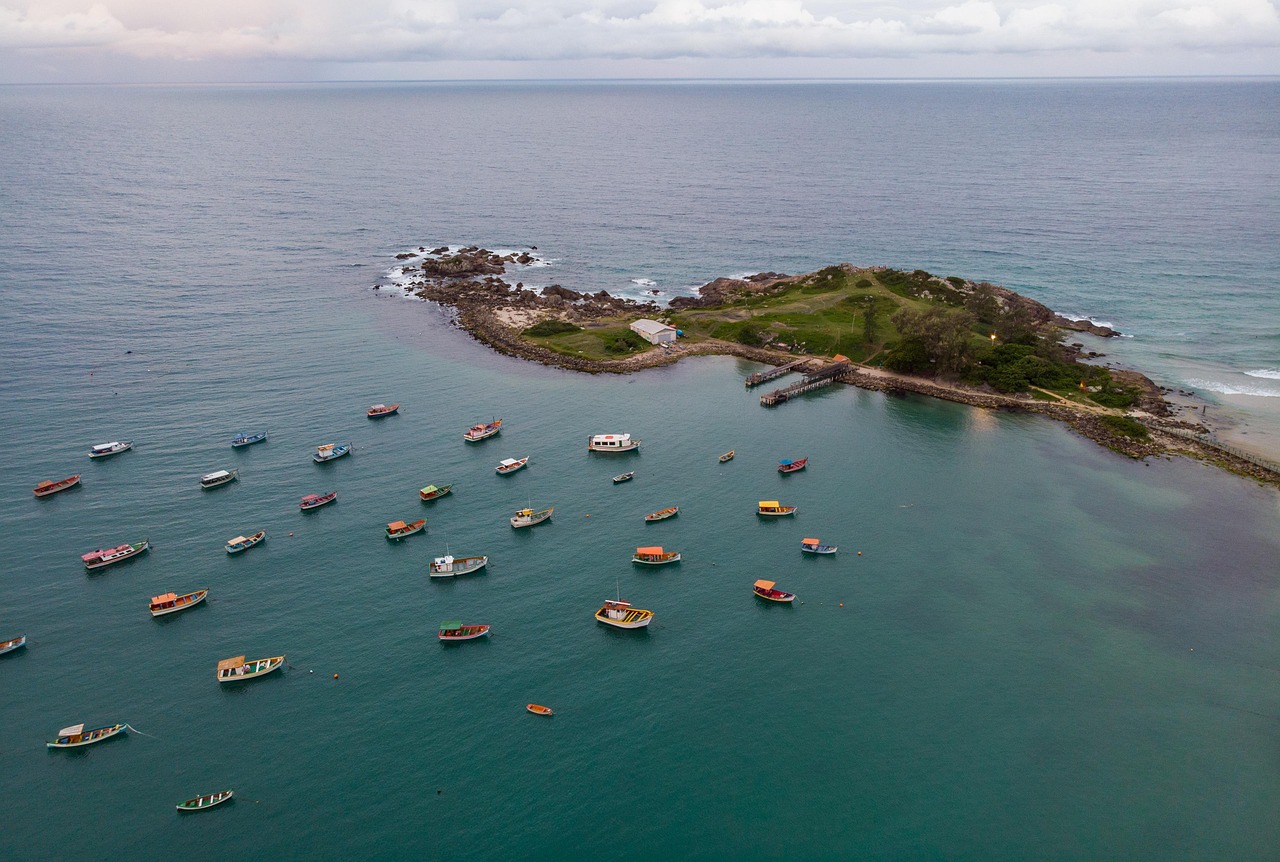
A small island off Campeche beach, with clear water and rock carvings made by its early Indigenous inhabitants; visits are by boat in summer, with daily visitor limits.
Lagoinha do Leste
A beach between forested headlands reached only on foot, from Pântano do Sul or Armação, on a trail of about an hour each way; one of the island’s most beautiful.
Santo Antônio de Lisboa and Ribeirão da Ilha
Colonial villages founded by settlers from the Azores in the 18th century, with whitewashed churches, cobbled lanes and restaurants serving oysters fresh from the bay.
More to see
- The Hercílio Luz Bridge: the city’s symbol, reopened to traffic and pedestrians in 2019 after decades of restoration.
- The Public Market: fish, seafood stalls and bars in a 19th-century building downtown.
- Santa Cruz de Anhatomirim Fortress: an 18th-century fort on an island in the north bay, visited by boat.
- Costa da Lagoa: a village on the lagoon reached by boat or a trail, with waterfalls and seafood restaurants.
Beaches in Florianópolis
- Jurerê, Canasvieiras and Ingleses (north): calm, warm water, families and beach clubs.
- Praia Mole and Joaquina (east): surf, sunbathing and beach volleyball; strong currents.
- Barra da Lagoa and Moçambique (east): a fishing village beach and a long wild one.
- Campeche and Armação (south): long surf beaches, quieter than the north.
- Lagoinha do Leste (south): reached only on foot.
The state environment agency, IMA, tests beach water every week in summer and publishes which spots are suitable for swimming; check before you swim near river mouths and towns.
Other things to do in Florianópolis
Surfing, kitesurfing and sandboarding
Joaquina, Praia Mole, Campeche and Moçambique have consistent surf and surf schools; the lagoon is a kitesurfing and windsurfing spot; and the Joaquina dunes are for sandboarding.
Hiking
Trails cross the island’s forested hills to hidden beaches: Lagoinha do Leste, Naufragados at the southern tip, and the Costa da Lagoa trail along the lagoon.
Kayaking, paddleboarding and boat trips
The calm water of the Lagoa da Conceição is ideal for stand-up paddleboarding and kayaking, with rentals along the shore; schooner trips from Canasvieiras visit the Anhatomirim fortress and the dolphins of the North Bay, and boats from Armação cross to Campeche Island in summer. Divers head to the Arvoredo Marine Biological Reserve, off the north of the island, where visits are controlled by ICMBio and operators need permission.
Whale watching
Southern right whales come to calve in the bays of the mainland coast south of the island, from Garopaba to Laguna, protected by the federal Southern Right Whale Environmental Protection Area, usually from about July to November. They can often be seen from the shore; boat trips follow strict rules.
Food
Florianópolis is Brazil’s biggest oyster producer; try them raw, gratinated or steamed, along with shrimp and fresh fish. The traditional seafood “sequência” brings course after course of shrimp.
Where to eat
- Ribeirão da Ilha and Santo Antônio de Lisboa: oyster restaurants on the water, with sunset views over the bay.
- Lagoa da Conceição: the island’s densest restaurant and bar strip, from açaí and burgers to seafood and sushi.
- Barra da Lagoa and Pântano do Sul: simple fish restaurants run by fishing families, serving the seafood sequência.
- The Public Market downtown: fish stalls and bars, lively at lunchtime and after work.
- Jurerê Internacional: beach clubs and upscale restaurants.
Mullet (tainha) season, from about May to July, brings community fishing with nets from the beaches and grilled tainha on menus across the island.
Day trips from Florianópolis
- Guarda do Embaú and Garopaba: surf villages and whale watching on the mainland to the south, about an hour away.
- Bombinhas: clear-water beaches for snorkeling, about 1.5 hours north; the town charges visiting vehicles an environmental fee in season.
- Balneário Camboriú: a high-rise beach resort with a cable car, about 1.5 hours north.
- Gramado: about 6–7 hours by road; better as a separate trip.
More of the Santa Catarina coast
- Praia do Rosa: a hillside surf and whale-watching village about 1.5 hours south, with boutique pousadas.
- Laguna: a historic town about 2 hours south, where fishermen famously work together with dolphins to catch mullet.
- Blumenau and Pomerode: German-heritage towns in the Itajaí valley, about 2–2.5 hours north-west; Blumenau’s Oktoberfest is held in October.
- São Joaquim and the Serra Catarinense: Brazil’s coldest region, about 4 hours inland, with occasional winter frost and snow, apple orchards and high-altitude wineries.
Getting there and getting around
Arriving
Hercílio Luz International Airport (FLN), in the south of the island, has a modern terminal opened in 2019 and flights from São Paulo, Rio, Porto Alegre, Buenos Aires and other cities. It is 20–30 minutes from downtown and the southern beaches, and up to an hour or more from the northern beaches in summer traffic. Long-distance buses arrive at the bus station downtown.
Getting around tips
- Summer traffic: the roads to the northern beaches (SC-401) and over the hill to Lagoa can take an hour or more in January; leave early and return late.
- Buses: lines run from downtown’s TICEN terminal to the neighborhood terminals, where you change for the beaches; transfers inside terminals are free.
- Boats: boats link Lagoa da Conceição with the Costa da Lagoa, and tours run from Canasvieiras and Santo Antônio to Anhatomirim fortress.
- Bridges: the island is linked to the mainland by the Colombo Salles and Pedro Ivo bridges, and the Hercílio Luz bridge for buses, pedestrians and cyclists.
On the island
City buses connect neighborhoods through integration terminals (TICEN downtown, TILAG at the lagoon, and others), but trips are slow. Ride-hailing apps are widely used; a rental car gives the most freedom but traffic jams are long in summer, especially on the roads to the north and to the lagoon.
When to go and how long to stay
According to INMET’s 1991–2020 normals for Florianópolis, average highs are 28–30 °C (83–85 °F) from December to March and fall to 21–22 °C (70–72 °F) from June to August, with winter nights of about 13 °C (55 °F). About 1,770 mm (70 in) of rain falls a year, spread through all months and heaviest in January. January and February are hot, packed and expensive, with many visitors from Argentina and southern Brazil; March, April and November are warm and much quieter. The sea is cold in winter.
Florianópolis’s weather month by month
The table shows INMET’s 1991–2020 averages for its Florianópolis station.
| Month | Average high | Average low | Rain (Florianópolis) |
|---|---|---|---|
| January | 29 °C (85 °F) | 22 °C (71 °F) | 241 mm (9.5 in) |
| February | 30 °C (85 °F) | 22 °C (71 °F) | 198 mm (7.8 in) |
| March | 29 °C (84 °F) | 21 °C (69 °F) | 180 mm (7.1 in) |
| April | 27 °C (80 °F) | 19 °C (66 °F) | 116 mm (4.6 in) |
| May | 24 °C (75 °F) | 16 °C (60 °F) | 126 mm (5.0 in) |
| June | 22 °C (71 °F) | 14 °C (56 °F) | 86 mm (3.4 in) |
| July | 21 °C (70 °F) | 13 °C (55 °F) | 101 mm (4.0 in) |
| August | 22 °C (71 °F) | 14 °C (57 °F) | 93 mm (3.7 in) |
| September | 22 °C (72 °F) | 15 °C (60 °F) | 147 mm (5.8 in) |
| October | 24 °C (76 °F) | 18 °C (64 °F) | 153 mm (6.0 in) |
| November | 26 °C (79 °F) | 19 °C (66 °F) | 147 mm (5.8 in) |
| December | 28 °C (83 °F) | 20 °C (69 °F) | 177 mm (7.0 in) |
- December to February: hot, humid and packed; afternoon storms are common, and traffic to the beaches is heavy.
- March and April: still warm, with warm sea and far fewer people; the best overall months for beaches.
- May to August: cool and sometimes windy and rainy, with cold fronts; mullet fishing season, whales arriving on the coast to the south from about July, and low prices.
- September to November: spring, with mild weather, whales until about November and quiet beaches; the sea is still cool.
4 days in Florianópolis
Day 1: downtown, the Public Market and the Hercílio Luz Bridge at night. Day 2: Lagoa da Conceição, Joaquina dunes and Praia Mole. Day 3: the south, with Campeche or the hike to Lagoinha do Leste, and oysters in Ribeirão da Ilha. Day 4: the northern beaches and sunset in Santo Antônio de Lisboa.
A week in Florianópolis and around
Add Campeche Island by boat, Costa da Lagoa, a boat trip to Anhatomirim, and a day at Guarda do Embaú or Garopaba, with whales in season.
Where to stay in Florianópolis
- The north (Jurerê, Canasvieiras, Ingleses): resorts and apartments on calm beaches; best for families.
- Lagoa da Conceição: central on the island, with guesthouses, hostels and nightlife.
- Campeche and the south: quieter guesthouses near surf beaches and trails.
- Downtown: business hotels, handy for the bus station and short stays.
What things cost in Florianópolis
Our estimates for planning, as of October 2026:
| Item | Typical price |
|---|---|
| A dozen fresh oysters at a bay restaurant | about R$40–70 (US$8–13) |
| Seafood sequência for two | about R$200–350 (US$40–65) |
| City bus ride | a few reais |
| Surf lesson (group, 2 hours) | about R$150–250 (US$30–50) |
| Sandboard rental at Joaquina | about R$30–60 (US$6–12) |
| Car rental per day (economy) | about R$120–250 (US$25–50), more in summer |
| Double room, mid-range pousada at Lagoa | about R$300–600 (US$60–115) a night in low season; often double in January |
Practical tips for Florianópolis
- Summer traffic: in January and February, plan beach days around traffic and leave early.
- Swimming: the east and south beaches have strong currents; swim where lifeguards are posted and check IMA’s water-quality reports.
- Money: cards and contactless are accepted almost everywhere.
- Safety: Florianópolis is one of Brazil’s calmer state capitals; take normal care with phones and valuables at the beach and in nightlife areas, and don’t leave anything visible in a parked car.
- Emergencies: call 190 for police, 192 for an ambulance and 193 for the fire department.
What to pack for Florianópolis
In summer, pack swimwear, light clothes, sunscreen, a hat and water shoes; from May to September add a warm sweater and jacket for cool evenings and wind, and a wetsuit if you want to surf. Bring hiking shoes for the trails, insect repellent and a plug adapter for Brazil’s type N sockets.
Florianópolis travel FAQ
What is the best time to visit Florianópolis?
December to March for beach weather, March, April and November for fewer crowds, and July to November for whales on the coast nearby.
Which part of Florianópolis is best to stay in?
The north for calm beaches and families, Lagoa da Conceição for a central base with nightlife, and the south for quiet and surf.
Can you see whales from Florianópolis?
Southern right whales calve in the bays south of the island, from Garopaba to Laguna, usually from about July to November, and can often be seen from shore.
Is the sea warm in Florianópolis?
Warm enough for swimming from December to April; it is cold in winter, when surfers wear wetsuits.
Do I need a car in Florianópolis?
It helps, but ride-hailing apps cover the island; in summer, traffic is heavy whichever way you travel.
Do I need a yellow fever vaccine for Florianópolis?
It isn’t required, but the CDC recommends it for travelers going to Santa Catarina.
How many days do I need in Florianópolis?
Four or five days for the main areas and a couple of hikes; a week to add the mainland beaches.
What is there to do in Florianópolis in winter?
Watch whales on the coast to the south from about July, eat oysters and grilled mullet, hike to empty beaches and surf with a wetsuit.
Where are the best oysters in Florianópolis?
In Ribeirão da Ilha and Santo Antônio de Lisboa, where restaurants serve oysters from the farms in the bay.
How do I get from Florianópolis airport to Lagoa da Conceição?
By ride-hailing car or taxi, about 25–40 minutes, or by bus with a change at a terminal.
Sources and last review
Researched and last reviewed on 4 October 2026. Climate: INMET’s 1991–2020 normals for Florianópolis; population: IBGE’s 2022 census; the Southern Right Whale Environmental Protection Area: ICMBio; yellow fever: the US CDC; exchange rate: the Central Bank of Brazil. The number of beaches, neighborhoods, the bridge history, Campeche Island visitor limits, trails, the whale season, IMA water testing, the Bombinhas fee, the airport terminal, bus terminals, travel times and food come from secondary sources or general knowledge and are flagged for checking. Check the official sites before you go. For entry rules and money, see our Brazil travel guide.
Plan your trip
Partner links: TravelerCenter may earn a commission if you book, at no extra cost to you.
🇵🇹 Useful Portuguese phrases for Florianópolis
All 38 Portuguese phrases: restaurant, hotel, emergencies, romance (printable) →