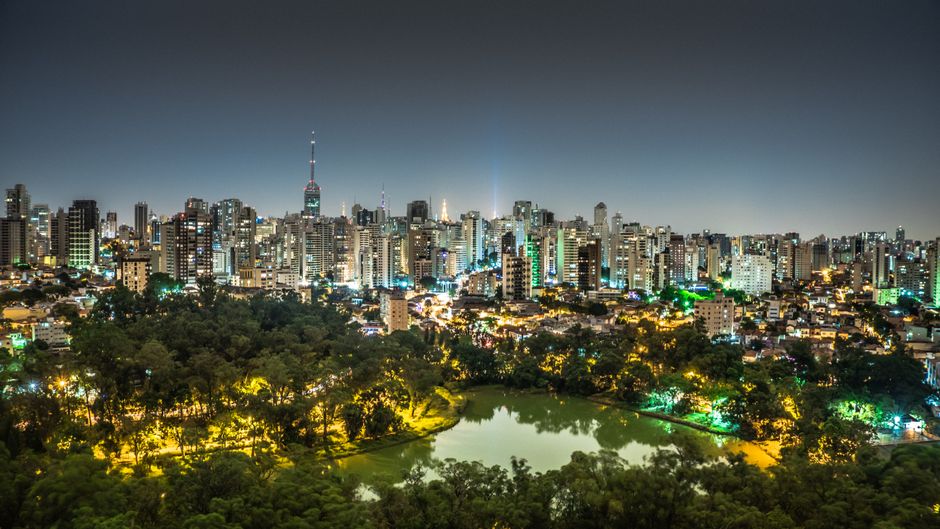
São Paulo is Brazil’s giant: a city of nearly 11.5 million people, more than 20 million in the metropolitan area, and the country’s capital of business, culture and food. It has no beach and few postcard views, but it rewards visitors who like cities: world-class art at MASP and the Pinacoteca, the Museum of the Ipiranga and the Football Museum, Avenida Paulista closed to cars on Sundays, Ibirapuera Park, the street art of Beco do Batman, Japanese food in Liberdade, the cathedral-like Municipal Market, and restaurants and bars that stay busy past midnight. Most international flights to Brazil land here, so a few days in São Paulo fit easily into a first trip. The weather is mild, as the city stands at about 760 m (2,500 ft): summers are warm and stormy, and winters are dry, sunny and cool.
Right now in São Paulo
- Wed18–25°C64–77°F3 mm rain
- Thu16–29°C61–85°FPartly cloudy
- Fri19–30°C66–87°FPartly cloudy
- Mon 12 Oct Our Lady of Aparecida (Nossa Senhora Aparecida)
Top tours in São Paulo
See all tours for São Paulo →
From local operators, with prices and reviews; you check availability and book on Viator, our partner. We may earn a commission at no extra cost to you. How we earn money
São Paulo at a glance
- Best for: museums, food, nightlife, shopping, architecture and soccer.
- How long: 2–3 days for the main museums, Paulista and the center; 4–5 to explore neighborhoods and take a day trip.
- Best time: April to June and August to October, when it is mild and drier; December to March has heavy afternoon storms.
- Getting there: Guarulhos International Airport (GRU), Brazil’s main gateway, about 25 km (16 miles) north-east of the center; Congonhas (CGH), in the city, for domestic flights.
- Getting around: an extensive metro and suburban rail network, plus cheap ride-hailing; traffic is notoriously heavy.
- Before you go: the e-visa, money and general safety are in our Brazil travel guide; for the coast, see our Rio de Janeiro and Paraty guides.
São Paulo’s neighborhoods: where things are
The historic center (Centro)
The old heart of the city around the Praça da Sé cathedral, the São Bento monastery, the Municipal Theater, the Farol Santander tower and the Municipal Market, with the Pinacoteca and the Luz station a short ride north. It is busy by day and empty at night.
Avenida Paulista
The city’s main avenue runs along a ridge, lined with banks, cultural centers, bookshops and MASP; on Sundays it closes to cars and fills with walkers, cyclists and street musicians.
Jardins and Pinheiros
Leafy, upscale neighborhoods south-west of Paulista, with designer shops on Rua Oscar Freire, many of the city’s best restaurants, and the bars and street art of Vila Madalena and the Beco do Batman alley.
Liberdade
The center of the largest Japanese community outside Japan, with red lanterns, a Sunday street fair and dozens of Japanese, Chinese and Korean restaurants.
Ibirapuera and Vila Mariana
Ibirapuera Park, São Paulo’s Central Park, designed with buildings by Oscar Niemeyer, holds the Afro Brasil Museum, the Museum of Modern Art and the São Paulo Biennial pavilion.
Bela Vista (Bixiga) and Consolação
Between the center and Paulista, Bixiga is the old Italian quarter, with cantinas, the Achiropita church festival in August and the Sunday antiques fair, while Rua Augusta and Consolação have the city’s alternative bars, clubs and theaters.
Barra Funda and Água Branca
West of the center, the Memorial da América Latina by Oscar Niemeyer and the Allianz Parque stadium; the Barra Funda transport hub links metro, trains and buses to the interior.
Itaim Bibi, Vila Olímpia and Brooklin
The business districts along the Pinheiros River, with modern office towers, the Ponte Estaiada cable-stayed bridge, hotels and expensive restaurants.
Top things to see in São Paulo
MASP (São Paulo Museum of Art)
The red concrete box raised on pillars over Avenida Paulista, designed by Lina Bo Bardi, holds the finest collection of European art in Latin America, from Raphael and Rembrandt to Van Gogh and Renoir, hung on glass easels, plus Brazilian art. As of October 2026, entry costs R$85 (about US$16), and it is free on Tuesdays from 10 a.m. to 8 p.m. (last entry 7 p.m.); from Wednesday to Sunday it opens from 10 a.m. to 6 p.m., according to the museum. Online booking is required, even on free days. Children up to 10 enter free.
The Pinacoteca
The state’s oldest art museum, in a red-brick 1900 building beside the Luz garden, is the best place to see Brazilian art from the colonial period to today, with a newer contemporary building across the street.
Museum of the Ipiranga
The palace on the hill where Brazil’s independence was proclaimed in 1822 reopened after a major restoration in 2022. It opens from Tuesday to Sunday, 10 a.m. to 5 p.m. (last entry 4 p.m.), according to the museum.
Football Museum
Inside the art-deco Pacaembu stadium, an interactive museum tells the story of Brazilian soccer, from Pelé to the World Cups.
Municipal Market (Mercadão)
A 1930s market hall with stained-glass windows, piled with tropical fruit, cheeses and cured meats; try the giant mortadella sandwich and pastel.
More to see
- Beco do Batman: an alley in Vila Madalena covered in street art.
- The Edifício Copan and Edifício Itália: landmark mid-century towers downtown; the Farol Santander tower has a viewing deck.
- The Japan House and the Sesc centers: free or cheap cultural centers on and near Paulista.
- The Butantan Institute: a historic venom and vaccine research center with snake displays.
Other things to do in São Paulo
Food and drink
São Paulo has some of the most varied food in the Americas, thanks to its Italian, Japanese, Lebanese, Portuguese and northeastern Brazilian communities: pizza (it claims more pizzerias than almost any city), sushi in Liberdade, esfihas and kibbeh, steakhouses, and the inventive cooking of Brazil’s best-known chefs. Bars spill onto the sidewalks of Vila Madalena and Pinheiros at night.
Where to eat and drink
- The Mercadão: the mortadella sandwich and pastel de bacalhau (cod pastry) are institutions; go on a weekday morning to avoid the crowds.
- Liberdade: ramen, sushi and Japanese bakeries, plus the Sunday street fair with food stalls at Liberdade station.
- Bixiga and Mooca: traditional Italian cantinas and pizzerias; São Paulo’s pizza is eaten with knife and fork.
- Pinheiros and Vila Madalena: contemporary Brazilian cooking, wine bars and lively botecos, with the Sunday Benedito Calixto square fair.
- Jardins: the city’s fine-dining restaurants, many showcasing Brazilian ingredients from the Amazon and the cerrado.
- Northeastern food: the Feira de São Cristóvão’s cousin, the Centro de Tradições Nordestinas, serves the food and music of migrants from the Northeast.
Paulistanos eat late, with dinner from about 8:30 p.m., and many restaurants don’t take reservations, so expect waits on weekends.
Soccer
Corinthians, Palmeiras and São Paulo FC play at big stadiums across the city; buy tickets through the club websites.
Architecture and street art
São Paulo is a showcase of 20th-century architecture: Oscar Niemeyer’s wavy Copan building and the Ibirapuera Park pavilions, Lina Bo Bardi’s MASP and the SESC Pompeia leisure center in a former factory, the art-deco Martinelli building, once the tallest in Latin America, and the brutalist houses of Paulo Mendes da Rocha. The city is also one of the world’s great street-art capitals, from the graffiti alleys of Vila Madalena’s Beco do Batman to the giant murals along the Minhocão elevated highway, which closes to cars in the evenings and on weekends and becomes a park.
Events
The São Paulo Biennial art show, the LGBT+ Pride Parade on Paulista, one of the biggest in the world, and the Formula 1 Grand Prix at Interlagos are the city’s best-known events; Carnival here centers on its own Sambódromo parades.
Day trips from São Paulo
- Santos: the port city on the coast, about an hour and a half away, with a long beach garden and the Coffee Museum.
- Embu das Artes: a colonial village with a weekend craft fair.
- The north coast: Ilhabela, Ubatuba and Maresias for beaches and forest, best over a weekend.
- Paraty: about five hours by road, a good stop on the way to Rio.
More day trips and weekends
- Campos do Jordão: a mountain town in the Serra da Mantiqueira, about 3 hours away, with Swiss-style chalets and a winter festival in July.
- Holambra: a Dutch-founded flower town about 2 hours north, with a big flower festival in September.
- Ilhabela: a forested island off the north coast, reached by ferry from São Sebastião, about 3–4 hours away, with waterfalls and beaches; better for two or three nights.
- Brotas: rafting and waterfalls in the interior, about 3 hours away.
Nearby destinations
- Paraty199 km
Getting there and getting around
From the airports
Guarulhos (GRU) handles most international flights. The suburban rail line 13 (Jade) links the airport with the city’s rail network, airport buses run to Paulista, Congonhas and the main bus terminal, and taxis and ride-hailing cars leave from marked areas; allow at least an hour to the center, and much longer at rush hour. Congonhas (CGH), inside the city, handles domestic flights, including a shuttle to Rio’s Santos Dumont.
Metro, trains and buses
The metro is fast, clean and the best way around: Line 1 (Blue) runs north–south through the center, Line 2 (Green) along Avenida Paulista and Line 4 (Yellow) to Pinheiros. Suburban trains and city buses fill in. Avoid rush hours if you can.
Getting around tips
- Paying: buy single tickets at metro stations or use contactless payment where the gates accept it; the Bilhete Único card, sold in stations, covers buses and metro with transfers.
- Lines for visitors: Line 1 (Blue) for the center, Liberdade and Luz; Line 2 (Green) for Paulista and MASP; Line 4 (Yellow) for Pinheiros, Faria Lima and the Paulista connection at Consolação; Line 5 (Lilac) toward Ibirapuera’s southern side.
- Rush hours: about 6–9 a.m. and 5–8 p.m. on weekdays, when trains are packed and traffic is gridlocked.
- Airport transfers at peak times: allow two hours from Paulista to Guarulhos on a weekday evening.
- Walking: Paulista, Jardins, Pinheiros and the historic center are good on foot by day; use apps at night.
Taxis and driving
Ride-hailing apps (Uber and 99) and taxis are widely used. Don’t drive: traffic is very heavy, and a weekday license-plate rotation restricts cars in the center at peak hours.
When to go and how long to stay
According to INMET’s 1991–2020 normals for the Mirante de Santana station, average highs are 28–29 °C (83–84 °F) from December to February and 23–25 °C (73–76 °F) from June to August, with winter nights of about 13 °C (55 °F). About 1,660 mm (65 in) of rain falls a year, mostly from November to March in heavy afternoon storms; July and August are the driest months. The city is pleasant all year, but quieter and cheaper in January and July, when many residents leave on vacation, and busy with business travelers on weekdays.
São Paulo’s weather month by month
The table shows INMET’s 1991–2020 averages for its Mirante de Santana station, in the north of the city.
| Month | Average high | Average low | Rain (Mirante de Santana) |
|---|---|---|---|
| January | 29 °C (83 °F) | 19 °C (67 °F) | 292 mm (11.5 in) |
| February | 29 °C (84 °F) | 20 °C (67 °F) | 258 mm (10.1 in) |
| March | 28 °C (82 °F) | 19 °C (66 °F) | 229 mm (9.0 in) |
| April | 27 °C (80 °F) | 18 °C (64 °F) | 87 mm (3.4 in) |
| May | 23 °C (74 °F) | 15 °C (58 °F) | 66 mm (2.6 in) |
| June | 23 °C (73 °F) | 14 °C (56 °F) | 60 mm (2.4 in) |
| July | 23 °C (73 °F) | 13 °C (55 °F) | 48 mm (1.9 in) |
| August | 24 °C (76 °F) | 13 °C (56 °F) | 32 mm (1.3 in) |
| September | 25 °C (77 °F) | 15 °C (59 °F) | 83 mm (3.3 in) |
| October | 26 °C (80 °F) | 16 °C (62 °F) | 127 mm (5.0 in) |
| November | 27 °C (80 °F) | 17 °C (63 °F) | 144 mm (5.7 in) |
| December | 28 °C (83 °F) | 19 °C (66 °F) | 231 mm (9.1 in) |
- December to March: warm and humid, with short, heavy afternoon storms that flood streets and snarl traffic; quieter in January, when many residents leave on vacation.
- April and May: mild and drier; a good time for walking the city.
- June to August: dry, sunny and cool, with cold mornings and occasional poor air quality during dry spells; bring a warm layer.
- September to November: warming and still fairly dry at first; the Biennial (in even years) and Formula 1 in November bring crowds.
2 days in São Paulo
Day 1: the historic center, the Municipal Market and the Pinacoteca, then dinner in Liberdade. Day 2: MASP and Avenida Paulista, Ibirapuera Park in the afternoon, and Vila Madalena at night.
4 days in São Paulo
Add the Museum of the Ipiranga, the Football Museum, Beco do Batman and Pinheiros, a soccer match, and a day trip to Santos or Embu das Artes.
What things cost in São Paulo
Official prices, as of October 2026, plus our estimates for planning:
| Item | Typical price |
|---|---|
| MASP entry | R$85 (about US$16), free on Tuesdays; official |
| Metro or bus single ride | a few reais, set by the state and city |
| Lunch buffet by weight | about R$45–80 (US$9–15) |
| Mortadella sandwich at the Mercadão | about R$45–70 (US$9–13) |
| Dinner for two at a mid-range restaurant, with drinks | about R$250–450 (US$50–85) |
| Ride-hailing from Guarulhos Airport to Paulista | about R$90–160 (US$17–30), more at peak times |
| Double room, mid-range hotel near Paulista | about R$400–800 (US$75–155) a night; cheaper at weekends |
Business hotels drop their prices on Friday and Saturday nights, so weekends are often the best value.
Where to stay in São Paulo
- Avenida Paulista and Jardins: central, safe-feeling and on the metro, with hotels at every price.
- Pinheiros and Vila Madalena: boutique hotels and hostels near the bars and restaurants.
- Itaim Bibi and Vila Olímpia: business hotels, good for weekend deals.
- Downtown: cheaper hotels near the sights, but quiet and less comfortable at night.
Practical tips for São Paulo
- Museum days: many museums close on Mondays; MASP is free on Tuesdays with an online booking.
- Sunday on Paulista: the avenue closes to cars for walking and cycling on Sundays and holidays.
- Money: cards and contactless are accepted almost everywhere.
- Safety: phone snatching is common, including from car windows in traffic and by thieves on bikes; keep phones out of sight in the street. The center and areas around Luz and Sé empty out at night, so use ride-hailing apps after dark. In 2025, São Paulo saw deaths from spirits contaminated with methanol, according to the UK government; buy drinks from reputable places.
- Emergencies: call 190 for police, 192 for an ambulance and 193 for the fire department.
What to pack for São Paulo
Pack layers: light clothes for warm days, a sweater or light jacket for cool evenings and air-conditioned buildings, and something warmer from June to August. Add an umbrella for summer storms, comfortable walking shoes, smart-casual clothes for restaurants, and a plug adapter for Brazil’s type N sockets.
São Paulo travel FAQ
Is MASP free on Tuesdays?
Yes. As of October 2026 MASP is free on Tuesdays from 10 a.m. to 8 p.m., with online booking required. On other days entry costs R$85.
How do I get from Guarulhos Airport to São Paulo?
Take the line 13 (Jade) suburban train and connect to the metro, an airport bus to Paulista or the main bus terminal, or a taxi or ride-hailing car. Allow at least an hour.
How many days do I need in São Paulo?
Two or three days cover the main museums, Avenida Paulista and the center; four or five let you explore the neighborhoods and food.
Does São Paulo have a beach?
No. The nearest beaches are in Santos, about an hour and a half away, and on the north coast.
When is the best time to visit São Paulo?
April to June and August to October, for mild, drier weather. Summer brings heavy afternoon storms.
Do I need a yellow fever vaccine for São Paulo?
It isn’t required, but the CDC recommends it for travel to the city of São Paulo and the state’s coastal islands.
Is São Paulo safe for tourists?
Most visits are trouble-free. Phone theft is the most common crime, so keep phones out of sight, and use ride-hailing apps at night.
What is the best area to stay in São Paulo for tourists?
Avenida Paulista and Jardins, for the metro, museums and restaurants; Pinheiros and Vila Madalena for nightlife.
Is São Paulo worth visiting?
Yes, if you like cities: it has Brazil’s best museums, food and nightlife, and most international flights land here anyway.
Is the São Paulo metro safe?
The metro is clean, busy and generally safe; keep phones out of sight in crowds and avoid rush hours.
Plan your trip
Partner links: TravelerCenter may earn a commission if you book, at no extra cost to you.
🇵🇹 Useful Portuguese phrases for São Paulo
All 38 Portuguese phrases: restaurant, hotel, emergencies, romance (printable) →
Sources · last reviewed 4 October 2026
Researched and last reviewed on 4 October 2026. MASP hours, prices and booking: MASP; Museum of the Ipiranga hours: the museum; climate: INMET’s 1991–2020 normals; population: IBGE’s 2022 census; yellow fever: the US CDC; methanol and crime patterns: the UK government’s Brazil pages; exchange rate: the Central Bank of Brazil. Neighborhood descriptions, the metro and rail lines, airport transport, events, the license-plate rotation, food and day-trip times come from secondary sources or general knowledge and are flagged for checking. Prices change, so check the official sites before you go. For entry rules and money, see our Brazil travel guide.
Data: Weather: MET Norway (CC BY 4.0) · Rates: ECB · Holidays: Nager.Date · Costs: World Bank ICP and price levels · Wikidata (CC0)