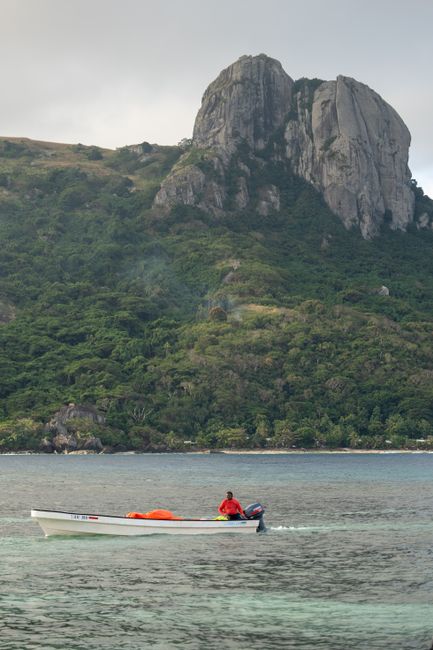
The Mamanuca Islands are a scatter of about 20 small islands and islets off the west coast of Viti Levu, between 30 minutes and two hours by fast catamaran from Port Denarau near Nadi. This is the Fiji of the travel posters: low, palm-covered islands ringed by white sand, turquoise lagoons and coral reefs, most of them home to a single resort. Some islands are large enough for villages, walking trails and several resorts, such as Malolo and Mana; others, like Treasure, Bounty or Beachcomber, can be walked around in 20 minutes. Between them lie world-class surf breaks such as Cloudbreak, a floating bar on the reef, day-trip islands with buffet lunches, and Monuriki, the uninhabited island where the movie Cast Away was filmed. Because the Mamanucas sit in the rain shadow of Viti Levu’s mountains, they are among the sunniest and driest places in Fiji. They are also easy: you can be on a beach within a couple of hours of landing at Nadi, which makes them ideal for short stays, families and honeymooners. The dry season from May to October brings the most settled weather; November to April is hotter, wetter and cyclone season.
Right now in Mamanuca Islands
- Wed 25–26°C 76–78°F Mostly clear
- Thu 24–26°C 75–78°F Clear
- Fri 24–25°C 76–78°F Clear
Weather: MET Norway (CC BY 4.0) · Sea temperature: NOAA CoastWatch
Top tours in Mamanuca Islands
See all tours for Mamanuca Islands →
From local operators, with prices and reviews; you check availability and book on Viator, our partner. We may earn a commission at no extra cost to you. How we earn money
Mamanucas at a glance
- Best months: May to October for dry, sunny weather and the biggest surf; July to September is the busiest. November to April is hotter and wetter, with a risk of tropical cyclones, but also cheaper.
- Getting there: fast catamarans from Port Denarau, 20 minutes from Nadi Airport, run several times a day; seaplanes and helicopters fly from Nadi Airport to most resorts in 10 to 20 minutes.
- Where to stay: single-resort islands, from family resorts with kids’ clubs to adults-only retreats and a few overwater bures; budget lodges on some islands.
- Time needed: four to seven nights on one or two islands; a day trip if you are staying on the mainland.
- Costs (as of October 2026): a full-day trip to South Sea Island costs FJ$285 per adult with lunch and drinks; FJ$1 = about US$0.44.
- Before you go: entry rules, the arrival card, the departure tax and money are covered in our Fiji travel guide.
Getting to the islands
Fast catamarans from Port Denarau
South Sea Cruises runs daily resort transfers from Port Denarau to most Mamanuca islands on high-speed catamarans with air-conditioned lounges, bars and outdoor decks, with several departures a day to the closer islands. The boats follow numbered routes, stopping at resorts along the way; smaller islands are served by a short transfer in the resort’s own boat or tender. Check in at the South Sea Cruises desk in the Port Denarau terminal 30 minutes before departure, and reconfirm your booking the day before if you booked online. A fuel surcharge has applied to all resort transfers since 7 April 2026. Coaches link most Nadi, Wailoaloa and Denarau hotels with the marina for FJ$11 per adult one way, and the company can arrange pickups from Nadi Airport. Surfboards cost extra, FJ$15.50 per board to the Mamanucas.
Seaplanes, helicopters and private boats
Seaplanes and helicopters fly from Nadi Airport straight to many resorts, a scenic shortcut that saves time if your flight lands in the afternoon. Some resorts, especially on Malolo and the outer islands, use their own boats or water taxis from Port Denarau or from Wailoaloa Beach. Ask your resort which transfer it recommends and whether luggage limits apply.
How far are the islands?
The closest islands, such as Bounty, Treasure and Beachcomber, are about 30 to 45 minutes from Port Denarau by catamaran; Malolo and Mana are 60 to 90 minutes; and the outer islands of Tokoriki, Matamanoa and Vomo up to two hours, depending on the number of stops.
The islands and resorts
Malolo and Malolo Lailai
Malolo, the largest island in the group, has two villages, hiking trails to hilltop lookouts and several resorts, including one of Fiji’s few resorts with overwater bures. Neighboring Malolo Lailai has an airstrip, the Musket Cove marina, a hub for cruising yachts with a famous island bar, and family-friendly resorts. A short boat ride away is the Cloud 9 floating bar and the surf breaks of the outer reef.
Mana
Mana is one of the bigger and more varied islands, with a village, several beaches on both sides, snorkeling straight off the sand and accommodation from a large resort to budget lodges. It is a popular stop for island-hoppers.
Castaway, Tokoriki and Matamanoa
Castaway Island (Qalito) is a family favorite with a kids’ club and good snorkeling. Tokoriki and Matamanoa, near the western edge of the group, have adults-only resorts and some of the Mamanucas’ best sunsets.
Treasure, Beachcomber, Bounty and South Sea Island
These small coral cays near Denarau are quick to reach. Treasure has a turtle nursery and a family resort; Beachcomber has long been a social, party-friendly island; Bounty has a laid-back resort and good snorkeling; and tiny South Sea Island is a day-trip island with a semi-submersible coral viewer and lunch included.
Vomo and Navini
At the northern edge of the group, Vomo is a private luxury resort island with a hill to climb and a walk-around beach, and Navini a small, quiet island with only a few bures.
Namotu and Tavarua
These two tiny islands sit next to Fiji’s most famous surf breaks, Cloudbreak and Restaurants, and host surf camps. Since 2010 the reef breaks have been open to all surfers, and boats run surfers out from Malolo, Namotu, Tavarua and Port Denarau.
Top things to do in the Mamanucas
Snorkeling and diving
Fringing reefs surround most islands, so you can snorkel straight off the beach at many resorts. Colorful hard and soft corals, clownfish, parrotfish, giant clams, turtles and reef sharks are common. Dive centers on most of the larger islands run trips to sites such as Supermarket (known for reef sharks), Gotham City and the Salamanda wreck, plus courses for beginners. Visibility is often 20 to 30 m (65 to 100 feet) in the dry season.
Monuriki, the Cast Away island
Monuriki, an uninhabited island at the western end of the group, was the setting for the movie Cast Away. Day trips from nearby resorts and from Port Denarau stop for swimming and snorkeling on its beach; the island belongs to the people of a nearby village, who charge a landing fee, usually included in the tour.
Cloud 9 and the floating bars
Cloud 9 is a two-level wooden platform anchored on the Ro Ro reef, with a bar, wood-fired pizzas, music and turquoise water all around. Boats run from Port Denarau and from several resorts; it is lively and busy, so go early in the day for a quieter swim.
Surfing
The Mamanucas have some of the world’s best reef breaks. Cloudbreak is a powerful left that holds huge swells and is for experts only; Restaurants and Namotu Lefts are slightly more forgiving, and Swimming Pools suits intermediates on small days. The biggest swells come from about April to October. All breaks are over shallow reef: wear booties, bring a helmet if you have one, and go with a local boat operator who knows the tides.
Day trips from the mainland
From Port Denarau, catamarans run day trips to South Sea Island, Malamala Beach Club, a beach club on its own island with an infinity pool, and resorts that welcome day guests. Most include lunch and some include drinks, snorkeling gear, kayaks and paddleboards.
Sailing and island cruising
Half-day and full-day sails visit sandbars, reefs and small islands, and Musket Cove is a yachting hub for the annual Fiji Regatta Week and for cruising sailors crossing the Pacific. Another option is the three-hour Mamanuca Island Explorer cruise, which drops off and picks up guests at the resorts.
Walks, kayaking and village visits
Climb to hilltop lookouts on Malolo, Mana and Vomo for views over the reefs, paddle kayaks across lagoons, and join a village visit with a kava ceremony on Malolo or Mana, dressed modestly with shoulders and knees covered.
Other things to do
- Fishing charters: game fishing for mahi-mahi, wahoo and tuna beyond the reef.
- Spa days: most resorts have spas, often in open-air bures.
- Parasailing, jet skis and wakeboarding: available at the larger resorts and on day-trip islands.
- Turtle and marine conservation programs: some resorts run coral-planting and turtle-nursery projects that guests can join.
Food and drink
Most resorts serve all meals, and many sell meal plans; on a single-resort island, you eat where you stay, so check the restaurant options and prices before you book. Expect fresh fish, kokoda (raw fish in lime and coconut cream), Indo-Fijian curries, tropical fruit and a weekly lovo feast cooked in an earth oven, often with a meke (traditional dance) performance. Musket Cove’s island bar and Cloud 9 are classic spots for a sunset drink. Tipping is not expected; many resorts have a staff Christmas fund instead.
Nearby destinations
- Nadi38 km
- Yasawa Islands88 km
- Coral Coast113 km
When to go and how long to stay
The Mamanucas are warm all year, with daytime highs around 28 to 32 °C (83 to 89 °F) and sea temperatures of about 25 °C (77 °F) in August to 29 °C (84 °F) in February. The dry season (May to October) is sunny with cooler nights and steady southeast trade winds, which suit surfers and sailors; the wet season (November to April) is hotter and more humid, with short, heavy downpours, especially from January to March, and the risk of tropical cyclones.
| Month | Average high | Average low | Rain | Rain days (≥1 mm) |
|---|---|---|---|---|
| Jan | 31 °C (89 °F) | 23 °C (74 °F) | 365 mm (14.4 in) | 14 |
| Feb | 32 °C (89 °F) | 23 °C (74 °F) | 336 mm (13.2 in) | 15 |
| Mar | 31 °C (88 °F) | 23 °C (74 °F) | 351 mm (13.8 in) | 16 |
| Apr | 31 °C (87 °F) | 23 °C (73 °F) | 188 mm (7.4 in) | 10 |
| May | 30 °C (85 °F) | 21 °C (70 °F) | 92 mm (3.6 in) | 5 |
| Jun | 29 °C (84 °F) | 20 °C (68 °F) | 57 mm (2.2 in) | 4 |
| Jul | 29 °C (83 °F) | 19 °C (67 °F) | 51 mm (2.0 in) | 3 |
| Aug | 29 °C (83 °F) | 19 °C (67 °F) | 65 mm (2.5 in) | 4 |
| Sep | 29 °C (85 °F) | 20 °C (69 °F) | 72 mm (2.8 in) | 5 |
| Oct | 30 °C (86 °F) | 21 °C (70 °F) | 87 mm (3.4 in) | 7 |
| Nov | 31 °C (87 °F) | 22 °C (72 °F) | 127 mm (5.0 in) | 9 |
| Dec | 31 °C (89 °F) | 23 °C (73 °F) | 210 mm (8.3 in) | 12 |
| Year | 30 °C (86 °F) | 22 °C (71 °F) | 1,999 mm (79 in) | 103 |
Figures are the Fiji Meteorological Service’s 1991–2020 normals for Nadi Airport, the nearest long-term station, as submitted to the World Meteorological Organization. The islands have similar temperatures, with slightly warmer nights because of the surrounding sea.
How long to stay: 3, 5 and 7 nights
- Three nights: one island close to Port Denarau, with snorkeling, a sunset sail and a trip to Cloud 9.
- Five nights: a larger island such as Malolo or Mana, with a dive or surf day, a hike and a village visit.
- Seven nights: split your stay between a family or social island and a quieter adults-only resort, or combine the Mamanucas with a few nights in the Yasawa Islands on the Yasawa Flyer.
Events and busy periods
- Fiji Regatta Week at Musket Cove (usually September): a week of sailing races and parties for cruising yachts.
- Australian and New Zealand school holidays, especially July and late September to early October, fill family resorts.
- Christmas and New Year: book months ahead.
Where to stay in the Mamanucas
Picking the right island is the key decision. Think about who you are traveling with, your budget and how far you want to be from Port Denarau.
- Families: large resorts with kids’ clubs, pools and shallow lagoons on Malolo Lailai, Castaway, Treasure and Malolo.
- Couples and honeymooners: adults-only resorts on Tokoriki, Matamanoa and Malolo, and private-island luxury on Vomo.
- Overwater bures: only a handful of resorts in Fiji have them, including one on Malolo; book early. Many luxury resorts offer beachfront bures with private plunge pools instead.
- Social and budget travelers: backpacker lodges and lively resorts on Mana and Beachcomber, with dorms and simple bures.
- Surfers: surf camps on Namotu and Tavarua, and resorts on Malolo with boat access to the breaks.
Rates usually include breakfast; lunch and dinner are often sold as a meal plan. Compare the total cost including meals and transfers, and book well ahead for July to September.
Typical costs
| Item (as of October 2026) | Fijian dollars | About US dollars |
|---|---|---|
| South Sea Island full-day trip, adult / child | FJ$285 / FJ$149 | US$126 / US$66 |
| Malamala Beach Club full-day pass | FJ$215 | US$95 |
| Coach, Nadi hotel to Port Denarau, adult one way | FJ$11 | US$5 |
| Surfboard on a Mamanuca transfer, per board | FJ$15.50 | US$7 |
| Catamaran transfer to a Mamanuca resort, one way | about FJ$100–200 | about US$45–90 |
| Two-tank dive | about FJ$350–450 | about US$155–200 |
| Resort meal plan, per adult per day | about FJ$120–250 | about US$55–110 |
| Budget island lodge or dorm, per person with meals | about FJ$120–200 | about US$55–90 |
| Resort bure for two, per night | about FJ$500–1,500 | about US$220–660 |
| Overwater bure, per night | about FJ$2,500 and up | about US$1,100 and up |
Day trips, coach and surfboard fees are South Sea Cruises’ published prices, valid until 31 March 2027; transfers carry a fuel surcharge, and card payments a 2.5–3% fee. Transfer fares, dives, meal plans and rooms are typical ranges, not official figures. Conversions use the Reserve Bank of Fiji’s rate of US$0.44 to FJ$1 on 5 October 2026.
Safety in the Mamanucas
- Cyclone season (November to April): boats stop running when tropical cyclone warnings are issued. In April 2026, Tropical Cyclone Vaianu suspended day trips and some resort transfers, and boats ran at reduced speed for days afterward because of debris. Follow the Fiji Meteorological Service and your resort’s instructions.
- Currents: strong currents run through passes between islands and over outer reefs, especially at changing tides. Snorkel in the resort’s marked areas or with a guide, and don’t swim beyond the reef edge.
- Reef cuts: wear reef shoes, never stand on coral, and clean any cut immediately, as coral cuts infect easily.
- Surfing: the reef breaks are shallow and powerful; Cloudbreak is for experts only.
- Sun: reflection from water and white sand intensifies UV. Wear a rash vest, hat and reef-safe sunscreen, and drink plenty of water.
- Dengue: mosquito-borne dengue occurs in Fiji; use repellent, especially at dawn and dusk.
- Medical care: resorts have first aid, but serious cases need evacuation to Nadi or abroad, so bring travel insurance that covers it.
What to pack
Swimwear, a rash vest, reef shoes, a mask and snorkel if you prefer your own, reef-safe sunscreen, a hat and polarized sunglasses, insect repellent, a dry bag, seasickness tablets for the boat, a sarong or T-shirt that covers your shoulders for village visits, and enough Fijian dollars for small purchases, as most islands have no ATMs. Plugs are Type I.
Mamanucas travel FAQ
How do I get to the Mamanuca Islands from Nadi?
Take a fast catamaran from Port Denarau, about 20 minutes from Nadi Airport, with South Sea Cruises or your resort’s boat. Seaplanes and helicopters fly from Nadi Airport to many resorts in 10 to 20 minutes.
How long is the boat ride to the Mamanucas?
About 30 to 45 minutes to the closest islands, such as Bounty and Treasure, and up to two hours to outer islands such as Tokoriki and Vomo, depending on stops.
Which Mamanuca island is best for families?
Malolo Lailai, Castaway, Treasure and Malolo have family resorts with kids’ clubs, pools and calm, shallow lagoons.
Which Mamanuca island is best for couples?
Tokoriki, Matamanoa and Malolo have adults-only resorts, and Vomo is a private luxury island.
Are there overwater bungalows in the Mamanucas?
Yes, but only a few. Malolo has one of Fiji’s few resorts with overwater bures; book early, especially for July to September.
Can I visit the Cast Away island?
Yes. Day trips stop at Monuriki for swimming and snorkeling. The island belongs to a nearby village, which charges a landing fee that is usually included in the tour price.
What is Cloud 9?
A two-level floating bar and pizzeria on a reef in the Mamanucas, reached by boat from Port Denarau and several resorts.
When is the best time to visit the Mamanucas?
May to October, the dry season, with sunny days and calmer conditions. November to April is hotter and wetter, with a risk of cyclones, but quieter and cheaper.
Can I do a day trip to the Mamanucas?
Yes. Catamarans run daily from Port Denarau to South Sea Island, Malamala Beach Club and several resorts, usually with lunch included.
Do I need cash in the Mamanucas?
Resorts take cards, usually with a card fee, but bring some Fijian dollars for village visits and tips to the staff fund, as most islands have no ATMs.
Sources and last review
Researched and last reviewed on 5 October 2026. Resort transfers, the fuel surcharge, check-in times, coach and surfboard fees, day-trip prices and the April 2026 cyclone disruption come from South Sea Cruises and Yasawa Adventures Fiji; the exchange rate from the Reserve Bank of Fiji; climate from the Fiji Meteorological Service’s 1991–2020 normals for Nadi Airport, as published by the World Meteorological Organization; coordinates from Wikidata. Island and resort descriptions, dive sites, surf breaks and seasons, boat times to individual islands, Monuriki landing fees, regatta dates, sea temperatures and transfer, dive, meal-plan and room prices are general references or estimates and should be checked with the resorts and operators. For entry rules, the arrival card, the departure tax and money, see our Fiji travel guide.
Plan your trip
Partner links: TravelerCenter may earn a commission if you book, at no extra cost to you.