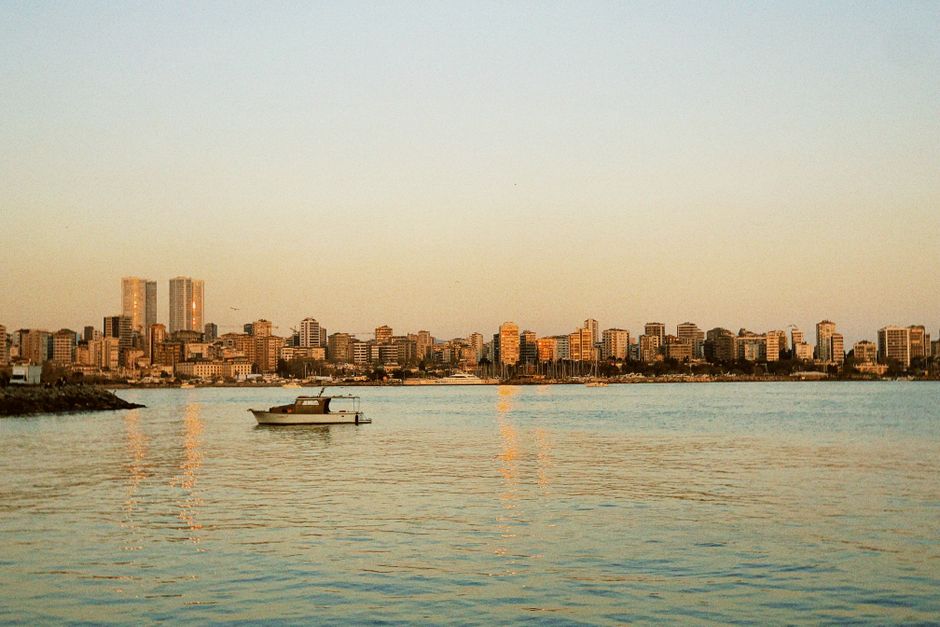
Beirut is Lebanon’s capital and largest city, built on a rocky headland that juts into the Mediterranean, with the snowy ridge of Mount Lebanon rising behind it for much of the year. It is a city of layers: Phoenician, Roman, Ottoman and French-era buildings stand beside glass towers, and mosques and cathedrals share the same squares in the rebuilt Downtown. Most visitors come for the atmosphere and the food. Walk the seafront Corniche to the Pigeon Rocks at Raouché, see Phoenician and Roman treasures in the National Museum, browse the galleries of the Sursock Museum in Achrafieh, and spend the evening in the bars and restaurants of Gemmayzeh and Mar Mikhael. Beirut is also the base for day trips to the Jeita Grotto, Harissa, Byblos, Baalbek and the Chouf mountains, all within two hours. The airport is about 9 km (6 miles) south of the center. The best months are April to June and September to November.
Right now in Beirut
- Wed21–25°C69–77°F1 mm rain
- Thu21–27°C70–81°FClear
- Fri24–27°C76–80°FClear
Top tours in Beirut
See all tours for Beirut →
From local operators, with prices and reviews; you check availability and book on Viator, our partner. We may earn a commission at no extra cost to you. How we earn money
Beirut at a glance
- Best for: food and nightlife, museums, seafront walks, architecture, and day trips across Lebanon.
- How long: 2 to 3 nights for the city, 4 to 5 as a base for day trips.
- Best time: April to June and September to November; summer is hot and humid but lively.
- Getting there: Beirut–Rafic Hariri International Airport (BEY); the licensed airport taxi fare to the city is US$18.
- Getting around: on foot within neighborhoods, and by taxi, ride-hailing app or shared “service” taxi between them.
- Money: prices are widely quoted in US dollars; bring clean, small dollar notes.
- Before you go: visas, money, transport and general practical advice are in our Lebanon travel guide.
Beirut’s neighborhoods and where to stay
Beirut is compact, roughly 5 km (3 miles) across, but each neighborhood has its own character.
Downtown (Beirut Central District)
The rebuilt historic center, with restored Ottoman and French Mandate-era streets around Nejmeh Square and its clock tower, the blue-domed Mohammad Al-Amin Mosque, the cathedrals of St. George, Roman bath ruins, and the marina and promenade of Zaitunay Bay. Quiet at night compared with the neighborhoods around it, but central for sightseeing.
Gemmayzeh and Mar Mikhael
East of Downtown, two neighborhoods of old stone houses with arched windows and wrought-iron balconies, packed with bars, restaurants, cafés, design shops and galleries along Rue Gouraud and Armenia Street. The St. Nicholas Stairs, a long public stairway lined with old houses, climb from Gemmayzeh to Achrafieh. The liveliest place in the city at night, and a good choice for boutique hotels.
Achrafieh
A hilly, mainly residential district above Gemmayzeh, with elegant old mansions, the Sursock Museum, shops on Rue Abdel Wahab el Inglizi and Sassine Square, and many good restaurants.
Hamra and Ras Beirut
West Beirut’s busy commercial heart, around Hamra Street, with cafés, bookshops, pubs and budget to mid-range hotels, next to the leafy campus of the American University of Beirut (AUB), founded in 1866, which runs down to the sea.
Raouché, the Corniche and Ain el Mreisseh
The seafront, with the long Corniche promenade, the Pigeon Rocks offshore, fish restaurants, beach clubs and the city’s big seafront hotels with Mediterranean views.
Badaro
A relaxed neighborhood of pubs and cafés near the National Museum and the Pine Forest (Horsh Beirut), the city’s largest park, popular with locals in the evening.
Top things to see in Beirut
The National Museum of Beirut
Lebanon’s main archaeological museum, in a 1930s building on the old Museum Crossing, holds a superb collection from prehistory to the Ottoman period: Phoenician statues, Roman mosaics, gold jewelry, a long row of white marble anthropoid sarcophagi from Sidon and, most famous of all, the sarcophagus of Ahiram, king of Byblos, carved with one of the oldest known inscriptions in the Phoenician alphabet. A short film in the ground-floor theater tells the story of how the collection was protected and restored. Allow 1.5 to 2 hours. The museum is usually closed on Mondays; check hours and the entry fee before you go.
The Corniche and the Pigeon Rocks
Beirut’s seafront promenade runs for about 5 km (3 miles) from the St. George Bay area west and south around the headland to Raouché. It is the city’s favorite place for an evening stroll, a jog or a cycle, with fishermen, coffee and corn sellers, and swimmers diving off the rocks in summer. At Raouché, the Pigeon Rocks (Sakhret al-Raouché), two great limestone arches standing in the sea, are Beirut’s best-known natural landmark; watch the sunset from the cafés above them, or take a short boat trip around them from the small harbor below in summer.
The Sursock Museum
A white villa of 1912, mixing Venetian and Ottoman styles, on a hill in Achrafieh, left to the city by the art collector Nicolas Sursock and now Beirut’s museum of modern and contemporary art. Changing exhibitions, a collection of Lebanese painting, a reconstructed Ottoman-era salon and a shop and café fill several floors. Check the museum’s website for current opening days.
Downtown: mosques, cathedrals and Roman Beirut
In a short walk around Martyrs’ Square and Nejmeh Square you pass the Mohammad Al-Amin Mosque, completed in 2008, with its blue domes and tall minarets; the St. George Maronite Cathedral next door; the St. George Greek Orthodox Cathedral, with an underground crypt museum showing the layers of earlier churches beneath it; the Roman Baths, excavated in terraces below the Grand Serail hill; and the Garden of Forgiveness area, where Roman colonnades have been uncovered. The Omari Mosque on Weygand Street was built as a Crusader church in the 12th century.
More classic sights
- AUB Archaeological Museum: on the campus of the American University of Beirut, one of the oldest museums in the Middle East, with pottery, coins, glass and Phoenician objects.
- Beit Beirut: a striking 1920s yellow-stone building on the old Museum Crossing, now a museum and cultural center about the city’s memory.
- Zaitunay Bay: a marina promenade of restaurants and cafés beside the yachts, next to the old St. George Hotel.
- MIM Museum: a private museum of minerals at Saint Joseph University, with one of the finest collections of its kind in the world, and a gallery of fossil fish from Lebanon.
- Horsh Beirut (the Pine Forest): the city’s largest green space, near the National Museum.
Other things to do in Beirut
Eating in Beirut
Beirut is one of the best places to eat in the Middle East. Start the day with a manakish, a flatbread with za’atar or cheese, from a neighborhood bakery, or a plate of foul (fava beans) and hummus; lunch on shawarma or falafel; and spend the evening over a long mezze dinner with grilled meats or fish and a glass of arak or Lebanese wine. Armenian restaurants in the Bourj Hammoud district serve spicy sausages (soujouk and makanek) and dishes from Aleppo and Cilicia, and old sweet shops sell knefeh, warm cheese pastry, for breakfast or dessert. On Saturdays, the farmers’ market Souk el Tayeb brings producers from across the country.
Nightlife
Beirut’s night starts late. Mar Mikhael and Gemmayzeh are lined with cocktail and wine bars that spill onto the sidewalks; Hamra has older pubs and live music; and in summer, rooftop bars and seaside clubs stay open until dawn. Dress is smart casual, and weekends are busiest.
Beaches and swimming
Beirut has a few public beaches, notably Ramlet al-Bayda south of Raouché, but most swimming is from paid beach clubs and hotel pools along the coast, with sunbeds, restaurants and music. Many people head north to Byblos and Batroun or south toward Jiyeh for cleaner water and sandy beaches. See our beaches guide.
Art and design
Beirut has an active contemporary art scene, with galleries in Mar Mikhael, Gemmayzeh, Downtown and the Karantina warehouse district, and design studios selling furniture, jewelry and fashion by Lebanese designers.
Day trips from Beirut
- Jeita Grotto and Harissa: about 30 minutes north, a limestone cave system with an upper gallery on foot and a lower cave by boat, open Tuesday to Sunday, 9 a.m. to 5 p.m., according to its official accounts; combine with the cable car from Jounieh to the shrine of Our Lady of Lebanon at Harissa.
- Byblos: about 40 km (25 miles) north, the Crusader castle, ancient ruins and old souk. See our Byblos guide.
- Baalbek and Anjar: a full day over the mountains to the Roman temples of Baalbek and the Umayyad ruins of Anjar, often with a winery stop at Ksara in the Beqaa Valley.
- Beiteddine and Deir el Qamar: about an hour southeast, the 19th-century palace and the stone village below it, with the Shouf cedar reserve beyond.
- Batroun and the north coast: about an hour north, a seaside town with a Phoenician sea wall, beaches and seafood.
- The Qadisha Valley and the Cedars: a long day, about 2.5 to 3 hours each way, to the monasteries of the Holy Valley, the Gibran Museum in Bsharri and the Cedars of God.
- Sidon: about 45 minutes south, the Sea Castle, the old souks and the soap museum.
Getting there and getting around
From the airport
Beirut–Rafic Hariri International Airport (BEY) lies on the coast about 9 km (6 miles) south of the center, 20 to 40 minutes by road depending on traffic. Licensed taxis, signed “Airport Taxi,” wait beside the terminal at the arrivals hall, and the airport publishes a fixed fare of US$18 to Beirut. Ride-hailing apps and hotel transfers are alternatives, and car rental desks are in the terminal. For departures, the airport recommends arriving at least three hours before your flight; flight information is on 150 from any Lebanese phone. The airport offers one hour of free Wi-Fi.
Getting around the city
There is no metro or tram. Walking is the best way to explore each neighborhood, but the city is hilly, sidewalks are often uneven or blocked by parked cars, and crossing busy roads needs care. Between neighborhoods, take a taxi or ride-hailing app, or a service, a shared taxi with red plates that follows a set route for a low fare; agree on the price, and say whether you want a “service” or a private “taxi,” before you get in. Buses and minivans run along the main roads and to other towns, leaving for the north from the Charles Helou station area near the port and for the south from the Cola junction.
When to go and how long to stay
Beirut has a Mediterranean climate. Spring, from April to June, is warm and fresh, and the best time for walking the city. Summer, from June to September, is hot, humid and almost rainless, with highs commonly around 30 °C (86 °F) and warm sea water; it is peak season for beach clubs, rooftops and festivals. Autumn, from September to November, stays warm, with the first rains usually in October. Winter, from December to March, is mild but wet, with heavy downpours and occasional storms; it rarely freezes on the coast, and snow on the mountains is visible from the Corniche on clear days. The table shows average monthly rainfall at Beirut airport, as published by Lebanon’s meteorological service on the World Meteorological Organization’s (WMO) World Weather Information Service.
| Month | Rain at Beirut airport | What to expect |
|---|---|---|
| January | 191 mm (7.5 in) | Mild and wet; the rainiest month |
| February | 133 mm (5.3 in) | Cool and showery, with sunny days |
| March | 111 mm (4.4 in) | Warming; showers easing |
| April | 46 mm (1.8 in) | Pleasant and green; good for walking |
| May | 15 mm (0.6 in) | Warm and mostly dry; one of the best months |
| June | 2 mm (0.1 in) | Hot; beach season starts |
| July | under 1 mm | Hot and humid; festivals around the country |
| August | under 1 mm | The hottest month; busy weekends |
| September | 2 mm (0.1 in) | Hot, easing late; warm sea |
| October | 60 mm (2.4 in) | Warm; first rains |
| November | 101 mm (4.0 in) | Mild; rainy spells |
| December | 164 mm (6.4 in) | Cool and wet; Christmas lights |
2 days in Beirut
Day one, the National Museum in the morning, lunch in Badaro, then Downtown’s mosques, cathedrals and Roman baths, and an evening in Gemmayzeh and Mar Mikhael. Day two, the Sursock Museum and Achrafieh, the AUB campus and Hamra, and a sunset walk along the Corniche to the Pigeon Rocks, with dinner by the sea.
4 to 5 days with day trips
Add a day for the Jeita Grotto, Harissa and Byblos; a day for Baalbek, Anjar and a Beqaa winery; and, if you have time, a day in the Chouf for Beiteddine and Deir el Qamar.
Where to stay in Beirut
- Gemmayzeh and Mar Mikhael: boutique hotels and guesthouses in old houses, steps from the bars and restaurants; can be noisy at night.
- Achrafieh: quieter, with good mid-range and upscale hotels near the Sursock Museum.
- Hamra: the widest choice of budget and mid-range hotels, close to AUB and the Corniche.
- Raouché and the seafront: large hotels with sea views, near the Pigeon Rocks.
- Downtown and Zaitunay Bay: international luxury hotels near the marina.
What a trip to Beirut costs
Prices are approximate, for October 2026, in US dollars, which are widely used alongside the Lebanese pound (the Banque du Liban’s official rate is LBP 89,500 to the dollar). The airport taxi fare is the one published by Beirut airport; museum fees change, so check them on the day.
| Item | Typical cost |
|---|---|
| Licensed airport taxi to Beirut | US$18 |
| Taxi or ride-hailing trip across the city | US$4–10 |
| Shared “service” taxi ride | US$1–3 |
| Manakish from a bakery | US$1–3 |
| Coffee in a café | US$2–5 |
| Mezze dinner for two in a mid-range restaurant, without wine | US$40–80 |
| Cocktail in Mar Mikhael | US$8–14 |
| Beach club entry, per day | US$15–40 |
| Mid-range hotel double, per night | US$90–180 |
Practical tips for Beirut
- Carry small dollar notes: for taxis, cafés and tips, and expect change in Lebanese pounds.
- Agree taxi fares first: or use a ride-hailing app, which shows the price upfront.
- Book dinner on weekends: popular restaurants fill up late, from about 9 p.m.
- Leave early for day trips: to beat the traffic out of the city, especially going north.
- Dress for religious sites: cover shoulders and knees for mosques and churches; women need a headscarf in mosques.
Safety
Everyday life in Beirut’s central neighborhoods is relaxed, and the practical risks are mostly ordinary city ones. Traffic is the biggest: drivers do not always stop at crossings, so cross carefully. Keep an eye on phones and bags in crowded places, as in any big city. In summer, carry water and avoid the midday heat. Backup generators keep hotels and restaurants running, but short power switchovers are normal. Do not photograph military sites, checkpoints or soldiers. For emergencies, call 112 for the police (Internal Security Forces) and 140 for a Lebanese Red Cross ambulance.
What to pack for Beirut
Light, breathable clothing for summer, smart casual outfits for evenings out, swimwear for the beach clubs, comfortable shoes for hilly streets, a scarf and long clothing for mosques and churches, a rain jacket and warm layers from November to March, a power bank, and a universal adapter for the mix of type C, D and G sockets at 220 V. See our rain jackets and travel adapters guides.
Beirut travel FAQ
How do I get from Beirut airport to the city center?
By licensed airport taxi from the stand at the arrivals hall, for a published fare of US$18, or by ride-hailing app or hotel transfer. The drive takes 20 to 40 minutes.
How many days do I need in Beirut?
Two to three days for the city, and four or five as a base for day trips to Byblos, the Jeita Grotto, Baalbek and the Chouf.
What is the best area to stay in Beirut?
Gemmayzeh and Mar Mikhael for nightlife and character, Achrafieh for quieter streets, Hamra for value, and the Raouché seafront for sea views.
What is the most famous sight in Beirut?
The Pigeon Rocks at Raouché, two limestone arches standing in the sea at the end of the Corniche. The National Museum is the top indoor sight.
Can I use US dollars in Beirut?
Yes. Prices in hotels, restaurants and many shops are quoted in dollars, and you can pay in dollars or Lebanese pounds. Bring clean, small notes.
Can you swim in Beirut?
Yes, at the public beach of Ramlet al-Bayda or, more commonly, at paid beach clubs and hotel pools; many people drive north to Byblos and Batroun for cleaner water.
How far is Byblos from Beirut?
About 40 km (25 miles) north, 45 minutes to an hour by car without heavy traffic, or a little longer by minibus from the Charles Helou station area.
What is the best time to visit Beirut?
April to June and September to November. Summer is hot and humid but the liveliest season; winter is mild and wet.
Plan your trip
Partner links: TravelerCenter may earn a commission if you book, at no extra cost to you.
🇪🇬 Useful Arabic phrases for Beirut
All 38 Arabic phrases: restaurant, hotel, emergencies, romance (printable) →
Sources · last reviewed 5 October 2026
Researched and last reviewed on 5 October 2026. Airport taxi stand, fixed fare to Beirut, car rental, three-hour check-in advice, the 150 flight information line and free Wi-Fi: Beirut–Rafic Hariri International Airport (beirutairport.gov.lb); rainfall at Beirut airport: Lebanon’s meteorological service, via the World Meteorological Organization’s World Weather Information Service; emergency numbers: the Internal Security Forces (112) and the Lebanese Red Cross (140); exchange rate: Banque du Liban; coordinates: Wikidata. Jeita Grotto hours are from its official social media accounts. Historical dates, sight descriptions, museum opening days, neighborhoods, temperatures, transport, distances, travel times and prices are general references or estimates, flagged for checking. Hours and fees change, so check the official sites before you go. For visas, money and general practical advice, see our Lebanon travel guide.
Data: Weather: MET Norway (CC BY 4.0) · Sea temperature: NOAA CoastWatch · Air quality: OpenAQ · Rates: ECB · Wikidata (CC0)