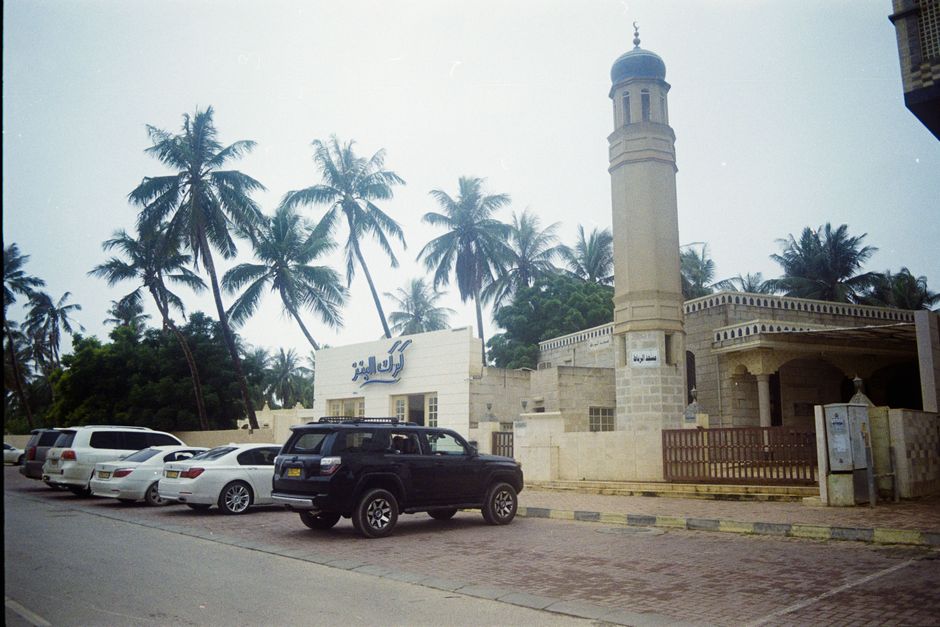
Salalah, the capital of Dhofar in southern Oman, is unlike anywhere else in Arabia. From 21 June to 21 September, the Khareef, the southwest monsoon, wraps the coast and the Dhofar mountains in mist and drizzle, turning the hills green, filling waterfalls and springs and keeping temperatures around 20–28 °C (68–82 °F) while the rest of the peninsula swelters; more than a million visitors, mostly from Oman and the Gulf, come every summer. The rest of the year, Salalah is a sunny, tropical-feeling city of coconut palms, banana plantations and long white beaches on the Arabian Sea. This is also the Land of Frankincense: the trees still grow in the dry valleys inland, and the ruins of the ancient ports of Al Baleed and Sumhuram, from which the resin was shipped across the ancient world, are UNESCO World Heritage Sites. Around the city you’ll find Wadi Darbat’s lakes and seasonal waterfall, the blowholes of Mughsail, the fishing town of Mirbat and viewpoints high above the sea. About 330,000 people live in Salalah, about 1,000 km (620 miles) south of Muscat. Its climate is warm all year, with a humid, misty summer monsoon and sunny, dry winters.
Right now in Salalah
- Wed 24–31°C 74–89°F Clear
- Thu 23–31°C 73–88°F Clear
- Fri 23–29°C 73–85°F Clear
Weather: MET Norway (CC BY 4.0) · Sea temperature: NOAA CoastWatch
Top tours in Salalah
See all tours for Salalah →
From local operators, with prices and reviews; you check availability and book on Viator, our partner. We may earn a commission at no extra cost to you. How we earn money
Salalah at a glance
- Best months: 21 June to 21 September for the green Khareef season and festivals; October to April for sunshine, beaches and clear views.
- Time needed: three days for the city, Al Baleed, Wadi Darbat and Mughsail; five days with Mirbat, the eastern coast, the springs and the mountain viewpoints.
- Getting there: Salalah International Airport (SLL) has flights from Muscat and the Gulf; Mwasalat buses from Muscat take about 12 hours.
- Costs (as of October 2026): the Muscat–Salalah bus costs OMR 8 (about US$21) one way; Khareef hotel prices are much higher than in winter.
- Before you go: visas, alcohol, dress and medicine rules are covered in our Oman travel guide.
Salalah areas and who each one suits
City center and Al Haffa
The center has the Al Haffa souq, famous for frankincense and perfume, the Sultan Qaboos Mosque, the corniche and mid-range hotels. Al Baleed Archaeological Park is on the seafront nearby.
The beach hotel strip
East and west of the center, resorts and hotels line the long sandy beaches, with coconut groves and fruit stalls on the roads behind them. Good for families and winter sun.
Hawana Salalah
West of the city toward Mughsail, this resort complex has beach hotels, a marina and lagoons.
Taqah and Mirbat
The coastal towns east of Salalah have castles, fishing harbors and quieter hotels, closer to Wadi Darbat, Sumhuram and the eastern springs.
Top things to see in Salalah
The Khareef season
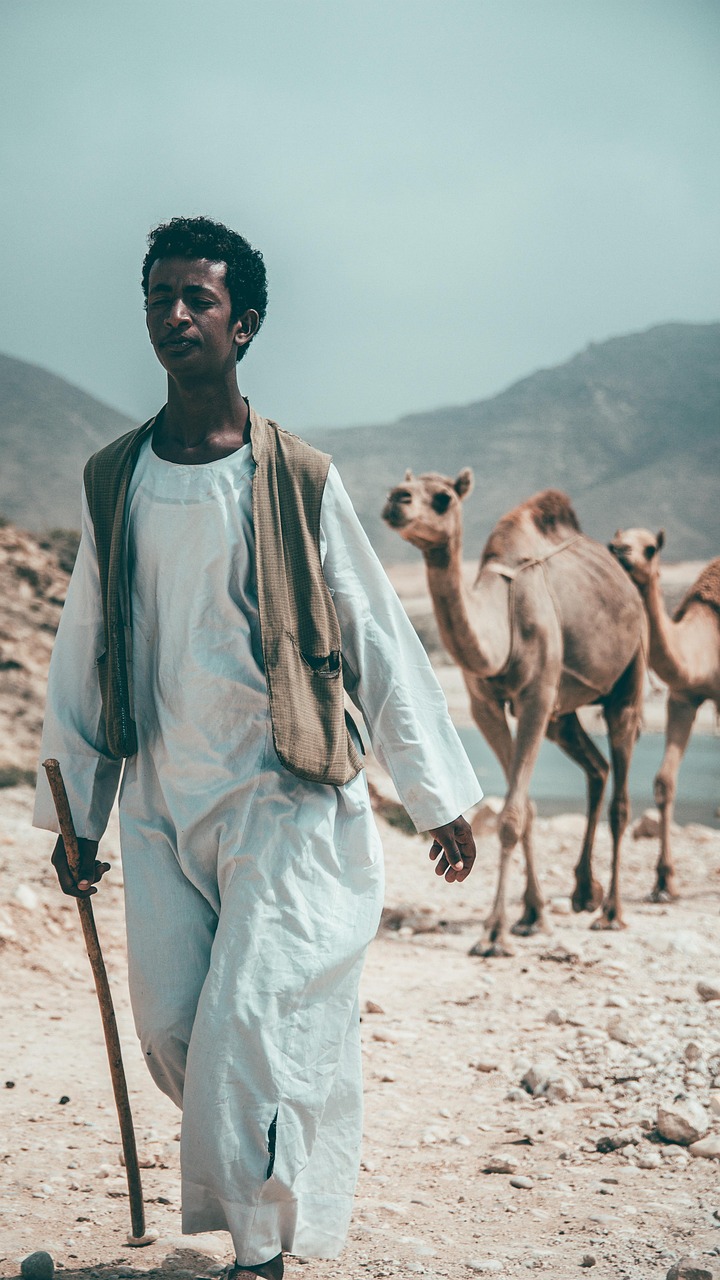
From 21 June to 21 September, the monsoon brings low cloud, fog and light rain to the coastal plain and the mountains facing the sea, and the landscape turns green within weeks. Camels and cattle graze on the hills, waterfalls appear in the wadis, and families picnic under the mist. The Khareef Dhofar season brings a program of events; in 2026 it included 125 cultural, artistic, sporting and entertainment events, evening shows at Atin Square, festivals in Taqah and Mirbat, film, theater and sculpture festivals and a cycling race, the Tour of Salalah. In 2024 the season drew about 1,048,000 visitors, about 70% of them Omani, and arrivals between 21 June and 15 August 2026 were up 6.6% on the year before.
Al Baleed Archaeological Park and the Museum of the Frankincense Land
On the seafront in the city, Al Baleed is the site of a medieval port city that traded frankincense, with the remains of a great mosque, a citadel and city walls among palm groves and a lagoon. Along with Sumhuram, Wadi Dawkah’s frankincense trees and the caravan oasis of Shisr, it forms the Land of Frankincense, a UNESCO World Heritage Site since 2000. The Museum of the Frankincense Land, opened in 2007 within the park, has a History Hall on the frankincense trail and Dhofar’s past and a Marine Hall on Oman’s seafaring. In the last Khareef season, the frankincense sites and museum received about 54,500 visitors.
Sumhuram (Khor Rori)
About 40 km (25 miles) east of Salalah, near Taqah, the ruins of Sumhuram stand on a hill above a lagoon at the mouth of a wadi. It was a major port on the incense route, and its stone walls, gate and temple overlook the inlet where ships once anchored. Sumhuram and Al Baleed show how ancient port cities on the Dhofar coast thrived on the frankincense trade.
Wadi Darbat
In the mountains above Khor Rori, just after Taqah, Wadi Darbat is a valley of small lakes and hillsides, with a natural tufa dam at its southern end that 19th-century travelers called one of the most stupendous natural phenomena they had seen. During the Khareef, the lakes refill, a waterfall pours over the cliff, and the grasslands draw grazing camels and picnicking families. Boating on the lakes is popular in season.
Mughsail Beach and the blowholes
West of Salalah, Mughsail’s soft white beach stretches for about 6 km (4 miles). At its western end, small holes in the rock above the sea send fountains of seawater shooting into the air when the sea is slightly rough, with a dramatic roar. Overlooking them, Al Marnif Cave offers shade and sea views, and the area has some of the most accessible frankincense trees in the region.
Mirbat Castle
On the coast east of Salalah, Mirbat Castle overlooks the old seaport and the traditional market. Rebuilt during the reign of Sultan Said bin Taimur, it has two floors with soldiers’ quarters, a prison, storerooms and the wali’s residence, with views over the harbor. It opens daily from 8 a.m. to 7 p.m., with tickets at the reception desk.
Springs: Ain Razat, Ain Jarziz and Ain Sahalnoot
The springs at the foot of the mountains are popular picnic spots: Ain Razat, one of the most abundant, with Razat Cave; Ain Jarziz, about 10 km (6 miles) from the center near the Atin plain, shaded by dense trees; and Ain Sahalnoot, a perennial spring close to central Salalah.
Shaat Viewpoint and the western mountains
West of Mughsail, the road climbs to Shaat, about 1,500 m (4,900 feet) above sea level, with panoramic views of the Arabian Sea, and on to the Dhanat Highlands, Ras Sajir and the Al Idabah Sinkhole. The views are clearest outside the Khareef.
Other things to do in Salalah
- Al Haffa Souq: buy frankincense resin of different grades, clay incense burners, perfume oils and Dhofari crafts.
- Fruit stalls: coconuts, bananas, papayas and sugarcane sold by the roadside in the plantation belt.
- Taqah Castle and Burj Al Askar: heritage sites in the town of Taqah, developed with local investors as visitor attractions.
- Sadah Castle: the easternmost fortification of the Dhofar coast, further east beyond Mirbat.
- Beaches: long, empty beaches east and west of the city; swimming is best from October to April, when the sea is calmer.
- Frankincense trees: see the gnarled trees in the dry valleys north of the mountains, and around Mughsail.
Food and drink
Dhofar’s food reflects its location between Arabia, East Africa and India. Try grilled fish and lobster, shuwa and mishkak (grilled meat skewers) from stalls during the Khareef, fresh coconut water, and camel milk. Dhofari halwa and frankincense-flavored sweets and drinks are local specialties. Alcohol is served only in licensed hotels and restaurants to people aged 21 and over.
Day trips from Salalah
The eastern coast: Taqah, Sumhuram, Wadi Darbat and Mirbat
A full day east of the city covers Taqah’s castle, Sumhuram, Wadi Darbat and the castle and harbor of Mirbat, about 75 km (47 miles) away.
The western coast and mountains
West to Mughsail, the blowholes and Al Marnif Cave, then up the hairpin road to Shaat and the Dhanat Highlands.
Wadi Dawkah and the desert
North over the mountains, the Wadi Dawkah frankincense reserve, part of the Land of Frankincense World Heritage Site, and the desert beyond make a half-day or full-day trip.
Getting there and getting around
Salalah International Airport (SLL)
The airport is close to the city, about 15 minutes from the center by taxi. It has frequent flights from Muscat with Oman Air and SalamAir and flights from other Gulf cities, which are busiest during the Khareef; in 2024, about 253,000 Khareef visitors arrived by air. Mwasalat city bus routes serve the airport. Since early 2026, regional tensions have led to periodic airspace closures across the Gulf, so flights can be delayed, rerouted or canceled at short notice; check your flight with the airline before you travel.
By road from Muscat
The drive from Muscat is about 1,000 km (620 miles) through the desert of Al Wusta, a long day with few services between towns; most Khareef visitors (about 795,000 in 2024) arrive by land. Mwasalat intercity buses run between Muscat and Salalah for OMR 8 one way or OMR 12.5 return.
Getting around
A rental car is the best way to explore Dhofar’s sites, which are spread along the coast and in the mountains. Taxis and taxi apps work in the city, and tour operators run day trips. During the Khareef, mountain roads are often foggy and slippery, traffic is heavy at weekends, and camels and cattle wander onto the roads; drive slowly and use your lights.
When to go and how long to stay
21 June to 21 September is the Khareef: cloudy, misty and drizzly on the coast and mountains, with temperatures of about 20–28 °C (68–82 °F), green landscapes and busy festivals, but rough seas and gray skies. October to April is sunny and dry, with warm days and the best beach weather. May and early June, before the monsoon, are the hottest and most humid months, with extremes above 44 °C (111 °F), and tropical cyclones from the Arabian Sea occasionally reach the Dhofar coast, which is why May shows a high average rainfall.
| Month | Lowest recorded | Highest recorded | Average rain |
|---|---|---|---|
| Jan | 15 °C (60 °F) | 35 °C (95 °F) | under 1 mm (0 in) |
| Feb | 14 °C (57 °F) | 35 °C (96 °F) | under 1 mm (0 in) |
| Mar | 19 °C (66 °F) | 40 °C (104 °F) | 6 mm (0.2 in) |
| Apr | 23 °C (73 °F) | 39 °C (102 °F) | 4 mm (0.1 in) |
| May | 23 °C (74 °F) | 44 °C (110 °F) | 62 mm (2.4 in) |
| Jun | 25 °C (78 °F) | 46 °C (114 °F) | 9 mm (0.4 in) |
| Jul | 23 °C (74 °F) | 42 °C (107 °F) | 21 mm (0.8 in) |
| Aug | 23 °C (73 °F) | 44 °C (111 °F) | 17 mm (0.7 in) |
| Sep | 22 °C (71 °F) | 36 °C (96 °F) | 6 mm (0.2 in) |
| Oct | 20 °C (68 °F) | 38 °C (100 °F) | 4 mm (0.2 in) |
| Nov | 19 °C (66 °F) | 37 °C (99 °F) | 1 mm (0.1 in) |
| Dec | 19 °C (65 °F) | 35 °C (94 °F) | 3 mm (0.1 in) |
| Year | 14 °C (57 °F) | 46 °C (114 °F) | 133 mm (5.2 in) |
Temperatures are the lowest and highest readings that Oman’s Directorate General of Meteorology reports for each month at Salalah Airport over 2002–2021; average rainfall is from the 1991–2020 normals Oman submitted to the World Meteorological Organization for the same station. The summer highs are rare hot spells; on typical Khareef days, the Ministry of Heritage and Tourism gives temperatures of about 20–28 °C (68–82 °F).
Events worth planning around
- Khareef Dhofar Season (21 June to 21 September): events across Salalah and the wilayats, including Atin Square’s evening shows and festivals in Taqah and Mirbat.
- Sarb season (late September to December): after the Khareef, the hills stay green for a few weeks and the skies clear, a pleasant, quieter time to visit.
- National Day (20 November): celebrations across Oman.
- Ramadan: in 2027 expected from about 8 February to 9 March.
Dates change each year; check with the organizers.
How long to stay: 2, 3 and 5 days
- Two days: Al Baleed and the museum, Al Haffa Souq; Wadi Darbat, Sumhuram and Mirbat.
- Three days: add Mughsail, the blowholes and Shaat Viewpoint.
- Five days: add the springs, Taqah, Wadi Dawkah, beach time and the eastern coast toward Sadah.
Where to stay in Salalah
- Beach hotels and resorts: along the coast east and west of the city, best for winter sun.
- City center: mid-range hotels and apartments near the souq.
- Hawana Salalah: resort hotels with lagoons and a marina.
- Taqah and Mirbat: quieter hotels closer to the eastern sights.
Hotels fill and prices rise sharply during the Khareef, especially during Gulf school holidays and Eid; book well ahead.
Typical costs in Salalah
| Item (as of October 2026) | Omani rials | About US dollars |
|---|---|---|
| Mwasalat bus Muscat–Salalah, single / return | OMR 8 / 12.5 | $21 / $32.50 |
| Frankincense resin, small bag | about OMR 1–5 | about $2.60–13 |
| Car rental, per day | about OMR 12–25 | about $31–65 |
| Casual restaurant meal | about OMR 2–5 | about $5–13 |
| Mid-range hotel room, per night outside the Khareef | about OMR 30–60 | about $78–156 |
| Mid-range hotel room, per night in the Khareef | about OMR 50–120 | about $130–312 |
The bus fare is Mwasalat’s; the other items are typical ranges. The rial is worth about US$2.60.
Safety in Salalah
Salalah is calm and safe, with low crime. The main risks come from the sea, the weather and the roads.
- Rough seas in the Khareef: monsoon waves and currents make swimming dangerous in summer; follow beach warnings and stay away from cliff edges at the Mughsail blowholes.
- Fog and roads: mountain roads can be foggy, wet and slippery in the Khareef; drive slowly, use lights and watch for camels and cattle.
- Tropical cyclones: storms from the Arabian Sea occasionally hit Dhofar, especially before and after the monsoon; follow warnings from Oman’s Directorate General of Meteorology and the Civil Defence and Ambulance Authority.
- Wadis and flash floods: heavy rain can turn wadis into torrents; avoid wadi beds when rain is forecast, and never cross flowing water.
- Heat: May and June can be very hot and humid; drink plenty of water.
- Dress codes: cover shoulders and knees in public; swimwear only at tourist beaches and pools.
- Alcohol, drugs, vapes and medicines: alcohol only in licensed venues at 21 or over, severe drug penalties, e-cigarettes illegal, and some medicines banned; carry prescriptions.
- Photography: ask before photographing people, and avoid military and government sites.
- Flight disruptions: since early 2026, regional tensions have led to periodic airspace closures across the Gulf, and flights can be delayed, rerouted or canceled at short notice. Check your flight with the airline before you travel, and follow instructions from the local authorities.
- Emergencies: call 9999 for police, ambulance and fire.
Practical tips for Salalah
- Time zone: Gulf Standard Time (UTC+4) all year.
- Weekend: Friday and Saturday.
- Money and plugs: cards are widely accepted in hotels and malls, but carry cash for the souq and fruit stalls. Sockets are type G (British three-pin) at 240 V.
What to pack for Salalah
For the Khareef, bring a light rain jacket, a warm layer for the misty mountains and shoes with good grip for wet paths. For winter, pack light clothes, swimwear, a hat and sunscreen. In both seasons, bring loose clothes that cover shoulders and knees, and carry medicines with your prescription. Don’t bring e-cigarettes into Oman.
Salalah travel FAQ
When is the Khareef season in Salalah?
From 21 June to 21 September. The monsoon brings mist, drizzle, green hills and temperatures of about 20–28 °C (68–82 °F).
Is Salalah worth visiting outside the Khareef?
Yes. From October to April it is sunny and dry, with warm seas, empty beaches and clear views of the mountains and frankincense sites.
What is the Land of Frankincense?
A UNESCO World Heritage Site since 2000, made up of Al Baleed, Sumhuram (Khor Rori), Wadi Dawkah’s frankincense trees and the oasis of Shisr.
When are the Mughsail blowholes most impressive?
When the sea is slightly rough, which often means the Khareef; stay behind barriers, as waves can be dangerous.
How do I get from Muscat to Salalah?
By air, about 1.5 hours, or by Mwasalat bus (OMR 8 one way) or car, about 1,000 km (620 miles) through the desert.
Can I swim in Salalah during the Khareef?
It isn’t safe: the monsoon brings big waves and strong currents. Swim from October to April instead.
What are Mirbat Castle’s opening hours?
Daily from 8 a.m. to 7 p.m., with tickets at the reception desk.
How many people visit Salalah in the Khareef?
About 1,048,000 visitors came between 21 June and 21 September 2024, most of them from Oman and other Gulf countries.
Where can I buy frankincense in Salalah?
At Al Haffa Souq, which sells resin of different grades, incense burners and perfume oils.
Do I need a car in Salalah?
It’s the easiest way to reach Wadi Darbat, Mughsail, Mirbat and the springs; taxis and tours are alternatives.
Sources and last review
Researched and last reviewed on 5 October 2026. The Khareef’s dates, the 2024 visitor numbers and arrivals by land and air come from the Ministry of Heritage and Tourism (citing the National Centre for Statistics and Information); Khareef temperatures, Dhofar’s sites (Wadi Darbat, Mughsail, Mirbat Castle and its hours, Ain Razat, Ain Jarziz, Ain Sahalnoot, Shaat Viewpoint, Sadah Castle) and the Land of Frankincense description from the Ministry’s Experience Oman website; Al Baleed, Sumhuram, the frankincense sites’ visitor numbers and Taqah’s heritage sites from the Oman News Agency; the museum’s opening date from the Oman News Agency (search excerpt); the 2026 Khareef program and visitor growth from the Oman Observer (state-owned newspaper; secondary); the World Heritage listing from UNESCO; bus fares from Mwasalat (search excerpt); cyclones, wadi floods, driving and emergency numbers from GOV.UK’s Oman travel information (updated 22 July 2026); airspace disruption from the European Union Aviation Safety Agency; temperature extremes from Oman’s Directorate General of Meteorology and rainfall from the 1991–2020 normals Oman submitted to the World Meteorological Organization; population from Wikidata. The Sarb season, sea conditions in the Khareef, Al Haffa Souq, Hawana Salalah, distances and drive times, flight times, Ramadan 2027 dates and typical prices are general references and flagged for checking. For entry rules and money, see our Oman travel guide.
Plan your trip
Partner links: TravelerCenter may earn a commission if you book, at no extra cost to you.
🇪🇬 Useful Arabic phrases for Salalah
All 38 Arabic phrases: restaurant, hotel, emergencies, romance (printable) →