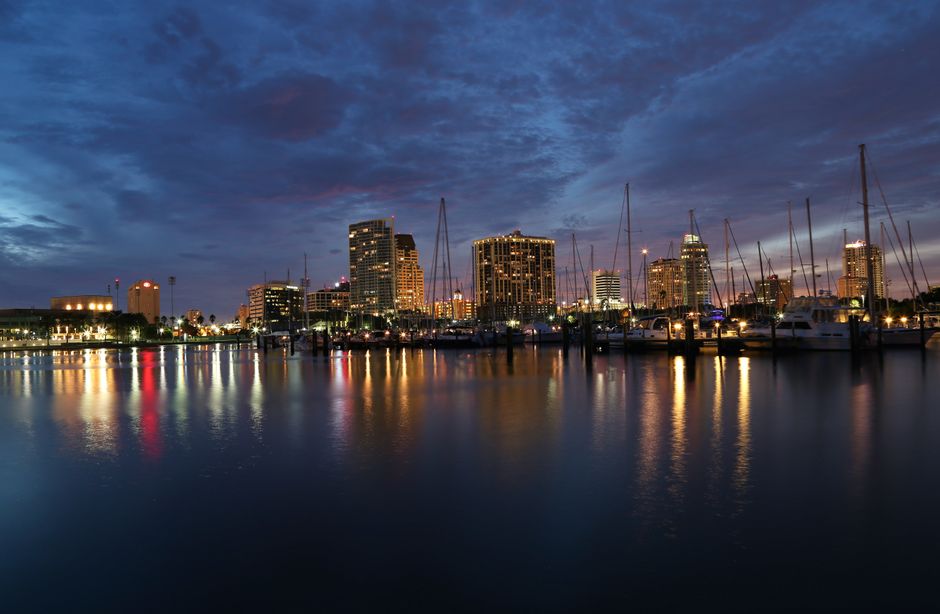
St. Petersburg, “St. Pete” to locals, is a sunny, arty city on a peninsula between Tampa Bay and the Gulf. Its downtown waterfront is one of the most attractive in Florida: miles of bayside parks, marinas and a pier full of restaurants and play areas, with the world’s largest collection of Salvador Dalí outside Europe in a striking glass-bubbled museum. Murals cover the walls of the Central Arts District, Major League Baseball is back at Tropicana Field, and the white-sand beaches of St. Pete Beach and Pass-a-Grille lie a short ride west by rapid bus. To the south, Fort De Soto Park has some of the finest wild beaches on the coast. Winters are mild and dry; summers are hot, humid and stormy.
Right now in St. Petersburg
- Wed24–27°C76–80°F26 mm rain
- Thu24–26°C75–79°F24 mm rain
- Fri24–27°C75–80°F20 mm rain
- Mon 12 Oct Columbus Day
Top tours in St. Petersburg
See all tours for St. Petersburg →
From local operators, with prices and reviews; you check availability and book on Viator, our partner. We may earn a commission at no extra cost to you. How we earn money
St. Petersburg at a glance
- Best for: art museums, a walkable waterfront, street art and craft breweries, beaches, and nature at Fort De Soto.
- How long: 2 days for downtown and the museums; 3–4 days to add the beaches and Fort De Soto.
- Best time: November to May, when it is dry and warm (highs of 69–86 °F / 21–30 °C). June to September is hot and humid with afternoon thunderstorms, and it is hurricane season.
- Getting there: fly to St. Pete–Clearwater International Airport (PIE), about 10 miles (16 km) north, or Tampa International Airport (TPA), about 20 miles (32 km) away across the bay.
- Getting around: walk downtown; ride the free Downtown Looper and Central Avenue Trolley; the SunRunner rapid bus runs to St. Pete Beach ($2.25 a ride as of October 2026).
- Before you go: entry rules, money, driving and general safety are on our United States travel guide.
St. Petersburg’s neighborhoods and who each one suits
The city is laid out on a grid, with numbered avenues running east–west from Central Avenue. Most visitors stay downtown or on the Gulf beaches, which are separate towns.
Downtown and the waterfront
The heart of St. Pete, between the bay and Tropicana Field: the pier, the Dalí Museum, the Museum of Fine Arts, waterfront parks, marinas and Beach Drive’s restaurants and cafés. Good for first-timers who want to walk everywhere; hotels range from historic to high-rise.
Central Arts District and the Edge District
West along Central Avenue, a stretch of galleries, glass studios, vintage shops, craft breweries and bars, with large murals on almost every block. Lively at night and on weekends, and on the free Central Avenue Trolley route.
Old Northeast
North of downtown, a leafy historic neighborhood of 1920s bungalows, brick streets and waterfront parks along Coffee Pot Bayou. Quiet, residential and good for walks, runs and bike rides; a few guesthouses and rentals.
St. Pete Beach and Pass-a-Grille
On the barrier islands to the west, St. Pete Beach is a separate city of resorts and condominiums on a wide Gulf beach, with the pink Don CeSar hotel as its landmark. At its southern tip, Pass-a-Grille is a small historic beach village with a laid-back main street and famous sunsets. Best for beach holidays; the SunRunner connects them with downtown.
Top things to see in St. Petersburg
Prices and hours below were checked on the official sites in October 2026, unless we say otherwise; check again before you go.
The Dalí Museum
Built to resist hurricanes, with a concrete shell and a free-form glass “enigma” bubbling out of it, the museum holds one of the world’s largest collections of Salvador Dalí’s work, from early paintings to his huge masterworks, plus a garden with a wish tree and a melting-clock bench. As of October 2026 it opens daily 10:00 a.m.–6:00 p.m. and until 8:00 p.m. on Thursdays. Gallery admission costs $32 for adults, $29 for seniors aged 65 and over and for military, educators, fire and police, $22 for students (13–17 and college), $12 for ages 6–12, and children 5 and under go free. On Thursday evenings after 5:00 p.m. adults pay $16. Shows in the immersive Dome cost $15 extra. Buy dated tickets online, up to 30 days ahead; sales are final.
The St. Pete Pier
The city’s pier stretches into Tampa Bay from downtown, with a park, playgrounds, a splash pad, restaurants, a fishing deck, the small Spa Beach and the Tampa Bay Watch Discovery Center, where kids can learn about the bay’s marine life. Look for Janet Echelman’s huge floating net sculpture, which glows at night, and walk out to the Pier Point at the end for views back to the skyline. Entry is free; trams run along the pier.
Museum of Fine Arts, St. Petersburg
A fine general art museum on the waterfront, with works from ancient Greece and Rome to French Impressionism, American art, photography and a modern wing. As of October 2026 it opens Tuesday to Sunday 10:00 a.m.–5:00 p.m., with Art After Dark on Thursdays from 5:00 to 8:00 p.m.; it closes on Mondays. Admission costs $16 for adults, $14 for seniors 65 and over, military, educators and college students, and $10 for ages 7–17; children 6 and under go free.
The Chihuly Collection and the Arts District
Dale Chihuly’s glass sculptures fill the Chihuly Collection, run by the Morean Arts Center on Central Avenue, and admission includes a live glass-blowing demonstration at the Morean Glass Studio. Then walk the Central Arts District and the Edge District for the murals of the yearly SHINE festival and small galleries. Check the Morean’s site for prices and demonstration times.
Sunken Gardens
A century-old garden in a sinkhole on 4th Street North, owned and run by the City of St. Petersburg, with winding paths through tropical plants, waterfalls, koi ponds and a flock of flamingos. As of October 2026 it opens Monday to Saturday 10:00 a.m.–4:30 p.m. and Sunday noon–4:30 p.m., with last admission at 4:00 p.m.
More to see
- Tropicana Field: the domed home of the Tampa Bay Rays baseball team, back in use for home games in 2026.
- The Florida Holocaust Museum and the James Museum of Western and Wildlife Art: two more good downtown museums.
- Saturday Morning Market: a big farmers’ and crafts market downtown, in season.
- Weedon Island Preserve: mangrove boardwalks and paddling trails on the bay shore.
Other things to do in St. Petersburg
Beaches
St. Pete Beach has a wide, soft beach with resorts, beach bars and watersports, and Pass-a-Grille a quieter, more local beach and the best sunsets. North along the barrier islands come Treasure Island and Madeira Beach, with John’s Pass Village for seafood and boat trips. Florida uses uniform beach warning flags: green for low hazard, yellow for moderate surf or currents, red for high hazard, double red when the water is closed to the public, and purple for dangerous marine life such as jellyfish; no flag does not mean safe water.
Red tide
Like the rest of Florida’s Gulf coast, St. Pete’s beaches can be hit by red tide, a bloom of the algae Karenia brevis that kills fish and causes coughing and eye irritation. It comes and goes week by week. Before you go, check the Florida Fish and Wildlife Conservation Commission (FWC) red tide status, NOAA’s Gulf Coast harmful algal bloom forecast (with a respiratory irritation forecast for each beach) and the Florida Department of Health’s Healthy Beaches advisories.
Baseball, breweries and the waterfront
Catch a Rays game at Tropicana Field (the season runs from spring to late September), sample local craft beer in the Edge and Warehouse Arts districts, or rent a bike and ride the waterfront parks and the Pinellas Trail, a long rail-trail that starts downtown. Kayak and paddleboard rentals, sunset sails and dolphin cruises leave from the downtown marinas.
Day trips and onward travel
Fort De Soto Park
At the mouth of Tampa Bay, Pinellas County’s largest park spreads over five islands, with almost 3 miles (5 km) of white-sand beach, including the popular North Beach, plus nature trails, a fishing pier, kayak trails and a 19th-century fort with huge mortars. It also has a fenced dog park where, in a designated area, dogs may go on the beach; the county says it is the only one of its kind. As of October 2026 the park opens daily from 7:00 a.m. to sunset and charges a $6 parking fee, paid by app, text, park terminals or annual pass. A ferry runs from the park to Egmont Key, a wild island with a lighthouse. The roads to Fort De Soto and St. Pete Beach cross the Pinellas Bayway, a toll road: see Getting there and getting around.
Tampa, Clearwater and Sarasota
Tampa, with Busch Gardens, the Riverwalk and Ybor City, is about 20 miles (32 km) away across the bay; Clearwater Beach about 20 miles (32 km) north. South over the soaring Sunshine Skyway Bridge, Sarasota and its beaches and Ringling museums are about 40 miles (64 km) away. All three have their own pages on TravelerCenter.
Nearby destinations
- Tampa26 km
- Clearwater27 km
- Sarasota50 km
- Orlando149 km
- Naples199 km
- Daytona Beach225 km
- St. Augustine269 km
Getting there and getting around
By air
St. Pete–Clearwater International Airport (PIE), about 10 miles (16 km) north of downtown, is served mainly by Allegiant’s non-stop flights. Tampa International Airport (TPA), about 20 miles (32 km) away, has far more airlines and international flights; allow 30–45 minutes by car or rideshare, longer at rush hour.
SunRunner, trolleys and buses
The Pinellas Suncoast Transit Authority (PSTA) runs the local buses. The SunRunner rapid bus links downtown St. Pete with St. Pete Beach along its own lanes for much of the way; it is cashless, so pay with the Flamingo Fares app or card or tap a bank card. As of October 2026 PSTA’s regular fare is $2.25, capped at $5 a day; children 8 and under ride free. Downtown, the Downtown Looper and the Central Avenue Trolley (every 20 minutes between the St. Pete Pier and the Grand Central Station) are free. The Suncoast Beach Trolley continues north from St. Pete Beach along the beaches to Clearwater.
Driving, parking and tolls
Downtown has meters and garages; the beaches have metered parking that fills early on weekends. Florida’s toll roads take no cash. According to Florida’s Turnpike Enterprise, the Pinellas Bayway to St. Pete Beach and Fort De Soto costs $0.58 per car with SunPass and $1.08 otherwise at each of its two main plazas, and $0.28 or $0.81 at the plaza on the road to Fort De Soto. The Sunshine Skyway Bridge south to Sarasota costs $1.16 with SunPass and $1.75 otherwise, and has been cashless since April 2026. TOLL-BY-PLATE invoices add a $2.50 administrative fee and are not available in rental cars, which use their own toll programs; you can also add a rental’s plate to your own SunPass account.
When to go and how long to stay
St. Petersburg is famous for its sunshine and has a humid subtropical climate, kept a little milder than inland by the water all around. The table uses NOAA’s 1991–2020 U.S. Climate Normals for the St. Petersburg (Albert Whitted) airport weather station on the downtown waterfront: average daily highs and lows, and days with at least 0.10 in (2.5 mm) of rain.
| Season | Average high / low | Rainy days per month | What it’s like | Good for |
|---|---|---|---|---|
| Winter (Dec–Feb) | 69–72 °F (21–22 °C) / 55–59 °F (13–15 °C) | 3–4 | Mild, sunny and dry; occasional cool fronts | Museums, festivals, walking, lower prices |
| Spring (Mar–May) | 76–86 °F (24–30 °C) / 62–73 °F (17–23 °C) | 3–4 | Warm, sunny and the driest season | Beaches, baseball, outdoor dining |
| Summer (Jun–Aug) | 89–90 °F (32 °C) / 77–78 °F (25–26 °C) | 9–12 | Hot and humid, with afternoon thunderstorms | Early beach days, museums in the afternoon |
| Autumn (Sep–Nov) | 88 °F falling to 77 °F (31 to 25 °C) / 77 °F falling to 64 °F (25 to 18 °C) | 10 in September, 3 in November | Stormy in September, pleasant from late October | Warm sea, quieter beaches, arts events |
The station averages about 46.6 in (1,185 mm) of rain a year, on about 67 days, with August the wettest month at 8.4 in (213 mm). Most summer rain comes in short afternoon storms with lightning.
Hurricane season: according to NOAA’s National Hurricane Center (NHC), the Atlantic hurricane season runs from 1 June to 30 November, with most activity between mid-August and mid-October. Much of St. Petersburg and all of the beach towns are low-lying and vulnerable to storm surge. Follow forecasts from the NHC and the National Weather Service, check your evacuation zone with Pinellas County emergency management, leave when ordered, and consider travel insurance.
Events worth planning around
- Spring to September: the Rays’ baseball season at Tropicana Field.
- Autumn: the SHINE mural festival adds new street art in the Arts District.
- Saturdays in season: the Saturday Morning Market downtown.
- Every evening: sunset at Pass-a-Grille.
How long to stay: 2, 3 and 4 days
2 days: day one, the Dalí Museum and the St. Pete Pier, then dinner on Beach Drive; day two, the Museum of Fine Arts, Sunken Gardens and the Central Arts District murals and breweries.
3 days: add a day at St. Pete Beach and sunset at Pass-a-Grille by SunRunner. 4 days: add Fort De Soto Park, or a day in Tampa or Clearwater.
Where to stay in St. Petersburg and hotel taxes
- Downtown waterfront: walk to the museums, pier and restaurants; the best base without a car.
- Central Arts District: boutique hotels and rentals near the nightlife.
- St. Pete Beach: resorts on the sand, with the SunRunner to downtown.
- Pass-a-Grille and Treasure Island: smaller, quieter beach stays.
Rooms are most expensive from February to April. St. Petersburg is in Pinellas County, where, according to the Florida Department of Revenue, sales tax totals 7% (6% state plus a 1% county surtax), charged on restaurant meals and most purchases; US prices are shown before tax. Stays of six months or less also carry Pinellas County’s 6% tourist development tax, so a hotel bill carries about 13% in tax. Beach resorts often add a mandatory resort fee and charge for parking; under the US Federal Trade Commission’s fee rule in force since May 2025, mandatory fees must be included in the advertised total price, while taxes may be shown separately.
Practical tips for St. Petersburg
- Ride free downtown: the Downtown Looper and Central Avenue Trolley cost nothing.
- Book the Dalí ahead: tickets are dated and weekends sell out; Thursday evenings are half price for adults.
- Have a SunPass or a rental toll plan: the Bayway and the Skyway take no cash.
- Check red tide and the flags: before a beach day, look at FWC and NOAA’s forecast.
- Summer storms: plan beaches for the morning and museums for the afternoon.
- Emergencies: call 911.
What to pack for St. Petersburg
Light, breathable clothes, a sun hat, sunglasses and high-factor, reef-friendly sunscreen are needed most of the year, plus swimwear and water shoes for the beaches and Fort De Soto. Bring comfortable walking shoes for downtown and the Arts District, insect repellent for parks and mangroves at dusk, and a compact umbrella for summer storms. In winter, a light sweater for evenings and air-conditioned museums is enough. A daypack and a refillable bottle help on bike rides and beach days.
St. Petersburg travel FAQ
How much are Dalí Museum tickets?
As of October 2026, $32 for adults, $29 for seniors 65 and over, $22 for students and $12 for ages 6–12; children 5 and under go free. Adults pay $16 on Thursday evenings after 5:00 p.m.
Is the Dalí Museum open every day?
Yes, daily 10:00 a.m.–6:00 p.m., and until 8:00 p.m. on Thursdays, as of October 2026.
How do I get from downtown St. Pete to the beach?
Take PSTA’s SunRunner rapid bus from downtown to St. Pete Beach. It is cashless: as of October 2026, $2.25 a ride or $5 for a day with Flamingo Fares or a contactless bank card.
Is the Downtown Looper free?
Yes. PSTA describes the Downtown Looper as a free service, and the Central Avenue Trolley between the pier and Grand Central Station is free too.
How much does it cost to visit Fort De Soto Park?
Pinellas County charges a $6 parking fee as of October 2026, plus the Pinellas Bayway tolls on the way: $0.58 per plaza with SunPass or $1.08 by plate at the main plazas.
Are the Tampa Bay Rays playing in St. Petersburg in 2026?
Yes. In 2026 the Rays are back at Tropicana Field in St. Petersburg for home games; check the team’s schedule for dates.
Which airport is best for St. Petersburg?
St. Pete–Clearwater (PIE), about 10 miles (16 km) north, for Allegiant flights; Tampa International (TPA), about 20 miles (32 km) away, for most other airlines and international flights.
Is there red tide in St. Petersburg?
Sometimes, on the Gulf beaches and in the bay. Blooms come and go, so check FWC’s status and NOAA’s beach-by-beach forecast in the days before you go.
What is the hotel tax in St. Petersburg?
In Pinellas County, 7% sales tax plus a 6% tourist development tax: about 13% on top of the room rate, plus any resort fee.
When is hurricane season in St. Petersburg?
From 1 June to 30 November, with the peak from mid-August to mid-October, according to NOAA’s National Hurricane Center.
Plan your trip
Partner links: TravelerCenter may earn a commission if you book, at no extra cost to you.
Sources · last reviewed 4 October 2026
Researched and last reviewed on 4 October 2026. Dalí Museum prices and hours: The Dalí Museum; Museum of Fine Arts: MFA St. Petersburg; Chihuly Collection: Morean Arts Center; Sunken Gardens hours: Sunken Gardens (City of St. Petersburg); St. Pete Pier: the pier’s official site; Fort De Soto fee and hours: Pinellas County; SunRunner, trolley and bus fares: Pinellas Suncoast Transit Authority (PSTA); Rays at Tropicana Field: Major League Baseball; tolls: Florida’s Turnpike Enterprise; sales tax: Florida Department of Revenue; tourist development tax: Pinellas County; beach flags: Florida’s uniform beach warning flag program as published by Volusia County; red tide: NOAA and FWC; resort fees: the US Federal Trade Commission; hurricane season: NOAA’s National Hurricane Center; climate: NOAA’s 1991–2020 U.S. Climate Normals for the St. Petersburg (Albert Whitted) airport station. Distances and drive times are approximate. Prices, hours and timetables change, so check the official sites before you go. For entry rules, money and general safety, see our United States travel guide.
Data: Weather: MET Norway (CC BY 4.0) · Sea temperature: NOAA CoastWatch · Rates: ECB · Holidays: Nager.Date · Costs: World Bank ICP and price levels · Wikidata (CC0)