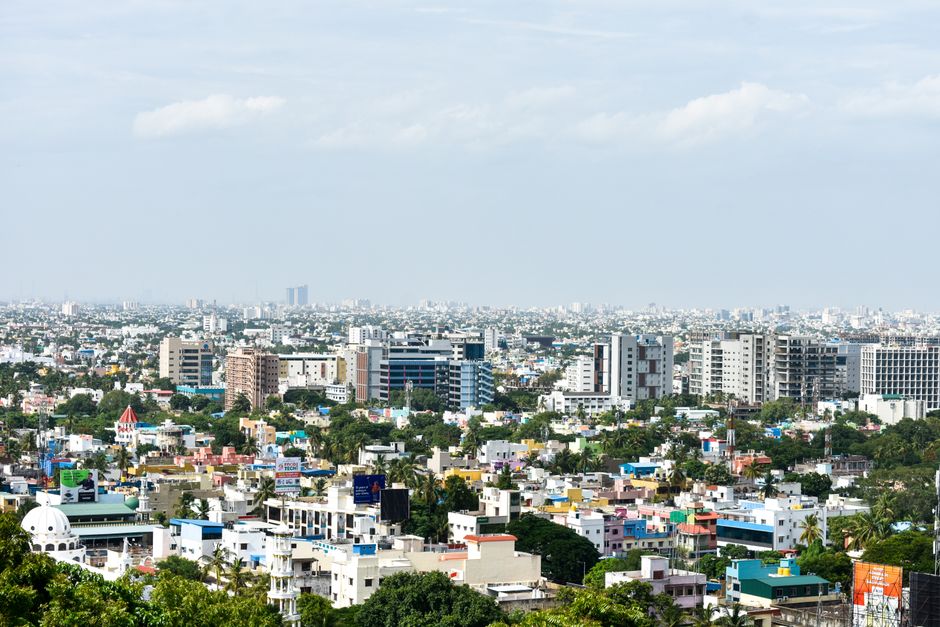
Chennai, the capital of Tamil Nadu and the gateway to South India, is a big, warm, unhurried city on the Bay of Bengal where Dravidian temple towers rise above busy streets, the sea breeze sweeps one of the world’s longest urban beaches, and filter coffee and crisp dosas start every morning. Known as Madras until 1996, it grew around Fort St. George, which the British East India Company built in 1644 on land acquired in 1639, and it has a few hundred temples, a cathedral built over the tomb of St. Thomas the Apostle, colonial museums and one of the liveliest classical music and dance scenes in India. Most visitors spend two or three days here before heading down the coast to the rock-cut temples of Mamallapuram, the silk town of Kanchipuram and French-flavored Puducherry. The weather is hot all year, and unlike most of India, Chennai gets most of its rain from October to December, during the northeast monsoon, so the most comfortable months are December to February.
Right now in Chennai
- Wed26–32°C79–89°F1 mm rain
- Thu26–32°C80–89°F1 mm rain
- Fri26–33°C78–91°F1 mm rain
Top tours in Chennai
See all tours for Chennai →
From local operators, with prices and reviews; you check availability and book on Viator, our partner. We may earn a commission at no extra cost to you. How we earn money
Chennai at a glance
- Best for: Dravidian temples, colonial history, the Marina beachfront, South Indian food, Carnatic music and Bharatanatyam dance, and day trips to UNESCO-listed Mamallapuram.
- How long: 2 days for the city; 4 or 5 with Mamallapuram, Kanchipuram and a night in Puducherry.
- Best time: December to February, when it is warm rather than hot and the rains have ended; the music season peaks in December and January.
- Getting there: Chennai International Airport (MAA) at Meenambakkam, about 16 km (10 miles) southwest of the center, is a designated e-Visa entry airport with international and domestic flights; trains from all over India arrive at Chennai Central and Chennai Egmore.
- Getting around: Chennai Metro (fares ₹10–50), suburban trains, auto-rickshaws and app cabs.
- Good to know: October to December is the wet season, with heavy rain and occasional cyclones; plan beach time and day trips with the forecast in mind.
- Before you go: the e-Visa, the online e-Arrival card, money, trains and general safety are in our India travel guide.
Chennai’s areas and where to stay
Chennai stretches about 25 km (16 miles) along the coast, from the port and George Town in the north to the IT corridor and the East Coast Road in the south. Most sights sit within a few kilometers of the beachfront, but distances are large and traffic heavy, so choose a base near a metro station.
George Town and the fort
The oldest part of the city grew up north of Fort St. George as “Black Town,” the quarter where Indian merchants and artisans lived in colonial times. Today George Town is a dense wholesale district of narrow lanes, old temples, churches and mosques, the High Court and the vast Chennai Central station. It is fascinating to walk through but has few visitor hotels.
Egmore, Chetpet and Nungambakkam
West of the fort, Egmore has the Government Museum, the second railway terminus and plenty of budget and mid-range hotels. Nungambakkam and the streets around Khader Nawaz Khan Road are leafier and more upmarket, with cafés, boutiques and good restaurants. Both are central and well placed for metro lines.
Mylapore and Triplicane
Mylapore, one of the oldest neighborhoods in Chennai, is the city’s traditional heart: the Kapaleeswarar Temple and its tank, flower and brass markets, Carnatic music halls (sabhas) and old-style vegetarian restaurants. Triplicane, just north, surrounds the Parthasarathy Temple and runs down to the Marina. Small hotels and guesthouses here put you close to the beach and temples.
T. Nagar, Alwarpet and Anna Salai
T. Nagar is Chennai’s great shopping district, famous for silk sari emporiums and gold jewelry stores, and very crowded on weekends. Anna Salai (Mount Road), the main artery, and Alwarpet and Teynampet have business hotels and international chains, with good metro access.
Besant Nagar and the south
Besant Nagar, around Elliot’s Beach, is a relaxed residential area with a lively seafront, cafés and the Ashtalakshmi Temple. Farther south, the East Coast Road (ECR) heads past beach resorts at Muttukadu and Kovalam (Covelong) toward Mamallapuram; staying here suits a beach-and-temples trip more than city sightseeing.
Top things to see in Chennai
Fort St. George and the Fort Museum
Built in 1644, Fort St. George was the first English fortress in India and the seed of the city. Its walls enclose the Tamil Nadu Legislative Assembly, so parts are off-limits, but you can visit the Fort Museum, with colonial-era weapons, uniforms, coins, porcelain and portraits, and St. Mary’s Church, the oldest Anglican church in India, where early British residents are buried. Clive House, the home of Robert Clive, also stands inside the walls. The Fort Museum is protected by the Archaeological Survey of India (ASI); on its online booking site, foreigners pay ₹250 and Indians ₹20. Carry your passport, as there are security checks at the gates.
Kapaleeswarar Temple and Mylapore
The Kapaleeswarar Temple, dedicated to Shiva and the goddess Karpagambal, is believed to have been founded by the Pallavas in the 7th century; it was rebuilt in the Vijayanagara period after Portuguese destruction in the 16th century. Its 37 m (121 ft) gopuram (gateway tower) is covered in painted figures of gods and saints, and the large temple tank to the west is the focus of festivals. The annual Brahmotsavam festival, between mid-March and mid-April, ends with a procession of the 63 Nayanmar saint-poets. Remove shoes, dress modestly and ask before photographing inside. Afterward, explore the surrounding streets for flower garlands, brass lamps and filter coffee.
Marina Beach
Stretching for more than 13 km (8 miles) along the Bay of Bengal, the Marina is one of the longest urban beaches in the world. It is not a swimming beach: the surf is strong and swimming is unsafe. Instead, locals come in the late afternoon and evening to walk, fly kites, eat sundal (spiced chickpeas) and roasted corn, and ride ponies. The promenade passes the Indo-Saracenic buildings of the University of Madras, Presidency College and the Chepauk Palace, as well as memorials to former chief ministers and the lighthouse at its southern end.
San Thome Basilica
At the southern end of the Marina, this white neo-Gothic cathedral was rebuilt in 1896 over the tomb believed to be that of St. Thomas the Apostle, who according to tradition came to India in 52 CE. It is one of only a handful of churches in the world built over the tomb of an apostle. The underground tomb chapel and a small museum are open to visitors; dress modestly and keep silent during services.
Government Museum
Founded in 1851 in Egmore, the Government Museum is the second-oldest museum in India. Its highlight is the Bronze Gallery, with superb Chola-period bronzes, including dancing Nataraja figures, and there are Buddhist sculptures from Amaravati, Pallava stone carvings, Roman antiquities, and paintings by Raja Ravi Varma in the National Art Gallery building. Allow at least half a day.
Parthasarathy Temple
In Triplicane, this temple dedicated to Krishna as the charioteer of Arjuna dates back to the 8th century and is one of the oldest in the city. Like Kapaleeswarar, it has a colorful gopuram, a sacred tank and lively festivals.
More classic sights
- Valluvar Kottam: a monument in the shape of a temple chariot honoring the Tamil poet-saint Thiruvalluvar.
- Vivekananda House (Ice House): a former ice store on the Marina, where Swami Vivekananda stayed in 1897, now a museum.
- Theosophical Society, Adyar: large gardens by the Adyar River with a famous old banyan tree.
- Kalakshetra: the dance and arts academy in Thiruvanmiyur, with performances during festivals.
Other things to do in Chennai
Food and drink
Chennai is the best place in India to eat South Indian vegetarian food. Breakfast is a ritual of idli (steamed rice cakes), vada, pongal (rice and lentils with pepper and ghee), dosa in a dozen styles, and strong filter coffee served in a steel tumbler and davara. At lunch, try a “meals” plate: rice with sambar, rasam, poriyal, kootu, curd and pickles on a banana leaf, refilled until you stop the server. For meat and fish, look for Chettinad cooking, famous for its black pepper and fennel, and seafood such as fish fry and crab masala. Mylapore and T. Nagar have classic vegetarian restaurants, and Besant Nagar has seafront cafés. Alcohol is sold at licensed bars and hotels, and in shops run by the state retailer. Drink bottled or filtered water.
Music, dance and the December season
Chennai’s Margazhi season, from mid-December to mid-January, is one of the world’s largest classical arts festivals, with hundreds of Carnatic music and Bharatanatyam dance performances in the sabhas of Mylapore, Alwarpet and T. Nagar, many of them free or inexpensive. Outside the season, check listings for concerts at the Music Academy and other halls. Pongal, the Tamil harvest festival in mid-January, fills the city with kolam (rice-flour patterns) on doorsteps.
Shopping
T. Nagar’s silk emporiums sell Kanchipuram silk saris, cotton handlooms and gold jewelry; Pondy Bazaar is a busy street market. Mylapore has bronze and brass work, and government emporiums sell handicrafts at fixed prices. Haggle politely at street stalls.
Beaches and coastal walks
Besides the Marina, Elliot’s Beach in Besant Nagar is quieter and popular in the evening, and beaches along the East Coast Road are good for sunsets. Swimming is generally unsafe on Chennai’s beaches because of strong currents; enjoy them from the sand. See our beaches and city sightseeing guides for more ideas.
Day trips from Chennai
- Mamallapuram (Mahabalipuram): the UNESCO-listed Group of Monuments, about 55 km (35 miles) south, with the 8th-century Shore Temple, the Five Rathas carved from single rocks and the vast relief of Arjuna’s Penance. On the ASI booking site, foreigners pay ₹550 online and Indians ₹35; the site has late slots until 8:30 p.m.
- DakshinaChitra: a living-history museum of South Indian homes and crafts on the East Coast Road, about 25 km (16 miles) south.
- Kanchipuram: the “city of a thousand temples” and home of silk weaving, about 75 km (47 miles) southwest, with the Kailasanathar, Ekambareswarar and Varadharaja Perumal temples.
- Vedanthangal Bird Sanctuary: about 85 km (53 miles) southwest, best from November to February when herons, storks and pelicans nest.
- Puducherry: the former French capital, about 160 km (100 miles) south, is better as an overnight trip. See our Puducherry travel guide.
- Tirupati: the hill temple of Tirumala, one of the world’s most visited pilgrimage sites, about 140 km (87 miles) northwest in Andhra Pradesh.
Nearby destinations
- Puducherry137 km
- Bengaluru291 km
Getting there and getting around
By air
Chennai International Airport (MAA) is one of India’s busiest, with flights from the Gulf, Southeast Asia, Sri Lanka and Europe, and domestic flights to almost every major Indian city. It is on the Bureau of Immigration’s list of designated e-Visa entry airports. The airport has its own metro station, so you can ride into the city for a few dozen rupees; otherwise use a prepaid taxi or an app cab.
By train
Chennai Central (officially Puratchi Thalaivar Dr. M.G. Ramachandran Central) handles trains to the north and west, including Bengaluru, Hyderabad, Mumbai, Delhi and Kolkata, while Chennai Egmore serves the south, including Madurai, Thanjavur and Puducherry connections. According to Indian Railways, Chennai is one of the stations with an International Tourist Bureau, where foreign visitors can get help booking tickets. Bengaluru is about 5 to 6 hours away by express train. See our Bengaluru travel guide.
By road
National highways link Chennai with Bengaluru, Tiruchirappalli and the south, and the scenic East Coast Road runs south to Mamallapuram and Puducherry. Long-distance buses leave from the Kilambakkam terminus on the southern edge of the city and from Koyambedu. Hiring a car and driver is the easiest way to combine Mamallapuram and Kanchipuram.
Around the city
Chennai Metro has two main lines: one runs from Wimco Nagar in the north through Chennai Central, the High Court, Anna Salai and Guindy to the airport, and the other from Chennai Central via Egmore and Koyambedu to St. Thomas Mount. According to Chennai Metro Rail, single fares range from ₹10 to ₹50, and QR tickets can be bought online. Suburban trains and the elevated MRTS line serve Mylapore and the south. Auto-rickshaws are everywhere; agree on the fare first or use an app. Walking is pleasant in Mylapore and along the beachfront, less so on the main roads.
When to go and how long to stay
Chennai has a hot, tropical climate. December to February is the most pleasant time, with highs around 29 to 31 °C (85 to 88 °F) and the December music season. March to June gets steadily hotter and more humid, peaking at about 37 °C (99 °F) in May and June. Unlike most of India, Chennai gets only moderate rain from the southwest monsoon in July to September; its wettest months are October to December, when the northeast monsoon brings heavy downpours, flooding in low-lying areas and occasional cyclones. The table shows 1991–2020 normals for the Chennai (Nungambakkam) station from the India Meteorological Department (IMD), as published by the World Meteorological Organization (WMO); rainy days are days with at least 2.5 mm of rain.
| Month | Average high / low | Rain (rainy days) | What to expect |
|---|---|---|---|
| January | 30 °C (85 °F) / 22 °C (71 °F) | 16 mm (0.6 in), under 1 day | Pleasant; Pongal and the end of the music season |
| February | 31 °C (88 °F) / 22 °C (72 °F) | 6 mm (0.2 in), under 1 day | Warm and dry; good for sightseeing |
| March | 33 °C (92 °F) / 24 °C (76 °F) | 2 mm (0.1 in), under 1 day | Getting hot; temple festivals |
| April | 35 °C (94 °F) / 27 °C (80 °F) | 14 mm (0.6 in), under 1 day | Hot and humid |
| May | 37 °C (99 °F) / 28 °C (83 °F) | 43 mm (1.7 in), 2 days | Hottest month; sightsee early |
| June | 37 °C (99 °F) / 28 °C (82 °F) | 59 mm (2.3 in), 4 days | Very hot; occasional storms |
| July | 36 °C (96 °F) / 27 °C (80 °F) | 102 mm (4.0 in), 7 days | Hot, some evening showers |
| August | 35 °C (95 °F) / 26 °C (79 °F) | 133 mm (5.2 in), 8 days | Humid, thunderstorms |
| September | 34 °C (94 °F) / 26 °C (78 °F) | 146 mm (5.8 in), 7 days | Humid, showers |
| October | 33 °C (91 °F) / 25 °C (77 °F) | 300 mm (11.8 in), 10 days | Northeast monsoon begins |
| November | 30 °C (87 °F) / 24 °C (74 °F) | 374 mm (14.7 in), 11 days | Wettest month; cyclone risk |
| December | 29 °C (85 °F) / 22 °C (72 °F) | 182 mm (7.2 in), 6 days | Rains easing; music season |
The city gets about 1,380 mm (54 in) of rain a year, more than half of it from October to December.
Two days in Chennai
Day one: Fort St. George and the Fort Museum in the morning, then the Government Museum’s bronzes; at sunset, walk the Marina from the Vivekananda House to the lighthouse and on to San Thome Basilica. Day two: an early start in Mylapore for the Kapaleeswarar Temple and a filter-coffee breakfast, the Parthasarathy Temple in Triplicane, silk shopping in T. Nagar in the afternoon, and dinner in Besant Nagar.
Four or five days along the coast
Add a day in Mamallapuram, with a stop at DakshinaChitra on the way, a day trip to Kanchipuram’s temples and silk weavers, and a night or two in Puducherry, returning along the East Coast Road.
Where to stay in Chennai
- Egmore and Chetpet: budget and mid-range hotels near the museum and the station; central and practical.
- Nungambakkam and Anna Salai: upmarket hotels, good restaurants, metro access.
- Mylapore and Triplicane: guesthouses and small hotels close to temples, the Marina and classic eateries.
- Guindy and the airport area: business hotels, handy for early flights and the metro.
- East Coast Road: beach resorts on the way to Mamallapuram, best with a car.
Book ahead for December and January, when the music season, weddings and holidays fill hotels, and check that your room has reliable air conditioning from March to October.
What a trip to Chennai costs
Prices are approximate, for October 2026, converted at about 96 rupees (₹) to the US dollar. Fort Museum and Mamallapuram fees are the ASI’s online prices; metro fares are from Chennai Metro Rail.
| Item | Typical cost |
|---|---|
| Fort Museum, Fort St. George, foreigners online | ₹250 (about US$2.60) |
| Mamallapuram monuments, foreigners online | ₹550 (about US$5.70) |
| Chennai Metro single journey | ₹10–50 (about US$0.10–0.50) |
| Idli, dosa and filter coffee breakfast | ₹80–250 (about US$1–2.60) |
| South Indian “meals” on a banana leaf | ₹150–450 (about US$1.60–4.70) |
| Chettinad or seafood dinner in a good restaurant | ₹700–1,800 (about US$7.30–19) |
| Auto-rickshaw across the center | ₹100–250 (about US$1–2.60) |
| Car and driver to Mamallapuram for the day | ₹3,000–5,000 (about US$31–52) |
| Mid-range hotel double, per night | ₹3,500–9,000 (about US$36–94) |
Practical tips for Chennai
- Start early: temples open around dawn and are busiest in the evening; mornings are coolest for walking.
- Dress for temples: cover shoulders and knees, remove shoes at the entrance, and carry socks for hot stone floors.
- Use the metro: it is cool, clean and avoids the traffic on Anna Salai and to the airport.
- Carry small notes: for autos, flowers, temple shoe stands and street food; cards and UPI work in larger shops and hotels.
Safety
Chennai is one of India’s calmer big cities and is generally safe for visitors. The sea is the biggest danger: rip currents and big surf make swimming unsafe on the Marina and most city beaches, and people drown every year, so stay out of the water. Cyclones and floods: the northeast monsoon from October to December brings very heavy rain, and cyclones from the Bay of Bengal can cause flooding, power cuts and disrupted flights and trains; follow IMD warnings and local instructions, and keep flexible plans in November. Heat: from April to June, temperatures reach 37 °C (99 °F) with high humidity; drink plenty of water and rest in the afternoon. Traffic is heavy and pedestrian crossings are few; cross with locals. Touts and scams are less common than in the north, but agree on auto fares in advance or use apps. Food and water: eat at busy places and drink bottled or filtered water. Women travelers generally find Chennai comfortable; dress modestly and use app cabs at night. In an emergency, call 112.
What to pack for Chennai
Light, breathable cotton or linen clothes that cover shoulders and knees, sandals that slip off easily for temples, a sun hat, sunglasses and high-factor sunscreen, an umbrella or light rain jacket from October to December, and a reusable water bottle. India uses 230 V, with round-pin plugs of types C, D and M. See our rain jackets and travel adapters guides.
Chennai travel FAQ
How many days do I need in Chennai?
Two days covers the fort, the museums, Mylapore and the Marina. Allow four or five to add Mamallapuram, Kanchipuram and Puducherry.
What is the best time to visit Chennai?
December to February, when it is warm rather than hot and the music season is on. April to June is very hot, and October to December is the rainy season.
Can I swim at Marina Beach?
No. The Marina has strong surf and currents, and swimming is unsafe. Enjoy it from the sand, especially in the evening.
How much is the Fort St. George museum ticket?
On the ASI’s booking site, foreigners pay ₹250 online and Indians ₹20. Carry your passport for the security check.
Does Chennai airport accept the e-Visa?
Yes. Chennai is one of the designated e-Visa entry airports listed by the Bureau of Immigration.
How do I get from Chennai airport to the city?
Take the metro from the airport station, which runs through Guindy and Anna Salai to Chennai Central, or use a prepaid taxi or app cab, which takes 40 minutes to over an hour.
How much does the Chennai Metro cost?
According to Chennai Metro Rail, single fares range from ₹10 to ₹50, depending on distance.
How do I get from Chennai to Mamallapuram?
By car or bus along the East Coast Road, about 55 km (35 miles), which takes 1½ to 2 hours. Many travelers hire a car for the day and stop at DakshinaChitra.
When does it rain in Chennai?
Mostly from October to December, during the northeast monsoon. November is the wettest month, with about 374 mm (15 in) of rain and a risk of cyclones.
Is Chennai safe for tourists?
Yes. The main risks are dangerous surf at the beaches, heat, traffic, and flooding during the northeast monsoon.
Plan your trip
Partner links: TravelerCenter may earn a commission if you book, at no extra cost to you.
🇮🇳 Useful Hindi phrases for Chennai
All 38 Hindi phrases: restaurant, hotel, emergencies, romance (printable) →
Sources · last reviewed 5 October 2026
Researched and last reviewed on 5 October 2026. The city’s history, sights and nearby attractions (Fort St. George, the Fort Museum, Kapaleeswarar, San Thome, the Government Museum, Marina Beach): Incredible India (Ministry of Tourism); Fort Museum and Mamallapuram fees: the Archaeological Survey of India’s e-ticket booking site; metro fares: Chennai Metro Rail Limited; the International Tourist Bureau at Chennai: Indian Railways; the list of designated e-Visa airports: the Bureau of Immigration; climate normals for the Chennai (Nungambakkam) station: the India Meteorological Department, via the World Meteorological Organization (1991–2020 normals archived by NOAA’s National Centers for Environmental Information); the exchange rate: the Reserve Bank of India (FBIL reference rate). Tamil Nadu Tourism’s website could not be reached, so distances, festival timing, the metro line routes, bus terminals and typical prices are general references or estimates, flagged for checking. Prices and hours change, so check locally before you go. For the e-Visa, money and trains, see our India travel guide.
Data: Weather: MET Norway (CC BY 4.0) · Sea temperature: NOAA CoastWatch · Air quality: OpenAQ · Rates: ECB · Costs: World Bank ICP and price levels · Wikidata (CC0)