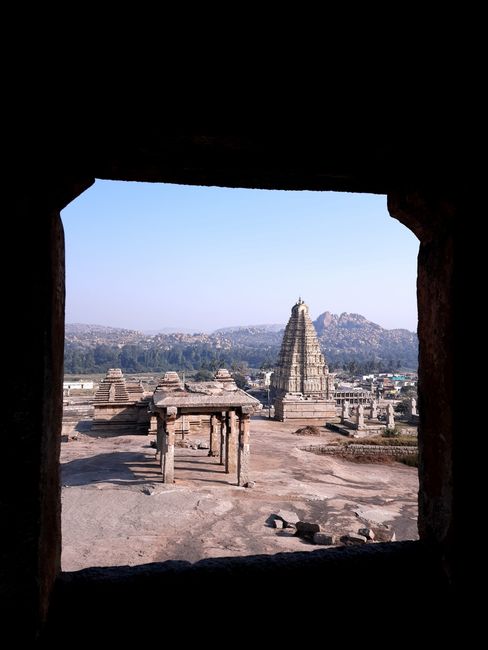
Hampi is one of the most extraordinary places in India: the ruined capital of the Vijayanagara Empire, scattered across a surreal landscape of giant granite boulders, banana plantations and rice fields on the banks of the Tungabhadra River in central Karnataka. Founded in 1336 by Harihara I and Bukka Raya I, Vijayanagara grew in the 15th and early 16th centuries into one of the largest and richest cities in the world, with markets trading diamonds, pearls, silk and horses, until a coalition of Deccan sultanates defeated its army at the Battle of Talikota in 1565 and the city was looted and abandoned. What remains, spread over about 29 km² (11 sq miles), was declared a UNESCO World Heritage Site in 1986: more than a thousand temples, palaces, baths, stables and bazaars, including the Virupaksha Temple, still in worship, and the Vittala Temple with its famous Stone Chariot. The village of Hampi itself is small, with guesthouses, cafés and a laid-back atmosphere, and most visitors stay three or four days, exploring by bicycle, moped, auto-rickshaw and coracle, and climbing the hills for sunrise and sunset. The best time to visit is October to February, as March to May is very hot.
Right now in Hampi
- Wed 22–33°C 71–91°F Mostly clear
- Thu 23–33°C 73–91°F Mostly clear
- Fri 22–32°C 72–89°F Clear
Weather: MET Norway (CC BY 4.0)
Top tours in Hampi
See all tours for Hampi →
From local operators, with prices and reviews; you check availability and book on Viator, our partner. We may earn a commission at no extra cost to you. How we earn money
Hampi at a glance
- Best for: UNESCO-listed ruins, temple architecture, boulder landscapes, sunrise and sunset viewpoints, cycling, bouldering and a slow pace of life.
- How long: 2 days for the main monuments; 3 or 4 to explore properly and add Anegundi or a day trip to Badami and Pattadakal.
- Best time: October to February, with warm days and cool nights; Hampi Utsav, the main festival, is usually held between November and January.
- Getting there: Hosapete Junction, about 13 km (8 miles) away, is the nearest railway station; Jindal Vijayanagar Airport, about 40 km (25 miles), has a few domestic flights; Bengaluru is about 340 km (211 miles), 6 to 7 hours by road.
- Tickets: most temples are free, but the ASI ticket for the Group of Monuments costs foreigners ₹550 online (Indians ₹35).
- Good to know: Hampi is in Vijayanagara district, Karnataka; the nearest e-Visa entry airports are Bengaluru, Hyderabad and Goa.
- Before you go: the e-Visa, the online e-Arrival card, money, trains and general safety are in our India travel guide.
Hampi’s ruins: where things are
The ruins fall into two main zones, the Sacred Centre along the river and the Royal Centre to the south, joined by roads and footpaths through the boulders. The village of Hampi sits at the western end, beside the Virupaksha Temple.
Hampi Bazaar and the Virupaksha Temple
The old Hampi Bazaar, a long avenue of stone pavilions that once housed merchants, runs east from the Virupaksha Temple toward Matanga Hill. The small village around it, Janatha Plot and the lanes behind the temple, has guesthouses, cafés, bicycle rental and shops, and it is the most convenient place to stay. Hemakuta Hill, with its early temples and sunset views, rises just to the south.
The river and the Vittala Temple
A path along the Tungabhadra leads northeast from Hampi Bazaar past riverside shrines, the Kodandarama Temple and the Achyutaraya Temple to the Vittala Temple, about 2 km (1.2 miles) away. This is the most beautiful walk in Hampi, through boulders and ruined gateways; the road to the Vittala Temple from the south is served by battery buggies.
The Royal Centre
South of the river, around the village of Kamalapur, the Royal Centre was the empire’s palace and administrative quarter, with the Zenana Enclosure and Lotus Mahal, the Elephant Stables, the Queen’s Bath, the Mahanavami Dibba platform, the stepped tank and the Hazara Rama Temple. Its monuments are spread over open, flatter ground, best covered by bicycle or auto-rickshaw. Kamalapur has a few hotels, including state-run accommodation.
Across the river: Virupapur Gadde and Anegundi
On the north bank, reached by coracle or boat from near the Virupaksha Temple when the river allows, Virupapur Gadde (nicknamed “Hippie Island”) is a rural area of rice fields and guesthouses popular with backpackers and climbers. Farther east, Anegundi, a heritage village believed to be older than Hampi, has temples, old houses and the hill of Anjanadri, held to be the birthplace of Hanuman.
Hosapete
The busy town of Hosapete (Hospet), about 13 km (8 miles) southwest, has the railway station, the bus stand, ATMs and larger hotels. It is convenient for transport but lacks Hampi’s atmosphere; buses and autos run to Hampi throughout the day.
Top things to see in Hampi
Virupaksha Temple
At the heart of Hampi, the Virupaksha Temple is dedicated to Shiva as Virupaksha and has been an active place of worship for centuries; its origins go back to a modest 7th-century shrine, greatly expanded by the Vijayanagara rulers. Its nine-story eastern gopuram (gateway tower) rises about 50 m (164 ft) and is visible across the valley. Inside are pillared halls, smaller shrines and, in the Ranga Mandapa, painted ceilings showing scenes from the epics. The temple elephant and its morning bath in the river are a local ritual. Entry is free; remove shoes and dress modestly. Maha Shivaratri, in February or March, draws large numbers of pilgrims.
Vittala Temple and the Stone Chariot
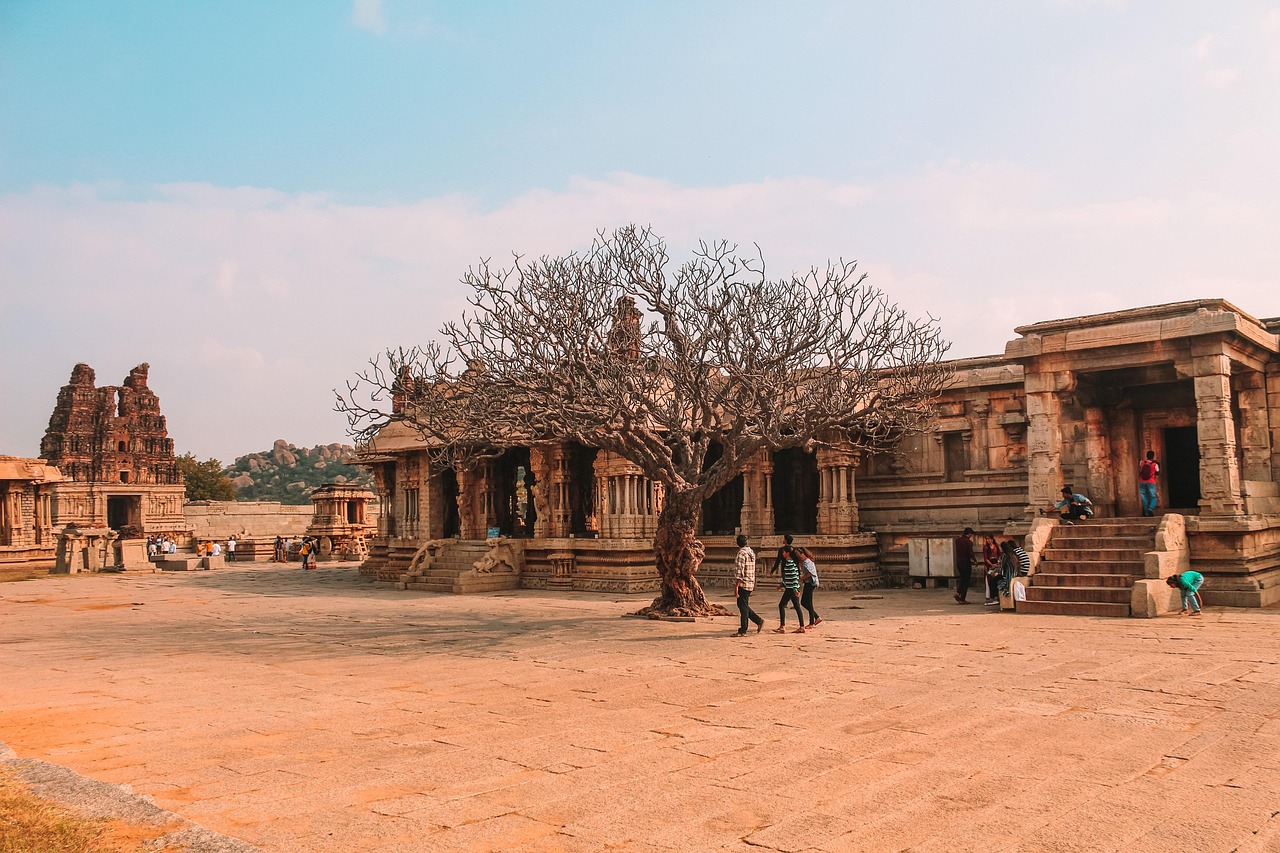
The 15th-century Vittala Temple, dedicated to Vishnu as Vittala, is the masterpiece of Vijayanagara architecture. In its courtyard stands the Stone Chariot, a shrine to Garuda carved in granite in the shape of a temple chariot, with stone wheels and elephants in front; its image appears on India’s ₹50 note. The main hall has the famous musical pillars, slender columns said to give different notes when tapped, though touching them is no longer allowed, to protect them. The Archaeological Survey of India (ASI) ticket is checked here: on the ASI’s online booking site, the Group of Monuments, Hampi, costs ₹550 for foreigners and ₹35 for Indians, with online slots from 6 a.m. to 6 p.m. every day; Karnataka Tourism notes the counter price may be slightly higher. Keep your ticket, as it is usually also checked at the Zenana Enclosure and Elephant Stables on the same day.
The Zenana Enclosure, Lotus Mahal and Elephant Stables
Inside the walled Zenana Enclosure, the Lotus Mahal is a two-story pavilion of arched, lotus-shaped openings that combines Hindu and Indo-Islamic styles, believed to have been designed to catch cooling breezes. Next door, the Elephant Stables is a long building of eleven large domed chambers, each with a different dome, where the royal elephants were kept.
Queen’s Bath and the royal platforms
The Queen’s Bath, plain on the outside, hides a large square pool surrounded by ornate arched balconies, once fed by an aqueduct. Nearby, the Mahanavami Dibba, a tall stepped platform carved with processions of elephants, horses, dancers and hunters, is where the kings watched the Navaratri festival, and the restored stepped tank shows the city’s sophisticated water engineering. The Hazara Rama Temple, the royal chapel, has walls carved with friezes of the Ramayana.
Hemakuta Hill and the giant Ganeshas
Just south of the bazaar, Hemakuta Hill has a cluster of temples from the 9th to 14th centuries, older than the empire, and is one of the best places to watch the sunset over the Virupaksha gopuram. On its slopes are two monolithic statues of Ganesha: Sasivekalu Ganesha, about 2.4 m (8 ft) tall, and the larger Kadalekalu Ganesha in its own pillared hall.
Ugra Narasimha and the Badavilinga
Carved from a single granite boulder, the Ugra Narasimha, Vishnu in his man-lion form, stands about 6.7 m (22 ft) tall and is the largest monolithic sculpture in Hampi. Beside it, the Badavilinga, a huge Shiva lingam, stands in water in a small chamber.
Matanga Hill
The highest point in Hampi, Matanga Hill rises at the eastern end of the bazaar. A rough climb up rocky paths and old steps takes about 30 to 45 minutes and rewards you with one of the best sunrise views in India, over the ruins, the river and the boulders. Go with others and use a flashlight on the way up.
More classic sights
- Achyutaraya Temple: a vast 16th-century temple complex with a long ruined market street, in a quiet valley below Matanga Hill.
- Krishna Temple and Krishna Bazaar: an early-16th-century temple facing a wide market avenue and tank.
- Underground Shiva Temple: a temple partly below ground level that floods with water.
- Archaeological Museum, Kamalapur: sculptures, coins and a scale model of the site.
- King’s Balance (Tula Bhara): a stone gateway on the riverside path where kings were weighed against gold and grain.
Other things to do in Hampi
Coracle rides on the Tungabhadra
Round basket boats called coracles, once woven from bamboo and now waterproofed with plastic and bitumen, have carried people across the Tungabhadra for centuries; each can take up to about eight people. Rides leave from near the Virupaksha Temple, in front of the Kodandarama Temple and, most popularly, near the Vittala Temple. Rides depend on water levels and may stop after heavy rain.
Cycling, mopeds and walking
Hampi is a wonderful place to cycle: rent a bicycle in the village and follow the roads between the Sacred and Royal Centres, stopping wherever you like. Mopeds and electric scooters are also available, and auto-rickshaw drivers offer full-day tours of the main sites. The riverside path to the Vittala Temple is best on foot.
Bouldering and sunrises
Hampi’s granite boulders make it one of India’s best-known bouldering areas, especially on the north bank; climbing shops rent crash pads and give advice. For sunrise and sunset, head to Matanga Hill, Hemakuta Hill, Anjanadri Hill across the river or the hills near the Achyutaraya Temple. See our hiking guide for more ideas.
Food and drink
Hampi’s cafés serve a mix of South Indian staples and traveler favorites: idli, vada, dosa and sambar for breakfast, thalis of rice, curries and chapati for lunch, and pancakes, falafel and Israeli dishes in the backpacker spots. Hampi is a sacred site, so the village is largely vegetarian and alcohol is not sold openly; Hosapete has more choice. Drink bottled or filtered water.
Festivals
Hampi Utsav (Vijaya Utsav), usually held between November and January, fills the ruins with music, dance, light shows and processions. The temple festivals at Virupaksha, especially Maha Shivaratri, attract many pilgrims.
Day trips from Hampi
- Tungabhadra Dam: gardens and reservoir views about 15 km (9 miles) west, near Hosapete.
- Daroji Sloth Bear Sanctuary: a rocky scrub reserve about 25 km (16 miles) south, where sloth bears are often seen in the late afternoon from a watchtower.
- Anegundi: across the river, with village life, temples and Anjanadri Hill; reachable by boat or by road via the bridge.
- Badami, Aihole and Pattadakal: the Chalukya cave temples of Badami and the temples of Aihole and UNESCO-listed Pattadakal, about 140 km (87 miles) west, best as an overnight trip. On the ASI booking site, foreigners pay ₹550 online at Pattadakal and ₹250 at the Badami caves.
- Ballari (Bellary): a hill fort above the district town, about 60 km (37 miles) east.
Getting there and getting around
By air
Jindal Vijayanagar Airport at Toranagallu, about 40 km (25 miles) from Hampi, has a few domestic flights, mainly to Bengaluru and Hyderabad. International visitors fly into a designated e-Visa airport such as Bengaluru’s Kempegowda International, Hyderabad or Goa first; Hubballi Airport, about 160 km (100 miles) west, has more domestic connections.
By train
Hosapete Junction is the station for Hampi, with trains to Bengaluru (an overnight service is the most popular way to arrive), Hubballi, Hyderabad and Goa. From the station, an auto-rickshaw or bus takes about 30 minutes to Hampi.
By road
Hampi is about 340 km (211 miles) from Bengaluru, a 6- to 7-hour drive, and overnight sleeper buses run from Bengaluru, Goa and Hyderabad to Hosapete or Hampi. A car and driver is the easiest way to combine Hampi with Badami and Pattadakal.
Around Hampi
Bicycles, mopeds, auto-rickshaws and walking are the ways to get around; local buses link Hampi, Kamalapur and Hosapete. Battery-operated buggies carry visitors along some stretches near the Vittala Temple. Crossing the river is by coracle or small boat, depending on water levels; in the monsoon or when the river is high, crossings may stop and the road detour via the bridge takes much longer.
When to go and how long to stay
Hampi has a hot, semi-arid climate. October to February is the best time, with highs of 29 to 30 °C (84 to 87 °F) and cool nights, around 16 to 17 °C (62 °F) in December and January. March to May is very hot, with highs around 38 °C (100 °F); sightsee at dawn and dusk. The monsoon, from June to October, brings moderate rain, green fields and fewer visitors, but the river can rise and stop the coracles. There is no IMD/WMO normals station in Hampi, so the table shows 1991–2020 normals for the nearest one, Koppal, about 35 km (22 miles) to the west, from the India Meteorological Department (IMD), as published by the World Meteorological Organization (WMO); rainy days are days with at least 2.5 mm of rain.
| Month | Average high / low | Rain (rainy days) | What to expect |
|---|---|---|---|
| January | 30 °C (86 °F) / 16 °C (62 °F) | 2 mm (0.1 in), under 1 day | Peak season; cool nights |
| February | 33 °C (91 °F) / 18 °C (65 °F) | 2 mm (0.1 in), under 1 day | Warm and dry; Shivaratri in some years |
| March | 36 °C (97 °F) / 22 °C (71 °F) | 27 mm (1.1 in), under 1 day | Hot by midday |
| April | 38 °C (101 °F) / 24 °C (75 °F) | 20 mm (0.8 in), 2 days | Very hot |
| May | 38 °C (100 °F) / 24 °C (75 °F) | 67 mm (2.6 in), 4 days | Very hot; storms |
| June | 33 °C (91 °F) / 23 °C (73 °F) | 86 mm (3.4 in), 5 days | Monsoon begins; windy |
| July | 30 °C (87 °F) / 22 °C (72 °F) | 88 mm (3.5 in), 6 days | Green, quiet |
| August | 30 °C (87 °F) / 22 °C (71 °F) | 114 mm (4.5 in), 7 days | Showers; river may rise |
| September | 30 °C (86 °F) / 22 °C (71 °F) | 151 mm (5.9 in), 7 days | Wettest month |
| October | 30 °C (87 °F) / 21 °C (70 °F) | 96 mm (3.8 in), 5 days | Rains ending; season begins |
| November | 29 °C (84 °F) / 19 °C (65 °F) | 26 mm (1.0 in), 1 day | Pleasant; Hampi Utsav in some years |
| December | 29 °C (84 °F) / 17 °C (62 °F) | 2 mm (0.1 in), under 1 day | Cool, dry; busiest month |
The area gets about 680 mm (27 in) of rain a year, mostly from June to October.
Two days in Hampi
Day one: sunrise from Matanga Hill, breakfast in the village, the Virupaksha Temple, then the riverside walk to the Vittala Temple and the Stone Chariot; sunset from Hemakuta Hill. Day two: by bicycle or auto-rickshaw through the Royal Centre: the Ugra Narasimha, the Hazara Rama Temple, the Zenana Enclosure and Lotus Mahal, the Elephant Stables, the Queen’s Bath and the stepped tank, finishing at the Kamalapur museum.
Four days at a slower pace
Add a coracle ride and a day across the river at Anegundi and Anjanadri Hill, an afternoon at the Daroji Sloth Bear Sanctuary, and an overnight trip to Badami and Pattadakal.
Where to stay in Hampi
- Hampi village (Janatha Plot): guesthouses and small hotels steps from the Virupaksha Temple; the most convenient base.
- Virupapur Gadde and the north bank: relaxed guesthouses among rice fields, popular with climbers; access depends on the river crossing.
- Kamalapur: quieter hotels, including state-run accommodation, close to the Royal Centre.
- Anegundi: heritage homestays in restored village houses.
- Hosapete and the outskirts: larger hotels and resorts, best with a car.
Hampi’s guesthouses are simple, and many lack air conditioning, which matters from March to May. Book ahead for December, January and festival dates.
What a trip to Hampi costs
Prices are approximate, for October 2026, converted at about 96 rupees (₹) to the US dollar. Monument fees are the ASI’s online prices; other prices are estimates.
| Item | Typical cost |
|---|---|
| Group of Monuments, Hampi, foreigners online | ₹550 (about US$5.70) |
| Group of Monuments, Hampi, Indians online | ₹35 (about US$0.40) |
| Pattadakal, foreigners online | ₹550 (about US$5.70) |
| Bicycle rental, per day | ₹100–250 (about US$1–2.60) |
| Moped or scooter rental, per day | ₹300–600 (about US$3.10–6.30) |
| Full-day auto-rickshaw tour | ₹1,000–1,800 (about US$10–19) |
| Coracle ride | ₹200–500 (about US$2–5.20) |
| Thali or breakfast in a café | ₹100–350 (about US$1–3.60) |
| Guesthouse double, per night | ₹1,200–4,500 (about US$13–47) |
Practical tips for Hampi
- Start at dawn: the light is best and the heat bearable before 10 a.m.; rest at midday and go out again for sunset.
- Keep your ASI ticket: it is checked at the Vittala Temple and the other ticketed monuments.
- Carry water and snacks: there are few shops in the Royal Centre and along the riverside path.
- Bring cash: ATMs are in Kamalapur and Hosapete, and small cafés may not take cards.
- Respect the temples: Virupaksha is an active place of worship; remove shoes and dress modestly.
Safety
Hampi is peaceful and generally safe. Heat is the main risk: from March to May, temperatures reach 38 °C (100 °F) among sun-baked rocks; carry plenty of water, wear a hat and avoid climbing at midday. The river has strong currents and hidden rocks, especially in the monsoon; do not swim in the Tungabhadra, and use only licensed coracles and boats. Boulders and hills: paths up Matanga and other hills are steep and uneven; avoid climbing alone, especially in the dark, and wear shoes with good grip. Isolated ruins: some monuments are far from others; go in pairs after dark and tell your guesthouse your plans. Monkeys live around the temples and snatch food. Snakes and scorpions live among the rocks; watch where you put your hands. Roads are narrow and used by trucks and buses; ride mopeds carefully and wear a helmet. In an emergency, call 112.
What to pack for Hampi
Light, loose clothes that cover shoulders and knees, a wide-brimmed hat, sunglasses and high-factor sunscreen, sturdy shoes with good grip for climbing the hills, sandals for temples, a flashlight or headlamp for sunrise climbs, a refillable water bottle, and a light rain jacket from June to October. India uses 230 V, with round-pin plugs of types C, D and M. See our hiking shoes and travel adapters guides.
Hampi travel FAQ
How much is the Hampi ticket?
On the Archaeological Survey of India’s booking site, the Group of Monuments, Hampi, costs ₹550 for foreigners and ₹35 for Indians online. Most temples, including Virupaksha, are free.
Which monuments does the Hampi ticket cover?
The ASI ticket is checked at the Vittala Temple and is usually also accepted on the same day at the Zenana Enclosure (Lotus Mahal) and the Elephant Stables. Keep it with you.
What are the timings for Hampi’s monuments?
The ASI’s online booking slots run from 6 a.m. to 6 p.m. every day. Temples have their own puja hours.
How many days do I need in Hampi?
Two days for the main sites; three or four to explore at a relaxed pace and add Anegundi or Badami.
What is the best time to visit Hampi?
October to February, when it is warm by day and cool at night. March to May is very hot.
How do I get to Hampi from Bengaluru?
By overnight train or sleeper bus to Hosapete, about 13 km (8 miles) from Hampi, then an auto-rickshaw or bus. The drive takes 6 to 7 hours.
Can I rent a bicycle in Hampi?
Yes. Bicycles, mopeds and electric scooters are available in Hampi village and Kamalapur.
Is it safe to swim in the Tungabhadra River?
No. The river has strong currents and submerged rocks, especially during the monsoon.
Why is Hampi famous?
It was the capital of the Vijayanagara Empire, one of the richest cities in the world in the 15th and 16th centuries, and its ruins are a UNESCO World Heritage Site.
Is Hampi safe for tourists?
Yes. Take care in the heat, on the rocky hills, near the river and in isolated ruins after dark.
Sources and last review
Researched and last reviewed on 5 October 2026. Monument fees and online booking hours for Hampi, Pattadakal and the Badami caves: the Archaeological Survey of India’s e-ticket booking site; Hampi’s history, size, UNESCO inscription in 1986, the Stone Chariot, Virupaksha, Lotus Mahal, Elephant Stables, Queen’s Bath, Ugra Narasimha, Sasivekalu Ganesha, Matanga Hill, Hampi Utsav, coracles, cycling, bouldering, the best season, the airport, station and road distances, and nearby places: Karnataka Tourism (Department of Tourism, Government of Karnataka) and Incredible India (Ministry of Tourism); the list of designated e-Visa airports: the Bureau of Immigration; climate normals for the Koppal station, used for Hampi: the India Meteorological Department, via the World Meteorological Organization (1991–2020 normals archived by NOAA’s National Centers for Environmental Information); the exchange rate: the Reserve Bank of India (FBIL reference rate). Which monuments the ticket covers, ferry and coracle rules, local distances and typical prices are general references or estimates, flagged for checking. Prices and hours change, so check locally before you go. For the e-Visa, money and trains, see our India travel guide.
Plan your trip
Partner links: TravelerCenter may earn a commission if you book, at no extra cost to you.
🇮🇳 Useful Hindi phrases for Hampi
All 38 Hindi phrases: restaurant, hotel, emergencies, romance (printable) →