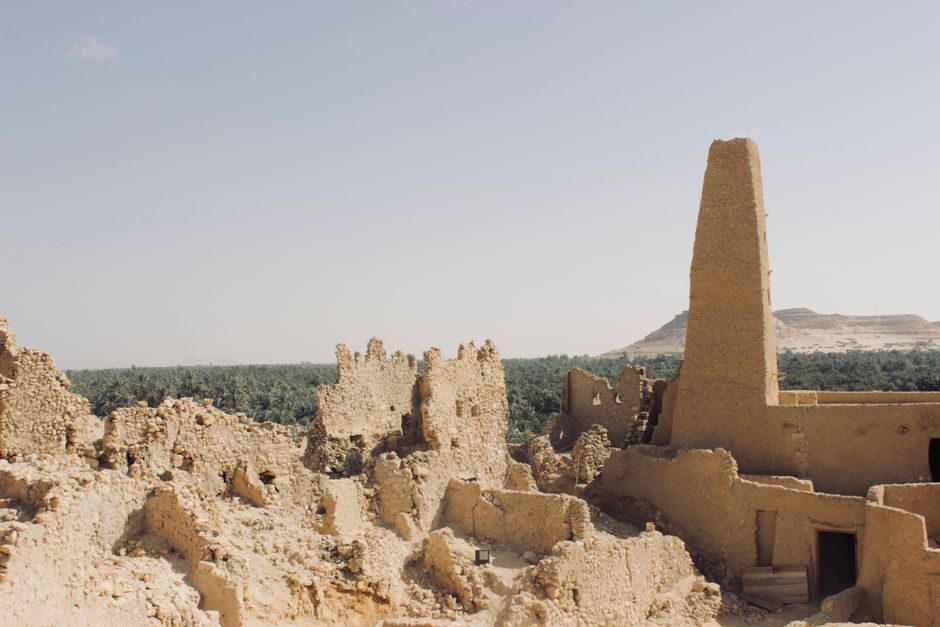
Siwa Oasis lies deep in Egypt’s Western Desert, about 300 km (186 miles) southwest of Marsa Matruh on the Mediterranean and about 50 km (31 miles) from the Libyan border. It fills a depression below sea level, about 80 km (50 miles) long, where springs feed hundreds of thousands of date palms and olive trees, glittering salt lakes and small farming villages, all ringed by the dunes of the Great Sand Sea. Isolated for most of its history, Siwa has its own culture: its people are Amazigh (Berber), speak their own language, Siwi, alongside Arabic, and build with kershef, a mix of salty mud and rock. In the middle of town rise the crumbling, restored mud walls of Shali, the 12th-century fortress-town, and at nearby Aghurmi stands the Temple of the Oracle of Amun, where Alexander the Great came in 331 BC to be told he was the son of a god. Around the oasis are the painted tombs of the Mountain of the Dead, bathing springs such as Cleopatra’s Spring, sunset views from Fatnas Island, turquoise salt pools you can float in, sand baths at Gebel Dakrour and desert safaris to hot springs among the dunes. Siwa is a long journey from anywhere, so plan at least three nights; the best seasons are October to November and February to April.
Right now in Siwa Oasis (Siwa)
- Wed18–27°C64–81°FClear
- Thu16–27°C62–81°FClear
- Fri19–27°C66–81°FClear
- Today Armed Forces Day (عيد القوات المسلحة)
Top tours in Siwa Oasis
See all tours for Siwa Oasis →
From local operators, with prices and reviews; you check availability and book on Viator, our partner. We may earn a commission at no extra cost to you. How we earn money
Siwa Oasis at a glance
- Best for: desert landscapes, mud-brick architecture, Amazigh culture, springs and salt lakes, eco-lodges and Great Sand Sea safaris.
- How long: 3–4 nights; the journey takes most of a day each way.
- Best time: October to November and February to April; summers are very hot, and winter nights are cold.
- Getting there: by bus or car from Marsa Matruh (about 4 hours), with buses and connections from Alexandria and Cairo, or the overnight sleeper train from Cairo to Marsa Matruh.
- Getting around: by bicycle, donkey cart, tuk-tuk and 4×4 with a driver.
- Good to know: carry your passport for checkpoints; safaris into the desert need permits arranged by licensed operators.
- Before you go: visas, money and general safety are in our Egypt travel guide.
Siwa’s areas and sights
Siwa town and Shali
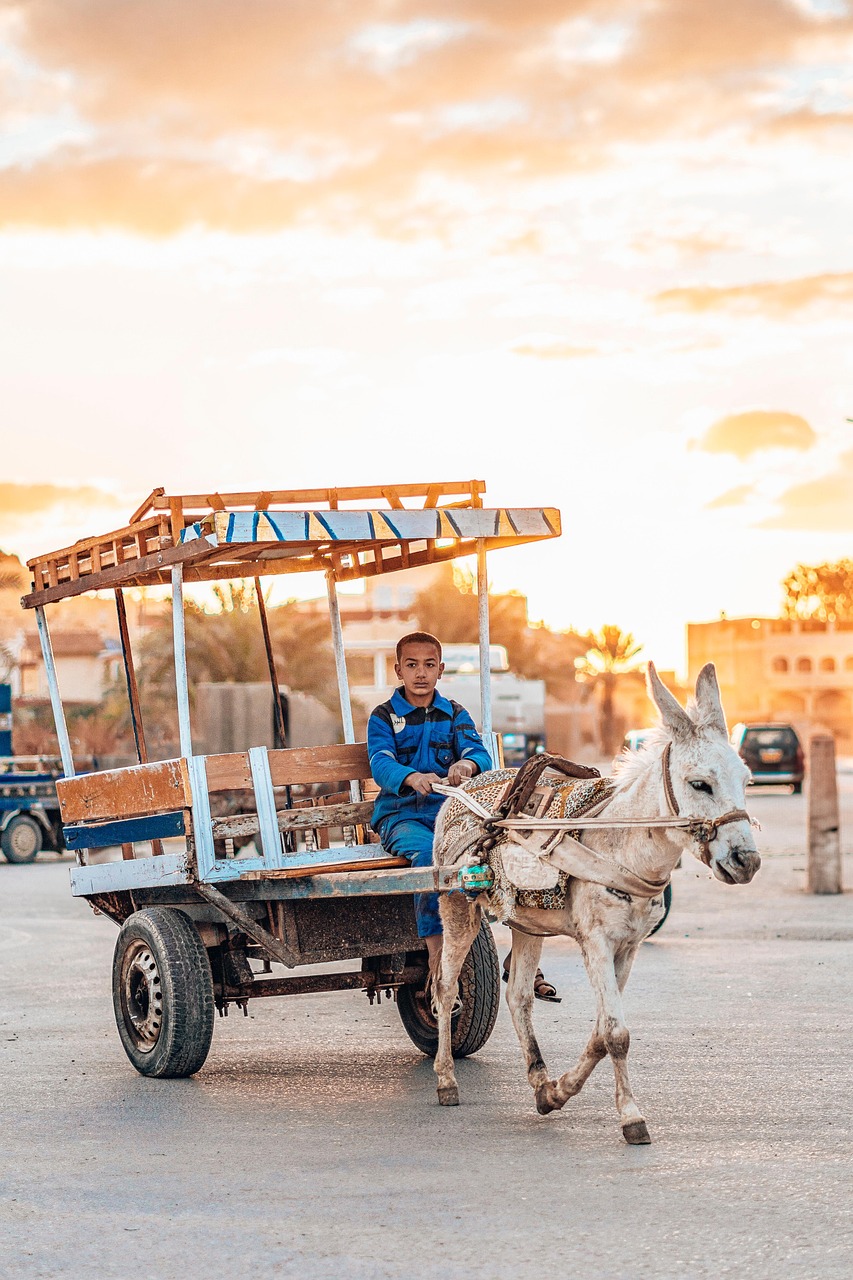
Siwa town, the only real town, grew up around the old fortress-town of Shali. It has the market square, the bus station, the main mosque, banks, shops, restaurants and most guesthouses and small hotels. Life moves at the pace of bicycles and donkey carts.
Aghurmi
About 4 km (2.5 miles) east of town, the village of Aghurmi stands on a rock outcrop with the ruins of the old village, the Temple of the Oracle and the restored Aghurmi Mosque. The ruined Temple of Umm Ubayda and Cleopatra’s Spring are nearby.
The salt lakes
Large, shallow salt lakes surround the oasis: Lake Siwa to the west, with Fatnas Island and the hills of Gebel Bayda beyond, and Lake Aghurmi to the east. Salt is harvested in bright turquoise evaporation pools.
The palm groves
Between the lakes, narrow tracks lead through palm and olive groves irrigated by more than 200 springs, with walled gardens, irrigation channels and eco-lodges built of kershef.
Gebel Dakrour
The golden mountain of Gebel Dakrour, southeast of town, is known for its sand baths and as the site of the annual Siyaha festival.
The Great Sand Sea
South and west of the oasis, the dunes of the Great Sand Sea, one of the largest dune fields in the world, stretch toward Libya, with hot springs, fossil beds and lakes hidden among them.
Where to stay in Siwa Oasis
- Siwa town: simple hotels and guesthouses near the market, convenient and cheap.
- Palm grove eco-lodges: traditional kershef lodges among the palms or by the lakes, often lit by candles and oil lamps.
- Desert camps: tents or huts near the dunes for a night under the stars, with a licensed operator.
Many eco-lodges are deliberately simple, with no electric light or Wi-Fi in the rooms; check what is included before booking. Rooms can be scarce during Egyptian holidays and the October festival.
Top things to see in Siwa Oasis
The Shali fortress-town
Shali, which means “town” in Siwi, was built in the 12th century as a fortified village of tall houses packed inside a single wall, with only one gate, Bab Inshal. According to the Ministry of Tourism and Antiquities, it is built of kershef, clay saturated with salt that dries as hard as cement; the town also includes the Old Mosque, said to be the oldest mud-built mosque in Africa, and the Tandi Mosque, and six deep wells. Heavy rains in 1926 melted much of the town, and its people moved out to new houses below, leaving the ruins that now give Siwa its silhouette. After a restoration project, the ministry reopened Shali and the Aghurmi Mosque to visitors in 2020; you can wander the lanes and climb to the top for sunset views over the palms, lakes and dunes.
The Temple of the Oracle of Amun
On the rock of Aghurmi, the Temple of the Oracle, built in the 6th century BC, was famous throughout the ancient world: Greeks consulted its oracle of Amun, and in 331 BC Alexander the Great crossed the desert to ask it about his destiny, emerging, it is said, as the son of Zeus-Amun. The temple and the ruins of the old village around it have wonderful views over the oasis. According to the ministry’s ticket site, the ticket costs EGP 120 (about US$2.30) for foreign adults, and the site opens from 9 a.m. to 5 p.m.
The Mountain of the Dead
Gebel al-Mawta, a conical hill north of town, is honeycombed with rock tombs from the 26th dynasty to Roman times. A few are open to visitors, including the Tomb of Si-Amun, whose paintings mix Egyptian gods with a Greek-style portrait of the dead man. The ministry lists the ticket at EGP 120 for foreign adults, with the same hours as the Oracle Temple. From the top, the views over Siwa are superb.
Cleopatra’s Spring
Ain Juba, known as Cleopatra’s Spring, is a round, stone-lined pool of clear, bubbling spring water near Aghurmi, where locals and visitors swim. Cafés surround it; swim in modest clothing. Other springs, such as Bir Wahed in the dunes, are hot.
Fatnas Island at sunset
Fatnas, a palm-covered peninsula in Lake Siwa about 6 km (4 miles) west of town, is the classic place to watch the sunset, with a spring-fed pool and a café facing the lake and the hills.
The salt pools
In the salt flats around the lakes, bright turquoise salt pools formed by salt mining are so salty that you float effortlessly. Bring water to rinse off and protect any cuts; access to some pools is controlled by the salt company or landowners and may need a guide.
Gebel Dakrour and the sand baths
In summer, people with rheumatism and joint pain come to Gebel Dakrour to be buried up to the neck in hot sand for a few minutes at a time, a traditional treatment supervised by local practitioners.
The House of Siwa Museum and crafts
A small traditional house in town displays Siwan costumes, embroidered wedding dresses, silver jewelry and household objects. Siwa’s crafts, including embroidered shawls, silver, baskets and pottery, are sold in town; olive oil, olives and many varieties of dates make good souvenirs.
Desert safaris to the Great Sand Sea
The highlight for many visitors is a half-day or full-day 4×4 safari into the Great Sand Sea: dune bashing, sandboarding, the hot spring of Bir Wahed and a cold freshwater lake among the dunes, fossil shells, and sunset and stars in the desert, often with dinner around a fire. Safaris must be run by licensed operators, who arrange the necessary permits with the local authorities, usually a day in advance; bring your passport.
Other things to do in Siwa Oasis
Food and drink
Siwan cooking uses dates, olives and local vegetables: try abodaraiz, a festive dish of meat with rice and tomatoes; flatbreads baked in clay ovens; grilled chicken and lamb; and date desserts, with mint or lemongrass tea. Restaurants around the market square serve Egyptian and Siwan food and pizza. Alcohol is not sold in Siwa, and drinking in public is not accepted.
Cycling and walking
Bicycles are the best way to explore the palm groves, springs and lake shores near town; the terrain is flat, but the heat is strong by late morning. See our cycling and hiking guides.
The Siyaha festival
Around the full moon of October, the Siyaha festival at Gebel Dakrour brings Siwan men together for three days of prayers, shared meals and reconciliation; visitors can watch respectfully.
Day trips and nearby
Marsa Matruh
Marsa Matruh, on the Mediterranean about 4 hours north, has white-sand beaches and turquoise bays such as Agiba and Cleopatra’s Bath, and is the usual overnight stop on the way to or from Siwa.
Alexandria
Alexandria is about 8–9 hours from Siwa by road; see our Alexandria guide.
El Alamein
The World War II cemeteries and museum at El Alamein are on the coast road between Alexandria and Marsa Matruh.
Getting there and getting around
By road
Most visitors arrive by road via Marsa Matruh: the road south across the desert to Siwa is about 300 km (186 miles), about 4 hours, and has police and military checkpoints, where passports are checked, so keep yours, and some photocopies, at hand. Public buses run from Marsa Matruh, and some run directly from Alexandria (about 8–9 hours) and Cairo (about 10–12 hours). Private drivers and tour operators also make the trip. The desert road between Bahariya Oasis and Siwa is closed to travelers, with military checkpoints, so Siwa cannot be combined directly with the White Desert by road.
By train and air
According to the Abela sleeper train timetable for October 2026, a sleeper leaves Cairo at 22:05 and reaches Marsa Matrouh at 05:40, from where you continue by bus or taxi to Siwa. Marsa Matruh’s airport has seasonal domestic flights. Siwa has no airport with regular flights.
Getting around
Siwa town is walkable. Bicycles can be rented in town, donkey carts and tuk-tuks carry passengers for short trips, and 4×4s with drivers are needed for Gebel Dakrour, Fatnas, the salt pools and the desert. Agree prices first.
When to go and how long to stay
Siwa has an extreme desert climate. Autumn (October and November) and spring (February to April) are the best seasons, with warm, sunny days and cool nights. Winter (December and January) has pleasant days around 20–21 °C (69–71 °F) but cold nights, close to freezing in the open desert; many eco-lodges are unheated, so bring warm clothes. Summer (May to September) is very hot, with highs around 37 °C (98–99 °F) or more, and desert safaris run only early in the morning or late in the day. Siwa has no station with published WMO 1991–2020 normals, so the table uses the 1991–2020 climate normals for Minya, an inland desert station of the Egyptian Meteorological Authority (EMA) at a similar latitude in the Nile Valley, as published by the World Meteorological Organization (WMO), as a guide to the inland desert climate: average daily highs and lows, total precipitation, and days with at least 1 mm of rain. Expect Siwa’s days to be similar or slightly hotter, and its nights in the open desert colder.
| Month | Average high / low | Rain (days with 1 mm or more) | What to expect |
|---|---|---|---|
| January | 20 °C (69 °F) / 6 °C (42 °F) | 1 mm (under 0.1 in), 0 days | Mild days, cold nights |
| February | 22 °C (72 °F) / 7 °C (44 °F) | 1 mm (under 0.1 in), 0 days | Mild days, cool nights; good |
| March | 26 °C (78 °F) / 10 °C (49 °F) | 1 mm (under 0.1 in), 0 days | Warm; very good; occasional dust storms |
| April | 31 °C (87 °F) / 13 °C (56 °F) | under 1 mm, 0 days | Warm to hot; very good |
| May | 35 °C (94 °F) / 18 °C (65 °F) | under 1 mm, 0 days | Hot; safaris early only |
| June | 37 °C (98 °F) / 21 °C (70 °F) | under 1 mm, 0 days | Very hot |
| July | 37 °C (99 °F) / 22 °C (72 °F) | under 1 mm, 0 days | Very hot |
| August | 37 °C (98 °F) / 22 °C (72 °F) | under 1 mm, 0 days | Very hot |
| September | 35 °C (96 °F) / 21 °C (70 °F) | under 1 mm, 0 days | Hot; quieter |
| October | 31 °C (88 °F) / 17 °C (63 °F) | under 1 mm, 0 days | Warm; Siyaha festival; excellent |
| November | 26 °C (79 °F) / 12 °C (53 °F) | under 1 mm, 0 days | Warm days, cool nights; excellent |
| December | 21 °C (71 °F) / 7 °C (45 °F) | under 1 mm, 0 days | Mild days, cold nights |
Rain is very rare, a few millimeters a year, but winter storms occasionally damage kershef buildings.
Events worth planning around
The Siyaha festival around the October full moon, Egyptian holidays, and the winter and spring school holidays bring visitors from Cairo and Alexandria; book eco-lodges early at these times. The date harvest runs from about August to October.
How long to stay: 2, 3 and 5 nights
- 2 nights: Shali, the Oracle Temple, the Mountain of the Dead, Cleopatra’s Spring and sunset at Fatnas. A rush after a long journey.
- 3 nights: add a Great Sand Sea safari with Bir Wahed and the salt pools.
- 5 nights: add a night in a desert camp, cycling through the palm groves, Gebel Dakrour and a slower pace.
Typical costs in Siwa Oasis
Prices are approximate, for October 2026, converted at about EGP 52.3 to the US dollar. Site tickets are the ministry’s foreign adult prices.
| Item | Typical cost |
|---|---|
| Temple of the Oracle | EGP 120 (about US$2.30) |
| Mountain of the Dead | EGP 120 (about US$2.30) |
| Bicycle rental, per day | EGP 100–250 (about US$1.90–4.80) |
| Great Sand Sea 4×4 safari, half day, per person | EGP 1,500–3,000 (about US$29–57), including the permit fee |
| Bus from Marsa Matruh | EGP 150–300 (about US$2.90–5.70) |
| Dinner in town | EGP 250–600 (about US$4.80–11.50) |
| Guesthouse double in town, per night | EGP 1,000–2,500 (about US$19–48) |
| Eco-lodge double, per night | about US$80–400 |
Safety in Siwa Oasis
Siwa is peaceful, and crime against visitors is rare, but it is remote, close to the Libyan border and has a strong security presence. Checkpoints on the road from Marsa Matruh check passports, and police may record your details; travel in daylight. Desert travel beyond the oasis requires permits, arranged by licensed operators with experienced drivers; never head into the dunes alone, and make sure vehicles carry water, spare tires and communications. The border areas toward Libya are closed military zones, and the road from Siwa to Bahariya is closed to travelers. Heat is extreme from May to September: drink plenty of water, cover up, and avoid the midday sun. Winter nights are cold, especially in unheated lodges and desert camps. Medical facilities are basic, the nearest hospitals with full services are in Marsa Matruh, and mobile coverage is patchy in the desert, so travel with insurance that covers evacuation. Siwa is conservative: dress modestly (covering shoulders and knees, and for women, loose clothing), swim in springs in modest clothing, ask before photographing people, especially women, and remember that alcohol is not sold. In an emergency, call 122 for the police, 123 for an ambulance and 126 for the tourist police.
Practical tips for Siwa Oasis
- Carry passport copies: checkpoints are frequent, and safari permits need passport details.
- Bring cash: there are a few ATMs in town, but they can run out of money, and many places don’t take cards.
- Book safaris locally: use your lodge or a licensed operator, who will arrange the permit.
- Respect local customs: modest dress, no alcohol, and ask before taking photos.
- Break the journey: stay a night in Marsa Matruh or Alexandria on the way.
- Bring a flashlight: eco-lodges and the palm groves are dark at night.
What to pack for Siwa Oasis
Loose, modest clothes that cover shoulders and knees, a scarf, a wide-brimmed hat, sunglasses and high-factor sunscreen, a warm jacket and layers for desert nights in winter, a swimsuit and a T-shirt to swim in springs, sturdy shoes or sandals for sand, a headlamp, a refillable water bottle, wet wipes, and cash. See our hiking shoes and travel adapters guides.
Siwa Oasis travel FAQ
How do I get to Siwa Oasis?
By road from Marsa Matruh on the Mediterranean, about 300 km (186 miles) and 4 hours, by bus, car or tour; there are buses from Alexandria and Cairo, and a sleeper train from Cairo to Marsa Matruh.
Do I need a permit to visit Siwa?
No permit is needed to visit the oasis itself by the Marsa Matruh road, but passports are checked at checkpoints. Safaris into the Great Sand Sea and the desert need permits, arranged by licensed operators.
Can I travel from Bahariya to Siwa?
Not directly: the desert road between Bahariya and Siwa is closed to travelers. Go via Cairo or Alexandria and Marsa Matruh.
How many days do I need in Siwa?
At least three nights, because the journey takes most of a day each way; that allows the main sights and a desert safari.
What is the best time to visit Siwa Oasis?
October to November and February to April. Summer is very hot, and winter nights are cold.
How much are the tickets for Siwa’s sights?
According to the Ministry of Tourism and Antiquities’ ticket site, the Temple of the Oracle and the Mountain of the Dead each cost EGP 120 for foreign adults.
Can you swim in Cleopatra’s Spring?
Yes. Locals and visitors swim in the spring-fed pool; wear modest swimwear, such as shorts and a T-shirt.
Is there alcohol in Siwa?
No. Alcohol is not sold in Siwa, and drinking in public is not accepted.
Is Siwa safe for tourists?
Siwa is peaceful, with a strong security presence and frequent checkpoints. Use licensed operators for desert trips, carry your passport, and respect local customs.
What language is spoken in Siwa?
Siwi, an Amazigh (Berber) language, and Arabic; English is spoken at lodges and by guides.
Plan your trip
Partner links: TravelerCenter may earn a commission if you book, at no extra cost to you.
🇪🇬 Useful Arabic phrases for Siwa Oasis
All 38 Arabic phrases: restaurant, hotel, emergencies, romance (printable) →
Sources · last reviewed 5 October 2026
Researched and last reviewed on 5 October 2026. Ticket prices and hours for the Temple of the Oracle at Aghurmi and the Tombs of Gabal al-Mawta: the Ministry of Tourism and Antiquities’ ticket site (egymonuments.com); the history, building material and reopening of Shali and the Aghurmi Mosque: the ministry’s site pages and news (egymonuments.gov.eg); the sleeper train to Marsa Matrouh: Abela Trains; the closed Bahariya–Siwa road and desert permits: the UK government’s factual safety pages, used for practical facts only; climate normals: the Egyptian Meteorological Authority via the World Meteorological Organization’s 1991–2020 normals (Minya station, used as an inland desert proxy, as Siwa has no published normals); the exchange rate: the Central Bank of Egypt. Safari permit procedures, distances and bus times, the Siyaha festival, the Shali 1926 rains, the House of Siwa Museum, salt pool access and typical prices are general references or estimates, flagged for checking. Prices and rules change, so check locally before you go. For visas, money and general safety, see our Egypt travel guide.
Data: Weather: MET Norway (CC BY 4.0) · Rates: ECB · Holidays: Nager.Date · Costs: World Bank ICP and price levels · Wikidata (CC0)