Short answer: Lombardy (Lombardia) is Italy’s richest and most populous region, and it pairs one big, stylish city with some of the most beautiful lakes in Europe. Start in Milan for the cathedral, The Last Supper, fashion and design, then head north to Lake Como, east to Bergamo and the Lombard shore of Lake Garda, and south to the Renaissance towns of Mantua and Cremona. One week covers Milan and a lake or two; ten days to two weeks lets you add the art towns or the Alps.
Lombardy stretches from the Swiss Alps in the north across the lakes and the flat, fertile Po valley to the river Po in the south. It is one of Italy’s most-visited regions: according to ISTAT, Italy’s national statistics institute, its hotels and other accommodation recorded 45.1 million nights in 2024, up 8% on 2023, and about two-thirds of them were by visitors from abroad. Milan alone accounted for 14.1 million nights, more than any Italian city except Rome. The region has twelve provinces, from Sondrio in the mountains to Mantua, Cremona and Pavia on the plain, and Milan is its capital. For entry rules, money, tipping and trains across the country, see our Italy travel guide.
Where to go in Lombardy
Milan is the hub: almost every corner of Lombardy is within two hours by regional train, and the lakes are close enough for day trips. Many visitors split their stay between Milan and a lake town such as Varenna, Bellagio or Sirmione, which is more relaxing than moving every night.
Milan
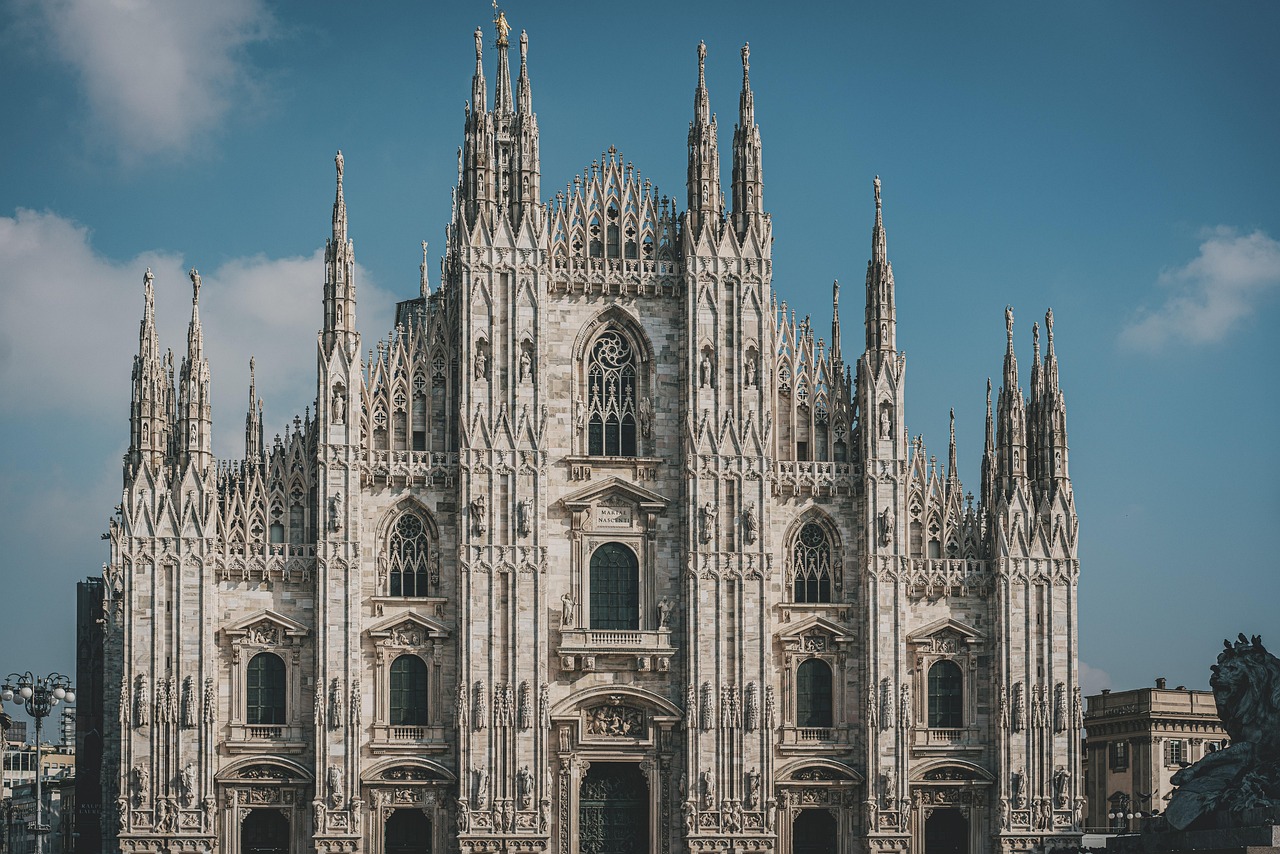
Italy’s business and fashion capital is more than shopping. The marble Milan Cathedral (the Duomo) has a forest of spires you can walk among on its rooftop; Leonardo da Vinci’s The Last Supper covers a wall of the refectory of Santa Maria delle Grazie; and La Scala is one of the world’s most famous opera houses. Add the Brera art gallery and district, the Sforza Castle, the elegant Galleria Vittorio Emanuele II, and the canals of the Navigli, where Milan comes out for its evening aperitivo. Our Milan travel guide has neighborhoods, tickets and airport transport.
Lake Como
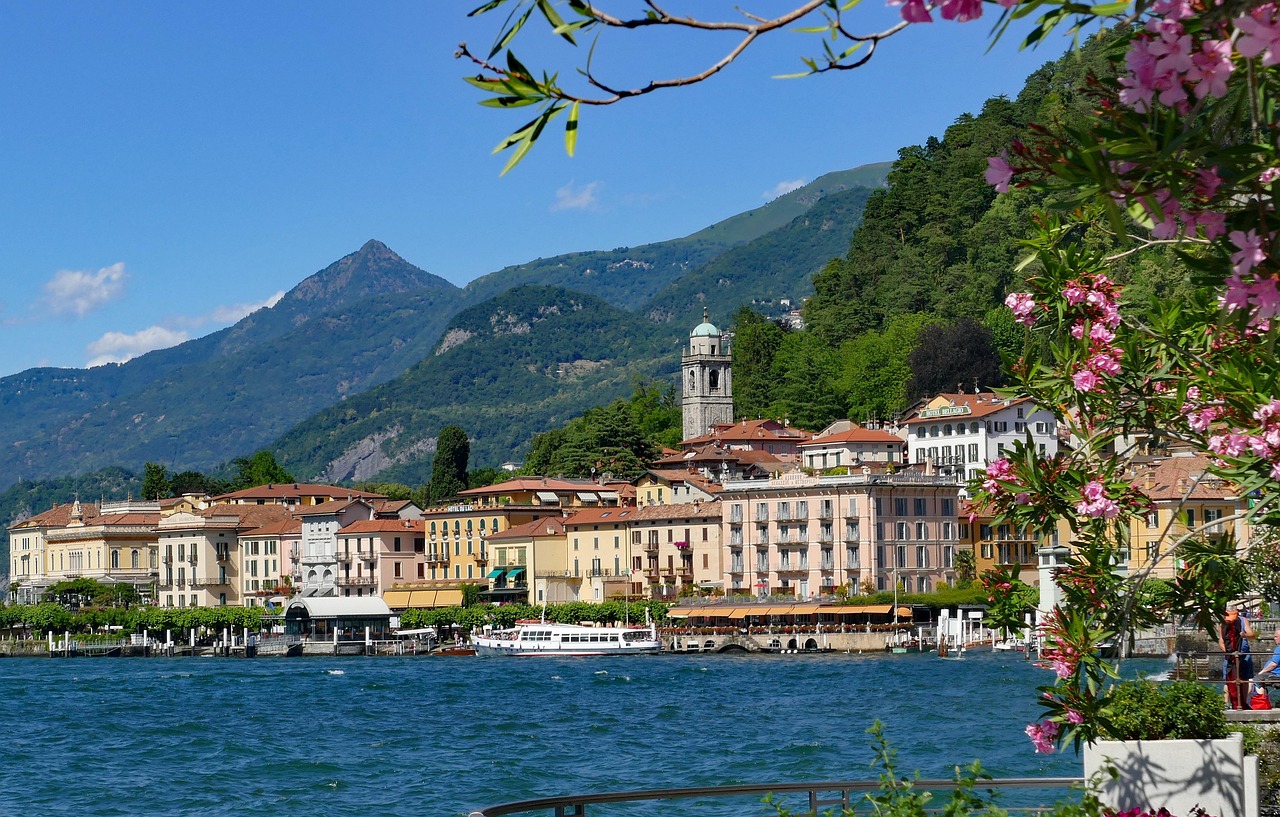
Shaped like an upside-down Y and framed by steep, green mountains, Lake Como is lined with villas, gardens and villages of pastel houses. Bellagio sits on the point where the three arms meet; Varenna, across the water, is easy to reach by train from Milan; and Menaggio, Tremezzo and Lenno face them on the western shore, with Villa Carlotta and its spring azaleas and Villa del Balbianello on its wooded peninsula. Ferries tie it all together. The city of Como, at the southern tip, has a fine cathedral and a funicular up to Brunate. See our Lake Como travel guide.
Lake Garda’s Lombard shore
Italy’s largest lake is shared by Lombardy, the Veneto and Trentino, and the south and west shores are Lombard. Sirmione, on a narrow peninsula, has a moated Scaliger castle and the ruins of a huge Roman villa, the Grotte di Catullo; Desenzano is a lively lakeside town with good train links; and further north, Salò, Gardone Riviera with the poet D’Annunzio’s extravagant Vittoriale estate, and Limone sul Garda, known for its old lemon houses, line the steep western shore. Our Lake Garda travel guide covers the whole lake.
Lake Maggiore and Lake Iseo
The eastern shore of Lake Maggiore is in Lombardy (the Borromean Islands and Stresa are on the Piedmont side, and the north end is in Switzerland). Here, the Rocca di Angera, a medieval castle owned by the Borromeo family, looks over the lake, and the hermitage of Santa Caterina del Sasso clings to a cliff above the water. Smaller and quieter, Lake Iseo, between Bergamo and Brescia, has Monte Isola, one of the largest lake islands in Europe, with fishing villages and almost no cars. Just south of Lake Iseo are the vineyards of Franciacorta, Italy’s best-known sparkling wine made by the traditional method.
Bergamo
Bergamo is two towns in one: the modern lower town and, on the hill above, the Città Alta, a perfectly preserved medieval and Renaissance town inside massive 16th-century Venetian walls, now a UNESCO World Heritage Site. A funicular railway that first opened in 1887 climbs between the two. Don’t miss the Piazza Vecchia, the Colleoni Chapel and the basilica of Santa Maria Maggiore, and the Accademia Carrara art gallery below the walls. Bergamo’s airport, Orio al Serio, is a major low-cost hub. Read our Bergamo travel guide.
Mantua, Cremona, Brescia and Pavia
Southern Lombardy is the region’s art country, and much quieter than the lakes. Mantua, surrounded on three sides by lakes formed by the river Mincio, was the court of the Gonzaga family: the Ducal Palace holds Mantegna’s painted Bridal Chamber, and Palazzo Te is a playful Renaissance villa. Mantua and the nearby ideal town of Sabbioneta are a joint UNESCO World Heritage Site. Cremona is the home of violin making, the city of Stradivari, with a violin museum and workshops still at work today, and a cathedral bell tower, the Torrazzo, that is one of the tallest brick towers in Europe. Brescia has the best Roman remains in northern Italy and the monastery of Santa Giulia, part of a UNESCO site dedicated to the Lombards. Near Pavia, the Certosa is one of the most lavish monasteries in Italy.
Valtellina and the Alps
In the far north, the Valtellina valley runs east from Lake Como between the Alps, with terraced vineyards on its sunny side. At its top are the ski and spa town of Bormio and duty-free Livigno, both venues of the 2026 Winter Olympics. From Tirano, the red trains of the Swiss Rhaetian Railway’s Bernina line climb over the Bernina Pass to St. Moritz, a route on the UNESCO World Heritage List and one of the most scenic train rides in the Alps. Further east, Val Camonica has thousands of prehistoric rock carvings, Italy’s very first UNESCO World Heritage Site.
Top things to do in Lombardy
See The Last Supper and the Duomo rooftop
Seeing Leonardo’s The Last Supper takes planning: booking is compulsory for every ticket, visits last 15 minutes in small groups, the museum is closed on Mondays, and tickets are released on the official site a few months at a time and sell out quickly. If you miss out, guided tours that include the visit are the main alternative. The Duomo is easier: buy a timed ticket for the cathedral and the rooftop terraces, by lift or by stairs, on the cathedral’s official site. Details and prices are in our Milan guide.
Ride the Lake Como ferries and visit the villas
The public ferries of Navigazione Laghi are the best way to see Lake Como, and much cheaper than a private boat. With the fares valid from April 2026, a one-way ticket from Como to Bellagio costs €12 on the slow boat, and short hops across the central lake, for example Bellagio to Varenna or Menaggio, cost €5.50; day passes for unlimited travel within a set area are also sold. In season, Villa Carlotta in Tremezzo charged €17.50 for adults in 2026, and Villa del Balbianello, run by the National Trust for Italy (FAI), requires booking. Most gardens close or reduce hours from November to March.
Explore Sirmione and Lake Garda
In Sirmione, walk to the tip of the peninsula past the Scaliger Castle (entry €10 in 2026, closed on Mondays) to the Grotte di Catullo, the remains of a Roman villa above the water (also €10; both sites cost €2 for EU citizens aged 18 to 25). Boats run from Sirmione and Desenzano to the other lake towns, and the drive up the western shore to Limone, through tunnels cut in the cliffs, is one of the most spectacular in Italy.
Discover the art towns
Spend a day each in Mantua and Cremona to see a quieter, deeply Italian side of Lombardy. In Mantua, combine the Ducal Palace and Palazzo Te with a walk along the lakes; in Cremona, visit the Violin Museum and listen for the sound of instruments being tested in the workshops (Cremona’s traditional violin craftsmanship is on UNESCO’s intangible heritage list). Bergamo’s Città Alta is easy as a half-day from Milan, and Brescia’s Roman forum and Santa Giulia museum make a good stop between Milan and Lake Garda. On the way to Lake Maggiore, the Rocca di Angera charged €18 for adults in 2026, with its season running from March to early November.
Ski, hike and ride the Bernina line
Bormio, Livigno, Santa Caterina Valfurva and the Aprica pass are Lombardy’s main ski areas, with Bormio’s thermal baths a welcome finish to a day on the slopes. In summer, the Stelvio National Park offers high-mountain hiking and the famous hairpins of the Stelvio Pass, one of the highest paved roads in the Alps, open only in the warmer months. A day trip on the Bernina line from Tirano to St. Moritz and back is spectacular in any season, and the train crosses into Switzerland, so carry your passport.
Design week, opera and Milan’s festivals
Milan’s year is shaped by its big events. The Salone del Mobile, the world’s leading furniture and design fair, is scheduled for 13 to 18 April 2027 at Rho Fiera Milano, and the whole city fills with design exhibitions at the same time, so hotels sell out and prices rise. The fashion weeks bring similar crowds in February and September. On 7 December, the feast of Sant’Ambrogio, Milan’s patron saint, La Scala opens its opera season and the Oh Bej! Oh Bej! Christmas market sets up around the Sforza Castle.
When to go to Lombardy
Milan and the Po valley have hot, humid summers and cold, foggy winters; the lakes are milder in winter and fresher in summer, but much wetter, because moist air rises against the Alps. Milan gets about 750 mm of rain and snow a year, with the wettest weather in autumn; the lakes get roughly twice as much. The figures below are 1991–2020 averages for Milan (Linate airport, Italian Air Force data) and for Lugano, on Lake Lugano just across the Swiss border, used here as a guide to the climate of Lake Como, about 30 km away (MeteoSwiss data).
| Season | Milan: average high / low | Lakes (Lugano): average high / low | What it’s like | Good for |
|---|---|---|---|---|
| Winter (Dec–Feb) | 7–10 °C / about 0 °C | 7–9 °C / 1–2 °C | Cold, often foggy in Milan; quiet, sunny days on the lakes; snow in the Alps | Museums, La Scala, Christmas markets, skiing in Valtellina |
| Spring (Mar–May) | 15–24 °C / 4–13 °C | 14–21 °C / 5–12 °C | Mild, with rainy spells; gardens in bloom in April and May | Lake villas and gardens, Salone del Mobile, art towns |
| Summer (Jun–Aug) | 28–31 °C / 17–19 °C | 25–27 °C / 16–18 °C | Hot and humid in the city, with thunderstorms; breezier on the lakes | Lake swimming and boats, mountain hiking, the Stelvio Pass |
| Autumn (Sep–Nov) | 26 °C falling to 12 °C / 15 °C falling to 5 °C | 22 °C falling to 12 °C / 14 °C falling to 6 °C | Warm September, mild October, wet and foggy November | Wine harvest in Franciacorta and Valtellina, Milan Fashion Week, the lakes without the crowds |
Best overall: April to early June and September to mid-October, when the lakes are green, the gardens open and the weather is comfortable for sightseeing. For the lakes: May to September, keeping in mind that July and August are the busiest and many Milanese leave the city in mid-August. For skiing: December to March. Many lake hotels, gardens and some ferry routes close or cut back from November to March.
Getting there and getting around
Airports
Lombardy has three main airports. Milan Malpensa (MXP) handles most long-haul flights, including nonstop routes from North America, and the Malpensa Express train reaches central Milan in about 50 minutes. Milan Linate (LIN), close to the city, is used mostly for European and domestic flights and is linked to the center by the M4 metro line. Bergamo Orio al Serio (BGY) is busy with low-cost airlines, with buses to Bergamo’s railway station and coaches to Milan.
Trains and the Io Viaggio Ovunque in Lombardia pass
Milan Centrale is one of Italy’s busiest high-speed hubs, with fast trains to Turin, Venice, Bologna, Florence and Rome, and direct trains to Switzerland. Within Lombardy, regional trains run by Trenord reach the lakes and towns: Varenna on Lake Como in about an hour from Milan Centrale, Como from Milan Cadorna or Milan’s main stations, and Bergamo, Brescia, Desenzano, Mantua, Cremona and Tirano.
For travel around the region, look at the Io Viaggio Ovunque in Lombardia ticket. According to the Lombardy Region, it costs €18 for one day, €30 for two, €35.50 for three and €47.50 for seven consecutive days. It covers regional trains in first and second class, plus city and intercity buses, trams and metro lines across Lombardy, the Malpensa Express (except journeys to and from the airport itself), the boats on Lake Iseo and some funiculars and cable cars. It does not cover high-speed Frecciarossa, Italo or Intercity trains, or the ferries on Lakes Como, Garda and Maggiore. The ticket is personal and valid on the day you validate it (and the following days for multi-day tickets) until the end of service. Buy it at Trenord ticket offices and machines, on the Trenord website or in its app.
Driving
You do not need a car in Milan, where driving into the center means paying the Area C congestion charge and parking is expensive; check the current rules on the city’s website before you drive in. A car is useful for the art towns of the south, Franciacorta, the western shore of Lake Garda and the Alpine valleys, but lake roads are narrow and parking in towns like Bellagio and Varenna is hard to find in summer. Most historic centers have camera-controlled limited traffic zones (ZTL), and motorways have tolls. If you drive into Switzerland, for example on the way to St. Moritz, you need a Swiss motorway vignette for its motorways.
Food and drink in Lombardy
Lombard cooking is built on butter, rice, polenta and cheese rather than olive oil and pasta. Milan’s signature dishes are risotto alla milanese, golden with saffron; ossobuco, braised veal shank, often served with that risotto; and cotoletta alla milanese, a breaded veal chop fried in butter. In winter, look for cassoeula, a rich pork and cabbage stew. Around the lakes, freshwater fish such as perch with risotto are the specialty, and in the Valtellina, pizzoccheri, buckwheat noodles baked with potatoes, cabbage and melted cheese, and the air-dried beef bresaola. Mantua is known for pumpkin-filled tortelli di zucca, and Bergamo and Brescia for stuffed pasta called casoncelli.
Lombardy makes some of Italy’s best cheeses, among them Gorgonzola, Taleggio and Grana Padano. Milan’s Christmas cake, panettone, is now eaten all over the world, and Cremona is famous for its nougat (torrone) and its spicy fruit mostarda. To drink, there is sparkling Franciacorta, the mountain reds of Valtellina, made from Nebbiolo grapes, and the wines of the Oltrepò Pavese south of the Po. Milan’s early-evening aperitivo, a drink served with snacks, is a ritual worth joining, especially along the Navigli.
Plan your trip
Tell our AI trip planner how many days you have and what you enjoy, and it will build a Lombardy itinerary from our guides, for example Milan and Lake Como by train, or Milan, Bergamo, Sirmione and Mantua. Check the forecast and monthly averages for each stop with our Destination weather tool, and pack for both city and lake: smart-casual clothes for Milan’s restaurants, a light rain jacket for the lakes, and covered shoulders for churches.
Frequently asked questions
What is the best time to visit Lombardy?
April to early June and September to mid-October are the best all-round months, with mild weather, open lake villas and gardens, and fewer crowds than in July and August. Come from December to March for skiing in the Alps and for Milan’s museums and opera.
Can you visit Lake Como as a day trip from Milan?
Yes. Regional trains reach Varenna in about an hour from Milan Centrale, and from there ferries cross to Bellagio and Menaggio. Como town is also an easy train ride away. Still, a night or two on the lake is much more relaxing and lets you see it in the quiet morning and evening hours.
What is the Io Viaggio Ovunque in Lombardia ticket?
It is a regional pass for unlimited travel on regional trains and local public transport across Lombardy, costing €18 for one day, €30 for two, €35.50 for three and €47.50 for seven days, according to the Lombardy Region. It does not cover high-speed trains or the ferries on Lakes Como, Garda and Maggiore.
How do I get tickets for The Last Supper?
Book on the official Cenacolo Vinciano website as soon as tickets for your dates are released; they are put on sale a few months at a time and sell out fast. Visits last 15 minutes and the museum is closed on Mondays. If tickets are gone, look for guided tours that include the visit.
Is Lake Garda in Lombardy?
Partly. Lake Garda is shared by three regions: the south and west shores, including Sirmione, Desenzano, Salò and Limone, are in Lombardy; the east shore is in the Veneto; and the northern tip, with Riva del Garda, is in Trentino.
Before you go: guidebooks and travel gear
Affiliate links: we may earn a commission at no extra cost to you. As an Amazon Associate we earn from qualifying purchases. We pick items for the place, not for the commission. How we earn money