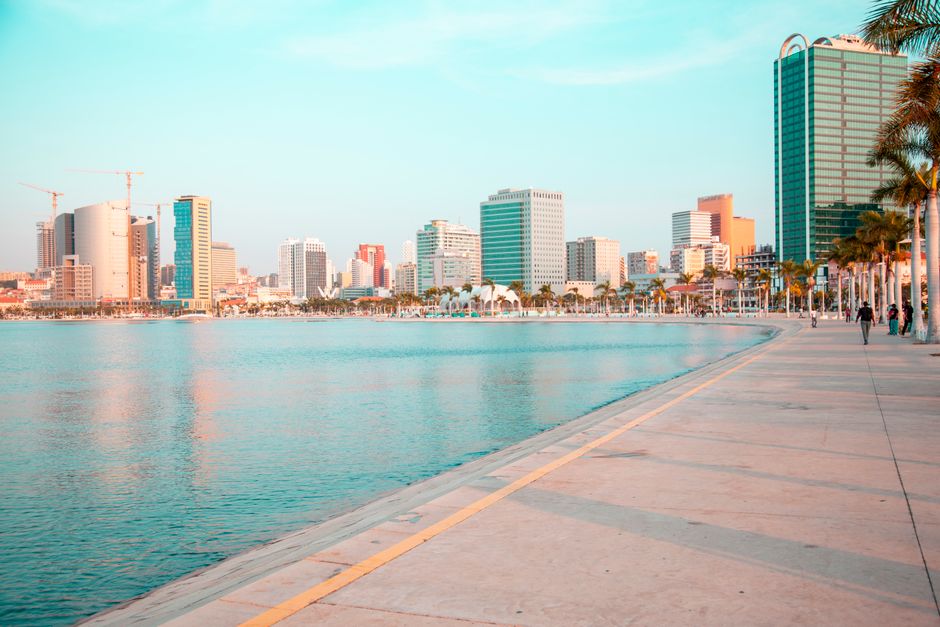
Luanda is Angola’s capital and largest city, spread around a wide, sheltered bay on the Atlantic coast, with a long sand island, the Ilha do Cabo, curving across the mouth of the harbor. Founded by the Portuguese in 1576, it is one of the oldest European-founded cities in sub-Saharan Africa, and its old upper town still has colonial churches, palaces and the hilltop Fortress of São Miguel, now surrounded by glass towers and busy boulevards. Most visitors come for business, but the city rewards a few days of exploring: walk the palm-lined Marginal along the bay, eat grilled fish in the beach restaurants of the Ilha, see masks and carvings in the National Museum of Anthropology, visit the National Slavery Museum on a cliff south of the city, and bargain for crafts at the Benfica market. Luanda is also the base for boat trips to the Mussulo peninsula and day trips to the eroded cliffs of the Miradouro da Lua and the savanna of Kissama National Park. Flights now arrive at the new Dr. António Agostinho Neto International Airport, about 40 km (25 miles) southeast of the center. The coolest, driest months are June to September.
Right now in Luanda
- Sat26–32°C79–89°FMostly clear
- Sun26–32°C79–90°F1 mm rain
- Mon27–32°C80–90°FPartly cloudy
Luanda: quick answers
- Things to do in Luanda
- The Fortress of São Miguel, The Marginal and the Ilha do Cabo, The National Museum of Anthropology, The Agostinho Neto Memorial, The National Slavery Museum. More
- Best time to visit Luanda
- June to September, when it is cooler and dry. December to April is hot and humid but the main beach season. More
- How many days in Luanda
- Two to three days for the city, and four or five to add Mussulo, the Miradouro da Lua and Kissama National Park. More
- Where to stay in Luanda
- The Baixa and the Marginal, The Cidade Alta, Ingombota, Maianga and Alvalade, The Ilha do Cabo, Miramar. More
Luanda at a glance
- Best for: seafront walks, beach restaurants, colonial architecture, museums, Angolan music and nightlife, and day trips along the coast.
- How long: 2 to 3 nights for the city, 4 to 5 with Mussulo, the Miradouro da Lua and Kissama.
- Best time: June to September, when it is cooler and dry; December to April is hot and humid.
- Getting there: Dr. António Agostinho Neto International Airport (NBJ), in Icolo e Bengo province southeast of the city; arrange a transfer in advance.
- Getting around: by ride-hailing app, hotel taxi or car with driver; walking is pleasant along the Marginal and in the Baixa.
- Money: prices are in kwanzas; bring clean US dollar or euro notes to exchange, and carry cash for markets and small restaurants.
- Before you go: visas, the yellow fever certificate, money and general practical advice are in our Angola travel guide.
Explore Luanda in videos
Hand-picked travel videos from YouTube creators to help you picture the trip. They play from YouTube; the facts in this guide come from our own research.
Luanda’s neighborhoods and where to stay
Luanda sprawls for many kilometers along the coast and inland, but most of what visitors want to see is around the bay, in the old center and on the Ilha.
The Baixa and the Marginal
The lower town, or Baixa, is the historic commercial center along the bay, with banks, ministries, colonial-era buildings and modern office towers. In front of it runs the Marginal (Avenida 4 de Fevereiro), a seafront boulevard with a wide promenade, palm trees, cycle lanes and views across the water to the Ilha. It is the city’s favorite place for an early morning jog or an evening stroll, and many of the large business hotels are along it or just behind it.
The Cidade Alta
The upper town on the hill above the Baixa is the old seat of government, with the presidential palace, the cathedral and several colonial churches and mansions. It is quieter than the Baixa, with fine views over the bay.
Ingombota, Maianga and Alvalade
Central districts just inland of the Baixa, with embassies, restaurants, cafés, shops and mid-range hotels. Alvalade and the area around the Largo do Kinaxixi are good for local restaurants and bakeries.
The Ilha do Cabo
The long, narrow sand spit known as the Ilha do Cabo or Ilha de Luanda, linked to the mainland by a short causeway, closes off the bay from the ocean. Its Atlantic side is a string of beaches, bars, beach clubs and seafood restaurants, busy on weekends and at night; its bay side has views back to the city skyline. A few hotels and guesthouses are right by the sand.
Miramar
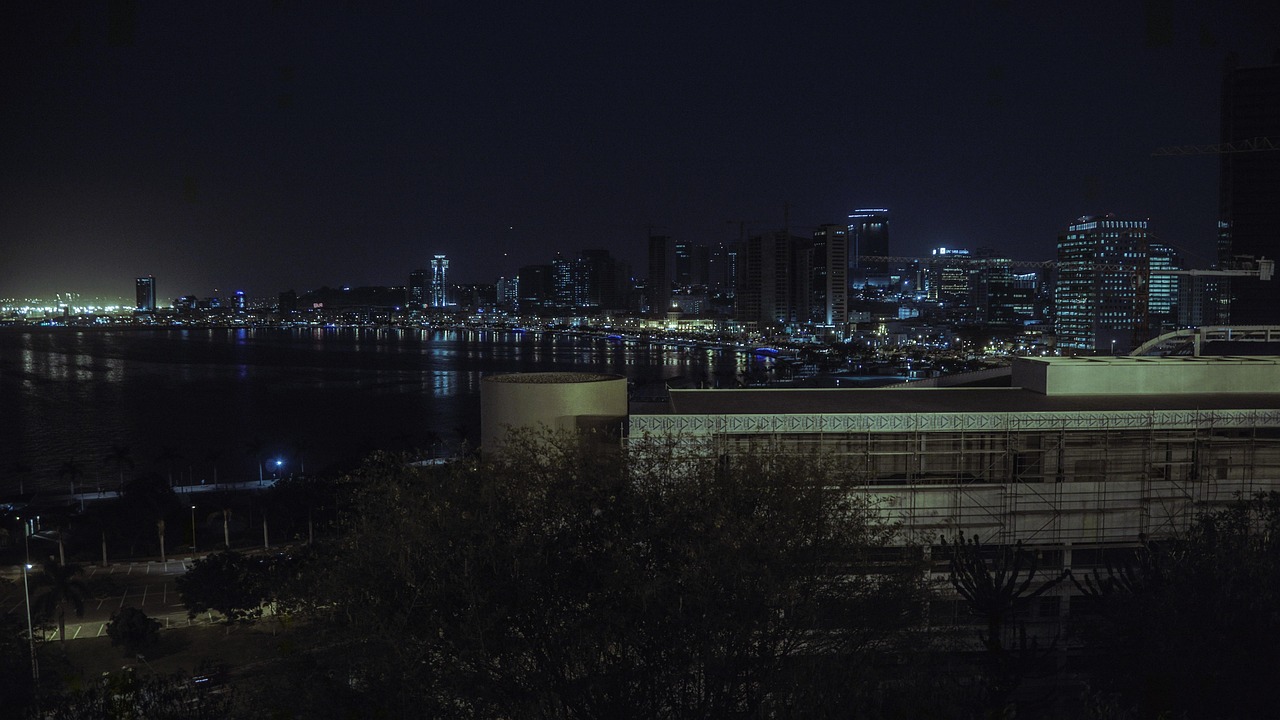
A residential hill on the north side of the bay, with embassy residences, restaurants and the Miramar viewpoint, one of the best places to see the whole curve of the bay and the Baixa skyline.
Talatona and the south
A modern district of business parks, shopping malls, international hotels and gated housing, about 15 km (9 miles) south of the center. It is calmer and more spread out, convenient for the road south to the Benfica market, Mussulo, the Miradouro da Lua and Kissama, and closer to the new airport than the old center.
Top things to see in Luanda
The Fortress of São Miguel
Built by the Portuguese in the late 16th century on a hill at the southern end of the Ilha’s causeway, the Fortaleza de São Miguel is Luanda’s oldest monument and its best viewpoint over the bay, the Ilha and the city skyline. Inside its thick ochre walls, decorated with blue-and-white azulejo tile panels showing scenes from Angola’s colonial history, it houses the Museu Nacional de História Militar, with old cannons, vehicles and colonial-era statues displayed around the ramparts. Check opening hours locally before you go.
The Marginal and the Ilha do Cabo
Start at the Marginal in the late afternoon, when the light turns gold over the bay, and walk the seafront promenade past the old customs house and the pink colonial building of the Banco Nacional de Angola. Then cross to the Ilha for a sunset drink and a seafood dinner at one of the beach restaurants. On weekends, the Ilha’s beaches fill with families, music and football games.
The National Museum of Anthropology
Housed in a colonial mansion in the center, the Museu Nacional de Antropologia holds one of the finest collections of Angolan traditional art, with masks, Chokwe carvings, musical instruments, textiles, pottery and tools from across the country. It marked its 50th anniversary in 2026. Allow about an hour, and check opening days before you go.
The Agostinho Neto Memorial
The tall, rocket-shaped concrete tower of the Memorial Dr. António Agostinho Neto, the mausoleum of Angola’s first president, rises above the southern end of the city near the coast road, surrounded by landscaped gardens and fountains. It is one of Luanda’s most recognizable landmarks and includes an exhibition space and library.
The National Slavery Museum
About 25 km (16 miles) south of the center, on the Morro da Cruz headland above the sea, the Museu Nacional da Escravatura occupies a small 17th-century chapel and the grounds of a former slave-trading estate, from where enslaved people were shipped across the Atlantic to the Americas. Its displays of chains, documents and objects tell the history of the Atlantic slave trade from Angola. It is a sobering but important visit, easily combined with the drive to Mussulo or the Miradouro da Lua.
More classic sights
- The Iron Palace (Palácio de Ferro): a prefabricated cast-iron building from the late 19th century in the Baixa, often attributed to the workshop of Gustave Eiffel, now restored as a cultural space.
- Igreja de Nossa Senhora dos Remédios: Luanda’s cathedral, a white 17th-century church with twin towers in the Cidade Alta area.
- Igreja de Nossa Senhora da Nazaré: a small 17th-century church near the Marginal with fine tile panels inside.
- Igreja de Nossa Senhora do Cabo: a modest old chapel on the Ilha, one of the oldest churches in the city.
- The Miramar viewpoint: a classic view over the bay and the Baixa skyline, best in the early evening.
Other things to do in Luanda
Eating in Luanda
Luanda’s food scene mixes Angolan, Portuguese and Brazilian cooking. Try moamba de galinha, chicken stewed in palm oil with okra, served with funje, a smooth cassava porridge; calulu, a fish and vegetable stew; and mufete, grilled fish with beans in palm oil, cassava, sweet potato and plantain, a favorite weekend lunch on the Ilha. Seafood is excellent, from grilled fish to prawns and lobster, and Portuguese-style bakeries and cafés serve coffee, pastries and sandwiches all day. Wash it down with a local Cuca or Nocal beer.
Music and nightlife
Luanda is the home of semba, kizomba and kuduro, and its nightlife is lively, especially from Thursday to Saturday. Beach bars and clubs on the Ilha, live music venues and rooftop bars in the center play everything from classic semba to Afro-house. Nights start late, and dress is smart casual.
Beaches and Mussulo
The Ilha has the most convenient beaches, but for calmer water and white sand, take a boat across the lagoon to the Mussulo peninsula, a long sandbar south of the city lined with weekend houses, beach resorts and restaurants. Boats leave from the jetties around Futungo de Belas and the Mussulo crossing points; the trip takes only a few minutes. Further south, Cabo Ledo is popular with surfers. See our beaches and surfing guides.
Shopping and crafts
The Benfica craft market (Mercado do Artesanato do Benfica), on the road south of the city, is a large open-air market of stalls selling wooden carvings, Chokwe masks, figures of the Pensador (the Thinker), paintings, baskets, jewelry and printed cloth. Bargaining is expected, and mornings are quieter. For everyday shopping, the malls in Talatona and the center have supermarkets, pharmacies and phone shops.
Day trips from Luanda
- Miradouro da Lua: about an hour south along the coast road, a viewpoint over red and white cliffs carved by erosion into fluted towers and gullies above the ocean; go in the late afternoon for the best light.
- Kissama National Park: about two hours south, across the Kwanza River, a savanna park with baobabs, elephants, giraffes, zebras and antelopes; game drives and river trips are run by lodges and tour operators, and an overnight stay gives the best chance of sightings.
- Mussulo: a short boat ride across the lagoon to the beaches and resorts of the Mussulo peninsula.
- The National Slavery Museum and Benfica market: combine both on the road south of the city.
- Cabo Ledo: about two hours south, a wide bay with waves for surfing and simple beach lodges.
- Kalandula Falls: too far for a day trip at about six hours by road, but a popular two- or three-day excursion east to Malanje, with the black rocks of Pungo Andongo on the way.
Getting there and getting around
From the airport
Scheduled passenger flights to Luanda now use the Dr. António Agostinho Neto International Airport (NBJ), which opened in the new province of Icolo e Bengo and took over flights from the old Quatro de Fevereiro Airport (LAD) in the city between late 2025 and early 2026. The new airport is about 40 km (25 miles) southeast of the center in a straight line, and the drive can take an hour or more depending on traffic. Most visitors arrange a hotel transfer or a pre-booked driver; ride-hailing cars also serve the airport. Check which airport your ticket shows, and allow generous time for the road when you fly out. Have your yellow fever certificate ready on arrival.
Getting around the city
Luanda has no metro, and traffic is heavy at rush hours. Ride-hailing apps are the easiest way for visitors to get around, showing the price upfront; hotels can also book taxis and drivers. The blue-and-white shared minibuses called candongueiros run on fixed routes for a low fare but are crowded and hard to use without Portuguese. Walking is pleasant along the Marginal, in the Baixa and on the Ilha in daylight. For day trips, hire a car with driver through your hotel or a tour operator. The suburban railway runs inland from the city toward Viana and beyond.
When to go and how long to stay
Luanda is warm all year, cooled by the Benguela Current. From June to September, the dry cacimbo season brings grey, hazy skies, almost no rain and pleasant temperatures, with highs around 24 °C (75 °F): the most comfortable time for sightseeing and day trips. From October to May, it is hotter and more humid, with highs around 30 °C (86 °F) and showers and storms, most often from about February to April; this is the main beach season. The table shows average daily highs and lows in Luanda from the 1961–1990 climate normals published by Angola’s meteorological service on the World Meteorological Organization’s (WMO) World Weather Information Service.
| Month | High / low | What to expect |
|---|---|---|
| January | 30 / 24 °C (85 / 75 °F) | Hot and humid; beach weather |
| February | 30 / 25 °C (87 / 76 °F) | Hot; Carnival season |
| March | 31 / 25 °C (87 / 76 °F) | The hottest month; storms |
| April | 30 / 24 °C (86 / 76 °F) | Hot, with rainy spells |
| May | 29 / 23 °C (84 / 74 °F) | Rains ending; warm |
| June | 26 / 20 °C (78 / 69 °F) | Cooler and dry; hazy skies |
| July | 24 / 19 °C (75 / 66 °F) | Cool and dry; good for walking |
| August | 24 / 19 °C (75 / 66 °F) | The coolest month |
| September | 25 / 20 °C (78 / 68 °F) | Dry and mild |
| October | 27 / 22 °C (80 / 72 °F) | Warming; first showers |
| November | 28 / 23 °C (83 / 74 °F) | Warm; Independence Day on 11 November |
| December | 29 / 23 °C (83 / 74 °F) | Hot; holiday season on the Ilha |
2 days in Luanda
Day one, the Fortress of São Miguel and its views in the morning, then the Baixa, the Iron Palace and the cathedral, the National Museum of Anthropology after lunch, and a sunset walk along the Marginal with dinner on the Ilha. Day two, drive south to the Agostinho Neto Memorial, the Benfica craft market and the National Slavery Museum, and end at the Miradouro da Lua for the late-afternoon light.
4 to 5 days with day trips
Add a beach day on Mussulo, and a night or two in Kissama National Park for game drives and the Kwanza River. With more time, continue east to Malanje for the Kalandula Falls and Pungo Andongo.
Where to stay in Luanda
- The Baixa and the Marginal: international business hotels with bay views, central for sightseeing.
- Ingombota, Maianga and Alvalade: mid-range hotels and serviced apartments close to restaurants.
- The Ilha do Cabo: a handful of hotels and guesthouses by the beach and the restaurants.
- Talatona: large modern hotels near the malls, quieter and handy for the road south and the new airport.
- Mussulo: beach resorts across the lagoon for a relaxed stay.
What a trip to Luanda costs
Luanda is expensive for international-standard hotels and restaurants, while local food and transport are much cheaper. These are rough estimates in US dollars, for November 2026; prices are paid in kwanzas at the day’s rate.
| Item | Typical cost |
|---|---|
| Pre-booked transfer from the new airport to the center | US$40–80 |
| Ride-hailing trip across the city | US$5–15 |
| Coffee and pastry in a bakery | US$2–5 |
| Grilled fish lunch on the Ilha | US$10–25 |
| Dinner for two in a mid-range restaurant | US$50–100 |
| Beer in a bar | US$1–3 |
| Full-day car and driver for day trips | US$120–200 |
| Mid-range hotel double, per night | US$120–220 |
Practical tips for Luanda
- Book your airport transfer: the new airport is well outside the city, so arrange a pickup before you land.
- Carry cash in kwanzas: for markets, beach restaurants and tips; change money at banks or official exchange offices.
- Plan around traffic: leave early for day trips and avoid crossing the city at rush hour.
- Learn a little Portuguese: English is limited outside the big hotels; a translation app helps.
- Ask before taking photos: of people, and avoid photographing government buildings, the presidential palace area, police or military sites.
Safety
The practical risks in Luanda are mostly ordinary big-city ones. Traffic is the biggest, so take care crossing busy roads and wear a seat belt. Keep phones, cameras and bags out of sight in crowded places and on the beach, use ride-hailing apps or hotel taxis, especially at night, and carry a copy of your passport. Drink bottled water, use insect repellent, and follow your doctor’s advice on malaria prevention. For emergencies, call 111 for the police, 115 for the Civil Protection and Fire Service and 116 for a medical emergency (INEMA), or ask your hotel for help.
What to pack for Luanda
Light, breathable clothing, a light sweater for cool, cloudy days from June to September, smart casual outfits for restaurants and evenings out, swimwear, sunscreen and a hat, strong insect repellent, comfortable walking shoes, your yellow fever certificate, clean US dollar or euro notes to exchange, a power bank, and an adapter for type C and F sockets at 220 V. See our travel adapters and water shoes guides.
Luanda travel FAQ
Which airport serves Luanda?
Scheduled passenger flights now use the Dr. António Agostinho Neto International Airport (NBJ), about 40 km (25 miles) southeast of the center in a straight line. The old Quatro de Fevereiro Airport in the city handed over its flights between late 2025 and early 2026, so check your ticket.
How many days do I need in Luanda?
Two to three days for the city, and four or five to add Mussulo, the Miradouro da Lua and Kissama National Park.
What is the best area to stay in Luanda?
The Baixa and the Marginal for sightseeing and bay views, the Ilha for beaches and restaurants, and Talatona for modern hotels and easier access to the new airport.
What is the most famous sight in Luanda?
The Fortress of São Miguel, with its views over the bay and the Ilha, and the seafront Marginal. Just outside the city, the cliffs of the Miradouro da Lua are the most photographed landscape.
Can you swim in Luanda?
Yes, on the ocean side of the Ilha do Cabo or, for calmer water, on the Mussulo peninsula, a short boat ride south of the city.
How far is the Miradouro da Lua from Luanda?
About an hour’s drive south along the coast road, depending on traffic; it combines well with the National Slavery Museum and Kissama National Park.
What is the best time to visit Luanda?
June to September, when it is cooler and dry. December to April is hot and humid but the main beach season.
Plan your trip
Partner links: TravelerCenter may earn a commission if you book, at no extra cost to you.
🇵🇹 Useful Portuguese phrases for Luanda
All 38 Portuguese phrases: restaurant, hotel, emergencies, romance (printable) →
Before you go: guidebooks and travel gear
Affiliate links: we may earn a commission at no extra cost to you. As an Amazon Associate we earn from qualifying purchases. We pick items for the place, not for the commission. How we earn money
Sources · last reviewed 10 November 2026
Researched and last reviewed on 10 November 2026. Temperatures: Angola’s meteorological service via the World Meteorological Organization’s World Weather Information Service (1961–1990 normals); coordinates of the city and both airports: Wikidata; 50th anniversary of the National Museum of Anthropology: Angola’s Ministry of Culture. Emergency numbers come from a Ministry of the Interior statement reported in the press and the statute of INEMA, and are flagged for checking. The move of flights to the new airport, the founding date and history of sights, opening hours, neighborhoods, transport, distances, travel times and prices are general references or estimates, flagged for checking. Hours and fees change, so check locally before you go. For visas, the yellow fever certificate, money and general practical advice, see our Angola travel guide.
Data: Weather: MET Norway (CC BY 4.0) · Sea temperature: NOAA CoastWatch · Rates: ECB · Wikidata (CC0)