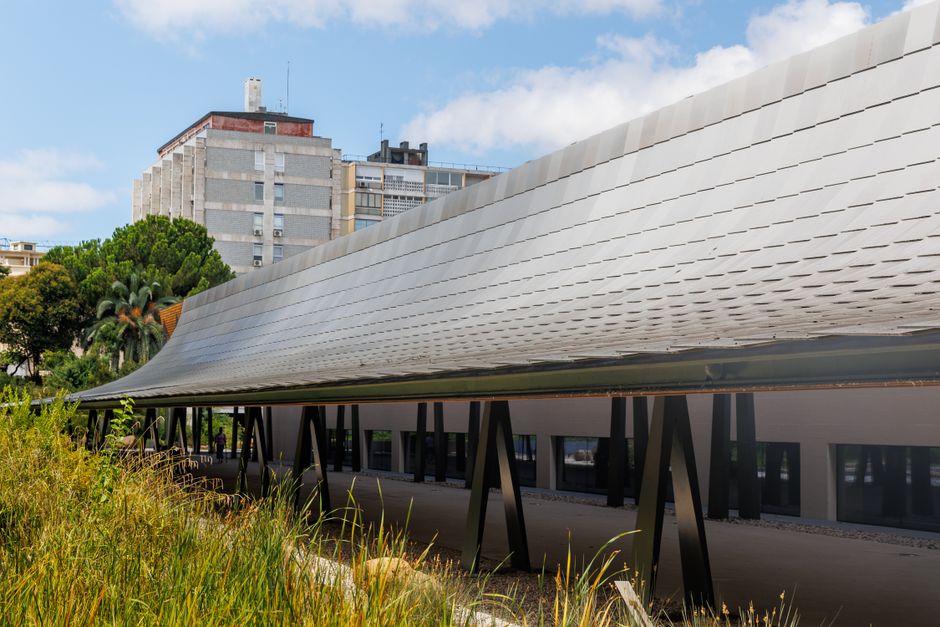
The Calouste Gulbenkian Museum is Lisbon’s great art museum: one collector’s treasures, from Egyptian antiquities and Islamic art to Rembrandt, Turner and René Lalique’s jewels, shown in a 1969 modernist building set in a free public garden. Next to it is the CAM modern art centre, reopened in 2024 under a canopy designed by Kengo Kuma. The museum ticket is €16 and includes the CAM collection. It opens 10:00–18:00 (to 21:00 on Saturdays) and closes on Tuesdays. Entry is free on Sundays from 14:00 (as of October 2026).
Right now in Calouste Gulbenkian Museum
- Wed17–24°C63–75°F1 mm rain
- Thu17–27°C63–81°FMostly clear
- Fri17–25°C63–77°FClear
Tickets and tours for Calouste Gulbenkian Museum
See all tours for Calouste Gulbenkian Museum →
From local operators, with prices and reviews; you check availability and book on Viator, our partner. We may earn a commission at no extra cost to you. How we earn money
Why it matters
Calouste Sarkis Gulbenkian (1869–1955) was an Armenian oil magnate who spent his life collecting art. He found a haven in Lisbon during the Second World War and, after his death, his collection of about six thousand pieces passed to a foundation based in the city. The foundation’s headquarters and museum were designed for the collection by architects Ruy Jervis d’Athouguia, Pedro Cid and Alberto Pessoa, after a competition in 1959–60, and opened in 1969. The complex won the Valmor architecture prize in 1975 and has been a national monument since 2010.
The building is low and calm, made of concrete and granite. Its galleries are organised around two gardens, with tall windows that let you look up from a vase or a painting to the trees outside. Around it, landscape architects Gonçalo Ribeiro Telles and António Viana Barreto laid out lawns, ponds, woods and an open-air amphitheatre.
What you’ll see
About a thousand pieces are on display, in two separate circuits.
- Eastern and Classical art: Egyptian art from the Old Kingdom to the Roman era; Greek and Roman sculpture, glass and coins (including part of the Abuqir treasure, found in Egypt in 1902); an Assyrian relief from the palace of Ashurnasirpal; art from Persia, Turkey, Syria, the Caucasus and India (12th–18th centuries); Armenian illuminated manuscripts; and Chinese porcelain and Japanese lacquer.
- European art: ivories and illuminated manuscripts, then paintings by Rubens and Rembrandt, Fragonard and Guardi, and 19th-century works by Turner, Manet, Degas, Renoir and Monet. Sculpture runs from the Middle Ages to Houdon, Carpeaux and Rodin. French 18th-century furniture, tapestries and silver have pride of place.
- René Lalique: the final room shows a large group of Lalique’s jewels and glass, a set the museum considers unique in the world.
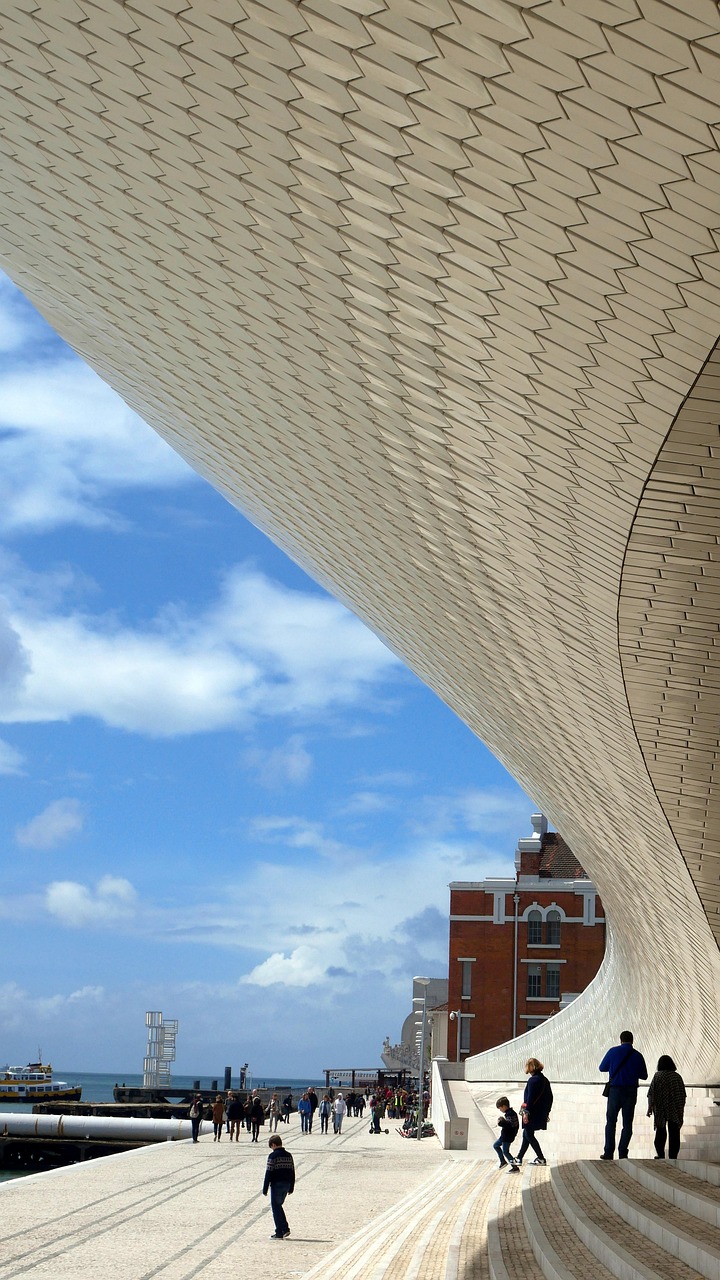
CAM (Centro de Arte Moderna), at the other end of the garden, holds the foundation’s modern and contemporary art collection and temporary exhibitions. It reopened on 20 September 2024 after a redesign by Japanese architect Kengo Kuma. Its signature is a 100-metre canopy of Portuguese ceramic tiles inspired by the Japanese engawa (a sheltered veranda), opening onto an extended garden by Vladimir Djurovic.
How to visit
From the Gulbenkian Foundation’s official site, as of October 2026:
- Hours (Museum, CAM and temporary exhibitions): 10:00–18:00, Saturdays 10:00–21:00; last entry 30 minutes before closing.
- Closed: Tuesdays, 1 January, Easter Sunday, 1 May, 24 and 25 December.
- Garden: open every day from sunrise to sunset, free.
- Tickets: Museum €16 (includes the CAM collection); All Inclusive €18 (Museum and CAM, including exhibitions); CAM €10; CAM temporary exhibitions €6. Buy online or at the ticket offices.
- Free entry: Sundays from 14:00 for everyone; under-18s always. Under-30s also get in free on Saturdays from 18:00 to 21:00.
- Discounts: 25% for under-30s, 20% with the Lisboa Card, 10% for over-65s. Discounts can’t be combined.
- Lockers: free, on the museum’s lower floor near the Foyer Bar.
How long to allow and when to go
Allow 2 hours for the museum and another 1–1½ for CAM and the garden. Weekday mornings are the quietest. The free Sunday afternoon is popular, so expect more people then. Saturday evenings, open until 21:00, are a relaxed way to see the collection. Remember the Tuesday closing; it is a good Monday choice, when the national monuments in Belém are shut.
Accessibility
The foundation says all its areas, and parts of the garden, have access and equipment for visitors with limited mobility. The main building has indoor and outdoor ramps for wheelchair access throughout, and staff can help with stairlifts and wheelchair lifts where needed. Toilets are adapted, and there are reserved parking spaces next to the lifts in the car park (entrance on Avenida de Berna). Carers of people with disabilities get in free.
Getting there
The Gulbenkian lies between São Sebastião and Praça de Espanha, north of the city centre, about 3.5 km from Baixa. The nearest Metro stations are São Sebastião (blue and red lines) and Praça de Espanha (blue line). Carris buses 716, 726 and 756 stop on Avenida de Berna, 746 on Avenida António Augusto de Aguiar, and 713 and 742 on Rua Marquês de Fronteira. There are four pedestrian entrances, on Avenida de Berna, Rua Nicolau Bettencourt, Rua Marquês de Fronteira and Rua Marquês Sá da Bandeira.
Combine it with
Spend an extra hour in the garden, by the ponds and the open-air amphitheatre. Then take the Metro back downtown for the São Jorge Castle at sunset; it is open until 21:00 through October. For a full day of art, pair the Gulbenkian with Belém’s Jerónimos Monastery (closed Mondays). See our Lisbon travel guide for more.
Gulbenkian Museum FAQ
How much does the Gulbenkian Museum cost?
€16 for the museum, including the CAM collection, or €18 for the All Inclusive ticket with exhibitions, as of October 2026. Under-18s enter free.
Is the Gulbenkian free on Sundays?
Yes, from 14:00 on Sundays entry is free for everyone. The garden is free every day.
What day is the Gulbenkian closed?
Tuesdays, plus 1 January, Easter Sunday, 1 May and 24–25 December.
What are the highlights of the collection?
The Egyptian and Islamic galleries, paintings by Rembrandt, Rubens and Turner, French 18th-century decorative arts and, at the end, the room of René Lalique jewels and glass.
Is the Gulbenkian Museum wheelchair accessible?
Yes. Ramps, stairlifts and lifts give access to all areas of the main building, toilets are adapted, and carers enter free.
How do I get to the Gulbenkian by Metro?
Take the blue or red line to São Sebastião, or the blue line to Praça de Espanha. Both are a short walk from the garden gates.