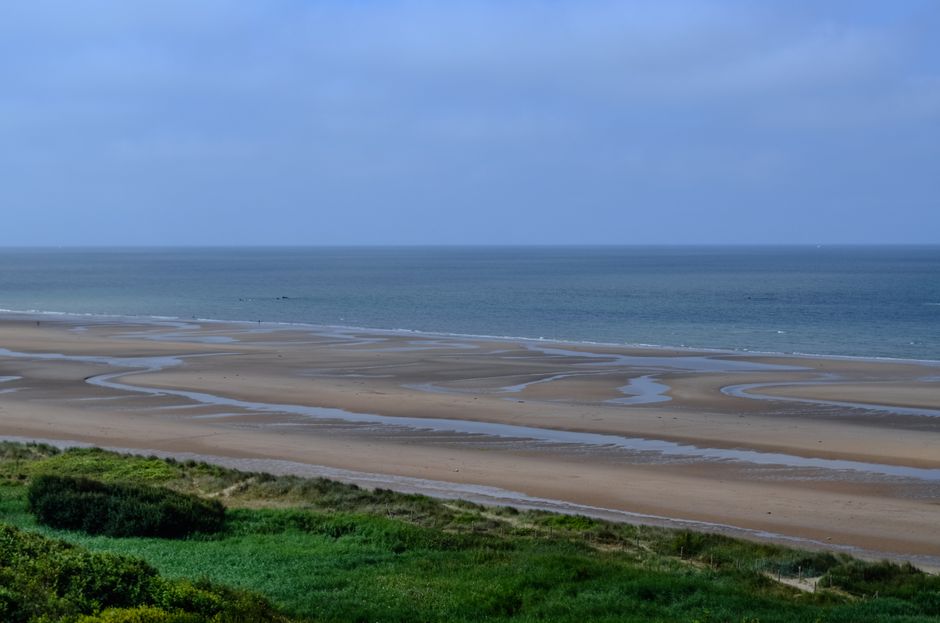
The D-Day landing beaches are the five stretches of Normandy coast where more than 150,000 Allied troops came ashore on 6 June 1944: Utah and Omaha (American), Gold and Sword (British) and Juno (Canadian). Since July 2026 they are a UNESCO World Heritage site, together with the cliffs of Pointe du Hoc. The beaches, the Normandy American Cemetery above Omaha and Pointe du Hoc are free to visit. Allow a full day for the American sector or the British and Canadian one, and two days for both, driving yourself or on a guided tour from Bayeux or Caen.
Right now in Omaha Beach
- Wed 15–18°C 59–65°F 10 mm Rain
- Thu 13–15°C 56–59°F Partly cloudy
- Fri 13–16°C 55–61°F 10 mm Rain
Weather: MET Norway (CC BY 4.0) · Rates: ECB
Tickets and tours for Omaha Beach
See all tours for Omaha Beach →
From local operators, with prices and reviews; you check availability and book on Viator, our partner. We may earn a commission at no extra cost to you. How we earn money
What it is and why it matters
D-Day opened the Battle of Normandy and the liberation of Western Europe. Soldiers from the United States, Britain, Canada and France landed by sea and by air, alongside Belgians, Dutch, Norwegians and Poles. In July 2026 UNESCO’s World Heritage Committee, meeting in Busan, inscribed “The D-Day Landing Beaches, Normandy, 1944” as a serial site of six parts: Utah, Omaha, Gold, Juno and Sword beaches and Pointe du Hoc, along about 80 km of the Calvados and Manche coast. Normandy Tourism counted more than 5.9 million visits to the region’s memorial sites in 2025.
These are places of memory and war graves. Visit quietly, keep to paths and never take objects from the beaches or bunkers. For the rest of the region, see our Normandy travel guide.
What you’ll see, beach by beach
Omaha Beach and the Normandy American Cemetery
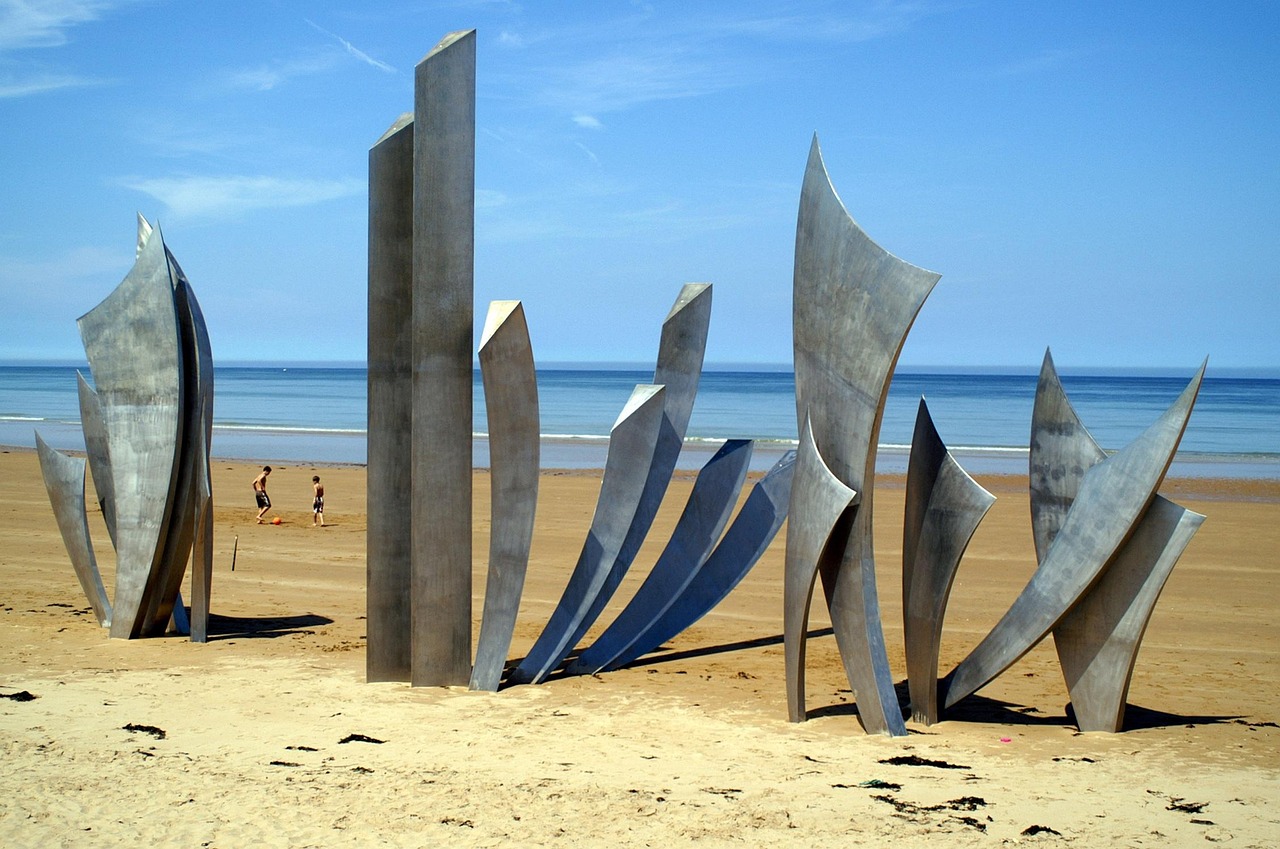
Omaha is a 7 km curve of sand between Vierville and Colleville-sur-Mer, under steep bluffs, where the Americans suffered their heaviest losses of the day. On the bluff above it, the Normandy American Cemetery, run by the American Battle Monuments Commission (ABMC), holds 9,389 graves, and 1,557 names are carved on the Walls of the Missing. There is a visitor centre, a chapel and a memorial facing the long rows of white crosses and Stars of David. The path from the cemetery down to the beach has been closed since 2016; you reach the sand from nearby car parks instead. The Overlord Museum is close to the cemetery entrance.
Pointe du Hoc
US Rangers climbed 30-metre cliffs here under fire to reach German gun positions, and the headland is still pitted with bomb craters and broken bunkers. It lies 11–13 km west of the cemetery by road and is under a major ABMC restoration until mid-2027 (see below).
Utah Beach
At the base of the Cotentin peninsula, Utah was the westernmost beach and the least costly. The Utah Beach Landing Museum stands on the dunes where the troops came ashore at Sainte-Marie-du-Mont. Inland, Sainte-Mère-Église is famous for the paratroopers who landed in the night before.
Gold, Arromanches and Longues-sur-Mer
At Arromanches, on Gold Beach, the concrete caissons of the Mulberry B artificial harbour, towed across the Channel and assembled after D-Day, still sit offshore; the clifftop viewpoint shows them best. Nearby, the Longues-sur-Mer battery keeps its original German guns.
Juno and Sword
The Juno Beach Centre at Courseulles-sur-Mer tells the Canadian story. At the eastern end, Sword Beach runs to Ouistreham, and Pegasus Bridge recalls the British airborne troops who opened the battle just after midnight.
Opening hours and prices (as of October 2026)
- Normandy American Cemetery: free, open daily 9:00–17:00 except 25 December and 1 January; last entry 30 minutes before closing. Since 28 July 2026 all grave plot areas are temporarily closed to visitors because of a drought water restriction; the visitor centre, memorial, chapel and Garden of the Missing stay open, daily guided tours continue, and relatives can ask staff for access to a grave.
- Booking from 2027: ABMC plans a pre-registration system for everyone, individuals, groups and tour operators, to be set up at the end of 2026 for visits from summer 2027. Entry will stay free.
- Pointe du Hoc: free, open daily 9:00–17:00. During the works, the visitor centre has been closed since 9 March 2026 (staff are at a welcome point by the temporary car park), part of the site’s paths and bunkers are closed, access is by the west path only, and parking is limited.
- Mémorial de Caen: the best overview museum; €20.80 for adults, €18.50 for ages 10–18 and over-65s, family pass €53, open 9:30–18:00 on most days. Allow half a day.
- Utah Beach Landing Museum: €10 for adults, €6.50 for children 6–15; open daily 10:00–18:00 from October to April and 9:30–19:00 from May to September.
- Overlord Museum (Colleville-sur-Mer): €9.90 from age 16, €7.50 reduced; in October 10:00–17:30.
- Juno Beach Centre: 9:30–18:00 in September and October; check its website for winter hours and prices.
How to visit: car or tour
The sites spread over about 80 km of coast with only thin public transport, so a car is easiest. Bayeux, a small cathedral town with a station on the Paris Saint-Lazare line, is the classic base; Caen has more hotels and the Mémorial. From Bayeux, the N13 and the D517/D514 coast road reach the cemetery and Pointe du Hoc.
A good plan for day one: Longues-sur-Mer, the American Cemetery and Omaha Beach, then Pointe du Hoc and Utah Beach. Day two: the Mémorial de Caen, Pegasus Bridge, Juno and Arromanches. Without a car, book a half-day or full-day guided tour from Bayeux or Caen; the Mémorial runs its own minibus tours. Early June, around the anniversary, brings ceremonies, crowds and road closures, so book rooms early.
Combine it with
Stay in Bayeux, whose famous tapestry is on loan to the British Museum in London until July 2027. Drive on to Mont-Saint-Michel, about two hours west, or east along the coast to Honfleur and the cliffs of Étretat. Rest days on the wide sands are in our beaches guide, and Normandy’s greenways are in our cycling guide.
D-Day beaches FAQ
Are the D-Day beaches a UNESCO World Heritage site?
Yes. In July 2026 UNESCO inscribed “The D-Day Landing Beaches, Normandy, 1944”: Utah, Omaha, Gold, Juno and Sword beaches and Pointe du Hoc, as one site.
Is it free to visit the D-Day beaches?
Yes. The beaches, the Normandy American Cemetery and Pointe du Hoc are free. You pay only for museums such as the Mémorial de Caen (€20.80 for adults, as of October 2026).
Can I walk among the graves at the American Cemetery?
Not for now. Since 28 July 2026 the plot areas are closed because of a drought water restriction. The memorial, chapel, visitor centre and Garden of the Missing are open, and relatives can ask staff for access.
Will I need to book the Normandy American Cemetery?
From summer 2027, probably yes. ABMC plans pre-registration for all visitors, set up at the end of 2026. Entry stays free, and relatives of the fallen can always visit when they choose.
How many days do I need for the D-Day beaches?
One full day covers either the American beaches or the British and Canadian ones. Two days cover both, with the Mémorial de Caen.
Can I visit the D-Day beaches without a car?
Yes, on a guided tour from Bayeux or Caen. Public buses along the coast are few, so going alone without a car is slow.
Sources and last review
Researched and last reviewed by TravelerCenter on 4 October 2026. The UNESCO inscription: Normandy Tourism; the cemetery, Pointe du Hoc works and pre-registration plan: the American Battle Monuments Commission; museum prices and hours: the Mémorial de Caen, the Utah Beach Landing Museum, the Overlord Museum and the Juno Beach Centre; the Bayeux Tapestry loan: the Bayeux Museum and the British Museum. Hours and rules change, so check the official links before you go.