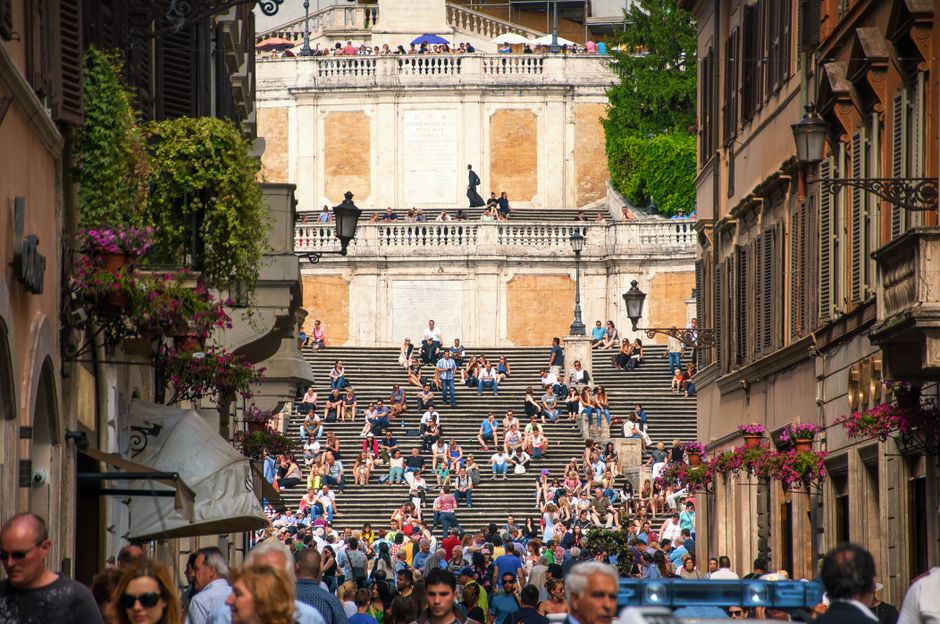
The Spanish Steps are a sweeping baroque staircase of 135 travertine steps, built in the 1720s to climb from Piazza di Spagna to the French church of Trinità dei Monti. They are free and open at all hours, with no ticket. The one rule to know: since 2019 sitting or lying on the steps has been banned under Rome’s urban police regulations, and municipal police move people on and can fine them (reported fines start at €250). Metro line A stops at Spagna, right beside them.
Right now in Spanish Steps
- Wed17–25°C62–76°FPartly cloudy
- Thu18–22°C64–71°F47 mm rain
- Fri18–22°C64–71°F1 mm rain
Tickets and tours for Spanish Steps
See all tours for Spanish Steps →
From local operators, with prices and reviews; you check availability and book on Viator, our partner. We may earn a commission at no extra cost to you. How we earn money
Why the Spanish Steps matter
For centuries a muddy slope separated the French-owned church of Trinità dei Monti on the Pincian Hill from the square below, named after the Spanish Embassy to the Holy See. A bequest from the French diplomat Étienne Gueffier paid for a monumental staircase, designed by Francesco De Sanctis and built between 1723 and 1725. Its curving flights and terraces turned the hill into a stage, and the area became the heart of the 18th- and 19th-century Grand Tour, when English travellers, poets and painters lodged in the streets around it. John Keats died in 1821 in the house at the foot of the steps, now the Keats-Shelley House museum. The luxury jeweller Bulgari paid for a full restoration that was completed in 2016.
What you’ll see
- The Barcaccia: the half-sunken “old boat” fountain at the foot of the steps, by Pietro Bernini, probably with his son Gian Lorenzo, finished around 1629. Its low design works with the weak water pressure of the Aqua Virgo, the same aqueduct that feeds the Trevi Fountain.
- The steps and the view: climb to the top for the view down Via dei Condotti across the rooftops and domes. The steps are dressed with pots of azaleas for a few weeks each spring.
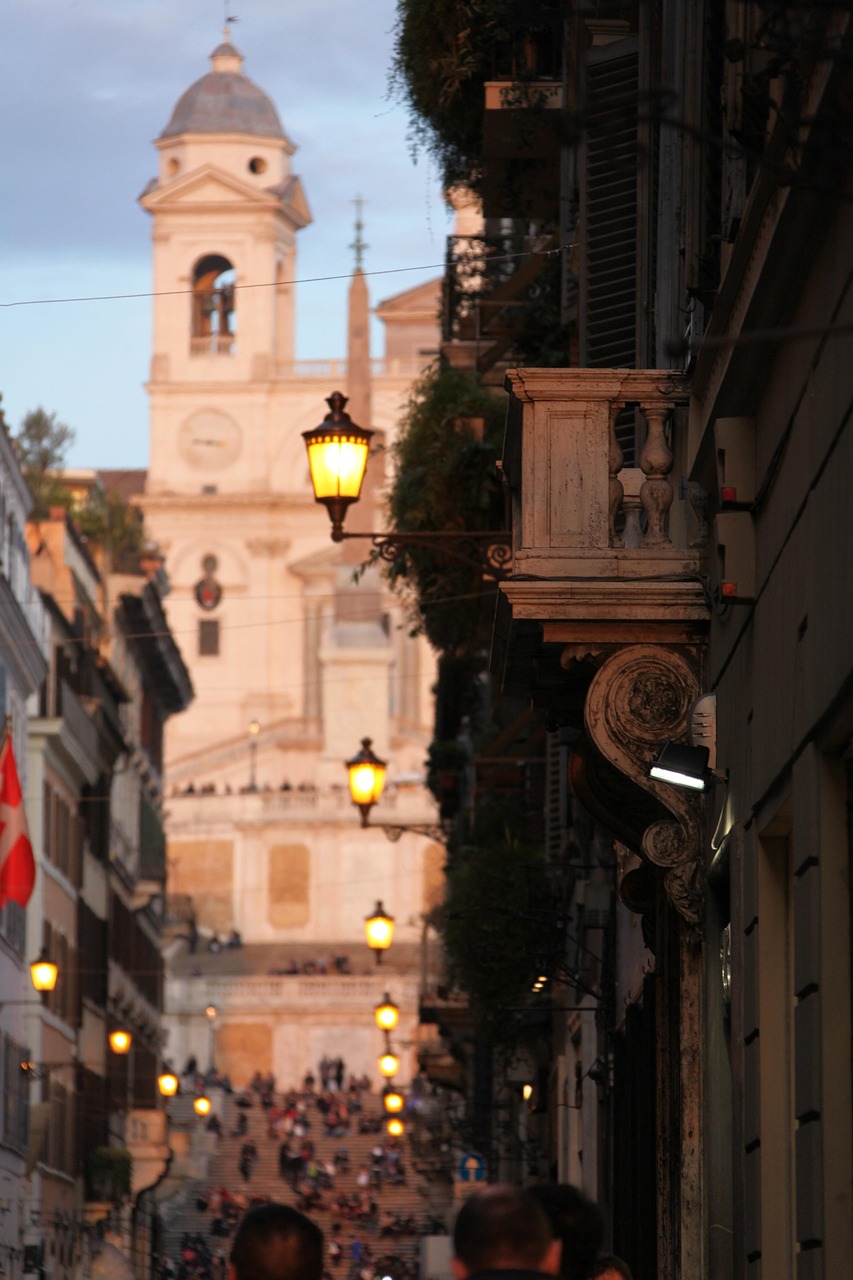
- Trinità dei Monti: the twin-towered church at the top, with an Egyptian-style Roman obelisk in front. It is a place of worship, so cover your shoulders and knees if you go in.
- The Keats-Shelley House: a small museum in the rooms where Keats spent his last months, on the right as you face the steps.
- Piazza di Spagna and Via dei Condotti: Rome’s most famous shopping street runs straight from the foot of the steps, and the Column of the Immaculate Conception stands in the southern part of the square.
Practical information
As of October 2026:
- Tickets and hours: none; the steps and the square are public spaces, open day and night. The church and the Keats-Shelley House have their own opening hours and, for the museum, a ticket.
- No sitting: sitting or lying on the steps, eating on them and dirtying them are banned under Rome’s urban police regulations, and municipal police patrol the area. Fines of €250, rising to €400 for damage or dirt, have been widely reported; an administrative court upheld the ban.
- The Barcaccia: don’t climb on the fountain or put your feet in it.
- Pickpockets and sellers: the square is crowded; keep bags zipped and ignore anyone pressing roses, bracelets or “free” gifts into your hand.
How long to allow and when to go
Twenty to thirty minutes, more if you shop or visit the Keats-Shelley House. Early morning, before about 9:00, is the only time the steps are nearly empty and the light is soft. Late afternoon and sunset are the most atmospheric, and the busiest. In spring, look out for the azaleas, and on 8 December the Pope traditionally comes to pray at the Column of the Immaculate Conception.
Accessibility
The staircase itself has no lift or ramp. To reach the top without climbing, go by road to Trinità dei Monti via Via Sistina or the Pincio, by taxi or on foot along the gentler streets from Piazza del Popolo. The square at the foot is flat and paved.
Getting there
Metro line A to Spagna, whose exit is a few steps from the square. From the Trevi Fountain it is a 10-minute walk, and from Piazza del Popolo 10 minutes along Via del Babuino.
Combine it with
From the top of the steps, walk along the terrace to the Pincio gardens for the view over Piazza del Popolo, then on through the Villa Borghese park to the Borghese Gallery, about 1.2 km away (book ahead). The Trevi Fountain is 600 metres south and the Pantheon about a kilometre. Our Rome travel guide covers the rest of the Tridente district.
Spanish Steps FAQ
Can you sit on the Spanish Steps?
No. Since 2019, sitting or lying on the steps has been banned under Rome’s urban police regulations. Municipal police patrol the area, and fines of €250 or more have been reported.
Do you have to pay to visit the Spanish Steps?
No. The steps and Piazza di Spagna are free and open day and night. Only the Keats-Shelley House museum charges admission.
How many Spanish Steps are there?
The staircase has 135 steps, climbing from Piazza di Spagna to the church of Trinità dei Monti.
Why are they called the Spanish Steps?
They are named after Piazza di Spagna at their foot, which takes its name from the Spanish Embassy to the Holy See. The steps themselves were paid for with a French diplomat’s bequest.
What is the best time to visit the Spanish Steps?
Early in the morning, before 9:00, for an almost empty staircase. Spring brings the azaleas, and sunset is beautiful but crowded.
Which metro stop is closest to the Spanish Steps?
Spagna, on metro line A, which exits right beside the square.