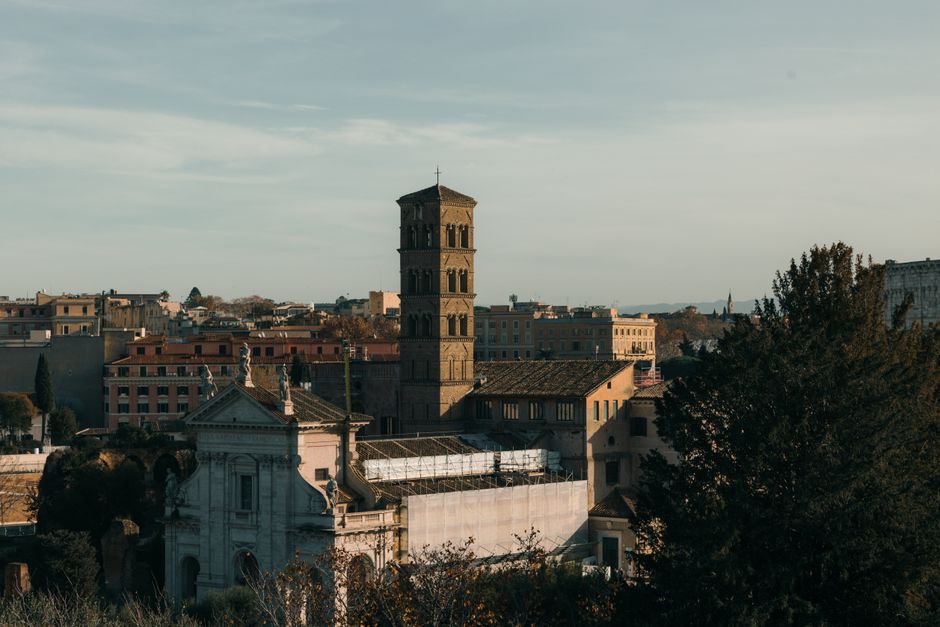
Rome is a city where you trip over history on the way to lunch. Gladiators fought in the Colosseum, emperors lived on the Palatine Hill, and the Pantheon has kept its dome for almost two thousand years; around them, baroque fountains splash in sunny piazzas, Vespas buzz down cobbled lanes, and every neighbourhood has a trattoria serving carbonara the way it should be. It is also perfect for city sightseeing on foot. Across the river, Vatican City holds Michelangelo’s Sistine Chapel and St. Peter’s Basilica. Give it three days for the highlights, four or five to add the Vatican at a gentler pace, a day trip and long evenings in Trastevere.
Right now in Rome
- Wed 18–25°C 64–76°F 1 mm Partly cloudy
- Thu 18–22°C 65–72°F 23 mm Showers
- Fri 18–22°C 64–71°F 1 mm Mostly clear
Weather: MET Norway (CC BY 4.0) · Sea temperature: NOAA CoastWatch · Rates: ECB
Top tours in Rome
See all tours for Rome →
From local operators, with prices and reviews; you check availability and book on Viator, our partner. We may earn a commission at no extra cost to you. How we earn money
Rome at a glance
- Best for: ancient history, art and churches, food, piazzas and fountains, and one of the world’s great museum days at the Vatican.
- How long: 3 days for the main sights, 4–5 with the Vatican at a relaxed pace and a day trip.
- Best time: April to June and September to October. July and August are hot; November is the wettest month; winter is mild and quiet.
- Getting in: Leonardo Express train from Fiumicino to Termini in 32 minutes for €14, or a fixed €55 taxi fare to the historic centre (as of October 2026).
- New in 2026: a €2 ticket to step down to the Trevi Fountain’s basin, and the Pantheon ticket up to €7 since 1 July 2026.
- Before you go: entry rules, money, trains and general safety are on our Italy travel guide.
Rome’s neighbourhoods and who each one suits
The historic centre is divided into 22 rioni, old districts whose names you will see on marble street plaques, such as Monti, Trastevere and Ponte. Most of what you want to see lies inside the Aurelian Walls, on both sides of a bend in the Tiber, and is walkable: from the Colosseum to the Pantheon takes about 25 minutes, and from the Pantheon to St. Peter’s about 30.
Centro Storico: Pantheon, Piazza Navona and Campo de’ Fiori
The tangle of lanes inside the river bend is Rome at its most romantic: the Pantheon, Piazza Navona’s fountains, the morning market on Campo de’ Fiori, the Jewish Ghetto with its fried artichokes, and coffee bars that have been pulling espressos for a century. Everything is on your doorstep, but rooms are small and pricey, and the streets are noisy at night.
Tridente: Spanish Steps and Piazza del Popolo
Three straight streets fanning out from Piazza del Popolo frame Rome’s smartest shopping district, with the Spanish Steps, Via Condotti’s designer boutiques and the Trevi Fountain a short walk away. Elegant and central, close to the Borghese Gallery, but expensive and quiet after the shops close.
Monti
Rome’s oldest residential quarter, between the Colosseum and Santa Maria Maggiore, now full of vintage shops, wine bars and small restaurants around the fountain on Piazza della Madonna dei Monti. Lively in the evening and close to the ancient sights and metro line B. A great base for first-timers who like a local feel.
Trastevere
“Across the Tiber”: ivy-covered houses, washing lines, the golden mosaics of Santa Maria in Trastevere and the city’s busiest street life after dark. It is the place for dinner and a drink, with quieter streets on the side towards the Gianicolo hill and its views. Charming but loud on weekend nights, and no metro.
Prati and the Vatican
Wide 19th-century avenues next to Vatican City, with good shopping on Via Cola di Rienzo, the Trionfale market and plenty of mid-range hotels. Calm, safe and handy for an early start at the Vatican Museums, and on metro line A, but less atmospheric than the centre.
Testaccio, the Aventine and Termini
Testaccio is Rome’s food neighbourhood, with a covered market, classic trattorias and offal dishes from its slaughterhouse past; the Aventine hill above is leafy and peaceful, with the famous keyhole view of St. Peter’s. Around Termini station (Esquilino) you find the cheapest beds and the best transport links, but the streets are less pleasant at night.
Top things to see in Rome
Prices and hours were checked on the official sites in October 2026; check again before you go, and book timed tickets for the Colosseum, the Vatican Museums and the Borghese Gallery, especially from April to October. Most state museums and sites are free on the first Sunday of the month, with long queues.
The Colosseum, Roman Forum and Palatine Hill
The Flavian Amphitheatre, finished in AD 80, held around 50,000 spectators for gladiator fights and animal hunts. Next to it, the Roman Forum was the heart of the ancient city, with temples, triumphal arches and the senate house, and the Palatine Hill above it holds the ruins of the emperors’ palaces and the best views over the Forum. All three are run by the Parco archeologico del Colosseo and share one ticket, sold on its official site (colosseo.it, ticketing by CoopCulture):
- 24h ticket (€18 as of October 2026): one entry to the Colosseum at a booked time and one entry to the Forum and Palatine within 24 hours.
- Full Experience tickets (about €24): valid for two consecutive days, adding the arena floor, or the underground passages (hypogeum) and the arena, plus the Forum, the Palatine and the extra “SUPER” sites such as the House of Augustus. Underground visits have few places and sell out first.
- Named tickets: all Colosseum tickets carry the visitor’s name, which is checked against your passport or ID at the entrance, so book in the exact names of your group and bring ID. Tickets are released about 30 days ahead and sell out quickly in high season; buy only on the official site or from tour operators you trust.
- Hours: the park opens at 8:30 and closes an hour after last entry, which changes with the season: until 24 October 2026 last entry is 17:30 and closing 18:30, earlier in winter. Closed on 25 December and 1 January.
- Free first Sundays: free tickets are handed out only on the day at the ticket offices, and the arena, underground and upper levels stay closed.
Start early or late in the day, when it is cooler and quieter, and allow at least half a day for all three. Since December 2025 the new Colosseo–Fori Imperiali station of metro line C, itself designed as a small museum of finds from the excavations, connects with line B right by the amphitheatre.
The Pantheon
Built under Emperor Hadrian around AD 125, the Pantheon still has the world’s largest unreinforced concrete dome, open to the sky through a 9-metre hole, the oculus. It has been a church since the 7th century and holds the tombs of Raphael and Italy’s first kings. Since 2023 visitors need a ticket: from 1 July 2026 it costs €7 (it was €5), €2 for EU visitors aged 18–25, and free for under-18s and residents of Rome. Book a time slot online in busy months; the calendar opens month by month. Entry for Mass and prayer remains free. Come early, or in the rain, to watch the drops fall through the oculus.
The Trevi Fountain
Nicola Salvi’s 18th-century masterpiece fills a small square near the Quirinal, and throwing a coin over your shoulder is meant to guarantee your return to Rome. You can always see it free from the square above. Since 2 February 2026, though, stepping down into the gated area by the basin costs €2 on Mondays and Fridays from 11:30 and on other days from 9:00, until 22:00 (last entry 21:00); outside those hours it is free. Residents of Rome and its metropolitan area, children under 6, disabled visitors with a companion, licensed guides and Roma MIC Card holders don’t pay. Buy tickets on the official site (fontanaditrevi.roma.it), at civic museums and tourist info points, or at the entrance by card only. Roma Capitale has set the fee for an experimental period until the end of 2027. For photos without crowds, go early in the morning; and remember that wading in the fountain brings a heavy fine.
Piazza Navona, the Spanish Steps and the great squares
Piazza Navona keeps the oval shape of the stadium it was built on, with Bernini’s Fountain of the Four Rivers in the middle. The Spanish Steps climb from Piazza di Spagna to the church of Trinità dei Monti; sitting on them is banned, and the city’s police enforce it. Piazza del Popolo, the Campidoglio designed by Michelangelo, and Piazza Venezia with the white Vittoriano monument (whose terrace has a lift and one of the city’s best views) complete the set.
The Borghese Gallery
A cardinal’s villa in the middle of the Villa Borghese park, holding Bernini’s breathtaking marble sculptures, including Apollo and Daphne and the Rape of Proserpina, and paintings by Caravaggio, Raphael and Titian. It is small and strictly limited: booking is compulsory for everyone, including free visitors, for two-hour time slots, and tickets often sell out weeks ahead. As of October 2026 a full ticket costs about €18 including the booking fee. It is open Tuesday to Sunday and closed on Mondays. Book only on the gallery’s official ticket site, and arrive 30 minutes early to leave bags at the cloakroom.
More classic sights
- Capitoline Museums: the world’s oldest public museum, with the bronze she-wolf and the original equestrian statue of Marcus Aurelius, and a terrace overlooking the Forum.
- Castel Sant’Angelo: Hadrian’s tomb turned papal fortress, with a rooftop café and views of St. Peter’s.
- Baths of Caracalla: vast, peaceful ruins of imperial baths, and a summer opera stage.
- Santa Maria Maggiore and San Giovanni in Laterano: two of Rome’s four papal basilicas, full of mosaics and gold.
- San Clemente: a 12th-century church on top of a 4th-century church on top of a Roman house and temple; you can walk down through all three layers.
- The Appian Way: the ancient road south of the city, lined with tombs, catacombs and umbrella pines; rent a bike on a Sunday, when much of it is car-free.
Monuments
- Colosseum
- Pantheon
- Roman Forum
- Spanish Steps
- Trevi Fountain
- Basilica of St. Paul Outside the Walls
Other sights
- Basilica of St. John Lateran
- Palatine Hill
Museums
Castles and forts
A Vatican City day: the Museums, the Sistine Chapel and St. Peter’s
Vatican City is the world’s smallest independent state, entirely surrounded by Rome. There are no border checks, but there is airport-style security at St. Peter’s and the Museums, and the same dress code applies to both: shoulders and knees covered. Plan a whole day, or at least a long morning, and don’t go on a Sunday unless it is the last one of the month.
The Vatican Museums and the Sistine Chapel
Seven kilometres of galleries collected by the popes over five centuries: classical statues such as the Laocoön, Raphael’s Rooms, the Gallery of Maps and, at the end, the Sistine Chapel, with Michelangelo’s ceiling and his Last Judgement. Photos are not allowed in the chapel, and silence is requested. As of October 2026, a full ticket costs €20 at the door or €25 online (including a €5 booking fee that lets you skip the ticket queue), with reduced tickets for children and students; under-7s go free. The Museums open Monday to Saturday from 8:00 to 20:00 (last entry 18:00) and are closed on Sundays, except the last Sunday of the month, when entry is free from 9:00 to 14:00 (last entry 12:30) and the queues are huge. They also close on some Catholic holidays. Buy only on the official site, tickets.museivaticani.va: many look-alike sites charge more. Go first thing or after about 15:00, and allow three to four hours.
St. Peter’s Basilica and Square
Bernini’s colonnade embraces St. Peter’s Square, and the basilica behind it, the largest church in the world, holds Michelangelo’s Pietà and Bernini’s bronze canopy over the altar. Entry to the basilica is free, through the security check on the right of the square; the queue is shortest early in the morning. For a small fee you can climb (or take a lift part of the way) up Michelangelo’s dome for the finest view in Rome. On Wednesdays the Pope usually holds a general audience in the square (free tickets from the Prefecture of the Papal Household), and on Sundays at noon he appears at a window for the Angelus prayer; on those mornings the basilica may open later. The Vatican Gardens and the Scavi, the excavations under the basilica where St. Peter’s tomb is believed to be, can be visited only on guided tours booked well ahead.
Rome after the Jubilee
The Catholic Church’s Jubilee Year of 2025 brought millions of pilgrims to Rome. It closed on 6 January 2026, when Pope Leo XIV shut the Holy Door of St. Peter’s; the Holy Doors of the other papal basilicas had closed a few days earlier and are walled up until the next Jubilee. The city kept the improvements made for it: a pedestrian Piazza Pia in front of Via della Conciliazione, cleaned fountains and monuments, renovated squares and the new metro stations at the Colosseum. Crowds in 2026 are back to Rome’s usual busy-but-manageable levels, though the big sights still need booking.
Activities and best months
- City sightseeingRome's official tourism site sets out a 3-day walking itinerary: Colosseum, Palatine, Roman Forum, Capitoline, Trevi Fountain, Pantheon and the Spanish Steps; then St Peter's, the Vatican Museums, Castel Sant'Angelo, Piazza Navona, the Ghetto and Trastevere; then Villa Borghese, Piazza del Popolo, Circus Maximus, the Aventine and Testaccio. · source
- CyclingThe Appian Way Regional Park has bike paths and bike rental; the Appian Way is closed to traffic on Sundays and holidays, ideal for cycling past the Tomb of Caecilia Metella, the catacombs and the Park of the Aqueducts. · source
Other things to do in Rome
Eating like a Roman
Roman cooking is simple and bold. Try the four classic pastas, carbonara, cacio e pepe, amatriciana and gricia; fried artichokes (carciofi alla giudia) in the Jewish Ghetto; supplì (fried rice balls with mozzarella) as a snack; thin, crisp Roman pizza in the evening and pizza al taglio (by the slice) at lunch; and maritozzi, cream-filled buns, for breakfast. Eat a street or two away from the big sights, where menus in ten languages and waiters touting outside are bad signs. Testaccio’s covered market, Campo de’ Fiori and the Trionfale market are good for picnic supplies. Book popular trattorias, especially for Friday and Saturday dinner.
Aperitivo, gelato and evening walks
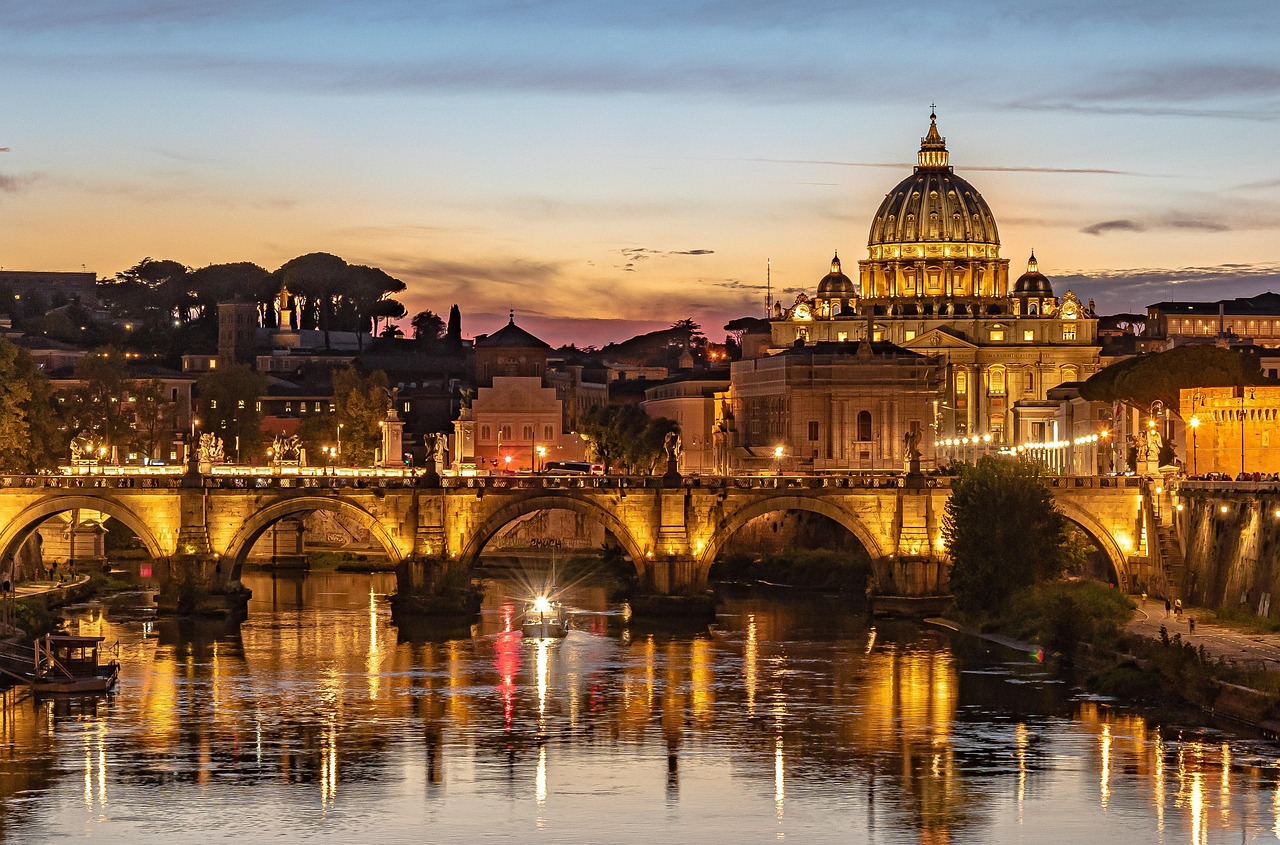
Rome is at its best in the early evening, when the light turns gold. Take an aperitivo on a piazza in Monti or Trastevere, walk across Ponte Sisto, climb the Gianicolo hill for sunset over the domes, or watch the lights come on at the Colosseum. Good gelato shops keep their pistachio a muted green, not neon, and store ice cream in covered metal tubs.
Parks, bikes and the river
Rent a rowing boat on the lake in Villa Borghese, picnic in the gardens of Villa Doria Pamphilj, or cycle the Appian Way past tombs and aqueducts. Along the Tiber, the lower riverbanks have a cycle path, and summer brings the Lungo il Tevere festival of bars and stalls; seasonal river boats also run between the Vatican area and Tiber Island.
Day trips from Rome
Ostia Antica and the beach
Rome’s ancient port is one of Italy’s best-preserved Roman towns, with streets, apartment blocks, baths, a theatre and mosaics, and far fewer crowds than Pompeii. It is about 40 minutes from Piramide on the Roma–Lido train, which takes a normal city ticket and continues to the beaches of Ostia; for cleaner sand and water, head south to Sabaudia or north to Santa Marinella. See our guide to beaches for more ideas.
Tivoli: Villa d’Este and Hadrian’s Villa
Two UNESCO sites in one day, about an hour east of Rome: the Renaissance gardens of Villa d’Este with hundreds of fountains, and the huge ruined country palace of Emperor Hadrian on the plain below. Go by regional train or Cotral bus, and use a taxi or local bus between the two villas.
Orvieto, Florence and Naples
Orvieto, a hill town on a cliff of volcanic rock with a dazzling cathedral, is about 1 hour 15 minutes away by regional train. High-speed trains reach Florence in about 1 hour 35 and Naples in about 1 hour 10, so both work as long day trips, although each deserves a night or two; from Naples, Pompeii and the Amalfi Coast are close. The Castelli Romani hill towns, with wine and porchetta in Frascati and Ariccia, are a short train ride south-east.
Nearby destinations
Getting there and getting around
From Fiumicino airport (FCO)
- Leonardo Express: the non-stop Trenitalia train to Roma Termini in 32 minutes, every 15 minutes (30 at some times), from about 5:38 to 23:27 from the airport. As of October 2026 a ticket costs €14, or €40 for four people with the “minigruppi” fare; under-4s travel free, and one child aged 4–12 travels free with each paying adult. You can tap in with a contactless card. Paper tickets are valid for 90 minutes from validation.
- Regional train FL1: slower and cheaper, stopping at Trastevere, Ostiense and Tiburtina, handy if you are staying near those stations; check the current fare on Trenitalia.
- Buses: several private coach companies run from the airport to Termini and the Vatican area for a lower fare than the train, taking 45–70 minutes depending on traffic.
- Taxi: official white taxis charge a fixed fare of €55 to anywhere inside the Aurelian Walls (the historic centre), including luggage and all supplements, as of October 2026. Take one only from the official rank at Arrivals in Terminals 1 and 3, and confirm the fixed fare before you set off; ignore drivers who approach you inside the terminal.
From Ciampino airport (CIA)
Rome’s low-cost airport has no train station of its own. Direct coaches run to Termini in about 40 minutes, or a short bus ride links it with Ciampino station for frequent regional trains to Termini. Official taxis also charge a fixed fare to the historic centre; check it at the rank.
By train
Roma Termini is the main station for Frecciarossa and Italo high-speed trains from Florence, Milan, Venice and Naples, and the hub for both metro lines A and B. Some trains also stop at Tiburtina, on metro B. Watch your bags in and around Termini.
Metro, buses, trams and passes
Rome’s metro has only three lines, because every dig hits ancient ruins: line A (Spanish Steps, Vatican via Ottaviano, Termini), line B (Termini, Colosseum, Piramide) and line C, which now reaches the Colosseum from the eastern suburbs. Buses and trams fill the gaps and are slow in traffic; many visitors simply walk. Run by ATAC, the fares as of October 2026 are:
- BIT ticket: €1.50, valid for 100 minutes on buses and trams, including one metro ride.
- Roma 24H, 48H and 72H: €8.50, €15 and €22 for unlimited travel from first validation.
- Contactless: you can tap a contactless bank card or phone at the metro gates and on validators on buses and trams instead of buying a ticket; use the same card every time.
Validate paper tickets every time you board a bus or tram, as inspectors fine passengers on the spot. The metro runs from about 5:30 to 23:30, later on Friday and Saturday nights; night buses take over after that.
Taxis and driving
Licensed taxis are white with a “TAXI” sign and a licence number on the door; find them at ranks or book through the official apps, as they don’t stop when hailed in the street. Don’t drive in Rome: the historic centre and Trastevere are ZTL restricted zones watched by cameras, parking is scarce and traffic is chaotic. If you are touring Lazio or Tuscany by car, pick it up as you leave the city.
When to go and how long to stay
Rome has a Mediterranean climate: long, hot, dry summers and mild, wetter winters. The table uses the 1981–2010 climate normals of the Italian Air Force Meteorological Service for Roma Ciampino airport: average daily highs and lows, and days with rain.
| Season | Average high / low | Rainy days per month | What it’s like | Good for |
|---|---|---|---|---|
| Winter (Dec–Feb) | 12–13 °C / 3–5 °C | 7–9 | Mild days, chilly nights, occasional rain | Museums without queues, Christmas, low prices |
| Spring (Mar–May) | 15–23 °C / 5–12 °C | 6–9 | Warm, sunny days and blossom; Easter crowds | Walking, ruins, terraces, gardens |
| Summer (Jun–Aug) | 28–31 °C / 16–19 °C | 2–4 | Hot, sunny and dry; heatwaves pass 35 °C | Early mornings, late evenings, summer festivals, beach trips |
| Autumn (Sep–Nov) | 27 °C falling to 16 °C / 16 °C falling to 8 °C | 6 in September, 10 in November | Golden September and October, wetter November | Sightseeing, food, fewer crowds |
July and August average highs above 30 °C, and recent summers have brought many days near 40 °C; sightsee early, rest in the afternoon and go out again in the evening, as Romans do. Mid-August, around Ferragosto, is quieter, with some local restaurants closed. November is the rainiest month, but even then most days have dry spells.
Events worth planning around
- Easter: the Pope’s Good Friday Way of the Cross at the Colosseum and Easter Mass in St. Peter’s Square (Easter Sunday is 28 March 2027); hotels fill early.
- 21 April: Rome’s birthday (Natale di Roma), with costumed parades around the Circus Maximus.
- June to September: outdoor opera at the Baths of Caracalla, open-air cinema and the riverside festival along the Tiber.
- 29 June: the feast of Saints Peter and Paul, the city’s patrons and a local holiday, with a flower carpet near St. Peter’s.
- October: the Rome Film Fest.
- December: the Christmas market and nativity scenes on Piazza Navona and in churches, the giant nativity in St. Peter’s Square, and midnight Mass at the Vatican.
How long to stay: 3-, 4- and 5-day plans
3 days: Day 1, the Colosseum, Roman Forum and Palatine in the morning, then Monti for lunch and the Capitoline Hill at sunset. Day 2, the Vatican Museums and Sistine Chapel early (not on a Sunday), St. Peter’s Basilica, and an evening in Trastevere. Day 3, the Pantheon, Piazza Navona, Campo de’ Fiori, the Trevi Fountain and the Spanish Steps, with the Borghese Gallery if you have a booking.
4 days: add the Appian Way by bike, the Baths of Caracalla and Testaccio’s market and trattorias. 5 days: add a day trip to Ostia Antica or Tivoli, or Orvieto by train, and slow down with long lunches.
Weather month by month
Averages from Aeronautica Militare normals 1991–2020, Rome Ciampino (airport) · Last reviewed 4 Oct 2026
Where to stay in Rome and the tourist tax
- Centro Storico (Pantheon, Navona): the most atmospheric and walkable; pricey and lively at night.
- Monti: local feel, close to the Colosseum and metro B; great for first-timers.
- Tridente (Spanish Steps): elegant, central and near the metro; expensive.
- Trastevere: charming and full of restaurants; noisy on weekends and no metro.
- Prati: calm, safe, good value and next to the Vatican; good for families.
- Termini (Esquilino): cheapest and best connected; less pleasant at night.
Rome tourist tax (contributo di soggiorno): every non-resident guest pays a nightly tax, collected by the accommodation, for up to 10 nights in a calendar year. Children under 10 and guests of official youth hostels are exempt. The rates in force in 2026, per person per night, are:
| Type of accommodation | Tax per person per night (2026) |
|---|---|
| 5-star hotel | €10 |
| 4-star hotel | €7.50 |
| 3-star hotel | €6 |
| 2-star hotel | €5 |
| 1-star hotel | €4 |
| B&B, agriturismo, aparthotel | €6 |
| Guest houses (affittacamere) and holiday rentals | €5–7 depending on category |
| Hostels | €3.50 (official youth hostels exempt) |
For a couple in a 4-star hotel that is €15 a night, often paid separately at check-out and not always included in the price shown on booking sites. Air conditioning is worth having from June to September.
Practical tips for Rome
- Book the big three: the Colosseum (named tickets, bring ID), the Vatican Museums and the Borghese Gallery, on the official sites only.
- Plan around closing days: the Vatican Museums close on Sundays (except the last of the month); the Borghese Gallery and many civic museums on Mondays.
- Dress for churches: shoulders and knees covered for St. Peter’s and most churches; carry a scarf.
- Drink from the nasoni: Rome’s cast-iron street fountains give free, cold drinking water; block the spout with a finger and drink from the hole on top.
- Watch your pockets: on metro line A, bus 64 and 40 to the Vatican, at Termini and around the Trevi Fountain and Colosseum; ignore anyone offering bracelets, roses or help at ticket machines.
- Respect the rules: no sitting on the Spanish Steps, no wading in fountains, no eating on monuments; fines are real.
- Check for strikes: ATAC transport and rail strikes are announced in advance on the official strike calendar.
What to pack for Rome
Comfortable shoes with good grip are essential: the cobbles (sampietrini) are uneven and slippery after rain, and you will walk 15 km a day without noticing. Pack a light scarf or shawl and trousers or a knee-length skirt for the Vatican and churches. In summer bring a sun hat, sunglasses, sunscreen and a refillable bottle for the nasoni; in spring and autumn a light jacket and compact umbrella; in winter a warm coat for the evenings. A cross-body bag that zips is the best defence against pickpockets, and keep a copy of your passport handy for the Colosseum’s ID check.
What to pack
- City walking shoesLisbon and Porto are steep, with polished limestone cobbles that get slippery, so grippy soles matter.
- Day packs and anti-theft bagsA small zipped or anti-theft bag makes crowded trams and viewpoints less stressful.
- Rain jacketsFrom October to April Porto and Lisbon see rain on roughly a third of days.
- Travel adapters and convertersPortugal uses Type C and F sockets at 230 V, so most visitors from outside Europe need an adapter.
- Water bottles and hydration packsRiding in the Algarve and Alentejo heat needs more water than you expect.
Rome travel FAQ
How many days do you need in Rome?
Three days covers the Colosseum and Forum, the Vatican and the historic centre. Four or five days lets you add the Borghese Gallery, the Appian Way and a day trip to Ostia Antica or Tivoli at a relaxed pace.
What is the best time to visit Rome?
April to June and September to October, when days are warm but not scorching. July and August are hot, often above 30 °C; winter is mild, quiet and cheaper, with November the wettest month.
Do you have to pay to see the Trevi Fountain?
Only to step down to the basin. Since 2 February 2026, entering the gated area next to the water costs €2 until 22:00 (from 11:30 on Mondays and Fridays, from 9:00 on other days); it is free at night and for Rome residents, children under 6, disabled visitors with a companion, licensed guides and Roma MIC Card holders. Viewing the fountain from the square is always free.
How much does the Pantheon cost?
€7 since 1 July 2026 (it was €5), €2 for EU visitors aged 18–25, and free for under-18s and Rome residents. Attending Mass is free. Book a time slot online in busy months.
How do I buy Colosseum tickets?
On the official site of the Parco archeologico del Colosseo. The basic 24-hour ticket (€18) includes the Colosseum at a set time plus the Forum and Palatine; Full Experience tickets add the arena or underground. Tickets are in the visitor’s name and checked against ID, and sell out weeks ahead in high season.
Are the Vatican Museums open on Sundays?
Only on the last Sunday of the month, when entry is free from 9:00 to 14:00 and very crowded. On other days they open Monday to Saturday from 8:00, with last entry at 18:00.
How much are Vatican Museums tickets?
As of October 2026, €20 at the ticket office or €25 online with the €5 booking fee, which lets you skip the queue. Book on tickets.museivaticani.va, the only official site.
Is St. Peter’s Basilica free?
Yes, entry to the basilica is free, through a security check in St. Peter’s Square. Climbing the dome costs a small fee. Cover your shoulders and knees, and go early to avoid the longest queue.
How do I get from Fiumicino airport to Rome?
The Leonardo Express train runs non-stop to Termini in 32 minutes for €14. Official taxis charge a fixed €55 to the historic centre inside the Aurelian Walls. Coaches are cheaper but slower in traffic.
Which metro ticket should I buy in Rome?
For a few rides, a €1.50 BIT ticket (100 minutes) or simply tap your contactless card at the gates. If you will use transport a lot, a Roma 24H (€8.50), 48H (€15) or 72H (€22) pass.
How much is the Rome tourist tax in 2026?
From €3.50 per person per night in a hostel to €10 in a 5-star hotel; €7.50 in a 4-star and €6 in a 3-star or B&B. It applies for up to 10 nights a year, and children under 10 don’t pay.
Do I need to book the Borghese Gallery?
Yes, booking is compulsory for every visitor, including those who go free, for two-hour time slots. It is closed on Mondays, and tickets often sell out weeks ahead.
Is Rome safe for tourists?
Yes. The main problem is pickpocketing on crowded buses and the metro and at busy sights. Keep bags zipped, use licensed taxis from ranks, check restaurant bills and call 112 in an emergency.
Sources
- © OpenStreetMap contributors · ODbL · fetched 4 Oct 2026
- Wikidata · CC0 · fetched 4 Oct 2026
Sources and last review
Researched and last reviewed on 3 October 2026. Climate: Italian Air Force Meteorological Service 1981–2010 normals for Roma Ciampino; Colosseum, Forum and Palatine: Parco archeologico del Colosseo; Trevi Fountain: Roma Capitale and its tourism office; Pantheon: Italy’s Ministry of Culture; Vatican Museums: museivaticani.va; Leonardo Express: Trenitalia; airport taxis: Aeroporti di Roma (ADR); transport fares: ATAC; the Jubilee: the Holy See. The tourist tax table, the Full Experience price, the Borghese Gallery price and some airport bus details come from secondary sources and are flagged for checking. Prices, hours and timetables change, so check the official links before you go. For entry rules, money and general safety, see our Italy travel guide.
Plan your trip
Partner links: TravelerCenter may earn a commission if you book, at no extra cost to you.
🇮🇹 Useful Italian phrases for Rome
All 38 Italian phrases: restaurant, hotel, emergencies, romance (printable) →