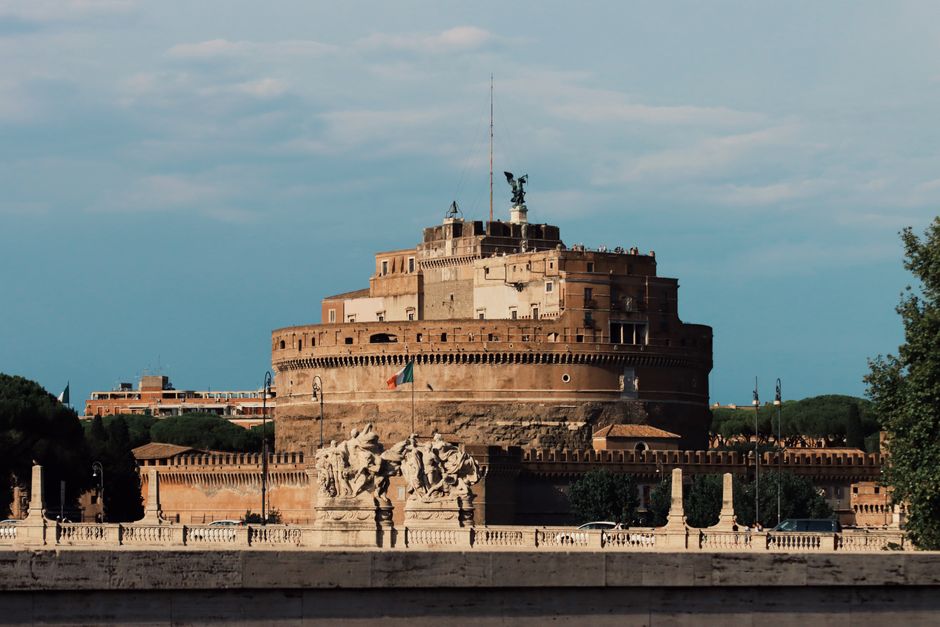
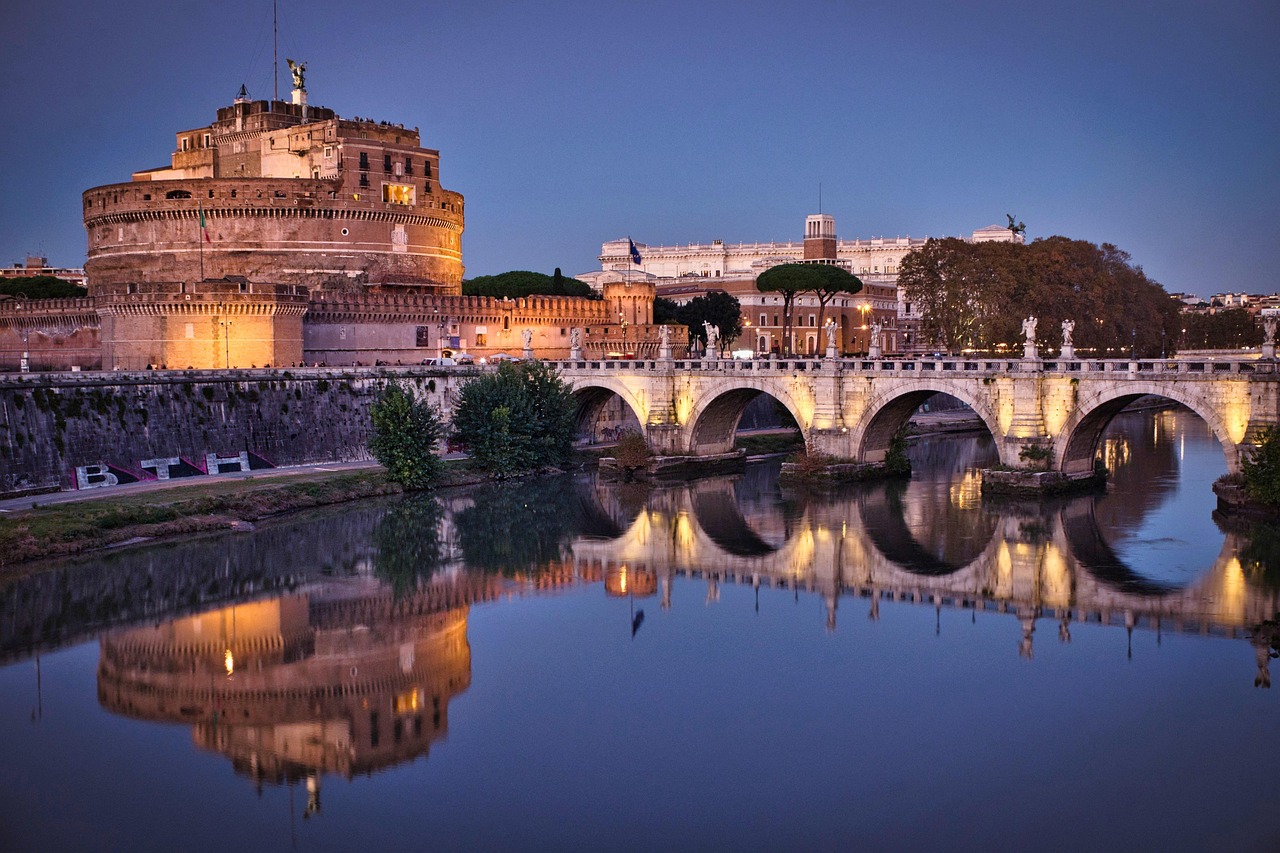
Castel Sant’Angelo is Emperor Hadrian’s tomb turned papal fortress, a massive round castle on the Tiber facing the old city across Ponte Sant’Angelo, with a rooftop terrace that has one of the best views of St. Peter’s dome. As of October 2026 a ticket costs €18 (up from €16 on 1 July 2026), €2 for EU citizens aged 18–25, and nothing for under-18s. It is open Tuesday to Sunday from 9:00 to 19:30, last entry 18:30; until December 2026 it also opens on Monday afternoons, 14:00–20:00, for €5.
Right now in Castel Sant'Angelo
- Wed17–25°C62–76°FPartly cloudy
- Thu18–22°C64–71°F47 mm rain
- Fri17–22°C63–72°F5 mm rain
Tickets and tours for Castel Sant'Angelo
See all tours for Castel Sant'Angelo →
From local operators, with prices and reviews; you check availability and book on Viator, our partner. We may earn a commission at no extra cost to you. How we earn money
Why Castel Sant’Angelo matters
Hadrian built the mausoleum for himself and his family in the 130s AD, and it was finished in 139 by his successor Antoninus Pius; emperors were buried here until the early 3rd century. Its thick drum of stone was soon pulled into the city’s defences, and through the Middle Ages it became the stronghold of the popes. According to legend, in 590 Pope Gregory the Great saw the Archangel Michael sheathing his sword on top of the tomb as a sign that a plague was over, which gave the castle its name and its crowning angel. An elevated corridor, the Passetto di Borgo, links it to the Vatican, and in 1527 Pope Clement VII fled along it to shelter here during the Sack of Rome. Later the castle was a prison and a barracks. It is the setting for the last act of Puccini’s opera Tosca, whose heroine leaps from the terrace. Today it is a national museum run by the Ministry of Culture’s Direzione Musei nazionali della città di Roma.
What you’ll see
- The Roman core: a spiral ramp climbs through the ancient mausoleum to the burial chamber where the imperial urns once stood.
- The papal apartments: Renaissance rooms with frescoes, including the Sala Paolina, decorated for Pope Paul III, along with the treasury and the library.
- The ramparts and courtyards: walk the bastions and see the Courtyard of the Angel, where the castle’s earlier marble angel now stands, and the old prison cells.
- The Terrace of the Angel: at the top, under the bronze Archangel Michael of 1753, a 360-degree view over the river, the domes of the centre and St. Peter’s.
- Ponte Sant’Angelo: the bridge in front, lined with ten angels designed by Bernini, is free and lovely at sunset.
Tickets and how to visit
Prices and hours from the Ministry of Culture’s Direzione Musei nazionali della città di Roma, as of October 2026:
- Ticket: €18 full price since 1 July 2026; €2 for EU citizens from 18 to 25; free for under-18s and visitors with a disability and a companion. Everyone goes free on the first Sunday of the month, without a reservation.
- Hours: Tuesday to Sunday, 9:00–19:30, last entry 18:30. Normally closed on Mondays, 25 December and 1 January.
- “I lunedì di Castello”: from 3 August to December 2026 the castle also opens on Mondays from 14:00 to 20:00, with a special €5 ticket (€2 reduced).
- Booking: buy online on the Ministry’s Musei Italiani website or app, by phone on +39 06 399 671 00 (Monday to Friday 9:00–18:00, Saturday 9:00–14:00) or at the ticket office. Booking isn’t compulsory but saves queuing in high season; bring ID.
- The Passetto di Borgo: the corridor towards the Vatican opens only on occasional guided tours, announced on the museum’s site.
- Bags: the museum publishes no bag-size limit, but with so many stairs and narrow passages it pays to travel light.
How long to allow and when to go
Allow one and a half to two hours to climb from the Roman ramp to the terrace. Late afternoon gives the best light on St. Peter’s from the top. Monday afternoons and weekday mornings are usually quieter than weekends.
Accessibility
The castle is a fortress built on many levels, with ramps, steep stairs and uneven floors. A lift, available on request to the right after the entrance, reaches several levels, including the Courtyard of the Angel and some historic rooms, but the final climb to the Terrace of the Angel is by narrow stairs and is not suitable for wheelchairs. Visitors with a disability and a companion enter free; call the museum on +39 06 6819111 before your visit.
Getting there
The castle is at Lungotevere Castello 50, on the Vatican side of the Tiber. The nearest metro stop is Lepanto on line A, about 15 minutes on foot; from the centre, cross Ponte Sant’Angelo from Piazza Navona (10 minutes). Bus 40 from Termini stops close by, and bus 64 runs nearby along Corso Vittorio Emanuele II.
Combine it with
St. Peter’s Square and Basilica and the Vatican Museums, in Vatican City, are about a kilometre west along Via della Conciliazione, so the castle fits well before or after a Vatican visit. In the other direction, cross the bridge to Piazza Navona and the Pantheon, about a kilometre away. Our Rome travel guide explains how to plan a Vatican day.
Castel Sant’Angelo FAQ
How much is a Castel Sant’Angelo ticket in 2026?
€18 since 1 July 2026 (it was €16). EU citizens aged 18–25 pay €2, under-18s go free, and the first Sunday of the month is free for everyone.
Is Castel Sant’Angelo open on Mondays?
Normally no, but from 3 August to December 2026 it opens on Monday afternoons from 14:00 to 20:00 with a €5 ticket, under the “I lunedì di Castello” initiative.
Do I need to book Castel Sant’Angelo?
It isn’t compulsory, but booking online on the Musei Italiani site saves queuing at weekends and in high season. On free first Sundays no reservation is needed.
Can you walk the Passetto di Borgo to the Vatican?
Only on occasional guided tours run by the museum, which are announced on its website. The corridor is not part of the normal visit.
Is Castel Sant’Angelo worth visiting?
Yes, for its mix of Roman tomb, Renaissance papal rooms and fortress, and above all for the terrace view of St. Peter’s and the city. Allow about two hours.
Is Castel Sant’Angelo wheelchair accessible?
Partly. A lift reaches several levels on request, but the terrace at the top is reached only by narrow stairs. Call the museum before your visit.