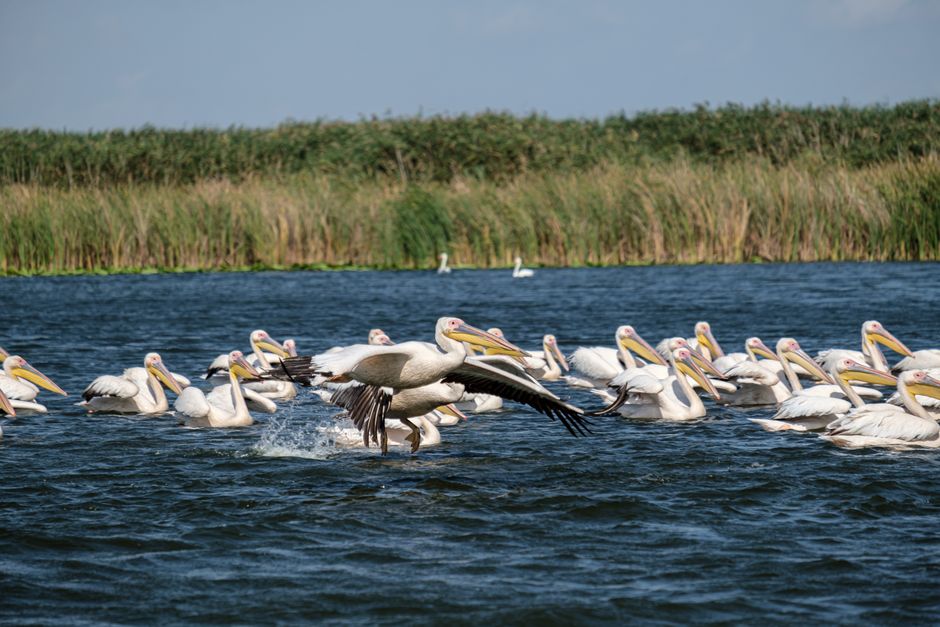
The Danube Delta is where Europe’s second-longest river reaches the Black Sea after 2,800 km, splitting into three arms and a maze of channels, lakes, reed beds, floating islands and oak forests on sand dunes. It is one of the largest wetlands in Europe and the best place on the continent to see pelicans, with more than 300 bird species recorded. Most of it lies in Romania and is protected as the Danube Delta Biosphere Reserve, a UNESCO World Heritage Site since 1991. There are almost no roads: you travel by ferry and small boat from Tulcea to fishing villages such as Crișan, Mila 23, Sulina and Sfântu Gheorghe, and you need a cheap access permit from the reserve administration. Come in May, June or September, bring mosquito repellent, and give it at least three days.
Right now in Danube Delta (Crișan)
- Wed12–22°C53–72°FPartly cloudy
- Thu14–21°C57–69°FPartly cloudy
- Fri15–22°C58–71°FMostly clear
Top tours in Danube Delta
See all tours for Danube Delta →
From local operators, with prices and reviews; you check availability and book on Viator, our partner. We may earn a commission at no extra cost to you. How we earn money
Danube Delta at a glance
- Best months: May and June for birds, water lilies and long days; September for the autumn migration, fewer mosquitoes and calm weather. July and August are hot and the mosquitoes are at their worst.
- Time needed: 1 day for a boat trip from Tulcea; 3–5 days to stay in a delta village and explore the channels.
- Getting there: Tulcea, the gateway town, is about 4 hours 30 minutes by road from Bucharest and about 2 hours from Constanța. From Tulcea, ferries and boats run into the delta.
- Access permit (as of October 2026): 5 lei a day, 15 lei for 7 days or 30 lei until the end of the year, from the reserve administration (ARBDD), online, by SMS or at its offices.
- Rules: stay on the authorised tourist routes, keep out of strictly protected areas, don’t disturb the birds or fish without a permit, and fly drones only with a permit.
How the delta works: three arms and the villages
At Tulcea, the Danube divides. The Chilia arm in the north carries most of the water and forms the border with Ukraine. The middle Sulina arm was straightened in the 19th century into a shipping canal, 71 km long, that ends at the port of Sulina. The southern Sfântu Gheorghe arm winds in great loops to the village of the same name. Between them lie thousands of channels, shallow lakes and the largest continuous reed beds in the world, with floating reed islands (plaur), willow and poplar woods, and two ancient oak forests growing on sand dunes, Letea and Caraorman. The land keeps growing into the sea with the silt the river brings down.
About 10,000 people live in the reserve, many of them Lipovans, Old Believers whose ancestors left Russia in the 18th century, along with Romanians and Ukrainians. Most villages can be reached only by water.
- Tulcea: the gateway town on the Danube, with the ferry port, hotels, the ARBDD headquarters and the Danube Delta Eco-Tourism Centre (aquarium and exhibition).
- Crișan: a village strung along the Sulina arm, the most popular base for boat trips into the channels and lakes; it has an ARBDD visitor centre.
- Mila 23: a Lipovan fishing village on the old course of the Sulina arm, reached by boat, known for its fish dishes and its world-class canoeists.
- Sulina: Europe’s easternmost town, at “kilometre zero” of the Danube, with an old lighthouse museum, the 19th-century Maritime Cemetery, the old offices of the European Danube Commission, and a long sandy beach.
- Sfântu Gheorghe: a remote village where the southern arm meets the sea, with a wild beach, fish restaurants and, usually in August, the Anonimul film festival.
- Murighiol, Uzlina and Dunavățu: on the southern edge, reached by road from Tulcea, with hotels and boat trips to the lakes of the Sfântu Gheorghe arm.
- Chilia Veche and Periprava: quieter villages on the Chilia arm, near the Letea forest.
The ARBDD access permit (as of October 2026)
Everyone who visits the reserve for tourism, including on organised boat trips, needs a tourist access permit from the Danube Delta Biosphere Reserve Administration (ARBDD). Many hotels and tour operators include it or buy it for you; ask.
| Permit | Price | Notes |
|---|---|---|
| Tourist access, 1 day | 5 lei | Per person |
| Tourist access, 7 days | 15 lei | Per person |
| Tourist access, to the end of the year | 30 lei | Per person |
| Own boat on the channels, 7 days | 20 lei | Or 100 lei to the end of the year |
| Vehicle where road access is allowed, 1 day | 10 lei | Or 100 lei to the end of the year |
| Drone under 500 g | 50 lei | Separate photo, filming and drone permits apply |
The access permit is free for pupils and students, pensioners, people with disabilities, war veterans and residents of the reserve and neighbouring communes. You can buy it online on the ARBDD permit site (permise.ddbra.ro) by card; by SMS to the short number 7494 (text TUR1, TUR7 or TURAN followed by your name, for 1 day, 7 days or the year), which may work only from Romanian mobile networks; at the 24-hour permit machine at the ARBDD headquarters in Tulcea (Strada Portului 34A); or in cash at the ARBDD information centres in Crișan, Sulina, Chilia Veche and Murighiol. Carry it, on paper or on your phone: reserve rangers and the police check boats. Fishing needs a separate permit.
Boats: Navrom ferries, fast boats and small-boat tours
Navrom Delta, the state-subsidised operator, runs the regular passenger lines from Tulcea to Sulina, Sfântu Gheorghe and Periprava, stopping at villages on the way, plus services to Mila 23 and Caraorman. On its autumn and winter timetable, which started on 1 October 2026, boats leave Tulcea for Sulina at 13:30 on Mondays, Wednesdays, Thursdays, Fridays and Saturdays and return from Sulina at 07:00 on Mondays, Tuesdays, Thursdays, Fridays and Sundays; boats for Sfântu Gheorghe leave Tulcea at 13:30 on Mondays, Wednesdays and Fridays and return at 07:00 on Tuesdays, Thursdays and Sundays. In summer there are more sailings, including fast boats. Tickets can be booked on Navrom Delta’s website; children under 7 travel free and pensioners pay half. As a guide, press reports give the 2026 adult fare from Tulcea to Sulina as about 60 lei on the classic ship and about 70 lei on the faster boat. The classic ship takes about four hours to Sulina.
To explore the narrow channels and lakes, which the big boats cannot reach, you need a small boat with a local guide. Fishermen and guesthouses in Crișan, Mila 23, Murighiol and Sfântu Gheorghe offer trips of two to eight hours; rowing boats and canoes are the quietest way to approach birds. Agree the route, the length and the price in advance, and choose operators who respect the speed limits and keep their distance from colonies.
Birdwatching through the year
The delta lies on a major migration route, and the mix of habitats draws more than 300 species. Highlights include the great white pelican and the rarer Dalmatian pelican, pygmy cormorants, glossy ibises, spoonbills, herons and egrets of many kinds, white-tailed eagles and, in winter, flocks of red-breasted geese.
- April and May: the spring migration and the start of breeding; the best time for variety, with colonies busy and pelicans back from Africa.
- June to August: pelicans feeding on the lakes, young birds in the colonies, water lilies in bloom; early mornings are best before the heat.
- September and October: the autumn migration, with waders on the coast and huge flocks of pelicans gathering before they leave.
- December to February: wintering geese and ducks, especially around the lagoons in the south; cold, with few services open.
Bring binoculars, go out at dawn, and keep at least the distance your guide suggests from nesting colonies.
Monuments
- Palace of the European Danube Commission
- Sulina Maritime Cemetery
Museums
- Sulina Old Lighthouse
Nature reserves
- Caraorman Forest
- Letea Forest
- Sacalin Island
Archaeological sites
- Histria
Mosquitoes, heat and other practicalities
Mosquitoes are part of life in the delta. They are worst from June to August, at dawn and dusk and near reeds and still water; on hot, windless evenings they can be fierce. Use a strong repellent, wear long, light-coloured sleeves and trousers in the evening, and choose a room with screens on the windows. Bring sun protection too: there is little shade on the water, and July and August days are often above 28 °C. In some villages there is no cash machine and card payments are not always possible, so take enough lei from Tulcea. Mobile coverage is good in the villages and patchy on remote channels.
Activities and best months
- Boat tripsNavrom Delta runs the passenger lines from Tulcea on all three arms of the Danube (Tulcea-Sulina, Tulcea-Sfântu Gheorghe, Tulcea-Periprava) and to Mila 23 and Caraorman, with online booking. ARBDD has approved tourist routes in the reserve, most of them by water, from Tulcea, Murighiol, Jurilovca, Chilia Veche, Crișan, Sulina and Sfântu Gheorghe (for example Tulcea - Mila 35 canal - Sireasa - Șontea - Olguța - old Danube - Mila 23 - Crișan - Maliuc - Tulcea); visitors need the ARBDD access permit.
Rules of the reserve
Large parts of the reserve are strictly protected and closed to visitors, and tourism is allowed on marked routes. Don’t land on islands or enter colonies; don’t throw rubbish in the water; camp only at authorised sites; keep noise down near birds; don’t pick water lilies; and fish only with a permit. Drones, photography for commercial use and filming need separate ARBDD permits. The Letea forest, with its wild horses, is visited only on authorised routes, usually by cart or on guided walks from C.A. Rosetti or Periprava.
Getting there and getting around
To Tulcea
From Bucharest, Tulcea is about 280 km, roughly 4 hours 30 minutes by car or by direct coach and minibus. From Constanța on the Black Sea it is about 2 hours. Trains to Tulcea are slow, with changes, so most visitors drive or take the bus. Buy a rovinieta before you drive on national roads. Tulcea’s small Danube Delta Airport has very few scheduled flights.
Into the delta
From Tulcea, take the Navrom ferry or a fast boat along the Sulina arm to Crișan or Sulina, or the Sfântu Gheorghe line; or drive to Murighiol, Uzlina and Dunavățu on the southern side. Many guesthouses meet guests at Tulcea or at the nearest pier with their own boat. Leave your car in a guarded car park in Tulcea or Murighiol.
When to go and how long to stay
The delta is the driest and sunniest part of Romania, with hot summers, mild autumns and cold, windy winters when the channels can freeze. The table uses the 1991–2020 climate normals of Romania’s National Meteorological Administration for Tulcea (at the edge of the delta) and Sulina (on the coast), from the World Meteorological Organization’s collection. Sulina gets only about 240 mm of rain a year and more than 2,300 hours of sunshine; Tulcea about 490 mm.
| Season | Average high, Tulcea | Average high, Sulina | Days with rain a month (Tulcea) | What it’s like |
|---|---|---|---|---|
| Spring (Mar–May) | 11 °C rising to 23 °C | 8 °C rising to 19 °C | 5–6 | Migration, nesting colonies; cool on the coast |
| Summer (Jun–Aug) | 28–30 °C | 24–27 °C | 4–6 | Hot and sunny; pelicans and water lilies; mosquitoes at their worst |
| Autumn (Sep–Nov) | 24 °C falling to 11 °C | 22 °C falling to 11 °C | 4–5 | Warm, settled September; autumn migration; fewer insects |
| Winter (Dec–Feb) | 4–6 °C | 4–6 °C | 5–6 | Cold, windy, sometimes frozen; wintering geese, few services |
Night-time lows in Tulcea average about −3 °C in January and 18 °C in July. Many guesthouses and boat operators open from about April to October; winter visits need planning.
Weather month by month
The delta in 2 days
Day 1: bus or drive to Tulcea, then the afternoon boat to Crișan. Day 2: a dawn boat trip through the channels and lakes towards Mila 23, and the evening in the village.
The delta in 4 days
Add a day in Sulina, with the lighthouse, the cemetery and the beach, and a day on the Sfântu Gheorghe arm or in the Letea forest, then return to Tulcea by boat. Combine with Bucharest or the Black Sea coast at Constanța.
Where to stay in the Danube Delta
- Tulcea: hotels in town, convenient for day trips and early boats, but you miss the delta at dawn and dusk.
- Crișan and Mila 23: family guesthouses with fish meals and their own boats; the best base for the channels and lakes.
- Sulina and Sfântu Gheorghe: guesthouses and small hotels near the sea; good for combining birds and beaches.
- Murighiol and Uzlina: resort hotels reachable by road, with boat trips included.
Many guesthouses offer full board, which is useful in villages with few restaurants. Book ahead for summer weekends and for the Sfântu Gheorghe film festival in August.
Practical tips for the Danube Delta
- Buy your ARBDD permit before you go out on the water, and carry it.
- Bring cash from Tulcea; some villages have no cash machine.
- Check the Navrom timetable before you travel, especially from October to April, when boats run only a few days a week.
- Go out at dawn for the birds and the cool air.
- Use repellent and long sleeves in the evening from June to August.
- Wear a life jacket on small boats, and don’t swim in the channels, where currents and boat traffic are dangerous; swim at the beaches of Sulina and Sfântu Gheorghe.
- Emergencies: call 112.
What to pack for the Danube Delta
Strong insect repellent, long light clothes for the evening, a sun hat, sunglasses and sunscreen, binoculars and a camera with a zoom, a light rain jacket or windproof for cool mornings on the water, sandals or water shoes for boats and beaches, a dry bag for your phone, and cash. A torch is useful in villages with little street lighting. Plugs are type F; see our guide to travel adapters.
What to pack
- Dry bags and phone pouchesSpray soaks phones and cameras on open boats to the Algarve caves and on whale-watching trips.
- Fleeces and warm layersIt is cooler at sea than on land, especially on morning whale-watching trips.
- Rain jacketsA windproof, waterproof shell keeps you warm on open boats, where wind and spray cool you quickly.
- Reef-friendly sunscreenSun reflects off the water on cruises and cave tours.
- Water shoesKayak and small-boat trips to the Algarve grottoes land on rock and wet sand.
Danube Delta travel FAQ
Do I need a permit to visit the Danube Delta?
Yes. Visitors need an ARBDD tourist access permit: as of October 2026, 5 lei a day, 15 lei for a week or 30 lei until the end of the year. Pupils, students, pensioners and people with disabilities get it free.
How do I buy the Danube Delta permit?
Online on the ARBDD permit site, by SMS to 7494 (possibly only from Romanian networks), at the permit machine at the ARBDD headquarters in Tulcea, or in cash at the ARBDD centres in Crișan, Sulina, Chilia Veche and Murighiol. Tour operators and hotels often arrange it.
How do I get from Tulcea to Sulina?
By Navrom Delta ferry or a fast boat along the Sulina arm. As of October 2026, ferries leave Tulcea at 13:30 five days a week (not on Tuesdays or Sundays) and take about four hours.
When is the best time to visit the Danube Delta?
May and June for birds and long days, and September for the autumn migration and fewer mosquitoes. July and August are hot and buggy; winter is cold, with few services.
Are the mosquitoes bad in the Danube Delta?
In summer, yes, especially from June to August at dawn and dusk. Use a strong repellent, cover up in the evening and choose a room with window screens.
Where is the best base in the Danube Delta?
Crișan or Mila 23 for boat trips through the channels and lakes; Sulina or Sfântu Gheorghe for the coast; Tulcea for day trips.
Where can I see pelicans in the Danube Delta?
On the larger lakes and channels around Crișan, Mila 23 and Lake Furtuna, and in the south towards Sfântu Gheorghe, mostly from April to September. Go with a local guide and keep your distance from colonies.
Can you swim in the Danube Delta?
Swim at the sea beaches of Sulina and Sfântu Gheorghe. Swimming in the channels and river arms is not recommended, because of currents and boat traffic.
How many days do you need in the Danube Delta?
At least two nights in a delta village; three to five days let you explore the channels, Sulina and the Sfântu Gheorghe arm.
Plan your trip
Partner links: TravelerCenter may earn a commission if you book, at no extra cost to you.
🇷🇴 Useful Romanian phrases for Danube Delta
All 38 Romanian phrases: restaurant, hotel, emergencies, romance (printable) →
Sources · last reviewed 4 October 2026
Researched and last reviewed on 4 October 2026. Permit prices, exemptions and contacts: the Danube Delta Biosphere Reserve Administration (ARBDD) permit site; ferry routes, discounts and online booking: Navrom Delta; the autumn and winter timetable from 1 October 2026: reported by Radio România Constanța and regional press; climate: Romania’s National Meteorological Administration 1991–2020 normals for Tulcea and Sulina in the WMO collection. The SMS and payment-point details, Navrom fares and journey times, bird seasons, village descriptions, the film festival month and road travel times come from regional media, local guides or general knowledge and are flagged for checking. Prices, timetables and rules change, so check ARBDD and Navrom Delta before you travel.
Also: navromdelta.ro · ANM normals 1991–2020, Tulcea (for the Danube Delta) (climate)
Data: Weather: MET Norway (CC BY 4.0) · Sea temperature: NOAA CoastWatch · Rates: ECB · Costs: World Bank ICP and price levels · © OpenStreetMap contributors (ODBL) · Wikidata (CC0)