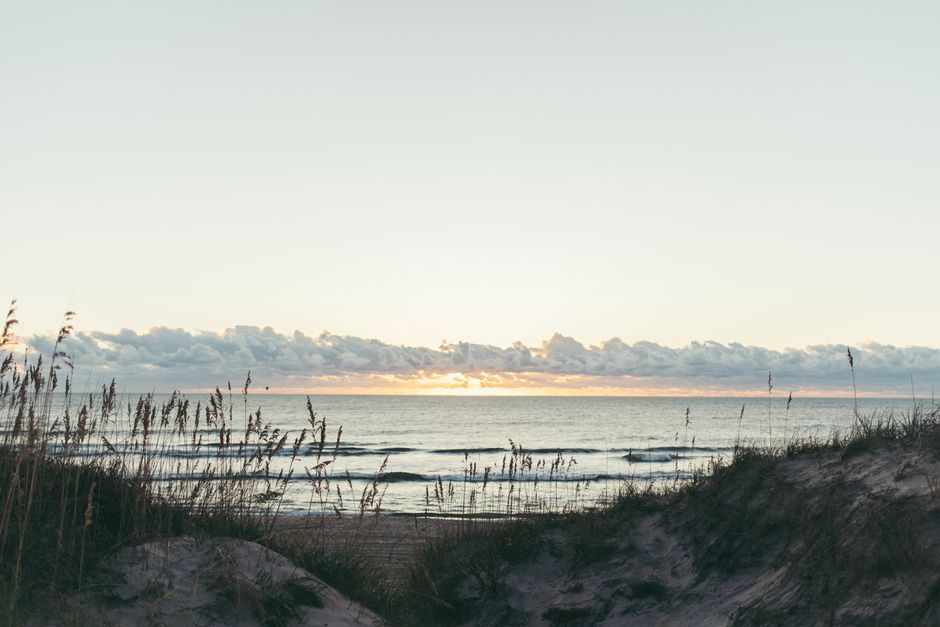
The Outer Banks are a 200-mile (320 km) chain of thin barrier islands off North Carolina, bowing out into the Atlantic between the Virginia line and Cape Lookout, with the wide Currituck, Albemarle and Pamlico sounds behind them. They hold more history and wild coast than almost anywhere on the East Coast: the dunes where the Wright brothers made the first powered flights in 1903, the site of England’s lost 1587 colony, wild horses at Corolla and Shackleford, striped and spiraled lighthouses, and the Cape Hatteras National Seashore, where long, empty beaches face the “Graveyard of the Atlantic”. Most visitors stay in beach houses in Duck, Kitty Hawk, Kill Devil Hills and Nags Head; quieter Hatteras and car-free-feeling Ocracoke lie further south along one fragile road, NC 12, and by free state ferry. Summer is the main season; spring and fall are warm, cheaper and calmer, though fall storms can cut the road.
Right now in Outer Banks (Manteo)
- Wed16–21°C60–70°FClear
- Thu16–27°C61–80°FPartly cloudy
- Fri19–23°C66–74°FCloudy
- Mon 12 Oct Columbus Day · regional holiday in North Carolina
- Mon 12 Oct Indigenous Peoples' Day · regional holiday in North Carolina
Top tours in Outer Banks
See all tours for Outer Banks →
From local operators, with prices and reviews; you check availability and book on Viator, our partner. We may earn a commission at no extra cost to you. How we earn money
Outer Banks at a glance
- Best for: beach-house holidays, lighthouses, aviation and colonial history, surfing, kiteboarding, fishing, wild horses and island hopping by ferry.
- How long: a week, the usual beach-rental stay; 3–4 days to see the northern beaches, Manteo and the Wright Brothers memorial.
- Best time: May–June and September–October; July and August for the warmest sea (highs in the mid-80s °F, around 29–30 °C) and the biggest crowds.
- Getting there: drive; the nearest major airport is Norfolk, Virginia. Bridges link the islands to the mainland at Kitty Hawk and Manteo, and state ferries serve Ocracoke.
- Getting around: a car is essential; NC 12 and US 158 run the length of the islands.
- Before you go: entry rules and ESTA, money, tipping and driving are in our United States travel guide.
The Outer Banks’ areas and who each one suits
Corolla and Duck
At the northern end, in Currituck County, Corolla is a resort area of large rental houses, the red-brick Currituck Beach Lighthouse and the Whalehead historic house. North of where the paved road ends, a four-wheel-drive beach runs through the range of Corolla’s wild Spanish mustangs. Duck, just south, is a small, upscale town with a soundside boardwalk, boutiques and good restaurants. Best for families and groups renting big houses, and anyone who wants a quieter, polished base.
Kitty Hawk, Kill Devil Hills and Nags Head
The “central beaches” are the busiest and most convenient part of the Outer Banks, with most hotels and motels, fishing piers, mini-golf, grocery stores and restaurants along the two parallel roads, the US 158 Bypass and the Beach Road (NC 12). Kill Devil Hills holds the Wright Brothers National Memorial; Nags Head has Jockey’s Ridge, the tallest living dune system on the Atlantic coast, and classic old beach cottages. Ideal for first-timers, families and short stays.
Roanoke Island and Manteo
Between the beaches and the mainland, Roanoke Island is where English colonists landed in the 1580s. The waterfront town of Manteo has inns, a boardwalk and harbor, the Roanoke Marshes Lighthouse replica and the Roanoke Island Festival Park; Fort Raleigh National Historic Site, the Elizabethan Gardens and the state aquarium are just outside town. Good for history lovers and couples who prefer a town to a beach strip.
Hatteras Island
South of Oregon Inlet, NC 12 crosses the Pea Island National Wildlife Refuge to a string of villages, Rodanthe, Waves, Salvo, Avon, Buxton, Frisco and Hatteras, set among dunes and the national seashore. This is the Outer Banks for surfers, kiteboarders, anglers and anyone who wants space: Canadian Hole near Avon is a famous windsurfing and kiting spot, Cape Point at Buxton is a legendary surf-fishing beach, and the Cape Hatteras Lighthouse rises above it all. Expect fewer services and longer drives.
Ocracoke Island
Reachable only by ferry or small plane, Ocracoke is a 16-mile (26 km) island of mostly undeveloped national seashore beach with one village around Silver Lake harbor, a squat white lighthouse, the British Cemetery and a lingering local brogue. Blackbeard the pirate was killed in a battle offshore in 1718. People get around by bike and golf cart. Perfect for a slow night or two.
Top things to see on the Outer Banks
Prices and hours below were checked on the official sites in October 2026, unless we say otherwise; check again before you go.
Wright Brothers National Memorial
On December 17, 1903, at the foot of Big Kill Devil Hill, Orville and Wilbur Wright made the first successful powered airplane flights. The National Park Service memorial has a visitor center with a full-size reproduction of the 1903 Flyer, the reconstructed camp buildings, stone markers showing the length of each flight, and a granite monument on top of the hill with sweeping views. As of October 2026 the entrance fee is $10 per person aged 16 and over (under-16s free), charged per person, not per car; an annual pass for the memorial costs $35, and America the Beautiful passes are accepted. The park is cashless: pay by card at the entrance or the fee machines in the main parking lot, or buy ahead on Recreation.gov. It opens daily from 9 a.m. to 5 p.m. and closes only on Christmas Day. Allow 2 hours, and come early in summer before the heat.
Jockey’s Ridge State Park
Jockey’s Ridge in Nags Head protects the tallest living sand dune system on the Atlantic coast, a desert-like mountain of sand that shifts with the wind. Day use is free. Walk up for the sunset, fly a kite, try sandboarding (no permit needed) or take a hang-gliding lesson from the park’s concessionaire; a soundside access area has calm, shallow water for paddling, swimming and kiteboarding on Roanoke Sound. According to NC State Parks, the main park is open from 8 a.m. to 7 p.m. in October and 8 a.m. to 6 p.m. from November to February, with the visitor center open daily from 9 a.m. to 4 p.m. The sand can be 30 °F hotter than the air in summer: wear shoes, carry water and protect dogs’ paws. The park also marks the eastern end of the Mountains-to-Sea State Trail.
Cape Hatteras Lighthouse and the other lighthouses
The black-and-white spiraled Cape Hatteras Lighthouse in Buxton, built in 1870, is the tallest brick lighthouse in the country and guards Diamond Shoals, the treacherous sandbars that earned this coast its nickname. In 1999 it was moved about half a mile (800 m) inland, on rails, to save it from the encroaching sea. It is now under a major restoration, and the NPS says it will not open for climbing in 2026; the grounds around it remain open around the clock, and a virtual climb and webcam are online. Check the park’s website for news of reopening.
The black-and-white banded Bodie Island Lighthouse, near Oregon Inlet, is open for self-guided climbs of just over 200 steps from late April to mid-October 2026. Tickets cost $10 for adults and $5 for seniors (62+), children aged 11 and under and visitors with disabilities; they are sold only on Recreation.gov, from 7 a.m. for that same day. Climbers must be at least 42 inches (107 cm) tall. The white Ocracoke Lighthouse, one of the oldest still working in the country, can be seen but not climbed. In Corolla, the unpainted brick Currituck Beach Lighthouse is run by a non-profit and opens for climbs seasonally; check its dates before you go.
Cape Hatteras National Seashore
The first national seashore in the United States protects about 70 miles (113 km) of beaches, dunes and marshes on Bodie, Hatteras and Ocracoke islands. There is no entrance fee; the NPS charges only for lighthouse climbs, campgrounds and permits to drive on the beach. Off-road vehicle (ORV) permits cost $50 for 10 consecutive days or $120 for a year as of October 2026, and some ramps and beach routes close seasonally for nesting birds and sea turtles; seasonal ORV routes reopen from October 15. Lower your tires to about 20 psi before driving on sand. The park’s campgrounds, at Oregon Inlet, Cape Point, Frisco and Ocracoke, are mostly open from spring to fall.
Fort Raleigh and the Lost Colony
On the north end of Roanoke Island, Fort Raleigh National Historic Site preserves the area of England’s first attempts at a colony in the New World, including the 1587 settlement whose more than 100 men, women and children, among them Virginia Dare, the first English child born in the Americas, had vanished by 1590. Entry is free. In summer the outdoor drama The Lost Colony, first staged in 1937, is performed in the park’s waterside theater, and the Elizabethan Gardens next door are a lovely, separate paid visit.
More to see
- North Carolina Aquarium on Roanoke Island: sharks, sea turtles and a large shipwreck tank.
- Pea Island National Wildlife Refuge: ponds and marshes full of migrating ducks, geese and shorebirds, especially in fall and winter.
- Graveyard of the Atlantic Museum, Hatteras village: shipwrecks, the Civil War and World War II U-boats off this coast.
- Fishing piers: long wooden piers at Kitty Hawk, Nags Head, Avon and Rodanthe, open to walkers for a small fee.
Other things to do on the Outer Banks
Surfing, kiteboarding and paddling
The Outer Banks stick far out into the Atlantic and catch more swell than most of the East Coast. Hatteras Island, especially around the lighthouse and Rodanthe, has the most consistent surf, best in fall when distant storms send waves; surf schools in Kitty Hawk, Nags Head and on Hatteras teach beginners in summer. The shallow, windy sounds behind the islands are world-famous for kiteboarding and windsurfing from spring to fall, and calm enough on still days for paddleboards and kayak tours through the marshes. See our surfing guide.
Wild horses
Descendants of Spanish horses brought in the 1500s still roam the beaches and dunes north of Corolla, where the paved road ends. Guided four-wheel-drive tours from Corolla are the easiest way to see them; you can also drive your own 4×4 onto the beach. Local rules require you to stay at least 50 feet (15 m) away and never feed or touch them; the Corolla Wild Horse Fund looks after the herd. Another herd lives on Shackleford Banks, reached by boat from Beaufort, North Carolina.
Fishing and seafood
Charter boats sail from Oregon Inlet and Hatteras to the Gulf Stream for tuna, mahi-mahi and billfish, and surf-casters line Cape Point in spring and fall for red drum. A North Carolina coastal recreational fishing license is needed for anglers aged 16 and over, except on piers that hold a blanket license. Eat local shrimp, soft-shell crabs in late spring, oysters in the cooler months and “Hatteras-style” clam chowder in a clear broth.
Ferries and day trips
The NCDOT ferries to Ocracoke
The North Carolina Department of Transportation (NCDOT) runs the state’s ferry system, with service every day of the year, weather permitting. Three routes reach Ocracoke:
- Hatteras–Ocracoke (vehicle ferry): free as of October 2026, no reservations, first come, first served; the crossing of Hatteras Inlet takes about an hour. NCDOT’s 2026 timetable has departures from Hatteras roughly every hour from 5 a.m. to 6 p.m., plus late-evening sailings up to midnight, from October 20 to December 31. Summer lines can be long; NCDOT publishes the most popular times so you can avoid them.
- Ocracoke Express (passenger ferry, Hatteras to Ocracoke village): $7.50 one way or $15 round trip, bikes $1, in season only; the 2026 season ran Monday to Saturday from May 5 to September 7, and service is scheduled to return in May 2027.
- Cedar Island–Ocracoke and Swan Quarter–Ocracoke: long crossings of Pamlico Sound (more than 2 hours) linking Ocracoke with the mainland, a few sailings a day; $15 one way for a vehicle under 20 feet, $10 for a motorcycle, $3 for a bicycle rider and $1 for a foot passenger. Reservations are recommended, at ncferry.org or 1-800-BY-FERRY, and must be claimed at least 30 minutes before departure.
Fares are as of October 2026; terminals take cash and cards. This will change on January 1, 2027: a 2026 state law requires NCDOT to charge tolls on all its ferry routes from that date, including the Hatteras–Ocracoke and Currituck–Knotts Island car ferries, with rates due to be set by the state Board of Transportation in November 2026, so check NCDOT’s ferry tolls page before a 2027 trip. Weather, tides and shoaling in Hatteras Inlet can delay or cancel sailings, so check NCDOT’s ferry status page or sign up for its free ferry alerts before you set out. A ferry, free until the 2027 tolls begin, also crosses Currituck Sound between Currituck and Knotts Island. Hyde County runs a free tram around Ocracoke village in season.
Virginia Beach, Norfolk and the Crystal Coast
Virginia Beach, with its boardwalk, aquarium and First Landing State Park, is about 1½–2 hours north of Kitty Hawk by car, and Norfolk’s naval base and museums are close by; see our Virginia Beach travel guide. From Ocracoke, the Cedar Island ferry leads to the “Crystal Coast”: Cape Lookout National Seashore, its diamond-patterned lighthouse and the wild horses of Shackleford Banks, reached by boat from Beaufort or Harkers Island.
Nearby destinations
- Virginia Beach150 km
Getting there and getting around
By air and by car
Most visitors drive. The nearest major airport is Norfolk International (ORF) in Virginia, about 80 miles (130 km) and 1½–2 hours from Kitty Hawk; Raleigh-Durham (RDU) is about 3½–4 hours away. Small airfields at Manteo, the First Flight Airport next to the Wright memorial, Hatteras (Billy Mitchell) and Ocracoke take private and charter planes. From the north, US 158 crosses Currituck Sound on the Wright Memorial Bridge to Kitty Hawk; from the west, US 64 crosses to Roanoke Island and Nags Head. On summer Saturdays, when thousands of weekly rentals change over, traffic backs up for hours at the bridges; arrive early in the morning or after dinner, or ask for a Sunday or midweek changeover.
NC 12, overwash and storm closures
NC 12 is the only road down Hatteras Island and onto Ocracoke, and in places it runs just behind a thin line of dunes. When storms, high tides or even strong nor’easters push the sea across the islands, the road floods with sand and water, a process called overwash, and NCDOT closes it until crews can clear it. The worst-hit spots include the Pea Island refuge north of Rodanthe, the “S-curves” at Mirlo Beach (now bypassed by the Rodanthe “Jug Handle” bridge over the sound, opened in 2022), Buxton and the north end of Ocracoke. In late September 2026 a powerful nor’easter damaged about 1,000 feet (300 m) of NC 12 near the Pea Island Visitor Center on September 24, cutting road access to Hatteras Island for several days; emergency ferries ran from Rodanthe to Stumpy Point, Dare County limited entry to residents and workers, and visitors were allowed back from October 1. NCDOT reopened the highway to two-way traffic on October 3, 2026, with periodic lane closures expected for about a week while crews rebuild the dune. Before driving south of Oregon Inlet, check DriveNC.gov and Dare County’s emergency updates, and never drive through deep water on the road.
When to go and how long to stay
The Outer Banks have hot, humid summers tempered by sea breezes, and mild, windy, often damp winters. The table uses NOAA’s 1991–2020 climate normals for the weather station at Dare County Regional Airport in Manteo on Roanoke Island: average daily highs and lows, and days with at least 0.1 inch (2.5 mm) of rain or melted snow. Cape Hatteras, further out in the ocean, is a few degrees warmer in winter and much wetter, with about 61 inches (1,555 mm) a year.
| Season | Average high / low | Wet days per month | What it’s like | Good for |
|---|---|---|---|---|
| Winter (Dec–Feb) | 51–55 °F (10–13 °C) / 36–40 °F (2–4 °C) | 6 | Cool, windy and gray at times; many businesses closed | Birding at Pea Island, empty beaches, low prices |
| Spring (Mar–May) | 59–75 °F (15–24 °C) / 43–60 °F (6–16 °C) | 5.5–6 | Warming but breezy; sea still cold until late May | Kiteboarding, fishing, lighthouses, hang gliding |
| Summer (Jun–Aug) | 82–86 °F (28–30 °C) / 69–73 °F (21–23 °C) | 6.5–7.5 | Hot and humid with afternoon storms; warm sea; very busy | Swimming, surfing lessons, family beach weeks |
| Fall (Sep–Nov) | 79 °F falling to 61 °F (26–16 °C) / 69 °F falling to 48 °F (21–9 °C) | 4.5–5.5 | Warm sea into October; hurricanes and nor’easters possible | Surfing, surf fishing, quieter beaches, lower prices |
Manteo averages about 46.5 inches (1,182 mm) of precipitation a year, wettest from June to September. The Atlantic hurricane season runs from June 1 to November 30, according to NOAA’s National Hurricane Center, with most activity from mid-August to mid-October, and the Outer Banks, jutting into the ocean, are among the most exposed places on the East Coast. Nor’easters in fall and winter can be just as damaging to roads and beaches. Dare County orders visitors to leave early when a major storm threatens, often a day or more before residents, so follow its instructions, consider trip insurance in late summer and fall, and leave plenty of time for the bridges.
Events worth planning around
- Late May to Labor Day: peak rental season, lifeguarded beaches, The Lost Colony outdoor drama and the Ocracoke Express ferry.
- Fall: surf contests, seafood and arts festivals and surf-fishing tournaments; check local listings for dates.
- December 17: the anniversary of the first flight, marked each year at the Wright Brothers National Memorial.
How long to stay: 3, 5 and 7 days
3 days: base yourself in Kill Devil Hills or Nags Head; day one, the Wright Brothers memorial and sunset on Jockey’s Ridge; day two, Manteo, Fort Raleigh and the aquarium; day three, the beach and the Bodie Island Lighthouse. 5 days: add a day trip down Hatteras Island to the Cape Hatteras Lighthouse and Cape Point, and a wild-horse tour at Corolla. 7 days: spend two nights on Hatteras Island and take the free ferry to Ocracoke for a night in the village.
Where to stay on the Outer Banks and the room taxes
- Kill Devil Hills and Nags Head: the most hotels and motels, short stays possible, close to the main sights.
- Duck and Corolla: large vacation homes for groups, often with pools; quieter, but far from Hatteras.
- Manteo: inns and B&Bs in a walkable waterfront town.
- Hatteras Island and Ocracoke: cottages, small motels and campgrounds for surfers, anglers and escapists.
Most accommodation is in weekly beach-house rentals, usually Saturday to Saturday in summer and booked many months ahead; hotels and shorter stays are easier in spring and fall. Rates are generally quoted before tax. According to the North Carolina Department of Revenue, the general sales tax in Dare County, which covers the area from Duck to Hatteras village and Roanoke Island, is 6.75% (the 4.75% state rate plus 2% local), and it applies to rooms and vacation rentals. Dare County adds an occupancy tax of 6%, which funds tourism, town services and beach nourishment: about 12.75% in total as of October 2026. Ocracoke (Hyde County) and Corolla (Currituck County) also charge 6.75% sales tax but have their own occupancy taxes. On November 3, 2026, Dare County voters decide on a quarter-cent sales tax increase for parks and recreation; if it passes, the county’s rate would rise to 7%. Rental companies often add cleaning, booking and damage-waiver fees; check the full price before you pay.
Practical tips for the Outer Banks
- Safety: rip currents are the biggest danger here and cause several drownings most summers. Swim near lifeguards, read the flags and warning signs, and if caught, swim parallel to the shore before heading in. Storms can also undermine oceanfront houses on eroding stretches such as Rodanthe and Buxton; keep away from damaged structures and debris on the beach.
- Mileposts: addresses on the northern beaches are given by milepost (MP) along US 158 and NC 12, counting south from Kitty Hawk.
- Fill up: gas stations and groceries thin out south of Nags Head; stock up before heading to Hatteras or Ocracoke.
- Bugs and sun: bring repellent for mosquitoes and biting flies on the sound side, and strong sunscreen; there is little shade on the beaches.
- Tipping: 18–22% is usual at sit-down restaurants; more in our United States travel guide.
- Emergencies: call 911.
What to pack for the Outer Banks
Pack swimwear, a sun hat, sunglasses and high-factor sunscreen, plus a windbreaker: it is almost always breezy, and evenings can be cool in spring and fall. A beach umbrella or sun shelter helps on the shadeless beaches (many rental companies deliver them), and water shoes are useful in the shell-strewn sound. Bring closed shoes for climbing Jockey’s Ridge on hot sand and for lighthouse climbs, insect repellent, a refillable water bottle, binoculars for birds and horses, and a light rain jacket for summer storms. If you rent a house, check whether linens and towels are included; many weekly rentals don’t provide them.
Outer Banks travel FAQ
Is the Hatteras–Ocracoke ferry free?
Yes, as of October 2026: the NCDOT vehicle ferry runs year-round without reservations, and the crossing takes about an hour. State law requires tolls on all ferry routes, including this one, from January 1, 2027, at rates still to be set. The Cedar Island and Swan Quarter ferries already charge $15 one way for a car.
Can you climb the Cape Hatteras Lighthouse?
Not in 2026. The NPS says the lighthouse will not open for climbing this year because of its restoration, though the grounds stay open. You can climb the Bodie Island Lighthouse from late April to mid-October for $10 per adult, with same-day tickets on Recreation.gov.
How much does it cost to visit the Wright Brothers National Memorial?
$10 per person aged 16 and over, as of October 2026; under-16s are free and America the Beautiful passes are accepted. Payment is by card only. It opens daily from 9 a.m. to 5 p.m., except Christmas Day.
Is Jockey’s Ridge State Park free?
Yes, day use is free. Hang-gliding lessons and sandboard rentals from the park’s concessionaire cost extra. Come for sunset, and wear shoes in summer, when the sand gets very hot.
Is NC 12 open to Hatteras Island?
Yes, as of October 3, 2026, after a nor’easter closed it at Pea Island from September 24; expect short lane closures while repairs finish. Storms and high tides can close it again, so check DriveNC.gov before you go.
What taxes are added to an Outer Banks rental?
In Dare County, about 12.75%: the 6.75% sales tax (4.75% state plus 2% local) and Dare County’s 6% occupancy tax, as of October 2026. Corolla and Ocracoke have their own occupancy taxes.
When is hurricane season on the Outer Banks?
From June 1 to November 30, according to NOAA, with the highest risk from mid-August to mid-October. Visitors are usually ordered to leave first when a storm threatens, so follow Dare County’s instructions.
Do I need a permit to drive on the beach?
On Cape Hatteras National Seashore, yes: an NPS off-road vehicle permit costs $50 for 10 days or $120 for a year, as of October 2026. Corolla’s 4×4 beach and the northern towns have their own rules and seasons.
When is the best time to visit the Outer Banks?
May, June, September and early October offer warm weather, lower rents and fewer crowds. July and August are best for swimming but busiest; fall brings the best surf and the highest storm risk.
Plan your trip
Partner links: TravelerCenter may earn a commission if you book, at no extra cost to you.
Sources
Researched and last reviewed on October 4, 2026. Wright Brothers National Memorial, Cape Hatteras National Seashore, its lighthouses, ORV permits and Fort Raleigh: the National Park Service; Jockey’s Ridge: North Carolina State Parks; ferries, ferry tolls, NC 12 closures and repairs: the North Carolina Department of Transportation; sales tax: the North Carolina Department of Revenue; occupancy tax, the sales tax referendum and storm entry rules: Dare County; hurricane season: NOAA’s National Hurricane Center; climate: NOAA’s 1991–2020 normals for Manteo (Dare County Regional Airport) and Cape Hatteras. Dare County’s website blocked direct reading, so its occupancy tax and re-entry dates are taken from its published summaries and flagged for checking; history, distances, wildlife rules and area descriptions are general references. Prices, rules and timetables change, so check the official sites before you go. For entry rules, money and general safety, see our United States travel guide.
Data: Weather: MET Norway (CC BY 4.0) · Sea temperature: NOAA CoastWatch · Rates: ECB · Holidays: Nager.Date · Costs: World Bank ICP and price levels · Wikidata (CC0)