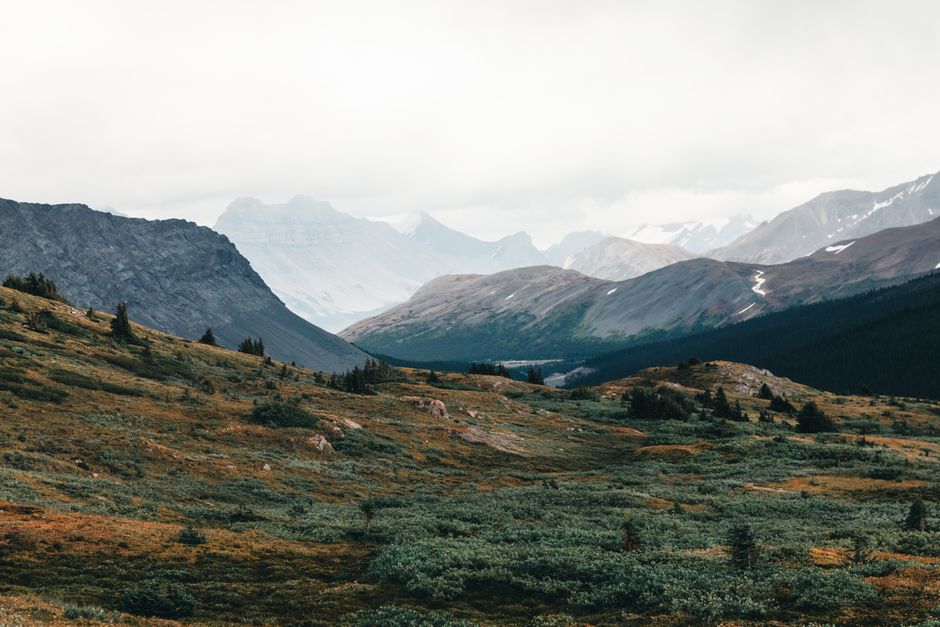
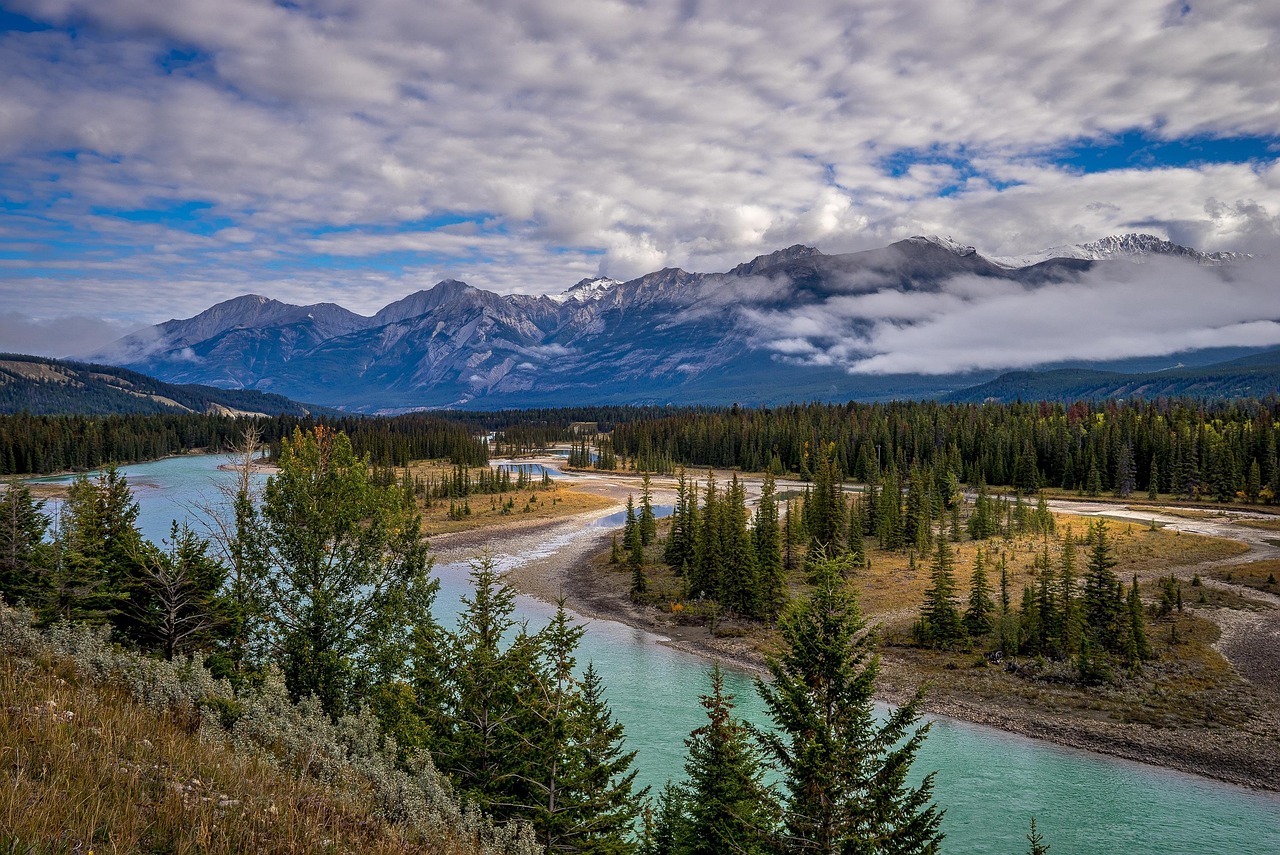
Jasper National Park is the largest national park in the Canadian Rockies, more than 11,000 km² (4,250 square miles) of glaciers, peaks, turquoise lakes and wide valleys in western Alberta, and one of the world’s largest dark-sky preserves. It is wilder and quieter than Banff to the south: elk graze beside the road, caribou and grizzly bears roam the high country, and the small town of Jasper is a friendly base with a railway station on the transcontinental line. In July 2024 a huge wildfire burned 32,722 hectares of forest and reached the town, destroying many homes and businesses. Two years on, the town is open, rebuilding and welcoming visitors, and virtually all trails have reopened, but a few famous places, Maligne Canyon and the road to Mount Edith Cavell, stay closed through 2026. This guide explains what is open now, how to plan around the recovery, and how to drive the Icefields Parkway from Lake Louise.
Right now in Jasper National Park (Jasper)
- Tue 4–15°C 38–59°F Partly cloudy
- Wed 3–15°C 37–59°F Cloudy
- Thu 7–14°C 44–57°F 7 mm Rain
- Mon 12 Oct Thanksgiving
Weather: MET Norway (CC BY 4.0) · Rates: ECB · Holidays: Nager.Date
Top tours in Jasper National Park
See all tours for Jasper National Park →
From local operators, with prices and reviews; you check availability and book on Viator, our partner. We may earn a commission at no extra cost to you. How we earn money
Jasper at a glance
- Best months: late June to September for hiking, lakes and the Columbia Icefield; late September and October for golden aspens, the elk rut and the Dark Sky Festival; December to April for skiing at Marmot Basin.
- Time needed: two days for Maligne Lake, Pyramid Lake, the SkyTram and Athabasca Falls; add a day to drive the Icefields Parkway with stops, and more for long hikes.
- Getting there: 370 km (230 miles) west of Edmonton airport on Highway 16, or 232 km (144 miles) north of Lake Louise on the Icefields Parkway; VIA Rail’s transcontinental train stops in town.
- Park fees (as of October 2026): adults $12.25 a day (about US$9), seniors $10.75, families or groups in one vehicle $24.50, under-18s free; Discovery Pass from $83.50. Prices on this page are in Canadian dollars.
- Before you go: entry rules (eTA or visa), money, taxes and driving in Canada are in our Canada travel guide.
Park passes and fees (as of October 2026)
You need a valid national park pass to stop anywhere in Jasper National Park, including the Icefields Parkway and Miette Hot Springs. Buy it online, at the park gates on Highway 16 and the Icefields Parkway, or at the Jasper Information Centre. A pass bought in Banff also covers Jasper for the same days. Free admission with the Canada Strong Pass ended on 7 September 2026, and regular fees apply again.
| Pass | Price (CAD) | Notes |
|---|---|---|
| Daily admission, adult (18–64) | $12.25 | Per person per day |
| Daily admission, senior (65+) | $10.75 | Per person per day |
| Daily admission, family/group | $24.50 | Up to seven people in one vehicle |
| Youth 17 and under | Free | Always free |
| Discovery Pass (12 months) | $83.50 adult / $71.50 senior / $167.50 family | More than 80 Parks Canada places, including Banff, Yoho and Kootenay |
| Frontcountry camping | $22–$61 a night | Plus a $13.75 fire permit to use fire pits; oTENTik tent-cabins $147.50 |
A family spending a week between Banff and Jasper pays $171.50 in daily passes, so the $167.50 family Discovery Pass (about US$121) is the better buy for trips of seven days or more. Pool entry at Miette Hot Springs is charged on top of the park pass.
The 2024 wildfire and what is open in autumn 2026
On the evening of 22 July 2024, lightning started several fires north and south of the town of Jasper after weeks of heat. An evacuation order emptied the park and town that night, and within 48 hours, driven by winds of over 100 km/h, the fire reached Jasper. The Jasper Wildfire Complex eventually covered 32,722 hectares (about 81,000 acres) and destroyed about a third of the town’s buildings, though the town centre, the railway station and most hotels survived. Recovery is well under way: debris has been cleared from 99% of affected properties, 184 building permits for 397 homes had been approved by July 2026, and on 30 June 2026 the federal government announced a further $520 million for the park’s rebuild. You will still see burned slopes, construction and temporary buildings, but shops, restaurants and accommodation are open, and visitors are an important part of the recovery.
Open
- Virtually all trails: Parks Canada says virtually all of Jasper’s trails have reopened. The Valley of the Five Lakes, Wabasso Lake and Curator trails and the rerouted Trail 9 reopened in summer 2026, and the Whistlers summit trails, Pyramid Bench, Old Fort Point, Lake Annette and Edith, Sixth Bridge and the Overlander Trail are open.
- Maligne Lake and Maligne Lake Road, Medicine Lake, Pyramid and Patricia lakes, Athabasca Falls, Sunwapta Falls and the Columbia Icefield along the Icefields Parkway.
- The town: the Jasper Information Centre (9 a.m. to 5 p.m. from 1 October 2026 to 31 March 2027; closed 25 December), the aquatic centre, library and public washrooms.
- Camping: all backcountry campgrounds, and in the frontcountry Whistlers, Wapiti (loops AA to H only) and the Icefield campgrounds; about 77% of the pre-fire frontcountry sites are available in 2026.
Closed or restricted
- Maligne Canyon: trails and land from the First Bridge parking lot to the Fifth Bridge junction are closed for all of 2026, including the popular winter ice walks, while engineers study the unstable, burned slopes. There is no reopening date. You can still walk from the Fifth and Sixth Bridge trailheads.
- Edith Cavell Road and trails (Path of the Glacier, Cavell Meadows): closed in 2026; slope stabilization is planned from autumn 2026 to spring 2027, and the opening date will be set afterwards. The road also has a normal winter closure from 1 November to 15 May for caribou.
- Campgrounds: Wabasso, Whirlpool Group and part of Wapiti remain closed for rebuilding; several others close for the season in autumn.
- Other closures: the Palisades Centre; off-trail areas inside the burn; Trail 9c and parts of Trail 7 and 5b. The Opal Hills area closed on 25 September 2026 because of a female grizzly with two cubs, and the Skyline Trail cannot be hiked end to end while the Evelyn Creek bridge is closed.
- Highway 93A: from mid-October to early November 2026, roadwork means 93A is reached from the south end only, with no through traffic; slope repairs at “Mile 5 Hill” continue through the 2026–27 ski season with single-lane alternating traffic.
Closures change often. Check Parks Canada’s interactive “What’s open” map and the park’s bulletins the week you travel, and ask at the Information Centre at 500 Connaught Drive.
The Icefields Parkway between Jasper and Lake Louise
The Icefields Parkway (Highway 93 North) links Jasper with Lake Louise in Banff National Park over 232 km (144 miles) of glaciers, waterfalls and lakes, climbing steep grades of 8–11% near Sunwapta Pass and Bow Lake. From the Jasper end, highlights include Athabasca Falls (30 km), Sunwapta Falls (54 km), the Columbia Icefield and Athabasca Glacier (103 km), then Peyto and Bow lakes in Banff. Allow at least four hours one way without stops, and a full day with them. Services run only from early May to mid-October; fuel up in Jasper, because the only gas station, at Saskatchewan River Crossing, is summer-only. There is no cell coverage, apart from limited coverage at the Columbia Icefield from May to early October.
In winter (early November to mid-June on the parkway) there are no services at all between Jasper and Lake Louise. Snow tires (snowflake or “M+S”) or chains are mandatory from 1 November to 31 March and whenever the road is snowy or icy, plowing happens only from 7 a.m. to 3:30 p.m., and the road closes for storms and avalanche control; never stop in the 38 signed avalanche zones. Check 511 Alberta (511alberta.ca or dial 511) before you go, drive in daylight, and carry warm clothes, food and water. In British Columbia, just west on Highway 16 at Mount Robson, winter tires or chains are required from 1 October to 30 April.
Safety: wildlife, wildfire and cold
- Elk: the rut lasts until mid-October, and bull elk are aggressive, even in town. Stay at least 30 m (100 ft) away and never get between a male and the females. Report encounters to Jasper Dispatch on 780-852-6155.
- Bears: black bears were frequenting the townsite in September 2026, and grizzlies close trails such as Opal Hills. Keep 100 m (330 ft) away, carry bear spray, make noise on trails and store all food in your vehicle or bear lockers.
- Wildfire and smoke: wildfires are natural here, and smoke can drift in from fires across Western Canada in summer. Check the current fire danger and any fire ban before lighting a campfire, and report smoke to Parks Canada Dispatch at 780-852-6155 or 911. Burned areas carry extra hazards (falling trees, landslides and debris flows), which is why off-trail areas in the burn stay closed.
- Cold: winter lows average −14 °C (7 °F) in town and colder spells are common; dress in layers and watch for ice on paths.
- Drones are prohibited in the park; fines reach $25,000.
Top things to see in Jasper
Maligne Lake and Spirit Island
Maligne Lake, 48 km (30 miles) southeast of town at the end of Maligne Lake Road, is the park’s largest natural lake, ringed by glaciated peaks. Boat cruises run in summer to Spirit Island, a tiny tree-covered islet that is one of the most photographed views in Canada; you can also rent a canoe or kayak and walk the lakeshore trails. On the way you pass Medicine Lake, which drains through underground caves and nearly empties every autumn. Watch for moose, caribou and bears along the road.
The Columbia Icefield and Athabasca Glacier
About 103 km (64 miles) south of town at Sunwapta Pass, the Athabasca Glacier spills from the Columbia Icefield almost to the highway. A short trail climbs to the toe of the glacier, with markers showing how far it has retreated; never walk onto the ice without a guide, as hidden crevasses are deadly. The private Columbia Icefield Adventure, with all-terrain Ice Explorer buses onto the glacier and the glass-floored Skywalk, runs until 12 October in 2026; its Ice Odyssey tours have closed for the rest of the 2026 season. The Parks Canada information desk at the Icefield Centre is closed for the season.
Jasper SkyTram and the Whistlers
Canada’s longest and highest guided aerial tramway climbs Whistlers Mountain just south of town, with views over the Athabasca valley, the town and, on clear days, Mount Robson. In 2026 the SkyTram runs until 25 October; from the upper station a steep trail continues to the summit at 2,464 m (8,084 ft). You can also hike all the way up on the reopened Whistlers trail.
Athabasca and Sunwapta Falls
Athabasca Falls, 30 km (19 miles) south of town, is not tall but powerful: the whole Athabasca River squeezes through a quartzite gorge, with walkways and viewpoints over the spray. Sunwapta Falls, farther south, drops into a narrow limestone canyon. Both are short walks from their parking lots and open all year (paths can be icy in winter).
Pyramid Lake, Patricia Lake and the lakes near town
Just above town, Pyramid Lake reflects the rusty-red Pyramid Mountain; a footbridge leads to tiny Pyramid Island. Lake Annette and Lake Edith, east of town, have sandy shores and an accessible paved loop, and Valley of the Five Lakes, reopened in 2026 with a new trail section, links five small lakes in shades of green and blue. Miette Hot Springs, 61 km (38 miles) northeast near the park’s east gate, has the hottest springs in the Rockies, cooled from 54 °C to about 40 °C for the pools; its last day in 2026 is 12 October, and it reopens in May 2027.
Dark skies and the northern lights
Jasper is the second largest dark-sky preserve in the world, and October is Dark-Sky Month: Tourism Jasper’s two-week Dark Sky Festival brings astronomy talks, star parties and concerts (events in 2026 run through 24 October). The northern lights appear on some clear, dark nights from late August to April, best seen from open spots such as Pyramid Lake, Lake Annette or Jasper Lake. The Jasper Planetarium runs telescope evenings in town.
Nature
- Athabasca Falls
- Athabasca Glacier
- Columbia Icefield
- Maligne Lake
- Pyramid Lake
- Sunwapta Falls
Peaks and mountains
- Mount Edith Cavell
Other things to do in Jasper
Activities and best months
- Hiking: from short walks around Lake Annette and the Valley of the Five Lakes to Sulphur Skyline above Miette, Wilcox Pass on the Icefields Parkway (one of the best short alpine hikes in the Rockies) and multi-day trips in the Tonquin Valley (via Portal Creek; the Astoria River access is closed).
- Skiing: Marmot Basin, 19 km (12 miles) south of town via Highway 93A, usually opens in November and runs into early May; some 93A roadwork continues through the 2026–27 season with alternating single-lane traffic.
- Wildlife watching: drive Maligne Lake Road or Highway 16 at dawn or dusk for elk, deer, bighorn sheep, mountain goats, moose and bears; always stay in your vehicle and pull fully off the road.
- Paddling and rafting: canoe Maligne, Pyramid or Patricia lakes, or raft the Athabasca River in summer; watercraft need an aquatic invasive species permit, and some rivers have restrictions.
- Learn about the fire: Tourism Jasper and local guides offer walks through burned forest, showing how the landscape regrows; it is a moving way to understand the recovery.
- Winter: snowshoeing, cross-country skiing at the Whirlpool hub, skating on Lake Mildred or Pyramid Lake when safe, and stargazing. Maligne Canyon’s ice walks are not running while the canyon is closed.
Getting there
By road: Jasper is 370 km (230 miles) west of Edmonton, about four hours on the Yellowhead Highway (Highway 16), 404 km (251 miles) northwest of Calgary via the Icefields Parkway, and 805 km (500 miles) northeast of Vancouver. The speed limit in the park is 90 km/h (56 mph) at most, lower in wildlife zones. Car rental is available in Jasper and at the airports.
By air: the nearest major airports are Edmonton (YEG), Calgary (YYC) and Vancouver (YVR). By bus: SunDog Transportation and Tours runs a daily connector between Edmonton and Jasper, and Brewster Express runs coaches between Banff and Jasper along the Icefields Parkway.
By train: VIA Rail’s Canadian, the transcontinental train between Toronto and Vancouver (4,406 km, four nights), stops at Jasper’s heritage station, with Economy, Sleeper Plus and Prestige classes. It runs only a few times a week, so plan around its timetable; VIA’s Jasper–Prince Rupert train heads west to the Pacific coast through northern British Columbia. Our Canada travel guide covers VIA Rail tickets and passes.
Around Jasper
Mount Robson Provincial Park, 85 km (53 miles) west in British Columbia, has the highest peak in the Canadian Rockies (3,954 m) and the Berg Lake Trail. Banff National Park lies at the far end of the Icefields Parkway. Hinton, just outside the east gate, has cheaper motels and services. See our Banff National Park guide for Lake Louise and Moraine Lake.
Nearby destinations
- Banff National Park243 km
When to go and how long to stay
Summer is short and busy, with over a million visitors in a few months; July and August are warm and long-lit, with occasional storms and smoke. September and early October bring golden aspens, bugling elk and quieter roads, though many seasonal businesses, the Columbia Icefield tours and Miette Hot Springs close around Canadian Thanksgiving (12 October in 2026). Winter is cold, snowy and peaceful, with skiing at Marmot Basin and dark, starry nights; spring (April to June) is muddy and changeable, and high trails stay snowy until July.
| Season | Average high | Average low | What it’s like |
|---|---|---|---|
| Spring (Mar–May) | 5–17 °C (40–62 °F) | −9 to 1 °C (17–33 °F) | Snow melting in the valley; lakes thaw in May and June. |
| Summer (Jun–Aug) | 20–24 °C (69–75 °F) | 5–7 °C (41–45 °F) | Peak season; June and July are the wettest months. |
| Autumn (Sep–Nov) | 18 °C falling to 2 °C (65 to 35 °F) | 3 to −8 °C (36–17 °F) | Golden aspens, elk rut, first snow. |
| Winter (Dec–Feb) | −3 to 1 °C (26–33 °F) | −13 to −14 °C (6–9 °F) | Cold and dry; ski season; cold snaps below −25 °C. |
Figures are averages for 1996–2025 calculated from Environment and Climate Change Canada’s daily records at the Jasper Warden station (1,020 m), which records about 360 mm (14 in) of rain and melted snow a year, less than Banff. The Columbia Icefield, 800 m higher, is much colder and snowier.
Jasper in two days
Day one: Maligne Lake Road with stops at Medicine Lake, then a cruise or paddle on Maligne Lake; Pyramid Lake at sunset. Day two: the SkyTram (until late October) or a Whistlers hike, Valley of the Five Lakes and an evening stargazing at Lake Annette.
Three to five days
Add a full day down the Icefields Parkway to Athabasca and Sunwapta falls, the Athabasca Glacier and Wilcox Pass, continuing to Lake Louise and Banff if you are travelling one way. Add Miette Hot Springs and Sulphur Skyline (May to mid-October) or a day trip to Mount Robson.
Where to stay near Jasper and the taxes on your bill
- Town of Jasper: hotels, motels, B&Bs and private home accommodations, walkable to restaurants and the station; capacity is lower than before the fire, so book early for summer.
- Lodges and cabins: the Fairmont Jasper Park Lodge on Lac Beauvert, Pyramid Lake and cabin resorts along the Athabasca and Maligne rivers.
- Icefields Parkway: rustic Hostelling International wilderness hostels and a hotel at the Columbia Icefield, mostly summer only.
- Hinton: outside the park, about an hour east, with cheaper chain motels.
- Camping: Whistlers and Wapiti near town and the Icefield campgrounds; reserve through the Parks Canada Reservation Service.
Taxes: Alberta has no provincial sales tax, so shops and restaurants add only the 5% GST. Accommodation also carries Alberta’s tourism levy of 6% on stays booked from 1 April 2026 (4% before), and some properties add their own fees.
Practical tips for Jasper
- Time zone: Mountain Time, like Banff and Calgary (Mount Robson, in BC, is on Pacific Time, one hour behind).
- Check before you go: Parks Canada’s “What’s open” map, the park bulletins and JasperNow for parking; recovery work means closures shift.
- Phone signal: good in town, patchy on Maligne Lake Road and absent on most of the Icefields Parkway.
- Be considerate: many residents lost homes; avoid photographing private rebuilding sites and follow detours.
- Emergencies: call 911; Jasper Dispatch (wildlife and fires) is 780-852-6155; the Information Centre is 780-852-6176.
What to pack for Jasper
Pack layers for any season: a warm jacket and waterproof shell even in summer, a hat and gloves for the Icefield and early mornings, sturdy hiking boots, sunscreen and sunglasses, a refillable water bottle and bear spray (buy it in town; it can’t go on planes). For stargazing, bring a red-light headlamp and an extra warm layer. In winter add insulated boots, ice cleats, a down parka and a winter car kit if you are driving the parkway.
What to pack
- Day packs and anti-theft bagsA 20–30 litre pack carries layers, water, a head torch and snacks on full-day levada walks.
- Fleeces and warm layersSummits like Pico do Areeiro averaged about 11 °C over 2024, so a fleece is needed even in summer.
- HeadlampsLevada routes such as PR1 and PR9 pass through long, dark, wet tunnels.
- Hiking shoes and bootsMadeira's levadas and the Azores' crater rims are wet, rocky and slippery, so grippy shoes matter more than anywhere else in Portugal.
- Rain jacketsMountain and island weather changes fast; a real shell beats an umbrella in the wind.
- Trekking polesLong stone staircases and steep descents on Madeira's peaks and the Azores' crater rims are easier on the knees with poles.
- Water bottles and hydration packsAlgarve and Alentejo trails are hot and exposed with few refill points.
Jasper travel FAQ
Is Jasper open after the 2024 wildfire?
Yes. The town, its hotels and restaurants are open, and virtually all trails have reopened. Maligne Canyon and the Edith Cavell Road and trails remain closed through 2026, along with a few campgrounds and off-trail areas in the burn.
Is Maligne Canyon open?
No. Maligne Canyon is closed for the 2026 season, including winter ice walks, while Parks Canada studies slope stability; no reopening date has been set. Maligne Lake and Maligne Lake Road are open.
How much is the Jasper park pass?
$12.25 per adult per day, $10.75 for seniors and $24.50 for a family or group in one vehicle; youth 17 and under are free. A Discovery Pass covers a year at Jasper, Banff and 80-plus other Parks Canada places.
Can I drive the Icefields Parkway in winter?
Yes, with care. Snow tires or chains are mandatory from 1 November to 31 March, there are no services or cell coverage for 232 km, and the road can close for avalanche control. Check 511 Alberta before leaving.
How long does it take to drive from Jasper to Banff?
Jasper to Lake Louise is 232 km on the Icefields Parkway, at least four hours without stops; Banff town is about another 45 minutes. Most people take a full day.
When does Miette Hot Springs close?
The 2026 season ends on 12 October; the pools reopen in May 2027. Pool entry is charged on top of your park pass.
Can I take the train to Jasper?
Yes. VIA Rail’s Canadian between Toronto and Vancouver stops in Jasper a few times a week, and the Jasper–Prince Rupert train runs west through northern BC. Book early for sleeper cabins in summer.
Can you see the northern lights in Jasper?
Sometimes, on clear, dark nights from late August to April. Jasper is a dark-sky preserve, so even without auroras the stars are spectacular; October brings the Dark Sky Festival.
What is the best time to visit Jasper?
Late June to September for hiking and lakes, September to mid-October for autumn colours and fewer people, and December to April for skiing and winter stargazing.
Sources
- © OpenStreetMap contributors · ODbL · fetched 4 Oct 2026
- Wikidata · CC0 · fetched 4 Oct 2026
Sources and last review
Researched and last reviewed on 4 October 2026. Park fees, what is open and closed, wildfire area closures, the 2024 wildfire history and size, recovery progress and funding, campgrounds, road restrictions and the Highway 93A roadwork, Icefields Parkway services and winter tire rules, Miette Hot Springs dates, information centre hours, wildlife bulletins, the dark-sky preserve and distances to Jasper come from Jasper National Park (Parks Canada); the tourism levy from the Government of Alberta; SkyTram and Columbia Icefield dates from their operator; festival dates from Tourism Jasper; train facts from VIA Rail; climate from Environment and Climate Change Canada’s daily records for Jasper Warden. The share of town buildings destroyed, Marmot Basin’s usual season, train frequency and some distances are flagged for checking. Conditions are changing as Jasper rebuilds, so check Parks Canada’s “What’s open” map before you travel. For entry rules, money and general safety, see our Canada travel guide.
Plan your trip
Partner links: TravelerCenter may earn a commission if you book, at no extra cost to you.