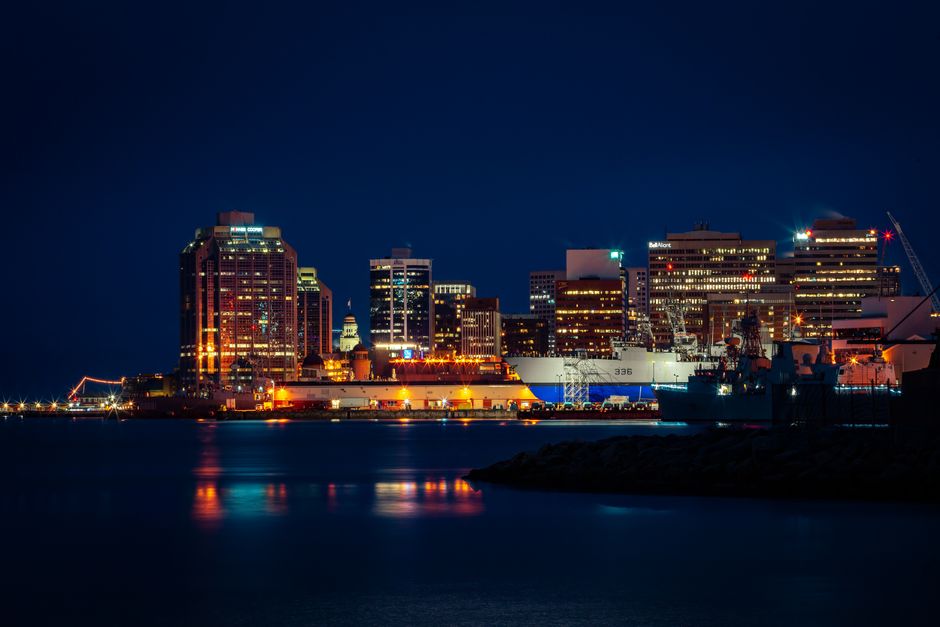
Halifax, the capital of Nova Scotia, is a friendly, walkable port city on one of the world’s largest natural harbours. Its long boardwalk waterfront is lined with seafood shacks, ferries, tall ships and museums; above it, the star-shaped Halifax Citadel fires its noon gun every day, and the city’s history runs from British naval base to the Titanic recovery effort, the 1917 Halifax Explosion and the arrival of a million immigrants at Pier 21. About 440,000 people live in the wider municipality, with a lively bar and live-music scene thanks to its universities. Halifax is also the gateway to the rest of the Maritimes: the lighthouse at Peggy’s Cove, the UNESCO-listed old town of Lunenburg, the Bay of Fundy, Cape Breton Island and Prince Edward Island are all within a day’s drive. Summer and early autumn are the best times to come; winter is mild for Canada but grey and snowy.
Right now in Halifax
- Wed 7–15°C 44–59°F Mostly clear
- Thu 10–18°C 51–65°F Mostly clear
- Fri 12–18°C 53–64°F Mostly clear
- Mon 12 Oct Thanksgiving
Weather: MET Norway (CC BY 4.0) · Sea temperature: NOAA CoastWatch · Rates: ECB · Holidays: Nager.Date
Top tours in Halifax
See all tours for Halifax →
From local operators, with prices and reviews; you check availability and book on Viator, our partner. We may earn a commission at no extra cost to you. How we earn money
Halifax at a glance
- Best months: late June to early October for warm, sunny days on the waterfront and festivals; the second half of September and October for autumn colour and fewer people.
- Time needed: two days for the waterfront, the Citadel, Pier 21 and the Maritime Museum; three or four with Peggy’s Cove and Lunenburg.
- Getting there: Halifax Stanfield International Airport (YHZ) is about 35 km (22 miles) north of downtown; the Route 320 express bus costs $4.75. VIA Rail’s Ocean train arrives from Montreal.
- Costs (as of October 2026): prices are in Canadian dollars; a bus or harbour ferry ride is $3 (about US$2.15); the Citadel is $22 for adults in season; Nova Scotia adds 14% HST to most prices, and hotels add a 3% marketing levy.
- Before you go: entry rules (eTA or visa), money and driving in Canada are in our Canada travel guide.
Halifax neighbourhoods and who each one suits
Downtown and the waterfront
The 4 km boardwalk runs from the Casino and Historic Properties, a cluster of restored stone warehouses, past the ferry terminal, the Maritime Museum, food stalls and the Queen’s Marque district to Pier 21 and the Halifax Seaport. Above it, steep streets climb past Province House, Canada’s oldest legislature building, and the pubs of Argyle Street to the Citadel. This is the best base for first-time visitors without a car.
Spring Garden Road and the South End
Spring Garden Road is the main shopping street, with the striking Central Library and the Victorian Halifax Public Gardens at its top. The leafy South End has grand old houses, Dalhousie and Saint Mary’s universities, and Point Pleasant Park, a forested peninsula at the harbour mouth with trails and old fortifications.
The North End
Agricola and Gottingen streets have the city’s most creative cafes, breweries, vintage shops and restaurants. The North End was the area devastated by the 1917 Halifax Explosion; Fort Needham Memorial Park overlooks the site. Good for food lovers and repeat visitors.
Dartmouth
Across the harbour, reached by the Alderney ferry in about 12 minutes, downtown Dartmouth is quieter, with independent shops, a waterfront trail, craft breweries and the best views back to the Halifax skyline at sunset. Hotels here can be cheaper.
Top things to see in Halifax
Halifax Citadel National Historic Site
The star-shaped hilltop fort, completed in 1856, was built to guard the naval base and was never attacked. In season, costumed interpreters of the 78th Highland Regiment drill on the parade square, play the bagpipes and fire the noon gun, a Halifax tradition. Exhibits cover the fort and the city’s military history, and the ramparts give the best views over downtown and the harbour. In 2026 the buildings are open daily from 7 May to 5 November; the grounds are open all year. Admission is $22 for adults and $18.75 for seniors, free for under-18s and with a Parks Canada Discovery Pass; parking costs $9.50 a day.
Canadian Museum of Immigration at Pier 21
Between 1928 and 1971, nearly a million immigrants, refugees, war brides and evacuee children entered Canada through this shed at the south end of the waterfront. The national museum tells their stories with personal objects, recordings and a reconstructed railway car, and you can research family records. It is open daily, 9:30 a.m. to 5:30 p.m., all year. Admission: adults $19, seniors (60+) $15, youth (6–16) and students $13. Parking is free in the evenings, at weekends and on holidays.
Maritime Museum of the Atlantic
On the waterfront, the province’s oldest and largest maritime museum is best known for its Titanic exhibit, with a deck chair and wooden fragments recovered by Halifax ships in 1912, and its displays on the 1917 Halifax Explosion, when a munitions ship blew up in the harbour, killing about 2,000 people. Outside, the hydrographic ship CSS Acadia can be boarded in summer. Some 150 Titanic victims are buried in Halifax cemeteries, most at Fairview Lawn.
The waterfront boardwalk and Halifax Seaport
Walk the boardwalk for lobster rolls, fish and chips and BeaverTails pastries, harbour tours, the Wave sculpture and hammocks overlooking the water. The Halifax Seaport, by Pier 21, has a farmers’ market (open year-round), artisan shops and the cruise-ship terminal. Harbour cruises, tall-ship sails and amphibious “harbour hopper” tours run from late spring to October.
Halifax Public Gardens and Point Pleasant Park
The Public Gardens, opened in 1867, are among the finest Victorian gardens in North America, with a bandstand, ponds and formal flower beds; entry is free, and they close for the winter months. Point Pleasant Park, at the south tip of the peninsula, has 39 hectares of forest trails, sea views and the ruins of forts, a favourite place for an easy walk or run.
Art Gallery of Nova Scotia
The province’s main art museum is best loved for the tiny, brightly painted house of folk artist Maud Lewis, rebuilt inside the gallery, alongside Atlantic Canadian and Inuit art.
Historic downtown: Province House, St. Paul’s and the Old Town Clock
Halifax was founded by the British in 1749, and a short loop downtown covers its oldest landmarks. The Old Town Clock, a gift from Prince Edward in 1803, stands on the slope below the Citadel. St. Paul’s Church (1750) on the Grand Parade is the oldest Protestant church building in Canada; look for the window fragment said to show a man’s profile, left by the 1917 explosion. Province House, a Georgian sandstone building from 1819, is still home to the Nova Scotia legislature and is often open for free tours when the house is not sitting. Down by the water, Alexander Keith’s Nova Scotia Brewery, founded in 1820, runs costumed tours with tastings.
Titanic graves and the Halifax Explosion memorial
When the Titanic sank in April 1912, ships sent from Halifax recovered many of the victims, and 150 are buried in the city, 121 of them in rows shaped like a ship’s bow at Fairview Lawn Cemetery in the West End (a 10-minute ride from downtown). In the North End, the Halifax Explosion Memorial Bell Tower in Fort Needham Memorial Park looks down on the Narrows, where on 6 December 1917 the munitions ship Mont-Blanc collided with another vessel and exploded, flattening much of the area. Every 6 December the city holds a remembrance ceremony there.
Harbour islands: McNabs Island and Georges Island
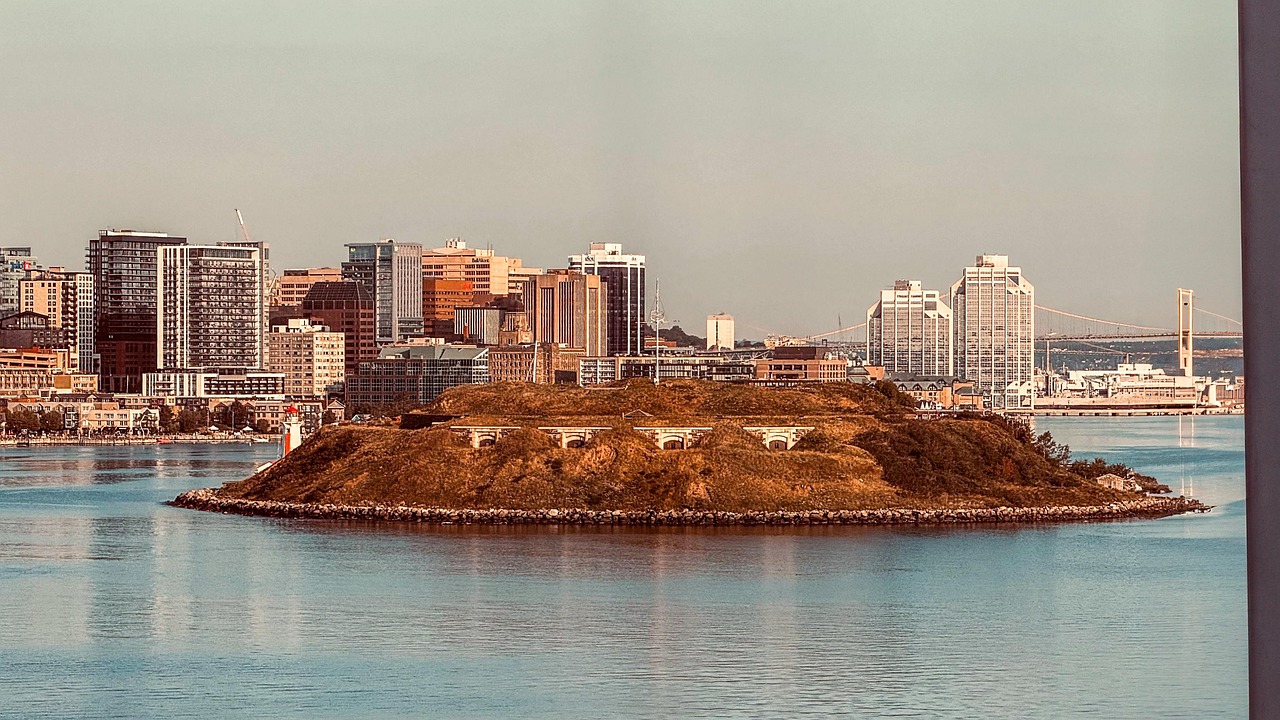
Two islands guard the harbour. Georges Island, right off the waterfront, is a national historic site with a fort and tunnels, open on summer days by boat tour; Parks Canada does not sell passes there. McNabs Island, at the harbour mouth, is a provincial park with forest trails, beaches, old forts and a lighthouse, reached in summer by private water taxis and boat tours from the waterfront or Eastern Passage. There are no shops or services on either island, so bring water and snacks, and check the last boat back.
Rainy-day Halifax
Halifax gets plenty of rain, so keep a few indoor options in hand: Pier 21 and the Maritime Museum, the Art Gallery of Nova Scotia, the Discovery Centre science museum on the waterfront, the Central Library’s rooftop cafe and reading rooms, a brewery tour, or the Seaport Farmers’ Market. The Citadel’s exhibits and tunnels are partly under cover too.
Museums
- Art Gallery of Nova Scotia
- Canadian Museum of Immigration at Pier 21
- Halifax Citadel
- Maritime Museum of the Atlantic
Monuments
- Fairview Lawn Cemetery (Titanic graves)
- Halifax Town Clock
Parks and gardens
- Halifax Public Gardens
Activities and best months
- City sightseeingThe Halifax Citadel National Historic Site is open daily from 7 May to 5 November 2026 (adult $22.00), and the Canadian Museum of Immigration at Pier 21 opens every day 9:30 a.m.-5:30 p.m. all year (adult $19). · source
Other things to do in Halifax
- Seafood: Nova Scotia lobster, Digby scallops, mussels, seafood chowder and donairs, Halifax’s sweet-sauced official snack.
- Live music and pubs: Celtic and East Coast music in Argyle Street and waterfront pubs, plus craft breweries across the city and in Dartmouth.
- Beaches and lakes: Crystal Crescent Beach, a white-sand cove 30 minutes south, and freshwater lakes for summer swims; the Atlantic is chilly even in August, around 15–18 °C (59–64 °F).
- Ride the ferry: the harbour ferry to Dartmouth costs the same as a bus ride and is the cheapest harbour tour in town.
- Whale watching: boats from Halifax occasionally see whales offshore, but the Bay of Fundy and Cape Breton Island are far more reliable (see Day trips).
Day trips from Halifax
Peggy’s Cove
About 45 km (28 miles) southwest, the fishing village of Peggy’s Cove and its red-and-white lighthouse perched on bare granite is Nova Scotia’s most famous image. A viewing platform and walkways keep you above the surf. Stay off the black, wet rocks near the water: rogue waves sweep people into the sea here every few years. Come early or late to avoid tour buses.
Lunenburg and Mahone Bay
Lunenburg, about 100 km (62 miles) southwest, is a UNESCO World Heritage town of brightly painted wooden houses laid out in 1753, home port of the schooner Bluenose II and the Fisheries Museum of the Atlantic. Stop on the way at Mahone Bay, famous for its three churches reflected in the water.
Annapolis Valley and the Bay of Fundy
An hour northwest, the Annapolis Valley has wineries, orchards and Grand-Pré National Historic Site, which remembers the Acadian deportation. Beyond it, the Bay of Fundy has the world’s highest tides; whale-watching boats from Digby Neck and Brier Island (about 3.5 hours away) see humpback, finback and minke whales from about June to October, and North Atlantic right whales sometimes visit late in the season.
Farther afield: Cape Breton and Prince Edward Island
Cape Breton Island and its Cabot Trail start about 3 hours’ drive northeast (the Canso Causeway is 280 km away), and Prince Edward Island is about 2.5 hours away via the Wood Islands ferry from Caribou near Pictou, or 3 hours via the Confederation Bridge. Both deserve several days; see our Cape Breton Island and Prince Edward Island guides.
Nearby destinations
- Prince Edward Island197 km
- Cape Breton Island278 km
Getting there and getting around
From Halifax Stanfield Airport
Halifax Stanfield International (YHZ), the main airport in the Maritimes, has flights across Canada and to the US and Europe. Halifax Transit’s Route 320 Airport/Fall River express links the airport with downtown in roughly 45 minutes for $4.75 (seniors and youth $3.25, under-13s free); a regular ticket can be topped up for $1.50. Taxis and airport shuttles take about 30 to 40 minutes, depending on traffic.
Buses and harbour ferries
Halifax Transit runs buses across the municipality and two harbour ferries: Halifax–Alderney (downtown Dartmouth) and Halifax–Woodside. Ferries use the same fares and transfers as buses.
| Ticket (bus and ferry) | Adult (18–64) | Senior (65+) / youth (13–17) | Notes |
|---|---|---|---|
| Single ride | $3 | $2.25 | Cash or HFXGO app; children 12 and under free |
| 1-day pass | $7.50 | $5.50 | HFXGO app |
| 2-day pass | $13.50 | $10 | HFXGO app |
| 7-day pass | $25.50 | $19 | HFXGO app |
| Regional Express (Route 320 to the airport) | $4.75 | $3.25 | Day pass $11.75 |
Seniors 65 and over ride all buses and ferries free on Tuesdays from 10 a.m. to 3:30 p.m. Downtown is compact but hilly; good walking shoes are enough for most sights.
Trains, buses and driving
VIA Rail’s Ocean runs overnight between Montreal and Halifax a few times a week, arriving at the 1930 Halifax station by the Westin hotel, a relaxed alternative to flying (our Canada travel guide covers VIA Rail). Maritime Bus connects Halifax with towns across Nova Scotia, New Brunswick and PEI. To explore the coast you will want a car; Nova Scotia’s highways are quiet outside the city, and rentals are at the airport and downtown. In summer, The CAT ferry links Yarmouth in southwestern Nova Scotia with Bar Harbor, Maine (its 2026 season ends on 14 October).
When to go and how long to stay
Halifax has a moderate, maritime climate: rarely very hot, often foggy in late spring and early summer, and wet in every season, with about 1,400–1,500 mm (55–58 in) of rain and snow a year. July and August are warm and lively, with the Halifax Jazz Festival and many outdoor events. September and early October are often the sunniest, calmest weeks, though this is also the tail of hurricane season, when the remnants of Atlantic storms occasionally bring heavy rain and wind. Winters are milder than in inland Canada but changeable, with snow, ice and rain.
| Season | Average high | Average low | What it’s like |
|---|---|---|---|
| Spring (Mar–May) | 4–14 °C (38–58 °F) | −4 to 6 °C (25–42 °F) | Cool and damp; fog by the sea; gardens bloom in late May. |
| Summer (Jun–Aug) | 20–23 °C (67–74 °F) | 11–15 °C (51–59 °F) | Pleasant; festival season; sea breezes. |
| Autumn (Sep–Nov) | 19 °C falling to 8 °C (67 to 47 °F) | 12 to 1 °C (53–35 °F) | Often sunny in September; autumn colour in October; storm remnants possible. |
| Winter (Dec–Feb) | 0–3 °C (32–37 °F) | −8 to −4 °C (17–24 °F) | Grey, with snow, ice and rain; about 150 cm (60 in) of snow a season. |
Figures are Environment and Climate Change Canada’s 1981–2010 climate normals for the Halifax Citadel station, in the city centre. The airport, inland, is a little colder in winter and snowier.
Events worth planning around
- Royal Nova Scotia International Tattoo (late June to early July): a big indoor show of military bands, pipes and drums, and performers.
- Halifax Jazz Festival (July): outdoor stages on the waterfront and concerts across the city.
- Natal Day (the first Monday of August, a civic holiday): fireworks, parades and races.
- Nocturne (October): a free night of art installations around downtown.
- Halifax Explosion remembrance (6 December) and winter holiday markets in December.
Dates change every year; check the organizers’ websites before you book. Hotels fill up and prices rise during the Tattoo, the Jazz Festival and on busy cruise-ship days in September and October.
How long to stay: 2, 3 and 4 days
- Two days: the Citadel and the noon gun, the waterfront and the Maritime Museum, Pier 21 and the Seaport market; the ferry to Dartmouth for sunset.
- Three days: add Peggy’s Cove early in the morning and the Public Gardens and Point Pleasant Park.
- Four days: add Mahone Bay and Lunenburg, or the Annapolis Valley wineries, before heading to Cape Breton or PEI.
Where to stay in Halifax and the taxes on your bill
- Downtown and the waterfront: the most convenient, with harbour-view hotels near the boardwalk and Citadel.
- Spring Garden Road and the South End: quieter streets, heritage B&Bs and easy walks to the gardens and park.
- Dartmouth: often cheaper, 12 minutes by ferry from downtown.
- Near the airport: handy for early flights only.
Taxes: listed prices do not include tax. Nova Scotia’s HST is 14% (down from 15% since 1 April 2025) and applies to most goods, meals and rooms. All accommodations in the Halifax Regional Municipality, including short-term rentals booked on online platforms, also charge a 3% marketing levy per night. Expect about 17% on top of the room rate, plus parking, which is pricey downtown.
Practical tips for Halifax
- Time zone: Atlantic Time, one hour ahead of Toronto, Montreal and New York; clocks go back on 1 November 2026.
- Cruise days: on days when several cruise ships are in port (mostly September and October), the waterfront and Peggy’s Cove get very busy; check the port schedule and plan around it.
- Tipping: 15–20% in restaurants and bars, calculated before tax.
- Safety: Halifax is a generally safe city; watch for ice on steep streets in winter and for rogue waves on coastal rocks. Downtown bar streets get rowdy late at night at weekends.
- Emergencies: call 911.
What to pack for Halifax
Bring a waterproof jacket in any season, layers for cool sea breezes even in July, comfortable shoes with grip for the hills and wet boardwalks, and a warm sweater for harbour cruises. In winter you need a proper coat, hat, gloves and boots for slush and ice. Sunscreen and sunglasses are worth packing for summer days on the water.
What to pack
- City walking shoesLisbon and Porto are steep, with polished limestone cobbles that get slippery, so grippy soles matter.
- Day packs and anti-theft bagsA small zipped or anti-theft bag makes crowded trams and viewpoints less stressful.
- Rain jacketsFrom October to April Porto and Lisbon see rain on roughly a third of days.
- Travel adapters and convertersPortugal uses Type C and F sockets at 230 V, so most visitors from outside Europe need an adapter.
Halifax travel FAQ
How do I get from Halifax airport to downtown?
Take Halifax Transit’s Route 320 express bus for $4.75 (about 45 minutes), or a taxi or shuttle, about 30 to 40 minutes. The airport is about 35 km north of downtown.
How much is the Halifax Citadel?
$22 for adults and $18.75 for seniors, free for under-18s and Discovery Pass holders. In 2026 the site is open daily from 7 May to 5 November; the grounds are open all year.
How much is the bus and ferry in Halifax?
$3 per ride for adults on buses and harbour ferries, or $7.50 for a day pass in the HFXGO app. Children 12 and under ride free.
What taxes are added to hotel bills in Halifax?
14% HST plus a 3% municipal marketing levy, about 17% in total, plus any parking fees.
How far is Peggy’s Cove from Halifax?
About 45 km (28 miles), roughly 45 minutes by car. There is no regular public bus, so drive or join a tour, and stay off the wet black rocks.
Can you see whales from Halifax?
Sometimes, but the best whale watching in Nova Scotia is on the Bay of Fundy (Digby Neck and Brier Island) and around Cape Breton, from about June to October.
Is Pier 21 worth visiting?
Yes, especially if your family has immigrant roots: it tells the stories of nearly a million newcomers who arrived here between 1928 and 1971. Adults pay $19; it is open daily 9:30 a.m. to 5:30 p.m.
Do I need a car in Halifax?
Not for the city: downtown is walkable and buses and ferries cover the rest. Rent a car for Peggy’s Cove, Lunenburg, the Annapolis Valley and the drive to Cape Breton or PEI.
Where are the Titanic graves in Halifax?
Most are at Fairview Lawn Cemetery in the West End, where 121 victims lie in rows shaped like a ship’s bow; others are in the Mount Olivet and Baron de Hirsch cemeteries. The Maritime Museum of the Atlantic displays recovered objects.
When is the best time to visit Halifax?
Late June to early October, with September often the sunniest and calmest. Winter is quiet and cheaper but grey and icy.
Sources
- © OpenStreetMap contributors · ODbL · fetched 4 Oct 2026
- Wikidata · CC0 · fetched 4 Oct 2026
Sources and last review
Researched and last reviewed on 4 October 2026. Citadel season, fees and parking come from Halifax Citadel National Historic Site (Parks Canada); bus, ferry and airport express fares and senior free rides from Halifax Transit; the 3% marketing levy from the Halifax Regional Municipality; HST from the Canada Revenue Agency; Pier 21 hours and prices from the Canadian Museum of Immigration at Pier 21; The CAT’s 2026 season from Bay Ferries; climate from Environment and Climate Change Canada’s 1981–2010 normals for Halifax Citadel; population from Wikidata. Distances and drive times, the airport bus travel time, the Maritime Museum’s exhibits, train frequency, whale seasons and some historical details are flagged for checking. Prices and timetables change, so check the official sites before you go. For entry rules, money and general safety, see our Canada travel guide.
Plan your trip
Partner links: TravelerCenter may earn a commission if you book, at no extra cost to you.