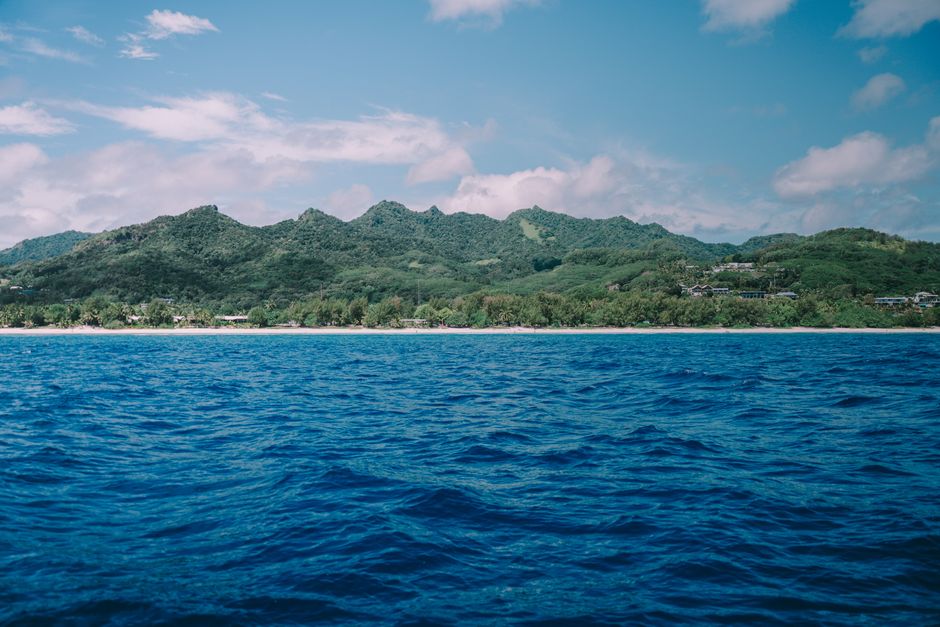
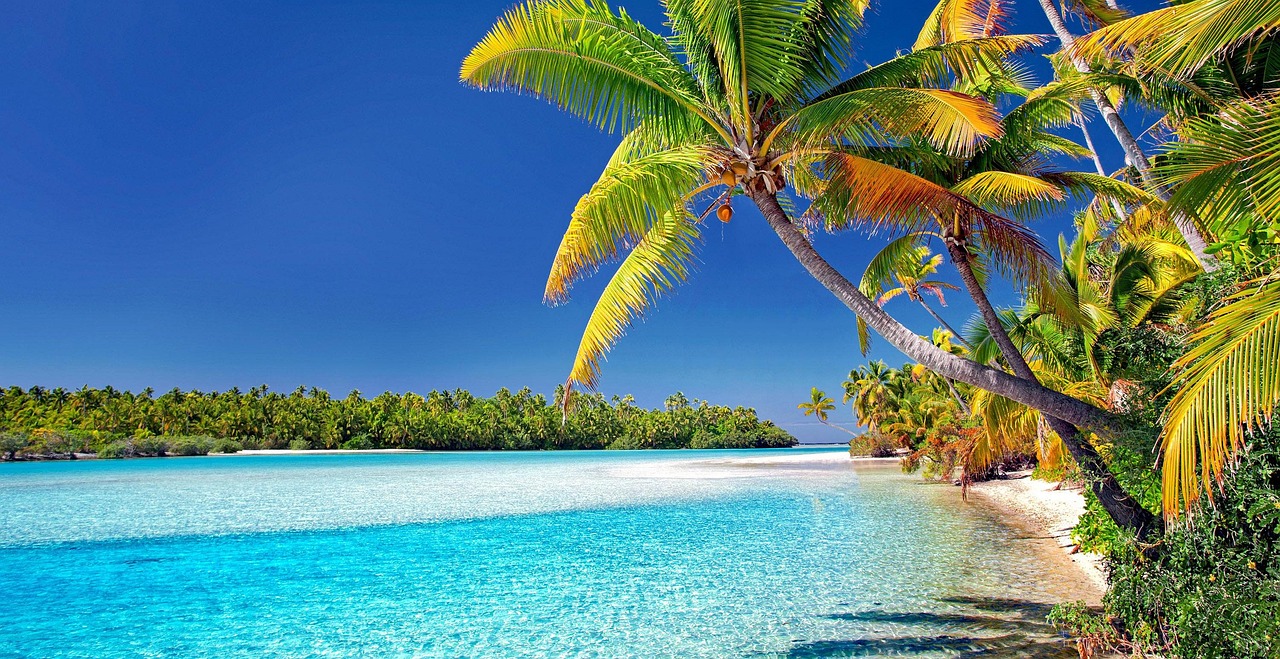
Aitutaki, about 260 km (160 miles) north of Rarotonga, is the Cook Islands’ postcard: a low, green island tucked into the corner of a vast, triangular lagoon of shallow water in every shade of turquoise, enclosed by a barrier reef and dotted with 15 sandy motus. Travelers often call it the most beautiful lagoon in the world, and from the window of the plane as you come in to land, it is hard to argue. The main island itself is gentle and rural, with a few villages, churches, banana and taro plots, a handful of resorts and guesthouses, and one low hill, Maungapu, with a view over everything. The real attraction is out on the water: a lagoon cruise to One Foot Island, where you can have your passport stamped by the island’s tiny post office, sandbars that appear at low tide, giant clams, snorkeling over coral gardens, and some of the best bonefishing in the Pacific. Aitutaki is quieter, more romantic and a little pricier than Rarotonga, and well suited to honeymooners and anyone wanting to slow right down. Most visitors fly in from Rarotonga in 50 minutes, either for a day tour or, better, for several nights.
Right now in Aitutaki
- Tue 23–24°C 73–74°F Partly cloudy
- Wed 22–24°C 72–75°F 2 mm Mostly clear
- Thu 23–24°C 73–74°F 2 mm Mostly clear
Weather: MET Norway (CC BY 4.0) · Sea temperature: NOAA CoastWatch
Top tours in Aitutaki
See all tours for Aitutaki →
From local operators, with prices and reviews; you check availability and book on Viator, our partner. We may earn a commission at no extra cost to you. How we earn money
Aitutaki at a glance
- Best months: May to October for cooler, drier weather and calm lagoon days. November to April is hotter and wetter, and the tropical cyclone season.
- Getting there: Air Rarotonga flies from Rarotonga up to five times a day in about 50 minutes; the Aitutaki Day Tour runs Monday to Saturday.
- Where to stay: resorts with beach and overwater bungalows, beachfront bungalows on the west coast, and family guesthouses.
- Time needed: a day tour at minimum; three to five nights to enjoy the lagoon.
- Costs (as of October 2026): NZ$1 = about US$0.56; lagoon cruises cost about NZ$100–150 per person.
- Before you go: entry rules, money and the departure tax are covered in our Cook Islands travel guide.
The island and the lagoon
Arutanga and the main island
Arutanga, on the west coast, is the main village, with the harbor, a few shops, the post office and the Cook Islands Christian Church, built in 1828 and often described as the oldest church in the Cook Islands, with coral-lime walls, carved details and stained glass. The airport, built by US forces during World War II, is on the island’s northern tip near Ootu Beach, a long spit of sand facing the lagoon. Small villages, plantations and quiet roads cover the rest of the island, which you can circle by scooter in an hour or two.
The lagoon and its motus
The barrier reef encloses a lagoon about 12 km (7.5 miles) across at its widest, mostly shallow, with white-sand bottom and coral heads. The 15 motus around its edge include:
- Tapuaetai (One Foot Island): a palm-fringed islet with a long beach, a sandbar and a small post office hut where you can buy postcards and get a souvenir stamp in your passport.
- Akaiami: once a stopover for the TEAL flying boats of the 1950s Coral Route between New Zealand and Tahiti, with remains of the old jetty.
- Maina: home to nesting red-tailed tropicbirds, with an often-photographed sandbar known as Honeymoon Island nearby.
- Moturakau: a small, rocky islet used for a reality TV show, with a sandy beach.
- Akitua: a private motu with a resort, linked to the main island by a short bridge.
The giant clam nursery
The Ministry of Marine Resources runs a giant clam (paua) nursery on the main island’s south coast, and many lagoon cruises snorkel over a clam garden where enormous, vividly colored clams have been reseeded. Don’t touch or stand on them.
Top things to do on Aitutaki
Lagoon cruise to One Foot Island
A full-day lagoon cruise is the essential Aitutaki experience. Boats, from traditional vaka-style catamarans to small motor launches, typically stop to snorkel at a coral garden and the giant clams, visit Honeymoon Island or Maina sandbar, and spend the afternoon on One Foot Island, with a barbecue lunch of fish and tropical salads, time to swim, walk the sandbar and get your passport stamped. Choose a smaller boat for a quieter day.
Snorkeling and diving
Inside the lagoon, the best snorkeling is in the deeper channels and around the clam gardens; ask your accommodation where currents are safe. Outside the reef, dive operators take certified divers to drop-offs and canyons with eagle rays, turtles, reef sharks and sometimes humpback whales in season.
Bonefishing and fly fishing
Aitutaki’s shallow flats are famous among fly anglers for bonefish and giant trevally. Local guides run catch-and-release trips; some areas of the lagoon are closed under traditional ra’ui rules.
Kitesurfing and paddling
The steady southeast trade winds and shallow water make Aitutaki excellent for kitesurfing, especially from Ootu Beach. Kayaks and paddleboards are available at most resorts for exploring nearby motus at high tide.
Piraki lookout and Maungapu
A short drive and walk to the Piraki lookout, or a 30-minute climb up Maungapu, the island’s highest point at 124 m (407 feet), give sweeping views over the lagoon and motus; sunrise and late afternoon are best.
Island nights and Sunday church
Aitutaki’s dancers and drummers are among the best in the Cook Islands and regularly win national competitions. Resorts host island nights with buffets several times a week. On Sunday morning, visitors are welcome at the services in Arutanga’s historic church; dress modestly and enjoy the singing.
Other things to do
- Scooter and bicycle tours: circle the island past villages, plantations and quiet beaches.
- Cultural tours: learn about traditional fishing, weaving, coconut uses and local plants.
- Whale watching: humpback whales pass Aitutaki from about July to October.
- Spa days: most resorts have spas, some in overwater or beachfront bures.
- Weddings and vow renewals: beach ceremonies on the lagoon are popular with couples.
Food and drink
Aitutaki has a handful of restaurants and cafés beyond the resorts, plus small shops for self-catering; supplies arrive by ship and plane, so choice is limited and prices are higher than on Rarotonga. Try ika mata (raw fish with coconut cream), freshly caught tuna and wahoo, rukau (taro leaves in coconut cream), pawpaw and bananas. Some restaurants offer free transport if you book; many close on Sunday. Tipping is not customary.
Nearby destinations
- Rarotonga265 km
Getting there and getting around
Flights from Rarotonga
Air Rarotonga flies from Rarotonga to Aitutaki up to five times a day, about 50 minutes each way, on Saab 340 turboprops. Sit on the right side of the plane on the way in for the best lagoon views. The domestic baggage allowance is lower than on international flights, so check before you fly and leave extra luggage at your Rarotonga accommodation if needed. Allow a buffer between your return flight to Rarotonga and your international departure.
The Aitutaki Day Tour
If time is short, Air Rarotonga’s Aitutaki Day Tour runs Monday to Saturday, leaving Rarotonga at about 8 a.m. and returning by 5:30 p.m. It includes hotel pickup on Rarotonga, return flights, an island tour and a lagoon cruise with snorkeling equipment, a barbecue lunch and a visit to One Foot Island.
Getting around Aitutaki
Most accommodation provides airport transfers. Rent a scooter, bicycle or small car to explore; the roads are quiet and mostly flat, and drive on the left. Your home license works for the vehicle classes you hold for up to six months if it is from Australia, New Zealand, the US, Canada, the UK or the EU; if you need a visitor license to ride a scooter, get it on Rarotonga. There is no public bus, and taxis are few, so book transfers ahead.
When to go and how long to stay
Aitutaki shares Rarotonga’s climate, with slightly warmer temperatures because it lies about 2.5 degrees farther north. From May to October, the weather is mostly dry and sunny, with pleasant days of 25 to 27 °C (77 to 81 °F), cooler nights and steady trade winds. From November to April, it is hotter, more humid and wetter, with the risk of tropical cyclones; in February 2010, Cyclone Pat damaged many homes on the island.
| Month | Average high | Average low | Rain |
|---|---|---|---|
| Jan | about 29 °C (84 °F) | about 24 °C (74 °F) | about 235 mm (9.3 in) |
| Feb | about 29 °C (85 °F) | about 24 °C (75 °F) | about 200 mm (7.9 in) |
| Mar | about 29 °C (85 °F) | about 24 °C (74 °F) | about 190 mm (7.4 in) |
| Apr | about 28 °C (83 °F) | about 23 °C (73 °F) | about 210 mm (8.3 in) |
| May | about 27 °C (81 °F) | about 21 °C (71 °F) | about 175 mm (6.9 in) |
| Jun | about 26 °C (78 °F) | about 20 °C (68 °F) | about 105 mm (4.1 in) |
| Jul | about 25 °C (77 °F) | about 19 °C (67 °F) | about 85 mm (3.3 in) |
| Aug | about 25 °C (77 °F) | about 19 °C (67 °F) | about 135 mm (5.2 in) |
| Sep | about 26 °C (78 °F) | about 20 °C (68 °F) | about 115 mm (4.5 in) |
| Oct | about 26 °C (79 °F) | about 21 °C (69 °F) | about 105 mm (4.1 in) |
| Nov | about 27 °C (81 °F) | about 22 °C (71 °F) | about 150 mm (5.9 in) |
| Dec | about 28 °C (82 °F) | about 23 °C (73 °F) | about 200 mm (8.0 in) |
| Year | about 27 °C (81 °F) | about 22 °C (71 °F) | about 1,910 mm (75 in) |
Figures are long-term averages for Rarotonga, the nearest station with published monthly values, from the Cook Islands Meteorological Service as published in the Pacific Climate Change Science Program’s climate profile of the Cook Islands; values are read from its chart and rounded. Aitutaki is low and flat, so it generally gets less rain than mountainous Rarotonga and is slightly warmer.
How long to stay: 1, 3 and 5 days
- Day tour: the Aitutaki Day Tour from Rarotonga covers the island and a lagoon cruise in one long day.
- Three nights: a full-day lagoon cruise to One Foot Island, a scooter loop of the island with the Piraki lookout and the church, and an island night.
- Five nights: add a dive or bonefishing trip, a kitesurf lesson or a kayak to the nearby motus, and plenty of time in the water.
Events worth planning around
- Te Maeva Nui (late July to early August): Aitutaki’s dance teams compete in the national festival on Rarotonga, and the island celebrates at home.
- New Zealand and Australian school holidays and Christmas: the small number of rooms fills quickly.
Aitutaki for couples, families and solo travelers
Honeymooners come for the overwater and beachfront bungalows, sunset dinners on the sand and private lagoon picnics that resorts can arrange on a motu. Families will find the shallow, warm lagoon ideal for young swimmers, though some resorts are adults-only, so check before booking; self-catering bungalows on Ootu Beach and at Amuri are good value for groups. Solo travelers and budget visitors do well in family-run guesthouses, which often include breakfast and island tips, and can join shared lagoon cruises. Whoever you travel with, plan around the tides: the sandbars and motus are best reached at mid to low tide, while snorkeling over the clam gardens is best near high tide.
Responsible travel on the lagoon
Aitutaki’s lagoon is fragile and has suffered from coral bleaching, cyclones and overfishing in the past. Use reef-safe sunscreen, never stand on coral or giant clams, don’t feed fish, take all rubbish back with you from the motus, and follow the ra’ui signs that mark areas closed to fishing and collecting. If you go fishing, follow your guide’s catch-and-release practice for bonefish and giant trevally.
Where to stay on Aitutaki
- Resorts: a resort on Akitua motu has overwater bungalows and beachfront villas, and other resorts on the main island have beach and garden bungalows, pools and spas.
- Beachfront bungalows: along Ootu Beach and the west coast at Amuri, many self-catering, with kayaks and sunset views.
- Guesthouses and family-run lodges: simpler rooms and bungalows, often with breakfast.
Aitutaki has far fewer rooms than Rarotonga, so book early for peak seasons, and remember that you need booked accommodation for your whole stay to enter the Cook Islands.
Typical costs on Aitutaki
| Item (as of October 2026) | New Zealand dollars | About US dollars |
|---|---|---|
| Return flight Rarotonga–Aitutaki | about NZ$350–600 | about US$195–335 |
| Full-day lagoon cruise with lunch | about NZ$100–150 | about US$55–85 |
| Scooter rental, per day | about NZ$25–40 | about US$14–22 |
| Guided bonefishing, half day | about NZ$300–500 | about US$170–280 |
| Two-tank dive | about NZ$250–300 | about US$140–170 |
| Lunch at a café | about NZ$20–35 | about US$11–20 |
| Guesthouse or beach bungalow, per night | about NZ$150–350 | about US$85–195 |
| Resort beachfront or overwater bungalow, per night | about NZ$600–1,500 | about US$335–840 |
All prices are typical ranges, not official figures, and vary by season and operator. Conversions use about US$0.56 to NZ$1 (European Central Bank reference rates, 2 October 2026).
Safety on Aitutaki
- Cyclone season (November to April): follow the Cook Islands Meteorological Service and your accommodation’s instructions; flights may be canceled.
- Currents: the lagoon is calm, but currents can be strong in channels between motus and at the reef passages, especially on an outgoing tide. Snorkel with a guide or in spots recommended by locals.
- Reef cuts, stonefish and giant clams: wear reef shoes, don’t stand on coral or clams, and treat cuts quickly.
- Sun: shade is scarce on lagoon cruises and sandbars; use reef-safe sunscreen, a hat and a rash vest.
- Mosquitoes: dengue occurs in the Cook Islands; use repellent.
- Scooters: ride slowly, wear a helmet even where not required, and watch for dogs and potholes.
- Medical care: Aitutaki has a small hospital; serious cases are flown to Rarotonga or New Zealand, so travel insurance with medical evacuation is essential.
Practical tips for Aitutaki
- Cash: bring enough New Zealand dollars from Rarotonga; ATMs on Aitutaki are few and can run out.
- Sunday: most shops and many restaurants close; stock up on Saturday.
- Luggage: domestic baggage allowances are lower; pack light.
- Respect ra’ui: obey the signs marking protected lagoon areas.
What to pack for Aitutaki
Swimwear, a rash vest, reef shoes, a mask and snorkel, a wide-brimmed hat, polarized sunglasses, reef-safe sunscreen, insect repellent, a dry bag and waterproof phone pouch for lagoon cruises, a light rain jacket, a modest outfit for church, your passport if you want the One Foot Island stamp and a Type I plug adapter.
Aitutaki travel FAQ
How do I get to Aitutaki?
Fly from Rarotonga with Air Rarotonga, about 50 minutes, with up to five flights a day. There are no passenger ferries.
Can I visit Aitutaki on a day trip?
Yes. The Aitutaki Day Tour runs Monday to Saturday from Rarotonga, with flights, an island tour and a lagoon cruise to One Foot Island with lunch.
What is One Foot Island?
Tapuaetai, a motu on the edge of Aitutaki’s lagoon with a long beach and sandbar, visited on most lagoon cruises. Its tiny post office stamps souvenir marks in passports.
Does Aitutaki have overwater bungalows?
Yes, at a resort on Akitua motu, connected to the main island. Book early, especially for honeymoons and holidays.
How many days do you need on Aitutaki?
Three to five nights is ideal: one day for a lagoon cruise, one to explore the island, and the rest for snorkeling, diving or relaxing.
Is Aitutaki better than Rarotonga?
Aitutaki has the more spectacular lagoon and a quieter, more romantic atmosphere; Rarotonga has more restaurants, activities and lower prices. Most visitors combine both.
When is the best time to visit Aitutaki?
May to October, the cooler, drier season, with calm lagoon days. November to April is hotter and wetter and the cyclone season.
Can you swim with whales in Aitutaki?
Humpback whales pass from about July to October and are sometimes seen from boats and dive trips outside the reef; sightings are not guaranteed.
Is there an ATM on Aitutaki?
There are very few, and they can run out of cash. Bring New Zealand dollars from Rarotonga; resorts and some businesses accept cards.
Do I need a car on Aitutaki?
No. Most accommodation provides airport transfers, and a scooter or bicycle is enough to explore the small, quiet island.
Sources and last review
Researched and last reviewed on 5 October 2026. Air Rarotonga’s flights and the Aitutaki Day Tour come from Air Rarotonga and Cook Islands Tourism; license rules from Cook Islands Tourism; airport and arrival information from the Cook Islands Airport Authority; climate from the Pacific Climate Change Science Program’s profile of the Cook Islands (Rarotonga, prepared with the Cook Islands Meteorological Service); the exchange rate from the European Central Bank; coordinates and area from Wikidata. Lagoon size, motu descriptions, history, heights, the clam nursery, events and all flight, cruise, rental, fishing, dive, meal and room prices are general references or estimates and should be checked with the operators. For entry rules, money and the departure tax, see our Cook Islands travel guide.
Plan your trip
Partner links: TravelerCenter may earn a commission if you book, at no extra cost to you.