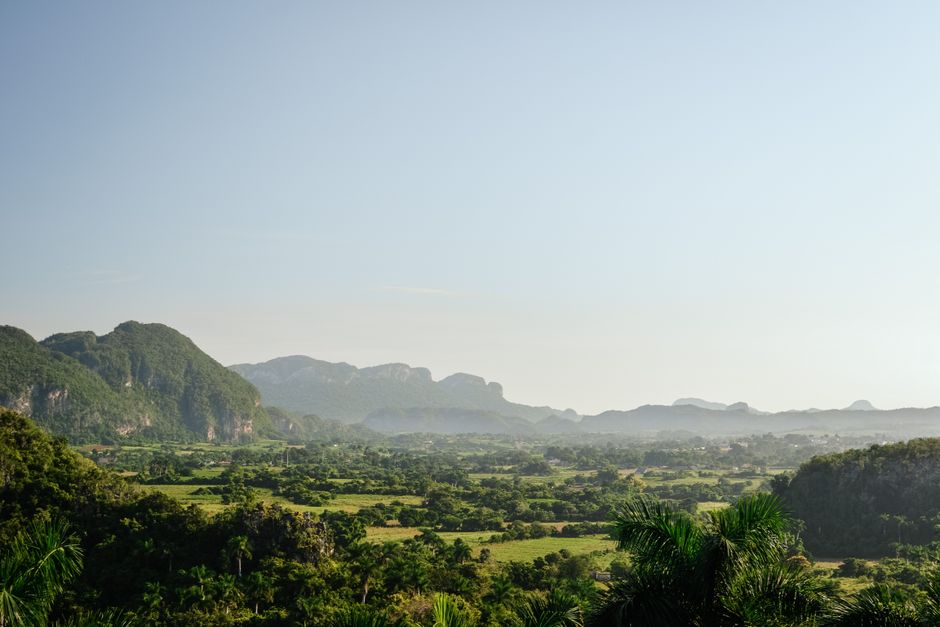
Viñales is a small farming town in the far west of Cuba, set in a valley of red earth, palm trees and tobacco fields ringed by mogotes, steep, round-topped limestone hills covered in forest that rise straight out of the flat valley floor. It lies about 180 km (110 miles) west of Havana and about 27 km (17 miles) north of the provincial capital, Pinar del Río. UNESCO listed the Viñales Valley as a cultural landscape in 1999 for its traditional farming, vernacular houses and karst scenery, and much of the area is a national park. Visitors come to see how Cuba’s famous tobacco is grown and dried, to walk or ride horses between the mogotes, to explore caves, and to relax on the porches of the town’s many family guesthouses. It is quieter and greener than Havana, and an easy two- or three-night stop. In 2026, Viñales has daily power cuts and fewer buses because of fuel shortages. November to April is the best time to go, and the tobacco harvest runs from about January to March.
Right now in Viñales
- Tue 23–31°C 73–88°F 5 mm Rain
- Wed 23–31°C 73–88°F 12 mm Heavy rain
- Thu 23–31°C 73–87°F 4 mm Partly cloudy
- Sat 10 Oct Independence Day (Día de la Independencia)
Weather: MET Norway (CC BY 4.0) · Holidays: Nager.Date
Top tours in Viñales
See all tours for Viñales →
From local operators, with prices and reviews; you check availability and book on Viator, our partner. We may earn a commission at no extra cost to you. How we earn money
Viñales at a glance
- Best for: landscapes, tobacco farms, easy hiking and horseback riding, caves, rural life and a rest from the cities.
- How long: 2 nights for the valley; 3–4 nights to add Cayo Jutías or Cayo Levisa.
- Best time: November to April, the drier season; January to March for the tobacco harvest. May to October is hot, wet and muddy, and hurricane season.
- Getting there: about 2.5–3 hours by road from Havana, by Viazul coach, shared taxi or private driver; there is no airport.
- Getting around: walk, cycle, ride a horse, or take taxis and tours; the town is small.
- Before you go: get the e-visa and complete D’Viajeros; entry rules, US travel categories, money and general safety are in our Cuba travel guide. For US rules on the way home, see our United States travel guide.
Viñales’s areas and who each one suits
The town
One main street, Calle Salvador Cisneros, with a church, a small square, the cultural center, paladares and bars, and side streets lined with single-story wooden and concrete houses, most of them casas particulares. Best for everyone: everything is within walking distance, and farms start at the edge of town.
The valley
The farmland around town, crossed by dirt tracks to tobacco farms, coffee plots and viewpoints, with a few farm stays and the state hotels on the hills. Best for a rural stay, with transport.
The northern valleys and caves
The road north toward the Cueva del Indio and Cueva de Santo Tomás passes more mogotes and the neighboring valleys of Palmarito and Ancón; quieter, with fewer services.
Top things to see in Viñales
Prices and hours change often, and power cuts can affect cave lighting and attractions; check locally.
The mogotes and the Los Jazmines viewpoint
The best view of the valley is from the terrace of the Los Jazmines hotel on the hill above the road from Pinar del Río, looking over the tobacco fields to the mogotes, especially in early morning mist or at sunset. The mogotes are the remains of a limestone plateau worn away over millions of years, and they shelter plants and animals found nowhere else.
Tobacco farms
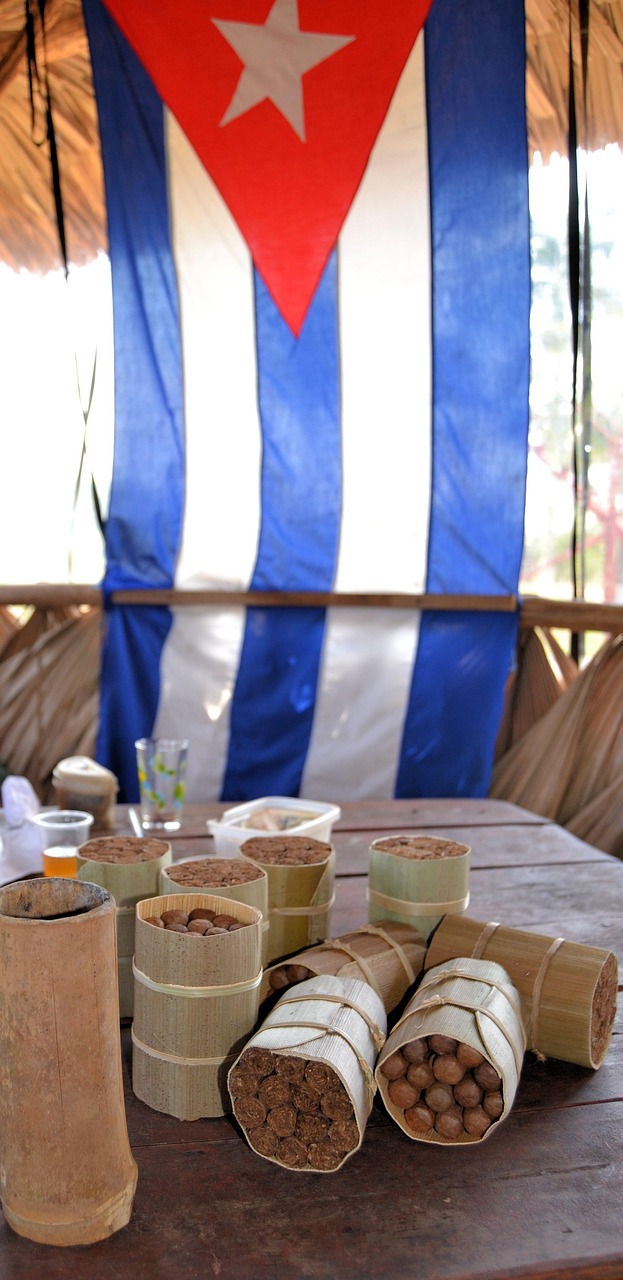
Viñales is at the edge of Vuelta Abajo, the region known for the world’s finest cigar tobacco. Family farms welcome visitors to see the fields, the tall thatched drying barns (secaderos) and a cigar being rolled by hand; many offer cigars for sale direct from the farm. Planting starts in autumn, the harvest is from about January to March, and leaves dry in the barns into spring. A tip or a small purchase is expected.
Mural de la Prehistoria
A huge painting on the face of a mogote in the Valle de Dos Hermanas, commissioned after the revolution and painted in the early 1960s, showing the evolution of life from snails to humans in bright colors. Opinions divide, but it’s an easy stop with a restaurant.
Cueva del Indio
A cave a few kilometers north of town, used as a refuge by Indigenous people, where you walk through lit passages and then take a short boat ride on an underground river.
Cueva de Santo Tomás
One of the largest cave systems in Latin America, with tens of kilometers of galleries, about 15–20 km (9–12 miles) west of town in El Moncada. Guided tours with helmets and headlamps explore part of the system; it is wilder and less touristy than the Cueva del Indio.
More to see
- Palenque de los Cimarrones: a cave once used as a hideout by people escaping slavery, with a small display and restaurant.
- Pinar del Río: the provincial capital, with a cigar factory and the Casa Garay distillery, which makes guayabita del Pinar, a guava-flavored liqueur.
- Valle del Silencio: a quiet side valley with farms, easy to reach on foot or horseback.
Other things to do in Viñales
Hiking and horseback riding
Horseback rides of two to four hours are the classic Viñales outing, following trails through the valley to tobacco and coffee farms, a cave and a lake. Guided hikes lead into the national park, between the mogotes and up to viewpoints; within the park, walks must be with a licensed guide, and a park fee applies. Trails are muddy in the rainy season. See our hiking guide.
Cycling
Bikes can be rented in town for flat rides through the valley and to the caves; roads are quiet but have potholes. See our cycling guide.
Food and evenings
Many casas serve generous home-cooked dinners of roast pork, chicken, fish, rice and beans and vegetables from their farms, often better value than restaurants. In the evening, the cultural center on the main square has live music and salsa dancing.
Beaches nearby
Cayo Jutías, reached by a causeway about 60 km (37 miles) northwest, has a long white beach with shallow water and a metal lighthouse; Cayo Levisa is a small island reached by boat from Palma Rubia, with a beach and snorkeling. Day trips run from Viñales when transport is available. See our beaches guide.
Day trips and onward travel
Cayo Jutías
About 1–1.5 hours by road: beach, snorkeling and mangroves; bring food and water, as services are limited.
Las Terrazas and Soroa
On the way to Havana, the Sierra del Rosario has the eco-village of Las Terrazas, river pools and old coffee plantations, and the orchid garden and waterfall at Soroa.
Havana
About 180 km (110 miles), 2.5–3 hours by road. See our Havana travel guide. Trinidad and Varadero are a long day’s journey east; see our Trinidad and Varadero travel guides.
Getting there and getting around
By road
Viazul coaches run between Havana and Viñales, via Pinar del Río; book in advance, as fuel shortages have reduced departures in 2026. Shared taxis (colectivos) and private drivers pick up from casas in Havana and take about 2.5–3 hours; agree the price in advance. Day tours from Havana are rushed, so stay at least one night if you can.
By air
Viñales has no airport. The nearest international airport is Havana’s José Martí (HAV), about 2.5 hours away.
Getting around
The town is walkable. For the valley, walk, cycle, ride or take taxis, which wait near the main square; a hop-on, hop-off tourist bus to the viewpoints and caves has run when fuel allows. Tours to the cays leave from the main street.
When to go and how long to stay
Viñales has a tropical climate with a drier season from November to April and a hot, rainy season from May to October. Being inland and among hills, it is a little cooler at night and wetter than Havana, with morning mist in winter. There are no official long-term averages for Viñales online, so the table uses the averages for Havana, about 180 km (110 miles) east, published by the World Meteorological Organization’s World Weather Information Service, with data from Cuba’s Institute of Meteorology (INSMET).
| Season | Average high / low (Havana) | Rain per month | What it’s like in Viñales | Good for |
|---|---|---|---|---|
| Winter (Dec–Feb) | 26 °C (79 °F) / 19–20 °C (65–67 °F) | 58–69 mm (2.3–2.7 in) | Dry, sunny days, cool nights and misty mornings | Tobacco harvest, hiking, riding |
| Spring (Mar–May) | 28–30 °C (82–86 °F) / 20–22 °C (67–72 °F) | 46–54 mm (1.8–2.1 in), then 98 mm (3.9 in) in May | Dry and warming; tobacco drying in the barns | Hiking, caves, beaches |
| Summer (Jun–Aug) | 31–32 °C (87–89 °F) / 23–24 °C (73–75 °F) | 100–182 mm (3.9–7.2 in) | Hot and humid, heavy afternoon rain, muddy trails | Green landscapes, cave visits |
| Autumn (Sep–Nov) | 28–31 °C (82–88 °F) / 21–24 °C (70–75 °F) | 88–181 mm (3.5–7.1 in) | Wet until late October; peak hurricane risk; tobacco planting begins | Quiet visits, with flexible bookings |
Hurricane season: according to NOAA’s National Hurricane Center (NHC), the Atlantic hurricane season runs from 1 June to 30 November, with most activity between mid-August and mid-October. Western Cuba is often in the path of storms: Hurricane Ian crossed Pinar del Río province as a Category 3 in September 2022, destroying many tobacco barns, and Hurricane Rafael made landfall in neighboring Artemisa province as a Category 3 in November 2024. As of 4 October 2026, the 2026 season had produced eight tropical storms and no hurricanes, and none had affected Cuba, according to the NHC.
How long to stay: 2, 3 and 4 nights
2 nights: arrive in the afternoon for sunset at Los Jazmines; next day, a morning horseback ride to a tobacco farm and cave, and an afternoon at the Cueva del Indio and the Mural de la Prehistoria.
3 nights: add a guided hike in the national park or the Cueva de Santo Tomás. 4 nights: add a beach day at Cayo Jutías or Cayo Levisa.
Where to stay in Viñales and hotel taxes
- In town: hundreds of casas particulares, many with porches and rocking chairs looking at the mogotes, and home-cooked meals.
- On the edge of town: quieter casas and farm stays among the fields.
- On the hills: a couple of state hotels with views, such as Los Jazmines.
Room rates are normally quoted with taxes included, without a separate nightly tourist tax at checkout; casas quote one nightly price and usually offer breakfast and dinner. US travelers should check the State Department’s Cuba Prohibited Accommodations List; most visitors here stay in casas. Ask whether your casa has backup power and water storage.
Practical tips for Viñales
- Cash: there are few ATMs, and they fail during blackouts; bring enough cash, especially if you have US-issued cards, which don’t work in Cuba.
- Guides: hike inside the national park only with a licensed guide.
- Horse rides: agree the route, time and price first, and ask for a calm horse if you are a beginner.
- Cigars: buying from farms is common; check how many cigars your home country allows you to bring back.
- Mud and sun: trails are muddy after rain, and there is little shade in the fields.
- Emergencies: call 106 for police and 104 for an ambulance; the nearest hospital is in Pinar del Río.
What to pack for Viñales
Pack light, quick-drying clothes, long pants for horseback riding, sturdy hiking shoes that can get muddy, a sun hat, sunscreen, insect repellent, a light rain jacket, a warm layer for cool winter nights, a headlamp for caves and blackouts, a power bank, swimwear for the cays, and your medicines.
Viñales travel FAQ
How far is Viñales from Havana?
About 180 km (110 miles), 2.5–3 hours by road. Viazul coaches, shared taxis and private drivers make the trip daily, fuel permitting.
Is Viñales worth visiting?
Yes, for its UNESCO-listed landscape of mogotes and tobacco fields, farm visits, caves and easy hikes. Stay at least one night rather than visiting on a rushed day tour.
When is tobacco season in Viñales?
Tobacco is planted in autumn and harvested from about January to March; leaves dry in the barns into spring. Farms welcome visitors all year.
Do I need a guide to hike in Viñales?
Inside the national park, yes: walks must be with a licensed guide, and a park fee applies. Tracks around the town can be walked on your own.
What are mogotes?
Steep, round-topped limestone hills left standing as the surrounding rock wore away, covered in forest and home to unique plants and animals.
What is the best time to visit Viñales?
November to April, when it is drier and trails are firm. January to March is tobacco harvest time.
Are there beaches near Viñales?
Yes. Cayo Jutías, about 60 km (37 miles) northwest, and Cayo Levisa, reached by boat from Palma Rubia, both have white-sand beaches.
Is there an ATM in Viñales?
There are only a few, and they often don’t work during blackouts. Bring cash, especially if your cards were issued by a US bank.
Can you visit the caves in Viñales?
Yes. The Cueva del Indio has an underground boat ride, and the Cueva de Santo Tomás offers guided caving with helmets and lamps.
Was Viñales affected by hurricanes?
Hurricane Ian hit Pinar del Río province in September 2022, damaging many tobacco barns, which have since been rebuilt. The 2026 season had not affected Cuba as of early October.
Sources and last review
Researched and last reviewed on 4 October 2026. Entry rules come from Cuba’s Ministry of Foreign Affairs; the US travel categories and the Cuba Prohibited Accommodations List from the US Treasury’s Office of Foreign Assets Control; hurricane season, Hurricane Rafael and the 2026 season from NOAA’s National Hurricane Center; the climate averages from the WMO World Weather Information Service (INSMET data for Havana); the UNESCO listing from the UNESCO World Heritage Centre. Hurricane Ian’s damage, sights, distances, the tobacco calendar, park rules and transport come from general references and are flagged for checking. For entry rules and money, see our Cuba travel guide; for US rules on the way home, see our United States travel guide.
Plan your trip
Partner links: TravelerCenter may earn a commission if you book, at no extra cost to you.
🇪🇸 Useful Spanish phrases for Viñales
All 38 Spanish phrases: restaurant, hotel, emergencies, romance (printable) →