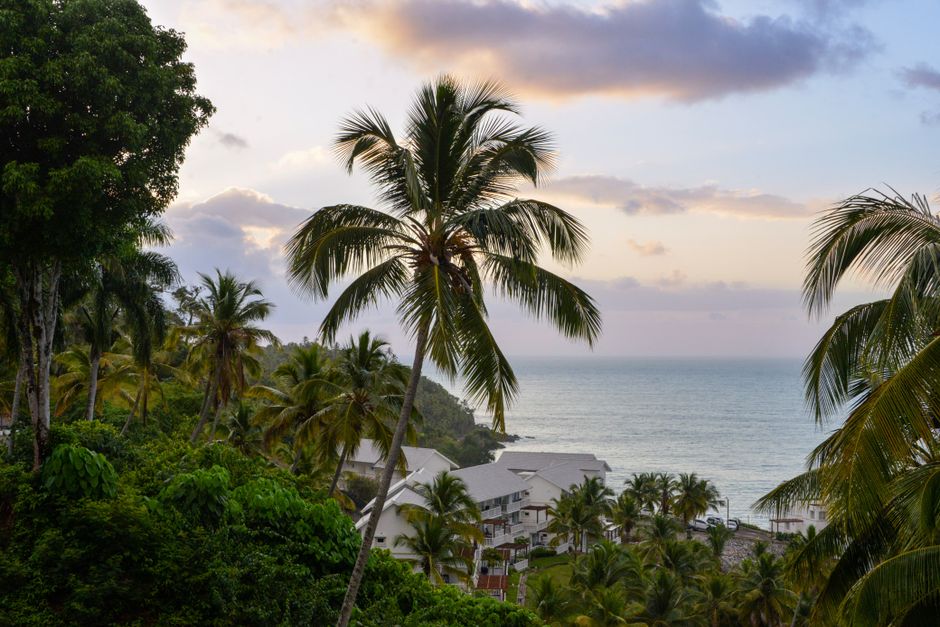
The Samaná Peninsula is the Dominican Republic at its greenest and wildest: a finger of mountains covered in coconut palms that juts into the Atlantic from the country’s northeast corner, with Samaná Bay on its south side. There are no giant resort strips here. Instead you find Las Terrenas, a relaxed beach town with cafés, small hotels and a cosmopolitan crowd; Las Galeras, a sleepy village at the end of the road near the empty beaches of Playa Rincón and Playa Frontón; the El Limón waterfall in the hills; and Samaná town on the bay. From mid-January to March, thousands of visitors come to see humpback whales breeding and calving in the bay, and all year boats cross to the mangroves, limestone islets and Taíno cave paintings of Los Haitises National Park. Samaná is the wettest corner of the country, lush all year, with the driest weather from February to April.
Right now in Samaná (Santa Bárbara de Samaná)
- Wed26–30°C78–86°F2 mm rain
- Thu25–29°C77–84°F4 mm rain
- Fri26–30°C80–85°F5 mm rain
Top tours in Samaná
See all tours for Samaná →
From local operators, with prices and reviews; you check availability and book on Viator, our partner. We may earn a commission at no extra cost to you. How we earn money
Samaná at a glance
- Best for: whale-watching, wild and quiet beaches, waterfalls, mangrove and cave boat trips, small hotels and a slower pace.
- How long: 4 to 7 days; longer if you want to unwind.
- Best time: mid-January to March for the whales; February to April for the driest weather, with highs of 86–89 °F (30–32 °C). June to November is hurricane season.
- Getting there: fly to Samaná El Catey International Airport (AZS), or drive about 2.5 hours from Santo Domingo on the Autopista del Nordeste; cruise ships anchor in Samaná Bay.
- Getting around: taxis, guaguas, motoconchos and tours; a rental car or ATV is useful for the beaches.
- Before you go: fill in the free e-ticket for arrival and departure if you fly, and read our Dominican Republic travel guide for entry rules, money and safety.
The peninsula’s towns and who each one suits
The peninsula is about 30 miles (50 km) long and up to 9 miles (15 km) wide, and its three main bases each have a different character.
Las Terrenas
On the north coast, Las Terrenas grew from a fishing village into the peninsula’s liveliest beach town, with a strong French and Italian influence: bakeries, beach restaurants, boutique hotels, villas and nightlife along beaches such as Punta Popy, Playa Las Ballenas, Playa Bonita and the long, palm-lined Playa Cosón. Best for couples, independent travelers and anyone who wants a beach with restaurants on the doorstep.
Las Galeras
At the eastern tip of the peninsula, Las Galeras is a small, quiet village with a beach, guesthouses and a few resorts. From here, boats and rough tracks reach some of the most beautiful beaches in the country, including Playa Rincón, Playa Frontón and Playa Madama. Best for nature lovers, snorkelers and travelers who want to switch off.
Samaná town (Santa Bárbara de Samaná)
On the bay, the peninsula’s main town has a seafront Malecón, a harbor full of whale-watching boats and the Puente de los Cayos, a footbridge linking small islets. It is the base for whale trips and boat tours to Los Haitises and Cayo Levantado, and where cruise passengers come ashore. Best for whale season and practical access to the bay.
Top things to see on the Samaná Peninsula
Prices and schedules change; check with operators before you go.
Humpback whales in Samaná Bay
Every winter, North Atlantic humpback whales migrate to the warm waters of Samaná Bay and the offshore Silver and Navidad banks to court, mate and give birth. The bay and banks are protected as a marine mammal sanctuary, and the Dominican presidency says that about 80% of the North Atlantic humpback population was born in Dominican waters. The 2026 whale-watching season ran from 15 January to 31 March, with activity peaking in February and March, and the environment ministry issues a limited number of permits to whale-watching boats each year. Trips of 3 to 4 hours leave Samaná town in the morning; choose an authorized operator that follows the sanctuary’s rules on distance and time with the whales. Seas can be choppy, so take seasickness tablets.
Los Haitises National Park
On the south side of Samaná Bay, Los Haitises protects a maze of mangroves, rainforest and hundreds of rounded limestone hills (mogotes) rising from the water, home to frigatebirds, pelicans and herons. Boat tours from Samaná, Sánchez or Sabana de la Mar weave between the islets and stop at caves such as San Gabriel and La Línea, with Taíno pictographs and carvings. It is one of the country’s protected areas listed under the Caribbean SPAW protocol for specially protected areas. The park entry fee is usually included in tour prices.
El Limón waterfall
In the hills between Las Terrenas and Samaná, the Salto El Limón drops about 130 feet (40 m) into a cool pool in the forest. You reach it on a hike of about 1 to 1.5 hours each way from the village of El Limón, on foot or on horseback, with streams to cross and muddy stretches after rain. Go early, wear shoes with grip and bring swimwear for a dip.
Playa Rincón and Playa Frontón
Playa Rincón, near Las Galeras, is a sweeping, nearly 2-mile (3 km) bay of white sand backed by palms, with a cold freshwater river at one end and a few shacks grilling fresh fish. Playa Frontón, reached by boat or a rough hike from Las Galeras, is a wild cove below cliffs with good snorkeling on the reef. Both are among the most beautiful beaches in the Caribbean.
More to see
- Cayo Levantado: a small island in Samaná Bay with a public beach, often combined with whale trips.
- Playa Cosón: a long, quiet beach west of Las Terrenas with a few luxury hotels.
- Puente de los Cayos: the footbridge over the islets off Samaná town.
- Playa Las Ballenas: Las Terrenas’ sunset beach, with islets offshore.
Other things to do on the Samaná Peninsula
Snorkeling and diving
The best snorkeling is around Las Galeras, at Playa Frontón and the reefs off Cabo Cabrón and Cabo Samaná, reached by boat with local dive centers. Las Terrenas has dive shops that visit the islets offshore. Water clarity is best on calm days from spring to fall.
Hiking, horseback riding and ATVs
Trails lead along the coast between beaches and into the hills to the El Limón waterfall and mountain viewpoints. Quad and horseback tours from Las Terrenas reach remote beaches such as Playa El Valle, and guides in Las Galeras lead hikes to Playa Frontón and Playa Madama.
Food and village life
Samaná’s food is coconut country: try pescado con coco (fish in coconut sauce), lobster and shrimp in season, and the French bakeries and Italian restaurants of Las Terrenas. Samaná town also has descendants of free African Americans who settled here in the 1820s, and their Protestant church and English-speaking heritage are part of local history.
Beach safety and sargassum
The peninsula’s north-coast beaches face the open Atlantic and can have strong waves and rip currents, especially in winter swells; Playa Rincón and some Las Terrenas beaches can be rough. Swim where the water is calm, follow local advice and red flags, never swim alone on remote beaches, and be careful in river mouths after heavy rain. Choose licensed boat operators with life jackets. Sargassum seaweed reaches Samaná’s beaches in some years, usually between about April and September. According to the University of South Florida’s Sargassum Watch, 2026 has been one of the largest sargassum years on record across the Caribbean, with amounts falling by late September; the National Maritime Affairs Authority (ANAMAR) publishes satellite monitoring of Dominican waters. Ask your hotel about recent conditions.
Day trips and onward travel
Los Haitises and Cayo Levantado
Both are easy half-day or day trips by boat from Samaná town, often combined.
The north coast: Cabarete and Puerto Plata
The coast road continues west to Río San Juan, Cabarete and Puerto Plata, about 3 to 4 hours away. See our Puerto Plata travel guide.
Santo Domingo
The capital is about 2.5 hours away on the Autopista del Nordeste; see our Santo Domingo travel guide.
Punta Cana
There is no direct road around the bay. A small ferry crosses Samaná Bay between Samaná town and Sabana de la Mar, from where roads lead east to Punta Cana; check the schedule locally, as it depends on the weather. Our Punta Cana travel guide covers the resort coast.
Nearby destinations
- La Romana103 km
- Santo Domingo103 km
- Punta Cana137 km
- Puerto Plata146 km
- Rincón250 km
Getting there and getting around
By air
Samaná El Catey International Airport (AZS), officially Presidente Juan Bosch International Airport and run by Aerodom, lies on the peninsula’s neck, about 40 minutes from Las Terrenas and about an hour from Samaná town and 1.5 hours from Las Galeras. Its flights are mostly seasonal, from Canada, Europe and the US, so many visitors fly into Santo Domingo (SDQ), about 2.5 hours away, or Punta Cana. From Florida, nonstop flights to Santo Domingo take about 2 hours from Miami. Aerodom also runs the small Arroyo Barril airstrip near Samaná town, used by domestic and charter flights. Before you fly, every passenger must complete the free e-ticket at eticket.migracion.gob.do, one for arrival and one for departure; the US$10 tourist card and US$20 departure tax are included in airline tickets issued abroad.
By road
From Santo Domingo, the Autopista del Nordeste (Juan Pablo II highway) reaches the peninsula in about 2 to 2.5 hours, and the Boulevard Turístico del Atlántico continues to El Catey and Las Terrenas; both are toll roads, paid in pesos or with a Paso Rápido tag. Caribe Tours and other bus companies run between Santo Domingo and Samaná town, and minibuses connect Las Terrenas.
By sea
Cruise ships anchor in Samaná Bay, off Samaná town, and bring passengers ashore by tender. Popular excursions are whale-watching in season, Cayo Levantado, Los Haitises and El Limón. According to the official tourism site, cruise passengers don’t need the e-ticket.
Getting around
Taxis are available in Las Terrenas, Samaná and Las Galeras; agree fares in advance. Guaguas link the towns cheaply. Motoconchos (motorbike taxis) are everywhere but risky; wear a helmet if you use them. Renting a car or an ATV gives the most freedom, but mountain roads are steep and winding, and many beach tracks are rough, so avoid driving at night.
When to go and how long to stay
Samaná is the rainiest of the country’s main beach areas, which is why it is so green. The table uses the 1991–2020 climate normals the Dominican weather service submitted to the World Meteorological Organization for the Arroyo Barril station, near Samaná town on the bay.
| Season | Average high / low | Rain per month | What it’s like | Good for |
|---|---|---|---|---|
| Winter (Dec–Feb) | 86–87 °F (30–31 °C) / 68–69 °F (20–21 °C) | 3.7–7.2 in (95–182 mm) | Warm, with showers easing by February; fresher nights | Whale-watching from mid-January; Carnival in February |
| Spring (Mar–May) | 88–89 °F (31–32 °C) / 70–72 °F (21–22 °C) | 4.3 in in March rising to 8.2 in in May (108–207 mm) | February to April is the driest stretch; rain returns in May | Whales until March, beaches, El Limón, Los Haitises |
| Summer (Jun–Aug) | 90 °F (32 °C) / 73 °F (23 °C) | 5.3–9.0 in (133–229 mm) | Hot and humid, with tropical downpours | Quiet beaches, snorkeling on calm days, lower prices |
| Fall (Sep–Nov) | 90 °F falling to 88 °F (33 to 31 °C) / 73 °F falling to 71 °F (23 to 22 °C) | 9.2–10.7 in (233–272 mm) | The wettest months and the peak of hurricane season | Deals, though some small hotels close |
The station averages about 85 in (2,170 mm) of rain a year, with November the wettest month; much of it falls in short, heavy showers.
Hurricane season: according to NOAA’s National Hurricane Center (NHC), the Atlantic hurricane season runs from 1 June to 30 November, with most activity from mid-August to mid-October. As of 4 October 2026, the 2026 season had brought eight tropical storms and no hurricanes; in late August 2026, the Emergency Operations Center (COE) included Samaná among provinces on a green alert for rain linked to the remnants of Tropical Storm Dolly. Heavy rain can flood rivers and make mountain roads and the El Limón trail slippery. Follow the NHC, the Dominican weather service (INDOMET) and the COE if you travel in season.
How long to stay: 3, 5 and 7 days
3 days: base yourself in Las Terrenas; day one on the beaches, day two at El Limón waterfall, day three on a whale-watching trip (in season) or a boat trip to Los Haitises from Samaná.
5 days: add two nights in Las Galeras for Playa Rincón and Playa Frontón.
7 days: add Cayo Levantado and Playa Cosón, or continue west along the coast to Cabarete and Puerto Plata.
Where to stay on the Samaná Peninsula and the hotel tax
- Las Terrenas: boutique hotels, beachfront apartments and villas, with the widest choice of restaurants.
- Playa Cosón: a few upscale resorts and villas on a long, quiet beach.
- Las Galeras: guesthouses, eco-lodges and a couple of resorts near the wild beaches.
- Samaná town and around: hotels on the bay, convenient for whale trips, plus resorts on Cayo Levantado and the bay shore.
As of October 2026, Dominican hotels add the 18% ITBIS (the national value-added tax) and a 10% legal service charge, 28% in all, to rates quoted before tax, so compare total prices. Book early for the whale season and Christmas, and check whether small hotels stay open in September and October.
Practical tips for the Samaná Peninsula
- Whales: book with an authorized operator; mornings are usually calmer at sea.
- Cash: carry pesos for beach shacks, guaguas and small guesthouses; ATMs are in Las Terrenas and Samaná but scarce in Las Galeras. US$1 was about RD$60 in October 2026.
- Bugs and rain: bring repellent and a rain jacket; this is the wettest part of the country.
- Remote beaches: go with a local boat or guide, and don’t leave valuables on the sand.
- Water: drink bottled water, never tap water.
- Emergencies: call 911; the CESTUR tourist police has officers in Las Terrenas and Samaná.
What to pack for the Samaná Peninsula
Pack swimwear, a rash vest, reef-safe sunscreen, a hat and sunglasses, plus sturdy shoes or sandals with grip for the El Limón trail and muddy tracks, and water shoes for rocky coves. Bring a light rain jacket and a dry bag at any time of year, seasickness tablets and a windproof layer for whale trips, a mask and snorkel for Las Galeras, and plenty of insect repellent. Visitors from Europe and the UK need a type A/B plug adapter.
Samaná travel FAQ
When is whale season in Samaná?
The official season runs from mid-January to the end of March (15 January to 31 March in 2026), with most whales in the bay in February and March.
How do I get to Samaná from Santo Domingo?
By road on the Autopista del Nordeste, about 2 to 2.5 hours, by car, private transfer or bus. Las Terrenas is about the same distance via the Boulevard Turístico del Atlántico.
Which airport is closest to Las Terrenas?
Samaná El Catey (AZS), about 40 minutes away. It has mostly seasonal flights, so many visitors fly into Santo Domingo, about 2.5 hours away.
Is Las Terrenas or Las Galeras better?
Las Terrenas for restaurants, nightlife and easy beaches; Las Galeras for a quiet village, wild beaches like Playa Rincón and Playa Frontón, and snorkeling.
How do you get to El Limón waterfall?
From the village of El Limón, between Las Terrenas and Samaná, it is a hike or horseback ride of about 1 to 1.5 hours each way through the forest, with stream crossings.
Can you visit Los Haitises National Park from Samaná?
Yes. Boat tours leave Samaná town, Sánchez and Sabana de la Mar to visit the mangroves, limestone islets and caves with Taíno rock art.
What is the hotel tax in Samaná?
As of October 2026, 18% ITBIS plus a 10% service charge, 28% in total, when rates are quoted before tax.
Is there sargassum in Las Terrenas?
Sometimes, mainly between about April and September. 2026 has been one of the heaviest sargassum years on record across the Caribbean, though amounts were falling by late September.
When is the rainy season in Samaná?
Samaná gets rain all year; the wettest months are September to November, and the driest are February to April.
Plan your trip
Partner links: TravelerCenter may earn a commission if you book, at no extra cost to you.
🇪🇸 Useful Spanish phrases for Samaná
All 38 Spanish phrases: restaurant, hotel, emergencies, romance (printable) →
Sources · last reviewed 4 October 2026
Researched and last reviewed on 4 October 2026. Whale population claim and sanctuary: the Dominican Presidency; airports (El Catey and Arroyo Barril): Aerodom; e-ticket rules and cruise passengers: the Dominican Presidency and the Ministry of Tourism; tourist card: the tax authority (DGII); departure tax and tap water: the Ministry of Tourism; ITBIS: the DGII; exchange rate: the Central Bank; climate: the WMO 1991–2020 normals for the Arroyo Barril station; hurricane season: NOAA’s National Hurricane Center; sargassum: the University of South Florida’s Sargassum Watch and ANAMAR. The 2026 whale season dates and permit numbers, the Dolly alert, the SPAW listing of Los Haitises, waterfall height and hike times, beach descriptions, the Sabana de la Mar ferry, airport distances and travel times come from press reports or general references because the environment ministry’s site could not be read, and are flagged for checking. Prices and schedules change, so check before you go.
Data: Weather: MET Norway (CC BY 4.0) · Sea temperature: NOAA CoastWatch · Rates: ECB · Costs: World Bank ICP and price levels · Wikidata (CC0)