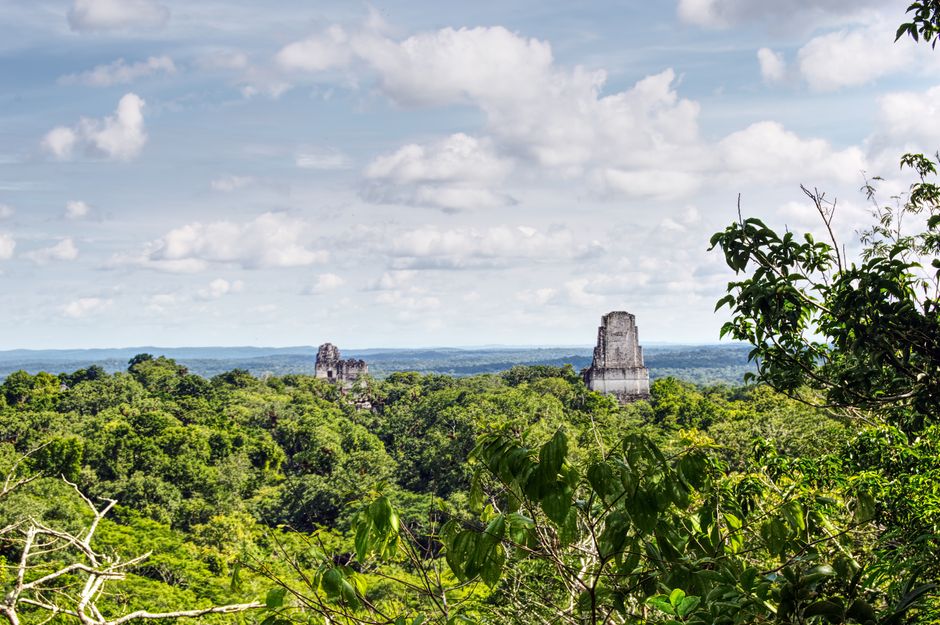
Tikal National Park, in the rainforest of Petén in northern Guatemala, protects the greatest of the ancient Maya cities and one of the most thrilling archaeological sites in the world. Its stone temples rise above the jungle canopy, linked by causeways through a forest full of howler and spider monkeys, toucans, coatis and ocellated turkeys. At its height in the Classic period, roughly 200 to 900 AD, Tikal was a capital of tens of thousands of people that rivaled Calakmul for control of the Maya lowlands. Today the park covers more than 570 km² (220 sq miles) of tropical forest, with an open archaeological area of about 16 km² (6 sq miles) and thousands of documented structures, many still unexcavated, according to the Guatemalan Tourism Institute (INGUAT). It was listed by UNESCO in 1979 for both its cultural and natural value. Climb the wooden stairs of Temple IV, more than 60 m (200 ft) high, at dawn or dusk, and you’ll see the roof combs of the other temples poking out of a sea of green.
Right now in Tikal National Park (Tikal)
- Tue 22–31°C 72–88°F 6 mm Light rain
- Wed 22–31°C 72–87°F 8 mm Light rain
- Thu 22–29°C 72–85°F 11 mm Showers
Weather: MET Norway (CC BY 4.0)
Top tours in Tikal National Park
See all tours for Tikal National Park →
From local operators, with prices and reviews; you check availability and book on Viator, our partner. We may earn a commission at no extra cost to you. How we earn money
Tikal at a glance
- Best months: November to April, the dry season, for drier trails, according to INGUAT; February to April are the driest. May to October is greener but muddier and wetter.
- Time needed: one full day for the main temples; two days, staying near the park or in Flores, to add sunrise or sunset and the outlying groups.
- Getting there: about 63 km (39 miles), or one hour, by road from Flores and its Mundo Maya airport, according to the Ministry of Culture and Sports; 484 km (301 miles), or nine hours, from Guatemala City.
- Fee (as of October 2026): Q150 (about US$20) for foreign visitors; Q100 (about US$13) extra for a sunrise or sunset ticket.
- Before you go: entry rules, the CA-4 agreement and money are in our Guatemala travel guide.
Fees, hours and tickets (as of October 2026)
The Ministry of Culture and Sports sells Tikal tickets on its official site (boletos.culturaguate.gob.gt). According to the ministry:
| Ticket | Foreign visitors | Notes |
|---|---|---|
| Park entrance | Q150 (about US$20) | Required for every other ticket; children under 10 enter free |
| Sunrise tour ticket | Q100 (about US$13) | Entry 4 a.m.–6 a.m.; licensed guide required, not included |
| Sunset tour ticket | Q100 (about US$13) | Entry 6 p.m.–8 p.m.; licensed guide required, not included |
| Museum entrance | Q30 (about US$4) | Requires the park ticket |
| Camping area | Q50 (about US$6.50) | Requires the park ticket |
| Uaxactún | Q50 (about US$6.50) | The Maya site north of Tikal; requires the park ticket |
The park opens daily from 6 a.m. to 6 p.m. Things to know about tickets, according to the ministry:
- Buy the right category. Guatemalan tickets are much cheaper but only for citizens with a Guatemalan ID; foreigners with national tickets are refused entry, with no refunds.
- Card surcharge: international cards pay an extra 2.3% per ticket online.
- Your ticket is a PDF (an official electronic receipt, Form 63A2) sent by email. Show it on your phone or printed, with your passport, and staff will give you wristbands. Screenshots of payments don’t count.
- Validity: tickets can be used within 30 days of purchase, but only once; they are valid for the day they are checked.
- Sunrise and sunset tickets need a separate park ticket and a licensed guide, hired at the entrance or through an authorized tour operator.
Tours from Flores usually include transport and a guide, and sometimes the tickets; check what is included.
Top things to see in Tikal
Tikal’s main temples are spread over several kilometers of forest trails. A basic loop from the entrance to the Great Plaza, the Lost World and Temple IV is about 10–15 km (6–9 miles) of walking; a guide brings the history and wildlife to life.
The Great Plaza
The ceremonial heart of the city, framed by Temple I (the Temple of the Great Jaguar), the tomb of the king Jasaw Chan K’awiil, and Temple II (the Temple of the Masks) facing it, with the North Acropolis, a dense layer of temples and royal tombs built over centuries, and the Central Acropolis of palaces. Temple I can’t be climbed, but Temple II has wooden stairs to a viewing platform.
Temple IV
The tallest structure at Tikal, more than 60 m (200 ft) high, according to INGUAT, and among the tallest buildings the Maya ever built. Wooden stairs lead to a platform with the famous view over the canopy to the roof combs of Temples I, II and III. It is the usual spot for sunrise and sunset tours.
Mundo Perdido (the Lost World)
One of the oldest parts of the city, with a great pyramid of the Preclassic period, about 30 m (100 ft) high, that you can climb for views over the forest, and a complex once used as an astronomical observatory.
Temple V, Temple of the Inscriptions and the outer groups
Temple V, south of the Great Plaza, has steep stairs to a top platform. Further out, the Temple of the Inscriptions (Temple VI) has a long hieroglyphic text on its roof comb, and the Twin Pyramid complexes show how the Maya marked the end of each 20-year period.
Wildlife
Tikal is as much a nature reserve as a ruin, with hundreds of species of birds and mammals, including howler and spider monkeys, toucans, coatis and ocellated turkeys, according to INGUAT. Early morning and late afternoon are best for wildlife, and the dawn chorus of howler monkeys is unforgettable.
Other things to do in and around Tikal
- Museums: the park’s museums show stelae, carved altars and finds from the tombs (separate Q30 ticket).
- Birdwatching: more than 300 species have been recorded; bring binoculars.
- Uaxactún: a smaller Maya site about 23 km (14 miles) north of Tikal on a dirt road, with one of the oldest known Maya astronomical complexes (separate Q50 ticket).
- Jungle treks: multi-day guided treks from Carmelita to El Mirador, one of the largest Preclassic Maya cities, deep in the forest.
Getting there
From Flores
Flores, an island town on Lake Petén Itzá linked to the mainland by a causeway, is the main base for Tikal. It is about 63 km (39 miles), or one hour, from the park, according to the Ministry of Culture. From Flores take the CA-13 toward Melchor de Mencos and turn left at the village of Ixlú toward El Remate and the park entrance. Shared shuttles and private minibuses run daily from Flores and El Remate, including very early departures for sunrise.
By air
Mundo Maya International Airport (FRS), just outside Flores, has flights of about an hour from Guatemala City, much faster than the road. Tour operators and shuttles wait at the airport.
By road from Guatemala City
First-class buses run overnight and by day from Guatemala City to Flores; the Ministry of Culture puts the trip at about nine hours. Driving yourself is possible on paved highways, but travel by day.
From Belize
From San Ignacio in Belize, cross the border at Benque Viejo–Melchor de Mencos, about 2 hours from Tikal by road. Belize charges a land exit fee of BZ$40 (US$20), according to the UK government. Day tours from San Ignacio include the crossing.
Around Tikal
- Flores: colorful streets, lakeside restaurants and boat trips on Lake Petén Itzá.
- Yaxhá: a large lakeside Maya site about an hour and a half from Flores, quieter than Tikal and known for sunsets from its Temple 216.
- El Remate: a village on the east shore of the lake, closer to Tikal, with small lodges.
- Belize: San Ignacio and the Cayo District are about two hours east; see the “From Belize” section above.
Nearby destinations
- Placencia154 km
- Caye Caulker178 km
- Ambergris Caye199 km
- Bacalar208 km
- Copán Ruinas269 km
Food and drink around Tikal
Inside the park there are only a few simple comedores and snack stands near the entrance and the visitor center, with sandwiches, set plates of chicken or eggs with rice and beans, cold drinks and coffee; nothing is sold among the ruins, so carry snacks and plenty of water. Most travelers eat their main meals in Flores or El Remate. Petén’s cooking is simple and based on what the lake and forest provide: look for pescado blanco, a white fish from Lake Petén Itzá, grilled or fried whole, along with tamales, chirmol (a fresh tomato salsa), black beans and handmade tortillas.
Flores has the region’s widest choice, with lakeside terraces for sunset drinks, pizza and pasta, Guatemalan comedores, and street stalls on the causeway and in the main square selling garnachas (small fried tortillas with meat), tacos and fruit in the evening. Some restaurants and cooperatives serve dishes and drinks made with ramón nut (Maya nut), a forest tree that the ancient Maya also ate. Santa Elena, across the causeway, has supermarkets and cheaper local food. Tap water isn’t drinkable; ask for filtered water.
When to go and how long to stay
Petén is hot and humid all year, with daytime temperatures often around 30–35 °C (86–95 °F). The dry season from November to April has fewer rains and better trail conditions, according to INGUAT; March and April are the hottest months. The green season from May to October brings heavy afternoon storms, mud and mosquitoes, but lush vegetation that INGUAT calls ideal for nature photography, and fewer visitors. Mornings are cooler and best for wildlife at any time of year.
| Season | What it’s like | Good for |
|---|---|---|
| November–January | Drier and pleasant; cooler mornings | Sunrise tours, birdwatching |
| February–April | Driest; hot by midday; Holy Week crowds | Easy trails, clear views from the temples |
| May–August | Rainy afternoons, humid, green | Fewer visitors, wildlife, photography |
| September–October | Wettest; muddy trails, mosquitoes | Quiet visits, lower prices |
Hurricanes: the Atlantic hurricane season runs from June 1 to November 30, according to NOAA’s National Hurricane Center. Storms seldom reach Petén at full strength, but they can bring days of heavy rain.
Tikal month by month
| Month | Weather | Crowds and prices | Why go |
|---|---|---|---|
| January | Dry, pleasant; cooler mornings | Busy early in the month | Sunrise tours, birdwatching |
| February | Dry and warm | High season | Easy trails, clear views |
| March | Dry and hot | Very busy around Holy Week (March 21–28, 2027) | Temple views; go early |
| April | The hottest month; hazy from farm burning some years | Moderate | Early-morning visits |
| May | Green season begins; storms in the afternoon | Quiet | Wildlife, fewer visitors |
| June | Rainy afternoons, humid | Quiet | Photography, green forest |
| July | Rainy afternoons | Busier with summer visitors from abroad | Wildlife; a drier spell some years |
| August | Rainy, humid | Moderate | Birding |
| September | Among the wettest months; muddy trails | Very quiet | Quiet visits, lower prices |
| October | Wet; mosquitoes | Very quiet | Quiet visits |
| November | Drier and pleasant | Moderate | Sunrise tours, migrant birds |
| December | Drier; cooler mornings | Busy at Christmas and New Year | Sunrise tours, holiday trips |
One day at Tikal
Leave Flores early to arrive when the park opens at 6 a.m., visit the Great Plaza, the North Acropolis, the Lost World and Temple IV with a guide, and stay until the heat of midday. Bring lunch and plenty of water.
Two days at Tikal
Stay at one of the lodges near the park entrance or in El Remate, take a sunrise or sunset tour from Temple IV with a licensed guide, and explore the outer groups, the museums and Uaxactún, or add Yaxhá on the second afternoon.
Where to stay near Tikal
- Inside the park: a few simple lodges near the entrance, the closest base for sunrise and sunset; book ahead.
- El Remate: small lodges on Lake Petén Itzá, about 30 minutes from the park.
- Flores and Santa Elena: the widest choice of hotels, restaurants and tours, about an hour away.
Hotel bills in Guatemala carry the 12% value-added tax and a 10% tourism tax, about 22% in total; check whether quoted rates include them.
Flores, El Remate or the park?
Flores is the most comfortable base, with the airport, banks, shuttles and the best restaurants, but it is an hour from the ruins, so sunrise means leaving around 3 a.m. El Remate cuts the drive to about 30 minutes and has quiet lakeside lodges and swimming docks, but few services. The lodges at the park entrance are the only way to be among the ruins at opening time without an early ride and to hear the howler monkeys at dawn; they are simple and pricier for what you get, and the generators may run only at certain hours.
What a visit to Tikal costs
Tikal itself is cheap; transport, guides and lodging make up most of the cost. Park tickets are the Ministry of Culture’s official prices for foreign visitors; the rest are our estimates for 2026, converted at about Q7.6 to US$1, close to the Bank of Guatemala’s reference rate in early October 2026.
| Item | Quetzales (Q) | About (US$) |
|---|---|---|
| Park entrance, foreign visitor (Ministry of Culture) | Q150 | about US$20 |
| Sunrise or sunset ticket (Ministry of Culture) | Q100 | about US$13 |
| Shared shuttle, Flores to Tikal and back | Q90–150 | US$12–20 |
| Licensed guide, shared group (per person) | Q100–230 | US$13–30 |
| Lunch at a comedor near the entrance | Q50–90 | US$6.50–12 |
| Pescado blanco dinner in Flores | Q80–150 | US$10–20 |
| Hostel dorm bed in Flores | Q80–130 | US$10–17 |
| Mid-range double room in Flores or El Remate | Q380–760 | US$50–100 |
| Lodge room at the park entrance | Q760–1,500 | US$100–200 |
A budget day trip from Flores, with a shuttle, the park ticket and a shared guide, comes to about US$50 to US$70 (Q380–530) including a dorm bed and meals; a two-day visit with a lodge at the park and a sunrise tour is more like US$200 to US$350 (Q1,520–2,660) per person.
Practical tips for Tikal
- Tickets: buy online in advance on the Ministry of Culture’s site, in the foreign category, and keep the PDF and your passport handy.
- Guides: licensed guides are available at the entrance; a guide is required for sunrise and sunset tours and recommended at any time.
- Water and food: carry at least 2–3 liters (about 3 quarts) of water per person; food is sold near the entrance but not among the ruins.
- Climbing: use only the wooden stairs and platforms; climbing the stone steps of closed temples is not allowed.
- Wildlife: don’t feed animals, watch for snakes on trails, and keep to marked paths.
- Safety: stay with your group in remote parts of the park; criminal incidents on Petén’s roads are more common away from tourist routes, according to the UK government, so travel by day with established operators. For help, call PROATUR on 1500.
What to pack for Tikal
Bring light, breathable long sleeves and pants against sun and mosquitoes, comfortable walking shoes with grip, a hat, sunscreen, strong insect repellent, a rain jacket from May to October, a headlamp or flashlight for sunrise and sunset tours, binoculars, at least 2–3 liters of water, snacks, and cash in quetzales for guides and drinks. Plugs are the US type.
Tikal travel FAQ
How much is the entrance fee to Tikal?
Q150 (about US$20) for foreign visitors as of October 2026, according to the Ministry of Culture and Sports. Children under 10 enter free.
How do I buy Tikal tickets?
On the ministry’s official site, boletos.culturaguate.gob.gt, in the category for foreigners. You receive a PDF ticket by email to show with your passport; international cards pay a 2.3% surcharge.
Can I see the sunrise at Tikal?
Yes, with a sunrise ticket (Q100, entry from 4 a.m.), a park ticket and a licensed guide. Morning mist often hides the sun, but the sounds of the waking forest are memorable.
What are Tikal’s opening hours?
Daily from 6 a.m. to 6 p.m., with sunrise entry from 4 a.m. and sunset tours from 6 p.m. to 8 p.m.
How do I get from Flores to Tikal?
By shuttle, tour or taxi, in about an hour along the road via Ixlú and El Remate.
How long do I need at Tikal?
At least a full day; two days let you add sunrise or sunset and the outer groups.
Can you climb the temples at Tikal?
Some, by wooden stairs: Temple II, Temple IV, Temple V and the Lost World pyramid have viewing platforms. Temple I is closed to climbing.
Can I visit Tikal from Belize?
Yes. Day tours run from San Ignacio via the Benque Viejo–Melchor de Mencos border, about two hours each way; Belize charges a land exit fee of BZ$40 (US$20).
Where should I stay to visit Tikal?
Flores for the most hotels, restaurants and tours, about an hour away; El Remate for quiet lakeside lodges about 30 minutes away; or the lodges at the park entrance to be at the ruins for opening time and sunrise tours.
Can I buy food inside Tikal?
Only near the entrance and visitor center, where a few comedores and stands sell meals, snacks and drinks. Nothing is sold among the ruins, so carry snacks and at least 2–3 liters of water per person.
Sources and last review
Researched and last reviewed on 4 October 2026. Ticket prices for foreigners and nationals, hours, sunrise and sunset rules, the guide requirement, the card surcharge, ticket validity, the PDF ticket, the free entry for children under 10, the distances from Flores and Guatemala City and the route via Ixlú: the Ministry of Culture and Sports’ official ticket site; the park’s size, open area, structures, UNESCO year, Temple IV’s height, wildlife and seasons: the Guatemalan Tourism Institute (INGUAT); the quetzal rate: the Bank of Guatemala; hurricane season: NOAA’s National Hurricane Center; Belize’s land exit fee and Petén road safety: the UK government. Tikal’s history, monument details, walking distances, temperatures, flight times, Uaxactún’s distance, Yaxhá, lodges, bird counts and hotel taxes come from secondary sources or general knowledge and are flagged for checking. Prices and rules change, so check the official sites before you go. For entry rules and money, see our Guatemala travel guide. The food notes, the comparison of bases, the month-by-month table and the daily costs (other than the ministry’s ticket prices) come from general knowledge or our own estimates and are flagged for checking; quetzal amounts are converted at about Q7.6 to US$1, close to the Bank of Guatemala’s reference rate in early October 2026.
Plan your trip
Partner links: TravelerCenter may earn a commission if you book, at no extra cost to you.
🇪🇸 Useful Spanish phrases for Tikal National Park
All 38 Spanish phrases: restaurant, hotel, emergencies, romance (printable) →