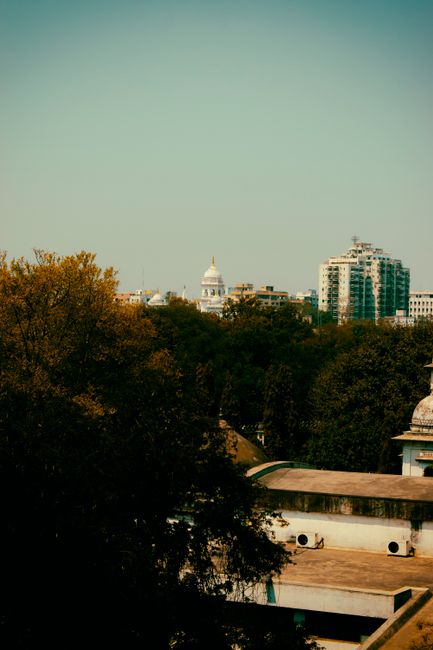
Hyderabad, the capital of Telangana, India’s youngest state, is a city of two faces: the Old City of the Qutb Shahi sultans and the Nizams, with the Charminar, bangle bazaars, palaces and the aroma of biryani, and a gleaming modern city of tech parks, malls and glass towers in HITEC City. Founded in the late 16th century by Muhammad Quli Qutb Shah as a new capital near the fortress of Golconda, Hyderabad later became the seat of the Nizams, who ruled the Deccan for more than two centuries and amassed one of the world’s great fortunes, until the state joined the Indian Union in 1948. The “City of Pearls” is famous for its Indo-Islamic monuments, its rich Hyderabadi cuisine, its film industry and its Dakhini culture, a blend of North and South Indian traditions. Most visitors spend two or three days here, seeing the Charminar and Laad Bazaar, the huge Golconda Fort, the Salar Jung Museum and the Qutb Shahi Tombs, and eating a great deal of biryani and haleem. October to February is the best time to visit; April and May are very hot.
Right now in Hyderabad
- Wed 24–32°C 75–89°F 1 mm Showers
- Thu 24–33°C 74–91°F 3 mm Showers
- Fri 25–33°C 76–91°F Mostly clear
Weather: MET Norway (CC BY 4.0)
Top tours in Hyderabad
See all tours for Hyderabad →
From local operators, with prices and reviews; you check availability and book on Viator, our partner. We may earn a commission at no extra cost to you. How we earn money
Hyderabad at a glance
- Best for: Indo-Islamic monuments, forts and palaces, Hyderabadi biryani and haleem, pearls and bangles, museums, and the Telugu film world.
- How long: 2 days for the main sights; 3 or 4 with Ramoji Film City or a trip to Warangal.
- Best time: October to February, when days are warm and dry; Ramadan evenings in the Old City are memorable.
- Getting there: Rajiv Gandhi International Airport (HYD) at Shamshabad, about 25 km (16 miles) south of the Charminar, is a designated e-Visa entry airport; trains arrive at Secunderabad, Hyderabad (Nampally) and Kacheguda.
- Getting around: Hyderabad Metro, app cabs and auto-rickshaws.
- Good to know: Golconda Fort and the Charminar cost foreigners ₹250 each on the ASI’s online booking site.
- Before you go: the e-Visa, the online e-Arrival card, money, trains and general safety are in our India travel guide.
Hyderabad’s areas and where to stay
Hyderabad and its twin city, Secunderabad, a former British cantonment, are joined by the Hussain Sagar lake. The Old City lies south of the Musi River; the commercial center sits between the river and the lake; and the modern city spreads west toward Banjara Hills, Jubilee Hills and HITEC City.
The Old City
South of the Musi, around the Charminar, the Old City is the historic heart, with Laad Bazaar, the Mecca Masjid, the Chowmahalla Palace and the Salar Jung Museum on the riverbank. It is crowded, atmospheric and best explored on foot, but has few hotels for visitors.
Abids, Nampally and the lake
North of the river, the older commercial district around Abids and Nampally has budget and mid-range hotels and the Hyderabad railway station. Around the Hussain Sagar, Tank Bund Road, Necklace Road and the Lumbini Park area are popular in the evening.
Banjara Hills and Jubilee Hills
West of the lake, these upscale neighborhoods on rocky hills have luxury hotels, restaurants, cafés, boutiques and galleries. They are a comfortable base, about 30 to 45 minutes by road from the Old City.
HITEC City and Gachibowli
The tech hub in the west, with glass office towers, malls and business hotels, is convenient for work trips and for Golconda, but far from the Old City.
Secunderabad
North of the lake, the former cantonment has colonial churches, markets and the main railway station, with mid-range hotels handy for trains.
Top things to see in Hyderabad
Charminar and Laad Bazaar
Built in 1591, the Charminar (“four minarets”) is the symbol of Hyderabad: a monumental square archway whose four minarets rise 48.7 m (160 ft), combining Indo-Islamic architecture with Persian influences and stucco floral decoration. Its upper floor holds what is said to be the city’s oldest mosque, and legend links its building to the end of a plague or to the love story of Quli Qutb Shah and Bhagmati. Visitors can climb to the first-floor gallery for views over the bazaars. The monument is protected by the Archaeological Survey of India (ASI); on its online booking site, foreigners pay ₹250 and Indians ₹20, with online slots between 6 a.m. and 6 p.m. Beside it, Laad Bazaar (Choodi Bazaar) glitters with lacquer bangles, pearls and bridal wear, and is at its liveliest during Ramadan. The Bhagyalakshmi Temple stands at the Charminar’s base.
Golconda Fort
About 9 km (6 miles) west of the Hussain Sagar, Golconda Fort is one of India’s most impressive fortress complexes. Its origins go back to a mud fort of the Kakatiya kings, and it was the capital of the Bahmani sultans and then the Qutb Shahi dynasty between the 14th and 17th centuries, famous for the diamond trade. Massive walls, eight gateways, including the Fateh Darwaza (Victory Gate), cannons, palaces, mosques and an ingenious water system climb a granite hill to the Bala Hisar pavilion at the top. Clap your hands under the dome near the entrance and the sound carries to the hilltop pavilion almost 1 km (0.6 miles) away. On the ASI’s booking site, foreigners pay ₹250 online and Indians ₹20. Go in the late afternoon for the light and the sunset views, and stay for the evening light and sound show, which tells the fort’s story; the climb to the top takes 30 to 45 minutes.
Qutb Shahi Tombs
Below Golconda, the domed tombs of the Qutb Shahi kings stand in a large garden, now restored as a heritage park. With their onion domes, arches and turquoise tilework, they are among the finest Islamic monuments in the Deccan and a peaceful place to spend an hour or two.
Salar Jung Museum
On the south bank of the Musi, this is one of India’s national museums and, according to Incredible India, the third-largest in the country, built around the collection of Mir Yousuf Ali Khan, Salar Jung III. It holds more than 46,000 art objects, 8,000 manuscripts and 60,000 printed books from Asia, Europe and the Middle East, from jade and Mughal miniatures to the marble Veiled Rebecca and a 19th-century musical clock of more than 350 parts that draws crowds when it chimes. Allow at least half a day.
Chowmahalla Palace and Mecca Masjid
The Chowmahalla Palace, the seat of the Nizams, has courtyards, fountains, chandeliered durbar halls and vintage cars, beautifully restored. Nearby, the Mecca Masjid, begun by the Qutb Shahis and completed under the Mughals, is one of the largest mosques in India, with bricks said to contain soil from Mecca; non-Muslims may visit the courtyard outside prayer times, dressed modestly.
Falaknuma Palace
About 5 km (3 miles) from the Charminar on a hilltop, the Falaknuma (“mirror of the sky”) was built by the Paigah nobles and later used by the Nizam. Designed by the English architect William Ward Marret in Italian marble, with stained glass, Venetian chandeliers and a library, it was restored over nearly a decade and is now a luxury heritage hotel. Non-guests can visit on hotel-organized tours or by booking a meal.
More classic sights
- Hussain Sagar: a lake dug in 1562 under Ibrahim Quli Qutb Shah, with a 16 m (52 ft) monolithic Buddha statue on an island, boat rides and evening crowds on Necklace Road.
- Birla Mandir: a white marble temple on a hill overlooking the lake, best at sunset.
- Paigah Tombs: intricately carved marble and stucco tombs of the Paigah nobility, in the Old City.
- Nehru Zoological Park: a large zoo with a safari park, near the Old City.
- Shilparamam: a crafts village with regional artisans and performances, in HITEC City.
Other things to do in Hyderabad
Food and drink
Hyderabadi cuisine, shaped in the kitchens of the Nizams by Turkish, Arab and Mughal cooking and by Telugu and Marathwada spices, is the city’s pride. The Hyderabadi biryani, with meat and rice layered and slow-cooked in a sealed pot (dum), is a must. During Ramadan, the Old City’s stalls serve haleem, a rich slow-cooked stew of meat, wheat and lentils. Try mirchi ka salan (chilies in a peanut and sesame sauce), khorma, shorba, Irani chai and Osmania biscuits in an old Irani café, and desserts such as double ka meetha (bread pudding) and qubani ka meetha (apricot pudding). Telugu food is spicier, with pesarattu (green-gram dosa), gongura pickle and Andhra meals. Drink bottled or filtered water.
Shopping
Hyderabad has been the “City of Pearls” for centuries; the pearl shops around the Charminar and on Pathergatti Road sell strings at every price, though quality varies, so buy from reputable dealers. Laad Bazaar is the place for bangles, attar (perfume oils) and bridal wear; look also for Kalamkari textiles, bidriware (silver-inlaid metalwork) and Pochampally ikat.
Film and festivals
Hyderabad is the hub of the Telugu film industry (“Tollywood”). Ramoji Film City, a vast studio and theme park on the edge of the city, offers tours of film sets, shows and rides; allow a full day. The city celebrates Eid, Diwali, Ugadi (Telugu New Year) and Bonalu, a festival in honor of the goddess Mahakali in July or August, with processions and offerings. See our city sightseeing guide for more ideas.
Day trips from Hyderabad
- Ramoji Film City: studios, sets and shows about 30 km (19 miles) east of the center.
- Warangal: the former Kakatiya capital, about 150 km (93 miles) northeast, with the Warangal Fort’s carved stone gateways and the Thousand Pillar Temple; on the ASI’s booking site, foreigners pay ₹250 for the Warangal Fort.
- Ramappa Temple: the 13th-century Kakatiya temple, a UNESCO World Heritage Site, about 210 km (130 miles) northeast; combine with Warangal on a long day or an overnight trip.
- Bhongir Fort: a fort on a single huge rock, about 50 km (31 miles) east, popular with climbers.
- Nagarjuna Sagar: a huge dam on the Krishna River with a Buddhist heritage island museum, about 150 km (93 miles) southeast.
- Hampi: the ruins of Vijayanagara are a night train or bus away. See our Hampi travel guide.
Getting there and getting around
By air
Rajiv Gandhi International Airport (HYD) at Shamshabad has flights to the Gulf, Southeast Asia, Europe and most Indian cities. It is on the Bureau of Immigration’s list of designated e-Visa entry airports. The trip to Banjara Hills takes 45 minutes to an hour by app cab, prepaid taxi or the airport’s express buses.
By train
Hyderabad’s main stations are Secunderabad, Hyderabad (Nampally) and Kacheguda, with trains to Delhi, Mumbai, Chennai, Bengaluru, Kolkata and Hosapete (for Hampi). According to Indian Railways, Secunderabad has an International Tourist Bureau, where foreign visitors can get help booking tickets. Bengaluru and Chennai are both overnight journeys.
By road
Highways run to Bengaluru, Vijayawada, Warangal and Mumbai, and Telangana state buses and private operators run frequent overnight services. A car and driver is the easiest way to reach Warangal and Ramappa in a day.
Around the city
Hyderabad Metro has three lines that link the Old City edge, Secunderabad, Ameerpet, the lake area and HITEC City, and it is the fastest way across town; the airport is not on the metro. Elsewhere, use app cabs and auto-rickshaws (agree the fare or use an app). The Old City is best explored on foot. The MMTS suburban trains are cheap but slow.
When to go and how long to stay
Weather for your datesSunrise and sunset
Hyderabad has a hot, semi-arid climate. November to February is the most comfortable time, with highs of 29 to 32 °C (85 to 90 °F) and cool nights around 15 to 16 °C (60 to 61 °F) in December and January. March to May is hot and dry, peaking at about 40 °C (103 °F) in May. The monsoon, from June to September, brings cooler, cloudy weather and heavy downpours, with the most rain in August, and showers continue into October. The table shows 1991–2020 normals for the Hyderabad station from the India Meteorological Department (IMD), as published by the World Meteorological Organization (WMO); rainy days are days with at least 2.5 mm of rain.
| Month | Average high / low | Rain (rainy days) | What to expect |
|---|---|---|---|
| January | 30 °C (85 °F) / 16 °C (61 °F) | 9 mm (0.4 in), under 1 day | Dry, sunny; cool nights |
| February | 32 °C (90 °F) / 18 °C (65 °F) | 10 mm (0.4 in), under 1 day | Warm and dry |
| March | 36 °C (97 °F) / 22 °C (71 °F) | 12 mm (0.5 in), under 1 day | Hot; Ugadi in some years |
| April | 38 °C (101 °F) / 24 °C (76 °F) | 27 mm (1.1 in), 2 days | Very hot |
| May | 40 °C (103 °F) / 27 °C (80 °F) | 34 mm (1.4 in), 2 days | Hottest month |
| June | 35 °C (95 °F) / 24 °C (76 °F) | 114 mm (4.5 in), 7 days | Monsoon arrives |
| July | 32 °C (89 °F) / 23 °C (73 °F) | 162 mm (6.4 in), 10 days | Cloudy, rainy; Bonalu |
| August | 30 °C (87 °F) / 22 °C (72 °F) | 204 mm (8.0 in), 11 days | Wettest month |
| September | 31 °C (88 °F) / 22 °C (72 °F) | 148 mm (5.8 in), 8 days | Showers |
| October | 31 °C (89 °F) / 21 °C (70 °F) | 114 mm (4.5 in), 6 days | Rains easing; festivals |
| November | 30 °C (86 °F) / 18 °C (64 °F) | 19 mm (0.8 in), 1 day | Pleasant, dry |
| December | 29 °C (85 °F) / 15 °C (60 °F) | 5 mm (0.2 in), under 1 day | Cool nights; peak season |
The city gets about 860 mm (34 in) of rain a year, mostly from June to October.
Two days in Hyderabad
Day one: the Charminar early, Laad Bazaar, the Mecca Masjid and the Chowmahalla Palace, then the Salar Jung Museum and a biryani lunch; at sunset, Necklace Road and the Birla Mandir. Day two: the Qutb Shahi Tombs in the morning, Golconda Fort in the afternoon and the light and sound show in the evening, with dinner in Banjara Hills.
Four days with the Kakatiyas
Add a day at Ramoji Film City or the Paigah Tombs and Falaknuma Palace, and a long day trip to Warangal and the Ramappa Temple.
Where to stay in Hyderabad
- Banjara Hills and Jubilee Hills: upscale hotels, restaurants and nightlife, central to both old and new Hyderabad.
- Abids and Nampally: budget and mid-range hotels close to the Old City and the station.
- Secunderabad: practical mid-range hotels near the main station.
- HITEC City and Gachibowli: business hotels near Golconda and the tech parks.
- Heritage stays: the Falaknuma Palace and a few restored mansions for a splurge.
Stay near a metro station if you plan to sightsee, and allow for traffic between the Old City and the west.
What a trip to Hyderabad costs
Money exchange (INR)Tip calculator
Prices are approximate, for October 2026, converted at about 96 rupees (₹) to the US dollar. Monument fees are the ASI’s online prices; other prices are estimates.
| Item | Typical cost |
|---|---|
| Charminar, foreigners online | ₹250 (about US$2.60) |
| Golconda Fort, foreigners online | ₹250 (about US$2.60) |
| Charminar or Golconda, Indians online | ₹20 (about US$0.20) |
| Metro ride | ₹10–75 (about US$0.10–0.80) |
| Plate of Hyderabadi biryani | ₹250–500 (about US$2.60–5.20) |
| Irani chai and Osmania biscuits | ₹30–80 (about US$0.30–0.80) |
| Ramoji Film City day ticket | ₹1,500–3,000 (about US$16–31) |
| App cab from the airport to Banjara Hills | ₹700–1,200 (about US$7.30–13) |
| Mid-range hotel double, per night | ₹3,500–9,000 (about US$36–94) |
Practical tips for Hyderabad
- Go to the Old City early: the Charminar and bazaars are calmer and cooler before 10 a.m.; shops open later.
- Save Golconda for late afternoon: climb at golden hour and stay for the show.
- Dress modestly: cover shoulders and knees at mosques and temples, and women should carry a scarf.
- Buy pearls carefully: stick to established shops and ask for a certificate.
- Plan for Ramadan: the Old City comes alive after sunset, but some sights have shorter hours.
Safety
Hyderabad is generally safe for visitors. Heat is the main risk from March to June, when temperatures reach 40 °C (103 °F); sightsee early and late, wear a hat and drink plenty of water. Monsoon: heavy downpours from June to October can flood roads and underpasses quickly and snarl traffic; avoid flooded streets and allow extra time for flights. Crowds and petty theft: keep valuables secure in Laad Bazaar, around the Charminar and on festival days. Traffic is heavy and chaotic; cross carefully and use app cabs. Touts offer pearl and bangle “bargains” and guiding at Golconda; agree prices in advance. Food and water: eat at busy places and drink bottled or filtered water; biryani and haleem are best fresh. Women travelers generally find Hyderabad comfortable; dress modestly in the Old City and use app cabs at night. In an emergency, call 112.
What to pack for Hyderabad
Light, loose clothes that cover shoulders and knees, a scarf for mosques, a wide-brimmed hat, sunglasses and high-factor sunscreen, comfortable shoes with good grip for Golconda’s steps, a light sweater for December nights, and an umbrella or rain jacket from June to October. India uses 230 V, with round-pin plugs of types C, D and M. See our travel adapters and hiking shoes guides.
Hyderabad travel FAQ
How much is the Charminar ticket?
On the ASI’s booking site, foreigners pay ₹250 and Indians ₹20 online.
How much is the Golconda Fort ticket?
On the ASI’s booking site, foreigners pay ₹250 and Indians ₹20 online. The evening light and sound show is ticketed separately.
What are the timings for Golconda and the Charminar?
The ASI’s online booking slots run from 6 a.m. to 6 p.m. Check the light and sound show times at the fort.
How many days do I need in Hyderabad?
Two days covers the Old City, the Salar Jung Museum, the Qutb Shahi Tombs and Golconda. Add a day or two for Ramoji Film City or Warangal.
What is the best time to visit Hyderabad?
November to February, when it is warm and dry. April and May are very hot.
Does Hyderabad airport accept the e-Visa?
Yes. Hyderabad is one of the designated e-Visa entry airports listed by the Bureau of Immigration.
Where can I eat the best Hyderabadi biryani?
At long-established biryani houses in the Old City and around the center; choose busy places where it is served fresh from the pot.
When is haleem season?
During Ramadan, when the Old City’s stalls and restaurants serve it every evening.
Is the Hyderabad Metro useful for visitors?
Yes, for crossing between Secunderabad, the lake, the center and HITEC City, though it does not reach the airport or Golconda.
Is Hyderabad safe for tourists?
Yes. Take care in the heat, in crowded bazaars and in traffic, and watch the weather during monsoon downpours.
Plan your trip
Partner links: TravelerCenter may earn a commission if you book, at no extra cost to you.
🇮🇳 Useful Hindi phrases for Hyderabad
All 38 Hindi phrases: restaurant, hotel, emergencies, romance (printable) →
Sources · last reviewed 5 October 2026
Researched and last reviewed on 5 October 2026. Charminar, Golconda Fort and Warangal Fort fees and online booking hours: the Archaeological Survey of India’s e-ticket booking site; the city’s history, the Charminar’s height and mosque, Laad Bazaar, Golconda’s history, gates, acoustics and show, the Salar Jung Museum’s collection, the Falaknuma Palace, Hussain Sagar and its Buddha statue, Ramoji Film City and Hyderabadi cuisine: Incredible India (Ministry of Tourism); the International Tourist Bureau at Secunderabad: Indian Railways; the list of designated e-Visa airports: the Bureau of Immigration; climate normals for the Hyderabad station: the India Meteorological Department, via the World Meteorological Organization (1991–2020 normals archived by NOAA’s National Centers for Environmental Information); the exchange rate: the Reserve Bank of India (FBIL reference rate). Telangana Tourism’s and the Hyderabad Metro’s websites could not be reached, so the light and sound show, metro lines and fares, the Qutb Shahi Tombs, distances, festival dates and typical prices are general references or estimates, flagged for checking. Prices and hours change, so check locally before you go. For the e-Visa, money and trains, see our India travel guide.
Place data: Wikidata (CC0)