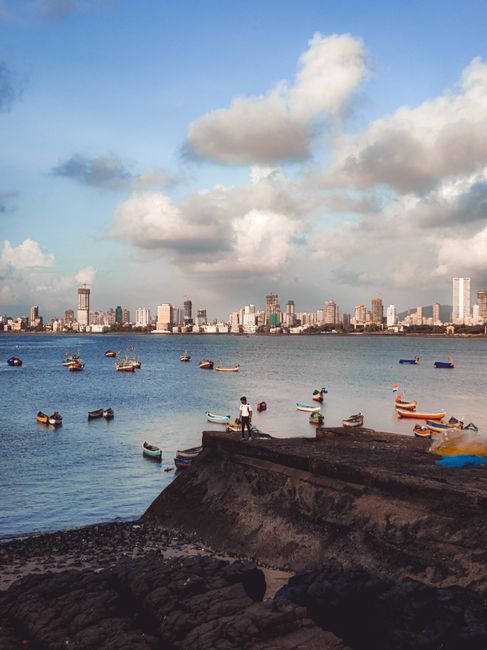
Mumbai, the capital of Maharashtra, is India’s financial center, the home of Bollywood and its most cosmopolitan city, built on seven islands on the Arabian Sea that were joined by land reclamation from the 18th century onward. Its southern tip is a showcase of the British Raj at its most confident: the Gothic Revival railway terminus of Chhatrapati Shivaji Maharaj Terminus and the Victorian and Art Deco buildings around the Oval Maidan are both UNESCO World Heritage Sites, and an hour away by ferry, the rock-cut cave temples of Elephanta Island are a third. Around them unfolds a city of more than 12 million people, according to the 2011 census, with seafront promenades, temples and Sufi shrines, buzzing street-food stalls, art galleries, film studios, crowded suburban trains and some of Asia’s priciest real estate beside some of its largest informal settlements. Mumbai is the main gateway to western India and Goa. The best months are November to February; from June to September the monsoon brings some of the heaviest rain of any big city in the world.
Right now in Mumbai
- Wed 26–37°C 78–98°F 1 mm Showers
- Thu 26–38°C 79–100°F Clear
- Fri 27–36°C 81–97°F 1 mm Light showers
Weather: MET Norway (CC BY 4.0) · Sea temperature: NOAA CoastWatch · Air quality: OpenAQ
Top tours in Mumbai
See all tours for Mumbai →
From local operators, with prices and reviews; you check availability and book on Viator, our partner. We may earn a commission at no extra cost to you. How we earn money
Mumbai at a glance
- Best for: colonial architecture, the Gateway of India and Marine Drive, Elephanta Caves, street food, art, nightlife and Bollywood.
- How long: 2 to 3 days for south Mumbai and Elephanta; 4 or 5 with the suburbs, Kanheri Caves and a day trip.
- Best time: November to February, when it is warm, dry and less humid.
- Getting there: Chhatrapati Shivaji Maharaj International Airport (BOM) in the northern suburbs, about 25 km (16 miles) from Colaba; trains from across India.
- Getting around: app cabs and black-and-yellow taxis in the south, suburban trains and the metro farther out.
- Good to know: the Elephanta Caves are closed on Mondays; foreigners pay ₹550 (about US$5.70) online, plus the ferry.
- Before you go: the e-Visa, money, trains and general safety are in our India travel guide.
Mumbai’s areas and where to stay
Mumbai is a long, narrow peninsula. The historic center, called “town” by locals, lies at the southern tip; the suburbs stretch some 40 km (25 miles) north toward the airport and beyond.
Colaba
The southern tip of the city, around the Gateway of India and the Taj Mahal Palace hotel, is where most visitors stay: hotels at every price, cafés, bars, the Colaba Causeway street market and the ferry to Elephanta.
Fort and Kala Ghoda
Just north of Colaba, the old Fort district holds the city’s grandest Victorian buildings, banks and university, while Kala Ghoda is the art quarter, with galleries, the city’s main museum, boutiques and some of its best restaurants.
Churchgate, Marine Drive and Malabar Hill
The sweep of Marine Drive along Back Bay is lined with Art Deco apartment blocks and a few seafront hotels. Above it, Malabar Hill is the wealthy residential district, with hanging gardens and the ancient Banganga Tank.
Bandra and Juhu
The western suburbs are where Mumbai goes out: Bandra has street art, cafés, boutiques, bars and colonial-era Catholic villages, and Juhu has a long beach and film-star homes. Both are convenient for the airport.
Top things to see in Mumbai
Gateway of India and Colaba
The basalt archway of the Gateway of India, completed in 1924 to commemorate a royal visit, faces the harbor at Apollo Bunder, next to the domed Taj Mahal Palace hotel of 1903. It is the departure point for ferries to Elephanta and the city’s favorite place for an evening stroll, with snack sellers and horse carriages. Behind it, Colaba Causeway is a long street market of clothes, jewelry and souvenirs.
Chhatrapati Shivaji Maharaj Terminus
Formerly Victoria Terminus, this railway station of 1888 is one of the finest Victorian Gothic buildings in the world, a riot of domes, turrets, stained glass and stone carving that still handles hundreds of commuter trains a day. It is a UNESCO World Heritage Site; see it from the street or on a guided heritage tour of the building.
The Victorian and Art Deco ensembles
Around the Oval Maidan, where cricket is played every day, a row of 19th-century Gothic Revival public buildings, including the High Court and Bombay University with its Rajabai Clock Tower, faces a line of 1930s Art Deco apartment blocks across the green. The two ensembles were inscribed together as a UNESCO World Heritage Site in 2018; Marine Drive continues the Art Deco theme.
Elephanta Caves
On Elephanta Island in Mumbai harbor, a group of rock-cut cave temples dedicated to Shiva, carved in the 5th to 7th centuries, holds some of India’s finest sculpture, above all the 6 m (20 ft) Trimurti, the three-faced bust of Shiva in the main cave. The caves are a UNESCO World Heritage Site. Ferries leave from the Gateway of India for the roughly hour-long crossing, and steps lead up to the caves from the jetty. On the Archaeological Survey of India’s (ASI) booking site, foreigners pay ₹550 online, and the caves are closed on Mondays. Ferries do not run in rough weather, and services are limited during the monsoon.
Chhatrapati Shivaji Maharaj Vastu Sangrahalaya
The city’s main museum, formerly the Prince of Wales Museum, occupies an Indo-Saracenic building of 1922 in Kala Ghoda and holds sculpture, Mughal and Rajput miniature paintings, decorative arts and natural history. The Jehangir Art Gallery and the National Gallery of Modern Art are nearby.
Marine Drive and Chowpatty
The 3.6 km (2.2-mile) seafront promenade along Back Bay, nicknamed the Queen’s Necklace for its curve of streetlights at night, is the city’s living room at sunset. At its northern end, Girgaum Chowpatty beach is famous for bhel puri stalls and for the immersion of Ganesh idols at the end of the Ganesh Chaturthi festival.
More classic sights
- Haji Ali Dargah: a white 15th-century Sufi shrine on an islet in the sea, reached by a causeway at low tide.
- Banganga Tank: an ancient temple tank on Malabar Hill, surrounded by shrines and old houses.
- Mahalakshmi Dhobi Ghat: a vast open-air laundry, best seen from the bridge at Mahalakshmi station.
- Mani Bhavan: the house where Mahatma Gandhi stayed on his visits to the city, now a museum.
- Crawford Market: a Victorian covered market for fruit, spices and household goods.
- Siddhivinayak Temple: the city’s most popular Ganesh temple, in Prabhadevi.
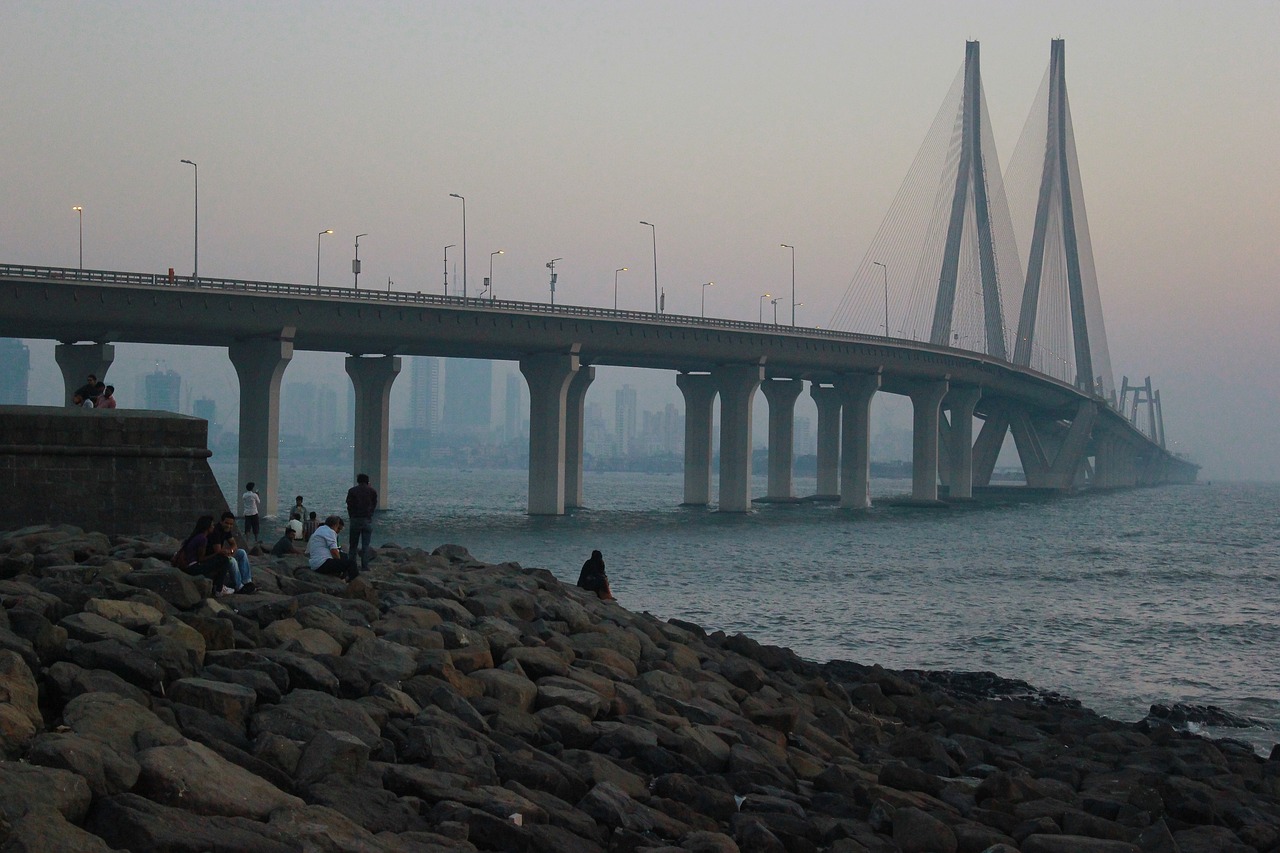
- Bandra–Worli Sea Link: the cable-stayed bridge across Mahim Bay, best seen from Bandra Bandstand.
Other things to do in Mumbai
Food and drink
Mumbai’s street food is the best reason to explore. Start with vada pav, a spiced potato fritter in a soft bun, the city’s signature snack; pav bhaji, buttery mashed vegetable curry with bread; and bhel puri and pani puri on the beaches. The old Irani cafés serve bun maska and chai, Parsi berry pulao and egg dishes; the coast’s Malvani and Konkani seafood restaurants serve fried pomfret, prawn curries and bombil (Bombay duck); and Mohammed Ali Road is famous for kebabs and sweets after dark during Ramadan. Bandra, Lower Parel and Colaba have the city’s best bars and modern Indian restaurants. Drink bottled or filtered water and pick busy stalls.
Art, film and markets
Kala Ghoda’s galleries and its arts festival every February showcase contemporary Indian art. Film-studio tours visit Film City in Goregaon, and the city’s cinemas show Bollywood releases in Hindi. Shop for textiles at Colaba Causeway, antiques at Chor Bazaar, and crafts in Kala Ghoda’s boutiques.
Walking tours
Guided walks explore the Fort district’s architecture, the Art Deco buildings of Marine Drive, the bazaars of Bhendi Bazaar and the Catholic villages of Bandra. Community-run tours of Dharavi, one of Asia’s largest informal settlements, focus on its recycling, pottery and leather industries; choose operators that reinvest in the community and do not take photographs of residents. See our city sightseeing guide.
Festivals
Ganesh Chaturthi, in August or September, is Mumbai’s biggest festival: for ten days, giant idols of the elephant-headed god are worshipped in neighborhood pavilions and then carried to the sea in huge processions. Diwali, Navratri with its all-night dancing, and Christmas in Bandra are also celebrated with gusto.
Day trips from Mumbai
- Kanheri Caves and Sanjay Gandhi National Park: more than 100 Buddhist caves carved from the 1st century BC, in a forested national park in the northern suburbs; foreigners pay ₹250 online on the ASI booking site.
- Alibaug: beaches and a sea fort across the harbor, reached by ferry and bus in about 2 hours.
- Lonavala and the Karla Caves: a hill station in the Western Ghats, about 2 hours by train or road, with early Buddhist cave temples nearby; green and misty in the monsoon.
- Matheran: a car-free hill station reached by a narrow-gauge toy train from Neral, about 2½ to 3 hours away.
- Ajanta and Ellora: India’s most famous painted and rock-cut caves, both UNESCO World Heritage Sites, are about 350 km (220 miles) east near Chhatrapati Sambhajinagar (Aurangabad), best visited on an overnight trip by train or plane.
- Goa: the beaches are about 8 hours south by Vande Bharat or other express trains, or an hour’s flight. See our Goa travel guide.
Getting there and getting around
By air
Chhatrapati Shivaji Maharaj International Airport (BOM), in the suburbs of Santacruz and Sahar, is one of India’s two busiest airports, with international flights at Terminal 2. It is a designated e-Visa entry airport, as is the newer Navi Mumbai International Airport across the harbor. App cabs and prepaid taxis take 45 minutes to 1½ hours to Colaba depending on traffic, and the underground metro Line 3 links the airport with the south of the city.
By train
Mumbai’s long-distance trains use Chhatrapati Shivaji Maharaj Terminus (CSMT), Mumbai Central, Bandra Terminus, Dadar and Lokmanya Tilak Terminus; check which station your train uses. Vande Bharat Express trains link Mumbai with Goa, Ahmedabad and other cities. Indian Railways runs a booking office for international tourists in Mumbai.
Around the city
Suburban trains on the Western, Central and Harbour lines are the city’s lifeline, fast and cheap but extremely crowded at rush hours; buy a first-class ticket, use the women-only cars if you are a woman, and avoid peak times with luggage. A growing metro network serves the suburbs and, with Line 3, south Mumbai. The black-and-yellow taxis run on the meter, and app cabs are widely available; auto-rickshaws operate only in the suburbs. Ferries cross the harbor to Elephanta, Alibaug and Navi Mumbai.
When to go and how long to stay
Mumbai has a tropical climate: hot and humid most of the year, with an extraordinarily wet monsoon. November to February is the best time to visit, with sunny days of 31 to 34 °C (88 to 93 °F), lower humidity and nights of 17 to 21 °C (62 to 71 °F). March to May becomes steadily more humid and sticky. The monsoon arrives in early June and lasts until late September: July alone brings more than 900 mm (36 in) of rain at the airport, with flooding that can halt trains and traffic, though the green, dramatic city has its own appeal. October is hot and humid as the rains end. The table shows 1991–2020 normals for the Santacruz airport station from the India Meteorological Department (IMD), as published by the World Meteorological Organization (WMO); rainy days are days with at least 2.5 mm of rain. Colaba, in the south, is slightly milder in winter and a little less wet.
| Month | Average high / low | Rain (rainy days) | What to expect |
|---|---|---|---|
| January | 31 °C (88 °F) / 17 °C (62 °F) | under 1 mm, 0 days | Sunny, dry and pleasant; best month |
| February | 32 °C (89 °F) / 18 °C (65 °F) | under 1 mm, 0 days | Dry and warm; Kala Ghoda Arts Festival |
| March | 33 °C (92 °F) / 21 °C (70 °F) | under 1 mm, 0 days | Warmer; humidity rising |
| April | 33 °C (92 °F) / 24 °C (76 °F) | under 1 mm, 0 days | Hot and humid |
| May | 34 °C (93 °F) / 27 °C (81 °F) | 7 mm (0.3 in), 1 day | Sticky; pre-monsoon heat |
| June | 32 °C (90 °F) / 27 °C (80 °F) | 526 mm (20.7 in), 14 days | Monsoon arrives; heavy downpours |
| July | 30 °C (87 °F) / 26 °C (78 °F) | 920 mm (36.2 in), 23 days | Wettest month; flooding |
| August | 30 °C (86 °F) / 25 °C (77 °F) | 561 mm (22.1 in), 21 days | Very wet; Ganesh Chaturthi in some years |
| September | 31 °C (88 °F) / 25 °C (77 °F) | 384 mm (15.1 in), 14 days | Rains easing late in the month |
| October | 34 °C (92 °F) / 24 °C (75 °F) | 91 mm (3.6 in), 4 days | Hot and humid; Navratri |
| November | 34 °C (93 °F) / 21 °C (71 °F) | 11 mm (0.4 in), 1 day | Dry season begins; Diwali in some years |
| December | 33 °C (91 °F) / 18 °C (65 °F) | 2 mm (0.1 in), under 1 day | Warm, dry and festive |
Santacruz gets about 2,500 mm (98 in) of rain a year, almost all of it from June to September.
Two days in Mumbai
Day one: the Gateway of India, a morning ferry to the Elephanta Caves, Colaba Causeway, and sunset on Marine Drive and Chowpatty. Day two: CSMT and the Fort district, the museum and galleries of Kala Ghoda, Crawford Market, Haji Ali and an evening in Bandra.
Four days with the suburbs
Add the Kanheri Caves and Sanjay Gandhi National Park, Dhobi Ghat and Banganga Tank, a walking tour and a day in Lonavala or Matheran.
Where to stay in Mumbai
- Colaba: the widest choice for first-time visitors, from guesthouses to grand hotels, near the Gateway and the Elephanta ferry.
- Fort and Churchgate: business and heritage hotels close to CSMT, museums and Marine Drive.
- Bandra: boutique hotels and serviced apartments near the best bars and cafés, halfway to the airport.
- Juhu: beachfront hotels near the airport.
- Andheri and the airport: international hotels for short stays.
Mumbai’s hotels are among the most expensive in India; book ahead for the November to February season and for Ganesh Chaturthi and New Year.
What a trip to Mumbai costs
Prices are approximate, for October 2026, converted at about 96 rupees (₹) to the US dollar. Monument fees are the online prices for foreigners on the Archaeological Survey of India’s booking site.
| Item | Typical cost |
|---|---|
| Elephanta Caves, foreigners | ₹550 online (about US$5.70) |
| Ferry from the Gateway of India to Elephanta, return | ₹250–350 (about US$2.60–3.60) |
| Kanheri Caves, foreigners | ₹250 online (about US$2.60) |
| Vada pav or pav bhaji from a stall | ₹30–150 (about US$0.30–1.50) |
| Dinner in a mid-range restaurant | ₹1,000–2,500 (about US$10–26) per person |
| Suburban train ticket, second class / first class | ₹10–30 / ₹50–200 (about US$0.10–2) |
| App cab from the airport to Colaba | ₹800–1,500 (about US$8–16) |
| Mid-range hotel double, per night | ₹7,000–15,000 (about US$73–156) |
Practical tips for Mumbai
- Do Elephanta early: take the first ferry from the Gateway, avoid Mondays, when the caves are closed, and check that ferries are running in the monsoon.
- Avoid rush hour: suburban trains and roads are packed from about 8 to 11 a.m. and 5 to 9 p.m.
- Use the meter: black-and-yellow taxis and suburban auto-rickshaws should run on the meter; app cabs show the fare in advance.
- Respect the dabbawalas: the lunchbox carriers move on tight schedules through stations at midday; give them space.
- Dress for shrines: cover your head and shoulders at Haji Ali and remove your shoes at temples.
Safety
Mumbai is one of the safer big cities in India, including for women traveling alone, but it has its hazards. The monsoon is the biggest: from June to September, intense downpours can flood streets and railway tracks within hours, halting trains and traffic; follow local news and the weather department’s alerts, and avoid wading through floodwater, which can hide open drains. The sea at Juhu, Chowpatty and the city’s other beaches is not for swimming: currents are strong and the water polluted, and people drown every year, especially in the monsoon. Suburban trains are so crowded at rush hour that passengers hang from open doors and falls are common; travel off-peak and stand away from the doors. Heat and humidity are draining year-round, so drink plenty of water. Food and water: use bottled or filtered water and freshly cooked street food. Scams and petty crime: pickpockets work in crowded trains, markets and around the Gateway; ignore strangers offering roles as Bollywood film extras, charity appeals and “special” shopping trips. Women travelers should use the women-only train cars and app cabs at night. Road safety: traffic is heavy, so cross at signals or by footbridges. In an emergency, call 112.
What to pack for Mumbai
Light cotton and linen clothes, a hat and sunscreen, and modest clothing for temples and shrines; in the monsoon, a good rain jacket or umbrella and quick-drying sandals or water shoes for flooded streets. India uses 230 V, with round-pin plugs of types C, D and M. See our rain jackets, water shoes and travel adapters guides.
Mumbai travel FAQ
How many days do I need in Mumbai?
Two to three days for south Mumbai, the Gateway of India, CSMT and the Elephanta Caves; four or five with the suburbs and a day trip.
How do I get to the Elephanta Caves?
By ferry from the Gateway of India, about an hour each way, then steps up to the caves. The caves are closed on Mondays, and ferries stop in rough weather.
How much does Elephanta cost?
Foreigners pay ₹550 online on the Archaeological Survey of India’s booking site, plus the ferry fare.
What is the best time to visit Mumbai?
November to February, for dry, sunny and less humid weather. The monsoon, from June to September, brings very heavy rain and flooding.
Where should I stay in Mumbai?
Colaba for first visits and the Gateway of India, Fort for heritage hotels near the sights, Bandra for nightlife and cafés, and Juhu or Andheri for the airport.
Is Mumbai safe for tourists?
Generally, yes. Watch for pickpockets in crowds, avoid suburban trains at rush hour, stay out of the sea, and take care during monsoon floods.
Can I swim at Juhu or Chowpatty?
It is not recommended. Currents are strong, the water is polluted, and drownings happen every year, especially during the monsoon.
How do I get around Mumbai?
App cabs and metered black-and-yellow taxis in the south, suburban trains and the metro for longer trips off-peak, and ferries across the harbor.
What food should I try in Mumbai?
Vada pav, pav bhaji, bhel puri on Chowpatty beach, Irani café chai and bun maska, Parsi dishes and Malvani seafood.
How far is Goa from Mumbai?
About 8 hours by the fastest trains, including the Vande Bharat Express, or roughly an hour’s flight to either of Goa’s airports.
Sources and last review
Researched and last reviewed on 4 October 2026. Elephanta and Kanheri entry fees and Elephanta’s Monday closure: the Archaeological Survey of India’s e-ticket booking site; designated e-Visa airports (Mumbai and Navi Mumbai): the Bureau of Immigration’s e-Visa site; international tourist booking offices: Indian Railways; climate normals for Santacruz and Colaba: the India Meteorological Department, via the World Meteorological Organization (1991–2020 normals archived by NOAA’s National Centers for Environmental Information); population: the 2011 census as recorded on Wikidata; the exchange rate: the Reserve Bank of India (FBIL reference rate). Building dates, UNESCO years, ferry times and fares, the metro, train times, festival dates, distances, emergency numbers and typical prices are general references or estimates, flagged for checking. Fees and hours change, so check the official sites before you go. For the e-Visa, money and trains, see our India travel guide.
Plan your trip
Partner links: TravelerCenter may earn a commission if you book, at no extra cost to you.
🇮🇳 Useful Hindi phrases for Mumbai
All 38 Hindi phrases: restaurant, hotel, emergencies, romance (printable) →