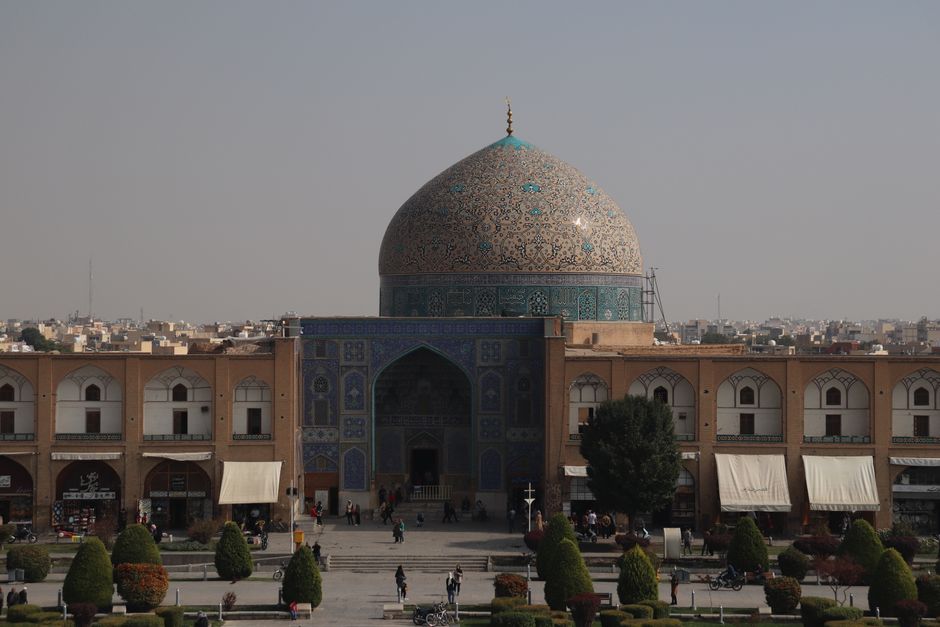
Isfahan (Esfahan) is the jewel of Iran, a city of turquoise domes, tiled portals, shady gardens and long arched bridges, and for many visitors the highlight of a trip to the country. In the late 16th century, Shah Abbas I of the Safavid dynasty made it his capital and rebuilt it on a grand scale around a vast new square, Naqsh-e Jahan, “the image of the world,” lined with two of the most beautiful mosques ever built, a royal palace and the gateway to the bazaar. The square has been a UNESCO World Heritage site since 1979, and the city’s much older Jameh Mosque, a living catalog of a thousand years of Persian architecture, was added in 2012. Beyond them, Isfahan has the painted pavilion of Chehel Sotun in its Persian garden, the bridges over the Zayandeh Rud river, where people gather on summer evenings, and the Armenian quarter of New Julfa, with its cathedral and cafés. It lies in the center of Iran, on the high plateau about 440 km (275 miles) south of Tehran. The best months are April to May and late September to November. Give it at least three days.
Right now in Isfahan
- Sat7–21°C45–69°FMostly clear
- Sun8–21°C46–70°FPartly cloudy
- Mon9–22°C48–72°FClear
Isfahan: quick answers
- Things to do in Isfahan
- Naqsh-e Jahan Square, The Shah (Imam) Mosque, The Sheikh Lotfollah Mosque, Ali Qapu Palace, Chehel Sotun and Hasht Behesht, The Jameh Mosque. More
- Best time to visit Isfahan
- April to May and late September to November, for warm days, cool evenings and gardens at their best. More
- How many days in Isfahan
- Two full days for the square, palaces, bridges and New Julfa; three to five to add the Jameh Mosque, the old city and day trips. More
- Where to stay in Isfahan
- Around Naqsh-e Jahan Square, The old city and the bazaar, The river and New Julfa. More
Isfahan at a glance
- Best for: Safavid architecture and tilework, the great square, Persian gardens, historic bridges, the bazaar and crafts, and evenings in teahouses.
- How long: three days for the main sights; four or five with day trips to Abyaneh, Kashan or the desert.
- Best time: April to May and late September to November; summer middays are hot, winter nights cold.
- Getting there: about an hour’s flight or 5 hours by road from Tehran; buses and trains connect it with the rest of the country.
- Getting around: the square, bazaar, palaces and bridges are within walking distance of one another; taxis, ride-hailing apps and the metro cover the rest.
- Before you go: visas, money, transport and general practical advice are in our Iran travel guide.
Explore Isfahan in videos
Hand-picked travel videos from YouTube creators to help you picture the trip. They play from YouTube; the facts in this guide come from our own research.
Isfahan’s areas and where to stay
Isfahan is a large city, but the historic center is compact, running from the old Jameh Mosque in the north, through the bazaar, to Naqsh-e Jahan Square and down the tree-lined avenue of Chaharbagh to the river.
Around Naqsh-e Jahan Square
The heart of Isfahan and the most convenient place to stay, with traditional-house hotels and larger hotels a short walk from the square, the bazaar, Chehel Sotun and the river. The streets around the square are lined with craft workshops.
The old city and the bazaar
North of the square, the covered bazaar winds for more than a kilometer to the Jameh Mosque through a district of caravanserais, small mosques and courtyard houses, some restored as guesthouses.
The river and New Julfa
South of the center, the Zayandeh Rud is lined with parks and crossed by the historic bridges. Across the river, the Armenian quarter of New Julfa, founded by Shah Abbas in the early 17th century for Armenian merchants and craftsmen, is a lively area of churches, cafés and restaurants with a younger, relaxed feel.
Top things to see in Isfahan
Naqsh-e Jahan Square
Laid out by Shah Abbas I at the start of the 17th century, Naqsh-e Jahan Square, also called Imam Square, is one of the largest city squares in the world, roughly 500 m (1,650 ft) long, with a garden of lawns, fountains and pools in the middle and two stories of arcaded shops around its edges. It was built as the stage of royal Isfahan, for polo matches, markets and ceremonies, and the old stone polo goalposts still stand at each end. Each side is anchored by a great building: the Shah Mosque to the south, the Sheikh Lotfollah Mosque to the east, the Ali Qapu Palace to the west and the gateway of the bazaar to the north. Come at different times of day: in the morning for the light on the tiles, and at dusk, when families picnic on the grass, horse-drawn carriages circle the square and the domes are lit up.
The Shah (Imam) Mosque
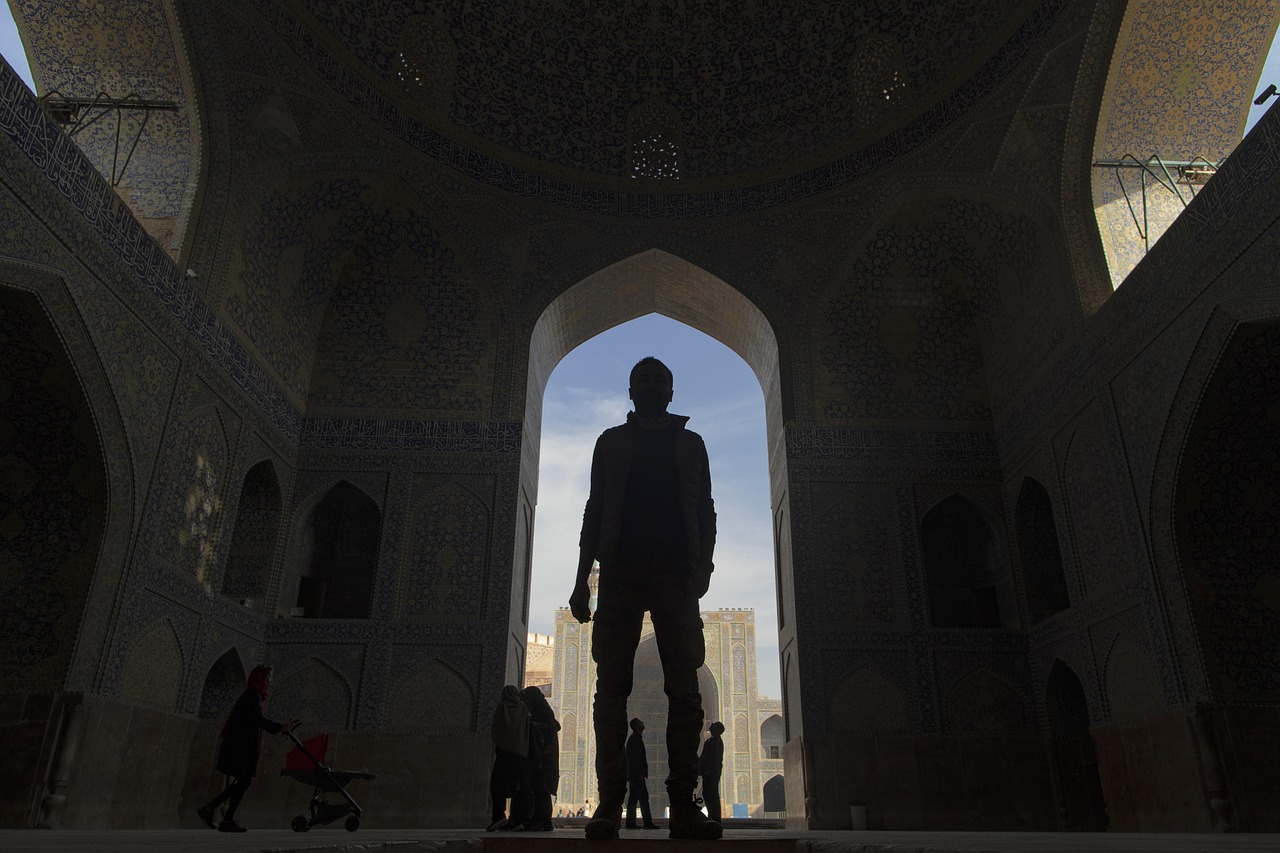
The Shah Mosque, now officially the Imam Mosque, is the crowning glory of the square: a huge complex covered inside and out with blue and yellow seven-color tiles, built in the early 17th century. Its entrance portal faces the square, but the mosque itself turns at an angle behind it to face Mecca. Stand beneath the main dome and clap or speak to hear the famous echo, and look up into the muqarnas (honeycomb vaulting) of the portal. Two madrasas, or religious schools, open off the side courtyards.
The Sheikh Lotfollah Mosque
Smaller and more intimate, the Sheikh Lotfollah Mosque on the east side of the square was built as a private mosque for the royal court and has no courtyard or minarets. Its cream-colored dome changes tone with the light, and inside, a single chamber is lit by small windows under a dome of tiles that seem to spiral inward toward a peacock-like sunburst at the center. Many visitors find it the most beautiful interior in Iran.
Ali Qapu Palace
On the west side of the square, the Ali Qapu palace served as the grand entrance to the royal palace grounds. Climb to its elevated wooden terrace, from where the shah watched polo and parades, for the best view over the square and the domes. On the top floor, the music room has ceilings and walls cut with delicate stucco shapes of vases and bottles, designed to improve the acoustics.
Chehel Sotun and Hasht Behesht
West of the square, the Chehel Sotun (“forty columns”) is a Safavid pavilion used for royal receptions. Its twenty slender wooden columns, reflected in a long pool, make forty, and inside, large wall paintings show court scenes and battles. The garden is one of the nine gardens that make up the UNESCO World Heritage site of the Persian Garden. Nearby, the smaller Hasht Behesht (“eight paradises”) palace stands in a quiet park.
The Jameh Mosque
The Jameh (Friday) Mosque, in the old city at the far end of the bazaar, is the oldest and largest mosque in Isfahan and a UNESCO World Heritage site since 2012. Rebuilt and added to over more than a thousand years, it is a lesson in the history of Persian architecture: the 11th-century brick domes of the Seljuk period, a classic four-iwan courtyard plan that was copied across the Islamic world, Mongol-era stucco and Safavid tilework. Wander through its forest of brick-vaulted prayer halls, each different from the next.
The bridges: Si-o-se-pol and Khaju
Isfahan’s historic bridges over the Zayandeh Rud are as much meeting places as crossings. The Si-o-se-pol (“thirty-three arches”), built in the early 17th century at the end of Chaharbagh, is the longest. The Khaju Bridge, from the mid-17th century, is the most elaborate, with two levels of arches, tiled pavilions in the middle and steps down to the water, and its arches carry voices beautifully when people sing in the evening. The river’s flow is controlled upstream and it is often dry for much of the year, but the bridges are lovely at any time, especially when lit at night.
Vank Cathedral and New Julfa
In New Julfa, the 17th-century Vank Cathedral (Holy Savior Cathedral) of the Armenian Church looks like a mosque from outside, with a brick dome, but inside its walls are covered with richly colored frescoes of biblical scenes. A museum in the courtyard holds manuscripts and other treasures of the Armenian community. Several other Armenian churches stand in the surrounding lanes.
More sights
- The Grand Bazaar: the Qeysarieh portal on the north side of the square opens into covered lanes of carpets, copper, spices, sweets and textiles.
- Chaharbagh: the Safavid avenue of plane trees that runs from the center to the river, with the Chaharbagh madrasa along it.
- Menar Jonban: the “shaking minarets,” a 14th-century tomb west of the city whose twin minarets sway when one of them is moved.
- The Atashgah: the hilltop remains of a Sassanian-era fire temple on the western edge of the city, with views over Isfahan.
- The Pigeon Towers: old round towers in the countryside around Isfahan, built to collect pigeon droppings as fertilizer for melon fields.
Other things to do in Isfahan
Crafts and workshops
Isfahan is Iran’s great craft city. In the arcades around the square and the lanes behind them, you can watch artisans at work on miniature painting, minakari (enamel on copper), khatam (micro-mosaic inlaid wood), hammered copper and silverwork, and ghalamkar, cotton printed by hand with carved wooden blocks. Carpet shops around the square are happy to explain knots, dyes and regional styles over tea. Bargaining is normal.
Teahouses and evenings by the river
Do as the Isfahanis do: spend the evening by the river, walking from bridge to bridge, then sit in a traditional teahouse for tea, sweets and perhaps a water pipe. On summer nights, people picnic in the riverside parks until late.
Food and drink
Isfahan’s signature dish is beryani, minced lamb and lung cooked on a flat pan and served on bread with herbs and onion, sold in small specialist restaurants. Try also khoresh mast, an unusual sweet saffron and yogurt dessert-stew, chelow kabab, and the city’s famous nougat, gaz, made with pistachios and rosewater and sold in boxes all over town. Saffron ice cream and fresh fruit juices are summer favorites. Several restored historic houses in the old city now serve as restaurants.
Day trips from Isfahan
- Abyaneh: about 2.5 hours north, a red-earth mountain village of mud-brick houses and wooden balconies, often combined with Kashan.
- Kashan: about 2.5 hours north, with its historic merchants’ houses and the Fin Garden, part of the Persian Garden World Heritage site; best as an overnight stop on the way to or from Tehran.
- Varzaneh: about 2 hours east, sand dunes, a salt lake and a desert village known for its women’s white chadors and its old bridge.
- Na’in: on the road to Yazd, a small desert town with a 10th-century mosque and a tradition of fine carpets.
- Yazd: about 4 hours east by road, best as the next stop on the classic route rather than a day trip.
Getting there and getting around
By air
Isfahan Shahid Beheshti International Airport (IFN), northeast of the city, has frequent domestic flights to Tehran, Shiraz, Mashhad and other cities, and some international flights in the region. The flight from Tehran takes about an hour. Taxis wait outside the terminal for the ride into the center, about 30 to 45 minutes depending on traffic.
By road and rail
Comfortable VIP buses run day and night between Isfahan and Tehran (about 5 to 6 hours), Kashan, Yazd and Shiraz from the city’s bus terminals, with the Kaveh terminal serving the north and the Soffeh terminal the south. Trains link Isfahan with Tehran, Kashan, Yazd and Mashhad. Many visitors hire a car and driver for the stretch from Kashan, stopping at Abyaneh on the way.
Getting around
Walk between the square, the bazaar, Chehel Sotun and the river; the old city and the Jameh Mosque are a longer walk through the bazaar or a short taxi ride. Ride-hailing apps such as Snapp and street taxis are inexpensive, and Isfahan’s metro runs north–south under the city, with stations near Naqsh-e Jahan Square and the Si-o-se-pol.
When to go and how long to stay
Isfahan lies at about 1,550 m (5,100 ft) on the central plateau and has a dry climate with hot summers and cold winters. Spring, from April to May, and autumn, from late September to November, are ideal, with warm days, cool evenings and gardens at their best. Summer, from June to August, is hot, with highs around 34–36 °C (93–98 °F), but the air is dry and evenings by the river are pleasant; plan sightseeing early and late. Winter, from December to February, has crisp sunny days and nights around freezing, with few visitors. Around Nowruz, in late March, the city is full of Iranian holidaymakers, so book ahead. The table shows long-term averages for Isfahan, published by Iran’s meteorological organization on the World Meteorological Organization’s (WMO) World Weather Information Service; the city receives only about 110 mm (4.4 in) of rain a year.
| Month | High / low | Rain | What to expect in Isfahan |
|---|---|---|---|
| January | 9 °C / -2 °C (48 °F / 28 °F) | 17 mm (0.7 in) | Cold nights, sunny days; quiet sights |
| February | 12 °C / 0 °C (53 °F / 32 °F) | 14 mm (0.6 in) | Cold and clear |
| March | 17 °C / 4 °C (62 °F / 40 °F) | 18 mm (0.7 in) | Spring blossom; Nowruz crowds late in the month |
| April | 22 °C / 9 °C (72 °F / 49 °F) | 19 mm (0.8 in) | Ideal; gardens in bloom |
| May | 28 °C / 14 °C (82 °F / 58 °F) | 9 mm (0.3 in) | Warm and dry; ideal |
| June | 34 °C / 19 °C (93 °F / 66 °F) | under 1 mm | Hot; sightsee early, river evenings |
| July | 36 °C / 22 °C (98 °F / 71 °F) | under 1 mm | Hottest month |
| August | 35 °C / 20 °C (95 °F / 68 °F) | under 1 mm | Hot and dry |
| September | 31 °C / 15 °C (88 °F / 59 °F) | under 1 mm | Warm days, cooler nights |
| October | 24 °C / 9 °C (76 °F / 49 °F) | 4 mm (0.2 in) | Ideal; clear and golden |
| November | 17 °C / 4 °C (62 °F / 38 °F) | 10 mm (0.4 in) | Crisp; autumn colors along Chaharbagh |
| December | 11 °C / -1 °C (51 °F / 30 °F) | 20 mm (0.8 in) | Cold; Yalda Night celebrations |
Isfahan in 2 days
Day one: Naqsh-e Jahan Square, the Shah Mosque, Sheikh Lotfollah Mosque and Ali Qapu in the morning, the bazaar and craft workshops after lunch, and the square again at dusk. Day two: Chehel Sotun and Hasht Behesht, then Vank Cathedral and New Julfa, and an evening walk along the river from the Si-o-se-pol to the Khaju Bridge.
3 to 5 days
Add a morning at the Jameh Mosque and the old city, Menar Jonban and the Atashgah, and a day trip to Abyaneh or the desert at Varzaneh, or break the journey from Tehran with a night in Kashan.
Where to stay in Isfahan
- Near Naqsh-e Jahan Square: the best base, with traditional-house hotels around courtyards and larger hotels within a few minutes’ walk of the main sights.
- Chaharbagh and the river: large hotels, including historic ones, within walking distance of both the square and the bridges.
- The old city: restored courtyard houses near the bazaar and the Jameh Mosque, quiet and atmospheric.
- New Julfa: guesthouses and boutique hotels in the Armenian quarter, close to cafés and restaurants.
Book well ahead for Nowruz in late March and early April, when the city is at its busiest.
What a trip to Isfahan costs
Prices are rough estimates in US dollars for November 2026; local prices change quickly. Bank cards issued outside Iran do not work there, so budget in cash. Entry fees to the mosques, palaces and cathedral are set by the authorities and are higher for foreign visitors; check them at the ticket office.
| Item | Typical cost |
|---|---|
| Metro ride | under US$1 |
| Ride-hailing trip across the center | US$1–4 |
| Tea and sweets in a teahouse | US$2–5 |
| Beryani or kebab lunch | US$3–8 |
| Dinner for two in a historic-house restaurant | US$15–35 |
| Day trip by car and driver to Abyaneh or Varzaneh | US$40–80 |
| Traditional-house hotel double, per night | US$40–100 |
Practical tips for Isfahan
- See the square twice: once in the morning for the mosques and once at dusk for the atmosphere and the lights.
- Check prayer times: the mosques may close to visitors around Friday midday prayers; go earlier in the day.
- Dress for the mosques: women cover their hair and wear loose clothing covering arms and legs, as everywhere in public in Iran; men wear long trousers.
- Bring enough cash: in euros or US dollars, and change it at licensed exchange offices.
- Take your time in the workshops: tea and conversation come first; buying is never obligatory.
Safety
Isfahan is a relaxed, welcoming city, and the practical risks are small. Take care crossing the busy avenues, where motorbikes and cars do not always stop; carry water, sunscreen and a hat in summer; and watch your step on the uneven stone of the bridges and old lanes after dark. For emergencies, call 110 for the police, 115 for an ambulance and 125 for the fire service.
What to pack for Isfahan
Comfortable walking shoes that slip on and off easily for mosques and homes, a light headscarf and loose long clothing for women, long trousers for men, sunglasses, sunscreen and a hat for summer, a warm jacket for winter and for cool spring and autumn evenings, a refillable water bottle, cash for the whole stay, and a travel adapter if your devices do not use the European two-pin plug. See our hiking shoes and travel adapters guides.
Isfahan travel FAQ
Why is Isfahan famous?
For its 17th-century Safavid architecture, above all Naqsh-e Jahan Square with the Shah and Sheikh Lotfollah mosques and the Ali Qapu Palace, as well as the Jameh Mosque, its bridges, gardens and crafts. A Persian saying calls it nesf-e jahan, “half the world.”
Is Isfahan a UNESCO World Heritage site?
Yes, twice over: Naqsh-e Jahan (Meidan Emam) Square was inscribed in 1979 and the Jameh Mosque in 2012, and the Chehel Sotun garden is part of the Persian Garden World Heritage site.
How do I get from Tehran to Isfahan?
By air in about an hour, by VIP bus in about 5 to 6 hours, by train, or by car with a driver via Kashan and Abyaneh.
How many days do I need in Isfahan?
Two full days for the square, palaces, bridges and New Julfa; three to five to add the Jameh Mosque, the old city and day trips.
Is there water in the Zayandeh Rud?
Only at times. The river’s flow is controlled upstream and it is often dry for much of the year; the bridges are still well worth visiting, especially in the evening.
What should I buy in Isfahan?
Miniature paintings, minakari enamel, khatam inlay, hand-printed ghalamkar cloth, carpets and a box of gaz nougat.
What is the best time to visit Isfahan?
April to May and late September to November, for warm days, cool evenings and gardens at their best.
Plan your trip
Partner links: TravelerCenter may earn a commission if you book, at no extra cost to you.
Before you go: guidebooks and travel gear
Affiliate links: we may earn a commission at no extra cost to you. As an Amazon Associate we earn from qualifying purchases. We pick items for the place, not for the commission. How we earn money
Sources · last reviewed 10 November 2026
Researched and last reviewed on 10 November 2026. World Heritage inscriptions (Naqsh-e Jahan Square 1979, Jameh Mosque 2012, Persian Garden): UNESCO World Heritage Centre; temperatures and rainfall: Iran’s meteorological organization, via the World Meteorological Organization’s World Weather Information Service; foreign bank cards: the UK government’s travel information; emergency numbers: Isfahan University of Medical Sciences; coordinates: Wikidata. History, monument dates and descriptions, the river’s flow, food, transport, terminals, distances, travel times, elevation and prices are general references or estimates, flagged for checking. Hours and fees change, so check on arrival. For visas, money and general practical advice, see our Iran travel guide.
Data: Weather: MET Norway (CC BY 4.0) · Rates: ECB · Wikidata (CC0)