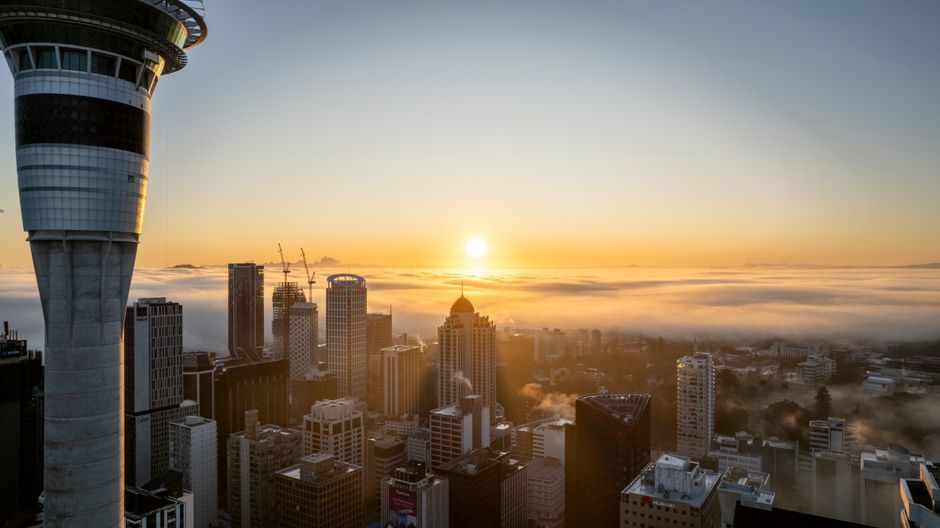
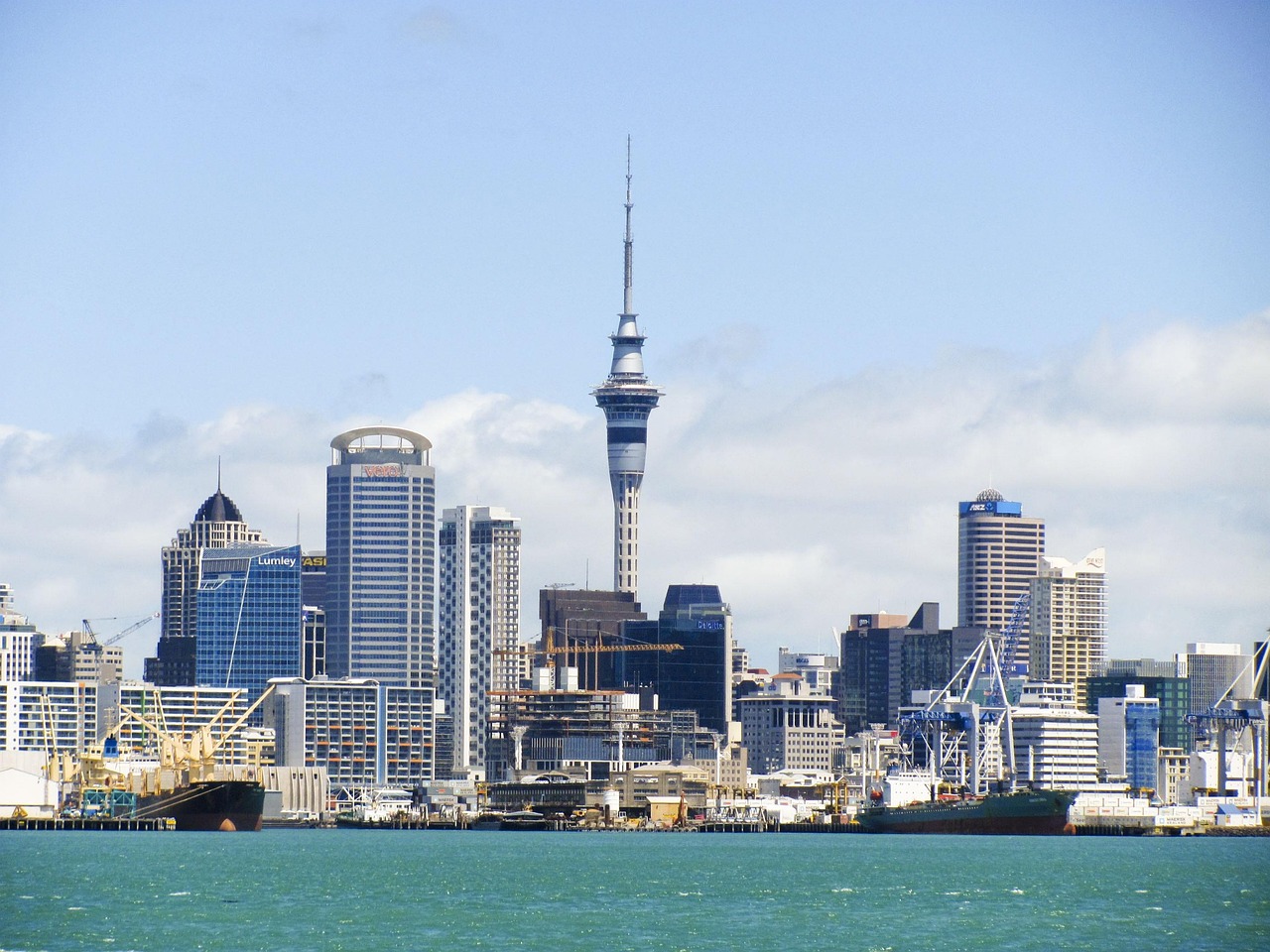
Auckland, Tāmaki Makaurau in te reo Māori, is New Zealand’s largest city and the arrival point for most international flights. It spreads across a narrow isthmus between two harbors, the Waitematā to the east and the Manukau to the west, and is built on a field of about 50 small volcanoes, many of them grassy cones with views over the city. With around 1.8 million people in the wider region, it is the country’s most diverse city, with big Pacific Island and Asian communities, and its food scene shows it. Ferries leave the downtown waterfront for Waiheke Island’s vineyards and beaches, the volcanic island of Rangitoto and the seaside village of Devonport, while black-sand surf beaches and rainforest are under an hour west. Most visitors spend two to four days here at the start or end of a trip, but the city rewards a slower look: the waterfront, the Auckland Museum, the cones of Maungawhau/Mount Eden and One Tree Hill, and a summer day on the Hauraki Gulf. The climate is mild and humid, warm from December to March and cool and showery in winter.
Right now in Auckland
- Wed9–18°C48–64°FClear
- Thu13–20°C55–67°FClear
- Fri11–19°C52–67°FMostly clear
Top tours in Auckland
See all tours for Auckland →
From local operators, with prices and reviews; you check availability and book on Viator, our partner. We may earn a commission at no extra cost to you. How we earn money
Auckland at a glance
- Best months: December to April for beaches, islands and outdoor dining; February and March are the most settled. Winter (June to August) is mild but wet.
- Time needed: two days for the city and a ferry trip; four days to add Waiheke, the west coast beaches and a day trip.
- Getting there: Auckland Airport (AKL) is about 20 km (12 miles) south of the center. The AirportLink bus connects to trains at Puhinui Station; taxis, rideshares and shuttles go direct.
- Costs (as of October 2026): prices in New Zealand dollars; a contactless card is capped at NZ$20 a day on buses, trains and most ferries (about US$11). A flat white is about NZ$5.50–6.50.
- Before you go: entry rules (the NZeTA and the NZ$100 visitor levy), the traveler declaration and biosecurity rules are in our New Zealand travel guide.
Auckland neighborhoods and who each one suits
City center, Viaduct Harbour and Wynyard Quarter
The central business district runs up from the ferry terminal along Queen Street. Hotels here put you next to the Sky Tower, the art gallery and the ferries, and the waterfront Viaduct Harbour and Wynyard Quarter are lined with restaurants, bars and superyachts. It is the most convenient base for first-time visitors and anyone without a car, though Queen Street itself is busy and some blocks are quiet at night.
Ponsonby, Grey Lynn and Karangahape Road
West of the center, Ponsonby Road is Auckland’s café and restaurant strip, with boutiques and wooden villas in the side streets. Karangahape Road (“K Road”) is edgier, with bars, live music and vintage shops. Good for food lovers and a more local feel; it is a 20-minute walk or short bus ride from downtown.
Parnell and Newmarket
Parnell, east of the center, has heritage buildings, galleries, the Auckland Domain and the museum, plus the Parnell Rose Gardens. Newmarket, just south, is a shopping district with a train station. Both suit couples and families who want a quieter base close to town.
Devonport and the North Shore
A 12-minute ferry ride across the harbor, Devonport is a Victorian seaside village with two volcanic cones, North Head (Maungauika) and Mount Victoria (Takarunga), and a beach. The North Shore beyond has long, family-friendly beaches such as Takapuna. Pick it for a relaxed, village stay with a ferry commute.
Mission Bay and the eastern bays
East along Tamaki Drive, Mission Bay, Kohimarama and St Heliers have sandy harbor beaches, ice-cream shops and a waterfront path that is popular with cyclists and runners. Best for a beach-side stay or a long summer evening walk.
Top things to see in Auckland
Sky Tower
At 328 m (1,076 feet), the Sky Tower is the tallest freestanding structure in the Southern Hemisphere, and its observation decks give a 360-degree view over the harbors, islands and volcanic cones. For a thrill, the SkyWalk (a harnessed walk around the outside rim) and SkyJump (a controlled base jump) start here. There is a revolving restaurant near the top.
Auckland War Memorial Museum and the Domain
Set on an old volcanic crater in the Auckland Domain, the city’s oldest park, the museum has one of the world’s best collections of Māori and Pacific Island treasures, including a carved meeting house and a war canoe, plus natural history and war memorial galleries. Short Māori cultural performances run daily. Entry is free for Auckland residents and by donation for other New Zealanders; international visitors pay an admission fee. The Domain’s Wintergardens glasshouses are free.
Maungawhau/Mount Eden and the volcanic cones
Auckland’s volcanic cones are its signature. Maungawhau/Mount Eden, the highest at 196 m, has a deep crater and a 360-degree view; walk up from the village (vehicles are no longer allowed to the top). Maungakiekie/One Tree Hill, in Cornwall Park, has a summit obelisk, sheep grazing on the slopes and terraces of a large Māori pā (fortified village). North Head in Devonport has old military tunnels. Most cones are cared for by the Tūpuna Maunga Authority, which co-governs them with mana whenua (local iwi); please stay on paths and don’t walk into the craters.
Rangitoto Island
The symmetrical island on the harbor’s horizon is New Zealand’s youngest volcano, which emerged from the sea only about 600 years ago. Ferries take about 25 minutes from downtown. A track climbs through lava fields and pōhutukawa forest to the summit in about an hour, with lava caves to explore with a torch. The island is pest-free, so check your bags and shoes for seeds, soil and stowaways before you board. There are no shops or water on the island: take food, water, sturdy shoes, a hat and sunscreen, since the black rock reflects the heat, and do not miss the last ferry back.
Waiheke Island
Forty minutes by fast ferry, Waiheke has vineyards, olive groves, art galleries and sandy beaches such as Oneroa and Onetangi. Hop-on hop-off buses, wine tours and e-bikes get you around; restaurants with vineyard views are the big draw, so book lunch ahead on summer weekends. It makes an easy day trip, or stay overnight for a slower pace.
The waterfront and Auckland Art Gallery
Walk from the ferry building along the waterfront to the Viaduct and Wynyard Quarter, with its fish market, playgrounds and Silo Park. Uphill, the Auckland Art Gallery Toi o Tāmaki, in a striking timber-roofed building beside Albert Park, has the country’s largest art collection, including Gottfried Lindauer and Charles Goldie portraits of Māori ancestors; general admission is free for New Zealanders, and international visitors pay for entry.
The west coast beaches and the Waitākere Ranges
Less than an hour west, the Waitākere Ranges Regional Park has rainforest walks, waterfalls and wild black-sand beaches: Piha, with its Lion Rock and surf, Karekare (the beach from the film The Piano) and Muriwai, with a gannet colony on the cliffs from about August to March. These are dangerous surf beaches with strong rips: swim only between the flags when lifeguards are on duty. Some tracks in the ranges remain closed to protect kauri trees from kauri dieback disease; clean your shoes at the stations.
Other things to do in Auckland
- Sail the harbor: Auckland calls itself the City of Sails; join a harbor cruise or a sailing trip on an America’s Cup yacht.
- Tiritiri Matangi Island: a pest-free open sanctuary in the Hauraki Gulf, reached by ferry, where you can see rare birds such as takahē and saddleback.
- Kelly Tarlton’s Sea Life Aquarium: penguins, sharks and an underwater tunnel on Tamaki Drive.
- Auckland Zoo and MOTAT: the zoo in Western Springs and the transport and technology museum next door are good for families.
- Markets: weekend markets in Matakana (north) and La Cigale in Parnell, and night markets in the suburbs.
- Sport: see the All Blacks or a cricket match at Eden Park.
Food and drink
Auckland’s food reflects its people: Pacific Island and Māori flavors, excellent Korean, Chinese, Malaysian, Indian and Japanese food along Dominion Road and in the suburbs, and seasonal New Zealand cooking in Ponsonby and the waterfront. Try seafood at the Wynyard Quarter fish market, a hāngī-style dish or rewena bread, a pie and a flat white at a local bakery, and a glass of Waiheke Syrah or a Kumeu Chardonnay. Ponsonby Road, K Road and Britomart are the evening hubs; the Viaduct is busiest on Friday nights.
Day trips from Auckland
Waitomo Caves
About 2.5 hours south, the Waitomo caves are famous for glowworms: tiny larvae whose blue-green lights cover the cave ceilings. Boat rides through the Glowworm Grotto are the classic tour, and adventure operators offer black-water rafting (tubing through the caves). Combine it with Hobbiton on the way to Rotorua rather than as a long return day trip.
Hobbiton Movie Set
The Shire from The Lord of the Rings and The Hobbit films is on a working farm near Matamata, about two hours south. Guided tours of the hobbit holes and the Green Dragon Inn take about 2.5 hours and cost NZ$130 for adults (NZ$65 for ages 11 to 17, free for children 10 and under); bookings are essential. Coach tours from Auckland run daily. See our Rotorua guide if you are heading on south.
The Coromandel Peninsula
Two to three hours east, the Coromandel has Hot Water Beach, where you can dig a spa in the sand at low tide, and the arch of Cathedral Cove, reached by boat, kayak or a coastal track depending on current access. It is better as an overnight trip than a day trip.
Matakana and Goat Island
An hour north, Matakana has a Saturday farmers’ market, wineries and cafés, and nearby Goat Island Marine Reserve, New Zealand’s first marine reserve, has snorkeling among big snapper right off the beach.
Nearby destinations
- Bay of Islands191 km
- Rotorua194 km
- Taupo235 km
- Tongariro National Park271 km
Getting there and getting around
From Auckland Airport (AKL)
The airport is about 20 km south of the center; allow 30 to 60 minutes by road depending on traffic. Public transport takes two steps: the orange AirportLink bus runs every 10 minutes from about 4:30 a.m. to 12:40 a.m. between the domestic and international terminals and Puhinui Station (13 to 20 minutes), where trains continue to Britomart in the city. Route 38 buses also run to Onehunga. You can pay with a contactless card or an AT HOP card (sold at the airport for NZ$5, plus a minimum NZ$1 top-up; vending machines sell cards preloaded with NZ$20). Taxis, rideshares and door-to-door shuttles wait outside both terminals. A free walkway and an inter-terminal bus link the domestic and international terminals, about 10 minutes apart.
Buses, trains and ferries
Auckland Transport (AT) runs the city’s buses, trains and most ferries. Tap on and off with a contactless Visa, Mastercard or American Express card, phone or watch, or an AT HOP card. Contactless payments are capped at NZ$20 a day; AT HOP card users get a NZ$50 seven-day cap. The busy City Link and Inner Link buses circle the center, and frequent trains run on four lines from Britomart. Ferries to Devonport (12 minutes), Waiheke (about 40 minutes) and other harbor stops leave from the downtown ferry terminal; the Waiheke service is run by Fullers360 and does not take contactless payment, but accepts AT HOP. Rangitoto ferries are run by Fullers360 too.
Driving
You don’t need a car in central Auckland, where parking is expensive, but one helps for the west coast, Matakana and beyond. Motorway traffic is heavy at rush hour. Drive on the left.
When to go and how long to stay
Auckland has a mild, humid, subtropical-influenced climate with no extremes. Summer (December to February) is warm, with highs around 24 °C (75 °F), humid nights, long evenings and occasional tropical downpours. Autumn (March to May) is often the most pleasant, with warm sea and calmer weather. Winter (June to August) is mild, around 15 °C (59 °F) by day, but it is the wettest season, with showers on about half the days. Spring (September to November) is changeable and windy, with sunny spells and showers. Rain can come at any time, but usually in short bursts.
| Month | Average high | Average low | Rain | Rain days (≥1 mm) |
|---|---|---|---|---|
| Jan | 24 °C (75 °F) | 16 °C (61 °F) | 58 mm (2.3 in) | 7 |
| Feb | 24 °C (76 °F) | 17 °C (62 °F) | 63 mm (2.5 in) | 7 |
| Mar | 23 °C (73 °F) | 15 °C (59 °F) | 75 mm (3.0 in) | 8 |
| Apr | 20 °C (69 °F) | 13 °C (55 °F) | 87 mm (3.4 in) | 10 |
| May | 18 °C (64 °F) | 11 °C (51 °F) | 120 mm (4.7 in) | 13 |
| Jun | 16 °C (60 °F) | 9 °C (48 °F) | 119 mm (4.7 in) | 14 |
| Jul | 15 °C (58 °F) | 8 °C (46 °F) | 137 mm (5.4 in) | 15 |
| Aug | 15 °C (59 °F) | 8 °C (47 °F) | 117 mm (4.6 in) | 15 |
| Sep | 16 °C (62 °F) | 10 °C (49 °F) | 100 mm (3.9 in) | 12 |
| Oct | 18 °C (64 °F) | 11 °C (52 °F) | 92 mm (3.6 in) | 12 |
| Nov | 20 °C (67 °F) | 13 °C (55 °F) | 69 mm (2.7 in) | 9 |
| Dec | 22 °C (72 °F) | 15 °C (59 °F) | 82 mm (3.2 in) | 9 |
| Year | 19 °C (67 °F) | 12 °C (54 °F) | 1,119 mm (44.1 in) | 130 |
Figures are NIWA’s 1991–2020 climate normals for Auckland. Sunshine averages about 2,120 hours a year, with around 240 hours in January.
Events worth planning around
- Auckland Anniversary Day (observed Monday 1 February 2027), with the Anniversary Day Regatta on the harbor.
- Waitangi Day (6 February, observed Monday 8 February 2027), with events at Okahu Bay and across the city.
- Pasifika Festival (March) and the Auckland Lantern Festival around Lunar New Year, two of the city’s biggest cultural events.
- Matariki (Māori New Year) in June and July, with light shows and dawn ceremonies; the 2027 public holiday is Friday 25 June.
- Diwali in October and New Year’s Eve fireworks from the Sky Tower.
Dates change every year; check the organizers’ sites before you book.
How long to stay: 2, 4 and 6 days
- Two days: the waterfront, the Sky Tower, the museum and the Domain, Maungawhau/Mount Eden at sunset, and a ferry to Devonport or Rangitoto.
- Four days: add a full day on Waiheke and a day on the west coast beaches and Waitākere Ranges.
- Six days: add Tiritiri Matangi, Matakana and Goat Island, or head to Waitomo, Hobbiton and Rotorua.
Where to stay in Auckland
- City center and Viaduct: most hotels, close to ferries and the airport bus connections; the best choice for a short stay.
- Ponsonby, Grey Lynn and Parnell: boutique hotels, B&Bs and apartments in leafy streets, near cafés and restaurants.
- Devonport and Takapuna: guesthouses and seaside apartments, a ferry or bus ride from town.
- Waiheke Island: vineyard lodges and holiday homes, for a slower stay.
- Near the airport: chain hotels in Māngere for early flights.
Prices are highest from December to March and during big events such as rugby tests and concerts. Displayed prices include 15% GST; there is no separate hotel tax.
Typical costs in Auckland
| Item (as of October 2026) | New Zealand dollars | About US dollars |
|---|---|---|
| AT HOP card (one-off purchase) | NZ$5 | US$2.80 |
| Daily cap on buses, trains and ferries with a contactless card | NZ$20 | US$11 |
| Seven-day cap with an AT HOP card | NZ$50 | US$28 |
| Hobbiton Movie Set tour, adult | NZ$130 | US$73 |
| Flat white coffee | about NZ$5.50–6.50 | about US$3–3.60 |
| Casual restaurant main | about NZ$28–40 | about US$16–22 |
| Return fast ferry to Waiheke Island | about NZ$60 | about US$34 |
| Mid-range hotel room, per night | about NZ$200–350 | about US$110–195 |
Transport caps and the Hobbiton price are official 2026 figures. Coffee, meals, ferry and hotel prices are typical ranges, not official prices. Conversions use about US$0.56 to NZ$1.
Safety in Auckland
- Beaches and rips: the west coast beaches (Piha, Karekare, Muriwai) have powerful rips and big surf. Swim only between the red-and-yellow flags when lifeguards are on patrol, usually on summer weekends and holidays.
- Sun: UV levels are very high in summer, even on cloudy days; use sunscreen, a hat and sunglasses.
- Weather: heavy rain can cause flash flooding, as in early 2023; follow MetService warnings and avoid flooded roads.
- Volcanic field: Auckland sits on an active volcanic field, but GeoNet’s alert level was 0 (no unrest) in October 2026. The last eruption, Rangitoto, was about 600 years ago.
- Crime: Auckland is generally safe, but car break-ins happen at beaches, trailheads and city parking; never leave valuables in a car. Late at night, parts of the central city can be rowdy.
- Emergencies: call 111.
Practical tips for Auckland
- Time zone: New Zealand Daylight Time (UTC+13) from 27 September 2026 to 4 April 2027.
- Biosecurity: clean your shoes before visiting pest-free islands and kauri forests.
- Free things: the Domain and Wintergardens, the volcanic cones, the waterfront, the Auckland Museum for New Zealand residents, the art gallery for New Zealanders, and Mission Bay.
- Tipping: not expected; round up for great service if you like.
- Ferries in summer: book the Waiheke and Rangitoto ferries ahead on weekends, and check the last sailing.
What to pack for Auckland
Pack light layers and a rain jacket in any season, plus a swimsuit, sunscreen, a hat and sunglasses for summer. Sturdy shoes are needed for Rangitoto’s lava and the Waitākere tracks; clean them before you go. In winter, add a warm sweater and a waterproof coat.
Auckland travel FAQ
How do I get from Auckland Airport to the city?
Take the AirportLink bus to Puhinui Station (13 to 20 minutes) and a train to Britomart, paying with a contactless card or AT HOP card. Taxis, rideshares and shuttles go direct in 30 to 60 minutes depending on traffic.
Can I use my credit card on Auckland public transport?
Yes. Contactless Visa, Mastercard, American Express and phone wallets work on buses, trains and most ferries, with a NZ$20 daily cap. The Fullers360 Waiheke ferry is the main exception; buy a ticket or use an AT HOP card.
How much is public transport in Auckland per day?
No more than NZ$20 a day if you tap on and off with a contactless card. With an AT HOP card, travel is capped at NZ$50 over seven days.
Is Waiheke Island worth a day trip?
Yes, especially in summer: the fast ferry takes about 40 minutes, and you can spend the day at vineyards, beaches and galleries. Book lunch and wine tours ahead on weekends.
How do I visit Rangitoto Island?
Take the Fullers360 ferry from downtown (about 25 minutes) and walk to the summit in about an hour. Bring food, water and sturdy shoes, check your gear for pests, and don’t miss the last ferry.
Is it safe to swim at Piha?
Only between the flags when lifeguards are on duty. Piha and the other west coast beaches have strong rips and are among New Zealand’s most dangerous for swimmers.
How far is Hobbiton from Auckland?
About two hours’ drive south, near Matamata. Tours cost NZ$130 for adults and must be booked; coach tours run from Auckland.
When is the best time to visit Auckland?
February and March, when the weather is warm and settled and the summer holiday crowds have gone. December to April is good for beaches and islands.
How many days do you need in Auckland?
Two days covers the city highlights; four lets you add Waiheke and the west coast.
Is Auckland expensive?
It is one of New Zealand’s pricier cities for accommodation and eating out, but transport is capped, many sights (volcanic cones, beaches, parks) are free, and ethnic restaurants in the suburbs are good value.
Plan your trip
Partner links: TravelerCenter may earn a commission if you book, at no extra cost to you.
Sources · last reviewed 5 October 2026
Researched and last reviewed on 5 October 2026. Airport bus, fare caps and AT HOP card prices come from Auckland Transport; ferry payment rules from Auckland Transport; Rangitoto Island guidance from the Department of Conservation; volcanic alert levels from GeoNet; climate from NIWA’s 1991–2020 normals for Auckland; public holiday dates from Employment New Zealand; daylight saving dates from Govt.nz; Hobbiton prices from Hobbiton Movie Set; museum entry rules from Auckland War Memorial Museum; exchange rates from the European Central Bank; population from Wikidata. Heights, travel times, the Waiheke ferry fare, international museum and gallery fees, event months, meal and hotel prices are general references and flagged for checking. Prices and schedules change, so check the official sites before you go. For entry rules, biosecurity and driving, see our New Zealand travel guide.
Data: Weather: MET Norway (CC BY 4.0) · Sea temperature: NOAA CoastWatch · Air quality: OpenAQ · Rates: ECB · Costs: World Bank ICP and price levels · Wikidata (CC0)