New Zealand, Aotearoa in te reo Māori, is two long, mountainous main islands and hundreds of smaller ones in the South Pacific, about 2,000 km (1,250 miles) southeast of Australia. You can drive from subtropical beaches and kauri forest in the far north to volcanoes, geysers and boiling mud in the middle of the North Island, then cross Cook Strait to the glaciers, fjords and alpine lakes of the South Island. About 5.3 million people live here, most of them in a handful of cities, so the open road, the national parks and the coast feel spacious even in summer. Māori culture is woven through daily life, from place names and greetings to the marae, carving and performance you can experience in Rotorua and at Waitangi. The seasons are the reverse of the Northern Hemisphere: summer runs from December to February, and the ski season from about late June to early October. Most visitors need an NZeTA (electronic travel authority) and pay a NZ$100 tourism levy before they fly, and every arriving traveler completes a free online traveler declaration. Biosecurity checks at the airport are strict.
Right now in New Zealand
- Wed 11–14°C 52–57°F 1 mm Partly cloudy
- Thu 11–13°C 52–55°F Cloudy
- Fri 11–14°C 52–58°F Cloudy
Weather: MET Norway (CC BY 4.0)
Multi-day tours of New Zealand
Multi-day tours from local operators. You check dates and book on Viator, our partner; we may earn a commission at no extra cost to you. How we earn money
New Zealand at a glance
- Capital: Wellington, at the southern tip of the North Island. Auckland is the largest city and the main international gateway.
- Population and size: about 5.3 million people in 268,021 km² (103,483 sq miles); the North and South islands are separated by Cook Strait, about 22 km (14 miles) wide at its narrowest.
- Languages: English, te reo Māori and New Zealand Sign Language are official. You will hear Māori words everywhere: kia ora (hello), whānau (family), kai (food), Aotearoa (New Zealand).
- Currency: the New Zealand dollar (NZ$). In early October 2026, NZ$1 was worth about US$0.56. Prices include 15% GST.
- Time zone: New Zealand Daylight Time (UTC+13) from 27 September 2026 to 4 April 2027, then New Zealand Standard Time (UTC+12). The Chatham Islands are 45 minutes ahead.
- Driving: on the left. Many rural bridges are one lane wide.
- Entry: most visitors need an NZeTA (NZ$17 in the app, NZ$23 online) plus the NZ$100 International Visitor Conservation and Tourism Levy (IVL); Australians need neither.
- Emergency number: 111 for police, fire and ambulance.
New Zealand’s regions
The North Island holds about three-quarters of the population: subtropical Northland, Auckland, the Coromandel, the volcanic plateau around Rotorua, Taupō and Tongariro, the sunny east coast wine country, Taranaki and Wellington. The South Island is bigger and emptier: Marlborough and Nelson in the north, Canterbury and Christchurch in the east, the Southern Alps along its spine, the rainy West Coast, the lakes of Otago and the fjords of Fiordland in the southwest. Stewart Island/Rakiura lies off the southern tip.
Regions
Where to go: cities, volcanoes, fjords and glaciers
Auckland and the Bay of Islands
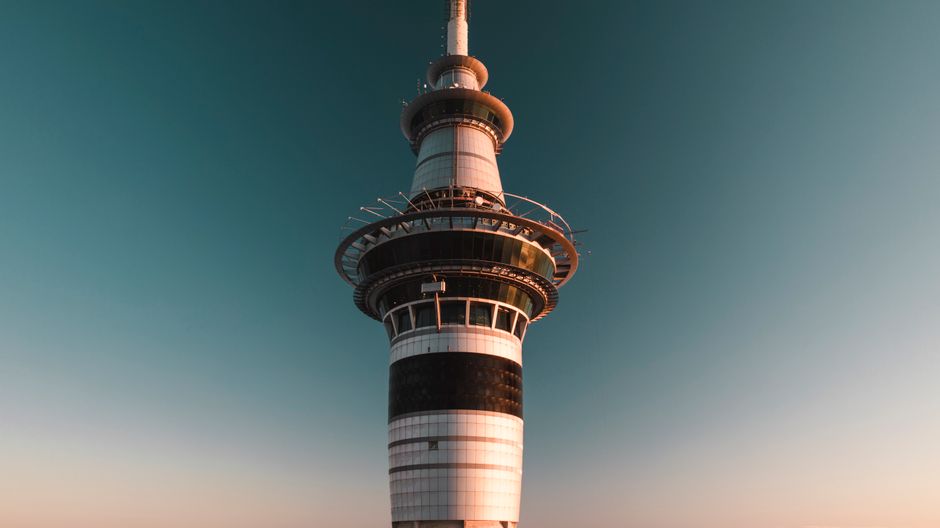
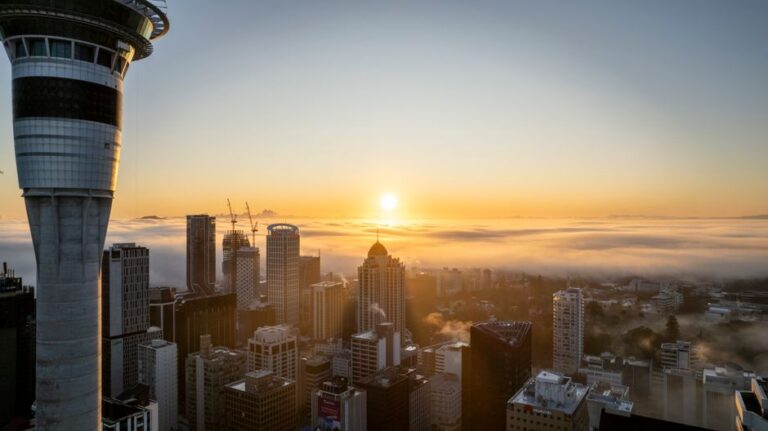
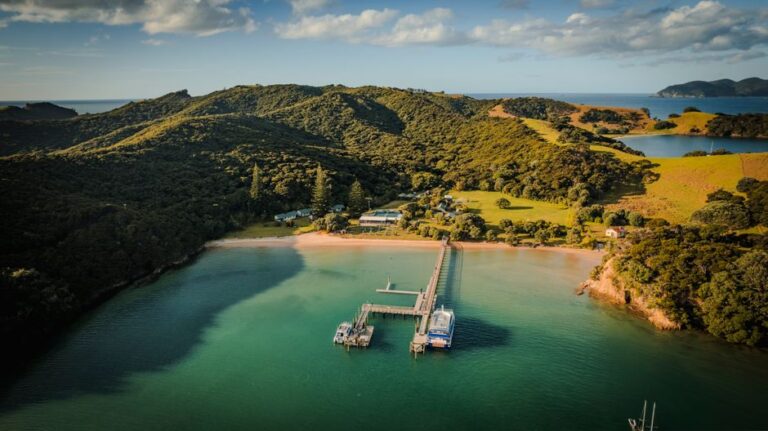
Auckland is where most international flights land: a harbor city of beaches, island ferries, volcanic cones such as Maungawhau/Mount Eden, and the Sky Tower. Waiheke Island, with vineyards and beaches, is 40 minutes away by ferry; the black-sand surf beaches of the west coast are under an hour by car. Three to four hours north, the Bay of Islands is a sheltered subtropical bay of 144 islands, with sailing, dolphin cruises and the Waitangi Treaty Grounds, where Māori chiefs and the British Crown signed the Treaty of Waitangi in 1840.
Rotorua, Taupō and Tongariro: the volcanic heart
Rotorua smells faintly of sulfur and steams from its parks and drains. Geysers, boiling mud, hot pools and colored terraces surround the town, and it is the best place to see Māori performance and eat a hāngī (earth-oven feast). Hobbiton, the movie set from The Lord of the Rings and The Hobbit, is about an hour away near Matamata. Taupō, on New Zealand’s largest lake, offers Huka Falls, jet boats, skydiving and fishing, and is the gateway to Tongariro National Park, a UNESCO World Heritage Site for both nature and culture, with the famous one-day Tongariro Alpine Crossing past steaming vents and emerald crater lakes.
Wellington
Wellington, the compact, windy capital, packs Te Papa (the national museum), the cable car, Parliament’s “Beehive”, a waterfront promenade, a strong café and craft-beer scene, and the Weta Workshop film studios into a small harbor city. It is also where the ferries leave for the South Island.
Christchurch, Canterbury and Aoraki/Mount Cook
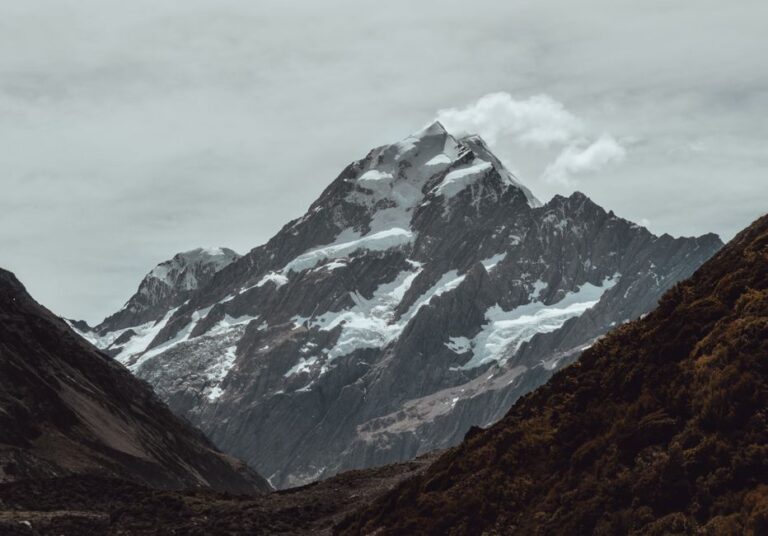
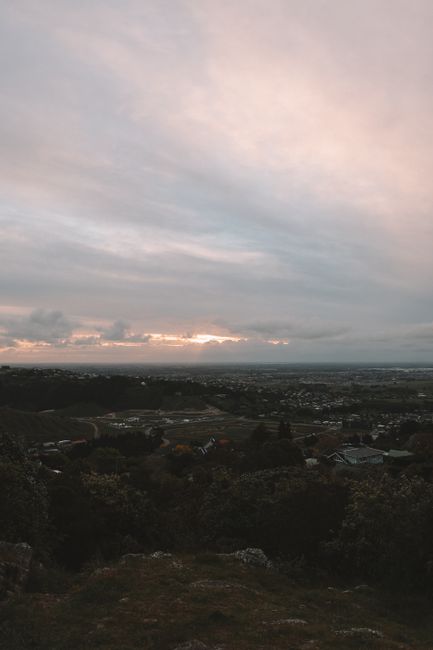
Christchurch, rebuilt after the 2010–11 earthquakes, is a garden city with a heritage tram, the Botanic Gardens, new architecture and street art, and the start of the scenic TranzAlpine train across the Alps. Akaroa, a harbor village in an old volcano, is 90 minutes away, and whale-watching Kaikōura about 2.5 hours north. Inland, the turquoise lakes Tekapo and Pukaki lead to Aoraki/Mount Cook National Park, home to New Zealand’s highest mountain (3,724 m, 12,218 feet) and the easy, spectacular Hooker Valley Track.
Queenstown, Wānaka and Central Otago
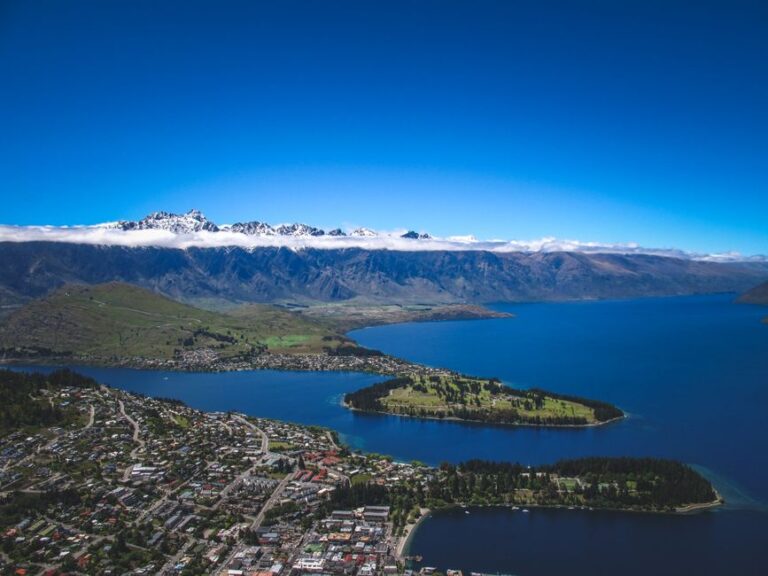
Queenstown, on Lake Wakatipu under the Remarkables range, is the country’s adventure capital: bungy jumping, jet boats, skiing, mountain biking and a lively town center. An hour north over the Crown Range, Wānaka is calmer, with lake walks, Roys Peak and access to Mount Aspiring National Park. Central Otago around Cromwell and Bannockburn produces some of the world’s southernmost Pinot Noir, and the Otago Central Rail Trail is a popular multi-day bike ride.
Fiordland and Milford Sound
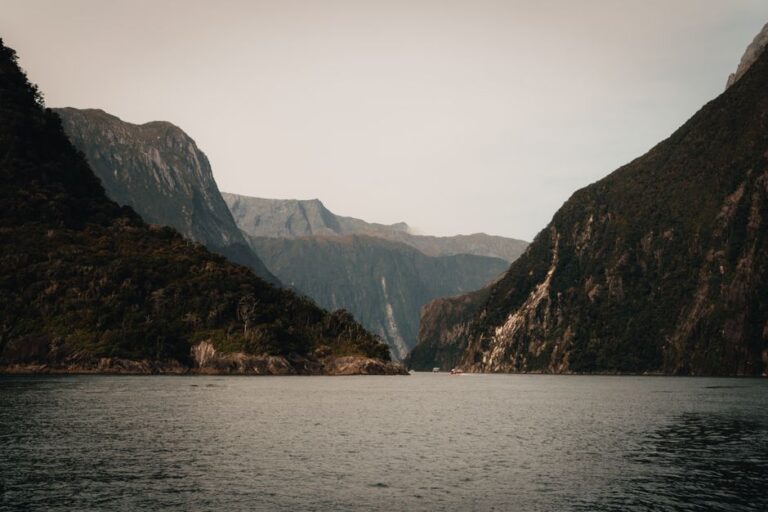
Fiordland National Park covers the southwest corner of the South Island with sheer-walled fjords, waterfalls and rainforest. Milford Sound/Piopiotahi is reached on one of the world’s great mountain roads from Te Anau, or on foot along the Milford Track; quieter Doubtful Sound needs a boat and a bus over a mountain pass. Three Great Walks, the Milford, Routeburn and Kepler tracks, are here or start nearby.
The West Coast glaciers
On the wet western side of the Alps, Westland Tai Poutini National Park has the Franz Josef and Fox glaciers, which descend from the mountains into temperate rainforest. Both have retreated a long way, and walking on the ice is now only possible on a guided heli-hike. Lake Matheson, near Fox Glacier, mirrors Aoraki/Mount Cook on calm mornings.
More to see
- Marlborough and the Marlborough Sounds: Sauvignon Blanc vineyards around Blenheim and the Queen Charlotte Track around sunken forested valleys near Picton.
- Nelson and Abel Tasman National Park: golden beaches, sea kayaking and the coastal Great Walk, in one of the sunniest corners of the country.
- The Coromandel Peninsula: Hot Water Beach and Cathedral Cove, 2.5 hours from Auckland.
- Dunedin and the Otago Peninsula: Scottish heritage, albatrosses and penguins.
- Stewart Island/Rakiura: the best place to see a wild kiwi.
Aoraki/Mount Cook National Park Travel Guide
Plan a visit to Aoraki/Mount Cook National Park: the Hooker Valley Track and its new 189 m swing bridge (July 2026), Tasman Glacier and…
Auckland Travel Guide
Plan a trip to Auckland: the Sky Tower and waterfront, Auckland Museum and the Domain, Maungawhau/Mount Eden and the volcanic cones, ferries to Waiheke,…
Bay of Islands Travel Guide
Plan a trip to the Bay of Islands: the Waitangi Treaty Grounds (2026/27 prices, hours and Waitangi Day), Paihia, Russell and Kerikeri, the Hole…
Christchurch Travel Guide
Plan a trip to Christchurch: Hagley Park and the Botanic Gardens, punting on the Avon, the heritage tram, the Cardboard Cathedral and the rebuilt…
Fiordland National Park Travel Guide
Plan a visit to Fiordland National Park: Milford Sound/Piopiotahi and Mitre Peak, Doubtful Sound, Te Anau and its glowworm caves, the Milford Road and…
Queenstown Travel Guide
Plan a trip to Queenstown: the Skyline Gondola, Lake Wakatipu and the TSS Earnslaw, bungy and jet boats, Arrowtown and Glenorchy, Coronet Peak and…
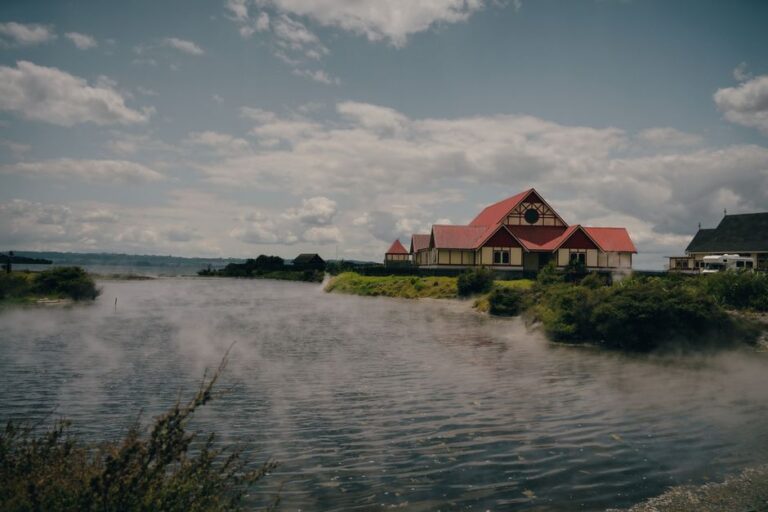
Rotorua Travel Guide
Plan a trip to Rotorua: Te Puia and Pōhutu Geyser, Whakarewarewa Living Māori Village, Wai-O-Tapu's Champagne Pool and Lady Knox Geyser, Waimangu and Hell's…
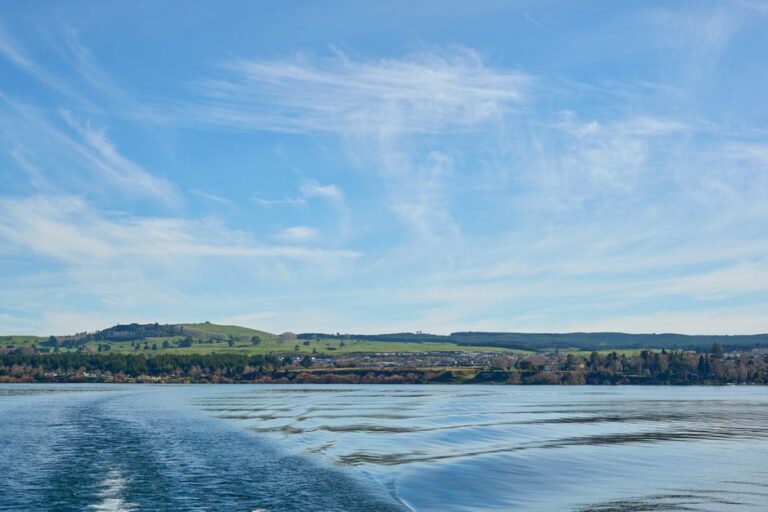
Taupō Travel Guide
Plan a trip to Taupō: Huka Falls, Craters of the Moon, the Aratiatia Rapids dam releases, the Ngātoroirangi Mine Bay Māori rock carvings, the…
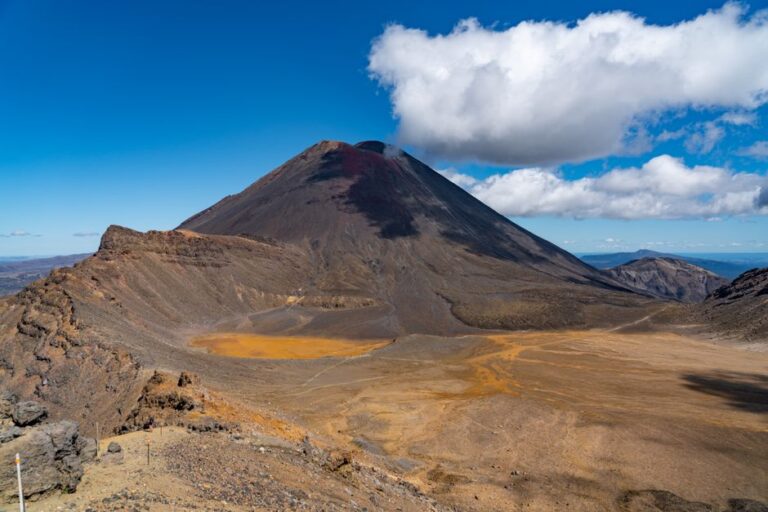
Tongariro National Park Travel Guide
Plan a visit to Tongariro National Park: the Tongariro Alpine Crossing (free booking, four-hour parking limit, shuttles, the 'Not Recommended Today' weather notice), Emerald…
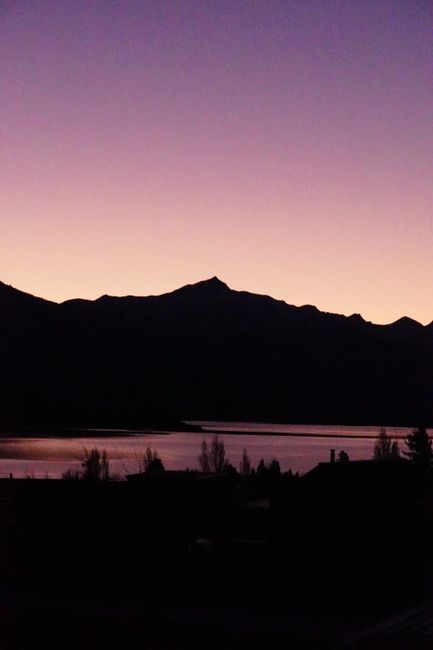
Wānaka Travel Guide
Plan a trip to Wānaka: Roys Peak Track (and its 1 October–10 November lambing closure), That Wānaka Tree, the Rob Roy Glacier Track in…
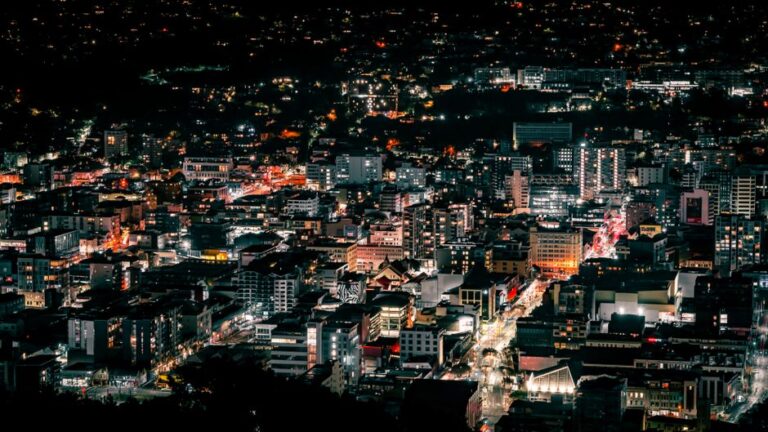
Wellington Travel Guide
Plan a trip to Wellington: Te Papa (and its NZ$35 international visitor ticket), the cable car and Botanic Garden, the waterfront and Oriental Bay,…
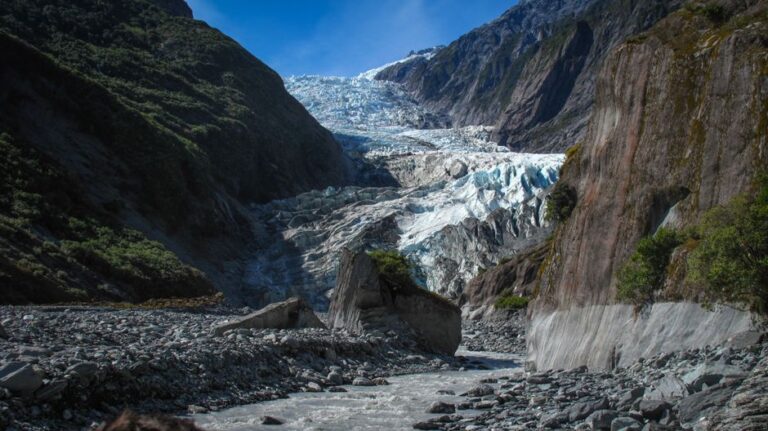
Westland Tai Poutini National Park Travel Guide
Plan a visit to Westland Tai Poutini National Park: Franz Josef and Fox glaciers (heli-hikes are the only way onto the ice), valley walks,…
Best time to visit New Zealand
New Zealand has a temperate maritime climate, and the weather changes quickly, often several times a day. The north is mild and humid; the south is cooler; the mountains get snow in winter and can get it in any month. The West Coast and Fiordland are among the wettest places on Earth, while Central Otago and Canterbury, in the rain shadow of the Alps, are dry.
- Summer (December to February): the warmest, sunniest and busiest season. Beaches, lakes, hiking and the Great Walks are at their best. Prices and crowds peak from Christmas to the end of January, when New Zealanders take their main holidays.
- Autumn (March to May): settled weather, fewer people and golden poplars in Central Otago and Wānaka in April. A favorite time for road trips.
- Winter (June to August): skiing in Queenstown, Wānaka, Canterbury and on Mount Ruapehu; clear, cold days inland; snow and ice on alpine roads. The North Island stays mild.
- Spring (September to November): lambs in the fields, blossoms and waterfalls swollen with snowmelt, but very changeable weather. The Great Walks season starts in late October or 1 November.
| Month | Auckland high / low | Wellington high / low | Christchurch high / low | Queenstown high / low |
|---|---|---|---|---|
| Jan | 24 / 16 °C (75 / 61 °F) | 20 / 14 °C (69 / 57 °F) | 22 / 12 °C (72 / 53 °F) | 22 / 10 °C (72 / 50 °F) |
| Feb | 24 / 17 °C (76 / 62 °F) | 21 / 14 °C (69 / 57 °F) | 22 / 12 °C (72 / 53 °F) | 22 / 10 °C (71 / 49 °F) |
| Mar | 23 / 15 °C (73 / 59 °F) | 19 / 13 °C (66 / 55 °F) | 20 / 10 °C (69 / 49 °F) | 19 / 7 °C (66 / 45 °F) |
| Apr | 20 / 13 °C (69 / 55 °F) | 17 / 11 °C (62 / 52 °F) | 17 / 7 °C (63 / 44 °F) | 15 / 4 °C (59 / 40 °F) |
| May | 18 / 11 °C (64 / 51 °F) | 15 / 9 °C (58 / 49 °F) | 15 / 4 °C (58 / 39 °F) | 12 / 2 °C (53 / 36 °F) |
| Jun | 16 / 9 °C (60 / 48 °F) | 12 / 7 °C (54 / 45 °F) | 12 / 1 °C (53 / 34 °F) | 9 / 0 °C (47 / 31 °F) |
| Jul | 15 / 8 °C (58 / 46 °F) | 12 / 7 °C (53 / 44 °F) | 11 / 1 °C (52 / 33 °F) | 8 / −1 °C (47 / 29 °F) |
| Aug | 15 / 8 °C (59 / 47 °F) | 12 / 7 °C (54 / 45 °F) | 12 / 2 °C (54 / 36 °F) | 10 / 0 °C (50 / 32 °F) |
| Sep | 16 / 10 °C (62 / 49 °F) | 14 / 8 °C (56 / 47 °F) | 15 / 4 °C (59 / 39 °F) | 13 / 2 °C (55 / 36 °F) |
| Oct | 18 / 11 °C (64 / 52 °F) | 15 / 9 °C (59 / 49 °F) | 17 / 6 °C (62 / 42 °F) | 15 / 4 °C (60 / 40 °F) |
| Nov | 20 / 13 °C (67 / 55 °F) | 17 / 10 °C (62 / 51 °F) | 19 / 8 °C (66 / 46 °F) | 18 / 6 °C (64 / 43 °F) |
| Dec | 22 / 15 °C (72 / 59 °F) | 19 / 12 °C (66 / 54 °F) | 21 / 10 °C (70 / 51 °F) | 20 / 8 °C (68 / 47 °F) |
Figures are NIWA’s 1991–2020 climate normals (mean daily maximum and minimum) for the four cities. For rain: Christchurch records about 620 mm (24 in) a year, Queenstown about 720 mm (28 in), Auckland about 1,120 mm (44 in) and Wellington about 1,320 mm (52 in), while Milford Sound averages about 6,550 mm (258 in), with rain on around 185 days a year. Each destination guide has its own month-by-month table.
Crowds and prices through the year
The peak is mid-December to January, when domestic and international holidays overlap; book campervans, rental cars, ferries and Great Walk huts months ahead. February and March are still summery but quieter once schools reopen. May and June, and October to mid-November, are the shoulder seasons with the best deals, though some tours and alpine routes run reduced schedules.
Seasons for 2026/27: walks, snow, whales and stars
- Great Walks: the 2026/27 season runs from 23 October 2026 (Tongariro Northern Circuit), 27 October (Kepler Track) and 1 November (Milford and Routeburn tracks) to 30 April 2027. Outside those dates, the alpine tracks are for experienced trampers only.
- Ski season: usually from mid- to late June until late September or early October on the South Island fields and on Mount Ruapehu, depending on snow.
- Whales: sperm whales live off Kaikōura all year; humpbacks pass in June and July.
- Stargazing: the Aoraki Mackenzie International Dark Sky Reserve around Tekapo and Aoraki/Mount Cook is best in the long, clear nights of autumn and winter.
Festivals and events
- Waitangi Day (6 February): commemorations and a free festival at the Waitangi Treaty Grounds; the historic buildings are closed that day.
- Matariki (Māori New Year, mid-winter): a public holiday since 2022, with light shows, dawn ceremonies and food events; the 2027 holiday falls on Friday 25 June.
- Queenstown Winter Festival in late June, and summer food, wine and music festivals across the country.
Public holidays
Many shops close on Christmas Day, Good Friday, Easter Sunday and on the morning of Anzac Day; traffic is heavy at the start and end of long weekends. Each region also has a provincial anniversary day.
| Holiday | 2026 date | 2027 date |
|---|---|---|
| Labour Day | Monday 26 October 2026 | Monday 25 October 2027 |
| Christmas Day | Friday 25 December 2026 | Saturday 25 December (observed Monday 27 December) |
| Boxing Day | Saturday 26 December (observed Monday 28 December) | Sunday 26 December (observed Tuesday 28 December) |
| New Year’s Day and day after | — | Friday 1 and Monday 4 January (2 January observed) |
| Waitangi Day | — | Saturday 6 February (observed Monday 8 February) |
| Good Friday and Easter Monday | — | Friday 26 and Monday 29 March |
| Anzac Day | — | Sunday 25 April (observed Monday 26 April) |
| King’s Birthday | — | Monday 7 June |
| Matariki | — | Friday 25 June |
How long to stay: sample itineraries
New Zealand looks small on a map, but roads are winding and two-lane, and you will want time to stop. Two to three weeks covers both islands well.
7 days: the North Island
Auckland (two days, with a ferry to Waiheke or Devonport), then Hobbiton on the way to Rotorua (two nights for geysers, a Māori cultural evening and the hot pools), then Taupō and the Tongariro Alpine Crossing in summer, and back to Auckland, or on to Wellington by road or on the Northern Explorer train.
10 days: the South Island loop
Fly into Christchurch, drive inland via Lake Tekapo to Aoraki/Mount Cook (Hooker Valley Track), continue to Wānaka and Queenstown (three nights), make a day trip or overnight to Milford Sound via Te Anau, then fly home from Queenstown, or return north up the West Coast via the glaciers and Arthur’s Pass.
2 weeks: the highlights of both islands
Auckland (2 nights), Rotorua (2), Taupō or Tongariro (1), Wellington (1), the Interislander ferry to Picton and a drive down the West Coast to Franz Josef (2), Wānaka (1), Queenstown (3) with a Milford Sound trip, and out from Queenstown. Domestic flights can replace the longest drives.
Entry, money and costs
Entry: the NZeTA and the IVL (as of October 2026)
Unless you are a New Zealand or Australian citizen, you need either a visa or a New Zealand Electronic Travel Authority (NZeTA) before you travel, including if you arrive by cruise ship. Citizens of visa waiver countries, including the United States, Canada, the United Kingdom, EU countries and Japan, can request an NZeTA. Australian permanent residents need one too. Immigration New Zealand’s fees guide (May 2026) lists:
| Item | Cost | Notes |
|---|---|---|
| NZeTA requested in the official app | NZ$17 (about US$9.50) | Up to 10 people per request in the app |
| NZeTA requested on the Immigration NZ website | NZ$23 (about US$13) | One request per person |
| International Visitor Conservation and Tourism Levy (IVL) | NZ$100 (about US$56) | Paid with the NZeTA or visa; not refundable |
| Visitor visa (citizens of non-waiver countries) | NZ$300 plus NZ$41 immigration levy and NZ$100 IVL | Pacific countries pay lower fees |
An NZeTA is valid for two years and multiple visits. Allow up to 72 hours for processing; it may take longer if more checks are needed. On arrival you are normally granted a visitor visa for up to three months (six months for UK citizens), with a limit of six months in any 12-month period. Your passport must be valid for at least three months after you plan to leave, and you may be asked to show onward travel and enough money, which Immigration New Zealand sets at NZ$1,000 a month (NZ$400 if your accommodation is prepaid). Transit passengers who stay airside at Auckland Airport for less than 24 hours can use a transit NZeTA and do not pay the IVL. The IVL is waived for Australian permanent residents and citizens of most Pacific Island countries.
The New Zealand Traveller Declaration
Every traveler arriving in New Zealand, including New Zealanders and babies, must complete a New Zealand Traveller Declaration (NZTD). It is free, done online or in the NZTD app, and covers customs, immigration and biosecurity questions. By air, you can submit it from 24 hours before your journey starts until you reach passport control; it is linked to your passport and checked at the eGates. A paper declaration is still available on board for people who cannot use the digital version. If you hold an NZeTA, you indicate in the declaration that you are applying for a visa on arrival.
Biosecurity: declare it or bin it
New Zealand’s farms and native species have no defense against many overseas pests, so the Ministry for Primary Industries (MPI) runs some of the world’s strictest airport checks. You must declare, or throw away in the amnesty bins before the inspection area, all food (including snacks from the plane, fruit, honey, dried meat, eggs and spices), plants, seeds, wooden items, animal products, and used outdoor equipment such as hiking boots, tents, bikes and fishing gear. Clean your boots and gear before you pack them. If you fail to declare a risk item, even by mistake, you can be fined NZ$400 on the spot; deliberate smuggling can bring fines of up to NZ$100,000 and up to five years in prison.
Money, cards and GST
Cards are accepted almost everywhere, including contactless payments by phone; carry a little cash for rural honesty boxes and some markets. ATMs are widespread. Displayed prices include 15% GST (goods and services tax), so there is no surprise at the till, and there is no general tourist tax refund. Some businesses add a small surcharge for card payments, and public holidays often bring a 10–20% surcharge in cafés and restaurants to cover staff pay.
Tipping
Tipping is not expected in New Zealand; staff are paid at least the minimum wage. Leaving 10% for excellent service in a restaurant, or rounding up a taxi fare, is appreciated but optional.
Typical travel costs
| Item (as of October 2026) | New Zealand dollars | About US dollars |
|---|---|---|
| NZeTA (app) plus IVL | NZ$117 | US$66 |
| Flat white coffee | about NZ$5.50–6.50 | about US$3–3.60 |
| Casual restaurant main | about NZ$28–40 | about US$16–22 |
| Pint of craft beer | about NZ$12–14 | about US$7–8 |
| Hostel dorm bed | about NZ$35–60 | about US$20–34 |
| Mid-range hotel or motel room | about NZ$180–300 | about US$100–170 |
| Hobbiton Movie Set tour, adult | NZ$130 | US$73 |
| Te Papa museum, international visitor aged 16+ | NZ$35 | US$20 |
| Milford Track hut, international adult, per night in season | NZ$152 | US$85 |
| Petrol, per liter | about NZ$2.70–3.10 | about US$1.50–1.75 |
Entry fees, tours and DOC hut fees are official 2026 prices; coffee, meals, rooms and fuel are typical ranges, not official figures, and vary by place and season. Conversions use about US$0.56 to NZ$1 (European Central Bank reference rates, 2 October 2026).
Getting there and getting around
Arrival airports
Auckland Airport (AKL) handles most long-haul flights, from North America, Asia, the Middle East and South America. Christchurch (CHC) and Queenstown (ZQN) have flights from Australian cities such as Sydney, Melbourne and Brisbane, and Christchurch some from Asia; Wellington (WLG) has trans-Tasman flights.
Domestic flights
Air New Zealand links more than 20 towns, and Jetstar flies the main routes. A flight from Auckland to Queenstown takes under two hours, versus two long days by road.
Driving: rules, rentals and one-lane bridges
Most highways are two-lane, winding and hilly, and drive times are longer than distances suggest: allow about 3.5 hours for Christchurch to Aoraki/Mount Cook (330 km, 205 miles) and 4 hours for Queenstown to Milford Sound.
- Keep left and give way to traffic from the right at uncontrolled intersections; on the open road the limit is usually 100 km/h (62 mph), lower on many rural roads and through towns.
- Licenses: you can drive on a valid overseas license, but it must be in English or come with an approved translation or an international driving permit. From 1 November 2026, visitors can drive on an overseas car license for 12 months from their last arrival (down from 18 months).
- One-lane bridges: common on the West Coast and in the South Island. A sign shows who must give way; the smaller red arrow gives way. Slow down and look before you cross.
- Winter roads: carry snow chains on alpine passes such as the Crown Range, the Desert Road and the Milford Road from about June to November. The Milford Road (SH94) has avalanche zones where stopping is prohibited.
- Rest and fuel: fill up before long stretches such as the Haast Pass, the West Coast and the Milford Road (no fuel after Te Anau). Driver fatigue causes many crashes; stop every two hours.
- Rentals: book early for summer and check your insurance excess.
Interislander and Bluebridge ferries
Two companies cross Cook Strait between Wellington and Picton. Interislander, run by KiwiRail with the ships Kaitaki and Kaiārahi, sails several times a day from its Kaiwharawhara terminal, five minutes from central Wellington; the crossing takes about 3.5 hours, the last hour through the beautiful Marlborough Sounds. In October 2026, passenger sailings left Wellington at 8:30 a.m., 3:30 p.m. and 8:30 p.m., and Picton at 9:30 a.m., 2 p.m. and 9:30 p.m. Bluebridge runs a competing service. Fares vary by date and type; most rental companies have you drop the car in Wellington and collect another in Picton. Book ahead in summer. Cook Strait can be rough, and sailings are sometimes canceled in storms.
Trains: Great Journeys of New Zealand
Long-distance rail is limited but scenic. KiwiRail’s TranzAlpine crosses the Southern Alps between Christchurch and Greymouth via Arthur’s Pass in about five hours; the Northern Explorer links Auckland and Wellington via Tongariro National Park; and the Coastal Pacific runs between Picton and Christchurch along the Kaikōura coast in summer.
Buses and city transport
InterCity runs coaches between most towns. In the cities, buses and trains take contactless cards or local smartcards: Auckland’s AT HOP card (with a NZ$20 daily cap on contactless), Wellington’s Snapper card, Christchurch’s Metrocard (a standard bus fare is NZ$3) and Queenstown’s Bee Card.
Campervans and freedom camping
You can stay at holiday parks, DOC campsites (from basic to serviced) or, in some places, free “freedom camping” sites. Freedom camping is only allowed where permitted by the local council or DOC, and most sites require a certified self-contained vehicle with a fixed toilet.
National parks, Great Walks and DOC fees
New Zealand has 13 national parks, run by the Department of Conservation (DOC, Te Papa Atawhai). Entry to the parks and most day walks is free. The ten Great Walks are well-built multi-day tracks with huts and campsites that must be booked during the season, and bookings open months ahead and sell out quickly for popular dates. Since 2025, DOC charges international visitors higher fees than New Zealanders on the busiest Great Walks.
| Great Walk (2026/27) | Season | Hut, per night: NZ adult / international adult | Campsite, international adult |
|---|---|---|---|
| Milford Track (53.5 km, 4 days, huts only) | 1 November 2026–30 April 2027 | NZ$106 / NZ$152 | No camping |
| Routeburn Track (33 km, 2–4 days) | 1 November 2026–30 April 2027 | NZ$88 / NZ$132 | NZ$42 |
| Kepler Track (60 km loop, 3–4 days) | 27 October 2026–30 April 2027 | NZ$88 / NZ$132 | NZ$42 |
| Tongariro Northern Circuit (35.5 km, 3–4 days) | 23 October 2026–30 April 2027 | NZ$44 / NZ$66 | NZ$28 |
Children’s fees are half the adult rate; international children are charged from birth, New Zealand children from age 5. Outside the season, hut fees drop to NZ$25–35 a night and huts are first come, first served, but the tracks become serious alpine routes with avalanche risk, removed bridges and no wardens. The Milford Track must be walked in one direction over three nights, with boat transport at both ends; the Tongariro Northern Circuit returns as a Great Walk for 2026/27 after Oturere Hut was replaced.
The Tongariro Alpine Crossing
The country’s most popular day hike crosses 20.2 km (12.5 miles) of volcanic terrain in 7 to 8 hours in summer, climbing to 1,886 m (6,188 feet) at Red Crater. Parking at the road ends is limited to four hours from Labour Weekend to 30 April, so most hikers use a shuttle; a free DOC track booking is recommended for everyone and required to use a shuttle or guide. From May to October, it is an alpine route needing ice axe, crampons and experience, and a guided trip is the safe option.
Proposed access charges for international visitors
The government has introduced a bill (the Conservation Amendment Bill, first reading 12 May 2026) that would let DOC charge international visitors to enter some popular sites. Four are being investigated: Cathedral Cove, the Tongariro Alpine Crossing, Aoraki/Mount Cook and Milford Sound/Piopiotahi. As of October 2026, the law had not passed and no charge applied; check DOC before you travel in 2027.
Culture, food and everyday etiquette
Māori culture and te reo
Māori, the Indigenous people of Aotearoa, arrived from eastern Polynesia more than 700 years ago and make up about one in five New Zealanders. The Treaty of Waitangi (Te Tiriti o Waitangi), signed in 1840, is the country’s founding document. Visitors meet Māori culture through place names, the hongi (pressing noses) greeting at formal welcomes, the haka, carving, weaving and the hāngī. If you visit a marae (meeting grounds), follow your hosts’ lead: remove shoes before entering the meeting house, don’t sit on tables or pillows, and don’t eat in the meeting house.
Food and drink
New Zealand food is about fresh produce, lamb, seafood and a lively café culture. Try green-lipped mussels, Bluff oysters (March to August), crayfish (rock lobster) in Kaikōura, whitebait fritters on the West Coast, pāua (abalone), kūmara (sweet potato), a hāngī in Rotorua, meat pies from a bakery, fish and chips on the beach, pavlova, hokey pokey ice cream and a flat white. Wine regions include Marlborough (Sauvignon Blanc), Central Otago (Pinot Noir), Hawke’s Bay and Martinborough; craft beer is excellent, especially in Wellington. The legal drinking age is 18.
Everyday etiquette
New Zealanders are informal and friendly. The Tiaki Promise asks visitors to care for the land, sea and nature, travel safely and respect culture.
Safety, health and connectivity
Safety
New Zealand is generally a safe and welcoming place to travel; the main risks are natural and on the roads.
- Weather in the mountains: it changes fast; snow can fall in summer on alpine tracks. Check MetService and NIWA forecasts, carry warm layers and rain gear, and leave your plans with someone (the Mountain Safety Council’s Plan My Walk app helps). Hire a personal locator beacon for remote walks.
- Rivers: river crossings are the leading cause of death on New Zealand tracks. Never cross a flooded river; wait for it to drop or turn back.
- Roads: drive on the left, take one-lane bridges slowly, and allow extra time for winding roads, gravel, livestock and roadworks.
- Sandflies: tiny biting flies are abundant in Fiordland, on the West Coast and at many lakes. They don’t carry disease but the bites itch for days; bring repellent and cover up.
- Geothermal areas: stay on marked paths around Rotorua and Taupō; the ground can be thin and the water boiling.
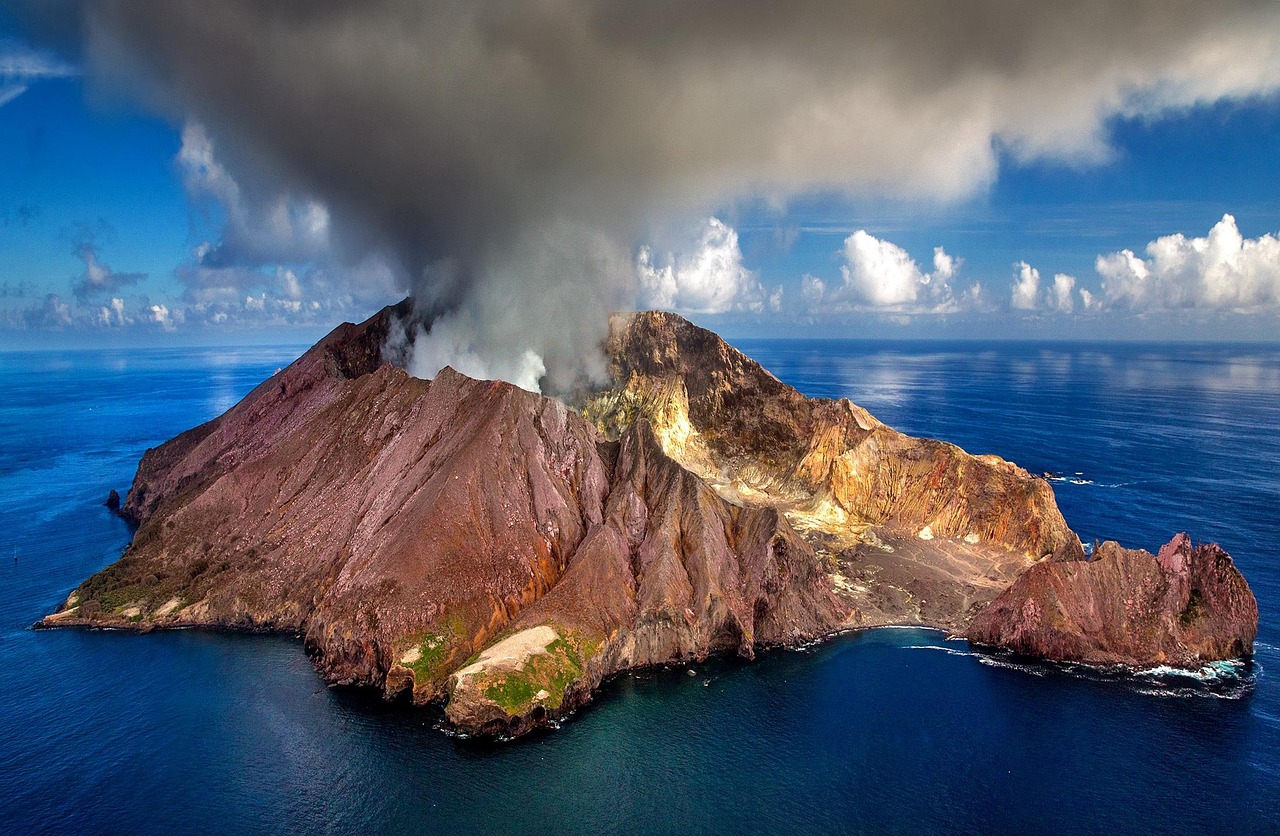
- Volcanoes: GeoNet sets volcanic alert levels from 0 to 5. In October 2026, Ruapehu was at Level 1 (minor unrest) and Whakaari/White Island at Level 2 (moderate to heightened unrest); Tongariro, Ngāuruhoe, Taupō, Rotorua and the Auckland Volcanic Field were at Level 0. Whakaari is not open to visitors.
- Earthquakes: New Zealand sits on a plate boundary and feels frequent small quakes. In a strong one, drop, cover and hold; near the coast, move to high ground if the shaking is long or strong.
- Beaches: swim between the red-and-yellow flags at patrolled beaches; rips are common on surf beaches.
- Sun: UV levels are very high in summer.
- Theft: never leave valuables in a car parked at a trailhead or viewpoint.
Health and ACC
ACC, New Zealand’s no-fault accident compensation scheme, covers visitors for the cost of treatment for accidental injuries in New Zealand. It does not cover illness, travel disruption, the cost of getting you home, or treatment after you leave, so travel insurance is still essential.
Connectivity and power
Mobile coverage is good in towns but patchy or absent in national parks, on many alpine roads (including most of the Milford Road) and on the West Coast. Buy a local SIM or eSIM from One NZ, Spark or 2degrees at the airport. Power is 230 volts, 50 Hz, with angled two- or three-pin Type I plugs, as in Australia.
Things to do: hiking, adventure, wildlife and wine
New Zealand is built for the outdoors. Hike a Great Walk or a day walk like the Hooker Valley or Tongariro Alpine Crossing; cruise Milford or Doubtful Sound; bungy jump, jet boat or skydive in Queenstown and Taupō; soak in hot pools; ski in Queenstown, Wānaka or on Ruapehu; cycle the Otago Central Rail Trail; kayak in Abel Tasman; watch whales at Kaikōura or penguins near Dunedin and Oamaru; tour the wine regions; and spend an evening with a Māori cultural experience.
What to pack
Pack layers whatever the season: a waterproof, windproof jacket, a fleece or merino mid-layer, a warm hat, sturdy walking shoes or boots (cleaned before you fly), sunscreen and sunglasses for the strong sun, insect repellent for sandflies, a swimsuit for hot pools and beaches, and a Type I power adapter. In winter, add thermal layers and gloves; if you drive alpine roads, your rental company should supply chains.
New Zealand travel FAQ
Do I need an NZeTA to visit New Zealand?
If you are not a New Zealand or Australian citizen and your country is on the visa waiver list, such as the United States, Canada, the UK and EU countries, you need an NZeTA before you travel, whether you arrive by plane or cruise ship. Citizens of other countries need a visitor visa. Australian permanent residents also need an NZeTA.
How much does the NZeTA cost?
NZ$17 in the official NZeTA app or NZ$23 on the Immigration New Zealand website, plus the NZ$100 International Visitor Conservation and Tourism Levy, so NZ$117 to NZ$123 in total (about US$66–69). It is valid for two years.
What is the IVL?
The International Visitor Conservation and Tourism Levy is a NZ$100 charge paid with your NZeTA or visa that funds conservation and tourism infrastructure. Australian citizens and permanent residents, most Pacific Island citizens and airside transit passengers do not pay it.
What is the New Zealand Traveller Declaration?
A free online form (or app) that every arriving traveler completes, covering customs, immigration and biosecurity. Submit it from 24 hours before your trip begins; a paper version is available on board.
What can’t I bring into New Zealand?
You must declare or bin all food, plant and animal products and used outdoor gear such as hiking boots and tents. Undeclared risk items can bring an instant NZ$400 fine. Clean your boots before you fly.
When is the best time to visit New Zealand?
December to March for warm weather, hiking and beaches (book early for Christmas to January); March to May for settled weather and fewer crowds; late June to early October for skiing.
How many days do you need in New Zealand?
At least 10 days for one island, and two to three weeks to see the highlights of both.
Can I drive in New Zealand with my US license?
Yes. A valid license in English can be used for up to 12 months from your last arrival (from 1 November 2026); otherwise carry an approved English translation or an international driving permit. Drive on the left.
How do I get between the North and South islands?
Take the Interislander or Bluebridge ferry between Wellington and Picton (about 3.5 hours), or fly. Rental companies often let you swap cars at each terminal.
How much does it cost to walk a Great Walk?
In the 2026/27 season, international adults pay NZ$152 a night in Milford Track huts, NZ$132 on the Routeburn and Kepler tracks and NZ$66 on the Tongariro Northern Circuit; New Zealanders pay less. Book on the DOC website.
Do I need to tip in New Zealand?
No. Tipping is optional and only for exceptional service; prices already include 15% GST.
Is New Zealand safe for tourists?
Generally yes. The main risks are fast-changing mountain weather, river crossings, unfamiliar roads, strong sun and break-ins to parked cars. Check weather and GeoNet volcanic alert levels before heading into the mountains.
What plug adapter do I need for New Zealand?
Type I, the same angled flat-pin plug used in Australia; the supply is 230 volts.
Sources and last review
Researched and last reviewed on 5 October 2026. NZeTA, IVL and visa fees and conditions come from Immigration New Zealand (its NZeTA page, IVL page and May 2026 fees guide); the traveler declaration from the official NZTD website; biosecurity rules from the Ministry for Primary Industries; driver license rules and the Milford Road from NZ Transport Agency Waka Kotahi; Great Walk seasons and fees, the Tongariro Alpine Crossing and proposed access charges from the Department of Conservation; volcanic alert levels from GeoNet; climate from NIWA’s 1991–2020 normals; public holidays from Employment New Zealand; daylight saving dates from Govt.nz; ACC cover from ACC; ferry schedules from Interislander; attraction prices from Te Papa, Hobbiton and the Waitangi Treaty Grounds; exchange rates from the European Central Bank; population and area from Wikidata. Meal, room and fuel prices, drive times, flight times and some seasonal patterns are general estimates. Prices and rules change, so check the official sites before you go.
Plan your trip
Partner links: TravelerCenter may earn a commission if you book, at no extra cost to you.