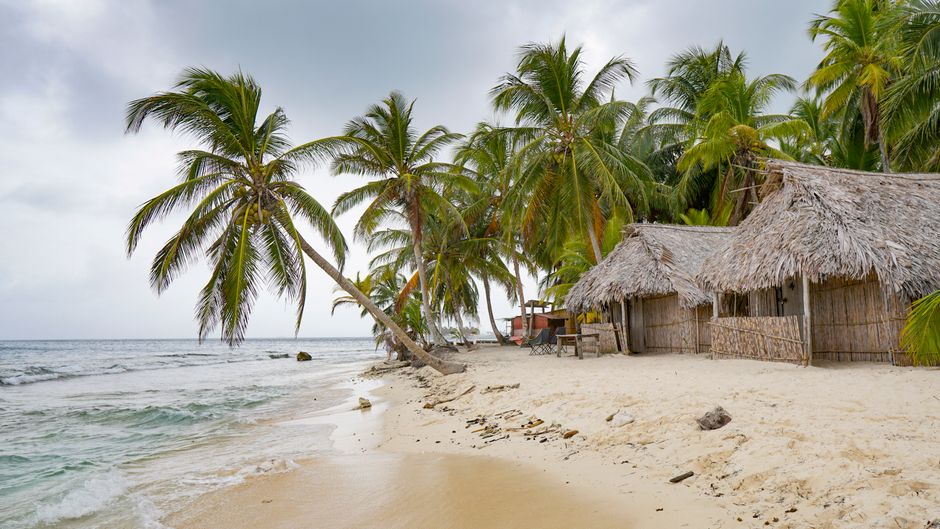
The San Blas Islands are the Caribbean of postcards: more than 365 islands strung along Panama’s north-east coast, many no bigger than a few palm trees on a patch of white sand, surrounded by turquoise water and reefs. They are also home to a living Indigenous nation. The islands belong to Guna Yala, the autonomous territory (comarca) of the Guna people, who won self-government after their revolution of 1925 and still run the region under their own laws and traditional authorities. There are no big hotels or chains: you stay in simple Guna-run cabins or on a sailboat, eat fresh fish and coconut rice, swim, snorkel, and learn about a culture famous for its molas, the colorful layered textiles that Guna women wear. Visiting means following Guna rules, paying an entry fee, and accepting basic comforts in exchange for one of the most beautiful places in the Americas.
Right now in San Blas Islands (El Porvenir)
- Tue 26–29°C 79–83°F 5 mm Rain
- Wed 26–29°C 78–83°F 22 mm Cloudy
- Thu 26–28°C 79–83°F 5 mm Rain
Weather: MET Norway (CC BY 4.0) · Sea temperature: NOAA CoastWatch
Top tours in San Blas Islands
See all tours for San Blas Islands →
From local operators, with prices and reviews; you check availability and book on Viator, our partner. We may earn a commission at no extra cost to you. How we earn money
San Blas at a glance
- Best for: island beaches, swimming and snorkeling, Guna culture, sailing, disconnecting from phones and crowds.
- How long: one or two nights on an island; three to five days on a sailboat; a day trip is possible but long.
- Best time: the drier months from about January to April, though trade winds can make crossings rough; the sea is often calmest from about May to November, between showers.
- Getting there: about two and a half hours from Panama City by licensed 4×4 to the Cartí area ports, then a boat, according to Panama’s tourism authority (ATP); or a charter flight.
- Before you go: entry rules for Panama, money and safety basics are in our Panama travel guide.
Guna Yala: how the comarca works
According to the Guna General Congress (Congreso General de Gunayala), the comarca has 51 communities: 49 are Guna and two, near the Colombian border, are not. Thirty-eight communities are on islands and 13 on the mainland coast. Each community is led by its own sagla (chief) and local assembly, and the region as a whole by two congresses: the Guna General Congress, the highest political and administrative authority, and the General Congress of Culture, the highest cultural and spiritual one, each with three caciques. More than 60,000 Guna live in the comarca and in Panama’s cities. The Congress’s tourism secretariat says it wants sustainable, orderly tourism that respects nature and Guna identity, and its rules apply to every visitor.
All lodging, boat transport and tourist services in Guna Yala are run by Guna families, communities or companies registered with the Congress, which requires Guna ownership and labor. Most of the small islands you see in photos are uninhabited except for a family that runs cabins; the busy island communities, where most people live, are densely built villages of cane-and-thatch houses.
The entry fee and other charges
Every visitor pays to enter Guna Yala. On the road, according to the Guna General Congress, each visitor pays a fee on arrival at Nusagandi, the checkpoint on the mountain road, for the Narganá protected area, which the Congress manages. Tour operators and island lodges usually include it in their packages; when quoted separately, it is generally about US$20 per foreign visitor (less for Panamanians), but confirm the current amount with your lodge or driver. You’ll also need your passport at the checkpoint.
Expect further small charges, payable in cash, to visit or overnight on individual islands and communities, and for photographs where they are allowed. Boat transfers from the ports are priced by the Congress’s maritime transport secretariat (see below). Sailboats and yachts need a separate permit from the Congress’s executive board.
Rules for visitors
The Guna General Congress publishes a list of activities not permitted for tourists and yachts. Breaking the rules can bring fines and confiscation. According to the Congress:
- Photos: you may not photograph or film places that are part of Guna spirituality, such as the onmaggednega (congress house), the innanega (ceremonial house), and rituals, religious and similar celebrations, without express permission from local authorities. Always ask before photographing people; a small payment is often expected.
- Dress: tourists may not walk the streets of the communities in swimwear. Nudism on the beaches and indecent acts in public are prohibited.
- Diving and fishing: the use of oxygen tanks for scuba diving is prohibited, and so is spearfishing and other sophisticated fishing techniques. Snorkeling is fine.
- Drones and motorized toys: drones, jet skis and kites are not allowed.
- Animals: no animals, especially dogs, may be brought onto the islands.
- Respect: don’t throw coins, objects or food, which the Congress considers degrading; no firearms; no drug use or trafficking.
- Yachts: foreign yachts may not run commercial charters in Guna waters, may not carry out maintenance on the islands that pollutes the sea, and may not collect marine resources; they need a written permit, with a registration form costing US$10, and may stay up to 30 days, according to the Congress’s tourism regulations.
Top things to see and do in San Blas
Island beaches and snorkeling
Most stays include boat trips to a few nearby islands: tiny palm islets with white sand, a sandbar in the middle of the sea where starfish lie in shallow water, and reefs and a shipwreck for snorkeling. The Cayos Holandeses, further offshore, have some of the clearest water and are popular with sailboats. Bring your own mask; equipment on the islands is basic. See our snorkeling and beaches guides.
Guna communities and molas
A visit to an inhabited island, with permission and usually a small fee, shows Guna daily life, with its congress house, where communities meet and chiefs chant the history and laws of the people. The mola, a panel of several layers of colored cloth cut and stitched into designs from Guna cosmology, is the famous art form; according to the ATP, each is unique, and they make the best souvenir, bought directly from the women who sew them. Guna women also wear beaded arm and leg wraps (wini) and gold nose rings.
Sailing trips
A few days on a sailboat or catamaran is the most comfortable way to see the outer islands, with nights at anchor among the reefs, according to the ATP. Many multi-day trips continue to Colombia (to Sapzurro or Cartagena). If you sail into or out of Panama, you must handle immigration properly: get your Panamanian exit stamp before leaving, and remember that, according to the UK government, people arriving in Panama on a vessel other than a cruise ship need a visa and pay a fee. Choose captains with proper registration, safety equipment and Guna permits.
Food and drink in San Blas
Meals on the islands are simple, fresh and almost always included in your stay. Expect fish caught that morning, fried or grilled, with coconut rice, fried plantain or patacones, and a salad; chicken is the usual alternative. Lobster, octopus and crab are offered to visitors, sometimes for an extra charge, but the Guna Congress sets closed seasons for lobster and other seafood to protect stocks, so don’t ask for them out of season. A traditional Guna dish is tule masi, fish cooked in coconut milk with green plantain, served to families on the inhabited islands.
Fresh water and everything else arrive by boat from the mainland, so drinks, snacks and fruit are limited and cost more than in the city. Bring snacks, a refillable bottle and any special dietary items with you, and tell your lodge in advance if you are vegetarian. Coconuts on the islands belong to Guna families, so never pick one; buy them instead. Beer and soft drinks are sold on many islands, but some communities restrict alcohol, and there are no bars or nightlife beyond a beer at sunset.
Getting there and getting around
By road and boat
The usual route is by the Llano–Gardi road, 40 km (25 miles) over the mountains from the Pan-American Highway east of Panama City. According to the Guna General Congress, only 4×4 vehicles certified by Panama’s land transport authority and by the Congress may use it, and drivers pick visitors up at their hotels, usually before dawn; the trip to the coast takes about two and a half hours, according to the ATP. Visitors pay the entry fee at the Nusagandi checkpoint on the way. On the coast, the Congress lists three working ports, Barsuggun, Niga Kantule and Dibin, near the Cartí communities, with parking, where boats wait to take you to the islands.
The Guna maritime transport secretariat sets round-trip boat fares per person from these ports to the tourist islands, last updated in December 2022:
| Island (Guna name) | Round trip per person |
|---|---|
| Iggodub | B/.20 (US$20) |
| Adsaryaladub | B/.25 |
| Aridub; Ogobsibudub | B/.30 |
| Nubesidub; Wailidub Nugarwessurdub | B/.35 |
| Dubasenigga; Niadub Assudub Bibbi | B/.40 |
| Guanidub; Gorgidub Assudub Dummad; Banedub–Nugnudub | B/.45 |
| Narasgandub Bibbi; Wissudub Yansagladub | B/.50 |
| Anmardub | B/.55 |
| Demarassu; Masargandub | B/.60 |
| Gaymau | B/.75 |
Many islands are also known by Spanish or English names, so check your lodge’s Guna name. Most island packages include the 4×4, the boat and the entry fee. Boats are open launches: you will get wet, so put everything in a dry bag, and wear the life jacket.
By air
According to the Guna General Congress, small planes fly from Panama City’s Albrook airport to airstrips including El Porvenir, Aggwanusadub, Uggubseni, Assudub, Mammidub, Ogobsuggun and Muladub, in daylight only. Air Panama currently offers Guna Yala as a charter destination rather than a scheduled route. From the airstrips, lodges collect guests by boat.
Around San Blas
- Panama City: the start and end of most trips; see our Panama City travel guide, including the Mola Museum in Casco Viejo.
- Portobelo and Isla Grande: Spanish forts and Afro-Colonial culture further west on the Caribbean coast, reachable by boat or a separate road trip.
- The Narganá protected area: the forested mountains along the access road, managed by the Guna, with birdwatching around Nusagandi.
Nearby destinations
- Panama City113 km
When to go and how long to stay
Weather for your datesSunrise and sunset
Guna Yala is on Panama’s Caribbean coast, warm and humid all year. According to Panama’s Institute of Meteorology and Hydrology (IMHPA), the country’s dry season normally runs from December 16 to May 15, when northeast trade winds blow from December to April; on the San Blas coast this brings the sunniest, driest weather, but also stronger winds and choppier seas on the boat crossings. From May to November it rains more, often in short, heavy showers, but the sea is frequently calmer. In 2026, the IMHPA forecasts below-normal rain for most of the country through December because of a strong El Niño.
| Months | What it’s like | Good for |
|---|---|---|
| January–April | Driest and sunniest; trade winds and rougher crossings | Beaches, sailing with wind; busiest around Carnival and Easter |
| May–August | Showers, calmer seas | Snorkeling, fewer visitors |
| September–November | Rainiest weeks, humid and still | Calm water between storms; the quietest time |
| December | Transition to the dry season; holiday crowds late in the month | Beach stays |
There is no official climate normal for Guna Yala in the WMO dataset we use; the month descriptions are general.
San Blas month by month
| Month | Weather | Crowds and prices | Why go |
|---|---|---|---|
| January | Dry and sunny; strong trade winds | Busy early in the month | Beaches; choppy crossings |
| February | Dry and windy | Very busy around Carnival | Sailing with wind |
| March | Dry and sunny | High season | Beaches, sandbars |
| April | Sunny; winds dropping | Busy around Holy Week | Beaches, snorkeling |
| May | Showers return; calmer seas | Quiet | Snorkeling |
| June | Short, heavy showers | Quiet | Calm water, snorkeling |
| July | Showers, often calm sea | Moderate | Snorkeling, sailing |
| August | Showers, often calm sea | Moderate | Clear water between storms |
| September | Rainy, humid and still | Quiet | Calm water, low prices |
| October | Among the rainiest weeks | Very quiet | The quietest time |
| November | Rainy, easing late in the month | Quiet; national holidays bring Panamanian visitors | Calm water between storms |
| December | Transition to the dry season | Busy late in the month | Beach stays over the holidays |
Two days in San Blas
Leave Panama City before dawn, reach your island by late morning, and spend the afternoon swimming. On day two, take the lodge’s boat tour to the starfish sandbar, a reef and a nearby island, visit a Guna community, and return to the city in the afternoon.
Three to five days
Split your time between two islands, or join a sailboat to the Cayos Holandeses and the outer islands, with nights at anchor.
Where to stay in San Blas and the taxes
According to the ATP, options range from hammocks under the palms and campsites to small cabins with no electricity or running water, a few more comfortable cabins over the water, and some small hotels; or you can sleep on a sailboat. Prices are usually per person and include three meals (fish, chicken or lobster in season, with rice and plantains) and a daily boat tour. Expect shared bathrooms, solar lights, limited fresh water, and little or no phone signal.
Panama taxes lodging at 10% ITBMS, according to the tax authority (DGI), and the Guna Congress also collects contributions from registered tourism businesses. Ask whether your package includes the entry fee, the 4×4, the boat and island fees.
Choosing an island and a package
The islands closest to Cartí, an hour or less by boat, are the cheapest and easiest to reach, with simple cabins and sandy islets that fill with day-trippers at weekends. Islands further out, toward the Cayos Holandeses and Cayos Limón, have clearer water and fewer people but longer, rougher crossings. If you want to meet Guna families, choose a lodge on or near an inhabited community. Most visitors buy a package from Panama City that bundles the 4×4, the entry fee, the boat, lodging, meals and island tours; compare exactly what is included before you pay.
What a trip to San Blas costs
Panama uses the US dollar alongside its balboa (B/.), fixed at par, so these prices apply in either. Bring cash: there are no ATMs in Guna Yala, and cards are rarely accepted. The entry fee is the commonly quoted figure described above; the rest are our estimates for 2026.
| Item | Price (US$ = B/.) |
|---|---|
| Guna Yala entry fee at Nusagandi (foreign visitor; confirm current amount) | about US$20 |
| 4×4 from Panama City to Cartí (each way) | US$25–40 per person |
| Boat from Cartí to a nearby island (each way) | US$15–35 per person |
| Small charges to visit or stay on individual islands | US$2–10 |
| Basic cabin or hammock with three meals and a boat tour, per night | US$50–120 per person |
| Overwater or more comfortable cabin, per night | US$120–250 per person |
| Mola bought from the maker | US$15–100+, depending on size and detail |
| Multi-day sailboat trip | US$150–300 per person per day |
A two-day, one-night trip from Panama City with transport, entry, a basic cabin and meals typically costs about US$150 to US$250 per person; longer stays on remoter islands or sailboats cost more.
Practical tips for San Blas
- Bring cash: there are no ATMs and few card machines; bring small US bills for fees, drinks, molas and tips.
- Carry your passport: it is checked at the road checkpoint and may be checked by police on the coast.
- Health: according to the ATP, yellow fever vaccination is recommended, though not required, if you visit Guna Yala; use insect repellent, and drink bottled or treated water on the islands.
- Boats: use the transport your lodge or a licensed Guna operator arranges, wear a life jacket, and don’t cross in bad weather.
- Respect the rules: cover up in villages, ask before taking photos, and leave no trash, which is hard to remove from small islands.
- Emergencies: call 911 if you have signal, and tell your lodge; medical help is hours away, so carry a basic first-aid kit and any medicines you need.
What to pack for San Blas
Packing list for San Blas Islands
Pack light in a soft bag: a large dry bag for the boat, swimwear and a cover-up for villages, a rash guard, reef-safe sunscreen, a hat, insect repellent, a snorkel mask, a headlamp, a power bank, toilet paper, a quick-dry towel, a light rain jacket, small US bills and your passport. Electricity on most islands is limited to solar lights. Plugs, where there are any, are the US type.
San Blas travel FAQ
How much is the San Blas entry fee?
Every visitor pays a Guna Yala entry fee at the Nusagandi checkpoint on the road, for the Narganá protected area managed by the Guna General Congress. It is usually about US$20 for foreigners and often included in packages; confirm the current amount with your lodge.
How do I get to the San Blas Islands from Panama City?
By licensed 4×4 on the Llano–Gardi road to the Cartí area ports, about two and a half hours, then a Guna boat to your island; or by charter flight from Albrook airport.
How much are boats from Cartí to the islands?
The Guna maritime transport secretariat sets round-trip fares from B/.20 to B/.75 (US$20–75) per person, depending on the island, as of its December 2022 table.
Can I scuba dive in San Blas?
No. The Guna General Congress prohibits scuba tanks in Guna Yala. Snorkeling is allowed and excellent.
Can I fly a drone in San Blas?
No. Drones, jet skis and kites are not allowed, according to the Guna General Congress.
Is there electricity and Wi-Fi in San Blas?
Very little. Most island cabins have solar lights only, and phone signal is patchy. Bring a power bank and plan to disconnect.
When is the best time to visit San Blas?
January to April is driest and sunniest, with windier crossings; May to November brings more rain but often calmer seas.
Can I take photos of the Guna people?
Only with permission, and often for a small fee. Photos and video of congress houses, ceremonial houses and rituals need express permission from local authorities.
What food is served in San Blas?
Fresh fish or chicken with coconut rice, patacones and salad, usually all included in your stay. Lobster and other seafood have closed seasons set by the Guna Congress; bring snacks and tell your lodge about special diets in advance.
How much does a San Blas trip cost?
By our estimates, a two-day, one-night trip from Panama City with the 4×4, entry fee, boat, a basic cabin and meals costs about US$150 to US$250 per person. Bring cash: there are no ATMs in Guna Yala.
Plan your trip
Partner links: TravelerCenter may earn a commission if you book, at no extra cost to you.
🇪🇸 Useful Spanish phrases for San Blas Islands
All 38 Spanish phrases: restaurant, hotel, emergencies, romance (printable) →
Sources · last reviewed 4 October 2026
Researched and last reviewed on 4 October 2026. The comarca’s communities, authorities and population, the tourism secretariat’s aims, the entry fee at Nusagandi and the Narganá protected area, the road, certified 4x4s, ports, airstrips, boat fares, the rules for visitors and yachts, the yacht registration fee and stay limit, and the requirements for tourism businesses: the Guna General Congress (Congreso General de Gunayala); the number of islands, travel time, accommodation types, molas, the Mola Museum, sailing and yellow fever advice: Panama’s tourism authority (ATP); charter flights: Air Panama; seasons and the 2026 El Niño: the IMHPA; the lodging tax: the tax authority (DGI); sea arrivals: the UK government’s Panama pages. The amount of the entry fee, island and photo charges, the Cayos Holandeses, sailing routes to Colombia, the Guna revolution’s date, wini and nose rings, meals, monthly sea conditions and the absence of ATMs come from secondary sources or general knowledge and are flagged for checking. Fees and rules can change, so confirm them with your lodge or the Guna General Congress before you go. For entry rules and money, see our Panama travel guide. The food notes, the island comparison, the month-by-month table and the trip costs (other than the commonly quoted entry fee) come from general knowledge or our own estimates and are flagged for checking.
Place data: Wikidata (CC0)