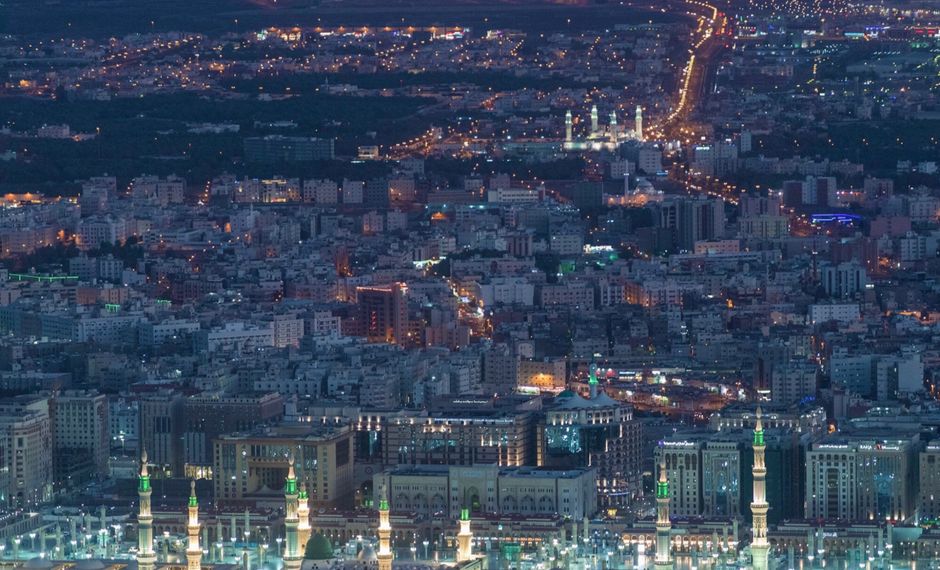
Medina (Al-Madinah Al-Munawwarah, “the Illuminated City”) is the second holiest city in Islam, the city where the Prophet Muhammad settled after the Hijrah from Mecca in 622 and where he is buried. At its center, the vast Prophet’s Mosque (Al-Masjid an-Nabawi), with its green dome, white marble courtyards and giant umbrella canopies, welcomes millions of worshippers every year, many of them pilgrims combining a visit with Umrah in Mecca. Around it, the city spreads across a basalt plateau ringed by volcanic hills and date-palm oases, with the historic mosques of Quba and Al-Qiblatain, Mount Uhud and the Baqi cemetery among the places visited by pilgrims. Unlike Mecca, Medina is open to non-Muslim visitors, except for the sacred area around the Prophet’s Mosque. About 1.4 million people live in Medina, which is linked to Mecca and Jeddah by the Haramain high-speed railway and is a gateway to AlUla, about four hours’ drive to the north. Medina has a hot desert climate with cooler winters than Mecca: January highs are about 24 °C (76 °F), and from June to September average highs reach 42–44 °C (108–111 °F).
Right now in Medina
- Wed26–40°C79–104°FMostly clear
- Thu26–41°C79–106°FPartly cloudy
- Fri28–40°C82–105°FClear
Top tours in Medina
See all tours for Medina →
From local operators, with prices and reviews; you check availability and book on Viator, our partner. We may earn a commission at no extra cost to you. How we earn money
Medina at a glance
- Who can visit: all visitors can enter the city; non-Muslims may not enter the sacred area around the Prophet’s Mosque.
- Permits: no permit is needed to pray in the Prophet’s Mosque, but a permit booked in the Nusuk app is required to pray in the Rawdah, and you can book one only every 30 days.
- Best months: November to March, with highs of about 24–31 °C (76–87 °F) and cool nights.
- Getting there: Prince Mohammad bin Abdulaziz International Airport (MED) and the Haramain high-speed train to Mecca and Jeddah.
- Before you go: visas, Umrah rules, medicines and local laws are covered in our Saudi Arabia travel guide.
Who can enter Medina’s sacred area
Visit Saudi’s official help center states that non-Muslims holding a visa can visit the city of Medina, except the Prophet’s haram, the central sacred area around the Prophet’s Mosque. Signs and staff mark the area, and non-Muslim visitors should respect it. The city’s modern districts, its hotels outside the central area, the airport and the Haramain station are open to everyone, and Medina is a convenient base or stopover for AlUla.
What non-Muslim visitors can see
Outside the central area, non-Muslim visitors can explore the date markets and farms famous for Ajwa dates, the restored Hejaz Railway Station, once the southern terminus of the Ottoman line from Damascus, the views of Mount Uhud and the volcanic landscapes around the city, and modern malls, cafes and restaurants. Rules for individual religious sites can vary, so ask your hotel or guide before visiting a specific mosque or cemetery.
Visiting the Prophet’s Mosque
The mosque
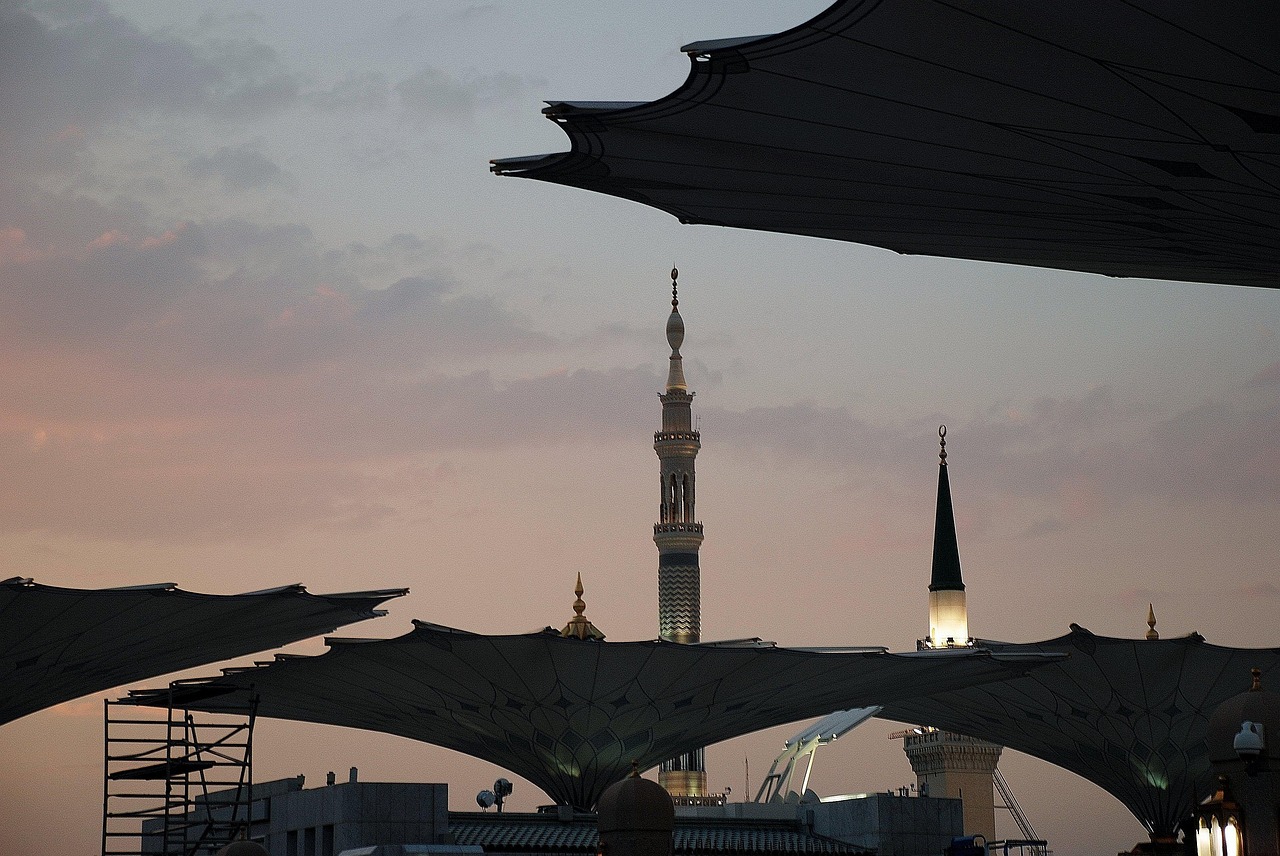
The Prophet’s Mosque was built by the Prophet himself and has been enlarged many times; today its courtyards, covered by retractable umbrellas, and its interior can hold well over a million worshippers at peak times. The Green Dome marks the Prophet’s tomb, beside those of Abu Bakr and Umar. The mosque is open around the clock. You don’t need to book to pray in the mosque.
The Rawdah
The Rawdah, the area between the Prophet’s pulpit and his tomb, is especially revered. Praying there requires a permit booked in the Nusuk app (or Tawakkalna for residents); appointments can’t be changed, but you can cancel before the permit time and book another slot, and each person can visit once every 30 days. Separate times are set for men and women. Arrive early, carry your phone with the permit and follow the instructions of the mosque staff.
Etiquette
Dress modestly, with women covering their hair and wearing loose clothing; remove shoes and carry them in a bag. Keep voices low, avoid filming other worshippers and leave large bags at your hotel. The courtyards get very hot from spring to autumn, so carry water.
Medina areas and who each one suits
The central area (Markaziyah)
Hotels surround the Prophet’s Mosque on all sides, so pilgrims can walk to every prayer. This is the most expensive area, especially in Ramadan, and is within the sacred area that non-Muslims may not enter.
Around the central area
Districts just outside the center, along King Faisal Road and toward Quba, have mid-range hotels and apartments with shuttle buses or short taxi rides to the mosque.
Near the Haramain station and the airport
Hotels near the train station and the airport road suit travelers on short stays, onward trips to AlUla and non-Muslim visitors passing through.
Sites to visit in Medina
Quba Mosque
About 3.5 km (2 miles) south of the Prophet’s Mosque, Quba is the first mosque built in Islam, founded when the Prophet arrived in Medina. Pilgrims often walk or take a short taxi ride there, and a pedestrian path links the two mosques.
Masjid Al-Qiblatain
The “Mosque of the Two Qiblas” marks the place where the direction of prayer was changed from Jerusalem to Mecca.
Mount Uhud and Jabal Al-Rumat
North of the city, Mount Uhud was the site of the Battle of Uhud in 625. Pilgrims visit the cemetery of the martyrs and climb the small hill of Jabal Al-Rumat, the Archers’ Hill, for views of the mountain.
Al-Baqi Cemetery
East of the Prophet’s Mosque, the Baqi cemetery is the resting place of many of the Prophet’s family and companions. Visiting times are limited; check locally.
Museums of the Prophet’s biography
The Best of Creation Museum, in As Safiyyah Museum and Park south of the Prophet’s Mosque, presents the Prophet’s life through seven interactive stations, with life-size models of the Caves of Hira and Thawr and of the mosque and pulpit, and a multilingual guidance system. The International Fair and Museum of the Prophet’s Biography and Islamic Civilization has 25 interactive sections presenting the Prophet’s biography and the message of Islam in many languages.
Hejaz Railway Station
The stone station built in the early 20th century for the Ottoman railway from Damascus has been restored, with a museum and the old tracks and locomotives on display.
Other things to do in Medina
- Date markets: Medina is famous for its dates, especially Ajwa; the markets near the central area and the date farms sell dozens of varieties.
- Seven Mosques area: a cluster of small historic mosques near the site of the Battle of the Trench.
- Wadi Al-Aqiq: green parks and walks along the valley west of the city.
- Modern Medina: malls, coffee shops and dining districts along King Abdullah Road and in the newer neighborhoods.
Food and drink
Medina’s restaurants serve pilgrims from every corner of the Muslim world: Turkish, Indonesian, Pakistani, Indian, Egyptian and Moroccan kitchens sit beside Saudi mandi, kabsa and mutabbaq shops. Try fresh dates with Arabic coffee, the local Hejazi sweets and the ma’amoul pastries sold around the central area. Many restaurants near the mosque close briefly during prayers. Iftar meals are shared in the mosque’s courtyards during Ramadan. Alcohol is prohibited in Saudi Arabia.
Day trips from Medina
AlUla
About 300 km (186 miles) north, roughly four hours by road according to the Royal Commission for AlUla, with Hegra, Dadan and Jabal Ikmah. It works best as an overnight trip or a short flight. See our AlUla guide.
Mecca (for Muslims)
The Haramain train takes about 2 hours 20 minutes, from SAR 162 in economy. See our Mecca guide.
Jeddah
About two hours by train, from SAR 135 in economy, for Historic Jeddah and the Red Sea. See our Jeddah guide.
King Abdullah Economic City
A train stop on the Red Sea coast with beaches and resorts, from SAR 108 in economy.
Nearby destinations
- AlUla292 km
Getting there and getting around
Prince Mohammad bin Abdulaziz International Airport (MED)
Medina’s airport, about 15 km (9 miles) northeast of the center, has domestic and international flights, including many direct flights for pilgrims. Taxis and ride-hailing apps reach the central area in about 20 to 30 minutes. Around the Hajj, visitors who aren’t performing Hajj can be stopped from flying to Medina. Since early 2026, regional tensions have led to periodic airspace closures across the Gulf, so flights can be delayed, rerouted or canceled at short notice; check your flight with the airline before you travel.
Haramain high-speed railway
The Madinah station is the northern end of the line to Mecca, with stops at King Abdullah Economic City, Jeddah airport and Jeddah. Shuttle buses link the station with the Prophet’s Mosque in busy seasons. Book in the Haramain app, on its website, at machines or at station offices, and carry ID.
| Haramain base fare from Medina (as of October 2026) | Economy | Business |
|---|---|---|
| Medina – King Abdullah Economic City | SAR 108 | SAR 270 |
| Medina – Jeddah airport | SAR 130 | SAR 365 |
| Medina – Jeddah | SAR 135 | SAR 375 |
| Medina – Mecca | SAR 162 | SAR 455 |
Base fares exclude VAT and fees and vary with demand; children get 50% off in economy and 40% in business.
Getting around
Taxis, ride-hailing apps and city buses serve the city; roads around the central area are closed to most traffic, so expect to walk the last stretch. Many hotels run shuttles to the mosque. Drive on the right, wear seatbelts and take care on the highway north to AlUla, where camels may wander onto the road.
When to go and how long to stay
November to March is the most comfortable season, with highs of about 24–31 °C (76–87 °F) and nights that can drop to about 12 °C (54 °F) in January, so bring a warm layer. April and October are hot, about 36–37 °C (96–99 °F). May to September brings average highs of 40–44 °C (103–111 °F), with records near 49 °C (120 °F). Like Mecca, Medina is busiest in Ramadan and in the weeks around the Hajj.
| Month | Average high | Average low | Rain | Highest recorded |
|---|---|---|---|---|
| Jan | 24 °C (76 °F) | 12 °C (54 °F) | 9 mm (0.3 in) | 33 °C (92 °F) |
| Feb | 27 °C (81 °F) | 14 °C (57 °F) | 3 mm (0.1 in) | 37 °C (98 °F) |
| Mar | 31 °C (87 °F) | 17 °C (63 °F) | 5 mm (0.2 in) | 40 °C (104 °F) |
| Apr | 36 °C (96 °F) | 22 °C (71 °F) | 7 mm (0.3 in) | 43 °C (109 °F) |
| May | 40 °C (103 °F) | 26 °C (79 °F) | 5 mm (0.2 in) | 46 °C (115 °F) |
| Jun | 43 °C (109 °F) | 29 °C (84 °F) | under 1 mm (0 in) | 48 °C (119 °F) |
| Jul | 43 °C (109 °F) | 30 °C (86 °F) | 1 mm (0.1 in) | 49 °C (120 °F) |
| Aug | 44 °C (111 °F) | 31 °C (87 °F) | 4 mm (0.2 in) | 49 °C (119 °F) |
| Sep | 42 °C (108 °F) | 29 °C (83 °F) | under 1 mm (0 in) | 46 °C (116 °F) |
| Oct | 37 °C (99 °F) | 24 °C (74 °F) | 5 mm (0.2 in) | 43 °C (109 °F) |
| Nov | 30 °C (87 °F) | 18 °C (64 °F) | 14 mm (0.5 in) | 37 °C (99 °F) |
| Dec | 26 °C (79 °F) | 14 °C (57 °F) | 7 mm (0.3 in) | 33 °C (91 °F) |
| Year | 35 °C (96 °F) | 22 °C (72 °F) | 60 mm (2.4 in) | 49 °C (120 °F) |
Figures are the 1991–2020 climate normals for the Madinah station that Saudi Arabia’s National Center for Meteorology submitted to the World Meteorological Organization; “highest recorded” is the hottest day in each month over those 30 years.
Dates worth planning around
- Ramadan: in 2027 expected from about 8 February to 9 March; the mosque is at its fullest, especially in the last ten nights.
- Before and after the Hajj: in 2027 the Hajj is expected in mid-May, and many pilgrims visit Medina before or after it; flights are restricted to Hajj visa holders around the pilgrimage.
- Date harvest (late summer): the markets fill with fresh dates.
Islamic dates are confirmed shortly before; check with the Ministry of Hajj and Umrah.
How long to stay
- Two days: prayers at the Prophet’s Mosque, a Rawdah visit, Quba Mosque and Mount Uhud.
- Four days: add the museums of the Prophet’s biography, Al-Qiblatain, the Seven Mosques and the date markets.
- Seven days or more: combine with Mecca by train, or continue to AlUla.
Where to stay in Medina
- Central area: hotels facing the Prophet’s Mosque, the most convenient and expensive (Muslim visitors only).
- Just outside the center: mid-range hotels and apartments with shuttles.
- Quba and the south: quieter hotels near Quba Mosque.
- Airport road and the station area: practical for short stays, onward travel and non-Muslim visitors.
Prices rise sharply in Ramadan and before the Hajj; compare total prices, as VAT and municipality fees are added.
Typical costs in Medina
| Item (as of October 2026) | Saudi riyals | About US dollars |
|---|---|---|
| Haramain train to Mecca, economy / business, base fare | SAR 162 / 455 | $43 / $121 |
| Haramain train to Jeddah, economy / business, base fare | SAR 135 / 375 | $36 / $100 |
| Taxi from the airport to the central area | about SAR 50–80 | about $13–21 |
| Box of Ajwa dates (1 kg) | about SAR 60–150 | about $16–40 |
| Casual restaurant meal | about SAR 20–50 | about $5–13 |
| Mid-range hotel, central area, per night outside peak seasons | about SAR 400–1,000 | about $105–265 |
Train fares are the official base fares (VAT and fees extra); taxis, dates, meals and hotels are typical ranges. The riyal is pegged at about SAR 3.75 to US$1.
Safety in Medina
Medina is calm and safe, with low crime. Heat and crowds are the main concerns.
- Heat: from May to September, highs above 40 °C (104 °F) are normal. Drink water often, rest in the shade and use an umbrella in the courtyards.
- Crowds: follow staff instructions, keep children close and agree on a meeting point, especially at the Rawdah and after Friday prayers.
- Dress codes: modest clothing in public, and full cover with a headscarf for women in mosques.
- Respect for the sacred area: non-Muslims shouldn’t enter the central area around the Prophet’s Mosque.
- Alcohol, drugs and medicines: alcohol is prohibited, drug penalties are severe, and controlled medicines need an SFDA clearance permit before you travel.
- Photography: avoid filming worshippers and don’t photograph government or security sites.
- Flash floods: winter rain can flood roads and the wadis around the city.
- Flight disruptions: since early 2026, regional tensions have led to periodic airspace closures across the Gulf, and flights can be delayed, rerouted or canceled at short notice. Check your flight with the airline before you travel, and heed the Saudi Civil Defense early-warning alerts sent to phones.
- Emergencies: call 911 for police, ambulance and fire, or 112 from a phone without a Saudi SIM card.
Practical tips for Medina
- Time zone: Arabia Standard Time (UTC+3) all year.
- Prayer times: shops and restaurants near the mosque close briefly for prayers.
- Money and plugs: cards work almost everywhere; VAT is 15%. Sockets are mostly type G (British three-pin) at 230 V.
What to pack for Medina
Pack modest, loose clothing, a headscarf for women, comfortable sandals, a bag for your shoes in the mosque, an umbrella for shade, sunscreen and a refillable water bottle. From November to March, add a warm layer for the evenings. Keep the Nusuk app updated and your phone charged for Rawdah permits, and carry medicines in their original packaging with a prescription.
Medina travel FAQ
Can non-Muslims visit Medina?
Yes. Non-Muslims with a visa can visit the city of Medina, but not the sacred area around the Prophet’s Mosque.
Do I need a permit to visit the Rawdah?
Yes. Book a Rawdah permit in the Nusuk app; you can visit once every 30 days. No permit is needed to pray in the rest of the Prophet’s Mosque.
Can I change my Rawdah appointment?
No, but you can cancel it in the Nusuk app before the permit time and book a new slot.
How do I get from Mecca to Medina?
By Haramain high-speed train, about 2 hours 20 minutes, from SAR 162 in economy; or by road, about 450 km (280 miles).
How do I get from Medina airport to the Prophet’s Mosque?
By taxi or ride-hailing app, about 20 to 30 minutes, or by hotel shuttle.
What is the best time to visit Medina?
November to March, when highs are about 24–31 °C (76–87 °F). Summers are very hot.
How far is Medina from AlUla?
About 300 km (186 miles), roughly four hours by car; there are also flights to AlUla’s airport from other Saudi cities.
What is Quba Mosque?
The first mosque built in Islam, about 3.5 km (2 miles) south of the Prophet’s Mosque.
Are Medina’s museums open to visitors?
Yes. The Best of Creation Museum and the International Fair and Museum of the Prophet’s Biography present the Prophet’s life with interactive displays in several languages.
What should I wear in Medina?
Loose, modest clothing that covers elbows and knees; women need a headscarf in mosques.
Plan your trip
Partner links: TravelerCenter may earn a commission if you book, at no extra cost to you.
🇪🇬 Useful Arabic phrases for Medina
All 38 Arabic phrases: restaurant, hotel, emergencies, romance (printable) →
Sources · last reviewed 5 October 2026
Researched and last reviewed on 5 October 2026. Access for non-Muslims comes from Visit Saudi’s official help center (search excerpt); Rawdah permits, the 30-day rule, prayer without permits and Umrah rules from the Ministry of Hajj and Umrah; the Best of Creation Museum, the Prophet’s Biography museum, Haramain journey times, station shuttles and Hajj-season rules from the Saudi Press Agency; Haramain fares from Haramain High Speed Railway; the drive time to AlUla from the Royal Commission for AlUla; Hajj flight restrictions, laws and emergency numbers from GOV.UK’s Saudi Arabia travel information (updated 20 September 2026); airspace disruption from the European Union Aviation Safety Agency; climate from the 1991–2020 normals Saudi Arabia submitted to the World Meteorological Organization; population from Wikidata. Mosque history and capacity, site descriptions and access times, the Hejaz Railway Station, distances, airport details, Ramadan and Hajj dates for 2027 and typical prices are general references and flagged for checking. For entry rules and money, see our Saudi Arabia travel guide.
Data: Weather: MET Norway (CC BY 4.0) · Rates: ECB · Costs: World Bank ICP and price levels · Wikidata (CC0)