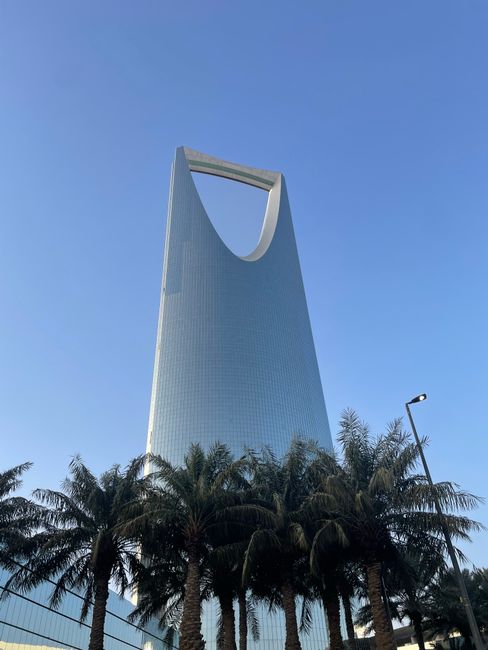
Saudi Arabia fills most of the Arabian Peninsula, a country of vast deserts, cool southern mountains, two long coastlines and some of the oldest trading routes on Earth. It is home to the two holiest cities of Islam, Mecca and Medina, which receive millions of pilgrims every year, and since tourist visas were introduced in 2019 it has also opened to leisure travelers. Visitors come for the Nabataean tombs of Hegra and the canyons of AlUla, the mud-brick capital of At-Turaif in Diriyah, the coral-stone houses of Historic Jeddah, the Red Sea coast, the green terraced highlands of Asir around Abha, the rose farms of Taif, the cultural centers of the Eastern Province and the events of the Riyadh Season. Distances are huge: Riyadh is about 950 km (590 miles) from Jeddah, so most travelers combine flights with the high-speed Haramain railway between Mecca, Jeddah and Medina. Plan around three things: the climate, which is pleasant in the cities from November to March but extremely hot from May to September; the religious calendar, from Ramadan to the Hajj; and the law, which is strict on alcohol, drugs, some medicines, photography and public behavior.
Right now in Saudi Arabia
- Wed 27–39°C 81–101°F Clear
- Thu 28–39°C 82–102°F Clear
- Fri 29–38°C 84–101°F Clear
Weather: MET Norway (CC BY 4.0)
Multi-day tours of Saudi Arabia
Multi-day tours from local operators. You check dates and book on Viator, our partner; we may earn a commission at no extra cost to you. How we earn money
Saudi Arabia at a glance: regions and cities
Saudi Arabia covers about 2.25 million km² (870,000 square miles), roughly a quarter of the size of the United States, with a population of about 33 million, including a large community of foreign residents from South Asia, the Arab world, the Philippines and beyond. Arabic is the official language, and English is widely used in airports, hotels and business. The kingdom is divided into 13 provinces; the capital, Riyadh, is in the center, in the Najd plateau. Most of the interior is desert, including the Rub’ al Khali (Empty Quarter) in the south, one of the largest sand seas in the world, while the Hejaz and Asir mountains run along the Red Sea coast and rise above 3,000 m (9,800 feet) in the southwest.
Time and the weekend: Saudi Arabia uses Arabia Standard Time (UTC+3) all year, with no daylight saving. The weekend is Friday and Saturday. Friday midday prayers are the most important of the week, and many attractions open later on Fridays.
The main regions for visitors
- Riyadh and the Najd: the capital, with At-Turaif in Diriyah, the National Museum, modern towers, the Riyadh Season and desert escarpments such as the Edge of the World.
- The Hejaz: the western region with Mecca and Medina, the port city of Jeddah and the mountain town of Taif.
- AlUla and the northwest: Hegra, Dadan, Jabal Ikmah and sandstone canyons, with Tabuk and the Red Sea coast beyond.
- Asir and the southwest: Abha, the cloud-covered Soudah highlands and the painted stone villages of Rijal Almaa.
- The Eastern Province: Dammam, Dhahran and Khobar on the Arabian Gulf, the Al-Ahsa oasis and the causeway to Bahrain.
Where to go: holy cities, heritage, mountains and coast
For a first leisure trip of a week, most visitors combine Riyadh with AlUla and Jeddah. Muslim visitors often build a trip around Umrah in Mecca and a visit to Medina, and add Jeddah or Taif. With more time, add Abha in the southwest or the Eastern Province.
Riyadh
The capital has the UNESCO-listed At-Turaif District in Diriyah, birthplace of the first Saudi state, the National Museum and Masmak Fortress, the Kingdom Centre’s sky bridge, a six-line metro and the Riyadh Season, which opens on 21 October 2026. See our Riyadh guide.
Jeddah
The Red Sea gateway has Historic Jeddah (Al-Balad), a UNESCO site of coral-stone houses with wooden balconies, the Red Sea Museum in the restored Bab Al-Bunt building, a long corniche and good diving. It is also the main arrival point for pilgrims. See our Jeddah guide.
Mecca
The holiest city in Islam, with the Masjid al-Haram and the Kaaba, is the destination of the Hajj and of Umrah. Only Muslims may enter the city’s sacred area. See our Mecca guide.
Medina
The city of the Prophet’s Mosque is the second holiest city in Islam. Non-Muslims may visit the city but not its central sacred area around the Prophet’s Mosque. See our Medina guide.
AlUla
In the northwest, AlUla has Hegra, Saudi Arabia’s first UNESCO World Heritage Site, with more than 100 monumental Nabataean tombs, along with the ancient city of Dadan, the inscriptions of Jabal Ikmah, Elephant Rock, the mirrored Maraya concert hall and a restored mud-brick old town. See our AlUla guide.
Abha and Asir
At more than 2,000 m (6,600 feet), Abha is the summer escape of the southwest, with cool weather, fog, green mountains, the Soudah highlands and the heritage village of Rijal Almaa. See our Abha guide.
Taif
The mountain city above Mecca is famous for its roses, which bloom in spring, and for the Al-Hada road and cable car. See our Taif guide.
Khobar and the Eastern Province
On the Arabian Gulf, Khobar has a long corniche and Saudi Arabia’s first Blue Flag beach, Ithra in neighboring Dhahran and the King Fahd Causeway to Bahrain. See our Khobar guide.
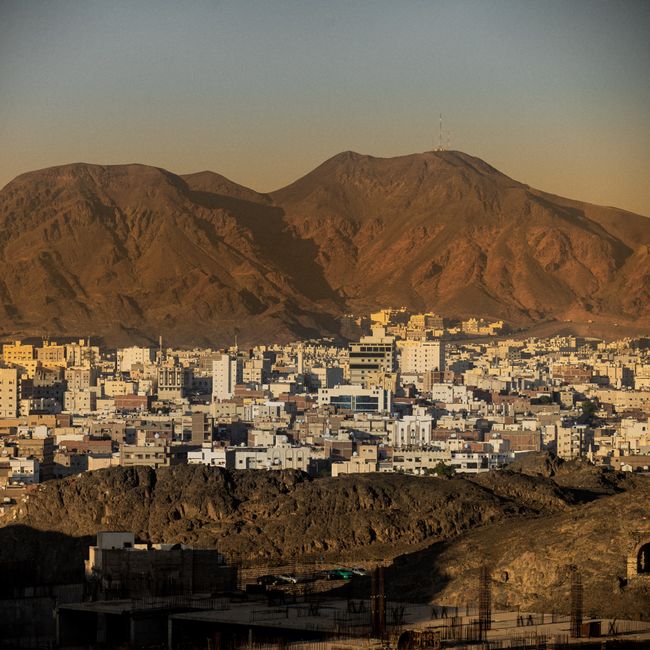
Abha Travel Guide
Plan a trip to Abha: the cool Asir highlands, Al-Soudah, the stone tower village of Rijal Almaa, Al-Habla, Art Street and the Aseer Summer…
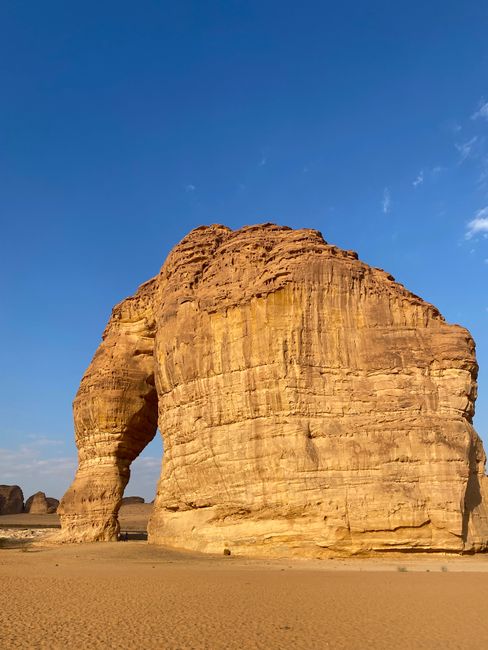
AlUla Travel Guide
Plan a trip to AlUla: Hegra tours and tickets (from SAR 95), Dadan and Jabal Ikmah, AlUla Old Town, Elephant Rock's hours, Maraya, stargazing…
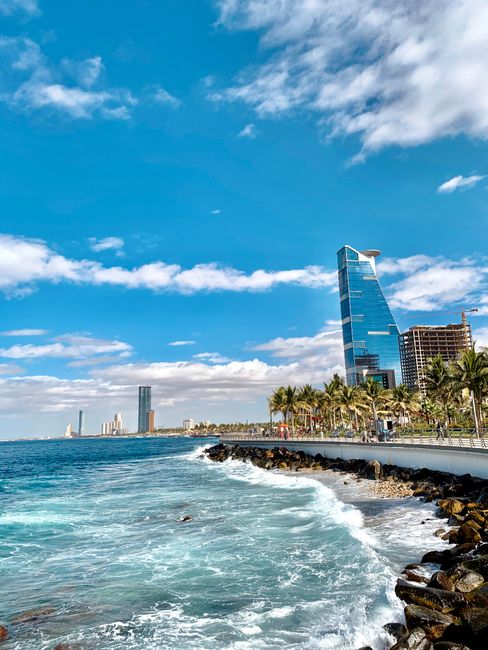
Jeddah Travel Guide
Plan a trip to Jeddah: Historic Jeddah (Al-Balad) and its coral-stone houses, the Red Sea Museum at Bab Al-Bunt, the corniche, King Fahd's Fountain…
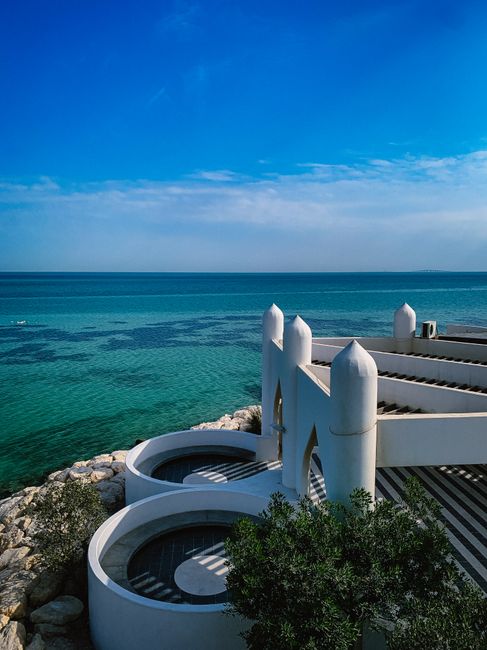
Khobar Travel Guide
Plan a trip to Khobar: the corniche and Bayfront, Saudi Arabia's first Blue Flag beach, Ithra in Dhahran, Half Moon Bay, the King Fahd…
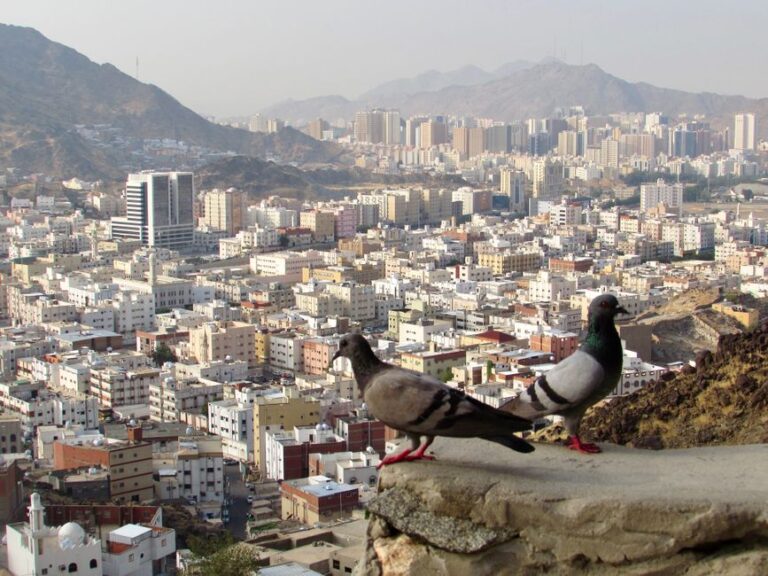
Mecca Travel Guide
Plan a visit to Mecca: who can enter the sacred area, Umrah on a tourist visa, Umrah visas and Nusuk permits, the 1448 AH…
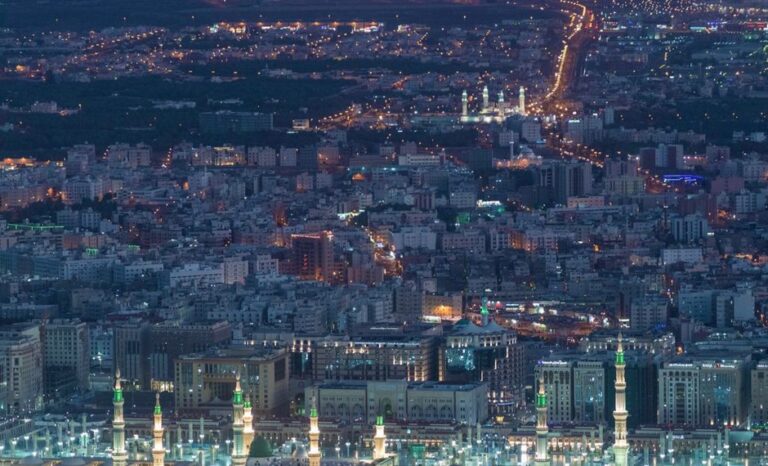
Medina Travel Guide
Plan a visit to Medina: access for non-Muslims, the Prophet's Mosque and Rawdah permits in Nusuk, Quba Mosque, Mount Uhud, museums of the Prophet's…
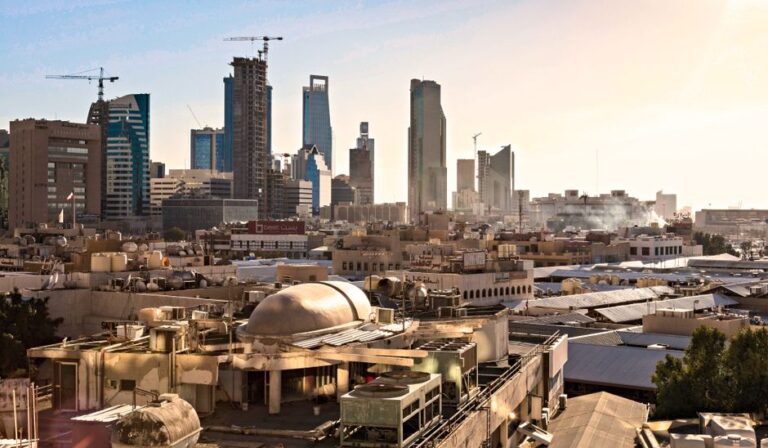
Riyadh Travel Guide
Plan a trip to Riyadh: At-Turaif in Diriyah and Bujairi Terrace, the National Museum, Masmak Fortress, the Kingdom Centre Sky Bridge, the Riyadh Season…
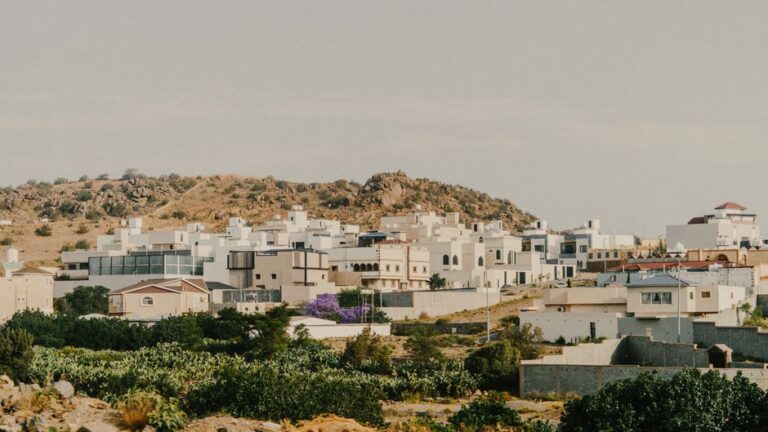
Taif Travel Guide
Plan a trip to Taif: the spring rose harvest and rose distilleries, the Al-Hada cable car and road, Al-Shafa's mountain farms, Shubra Palace, Souq…
Best time to visit Saudi Arabia
Most of Saudi Arabia has a hot desert climate. November to March is the main season in Riyadh, AlUla, Medina and the Eastern Province, with sunny days of about 20–30 °C (68–86 °F) and cool to cold nights inland; AlUla’s winter nights can drop to single digits. Jeddah and Mecca stay warm in winter, with highs of about 29–33 °C (84–91 °F). April and October are hot, and May to September is extreme in the lowlands: average highs of 40–44 °C (104–111 °F) in Riyadh, Mecca, Medina and Dhahran, with recorded extremes above 50 °C (122 °F), and humid heat on the coasts. The southwestern highlands are the exception: Abha has average summer highs of about 31 °C (88 °F) and summer rain, and Taif is several degrees cooler than Mecca. Rain falls mostly between November and April, often in short, heavy storms that flood roads and wadis.
| Average daily high, °C (°F) | Riyadh | Jeddah | Mecca | Medina | AlUla | Abha | Taif | Dhahran |
|---|---|---|---|---|---|---|---|---|
| Jan | 21 (69) | 29 (84) | 31 (88) | 24 (76) | 20 (68) | 20 (68) | 23 (74) | 22 (71) |
| Feb | 24 (75) | 30 (86) | 33 (91) | 27 (81) | 24 (76) | 22 (71) | 25 (78) | 24 (74) |
| Mar | 28 (82) | 32 (89) | 35 (96) | 31 (87) | 29 (83) | 24 (74) | 28 (82) | 28 (82) |
| Apr | 34 (92) | 35 (94) | 39 (102) | 36 (96) | 33 (92) | 26 (79) | 31 (87) | 34 (92) |
| May | 40 (103) | 37 (99) | 42 (108) | 40 (103) | 39 (101) | 29 (84) | 34 (93) | 40 (103) |
| Jun | 43 (109) | 38 (101) | 44 (111) | 43 (109) | 41 (106) | 31 (89) | 36 (97) | 43 (109) |
| Jul | 44 (111) | 39 (103) | 43 (110) | 43 (109) | 43 (109) | 31 (88) | 36 (96) | 44 (111) |
| Aug | 44 (111) | 39 (102) | 43 (109) | 44 (111) | 42 (108) | 31 (87) | 36 (97) | 44 (110) |
| Sep | 41 (106) | 37 (99) | 43 (109) | 42 (108) | 42 (108) | 30 (86) | 35 (95) | 41 (106) |
| Oct | 36 (96) | 37 (98) | 40 (105) | 37 (99) | 37 (98) | 26 (80) | 31 (88) | 37 (98) |
| Nov | 27 (81) | 33 (92) | 36 (96) | 30 (87) | 28 (83) | 23 (74) | 27 (80) | 30 (85) |
| Dec | 22 (72) | 31 (87) | 33 (91) | 26 (79) | 24 (76) | 21 (70) | 24 (76) | 24 (75) |
| Rain a year | 108 mm (4.2 in) | 60 mm (2.3 in) | 105 mm (4.1 in) | 60 mm (2.4 in) | 61 mm (2.4 in) | 201 mm (7.9 in) | 169 mm (6.6 in) | 95 mm (3.7 in) |
The table shows the 1991–2020 climate normals that Saudi Arabia’s National Center for Meteorology submitted to the World Meteorological Organization for King Khalid International Airport (Riyadh), King Abdulaziz International Airport (Jeddah), and the Mecca, Medina, Abha, Taif and Dhahran stations. The AlUla figures come from only one year of records, so treat them as a rough guide.
Crowds and prices through the year
- Peak (November to March): the best weather for sightseeing, AlUla’s busiest season and the Riyadh Season; book AlUla hotels and tours early.
- Ramadan and the last ten nights: Mecca and Medina are at their busiest, with very high hotel prices near the holy mosques.
- Hajj season: Mecca and the holy sites are closed to anyone without a Hajj permit, and flights to Jeddah and Medina fill with pilgrims.
- Summer (June to August): lowland cities are very hot and quieter; Saudi families head for Abha and Taif.
Festivals and events
- Riyadh Season (from 21 October 2026, about ten weeks): concerts, boxing and wrestling events, the Six Kings Slam tennis tournament and entertainment zones such as Boulevard World.
- AlUla winter season (roughly October to March): guided walks, stargazing and cultural events; the Leonid meteor shower viewing at Jabal Ikmah is on 15 November 2026.
- Founding Day (22 February) and National Day (23 September): public holidays with fireworks and celebrations.
- Taif rose season (spring): rose picking and rosewater distilling around Taif.
- Aseer summer season (June to August): events in Abha’s parks and on its Art Street.
- Ramadan (in 2027 expected from about 8 February to 9 March): quiet days and lively nights, with late openings after iftar.
Public holidays
Holidays include Founding Day (22 February), Eid al-Fitr at the end of Ramadan (about 10 March 2027), Eid al-Adha during the Hajj (about 16 May 2027) and National Day (23 September). Islamic holidays follow the lunar calendar and are confirmed only shortly before, so dates can move by a day or two. Government offices close for several days at the Eids, and domestic flights and hotels fill up.
How long to stay: sample itineraries
5 days: Riyadh and AlUla
Two days in Riyadh for Diriyah, the National Museum and the city’s towers, then fly to AlUla for three days: Hegra, Dadan and Jabal Ikmah, the old town and an evening at Elephant Rock.
7 days: Jeddah, Mecca and Medina for Umrah
For Muslim travelers: arrive in Jeddah, take the Haramain train to Mecca for Umrah, continue by train to Medina for the Prophet’s Mosque, and finish with a day or two in Historic Jeddah on the Red Sea.
10 to 14 days: the grand loop
Riyadh, AlUla, Jeddah and Taif, then fly south to Abha for the Asir highlands, and end in the Eastern Province with Khobar, Ithra and the Al-Ahsa oasis, or cross the causeway to Bahrain.
Combining Saudi Arabia with other countries
Saudi Arabia borders the UAE, Qatar, Bahrain, Oman, Jordan, Kuwait, Iraq and Yemen. Khobar is linked to Bahrain by the King Fahd Causeway, and short flights connect Riyadh and Jeddah with Dubai, Doha, Muscat and Cairo. See our Bahrain, Qatar, United Arab Emirates, Oman and Egypt guides.
Entry, money and costs
Entry: e-visas, visas on arrival and other options (last reviewed October 2026)
Your passport must be valid for at least six months from the date you arrive, and you will be refused entry with a passport reported lost or stolen. Citizens of the Gulf Cooperation Council (GCC) states don’t need a visa.
- Tourist e-visa: citizens of more than 60 eligible countries, including the United States, Canada, the United Kingdom, Australia, New Zealand, Japan, South Korea, China, Malaysia, Türkiye, South Africa and most of Europe, can apply online at the official Visit Saudi e-visa portal or get the same visa on arrival at Saudi international airports. It costs SAR 535, which includes health insurance during your stay; it is valid for one year with multiple entries and allows stays of up to 90 days in total. It can be used for tourism, family visits, events and Umrah outside the Hajj season, but not for Hajj.
- Visa holders and residents of other countries: people who hold a valid visa from the United States, the United Kingdom or the Schengen area, permanent residents of the US, the UK or the EU, and residents of the GCC countries can also get a tourist visa, whatever their nationality.
- Electronic Travel Authorization for British citizens: since 1 July 2026, holders of all types of UK passport can use an ETA for tourism, business or short study. It allows multiple entries and stays of up to 180 days, and is valid for 730 days; it doesn’t include health insurance, so buy your own.
- Stopover visa: passengers on Saudia and flynas can apply for a transit visa that allows a stay of up to 96 hours.
- Umrah visa: issued through Umrah companies, overseas agents or the Nusuk Umrah platform with a service package; it allows 90 days and free travel between cities. A multiple-entry Umrah visa launched in July 2026 is valid for 365 days, with up to 90 days in total.
Overstaying can lead to large fines, detention, deportation and a ban on returning. If you plan to arrive by land, for example over the causeway from Bahrain, check that your visa allows land entry. Entry rules change; check the official Visit Saudi portal, the Ministry of Foreign Affairs visa platform or your airline before you fly. A single GCC tourist visa, branded the GCC Grand Tours visa, has been agreed in principle by Gulf governments but had not launched for travelers as of October 2026.
Umrah, Hajj and the holy cities
Only Muslims may enter Mecca’s sacred area, the Haram; checkpoints on the approach roads turn back non-Muslim visitors. In Medina, non-Muslims can visit the city but not the sacred area around the Prophet’s Mosque. Muslim visitors on a tourist e-visa or ETA can perform Umrah outside the Hajj season, but they need an Umrah permit booked in the Nusuk app before entering the Grand Mosque for Umrah, and a separate permit to pray in the Rawdah at the Prophet’s Mosque (once every 30 days). Hajj needs a Hajj visa and a package booked through the official Nusuk Hajj platform; tourist and other visit visas never allow Hajj. In 2025, the Interior Ministry said that visit visa holders who enter or stay in Mecca and the holy sites from 1 Dhu al-Qadah to 14 Dhu al-Hijjah face fines of up to SAR 20,000, deportation and a 10-year entry ban. Pilgrims need a quadrivalent meningitis (ACWY) vaccination certificate at least 10 days before arriving. For the 1448 AH season, Umrah visas are issued until 9 March 2027, the last date to enter the kingdom on one is 23 March 2027, and Umrah visitors must leave by 7 April 2027.
Customs, medicines and what not to bring
Declare anything that may be prohibited or dutiable. It is illegal to bring in alcohol, pork products, pornography, narcotics and weapons, and religious items beyond personal use; books, films and devices may be checked. Drones, satellite phones and some radio equipment need licenses. Medicines: some prescription and over-the-counter medicines are controlled substances in Saudi Arabia. If you carry medicines containing narcotic or psychotropic substances, apply for a traveler’s clearance permit on the Saudi Food and Drug Authority’s Controlled Drugs System (cds.sfda.gov.sa) before you travel, uploading your prescription, a medical report and ID; show the permit on arrival. Carry an official prescription or doctor’s letter with the dose and amount, and keep medicines in their original packaging. Foreign prescriptions can’t be used to buy medicine in Saudi pharmacies.
Money and cards
The currency is the Saudi riyal (SAR), divided into 100 halalas and pegged to the US dollar at about SAR 3.75 to US$1. Cards and phone payments are accepted almost everywhere, including taxis, and ATMs are common. VAT of 15% applies to most goods and services. Carry some cash for markets and small shops.
Tipping
Service charges aren’t always included. Leaving 10% in restaurants, rounding up taxi fares and tipping hotel porters and guides a few riyals is appreciated but not expected.
Typical travel costs
| Item (as of October 2026) | Saudi riyals | About US dollars |
|---|---|---|
| Tourist e-visa, including health insurance | SAR 535 | $143 |
| Riyadh Metro, 2-hour ticket (standard / first class) | SAR 4 / 10 | $1.05 / $2.65 |
| Haramain train, Mecca–Medina, economy / business, base fare | SAR 162 / 455 | $43 / $121 |
| Haramain train, Mecca–Jeddah, economy / business, base fare | SAR 43 / 90 | $11.50 / $24 |
| Hegra Day Tour, AlUla, from | SAR 95 | $25 |
| AlUla Old Town tour | SAR 70 | $19 |
| Casual restaurant meal | about SAR 30–70 | about $8–19 |
| Mid-range hotel room, per night in winter | about SAR 400–900 | about $105–240 |
Visa, transport and AlUla tour prices are official; Haramain base fares exclude VAT and fees and vary with demand. Meals and hotels are typical ranges, and hotels near the holy mosques cost far more during Ramadan and the Hajj.
Getting there and getting around
Arrival airports
King Khalid International (RUH) in Riyadh and King Abdulaziz International (JED) in Jeddah are the main international gateways, the hubs of Saudia and flynas. Prince Mohammad bin Abdulaziz International (MED) in Medina, King Fahd International (DMM) near Dammam and Khobar, and AlUla International (ULH) also receive international flights, and Abha, Taif and Tabuk have busy domestic airports. Many pilgrims arrive in Jeddah’s dedicated Hajj Terminal. Around the Hajj, the authorities stop visitors who aren’t performing Hajj from flying to Jeddah, Medina and Taif, and you may need a Hajj visa to board flights there.
Flight disruptions
Since early 2026, regional tensions have led to periodic airspace closures across the Gulf, so flights can be delayed, rerouted or canceled at short notice. The authorities can also close airports near the southern border temporarily. Check your flight with the airline and the airport’s status before you travel.
Haramain high-speed railway
Electric trains at up to 300 km/h (186 mph) link Mecca, Jeddah (Al-Sulaymaniyah station), King Abdulaziz International Airport, King Abdullah Economic City and Medina on a 453 km (281-mile) line. Mecca to Medina takes about 2 hours 20 minutes. Base fares range from SAR 22 in economy between Jeddah and the airport to SAR 455 in business between Mecca and Medina, before VAT and fees, and prices vary with demand. Book in the Haramain app or on its website, from ticket machines or at station offices; carry ID, and arrive at least 10 minutes before departure, as boarding closes then. Non-Muslim travelers can use the line between Jeddah, the airport, KAEC and Medina, but not to Mecca.
Other trains
Saudi Arabia Railways (SAR) runs passenger trains from Riyadh east to Hofuf (Al-Ahsa) and Dammam, and north through Qassim and Hail to Al-Jouf and Qurayyat, with economy and business classes.
City transport
| City | System | How to pay (October 2026) |
|---|---|---|
| Riyadh | Riyadh Metro (six lines, 176 km, 85 stations) and Riyadh Bus | Darb app, station machines or offices: 2-hour ticket SAR 4 (first class SAR 10), 3-day SAR 20, 7-day SAR 40 |
| Jeddah, Mecca, Medina | City buses; Haramain train between cities | Card or app; most visitors use ride-hailing apps |
| AlUla | Shuttle and hop-on buses between sites; booked tours to Hegra | Tours booked on the Experience AlUla website |
| All cities | Metered taxis and ride-hailing (Uber, Careem, local apps) | Card or cash |
Domestic flights and driving
Flying is the practical way to cover long distances: Riyadh to Jeddah takes about 1 hour 45 minutes by air. Traffic drives on the right; standards of driving are poor and serious accidents are common, so drive defensively, always wear seatbelts and avoid driving at night outside cities. Many visitors can drive a rental car on their home license for their first months, and rental companies may ask for an International Driving Permit. Traffic fines are recorded automatically and must be paid before you leave the country. In the desert, travel in convoy and in daylight, and carry water and a phone.
Culture, food and everyday etiquette
Islam and local customs
Saudi Arabia is an Islamic country, home to Islam’s two holiest mosques, and religion shapes daily life. Five daily prayers are called from mosques; some smaller shops may pause briefly. Greet with “as-salaam alaykum,” wait for a woman to offer her hand before shaking it, and use your right hand to eat, pass and receive things. Arabic coffee (gahwa) with dates is the traditional welcome. Saudis are hospitable and private; ask before photographing anyone.
Food and drink
Saudi cuisine centers on kabsa (spiced rice with lamb or chicken), mandi (meat slow-cooked in an underground oven), jareesh (cracked wheat), saleeg (creamy rice from the Hejaz) and the Asir specialty of areeka, bread with honey and butter. Dates and coffee accompany every visit, and in the Hejaz you’ll find Indian, Yemeni and East African influences. Cities have every international cuisine, and Riyadh, Jeddah and Khobar have busy cafe cultures. Alcohol is prohibited throughout the country; restaurants and hotels serve alcohol-free drinks.
Laws visitors need to know
- Dress: men and women should wear loose clothing covering the elbows and the knees, avoiding tight clothes and slogans. Women visitors don’t have to wear an abaya or cover their hair, except in mosques.
- Behavior: public displays of affection, swearing, rude gestures, loud music and dancing in public can lead to fines or arrest. Public demonstrations are illegal.
- Religion: public worship of other religions and trying to convert people are illegal; bring religious books for personal use only.
- Relationships: sex outside marriage and same-sex relations are illegal, although unmarried tourists may share hotel rooms.
- Speech: criticizing the king, the royal family, the government or Islam, in person or online, is a criminal offense.
- ID: always carry ID; tourists should carry a copy of their passport and visa.
- Photography: don’t photograph government buildings, palaces, military installations or embassies, and only photograph people with their consent.
Safety, health, accessibility and connectivity
Safety
Crime against visitors is low in Saudi Arabia. The main risks come from the climate, the roads, strict laws and the regional situation.
- Heat: from May to September, lowland highs of 40–44 °C (104–111 °F) are normal and records exceed 50 °C (122 °F). Plan sightseeing for early morning and evening, drink water often, wear a hat and sunscreen, and know the signs of heatstroke, especially during Umrah and the Hajj.
- Dress codes: cover elbows and knees in public; mosques require stricter dress and, for women, a headscarf.
- Alcohol prohibition: don’t bring alcohol into Saudi Arabia or arrive under its influence; brewing, possessing or selling alcohol can lead to prison.
- Drugs and medicines: there is zero tolerance for drugs, and possessing even small amounts can lead to five years in prison and a fine of SAR 30,000; trafficking can carry the death penalty. Get an SFDA clearance permit for controlled medicines before you travel.
- Photography: filming government buildings, palaces, military sites and embassies is illegal, and publishing or broadcasting media content needs advance permission from the media regulator.
- Desert, wadis and floods: heavy rain, mostly from November to February, can cause sudden floods in towns and dry riverbeds; never cross flowing water and follow Civil Defense alerts. In the desert, travel in convoy, in daylight and with plenty of water.
- Driving: the accident rate is high; wear seatbelts and keep to major roads.
- Restricted areas: tourist trips to military zones and border posts are banned.
- Flight disruptions: since early 2026, regional tensions have led to periodic airspace closures across the Gulf, and flights can be delayed, rerouted or canceled at short notice. Check your flight with the airline before you travel, follow instructions from the local authorities and heed the Saudi Civil Defense early-warning alerts sent to phones.
- Emergencies: 911 for police, ambulance and fire in Riyadh, Mecca, Medina and the Eastern Province; 112 from a phone without a Saudi SIM card.
Health and insurance
Healthcare in the big cities is of a high standard but can be expensive. The tourist e-visa includes basic health insurance (cover up to SAR 100,000), but buy travel insurance that covers higher costs and evacuation. Pilgrims need the ACWY meningitis vaccine, and a yellow fever certificate is required if you arrive from a country with a risk of transmission. Respiratory infections spread easily during the Hajj and Ramadan, and altitude can affect visitors in the southern mountains.
Accessibility
New airports, the Haramain trains, the Riyadh Metro, malls and big hotels are generally accessible, and the holy mosques provide wheelchairs and electric carts for pilgrims. Haramain trains give a 50% discount to passengers with disabilities who hold eligible ID. Historic districts, desert sites and AlUla’s tomb areas involve uneven ground; ask about adapted vehicles when booking tours.
Connectivity and power
Mobile coverage is excellent in cities and along highways, and prepaid SIM cards and eSIMs from Saudi operators are sold at airports. Power is 230 V, 60 Hz; sockets are mostly type G (British three-pin), with some older type A, B and F outlets, so bring a universal adapter.
Things to do: heritage, pilgrimage, mountains and the sea
Saudi Arabia’s highlights range from the ancient to the brand new: the Nabataean tombs of Hegra, the inscriptions of Jabal Ikmah and the canyons and stargazing of AlUla; the mud-brick palaces of At-Turaif and the Riyadh Season’s concerts and sports; the coral-stone lanes of Historic Jeddah and diving in the Red Sea; Umrah in Mecca and prayer in Medina for Muslim travelers; fog and terraced villages in Asir; rose farms in Taif; and the oases and Gulf corniches of the east. Eight sites are on the UNESCO World Heritage List, including Hegra, At-Turaif, Historic Jeddah, the Al-Ahsa Oasis and the rock art of the Hail region.
What to pack
Pack light, loose clothes that cover elbows and knees, a scarf or shawl (women need a headscarf for mosques), comfortable walking shoes with good grip for AlUla’s rocky ground, a wide-brimmed hat, sunglasses and high-SPF sunscreen. Add a warm layer for desert and mountain nights from November to March, a reusable water bottle and a universal plug adapter. Carry medicines in their original packaging with your prescription and, where needed, your SFDA clearance permit. Pilgrims should pack ihram garments and a small bag for Umrah.
Saudi Arabia travel FAQ
Do I need a visa for Saudi Arabia?
Yes, unless you are a GCC citizen. Citizens of more than 60 countries, including the US, Canada, the UK, Australia and most of Europe, can get a tourist e-visa online or on arrival; British citizens can also use an Electronic Travel Authorization.
How much is the Saudi tourist e-visa?
SAR 535, including health insurance. It is valid for one year with multiple entries and stays of up to 90 days in total.
Can I perform Umrah on a tourist visa?
Yes, if you are Muslim, outside the Hajj season. Book an Umrah permit in the Nusuk app before you go to the Grand Mosque in Mecca. A tourist visa never allows Hajj.
Can non-Muslims visit Mecca and Medina?
Non-Muslims may not enter Mecca’s sacred area; checkpoints on the approach roads turn them back. In Medina, non-Muslims can visit the city but not the sacred area around the Prophet’s Mosque.
Is there a train between Mecca, Jeddah and Medina?
Yes. The Haramain high-speed railway links Mecca, Jeddah, Jeddah airport, King Abdullah Economic City and Medina; Mecca to Medina takes about 2 hours 20 minutes.
Can tourists drink alcohol in Saudi Arabia?
No. Alcohol is prohibited; don’t bring any, and don’t arrive under its influence.
What is the dress code for visitors?
Loose clothing covering elbows and knees for men and women. Women visitors don’t need an abaya or headscarf except in mosques.
When is the best time to visit Saudi Arabia?
November to March for Riyadh, AlUla, Medina and the east; June to August for the cool highlands of Abha and Taif.
When is Ramadan in 2027?
It is expected from about 8 February to 9 March 2027, depending on the sighting of the moon. Don’t eat, drink or smoke in public during daylight hours.
Do I need a permit for my medicines?
For controlled medicines containing narcotic or psychotropic substances, yes: apply for a traveler’s clearance permit on the SFDA’s Controlled Drugs System before you travel.
What is the weekend in Saudi Arabia?
Friday and Saturday.
Are flights to Saudi Arabia ever disrupted?
Sometimes. Since early 2026, regional tensions have led to periodic airspace closures across the Gulf, and airports near the southern border can close temporarily. Check your flight with the airline before you travel.
What currency is used in Saudi Arabia?
The Saudi riyal (SAR), pegged at about SAR 3.75 to US$1. Cards are accepted almost everywhere.
Sources and last review
Researched and last reviewed on 5 October 2026. The tourist e-visa price and insurance come from Visit Saudi (official site, read through search excerpts because it blocks automated reading); e-visa eligibility, residents and visa holders, the stopover visa, the UK Electronic Travel Authorization, the multiple-entry Umrah visa, the 1448 AH Umrah calendar, the Hajj-season rules for visit visa holders, the Riyadh Metro, the Haramain railway’s route and journey time, the SFDA medicine permit, the Red Sea Museum and the Riyadh Season date from the Saudi Press Agency; Umrah and Rawdah permits, Umrah visa rules and access to the holy cities from the Ministry of Hajj and Umrah; Haramain fares and stations from Haramain High Speed Railway; Riyadh Metro fares from Riyadh Public Transportation (search excerpt); AlUla tours from the Royal Commission for AlUla’s Experience AlUla website; World Heritage sites from UNESCO; laws, customs, driving, flooding, emergency numbers, e-visa validity and insurance and the factual background on local rules from GOV.UK’s Saudi Arabia travel information (updated 20 September 2026); airspace disruption from the European Union Aviation Safety Agency; climate from the 1991–2020 normals Saudi Arabia submitted to the World Meteorological Organization; area, population and capital from Wikidata. The number of e-visa countries, the GCC visa status, VAT, the riyal peg, other train routes, flight times, Ramadan, Eid and Hajj dates for 2027, power sockets, tipping and typical prices are general references and flagged for checking. Entry rules can change at short notice, so check official sources before you travel.
Plan your trip
Partner links: TravelerCenter may earn a commission if you book, at no extra cost to you.
🇪🇬 Useful Arabic phrases for Saudi Arabia
All 38 Arabic phrases: restaurant, hotel, emergencies, romance (printable) →