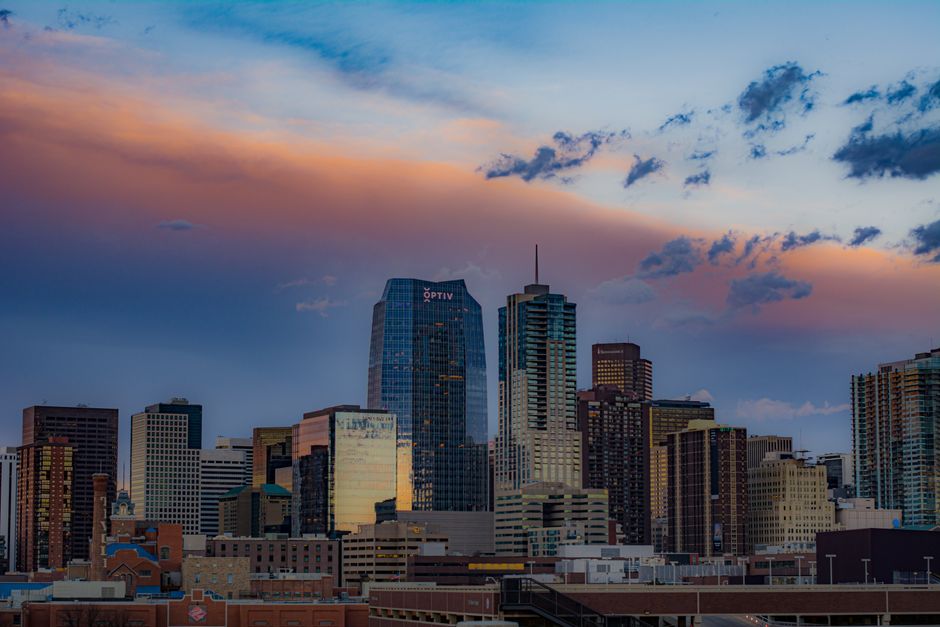
Denver, the Mile High City, sits on the high plains exactly one mile (1,609 m) above sea level, with the snowy wall of the Rocky Mountains filling the western skyline. Colorado’s capital is a relaxed, sunny city of about 715,000 people, with a restored railway station at its heart, a cluster of first-class museums, lively neighborhoods full of breweries and street art and plenty of sunshine. It is also the gateway to the Rockies: Red Rocks, Boulder, Rocky Mountain National Park and the ski towns are all within reach. A train links the airport with downtown in well under an hour, so it is easy to spend a day or three here before heading into the mountains.
Right now in Denver
- Tue 13–31°C 55–87°F Partly cloudy
- Wed 12–30°C 54–86°F 1 mm Partly cloudy
- Thu 12–28°C 53–82°F Clear
- Mon 12 Oct Columbus Day · regional holiday in Colorado
Weather: MET Norway (CC BY 4.0) · Holidays: Nager.Date
Top tours in Denver
See all tours for Denver →
From local operators, with prices and reviews; you check availability and book on Viator, our partner. We may earn a commission at no extra cost to you. How we earn money
Denver at a glance
- Best months: May–June and September–October for warm, dry days and cool nights; summer is hot with afternoon storms; winter is sunny between short snowy spells.
- Time needed: two or three days for the city and a concert or walk at Red Rocks; add days for Boulder, Rocky Mountain National Park or the ski resorts.
- Getting there: Denver International Airport (DEN) is about 25 miles (40 km) northeast of downtown; the RTD A Line train runs to Union Station for a $10 Airport Day Pass.
- Costs (as of October 2026): a 3-hour RTD pass is $2.75 and a day pass $5.50; Red Rocks Park is free to visit outside concerts; hotel bills add 15.75% in taxes at larger hotels.
- Before you go: entry rules, money, driving and general safety are on our United States travel guide.
Denver neighborhoods and who each one suits
LoDo and Union Station
Lower Downtown is Denver’s historic warehouse district, with red-brick buildings turned into restaurants, bars and hotels, Coors Field, home of the Colorado Rockies baseball team, and Larimer Square, a block of Victorian storefronts strung with lights. Union Station, the grand 1914 railway station, is the transport hub and a meeting place in itself. Best for first-time visitors without a car.
Downtown, the Golden Triangle and Capitol Hill
The office towers of the Central Business District line the 16th Street pedestrian mall, which runs from Union Station to Civic Center Park. South of the park, the Golden Triangle holds the Denver Art Museum, the Clyfford Still Museum, History Colorado and the Central Library. Capitol Hill, east of the gold-domed State Capitol, is a lively, slightly bohemian area of old mansions, apartments, bars and music venues.
RiNo and the Highlands
The River North Art District (RiNo), just northeast of downtown, is the city’s creative quarter: former factories painted with huge murals, food halls, breweries, galleries and cocktail bars. Across the South Platte River to the northwest, the Highlands (LoHi) have pedestrian bridges to downtown, rooftop restaurants and great skyline views. Both suit food lovers and night owls.
Cherry Creek, South Broadway and City Park
Cherry Creek is the polished shopping district, with a big mall, boutiques and upscale hotels along a creekside bike path. South Broadway has vintage shops, dive bars and music clubs. Around City Park, east of downtown, are the Denver Museum of Nature & Science, the Denver Zoo and quiet residential streets.
Top things to see in Denver
Red Rocks Park
About 15 miles (24 km) west of downtown near Morrison, a natural amphitheater sits between two huge tilted slabs of red sandstone, with views over the plains to the Denver skyline. Owned and run by the City and County of Denver, it is one of the world’s most famous concert venues, but you can also visit for free on most days. Admission and parking are free for the park, the amphitheater, the Visitor Center and the Trading Post. The park and its trails open one hour before sunrise and close one hour after sunset. On concert days, the amphitheater usually closes to the public at about 2 p.m. for sound checks; the recorded line on 720-865-2494 gives closure times.
The Visitor Center, with the Red Rocks Hall of Fame and the Ship Rock Grille, is open 7 a.m. to 7 p.m. from March to October and 8 a.m. to 4 p.m. from November to February; the Trading Post is open 9 a.m. to 6 p.m. (to 5 p.m. in winter). Many locals come at dawn to run the steps. The concert season runs from March to November; tickets are sold through AXS as mobile tickets only, and there is no re-entry once you are inside. Shows go ahead in almost any weather, so bring layers and rain gear; text RRWEATHER to 67283 for weather updates on the day. Many visitors also come for Film on the Rocks in summer and the Yoga on the Rocks sessions. There is no public transport to Red Rocks; drive, take a ride-share or join a tour, and for concerts allow plenty of time for traffic and an uphill walk from the parking lots.
Union Station
Denver’s 1914 Beaux-Arts railway station was beautifully restored in 2014. Its Great Hall, with chandeliers, long wooden tables and shuffleboard, is a public living room surrounded by bars, cafes and the Crawford Hotel, and behind it are the platforms for the A Line to the airport, light rail, Amtrak and the bus concourse. Even if you are not catching a train, stop for a coffee and look up at the clock and the giant arched windows.
Denver Art Museum and the Golden Triangle
The Denver Art Museum fills two striking buildings, the angular, titanium-clad Hamilton Building and the Martin Building, with an outstanding collection of Indigenous arts of North America, Western American art, and art from Asia, Europe and Latin America. It is open from 10 a.m. to 5 p.m., to 8 p.m. on Tuesdays, and closed on Wednesdays, Thanksgiving and Christmas Day. Prices are higher on Fridays, weekends and holidays, and special exhibitions cost extra. General admission is free on SCFD Free Days; the remaining ones in 2026 are 13 October, 7 November and 8 December. Nearby, the Clyfford Still Museum is devoted to one of the great abstract expressionists, and History Colorado tells the story of the state from the Indigenous peoples to the mining camps and ski resorts.
Colorado State Capitol
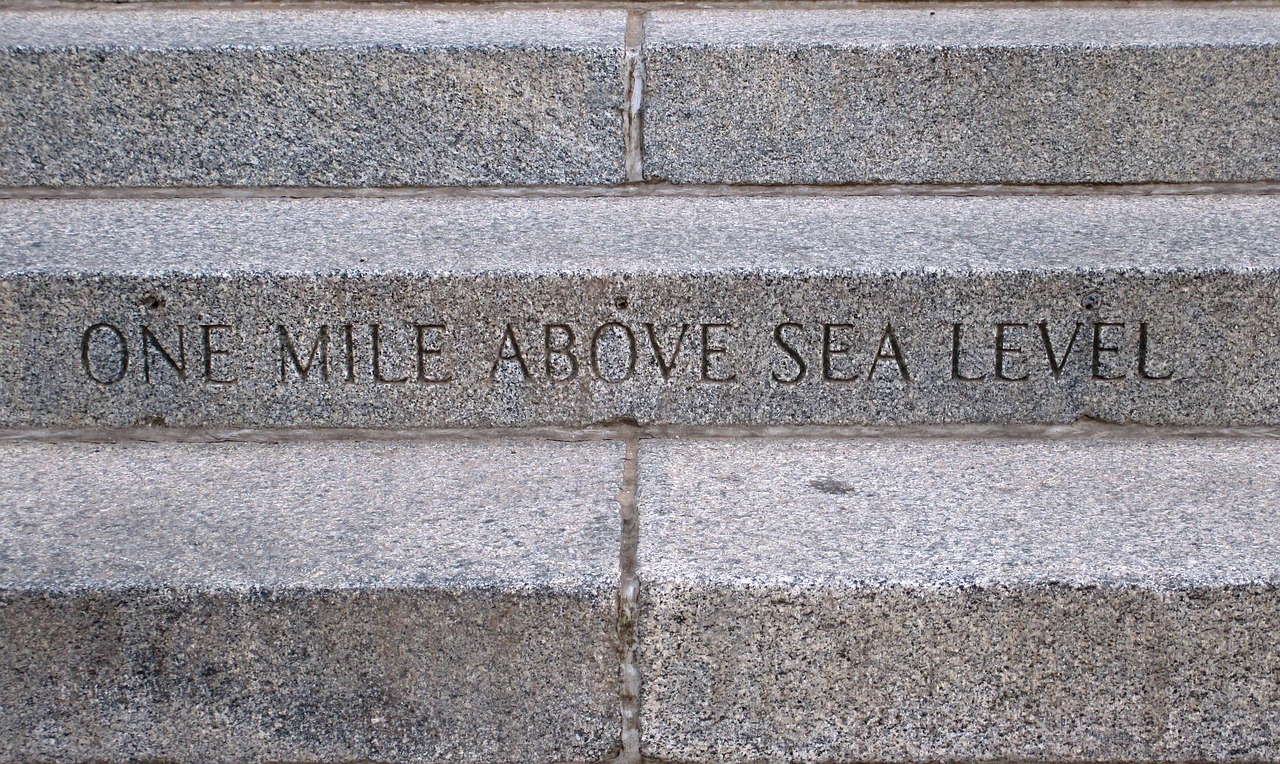
The State Capitol’s dome is covered in real Colorado gold leaf. On the west steps, one step is marked as being exactly one mile above sea level, the most popular photo in town. Free guided tours run on weekdays when the building is open; the view from the steps down Civic Center Park to the mountains is free at any time.
Denver Museum of Nature & Science and City Park
One of the biggest natural history museums in the West, with dinosaurs, gems and minerals, Egyptian mummies, a planetarium and an IMAX theater. It is open daily from 9 a.m. to 5 p.m. and until 9 p.m. on most Fridays, at 2001 Colorado Boulevard; it closes on 25 December and 26 August. The terrace behind the museum, across City Park’s lake, has one of the classic views of downtown with the mountains behind. The Denver Zoo is next door.
Denver Botanic Gardens
Some 24 acres (10 ha) of themed gardens in Cheesman Park’s neighborhood, from Japanese and water gardens to plants of the Western steppes, with summer concerts and a winter light show. It is busiest on sunny weekends; buy tickets online.
Other things to do in Denver
- Craft beer: Denver has dozens of breweries and taprooms, especially in RiNo and around Coors Field, and the Great American Beer Festival is held here each autumn.
- Sports: the Broncos (football), Nuggets (basketball), Avalanche (ice hockey) and Rockies (baseball) all play in or near downtown.
- Cycling: long, flat paved trails follow Cherry Creek and the South Platte River through the city; bike-share and rental e-bikes make it easy (see our cycling guide).
- Walking tours and street art: explore the RiNo murals, Larimer Square and the Highlands on foot; our city sightseeing guide has tips for city breaks.
- Cannabis: recreational marijuana is legal in Colorado for adults 21 and over, but it is not legal to use it in public, including parks, Red Rocks and hotel rooms that forbid it, and you cannot take it across state lines or onto planes.
Day trips from Denver
Boulder and Golden
Boulder, about 30 miles (48 km) northwest, is a university town below the jagged Flatirons, with easy and steep trails from Chautauqua Park and the pedestrian Pearl Street Mall. Golden, about 15 miles (24 km) west, is a small old town on Clear Creek, home of the Coors brewery and the Colorado School of Mines, and the start of the drive up Lookout Mountain to Buffalo Bill’s grave. Combine Golden with Red Rocks in one day.
Rocky Mountain National Park
Estes Park, at the park’s east entrance, is 66 miles (106 km) from Denver, about 1.5 to 2 hours by car. From late May to mid-October you need a timed entry reservation to enter during the busiest hours, and non-US residents aged 16 and over pay a $100 non-resident fee on top of the entrance fee unless they have an annual or America the Beautiful pass. Trail Ridge Road, over the Continental Divide, normally closes from about mid-October to late May. On summer weekends, Bustang buses run from Union Station to the park’s Park & Ride.
Mountain towns and Mount Blue Sky
West along Interstate 70, the old silver-mining towns of Idaho Springs and Georgetown have Victorian main streets and the Georgetown Loop Railroad. The road up Mount Blue Sky (formerly Mount Evans), one of the highest paved roads in North America, is open only in summer and needs a reservation; check the US Forest Service before you go. In winter, ski resorts such as Winter Park, Loveland, Keystone and Breckenridge are 1.5 to 2.5 hours away, depending on traffic, which can be heavy on weekends.
Colorado Springs and farther afield
Colorado Springs, about 70 miles (113 km) south, has the red rock spires of Garden of the Gods and the Pikes Peak road and cog railway. For a longer trip, Aspen and the Maroon Bells are about four hours west by car, and Las Vegas and the Grand Canyon are a day’s drive or a short flight away (see our Las Vegas travel guide).
Nearby destinations
- Rocky Mountain National Park90 km
- Vail119 km
- Aspen169 km
Getting there and getting around
From Denver International Airport
DEN is one of the busiest airports in the US, with flights across the country and to Europe, Mexico and Asia. The A Line commuter train runs from the airport station, under the hotel at the south end of the terminal, to Union Station in about 37 minutes, normally every 15 minutes for most of the day. The trains have space for luggage and level boarding. Any trip to or from the airport needs an Airport Day Pass ($10), valid on all RTD buses and trains for the rest of the day. Until 10 October 2026, maintenance work reduces A Line trains to every 30 minutes, so allow extra time. Taxis, ride-shares and shared shuttles also serve the airport; the drive downtown takes 30 to 45 minutes without traffic.
RTD buses and light rail
The Regional Transportation District (RTD) runs buses, light rail and commuter trains across the metro area. Fares since RTD’s 2024 fare reform are simple:
| Ticket | Standard fare | Notes |
|---|---|---|
| 3-Hour Pass | $2.75 | Unlimited rides for 3 hours (not to or from the airport) |
| Day Pass | $5.50 | Unlimited rides for the service day (not to or from the airport) |
| Airport Day Pass | $10 | Whole system for the day, including the airport |
| Airport upgrade | $7.25 from a 3-Hour Pass, $4.50 from a Day Pass | If you already hold a local ticket |
| Seniors 65+ and riders with disabilities | $1.35 (3 hours) / $2.70 (day) | Discount fares include the airport; proof required |
| Youth 19 and under | Free | On all RTD services |
The easiest way to pay is Tap-n-Ride: tap a contactless bank card or phone wallet on the validator as you board, and fares are capped so you never pay more than a day pass. You can also buy tickets in the RTD NextRide app, from machines at rail stations, or with cash on buses. Light rail lines run south and west to the suburbs; the W Line goes to Golden. Downtown is compact and flat, easy to explore on foot.
Driving and trains
You do not need a car in central Denver, but you will want one for the mountains. Interstate 70 west into the Rockies is often congested on Friday and Sunday afternoons and in snowstorms, when Colorado’s traction law may require snow-rated tires or chains. Amtrak’s California Zephyr stops at Union Station once a day each way, on its spectacular route between Chicago and the San Francisco Bay Area through the Rockies.
When to go and how long to stay
Weather for your datesSunrise and sunset
Denver is dry, sunny and changeable. Summers are hot by day and cool at night, with short, sometimes violent afternoon thunderstorms and hail. Autumn is the most settled season. Winters are generally mild and sunny in the city, with snowstorms that usually melt within days, while the mountains just to the west stay snowy. Spring swings between warm days and heavy, wet snow; March is often the snowiest month.
| Season | Average high | Average low | What it’s like |
|---|---|---|---|
| Spring (Mar–May) | 56–71 °F (13–22 °C) | 28–44 °F (−2 to 7 °C) | Changeable; warm spells and spring snowstorms. |
| Summer (Jun–Aug) | 83–90 °F (28–32 °C) | 53–60 °F (12–16 °C) | Hot, dry heat; afternoon storms and hail; concert season. |
| Autumn (Sep–Nov) | 80–53 °F (27–12 °C) | 50–26 °F (10 to −3 °C) | Sunny and settled; golden aspens in the mountains in late September. |
| Winter (Dec–Feb) | 44–46 °F (7–8 °C) | 18–20 °F (−8 to −7 °C) | Sunny between snowstorms; ski season in the mountains. |
Figures are NOAA 1991–2020 normals for Denver International Airport, about 5,400 ft (1,647 m) up. The airport gets about 14.5 inches (368 mm) of rain and melted snow a year, most of it from April to August. Downtown is similar.
Altitude and sun
At 5,280 ft (1,609 m) the air holds less oxygen and much less moisture than at sea level. Most visitors notice it only as shortness of breath on stairs, but drink more water than usual, go easy on alcohol on the first evening (it hits harder at altitude), and use sunscreen even in winter, as the sun burns quickly. If you are heading higher, to Rocky Mountain National Park or a ski resort, a night or two in Denver helps your body adjust.
How long to stay: 2, 3 and 4 days
- Two days: Union Station, LoDo and Larimer Square; the State Capitol and the Denver Art Museum; RiNo murals and breweries; sunrise or a concert at Red Rocks.
- Three days: add the Museum of Nature & Science and City Park, the Botanic Gardens, and an afternoon in Golden.
- Four days: add a full day in Rocky Mountain National Park or Boulder, or a mountain drive west on Interstate 70.
Where to stay in Denver and the hotel tax
- LoDo and Union Station: the most convenient base, with the airport train on the doorstep; prices are highest on game and concert nights.
- Downtown and the Convention Center area: large chain hotels, good for walking to museums and the 16th Street Mall.
- RiNo and the Highlands: boutique hotels and rentals close to restaurants and nightlife.
- Cherry Creek: upscale and quieter, near shopping and the creek trail.
- Near the airport: handy for early flights, but far from the sights.
Hotel tax: room rates are quoted before tax. Denver charges a lodger’s tax of 10.75%, plus 1% for the Tourism Improvement District at hotels with 50 or more rooms, and 4% in Colorado state and special district taxes (state sales tax, RTD transit and the cultural district). The total is 15.75% at larger hotels and 14.75% at smaller ones. Some hotels also add a daily “destination” or “amenity” fee and charge for parking, which can be expensive downtown; check the total price before you book.
Practical tips for Denver
- Time zone: Denver is on Mountain Time and uses daylight saving time, one hour ahead of Las Vegas and Los Angeles.
- Weather: check the forecast every day; a sunny morning can become a hailstorm in summer or a snowstorm in spring and autumn.
- Tipping and prices: sales tax is added at the till; tip about 18–22% in sit-down restaurants and bars (see our United States travel guide).
- Safety: downtown is generally safe, but parts of Colfax Avenue and the area around Civic Center can feel rough late at night; use normal city sense and keep valuables out of sight in cars.
- Emergencies: call 911.
What to pack for Denver
Pack layers whatever the season: mornings and evenings are cool even in summer, and temperatures can drop 30 °F (17 °C) in a day. Bring sunscreen, sunglasses, a hat, lip balm and moisturizer for the dry air, a reusable water bottle, a light rain jacket for summer storms and comfortable walking shoes. For Red Rocks concerts, add a warm layer and a poncho; in winter, a warm coat, gloves and boots with grip, and more if you are heading into the mountains.
Denver travel FAQ
How do I get from Denver airport to downtown?
Take the RTD A Line train to Union Station, about 37 minutes, with a $10 Airport Day Pass that also covers buses and trains for the rest of the day. A taxi or ride-share takes 30 to 45 minutes without traffic.
How much is a bus or train ticket in Denver?
$2.75 for a 3-Hour Pass and $5.50 for a Day Pass on RTD buses and trains, or $10 for an Airport Day Pass. Young people aged 19 and under ride free.
Is Red Rocks free to visit?
Yes. Admission and parking are free from one hour before sunrise to one hour after sunset, but on concert days the amphitheater usually closes to the public at about 2 p.m. Concerts need a ticket.
Can I take public transport to Red Rocks?
No regular RTD service goes there. Drive, take a ride-share or join a tour or concert shuttle; pickups after shows are at the Jurassic Lot near Entrance 2.
What is the hotel tax in Denver?
Denver’s lodger’s tax is 10.75%. With the 1% Tourism Improvement District tax at hotels of 50 rooms or more and 4% in state and special district taxes, the total is 15.75% (14.75% at smaller hotels), plus any hotel fees.
Will the altitude in Denver affect me?
Most people feel only a little breathless at 5,280 ft (1,609 m). Drink plenty of water, limit alcohol at first and use sunscreen; spend a night here before going higher into the mountains.
When is the Denver Art Museum free?
On SCFD Free Days; the remaining 2026 dates are 13 October, 7 November and 8 December. Ticketed exhibitions still cost extra, and the museum is closed on Wednesdays.
How far is Rocky Mountain National Park from Denver?
Estes Park, at the east entrance, is 66 miles (106 km) away, about 1.5 to 2 hours by car. Book a timed entry reservation if you plan to enter between late May and mid-October during the busiest hours.
When is the best time to visit Denver?
May–June and September–October, for warm sunny days and cool nights. Come in summer for Red Rocks concerts and in winter for skiing.
Plan your trip
Partner links: TravelerCenter may earn a commission if you book, at no extra cost to you.
Sources · last reviewed 4 October 2026
Researched and last reviewed on 4 October 2026. Fares, Tap-n-Ride and A Line service changes come from the Regional Transportation District (RTD); Red Rocks hours, free entry, concert and parking rules from Red Rocks Park (City and County of Denver); museum hours and free days from the Denver Art Museum and the Denver Museum of Nature & Science; Rocky Mountain National Park distances, timed entry and fees from the National Park Service; climate from NOAA’s 1991–2020 normals for Denver International Airport; lodging taxes from the City and County of Denver’s tax guide; population and elevation from Wikidata. The A Line travel time, distances to day-trip towns and some neighborhood details are general references and flagged for checking. Prices and timetables change, so check the official sites before you go. For entry rules, money and general safety, see our United States travel guide.
Place data: Wikidata (CC0)