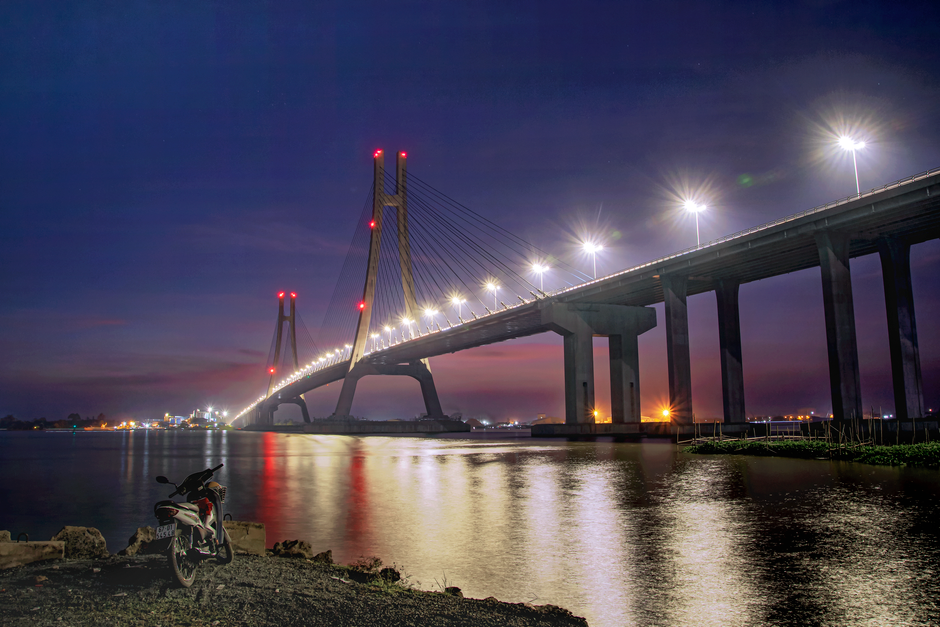
Can Tho (Cần Thơ) is the largest city of the Mekong Delta and the best base for exploring Vietnam’s “rice bowl,” a flat, green world of rivers, canals, orchards and paddy fields where life still follows the water. The city lies on the south bank of the Hau River, the main southern branch of the Mekong, about 170 km (105 miles) southwest of Ho Chi Minh City. Its great attraction is the Cai Rang Floating Market, where wholesale boats piled with pumpkins, pineapples and watermelons gather at dawn, each advertising its goods on a tall bamboo pole; recognized as part of Vietnam’s national intangible cultural heritage in 2016, it is the biggest and best known of the delta’s floating markets. Around it are a lively riverfront promenade at Ninh Kieu, Chinese and Khmer temples, a 19th-century ancestral house, fruit orchards and canal villages that you can explore by boat or bicycle. In July 2025, Can Tho merged with neighboring Hau Giang and Soc Trang into a much larger centrally governed city, which now includes Soc Trang’s famous Khmer pagodas. The driest months are December to April; from May to November, the rainy season brings afternoon downpours and, in autumn, high water.
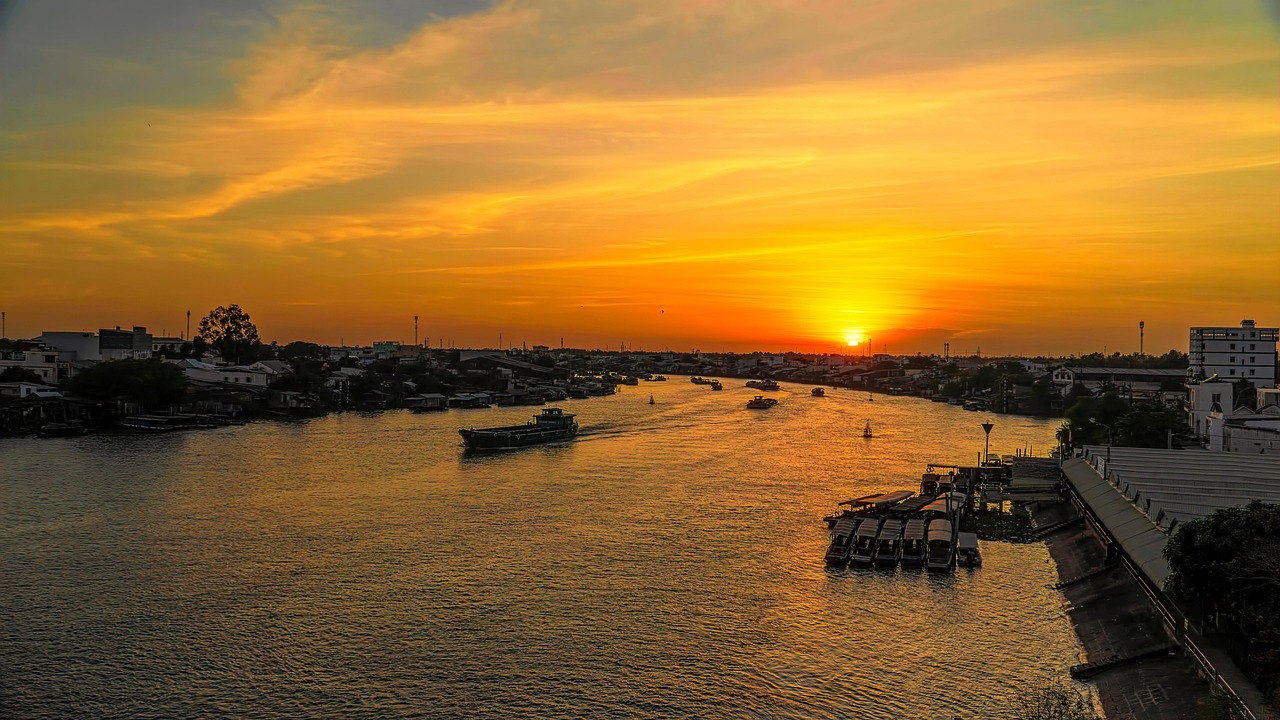
Right now in Can Tho
- Wed 25–32°C 76–90°F 22 mm Heavy rain
- Thu 24–33°C 75–91°F 17 mm Heavy showers
- Fri 25–32°C 76–90°F 26 mm Heavy rain
Weather: MET Norway (CC BY 4.0)
Top tours in Can Tho
See all tours for Can Tho →
From local operators, with prices and reviews; you check availability and book on Viator, our partner. We may earn a commission at no extra cost to you. How we earn money
Can Tho at a glance
- Best for: floating markets, river and canal boat trips, delta food and fruit, cycling through villages, and Khmer and Chinese temples.
- How long: 2 nights for an early-morning floating market trip and the countryside; 3–4 with Soc Trang’s pagodas or a homestay.
- Best time: December to April, the dry season; the fruit season peaks from May to August, and the flood season, from September to November, shows the delta at high water.
- Getting there: about 3.5 to 4 hours by bus from Ho Chi Minh City, or by air to Can Tho International Airport (VCA).
- Getting around: on foot along the riverfront, by Grab or taxi, and by boat to the floating markets.
- Good to know: the floating market is open from 4 to 9 a.m. and busiest from 5 to 8 a.m., so plan to leave Ninh Kieu wharf at about 5 to 5:30 a.m.
- Before you go: the e-visa, visa-free stays, money and general safety are in our Vietnam travel guide.
Can Tho’s areas and where to stay
The city center, in Ninh Kieu ward, faces the Hau and Can Tho rivers, with the floating market a few kilometers upstream on the Can Tho River.
Ninh Kieu riverfront
The central promenade along the Can Tho River, with the Ninh Kieu wharf, the statue of Ho Chi Minh, the night market and the illuminated walking bridge, has most of the hotels, from budget guesthouses to high-rises with river views, and many restaurants. Boats to the floating markets leave from here.
Cai Rang
About 5 km (3 miles) southeast of the center by road, the Cai Rang area around the floating market has riverside homestays and small hotels, convenient for the earliest boats.
Phong Dien and the countryside
West of the center, the orchards, canals and villages of Phong Dien have garden homestays and eco-lodges, where you can stay among fruit trees and cycle along the canals.
Top things to see in Can Tho
Cai Rang Floating Market
According to VietnamPlus, the English service of the state Vietnam News Agency, the market lies on the river in Cai Rang, about 5 km (3 miles) from the city center; it began more than 100 years ago as a place to sell farm produce and local food, is open every day from 4 to 9 a.m., and is busiest from 5 to 8 a.m., with up to 500 boats on holidays and festivals. It is a wholesale market for fruit and other farm products, about 30 to 45 minutes by boat from Ninh Kieu wharf. Large boats anchor in the river with their goods hung from bamboo poles 3–5 m (10–16 ft) tall, called cay beo, to show buyers from a distance what they sell, while small boats weave between them, selling coffee, noodle soup and fruit to traders and visitors. The number of wholesale boats has fallen over the years as roads have replaced waterways, but it remains the delta’s largest floating market.
Phong Dien Floating Market
About 17 km (11 miles) southwest of the center, this smaller floating market is more local, with farmers selling from small rowing boats; it is often combined with Cai Rang on a longer boat trip.
Ninh Kieu Wharf and the walking bridge
Can Tho’s riverfront promenade is the city’s social center, with families strolling in the evening, the lights of the Ninh Kieu pedestrian bridge, and dinner cruises on the river. The night market nearby sells street food and souvenirs.
Binh Thuy Ancient House
A grand house built by a wealthy family in the 1870s and rebuilt in a mix of French and Vietnamese styles in the early 20th century, with tiled floors, carved wooden furniture and a garden of orchids; it appeared in the film The Lover.
More classic sights
- Ong Pagoda: a Chinese assembly hall from the 1890s on the riverfront, with spiral incense coils hanging from the ceiling.
- Can Tho Museum: the history and culture of the delta’s Kinh, Khmer and Chinese communities.
- Truc Lam Phuong Nam Zen Monastery: a large, peaceful monastery complex in the countryside of Phong Dien.
- Can Tho Bridge: the long cable-stayed bridge over the Hau River, opened in 2010, one of the longest spans in Southeast Asia.
- Munirangsyaram Pagoda: a Khmer Theravada Buddhist pagoda in the city center.
Other things to do in Can Tho
Boat trips and canals
Besides the floating markets, boat trips explore the narrow canals off the Can Tho River, past stilt houses, fish farms and orchards, stopping at rice-paper and noodle workshops, where you can watch hu tieu noodles being made, and at fruit gardens. Choose a small sampan for the narrow canals. See our boat trips guide.
Cycling and orchards
The countryside of Phong Dien and the river islands is laced with canal paths and monkey bridges; cycling tours ride through villages and fruit orchards of rambutan, longan, mango, durian and pomelo, with stops for tastings. See our cycling guide.
Food and drink
The Mekong Delta’s cooking is sweet, fresh and full of herbs. In Can Tho, try lau mam, a pungent fermented-fish hotpot with a basket of vegetables and flowers; banh xeo, giant crispy pancakes filled with shrimp and bean sprouts; hu tieu, rice noodle soup; ca loc nuong trui, snakehead fish grilled in straw; banh cong, crispy mung bean and shrimp cakes; and com tam. The delta’s tropical fruits are at their best from May to August, and coconut candy and fresh coconut water are everywhere.
Khmer culture and the Ok Om Bok festival
The Mekong Delta is home to a large Khmer community, especially in the former Soc Trang province, now part of Can Tho city. Their Theravada Buddhist pagodas, with sweeping roofs and naga serpents, are centers of village life, and the Ok Om Bok festival, on the full moon of the tenth lunar month (usually in November), is celebrated in Soc Trang with ngo boat races, long, narrow boats paddled by dozens of rowers, and lantern ceremonies to thank the moon for the harvest.
Bird sanctuaries
North of the city, the Bang Lang stork sanctuary in Thot Not gives a spectacular sight of thousands of storks and herons returning to roost at dusk.
Day trips from Can Tho
- Soc Trang’s Khmer pagodas: about 1.5 hours southeast, in the former Soc Trang province, now part of Can Tho city: the Bat Pagoda (Mahatup), home to colonies of fruit bats, the Clay Pagoda (Buu Son Tu), with its clay statues, and the Som Rong Pagoda, with a huge reclining Buddha.
- Chau Doc and Sam Mountain: about 3 hours northwest, near the Cambodian border, with floating fish farms, Cham villages and the Tra Su cajuput forest.
- Vinh Long and Ben Tre: islands of orchards and homestays on the Mekong’s other branches, on the way to Ho Chi Minh City.
- Ho Chi Minh City: about 3.5 to 4 hours by road. See our Ho Chi Minh City guide.
- Phu Quoc: a short flight from Can Tho, or by road and ferry via Rach Gia. See our Phu Quoc guide.
Nearby destinations
- Ho Chi Minh City148 km
- Kampot154 km
- Phu Quoc169 km
- Phnom Penh170 km
- Sihanoukville225 km
Getting there and getting around
By air
Can Tho International Airport (VCA), about 10 km (6 miles) northwest of the center, has domestic flights from Hanoi, Da Nang, Phu Quoc and Con Dao and a few international routes. Taxis and Grab cars take about 20 minutes to Ninh Kieu.
By bus and road
Frequent buses and limousine vans run between Ho Chi Minh City’s Mien Tay (Western) bus station and Can Tho’s central bus station, taking about 3.5 to 4 hours on the expressway and highway via the Can Tho Bridge. Many companies offer hotel pickups. Buses also link Can Tho with Chau Doc, Rach Gia, Ca Mau and Soc Trang.
Around the city
The riverfront center is walkable. Grab and taxis are cheap and reliable. Boats to the floating markets can be booked through hotels, at Ninh Kieu wharf or with licensed tour operators; agree the route, duration and price in advance.
When to go and how long to stay
Can Tho has a hot tropical climate, with little change in temperature through the year and a dry and a rainy season. The dry season, from December to April, is sunny and pleasant, with March and April the hottest months, around 33–34 °C (91–93 °F). The rainy season, from May to November, brings short, heavy afternoon downpours. From about September to November, the Mekong’s annual flood raises the rivers and canals; low-lying roads and fields can be under water, and high tides combined with rain sometimes flood city streets, though this is also when the delta is greenest. Neither the WMO nor Vietnam’s National Center for Hydro-Meteorological Forecasting (NCHMF) publishes 1991–2020 normals for Can Tho on the WMO’s public lists, so the temperatures below come from Vietnam’s national technical regulation on natural conditions for construction, QCVN 02:2022/BXD, issued by the Ministry of Construction, for the Can Tho station; rainfall is described from general sources.
| Month | Average high / low | Typical rain | What to expect |
|---|---|---|---|
| January | 30 °C (86 °F) / 22 °C (72 °F) | Dry | Sunny and pleasant; flower markets before Tet |
| February | 31 °C (88 °F) / 23 °C (73 °F) | Driest month | Dry; Tet on February 6 in 2027 |
| March | 33 °C (91 °F) / 24 °C (75 °F) | Dry | Hot and sunny |
| April | 34 °C (93 °F) / 25 °C (77 °F) | Mostly dry | Hottest month |
| May | 33 °C (92 °F) / 25 °C (77 °F) | Rainy season begins | Afternoon storms; fruit season starts |
| June | 32 °C (90 °F) / 25 °C (76 °F) | Frequent showers | Fruit season; green fields |
| July | 31 °C (89 °F) / 24 °C (76 °F) | Wet | Daily showers; fruit at its peak |
| August | 31 °C (88 °F) / 24 °C (76 °F) | Wet | Rivers rising |
| September | 31 °C (88 °F) / 24 °C (76 °F) | Very wet | Flood season begins |
| October | 31 °C (88 °F) / 24 °C (76 °F) | Very wet | High water; street flooding at high tide |
| November | 31 °C (87 °F) / 24 °C (76 °F) | Rain easing | Floodwaters recede; Ok Om Bok festival in Soc Trang |
| December | 30 °C (85 °F) / 23 °C (73 °F) | Mostly dry | Dry season returns |
2 days in Can Tho
Day one, arrive in the afternoon, visit the Ong Pagoda and the Can Tho Museum, and walk the riverfront and night market. Day two, take a dawn boat to Cai Rang Floating Market and a noodle workshop, continue to Phong Dien Floating Market and the orchards, and visit Binh Thuy Ancient House in the afternoon.
3–4 days with the wider delta
Add a cycling day in Phong Dien, a night in a garden homestay, and a day trip to the Khmer pagodas of Soc Trang or the stork sanctuary at dusk.
Where to stay in Can Tho
- Ninh Kieu riverfront: the widest choice, from budget to upscale hotels with river views, close to the boats.
- Cai Rang: homestays and small hotels near the floating market.
- Phong Dien: garden homestays and eco-lodges among orchards and canals.
- River islands: a few resorts on islands in the Hau River, reached by boat.
Hotels fill during Tet and Vietnamese holidays; book ahead.
What a trip to Can Tho costs
Prices are approximate, for October 2026, converted at about 26,000 dong (VND) to the US dollar.
| Item | Typical cost |
|---|---|
| Private boat to Cai Rang Floating Market, 3–4 hours | 400,000–900,000 VND per boat (about US$15–35) |
| Small-group floating market tour, per person | 250,000–600,000 VND (about US$9.60–23) |
| Bowl of hu tieu or plate of com tam | 30,000–60,000 VND (about US$1.15–2.30) |
| Lau mam hotpot for two | 250,000–450,000 VND (about US$9.60–17) |
| Binh Thuy Ancient House entry | 20,000–50,000 VND (about US$0.75–1.90) |
| Limousine van from Ho Chi Minh City | 180,000–350,000 VND (about US$7–13.50) |
| Grab car from the airport | 100,000–150,000 VND (about US$3.85–5.80) |
| Mid-range hotel double, per night | 500,000–1,300,000 VND (about US$19–50) |
Practical tips for Can Tho
- Get up early: the floating market is busiest from dawn to about 8 a.m.; by 9 a.m. most traders have gone.
- Choose your boat carefully: small boats can enter the canals; large ones are more comfortable on the main river. Ask for life jackets.
- Bring cash: for boat trips, markets and small restaurants.
- Wear sunscreen and a hat: there is little shade on the water.
- Watch the tides: in October and November, high tides can flood riverside streets in the evening.
Safety
Can Tho is a safe, friendly city. The main things to know concern the water and the weather. Make sure boats carry life jackets, and avoid overcrowded boats; in July 2026, a tourist boat capsized in bad weather off Phu Quoc, according to the government, a reminder that standards vary. In the flood season, from September to November, high water, heavy rain and high tides can flood roads and riverside streets; follow local instructions and forecasts. Traffic is busy, with many motorbikes, so cross streets slowly and steadily; helmets are compulsory on motorbikes. Bag snatching occasionally occurs; keep phones away from the roadside. Mosquitoes carry dengue fever in the rainy season; use repellent. In an emergency, call 113 for police, 114 for fire and 115 for an ambulance.
What to pack for Can Tho
Light, breathable clothes, a hat, sunglasses and sunscreen, sandals or water shoes for boats, insect repellent, a light rain jacket or umbrella from May to November, and clothes covering shoulders and knees for pagodas. Vietnam uses 220 V, with sockets for flat (type A) and round (type C) two-pin plugs. See our rain jackets, water shoes and travel adapters guides.
Can Tho travel FAQ
What time should I go to Cai Rang Floating Market?
As early as possible: leave Ninh Kieu wharf at about 5 to 5:30 a.m. According to VietnamPlus, the market is open from 4 to 9 a.m. and busiest from 5 to 8 a.m.
How far is Cai Rang Floating Market from Can Tho?
About 5 km (3 miles) from the city center: about 30 to 45 minutes by boat from Ninh Kieu wharf, or 15 minutes by road.
Is Cai Rang Floating Market still worth visiting?
Yes, though there are fewer wholesale boats than in the past; it remains the largest floating market in the Mekong Delta and is best combined with a canal and orchard trip.
How do I get from Ho Chi Minh City to Can Tho?
By bus or limousine van in about 3.5 to 4 hours, or by air to Can Tho International Airport from other Vietnamese cities.
How many days do I need in Can Tho?
Two nights for the floating market, the riverfront and the countryside; three or four with Soc Trang or a homestay.
What is the best time to visit Can Tho?
December to April for dry weather; May to August for fruit; September to November for the flood season, when the delta is at high water.
What food is Can Tho known for?
Lau mam (fermented-fish hotpot), banh xeo, hu tieu noodles, grilled snakehead fish, banh cong and tropical fruit.
Is Soc Trang part of Can Tho now?
Yes. Since July 2025, the former provinces of Soc Trang and Hau Giang have been part of the centrally governed city of Can Tho.
Can I visit the floating market without a tour?
Yes. Boat owners at Ninh Kieu wharf offer private trips; agree the price, duration and route first, and ask for life jackets.
Is Can Tho safe?
Yes. Take care on boats and in traffic, and watch for street flooding during high tides in the flood season.
Sources and last review
Researched and last reviewed on 4 October 2026. Cai Rang Floating Market’s location, distance, history, opening hours (4 to 9 a.m.), busiest hours, boat numbers, bamboo-pole signs and its 2016 recognition as national intangible cultural heritage: VietnamPlus, the Vietnam News Agency’s English service (the Can Tho City portal, cantho.gov.vn, refused connections during this review); the 2025 merger of Can Tho, Hau Giang and Soc Trang: the Government of Vietnam’s news portal; the July 2026 Phu Quoc boat capsizing: the Government of Vietnam’s news portal; monthly temperatures for the Can Tho station: Vietnam’s Ministry of Construction, QCVN 02:2022/BXD (read via luatvietnam.vn); exchange rate: Vietcombank. The decline in wholesale boats, temple and house dates, the bridge’s opening, flight routes, rainfall and flood seasons, travel times and all typical prices are general references or estimates, flagged for checking. Prices change, so check before you go. For entry rules, money and general safety, see our Vietnam travel guide.
Plan your trip
Partner links: TravelerCenter may earn a commission if you book, at no extra cost to you.
🇻🇳 Useful Vietnamese phrases for Can Tho
All 38 Vietnamese phrases: restaurant, hotel, emergencies, romance (printable) →