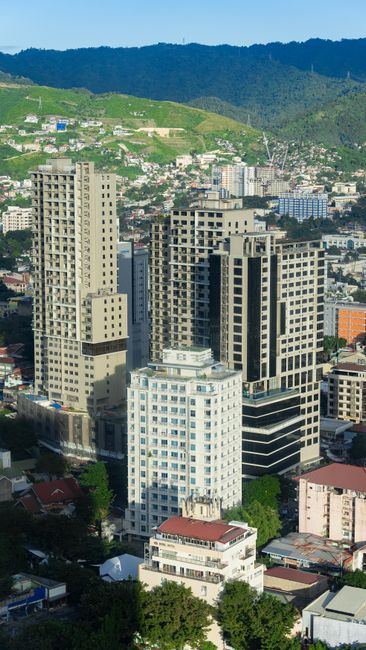
Cebu City, on the east coast of the island of Cebu in the central Visayas, is the oldest Spanish city in the Philippines and the country’s second gateway after Manila. It was here, in 1521, that Ferdinand Magellan’s expedition planted a cross and baptized the local ruler, and here that Miguel López de Legazpi founded the first permanent Spanish settlement in 1565. Today the city is the busy hub of the Visayas, with the Basilica del Santo Niño and Magellan’s Cross at its historic center, Fort San Pedro by the port, hilltop temples and viewpoints above the city, famous lechon (roast pig), and the January Sinulog festival, one of the biggest in the country. Across a channel, Mactan Island has the international airport and beach resorts, and the rest of Cebu offers some of the best day trips in the Philippines: sardine runs and turtles at Moalboal, the turquoise canyons of Kawasan Falls, thresher sharks off Malapascua and fast ferries to Bohol. Cebu is warm all year; February to May is the driest stretch, and typhoons are most likely from about July to December.
Right now in Cebu City
- Wed25–29°C77–85°F33 mm rain
- Thu25–30°C77–86°F10 mm rain
- Fri25–29°C77–83°F15 mm rain
Top tours in Cebu City
See all tours for Cebu City →
From local operators, with prices and reviews; you check availability and book on Viator, our partner. We may earn a commission at no extra cost to you. How we earn money
Cebu City at a glance
- Best for: Spanish colonial history, lechon and street food, a base for beaches, diving, waterfalls and island trips, and easy connections around the Visayas.
- How long: 1 to 2 days for the city; 4 to 7 with Mactan, Moalboal, Kawasan Falls or Malapascua.
- Best time: February to May, the driest months; highs are about 30–33 °C (85–91 °F) all year.
- Getting there: Mactan-Cebu International Airport, on Mactan Island, is about 30 to 60 minutes from the city by road.
- Getting around: Grab, taxis, jeepneys and buses; fast craft from the city’s piers to Bohol and other islands.
- Good to know: the Sinulog festival on the third weekend of January fills every hotel and flight; book months ahead.
- Before you go: eTravel registration, visa-free stays, money and general safety are in our Philippines travel guide.
Cebu City’s areas and where to stay
Metro Cebu stretches along the coast, with the old downtown by the port, the modern business districts uptown, and Mactan across the channel.
Downtown and the heritage district
The streets around the Basilica del Santo Niño, Magellan’s Cross, Fort San Pedro and Colon Street, often called the oldest street in the country, hold the historic sights, markets and the Parian district of old mansions. It is busy and gritty, with a few budget hotels; most visitors come for the day.
Fuente Osmeña and uptown
The traffic circle of Fuente Osmeña and the streets around it have mid-range hotels, restaurants and easy access to downtown and uptown.
Cebu IT Park and Cebu Business Park
The business districts in the north of the city, Cebu IT Park in Lahug and Cebu Business Park around Ayala Center Cebu, are modern, walkable and full of restaurants, bars, malls and international hotels, making them the most comfortable city base.
Mactan Island
Across the Mactan-Mandaue bridges, Mactan has the airport, beach resorts along its eastern coast with reefs and dive shops, and the Lapu-Lapu shrine. It suits travelers who want a beach and pool between trips, about 30 to 60 minutes from the city.
Top things to see in Cebu City
Long before the Spanish arrived, Cebu, then known as Sugbu, was a thriving trading port, dealing with Chinese, Malay and other Asian merchants. Magellan’s fleet landed in April 1521, and the ruler Rajah Humabon and hundreds of his people were baptized, but weeks later Magellan was killed on Mactan by the forces of the chief Lapu-Lapu. When Legazpi returned in 1565, Cebu became the first capital of the Spanish Philippines until the seat moved to Manila in 1571. Most of the historic sights are within a short walk of each other downtown, so they are easy to see in a morning, ideally early before the heat and the traffic build up.
Basilica Minore del Santo Niño
The country’s oldest church foundation houses the Santo Niño de Cebu, a small statue of the Christ Child believed to have been given by Magellan in 1521 and found by Legazpi’s men in 1565. Thousands of devotees visit every day, and candle sellers outside offer prayers on your behalf. Dress modestly and be respectful during masses.
Magellan’s Cross
Next to the basilica, a small octagonal kiosk shelters the wooden cross said to contain fragments of the original planted by Magellan’s expedition in 1521. The kiosk’s ceiling is painted with the scene of the first baptism.
Fort San Pedro
The small triangular stone fort by the port, begun by Legazpi in 1565, is the oldest Spanish fort in the country. Its walls, garden and small museum make a pleasant short stop.
Casa Gorordo and the Parian heritage houses
In the old Parian district, Casa Gorordo Museum is a restored 19th-century house with period interiors, and the nearby Yap-Sandiego Ancestral House, one of the oldest Chinese-Filipino homes in the country, is still family-run. The Heritage of Cebu Monument depicts scenes from the island’s history.
The Taoist Temple and the hills
In the hills of Beverly Hills, uptown, the colorful Taoist Temple has dragons, pagodas and city views. Farther up, the Temple of Leah, a Roman-style folly, Sirao’s flower farm and the Tops lookout offer panoramas, best toward sunset; go by Grab or hired car.
More classic sights
- Colon Street: the old commercial street laid out in the Spanish era, today lined with shops and eateries.
- Carbon Market: Cebu’s sprawling public market, being redeveloped, with fruit, fish and dried mangoes.
- Museo Sugbo: the provincial museum in a former jail, with exhibits on Cebu’s history.
- Lapu-Lapu shrine, Mactan: a statue of the chief whose warriors defeated Magellan in the Battle of Mactan in 1521.
Other things to do in Cebu City
Food and drink
Cebu is famous for lechon, whole spit-roasted pig with crisp skin and herb-stuffed meat, eaten without sauce; many Filipinos consider Cebu’s the best in the country. Also try puso, rice cooked in woven coconut-leaf pouches; ngohiong, a Cebuano spring roll; sutukil, seafood grilled, stewed or served raw in vinegar at seafood markets; and dried mangoes and danggit (dried fish) to take home. Larsian, an open-air barbecue area near Fuente Osmeña, is a classic late-night stop, and IT Park has dozens of restaurants and bars.
Festivals
The Sinulog festival honors the Santo Niño with a novena, a fluvial procession and a grand parade of street dancers on the third Sunday of January, drawing huge crowds; the city is packed for the whole week. Holy Week and Christmas are also major occasions.
Diving and beaches
Mactan’s resorts have house reefs, and dive centers run trips to nearby walls and to Olango Island, a wildlife sanctuary for migratory birds. Cebu’s best diving and beaches are farther away, at Moalboal, Malapascua and Bantayan. See our diving guide.
Day trips from Cebu City
- Moalboal: on the southwest coast, about 3 hours away, famous for a huge sardine shoal just off Panagsama Beach, turtles and the island of Pescador. See our snorkeling guide.
- Kawasan Falls and canyoneering: in Badian, near Moalboal, turquoise pools and guided canyoneering trips that jump and slide down the river.
- Oslob: in the far south, about 3 to 4 hours away, where whale sharks are fed by local boatmen; the feeding is controversial among scientists, so consider whether to go.
- Malapascua and Bantayan: islands off northern Cebu, 4 or more hours away, best as overnight trips; Malapascua is known for thresher sharks at dawn.
- Bohol: fast craft cross to Tagbilaran in about 2 hours, making a long day trip possible; better to stay a few nights. See our Bohol guide.
Getting there and getting around
By air
Mactan-Cebu International Airport (CEB) is the country’s second-busiest airport, with domestic flights from all over the Philippines and international flights from cities such as Seoul, Tokyo, Hong Kong, Singapore, Taipei, Bangkok and Kuala Lumpur. It has separate domestic and international terminals. According to the UK government, international departures from Mactan-Cebu carry a passenger service charge of ₱850; check whether it is already included in your ticket. Philippine Airlines and Cebu Pacific both have a hub here, with flights to Palawan, Siargao, Boracay (Caticlan), Davao and other islands.
From the airport
Grab and taxis take 30 to 60 minutes to the city, depending on traffic and the route; the Cebu-Cordova Link Expressway (CCLEX), a long bridge across the channel, can shorten trips to the south of the city. Airport buses such as MyBus run to SM City Cebu and other malls.
By sea
Cebu’s piers are a hub for fast craft and ferries. According to OceanJet, its routes from Cebu include Tagbilaran in Bohol, Ormoc and Palompon in Leyte, and Siquijor; check in at least 30 minutes before departure with a valid ID matching your ticket. Larger ferries sail overnight to Manila, Mindanao and other islands. Boats stop when the Coast Guard suspends sea travel in bad weather.
Around the city
Grab covers Cebu, and taxis are plentiful; insist on the meter. Jeepneys are cheap but routes are hard to learn, and traffic is heavy at rush hours and around Fuente Osmeña and the bridges. For day trips south and north, buses leave from the South and North Bus Terminals, or hire a car with driver.
When to go and how long to stay
Cebu has no pronounced dry season but is drier from February to May. According to PAGASA, the national weather agency, the country’s rainy season runs from June to November; in Cebu, rain spreads through much of the year, with the most falling from June to October and another peak in December and January. The table uses PAGASA’s 1991–2020 normals for its Mactan International Airport station, as submitted to the World Meteorological Organization (WMO).
| Month | Average high / low | Rain (days with 1 mm or more) | What to expect |
|---|---|---|---|
| January | 30 °C (85 °F) / 24 °C (75 °F) | 135 mm (5.3 in), 12 days | Showers; Sinulog festival crowds |
| February | 30 °C (86 °F) / 24 °C (75 °F) | 89 mm (3.5 in), 9 days | Drying out; pleasant |
| March | 31 °C (88 °F) / 25 °C (76 °F) | 61 mm (2.4 in), 7 days | Dry and sunny |
| April | 32 °C (90 °F) / 26 °C (78 °F) | 56 mm (2.2 in), 5 days | The driest month; Holy Week |
| May | 33 °C (91 °F) / 26 °C (79 °F) | 94 mm (3.7 in), 8 days | Hottest month |
| June | 32 °C (90 °F) / 26 °C (78 °F) | 181 mm (7.1 in), 13 days | Rain returns |
| July | 32 °C (89 °F) / 25 °C (77 °F) | 211 mm (8.3 in), 15 days | The wettest month; typhoons possible |
| August | 32 °C (89 °F) / 25 °C (77 °F) | 158 mm (6.2 in), 13 days | Showers |
| September | 32 °C (89 °F) / 25 °C (77 °F) | 190 mm (7.5 in), 14 days | Wet; typhoon peak |
| October | 31 °C (89 °F) / 25 °C (77 °F) | 208 mm (8.2 in), 15 days | Wet; typhoons possible |
| November | 31 °C (88 °F) / 25 °C (77 °F) | 131 mm (5.2 in), 12 days | Typhoons possible |
| December | 30 °C (87 °F) / 25 °C (76 °F) | 172 mm (6.8 in), 14 days | Showers; Christmas crowds |
Mactan gets about 1,690 mm (66 in) of rain a year, much less than Manila. Typhoons can affect Cebu from about July to December; Typhoon Odette (Rai) caused major damage across Cebu, Bohol and Siargao in December 2021. PAGASA said in September 2026 that a strong El Niño was expected to bring below-normal rainfall to most of the country into early 2027.
2 days in Cebu City
Day one, the Basilica del Santo Niño, Magellan’s Cross, Fort San Pedro, Casa Gorordo and the Heritage of Cebu Monument, with a lechon lunch and dinner in IT Park. Day two, the Taoist Temple, Temple of Leah and Tops lookout, then an afternoon on Mactan’s beaches.
5 days with day trips
Add Moalboal and Kawasan Falls (best with a night in Moalboal), and a fast craft to Bohol for two nights.
Where to stay in Cebu City
- Cebu IT Park and Cebu Business Park: modern hotels, restaurants and nightlife; the best city base.
- Fuente Osmeña: mid-range hotels between downtown and uptown.
- Downtown: budget hotels near the heritage sights and the piers.
- Mactan: beach resorts with pools and dive centers, near the airport.
Book early for Sinulog week in January and for Holy Week.
What a trip to Cebu City costs
Prices are approximate, for October 2026, converted at about ₱62.6 to the US dollar.
| Item | Typical cost |
|---|---|
| Jeepney ride | from about ₱13 (about US$0.20) |
| Grab from the airport to IT Park | ₱350–600 (about US$5.60–9.60) |
| Fast craft to Tagbilaran, Bohol, one way | ₱800–1,500 (about US$13–24) |
| Lechon meal | ₱250–450 (about US$4–7.20) |
| Meal at a carinderia | ₱100–200 (about US$1.60–3.20) |
| Canyoneering trip at Kawasan, with guide | ₱1,500–2,500 (about US$24–40) |
| Fun dive on Mactan, with equipment | ₱2,000–3,000 (about US$32–48) |
| Mid-range city hotel double, per night | ₱2,500–5,000 (about US$40–80) |
| Mactan beach resort double, per night | ₱6,000–15,000 (about US$96–240) |
Practical tips for Cebu City
- Plan around traffic: the bridges to Mactan and central streets jam at rush hours; leave plenty of time for flights.
- Book Sinulog early: hotels sell out and prices rise for the third week of January.
- Start day trips early: Moalboal, Oslob and Malapascua are 3 to 4 hours or more away by road.
- Carry cash outside the city: ATMs are scarce in small towns and on islands like Malapascua.
- Respect the basilica: cover shoulders and knees and keep quiet during masses.
- Buy pasalubong at the airport or malls: dried mangoes, otap biscuits and danggit are sold everywhere, but airline baggage rules apply to dried fish, so pack it well.
Safety
Cebu City is generally safe, with the usual precautions of a big Asian city. Pickpocketing and bag snatching happen in crowded areas such as Colon Street, Carbon Market and during Sinulog; keep valuables out of sight. Use Grab or metered taxis. Typhoons can affect Cebu between about July and December, cutting power and stopping ferries and flights; follow PAGASA’s Tropical Cyclone Wind Signals and local announcements, as sea trips stop when the Coast Guard suspends travel. The Visayas lie in an earthquake zone, so note your hotel’s exits. Heavy rain floods low-lying streets. On canyoneering and diving trips, use accredited operators with guides and safety equipment. Dengue occurs in Cebu, so use repellent. In an emergency, call 911.
What to pack for Cebu City
Light clothes, a hat and sunscreen, an umbrella or light rain jacket, sandals and water shoes for canyoneering and rocky beaches, and modest clothing for churches. The Philippines uses 220 V and mostly flat two-pin US-style plugs. See our water shoes and travel adapters guides.
Cebu City travel FAQ
How many days do I need in Cebu City?
One or two days for the city’s historic sights and food, plus three to five for Moalboal, Kawasan Falls, Malapascua or Bohol.
How do I get from Cebu to Bohol?
By fast craft from Cebu’s piers to Tagbilaran, in about 2 hours; OceanJet lists Cebu–Tagbilaran among its routes. There are also flights to Bohol-Panglao from elsewhere, but the ferry is the usual way from Cebu.
Is there Grab in Cebu?
Yes. Grab lists Cebu among its service areas, and it is the easiest way to get around the city and to Mactan.
What is Sinulog?
Cebu’s biggest festival, honoring the Santo Niño, with a novena, a procession at sea and a grand street-dancing parade on the third Sunday of January.
What is the best time to visit Cebu?
February to May is the driest period, with April the driest month. Typhoons are most likely from July to December.
Where should I stay in Cebu?
IT Park or Cebu Business Park for city comforts, downtown for budget hotels near the sights, or Mactan for beach resorts near the airport.
Is Oslob whale shark watching ethical?
The whale sharks at Oslob are attracted by feeding, which scientists say changes their behavior; many travelers prefer to see whale sharks in the wild elsewhere or skip it.
How far is Moalboal from Cebu City?
About 3 hours by road; buses leave from the South Bus Terminal, and many visitors combine it with Kawasan Falls in Badian.
Is there a departure fee at Mactan-Cebu airport?
According to the UK government, international departures carry a ₱850 passenger service charge; check whether your airline has included it in the fare.
What food is Cebu famous for?
Lechon above all, plus puso hanging rice, sutukil seafood, ngohiong, dried mangoes and danggit.
Plan your trip
Partner links: TravelerCenter may earn a commission if you book, at no extra cost to you.
🇵🇭 Useful Filipino phrases for Cebu City
All 38 Filipino phrases: restaurant, hotel, emergencies, romance (printable) →
Sources · last reviewed 4 October 2026
Researched and last reviewed on 4 October 2026. Seasons, typhoon statistics and the El Niño outlook: PAGASA, with climate normals for Mactan via the World Meteorological Organization; fast-craft routes and check-in rules: OceanJet; Grab coverage: Grab Philippines; Mactan departure charge: the UK government’s entry requirements page; exchange rate: the European Central Bank. History, opening details of churches and museums, airport transport and terminals, ferry times, Typhoon Odette, day-trip times and typical prices are general references or estimates, flagged for checking. Prices and hours change, so check the official sites before you go. For entry rules, money and general safety, see our Philippines travel guide.
Data: Weather: MET Norway (CC BY 4.0) · Sea temperature: NOAA CoastWatch · Rates: ECB · Costs: World Bank ICP and price levels · Wikidata (CC0)