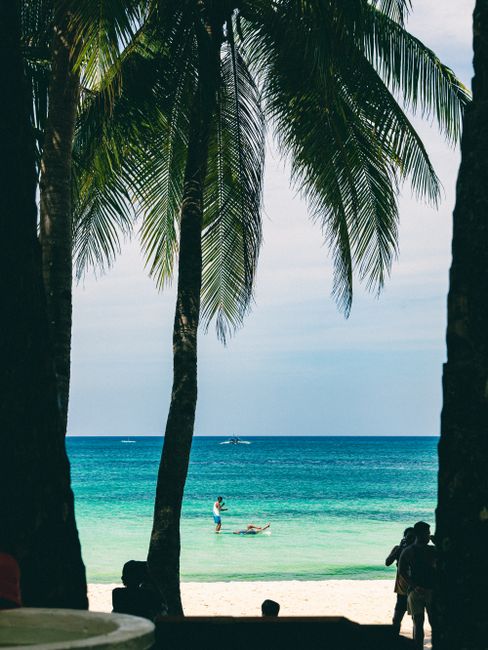
Boracay is a small island off the northwestern tip of Panay, in the province of Aklan, and its 4 km (2.5-mile) White Beach is one of the most famous beaches in Asia: powder-fine coral sand, shallow turquoise water, palm trees and a sunset that draws everyone to the shore every evening. The island is only about 7 km (4.3 miles) long and, at its narrowest, about 1 km (0.6 miles) wide, but it packs in hundreds of hotels, restaurants and bars, plus kitesurfing on Bulabog Beach on the east coast, quieter coves to the north, dive sites and island-hopping trips. In 2018, the national government closed Boracay to tourists for six months to clean up its water, sewage and beachfront, and the island reopened with stricter rules: visitors need a confirmed booking at an accredited hotel, the beachfront must be kept clear, and smoking and drinking on the beach are restricted. Boracay is busiest and calmest on White Beach from November to May; from June to October, the southwest monsoon brings rain, rougher seas on the west side and lower prices.
Right now in Boracay (White Beach)
- Wed 27–29°C 80–83°F 1 mm Mostly clear
- Thu 26–29°C 79–84°F 10 mm Showers
- Fri 27–28°C 81–82°F 25 mm Heavy rain
Weather: MET Norway (CC BY 4.0) · Sea temperature: NOAA CoastWatch
Top tours in Boracay
See all tours for Boracay →
From local operators, with prices and reviews; you check availability and book on Viator, our partner. We may earn a commission at no extra cost to you. How we earn money
Boracay at a glance
- Best for: a classic beach holiday, sunsets, sailing and water sports, kitesurfing, diving, nightlife and food.
- How long: 3 to 5 days; a week for kitesurfing or diving courses.
- Best time: November to May, with January to April the driest and calmest on White Beach; highs are about 29–32 °C (84–90 °F) all year.
- Getting there: fly to Caticlan, 5 to 10 minutes from the jetty port, or to Kalibo, about 1.5 to 2 hours away by road, then take a short boat crossing.
- Getting around: on foot along the beach path, by e-trike (electric tricycle) on the main road, and by hotel shuttle.
- Fees to know: a terminal fee and an environmental fee at the jetty port, the boat fare, and proof of a booking at an accredited hotel.
- Before you go: eTravel registration, visa-free stays, money and general safety are in our Philippines travel guide.
Boracay’s areas: where things are
Boracay is shaped like a dog bone, with White Beach running down the sheltered west coast and Bulabog Beach on the windward east side, only a 10-minute walk apart across the island’s waist.
Station 1
The northern end of White Beach has the widest, softest sand and many of the upscale resorts. It is quieter than the center and ends at Willy’s Rock, a small volcanic outcrop with a shrine to the Virgin Mary that you can wade out to at low tide.
Station 2
The busy middle of White Beach is the heart of Boracay, with D’Mall’s shops and restaurants, bars and mid-range hotels. It is lively day and night and convenient for everything.
Station 3
The southern end is more laid-back and budget-friendly, with smaller hotels and a few dive shops, and slightly narrower sand.
Bulabog Beach
On the east coast, Bulabog is Boracay’s kitesurfing and windsurfing beach, at its best during the northeast monsoon from about November to April. It has kite schools and guesthouses, and is calm in the southwest-monsoon months when White Beach gets rough.
The north: Diniwid, Puka and the resorts
Beyond Station 1, small coves such as Diniwid and the long, wild Puka Shell Beach (Yapak) on the northern tip feel far from the crowds. Several large resorts occupy the northern headlands.
Top things to see on Boracay
White Beach
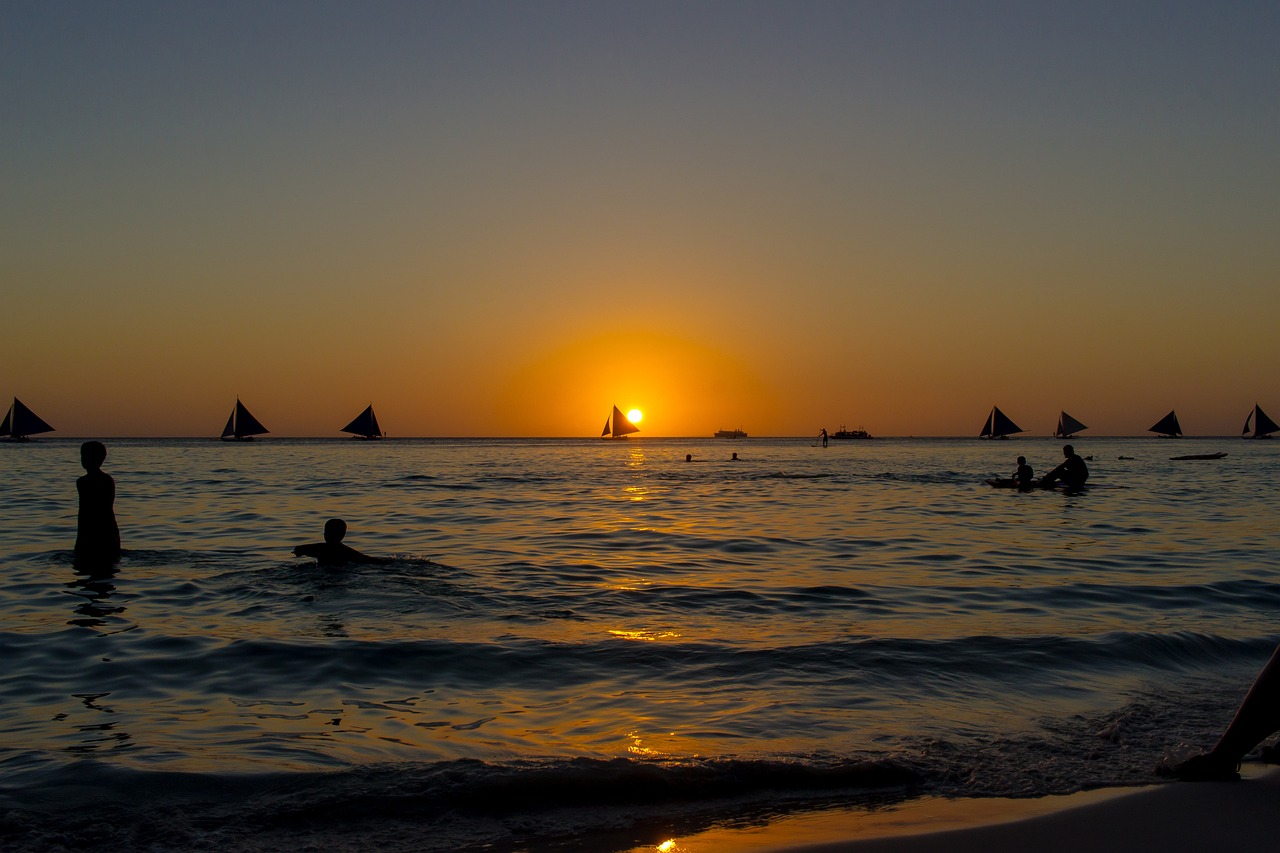
The main event: walk the beach path from Station 1 to Station 3, swim in the shallows, and stake out a spot for sunset, when paraw sailboats fill the bay. Beach rules introduced after the 2018 rehabilitation keep the sand clear of structures, and smoking and drinking on the beach itself are restricted, so bars and restaurants sit behind the beachfront line.
Sunset sailing on a paraw
The paraw, a traditional double-outrigger sailboat with a colorful sail, is Boracay’s signature ride. One-hour sunset trips leave from White Beach, mostly in the calmer months; expect to get splashed.
Puka Shell Beach
On the northern tip, Puka Beach is named for the small shells once collected here. It is longer, rougher and less developed than White Beach, with a few food shacks, and it makes a good stop on island-hopping trips.
Mount Luho
The island’s highest point, about 100 m (330 ft) above sea level, has a viewing deck with views over both coasts and the islands offshore; reach it by e-trike.
Willy’s Rock
The small rock formation off Station 1, topped by a statue of the Virgin Mary, is one of the island’s most photographed spots, best at low tide and early in the morning.
More classic sights
- D’Mall: the open-air shopping and dining hub at Station 2.
- Diniwid Beach and its cliff path: a small cove reached on foot from Station 1.
- Ilig-Iligan Beach: a quiet cove on the northeast coast with caves and rock formations.
- Bat caves and coastal caves: visited on some island-hopping trips.
Islands, diving and water sports
Island-hopping
Group and private island-hopping trips by banca (outrigger boat) visit Crystal Cove Island, with its caves and pools; Crocodile Island for snorkeling; and Magic Island, a cliff-jumping spot, often with lunch on the beach. Trips run mainly from November to May; in the southwest monsoon, routes depend on the sea. See our boat trips and snorkeling guides.
Diving
Boracay has easy reef dives such as Crocodile Island, Friday’s Rock and Coral Garden, and a few deeper and drift sites such as Yapak, a wall off the northern tip known for larger fish. Dive shops along White Beach run courses and fun dives. See our diving guide.
Kitesurfing and water sports
From about November to April, Bulabog Beach has steady northeast winds and a reef-protected lagoon that make it one of Asia’s best-known kitesurfing spots, with schools offering lessons. On White Beach, try stand-up paddleboarding, parasailing, banana boats and helmet diving. See our beaches guide.
Other things to do on Boracay
Food and drink
Boracay’s food scene is varied: fresh seafood picked from the “dampa”-style markets near D’Mall and cooked to order nearby, Filipino grills, international restaurants, and beach bars with happy-hour cocktails. Try chori burgers, a local snack; calamansi muffins, sold at bakeries since the 1990s; grilled fish and squid; and mango shakes. Station 2 is the busiest strip after dark, with live music and clubs.
Wellness
Spas from simple beach massage huts to resort retreats are everywhere, and yoga classes run in several hotels.
Festivals
The Ati-Atihan festival in Kalibo, on the mainland, fills the third week of January with drumming and street dancing in honor of the Santo Niño, and Boracay celebrates with its own events. Christmas, New Year and Holy Week are the busiest times on the island.
Day trips from Boracay
- Ariel’s Point: a cliff-diving and snorkeling spot on the Panay coast, reached by boat on day trips that include lunch and drinks.
- Kalibo: the provincial capital, home of the Ati-Atihan festival and the Bakhawan Eco-Park mangrove forest, about 1.5 to 2 hours away.
- Northern Panay: quiet beaches and waterfalls in Nabas and Pandan, and the island of Carabao, across the strait in Romblon.
Getting there and getting around
By air
The quickest route is to fly to Caticlan (Godofredo P. Ramos Airport, MPH), only a few minutes by tricycle or van from the Caticlan Jetty Port. Philippine Airlines and Cebu Pacific fly there from Manila, and some flights come from Cebu and Clark; the runway is short, so planes are small and baggage limits matter. The alternative is Kalibo International Airport (KLO), with more domestic flights and some international ones from elsewhere in Asia, about 1.5 to 2 hours by bus or van from the jetty port.
The jetty port: fees and registration
All visitors cross by boat from the Caticlan Jetty Port to Cagban Port on Boracay, a 15-minute ride. At Caticlan you pay a terminal fee and Boracay’s environmental fee, both collected by the provincial and local governments, plus the boat fare; in recent years these have added up to a few hundred pesos per person, and many transfer packages include them. Since the island reopened in 2018, tourists must show a confirmed booking at an accredited hotel or resort (accredited by the Department of Tourism and allowed to operate by the local government) before boarding; most hotels send a confirmation or QR code for this check. Book only accredited properties. During the southwest monsoon, when the Caticlan side is rough, boats sometimes use the Tabon port instead, and all boats stop when the Coast Guard suspends sea travel.
By sea and road
2GO ships sail from Batangas to Caticlan, and roll-on/roll-off ferries link Caticlan with Roxas in Oriental Mindoro, part of the “nautical highway” from Manila by bus and ferry. Buses and vans run from Iloilo, about 5 to 6 hours away.
Around the island
Boracay’s main road runs the length of the island behind White Beach. E-trikes, electric tricycles that carry several passengers, are the main transport; fares are low for shared rides and higher for private hire, so agree before setting off. Walking along the beach path is the easiest way to get between the stations. Grab does not operate on Boracay, and car traffic is limited.
When to go and how long to stay
Boracay’s seasons follow the two monsoons. From about November to May, the northeast monsoon (amihan) keeps White Beach sheltered and calm while Bulabog gets the wind; from about June to October, the southwest monsoon (habagat) brings rain, seaweed and waves to White Beach. The island has no PAGASA climate station of its own, so the table uses PAGASA’s 1991–2020 normals for its Roxas City station on the north coast of Panay, about 95 km (59 miles) east, as submitted to the World Meteorological Organization (WMO); Boracay’s pattern is similar.
| Month | Average high / low | Rain (days with 1 mm or more) | What to expect |
|---|---|---|---|
| January | 29 °C (84 °F) / 25 °C (77 °F) | 84 mm (3.3 in), 11 days | Breezy and busy; Ati-Atihan in Kalibo |
| February | 29 °C (85 °F) / 25 °C (77 °F) | 63 mm (2.5 in), 8 days | Calm on White Beach; kitesurfing on Bulabog |
| March | 30 °C (87 °F) / 25 °C (77 °F) | 62 mm (2.5 in), 7 days | Dry and sunny; peak beach season |
| April | 32 °C (89 °F) / 26 °C (79 °F) | 65 mm (2.6 in), 5 days | Driest month; Holy Week crowds |
| May | 32 °C (90 °F) / 26 °C (79 °F) | 142 mm (5.6 in), 9 days | Hot and calm; school holidays |
| June | 32 °C (89 °F) / 26 °C (78 °F) | 284 mm (11.2 in), 15 days | Southwest monsoon arrives; waves on White Beach |
| July | 31 °C (89 °F) / 25 °C (77 °F) | 274 mm (10.8 in), 16 days | Rainy spells; lower prices |
| August | 32 °C (89 °F) / 25 °C (77 °F) | 198 mm (7.8 in), 13 days | Wet; typhoons possible |
| September | 32 °C (89 °F) / 25 °C (77 °F) | 219 mm (8.6 in), 14 days | Typhoon peak; quietest month |
| October | 31 °C (88 °F) / 25 °C (77 °F) | 305 mm (12.0 in), 17 days | The wettest month at Roxas City |
| November | 31 °C (87 °F) / 26 °C (78 °F) | 213 mm (8.4 in), 14 days | Monsoon switching; seas calming on White Beach |
| December | 30 °C (85 °F) / 25 °C (77 °F) | 228 mm (9.0 in), 15 days | Showers but busy; Christmas and New Year peak |
Roxas City gets about 2,140 mm (84 in) of rain a year. Typhoons are most likely from July to October. PAGASA said in September 2026 that a strong El Niño was expected to bring below-normal rainfall to most of the country into early 2027.
3 days on Boracay
Day one, White Beach from Station 1 to Station 3 and a paraw sunset sail. Day two, an island-hopping trip to Crystal Cove, Crocodile Island and Magic Island, with dinner near D’Mall. Day three, Puka Beach and Mount Luho in the morning, and a dive or a massage in the afternoon.
5 days or more
Add a day trip to Ariel’s Point, a kitesurfing lesson on Bulabog in season, and a day simply on the beach.
Where to stay on Boracay
- Station 1: upscale resorts on the best stretch of sand.
- Station 2: mid-range hotels in the center of the action.
- Station 3: quieter, cheaper hotels and guesthouses.
- Bulabog: guesthouses for kitesurfers, close to White Beach on foot.
- The north: large resorts and private coves for a quieter stay.
Only stay at accredited hotels, as port staff check bookings. Prices peak from December to May and around Holy Week, Christmas and New Year.
What a trip to Boracay costs
Prices are approximate, for October 2026, converted at about ₱62.6 to the US dollar.
| Item | Typical cost |
|---|---|
| Terminal fee, environmental fee and boat fare at Caticlan | about ₱300–500 (about US$5–8) per person in total |
| Van from Kalibo airport to Caticlan | ₱250–500 (about US$4–8) |
| Shared e-trike ride | from about ₱20–30 (about US$0.30–0.50) |
| Paraw sunset sail, per boat | ₱2,000–3,500 (about US$32–56) |
| Group island-hopping tour with lunch | ₱1,500–2,500 (about US$24–40) per person |
| Fun dive with equipment | ₱2,000–3,000 (about US$32–48) |
| Meal at a local restaurant | ₱250–500 (about US$4–8) |
| Dinner in a beachfront restaurant | ₱900–1,800 (about US$14–29) per person |
| Mid-range hotel double, per night | ₱4,000–9,000 (about US$64–144) |
Practical tips for Boracay
- Book an accredited hotel: port staff check bookings before you board the boat at Caticlan.
- Carry cash: ATMs are concentrated around Station 2 and D’Mall and can run out at peak times.
- Keep the beach clean: respect the rules on smoking, drinking and littering on White Beach, and don’t take sand or shells.
- Arrive early for flights: Caticlan’s small airport gets busy, and flights can be canceled in bad weather.
- Check the monsoon: from June to October, plan around rough seas on White Beach and possible boat changes.
Safety
Boracay is a relaxed, well-policed resort island. The main hazards are on the water: from June to October, waves and currents on White Beach can be strong, and red flags mean no swimming; use reputable operators for water sports and wear life jackets on boats. Sea crossings and island-hopping stop when the Coast Guard suspends trips for weather, especially when PAGASA raises Tropical Cyclone Wind Signals for Aklan, so allow a buffer day before international flights. Petty theft from beach bags happens, so don’t leave valuables unattended, and be cautious with drinks from strangers in nightlife areas. Sun, heat and alcohol are a common combination for problems; drink water and use reef-safe sunscreen. Dengue occurs on the island, so use repellent. In an emergency, call 911.
What to pack for Boracay
Swimwear, a rash guard and hat, reef-safe sunscreen, sandals and water shoes for rocky coves, a light rain jacket in the wet season, and a dry bag for boat trips. Cover up for churches and when leaving the beach. The Philippines uses 220 V and mostly flat two-pin US-style plugs. See our water shoes and travel adapters guides.
Boracay travel FAQ
What is the best time to visit Boracay?
November to May, when the northeast monsoon keeps White Beach calm; January to April is the driest. June to October brings rain, waves on White Beach and lower prices.
How do I get to Boracay?
Fly to Caticlan, a few minutes from the jetty port, or to Kalibo, 1.5 to 2 hours away by road, then take the 15-minute boat from Caticlan Jetty Port to Cagban Port.
What fees do I pay to enter Boracay?
At Caticlan Jetty Port you pay a terminal fee, Boracay’s environmental fee and the boat fare, which together have come to a few hundred pesos per person; check current amounts with the Aklan and Malay governments.
Do I need a hotel booking to enter Boracay?
Yes. Since the island reopened in 2018, tourists must show a confirmed booking at an accredited hotel or resort before crossing; most hotels send a confirmation or QR code.
Is Grab available on Boracay?
No. Grab does not list Boracay among its service areas; use e-trikes, hotel shuttles or walk along the beach path.
Which part of White Beach is best?
Station 1 for the widest sand and upscale resorts, Station 2 for restaurants and nightlife, and Station 3 for a quieter, cheaper stay.
Can you drink alcohol on White Beach?
Drinking and smoking on the beach itself are restricted under rules introduced after the 2018 rehabilitation; enjoy drinks at the bars and restaurants behind the beachfront.
When is kitesurfing season on Boracay?
From about November to April, when northeast winds blow onto Bulabog Beach on the east coast.
How many days do I need on Boracay?
Three days cover White Beach, island-hopping and Puka Beach; five give time for diving, kitesurfing or a trip to Ariel’s Point.
Is Boracay expensive?
It is one of the pricier destinations in the Philippines, especially from December to May, but there are budget hotels at Station 3 and cheap local eateries away from the beachfront.
Sources and last review
Researched and last reviewed on 4 October 2026. Seasons, typhoon statistics, wind signals and the El Niño outlook: PAGASA, with climate normals for Roxas City via the World Meteorological Organization; Grab coverage: Grab Philippines; 2GO’s Batangas–Caticlan route: the Department of Tourism; exchange rate: the European Central Bank. The amounts of the terminal fee, environmental fee and boat fare, the accredited-hotel booking check, beach rules, the 2018 closure, airport and port details, the Tabon alternate port, dive sites, festival details and typical prices are general references or estimates, flagged for checking, because the Aklan and Malay government websites could not be read. Fees and rules change, so check the official sites before you go. For entry rules, money and general safety, see our Philippines travel guide.
Plan your trip
Partner links: TravelerCenter may earn a commission if you book, at no extra cost to you.
🇵🇭 Useful Filipino phrases for Boracay
All 38 Filipino phrases: restaurant, hotel, emergencies, romance (printable) →