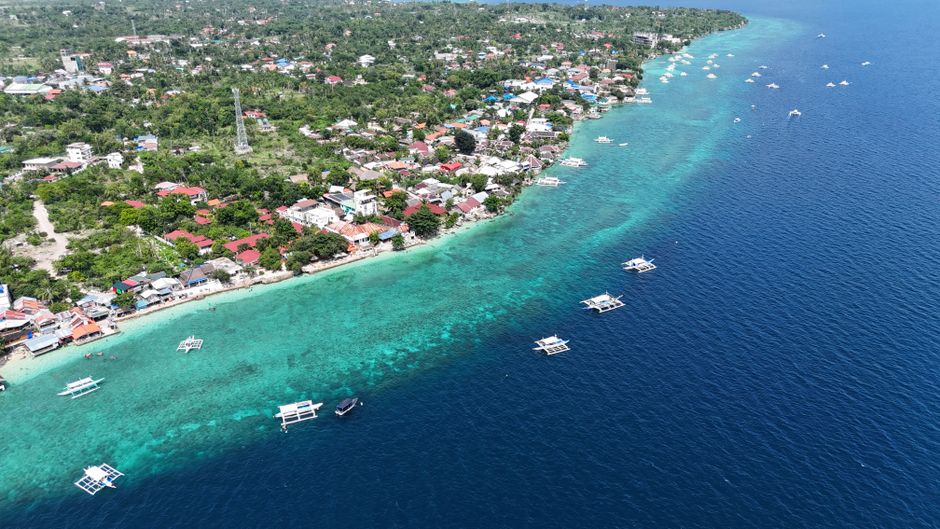
Bohol is a large, green island in the central Visayas, just southeast of Cebu, and one of the most rewarding stops in the Philippines for a mix of nature, history and beaches. Its best-known sight is the Chocolate Hills, more than 1,700 grassy limestone mounds that turn brown in the dry season, and it is home to the Philippine tarsier, one of the world’s smallest primates, which you can see in the wild at the sanctuary in Corella. Bohol also has some of the oldest stone churches in the country, a lazy river cruise through the jungle at Loboc, and, on the small island of Panglao, linked to the provincial capital Tagbilaran by bridges, white-sand beaches, dive sites and a busy resort strip at Alona Beach. Offshore, dolphins swim near Pamilacan and turtles graze the reefs of Balicasag. Bohol is a UNESCO Global Geopark, and the province regulates marine wildlife tours to protect them. It is an easy island to combine with Cebu, two hours away by fast craft. The driest months are February to May; showers are possible all year, and typhoons are most likely from about July to December.
Right now in Bohol (Alona Beach)
- Wed 26–29°C 78–84°F 17 mm Heavy rain
- Thu 26–30°C 78–85°F 7 mm Heavy showers
- Fri 25–29°C 78–84°F 6 mm Rain
Weather: MET Norway (CC BY 4.0) · Sea temperature: NOAA CoastWatch
Top tours in Bohol
See all tours for Bohol →
From local operators, with prices and reviews; you check availability and book on Viator, our partner. We may earn a commission at no extra cost to you. How we earn money
Bohol at a glance
- Best for: the Chocolate Hills and tarsiers, old churches, river cruises, beaches, snorkeling and diving, and a relaxed pace.
- How long: 3 to 4 days for a countryside tour, a beach day and an island trip; a week with diving.
- Best time: February to May, the driest months; the Chocolate Hills are greenest just after the rains and brown by April and May. Highs are about 30–33 °C (85–91 °F) all year.
- Getting there: fly to Bohol-Panglao International Airport, or take a fast craft from Cebu City to Tagbilaran in about 2 hours.
- Getting around: hired cars and vans for countryside tours, tricycles and scooters on Panglao, and buses and jeepneys between towns.
- Fees to know: small entrance fees at the Chocolate Hills complex, the Tarsier Sanctuary and many other sights, and island-hopping and marine sanctuary fees.
- Before you go: eTravel registration, visa-free stays, money and general safety are in our Philippines travel guide.
Bohol’s areas: where things are
Panglao and Alona Beach
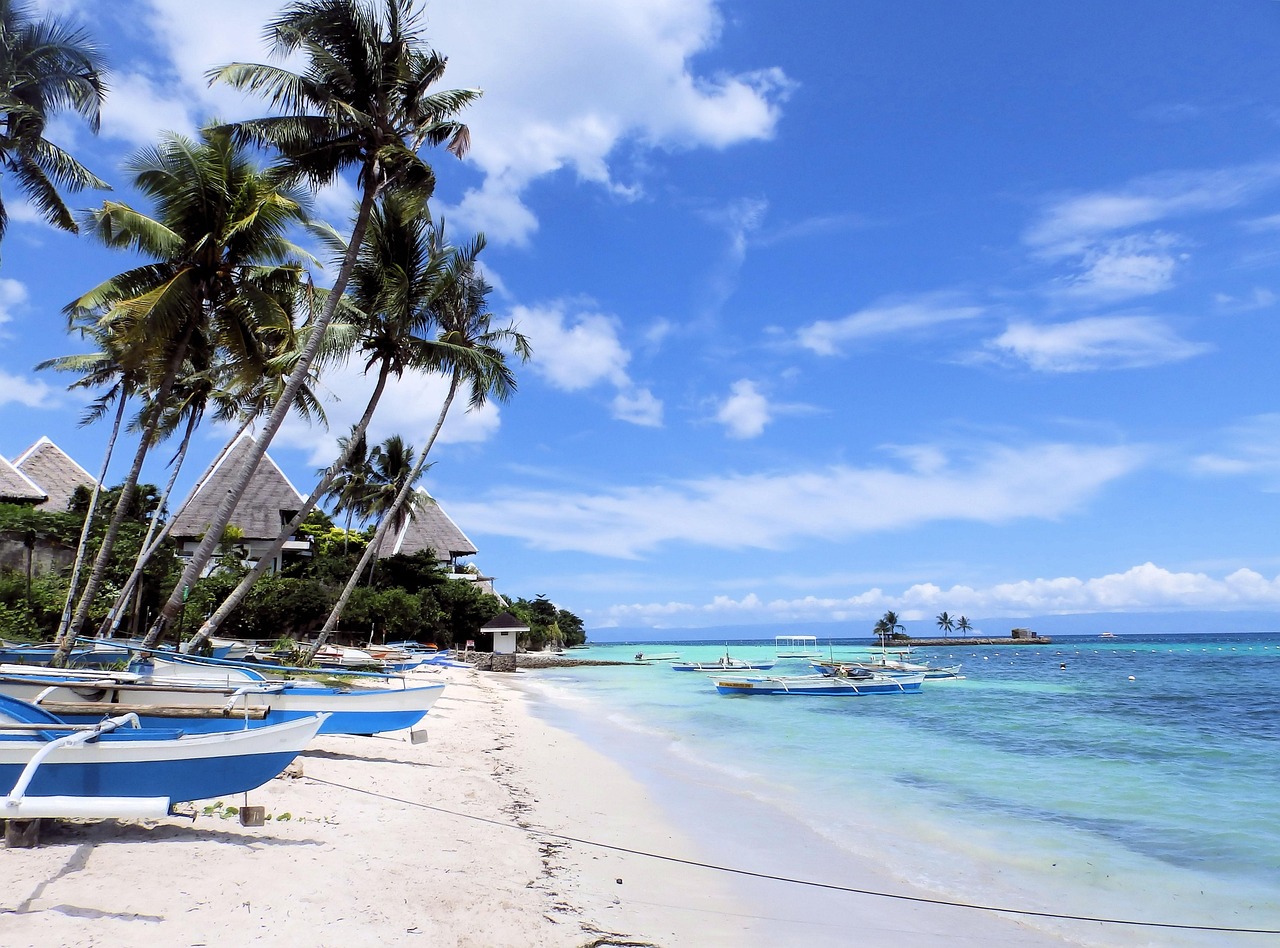
The island of Panglao, off Bohol’s southwest coast, is where most visitors stay. Alona Beach is a short strip of white sand packed with dive shops, restaurants and bars; quieter beaches such as Dumaluan, Doljo and Bikini Beach lie nearby. The international airport is on Panglao, about 15 to 20 minutes from Alona.
Tagbilaran City
The provincial capital, on the main island, has the ferry port for fast craft from Cebu, malls, budget hotels and the Blood Compact Shrine. It is a transport hub rather than a place to linger.
The countryside: Loboc, Carmen and Corella
Inland, the towns of Corella (tarsiers), Loboc (river cruises and church), Bilar (man-made forest) and Carmen (Chocolate Hills) lie along the main road through the center of the island, visited on a day trip from Panglao or with a night in a riverside lodge at Loboc.
Anda and the east coast
At the far eastern end of Bohol, about 2.5 to 3 hours from Panglao, Anda has quiet white-sand beaches, cave pools and small resorts, a calmer alternative to Alona.
Top things to see on Bohol
The Chocolate Hills
According to the Department of Tourism, the Chocolate Hills, the country’s third National Geological Monument, are made up of 1,776 mounds spread over six Bohol towns; the Provincial Government describes them as symmetrical limestone hills shaped by marine uplift and erosion, a geosite of the Bohol Island Geopark. The classic view is from the viewing deck at the Chocolate Hills Complex in Carmen, reached by about 200 steps; according to the DOT, it is open daily from 8:30 a.m. to 5:30 p.m., and January to May is the best time to visit. Go early or late in the day for softer light and fewer tour groups. The complex charges a small entrance fee.
The Philippine Tarsier Sanctuary, Corella
The tarsier, with its huge eyes, long fingers and a body that fits in a hand, is a nocturnal primate native to the southern Philippines. At the Philippine Tarsier Sanctuary in Corella, run by the Philippine Tarsier Foundation, guides lead small groups along a forest trail to spot tarsiers resting in the trees; according to the DOT, it opens daily from 9 a.m. to 4 p.m. Keep quiet, don’t use flash, and don’t touch. Avoid roadside “tarsier attractions” where the animals are kept in cages or handled, as stress harms them.
The Loboc River
A river cruise on a floating restaurant, with a buffet lunch and live music, drifts along the jungle-lined Loboc River to a small waterfall and back, with a stop at a village where children sing and dance. It is touristy but pleasant; kayaking and stand-up paddleboarding tours are quieter alternatives.
The colonial churches
Bohol’s coral-stone churches are among the oldest in the country. Baclayon Church, near Tagbilaran, has a museum of religious art, and Loboc Church is famous for its painted ceilings. Many were badly damaged in the 2013 earthquake and have since been restored. Dress modestly.
Balicasag and Pamilacan
Island-hopping trips leave Panglao at dawn to look for dolphins off Pamilacan Island, then snorkel at the marine sanctuary of Balicasag, known for turtles and a coral wall, often stopping at the Virgin Island sandbar. In 2026, the Provincial Government of Bohol introduced new rules for marine wildlife tourism under a provincial ordinance: operators need permits and certificates of compliance, and feeding, touching and harassing marine wildlife are prohibited, with distance rules and designated zones. Choose operators that follow them. See our snorkeling and boat trips guides.
More classic sights
- Bilar Man-made Forest: a tall stand of mahogany trees lining the road between Loboc and Carmen.
- Blood Compact Shrine: a monument in Tagbilaran to the 1565 blood compact between Legazpi and the Boholano chief Sikatuna.
- Hinagdanan Cave: a cave on Panglao with a swimmable underground pool.
- Danao adventure park: zip lines and canyon swings in the interior.
- Can-umantad Falls and Cadapdapan Rice Terraces: waterfalls and terraces in Candijay, on the way to Anda.
Diving, beaches and water sports
Diving
Panglao is one of the country’s established dive centers, with walls, reefs and macro sites around Panglao, Balicasag, Pamilacan and Cabilao islands. Dive shops at Alona run courses and daily boat dives. See our diving guide.
Beaches
Alona Beach is lively but crowded with boats; Dumaluan and Doljo are wider and quieter, and Anda on the east coast has long, uncrowded stretches. Sea urchins and seagrass are common in the shallows at low tide. See our beaches guide.
Other things to do on Bohol
Food and drink
Try kalamay, a sticky coconut-and-sugar sweet sold in coconut shells; peanut kisses, small meringue-like cookies shaped like the Chocolate Hills; fresh seafood grilled at Alona’s beachfront; and Filipino dishes such as sinigang and adobo at local eateries. Ube (purple yam) from Bohol is famous, and many cafés serve it in desserts. Alona has the island’s nightlife, with beach bars and live music.
Festivals
The Sandugo Festival in July marks the blood compact of 1565 with street dancing in Tagbilaran, and town fiestas fill the calendar.
Day trips from Bohol
- Cebu City: two hours by fast craft from Tagbilaran, for the Basilica del Santo Niño and Magellan’s Cross. See our Cebu City guide.
- Cabilao Island: a small island off the west coast with good diving and quiet resorts.
- Anda: beaches and cave pools on the east coast, better as an overnight trip.
- Siquijor: the “mystic” island to the south, reached by boat, better as a separate stop.
Getting there and getting around
By air
Bohol-Panglao International Airport (TAG), on Panglao Island, opened in 2018 and handled 2.2 million passengers in 2025, according to the Provincial Government of Bohol. Philippine Airlines, Cebu Pacific and AirAsia fly from Manila and some other cities, and a few international routes link it with elsewhere in Asia. Alona Beach is 15 to 20 minutes away by car or tricycle.
By fast craft from Cebu
The most common route is by sea: according to OceanJet, Cebu–Tagbilaran is one of its main routes, and the crossing takes about 2 hours; other operators also sail it. Check in at least 30 minutes before departure with a valid ID matching your ticket. Fast craft also link Tagbilaran with Siquijor and other islands. Boats stop when the Coast Guard suspends sea travel in bad weather.
Around the island
Most visitors see the countryside on a full-day tour by hired car or van with driver from Panglao, covering the Blood Compact Shrine, Baclayon Church, the Tarsier Sanctuary, the Loboc River cruise, the Bilar forest and the Chocolate Hills. Scooters are popular for independent trips, but the main roads are busy; wear a helmet. Tricycles serve short hops on Panglao, and buses run from Tagbilaran’s Dao terminal to towns around the island. Grab does not operate on Bohol.
When to go and how long to stay
Bohol is wet in no particular season and drier from February to May. According to PAGASA, the national weather agency, the country’s rainy season runs from June to November, and typhoons can affect the Visayas from about July to December. Bohol has no PAGASA climate station with published WMO normals, so the table uses PAGASA’s 1991–2020 normals for its Mactan International Airport station in Cebu, about 75 km (47 miles) north of Tagbilaran across the Bohol Strait, as submitted to the World Meteorological Organization (WMO); Bohol’s pattern is similar.
| Month | Average high / low | Rain (days with 1 mm or more) | What to expect |
|---|---|---|---|
| January | 30 °C (85 °F) / 24 °C (75 °F) | 135 mm (5.3 in), 12 days | Showers; green hills |
| February | 30 °C (86 °F) / 24 °C (75 °F) | 89 mm (3.5 in), 9 days | Drying out; pleasant |
| March | 31 °C (88 °F) / 25 °C (76 °F) | 61 mm (2.4 in), 7 days | Dry and sunny; calm seas |
| April | 32 °C (90 °F) / 26 °C (78 °F) | 56 mm (2.2 in), 5 days | The driest month; hills turning brown |
| May | 33 °C (91 °F) / 26 °C (79 °F) | 94 mm (3.7 in), 8 days | Hottest; “chocolate” hills at their brownest |
| June | 32 °C (90 °F) / 26 °C (78 °F) | 181 mm (7.1 in), 13 days | Rain returns |
| July | 32 °C (89 °F) / 25 °C (77 °F) | 211 mm (8.3 in), 15 days | Wettest month; Sandugo festival |
| August | 32 °C (89 °F) / 25 °C (77 °F) | 158 mm (6.2 in), 13 days | Showers; typhoons possible |
| September | 32 °C (89 °F) / 25 °C (77 °F) | 190 mm (7.5 in), 14 days | Wet; typhoon peak |
| October | 31 °C (89 °F) / 25 °C (77 °F) | 208 mm (8.2 in), 15 days | Wet; typhoons possible |
| November | 31 °C (88 °F) / 25 °C (77 °F) | 131 mm (5.2 in), 12 days | Showers; typhoons possible |
| December | 30 °C (87 °F) / 25 °C (76 °F) | 172 mm (6.8 in), 14 days | Showers; Christmas crowds |
Mactan gets about 1,690 mm (66 in) of rain a year. Typhoon Odette (Rai) hit Bohol hard in December 2021, and storms can stop ferries and island trips at short notice. PAGASA said in September 2026 that a strong El Niño was expected to bring below-normal rainfall to most of the country into early 2027; the Provincial Government of Bohol has been preparing for dry spells.
3 days on Bohol
Day one, a countryside tour: Baclayon Church, the Tarsier Sanctuary, the Loboc River cruise with lunch, the Bilar forest and the Chocolate Hills. Day two, a dawn dolphin-watching and snorkeling trip to Pamilacan and Balicasag, and an afternoon on Alona or Dumaluan Beach. Day three, Hinagdanan Cave, a dive or a scooter ride around Panglao.
A week
Add two nights in Anda on the east coast, with Can-umantad Falls on the way, and a couple of dive days or a trip to Cabilao.
Where to stay on Bohol
- Alona Beach: dive resorts, mid-range hotels and nightlife; convenient but busy.
- Dumaluan, Doljo and the rest of Panglao: larger resorts and quieter beaches.
- Loboc: riverside lodges for a night in the countryside.
- Anda: small resorts on quiet beaches at the eastern end.
- Tagbilaran: budget hotels near the port.
What a trip to Bohol costs
Prices are approximate, for October 2026, converted at about ₱62.6 to the US dollar.
| Item | Typical cost |
|---|---|
| Fast craft from Cebu to Tagbilaran, one way | ₱800–1,500 (about US$13–24) |
| Countryside tour by private car with driver | ₱2,500–4,000 (about US$40–64) per car |
| Chocolate Hills Complex entrance | about ₱100 (about US$1.60) |
| Tarsier Sanctuary entrance | about ₱100–150 (about US$1.60–2.40) |
| Loboc River cruise with buffet lunch | ₱800–1,200 (about US$13–19) |
| Dolphin-watching and island-hopping trip, shared | ₱1,200–2,000 (about US$19–32) per person |
| Fun dive with equipment | ₱1,800–2,800 (about US$29–45) |
| Scooter rental, per day | ₱400–600 (about US$6.40–9.60) |
| Mid-range hotel double on Panglao, per night | ₱3,000–6,500 (about US$48–104) |
Practical tips for Bohol
- Start the countryside tour early: you will beat the tour buses at the Tarsier Sanctuary and the Chocolate Hills.
- Choose responsible wildlife tours: see tarsiers only at the Corella sanctuary, and avoid dolphin trips that chase the animals.
- Bring cash: sights, tricycles and small eateries want pesos; ATMs are concentrated in Tagbilaran and Alona.
- Watch your feet: wear water shoes on Panglao’s beaches, where sea urchins hide in the seagrass.
- Book the ferry ahead: fast craft between Cebu and Tagbilaran fill up on weekends and holidays.
Safety
Bohol is relaxed and safe. The main risks are on roads and at sea: scooter accidents are common on busy highways and in the dark, so ride carefully, and boat trips stop when the Coast Guard suspends sea travel, especially when PAGASA raises Tropical Cyclone Wind Signals for the province. Wear life jackets on boats, and use accredited dive and tour operators. The island lies in an earthquake zone, as the 2013 quake showed; note your hotel’s exits. Sun and dehydration catch out visitors on long tour days. Petty theft from beach bags happens at Alona, so watch your belongings. Dengue occurs on Bohol, so use repellent. In an emergency, call 911.
What to pack for Bohol
Light clothes, swimwear and a rash guard, reef-safe sunscreen and a hat, water shoes for rocky beaches and seagrass, a dry bag for boat trips, a light rain jacket, and modest clothes for churches. The Philippines uses 220 V and mostly flat two-pin US-style plugs. See our water shoes and travel adapters guides.
Bohol travel FAQ
How many Chocolate Hills are there?
According to the Department of Tourism and the Provincial Government of Bohol, 1,776 mounds, spread over six towns; the main viewpoint is at the Chocolate Hills Complex in Carmen.
What are the Chocolate Hills opening hours?
The Chocolate Hills Complex in Carmen opens daily from 8:30 a.m. to 5:30 p.m., according to the Department of Tourism.
When are the Chocolate Hills brown?
In the dry season, especially around April and May; after the rains, from about June to January, they are green.
Where can I see tarsiers on Bohol?
At the Philippine Tarsier Sanctuary in Corella, open daily from 9 a.m. to 4 p.m., where guides show tarsiers in their forest habitat. Avoid places that keep them in cages or let visitors handle them.
How do I get from Cebu to Bohol?
By fast craft from Cebu City to Tagbilaran in about 2 hours. You can also fly to Bohol-Panglao International Airport from Manila and some other cities.
Where should I stay on Bohol?
On Panglao, at Alona Beach for convenience and nightlife or at Dumaluan and Doljo for quieter resorts; Anda suits travelers who want empty beaches.
Can I see dolphins on Bohol?
Yes. Dawn boat trips from Panglao look for dolphins near Pamilacan Island; under provincial rules introduced in 2026, feeding, touching and harassing marine wildlife are prohibited.
Is Bohol a UNESCO site?
Bohol Island is a UNESCO Global Geopark, and the Chocolate Hills are one of its geosites; the island is not on the World Heritage list.
Is there Grab on Bohol?
No. Hire a car with driver for countryside tours, and use tricycles and scooters on Panglao.
What is the best time to visit Bohol?
February to May, the driest months, with April the driest. Typhoons are most likely from July to December.
Sources and last review
Researched and last reviewed on 4 October 2026. The Chocolate Hills (1,776 mounds, National Geological Monument status, hours and best season) and the Tarsier Sanctuary hours: the Department of Tourism; the Chocolate Hills as a geopark geosite, the 2026 marine wildlife tourism rules and airport passenger figures: the Provincial Government of Bohol; fast-craft routes and check-in: OceanJet; seasons, typhoon statistics and the El Niño outlook: PAGASA, with climate normals for Mactan via the World Meteorological Organization; Grab coverage: Grab Philippines; exchange rate: the European Central Bank. Entrance fees, the geopark designation date, church history, the 2013 earthquake, Typhoon Odette, tour details and typical prices are general references or estimates, flagged for checking. Fees and hours change, so check the official sites before you go. For entry rules, money and general safety, see our Philippines travel guide.
Plan your trip
Partner links: TravelerCenter may earn a commission if you book, at no extra cost to you.
🇵🇭 Useful Filipino phrases for Bohol
All 38 Filipino phrases: restaurant, hotel, emergencies, romance (printable) →