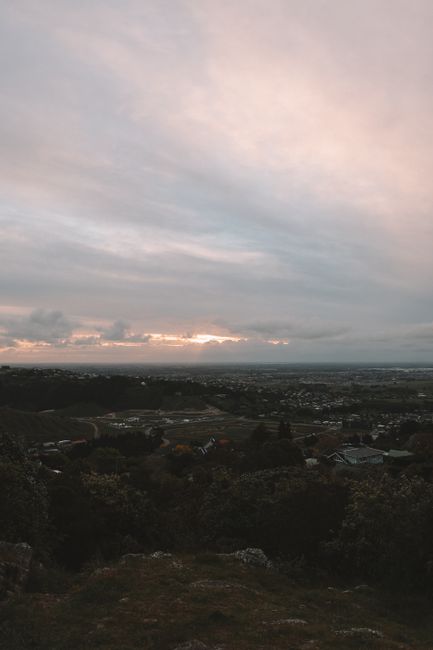
Christchurch, Ōtautahi in te reo Māori, is the largest city in the South Island and its main gateway, set on the flat Canterbury Plains between the Pacific coast, the volcanic Port Hills and, on a clear day, a distant wall of the Southern Alps. Long known as the “Garden City” for its parks and the willow-lined Avon River (Ōtākaro), it was badly damaged by earthquakes in 2010 and 2011 that killed 185 people and destroyed much of the old center. More than a decade later, the rebuilt city is one of the most interesting in the country: new architecture, a riverside promenade, a Cardboard Cathedral, street art on old fire walls and food halls sit beside surviving Gothic Revival stone buildings and the vast Hagley Park. Visitors come for the Botanic Gardens, punting on the Avon, the heritage tram, the International Antarctic Centre and the gondola, and use the city as a launch pad for Akaroa, Kaikōura, Arthur’s Pass and the TranzAlpine train, Lake Tekapo and Aoraki/Mount Cook. Plan a day or two here at the start or end of a South Island trip; the dry, sunny climate makes it pleasant for most of the year.
Right now in Christchurch
- Wed7–21°C44–70°FPartly cloudy
- Thu11–16°C52–61°FCloudy
- Fri10–15°C49–58°FCloudy
Top tours in Christchurch
See all tours for Christchurch →
From local operators, with prices and reviews; you check availability and book on Viator, our partner. We may earn a commission at no extra cost to you. How we earn money
Christchurch at a glance
- Best months: November to April for warm, dry days; October for spring blossom in Hagley Park; March and April for autumn colors.
- Time needed: one or two days for the city, plus day trips to Akaroa or Arthur’s Pass.
- Getting there: Christchurch Airport (CHC) is about 12 km (7 miles) northwest of the center, with domestic flights and services from Australia and some Asian hubs.
- Costs (as of October 2026): prices in New Zealand dollars; a Metro bus ride is NZ$3 with a Metrocard or contactless card (about US$1.70), capped at NZ$6 a day.
- Before you go: entry rules, the NZeTA and visitor levy, biosecurity and driving rules are in our New Zealand travel guide.
Christchurch’s areas and who each one suits
The central city
Inside the “four avenues”, the rebuilt center has most of the hotels, the Riverside Market, the Te Pae convention center, the Margaret Mahy Family Playground, the Avon riverbank promenade and the heritage tram loop. Everything is walkable, and the flat streets are good for cycling. The best base for a short stay.
Merivale and Fendalton
North of Hagley Park, these leafy, upscale suburbs have boutique hotels, motels on Papanui Road, cafés and Merivale’s restaurants. A quieter base about 20 minutes’ walk from the center.
Riccarton
West of Hagley Park, Riccarton has many motels along Riccarton Road, shopping, the historic Riccarton House and Bush (a remnant of native kahikatea forest), and easy access to the airport. Good value for drivers.
Sumner and New Brighton
On the coast east of the city, Sumner is a seaside village with a beach, cafés and walks around Cave Rock, while New Brighton has a long surf beach, a pier and a seaside playground. Choose these for a beach stay about 20 to 30 minutes from the center.
Lyttelton
Over the Port Hills, the harbor town of Lyttelton has a bohemian feel, a Saturday farmers’ market, bars and a small ferry to Diamond Harbour. Charming for a night or two.
Top things to see in Christchurch
Hagley Park and the Botanic Gardens
The 165-hectare (400-acre) Hagley Park is the green heart of the city, with avenues of trees, sports fields and spring blossoms. Inside its loop, the Christchurch Botanic Gardens, founded in 1863, have rose and herb gardens, native plant collections, conservatories and giant trees, all free to visit. Punts glide along the Avon through the gardens, and the visitor center has a café.
Punting on the Avon and the riverside
Being poled down the gentle Avon River in a flat-bottomed punt by a guide in Edwardian dress is a classic Christchurch experience, starting from the Antigua Boat Sheds or near the Worcester Street bridge. The rebuilt riverbank promenade, Te Papa Ōtākaro/Avon River Precinct, links the Margaret Mahy playground, the Bridge of Remembrance and the Earthquake Memorial, a curved marble wall listing the 185 people who died.
The heritage tram and the rebuilt center
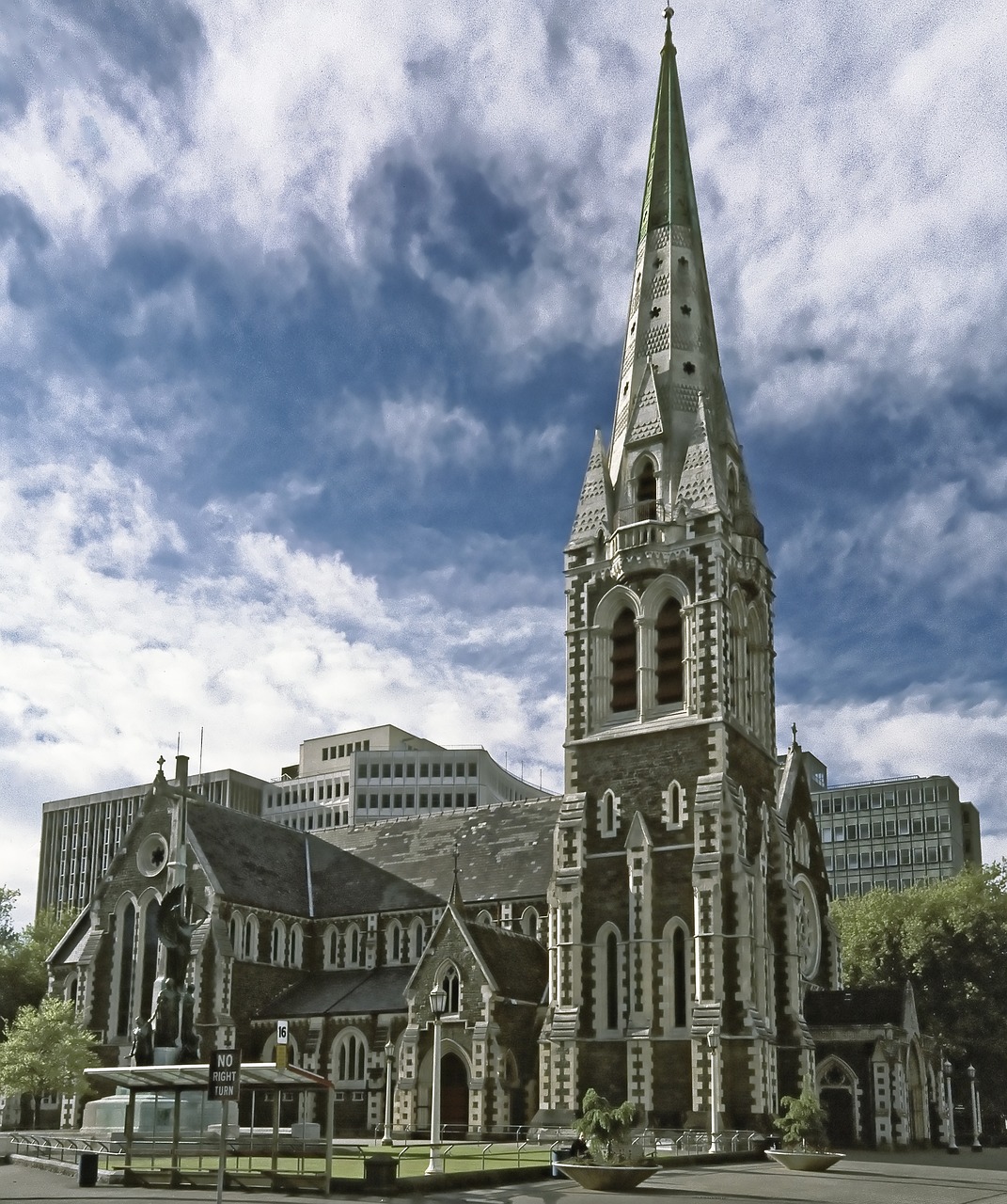
Restored trams circle a loop through the center, past New Regent Street’s Spanish Mission-style shops, Cathedral Square and the Arts Centre, with hop-on hop-off tickets and a commentary. Walk on to see the scale of the rebuild: the Cardboard Cathedral (Transitional Cathedral), designed by Japanese architect Shigeru Ban with cardboard tubes; the ongoing reinstatement of the damaged ChristChurch Cathedral in Cathedral Square; the Arts Centre, a restored Gothic Revival complex of the old university with markets, cinemas and galleries; and street art on walls exposed by the demolitions.
Christchurch Art Gallery and the museums
The glass-fronted Christchurch Art Gallery Te Puna o Waiwhetū has a strong collection of New Zealand art and free general entry. Quake City, run by Canterbury Museum, tells the story of the earthquakes with artifacts and survivor accounts. Canterbury Museum’s historic main building, next to the Botanic Gardens, is closed for a major redevelopment; check its website for its temporary exhibition sites and reopening.
International Antarctic Centre
Next to the airport, where flights to the US and New Zealand Antarctic bases leave, the center has a storm room where you can feel an Antarctic wind chill, rescued little blue penguins, a 4D cinema and rides in an all-terrain Hägglund vehicle. It is a good family stop on the way to or from a flight.
The Christchurch Gondola and the Port Hills
The gondola climbs from Heathcote Valley to the top of the Port Hills, about 500 m (1,640 feet) up, for views over the city, the plains and the Alps to one side and Lyttelton Harbour, a drowned volcanic crater, to the other. The Port Hills have walking and mountain-bike tracks, including the Crater Rim Walkway.
Other things to do in Christchurch
- Riverside Market: an indoor food market with stalls, small eateries and bars, busy at lunch and on weekend evenings.
- Wildlife: Willowbank Wildlife Reserve has kiwi and native birds (with a nocturnal kiwi house), and Orana Wildlife Park has open-range African animals and native species.
- Beaches and surf: New Brighton and Sumner, and the Taylors Mistake coastal walk.
- Cycling: the flat city has good cycleways and a public bike and e-scooter share.
- Lyttelton’s Saturday farmers’ market: local produce, coffee and baking.
- Rugby: the Crusaders, one of the most successful Super Rugby teams, play home games at the city’s new covered stadium, Te Kaha.
Food and drink
Christchurch has a strong café and small-bar scene, with plenty of new venues in the rebuilt laneways around Victoria Street, New Regent Street and the Riverside Market. Canterbury lamb and salmon, Akaroa salmon and cheeses, and Waipara Valley wines (Riesling and Pinot Noir from about an hour north) are local specialties. Lyttelton has excellent bakeries, and Sumner beachfront cafés suit a weekend brunch.
Day trips from Christchurch
Akaroa and Banks Peninsula
About 90 minutes southeast, the harbor village of Akaroa sits inside an ancient volcanic crater on Banks Peninsula. French settlers arrived in 1840, and street names and cafés still reflect it. Harbor cruises look for Hector’s dolphins, the world’s smallest marine dolphin and found only in New Zealand, and some operators offer swimming with them. The winding Summit Road has spectacular views; drive carefully.
Arthur’s Pass and the TranzAlpine
KiwiRail’s TranzAlpine train crosses the Canterbury Plains, follows the Waimakariri River gorge and climbs through the Southern Alps to Arthur’s Pass and Greymouth on the West Coast, in about five hours each way. Many visitors ride to Arthur’s Pass village and back, or take the train one way and continue down the West Coast by car. Arthur’s Pass National Park has short walks to waterfalls such as the Devil’s Punchbowl, and cheeky kea parrots.
Kaikōura
About 2.5 hours north on State Highway 1, Kaikōura is where the mountains plunge into a deep undersea canyon, bringing sperm whales close to shore all year. Whale-watching boats and flights, dolphin and seal tours, crayfish (rock lobster) from roadside stalls, and the Kaikōura Peninsula Walkway make it worth an overnight stay.
Hanmer Springs
About 1.5 hours north, the alpine village of Hanmer Springs has thermal pools, forest walks, jet boating and bungy.
Lake Tekapo and Aoraki/Mount Cook
Three hours southwest, Lake Tekapo’s turquoise water and the Church of the Good Shepherd lead on to Aoraki/Mount Cook National Park (about 4 hours from Christchurch). Too far for a comfortable day trip; stay at least one night.
Nearby destinations
Getting there and getting around
From Christchurch Airport (CHC)
The airport is about 20 to 25 minutes from the center by road. Metro buses run from the airport to the city center and the Riccarton area; taxis, rideshares and shuttles wait outside the terminal. The airport is a hub for rental cars and campervans, and for flights to Queenstown, Wellington and Auckland.
Metro buses and fares
Metro runs buses across Greater Christchurch and a ferry from Lyttelton to Diamond Harbour. You can pay with a Metrocard, a contactless bank card or phone (Motu Move), or cash.
| Metro fare (October 2026) | Bus | Ferry |
|---|---|---|
| Standard fare with Metrocard or contactless card | NZ$3 | NZ$5 |
| Standard cash fare | NZ$4 | NZ$6 |
| Child (5–18) cash fare | NZ$2 | NZ$4 |
| Standard daily cap (Metrocard or the same contactless card) | NZ$6 | NZ$10 |
| Standard weekly cap | NZ$30 | NZ$50 |
Use the same card or phone every time to get the caps. Children under 5 travel free.
Trains and coaches
The TranzAlpine (to Greymouth) and, in season, the Coastal Pacific (to Picton) leave from the station in Addington. InterCity coaches run to Queenstown, Dunedin, Picton and the West Coast.
Driving
Christchurch is the most common starting point for South Island road trips. The city is easy to drive, with plenty of parking. Allow about 3.5 hours to Aoraki/Mount Cook Village, 6 hours to Queenstown and 2.5 hours to Kaikōura; carry chains on alpine passes such as Arthur’s Pass and Lewis Pass in winter.
When to go and how long to stay
Christchurch is one of the driest cities in New Zealand, sheltered by the Alps. Summer (December to February) is warm and sunny, with highs around 22 °C (72 °F); a hot, dry northwesterly wind can push temperatures above 30 °C (86 °F), while cool easterlies off the sea bring cloudy days. Autumn (March to May) has calm, crisp days and golden trees. Winter (June to August) brings frosty mornings and highs around 11 °C (52 °F), with occasional snow on the Port Hills; skiing is two hours away. Spring (September to November) has blossoms in Hagley Park and daffodils, but also windy, changeable days.
| Month | Average high | Average low | Rain | Rain days (≥1 mm) |
|---|---|---|---|---|
| Jan | 22 °C (72 °F) | 12 °C (53 °F) | 42 mm (1.7 in) | 6 |
| Feb | 22 °C (72 °F) | 12 °C (53 °F) | 40 mm (1.6 in) | 5 |
| Mar | 20 °C (69 °F) | 10 °C (49 °F) | 45 mm (1.8 in) | 6 |
| Apr | 17 °C (63 °F) | 7 °C (44 °F) | 58 mm (2.3 in) | 8 |
| May | 15 °C (58 °F) | 4 °C (39 °F) | 58 mm (2.3 in) | 7 |
| Jun | 12 °C (53 °F) | 1 °C (34 °F) | 68 mm (2.7 in) | 9 |
| Jul | 11 °C (52 °F) | 1 °C (33 °F) | 64 mm (2.5 in) | 8 |
| Aug | 12 °C (54 °F) | 2 °C (36 °F) | 58 mm (2.3 in) | 7 |
| Sep | 15 °C (59 °F) | 4 °C (39 °F) | 42 mm (1.7 in) | 6 |
| Oct | 17 °C (62 °F) | 6 °C (42 °F) | 49 mm (1.9 in) | 7 |
| Nov | 19 °C (66 °F) | 8 °C (46 °F) | 45 mm (1.8 in) | 7 |
| Dec | 21 °C (70 °F) | 10 °C (51 °F) | 48 mm (1.9 in) | 7 |
| Year | 17 °C (63 °F) | 6 °C (43 °F) | 618 mm (24.3 in) | 83 |
Figures are NIWA’s 1991–2020 climate normals for Christchurch. The city averages only about 620 mm (24 in) of rain a year and about 2,130 hours of sunshine.
Events worth planning around
- Canterbury Anniversary Day (Show Day), Friday 13 November 2026, with the New Zealand Agricultural Show.
- Christchurch Festival of Flowers in February and March, and spring blossom in Hagley Park in September and October.
- The Christchurch Arts Festival and World Buskers Festival in summer.
- Crusaders Super Rugby home games from about February to June.
Dates change every year; check the organizers’ sites before you book.
How long to stay: 1, 2 and 4 days
- One day: the Botanic Gardens and a punt, the tram loop, the Cardboard Cathedral and Quake City, dinner at the Riverside Market.
- Two days: add the gondola and Lyttelton, the Antarctic Centre and an evening in Sumner.
- Four days: add Akaroa and a day on the TranzAlpine, or an overnight trip to Kaikōura.
Where to stay in Christchurch
- Central city: new hotels and apartments, walkable to everything.
- Merivale and Fendalton: boutique stays and motels near cafés.
- Riccarton: a long strip of good-value motels near the airport road.
- Sumner and Lyttelton: B&Bs and holiday homes by the sea or harbor.
- Near the airport: chain hotels and the start point for rental cars and campervans.
Prices include 15% GST and are generally lower than in Auckland or Queenstown.
Typical costs in Christchurch
| Item (as of October 2026) | New Zealand dollars | About US dollars |
|---|---|---|
| Metro bus ride, Metrocard or contactless / cash | NZ$3 / NZ$4 | US$1.70 / US$2.20 |
| Daily bus fare cap (standard) | NZ$6 | US$3.40 |
| Lyttelton to Diamond Harbour ferry, Metrocard | NZ$5 | US$2.80 |
| Christchurch Art Gallery and Botanic Gardens | Free | Free |
| Avon River punt ride, adult | about NZ$40 | about US$22 |
| TranzAlpine return to Arthur’s Pass | about NZ$200–300 | about US$110–170 |
| Casual restaurant main | about NZ$25–38 | about US$14–21 |
| Mid-range hotel or motel room, per night | about NZ$160–280 | about US$90–155 |
Bus and ferry fares are official Metro prices. Punt, train, meal and hotel prices are typical ranges, not official prices. Conversions use about US$0.56 to NZ$1.
Safety in Christchurch
- Earthquakes: Canterbury still has occasional aftershocks and earthquakes. If you feel strong shaking, drop, cover and hold; on the coast, move inland or to high ground after a long or strong quake.
- Wind and fire: hot northwesterly winds in summer bring high fire danger to the Port Hills; obey fire bans.
- Alpine passes: Arthur’s Pass and Lewis Pass can have snow and ice from May to October; carry chains and check road conditions.
- Beaches: swim between the flags at patrolled beaches such as New Brighton and Sumner.
- Driving: drive on the left and look out for cyclists on city streets and one-lane bridges on Banks Peninsula and in the backcountry.
- City safety: Christchurch is generally safe; take normal care around bars late at night.
- Emergencies: call 111.
Practical tips for Christchurch
- Time zone: New Zealand Daylight Time (UTC+13) from 27 September 2026 to 4 April 2027.
- Use the bus caps: tap the same card each time; you’ll never pay more than NZ$6 a day.
- Free things: the Botanic Gardens, Hagley Park, the art gallery, the riverside promenade, the Earthquake Memorial and street art.
- Start of a road trip: pick up a campervan here and finish in Queenstown to avoid backtracking (check one-way fees).
- Tipping: not expected.
What to pack for Christchurch
Pack layers for changeable days, a windproof jacket, sunscreen and a hat (the sun is strong and the air dry), and comfortable walking shoes. In winter, bring a warm coat, gloves and a hat for frosty mornings, and chains if you are driving over the passes.
Christchurch travel FAQ
How do I get from Christchurch Airport to the city?
Metro buses run between the airport and the city center; taxis, rideshares and shuttles take about 20 to 25 minutes. Pay the bus with a Metrocard, contactless card or cash.
How much is the bus in Christchurch?
NZ$3 with a Metrocard or contactless card, or NZ$4 cash, in October 2026. Travel is capped at NZ$6 a day and NZ$30 a week on the same card.
Is Christchurch worth visiting?
Yes, for the Botanic Gardens, the rebuilt center and its architecture, the Antarctic Centre and the gondola, and as the base for Akaroa, Kaikōura and the TranzAlpine.
How long is the TranzAlpine train?
About five hours each way between Christchurch and Greymouth. Many travelers ride to Arthur’s Pass and back, or take it one way and continue by car.
Can I see dolphins near Christchurch?
Yes. Akaroa Harbour, 90 minutes away, has rare Hector’s dolphins, and Kaikōura has dusky dolphins and whales.
What happened to Christchurch Cathedral?
The 1881 ChristChurch Cathedral in Cathedral Square was badly damaged in the 2011 earthquake and is being reinstated. The Cardboard Cathedral nearby serves as the transitional cathedral.
How far is Christchurch from Aoraki/Mount Cook?
About 330 km (205 miles), roughly 3.5 to 4 hours by car via Lake Tekapo and Lake Pukaki.
When is the best time to visit Christchurch?
November to April for warm, dry weather; late September and October for spring blossom.
Is Christchurch a good place to start a South Island road trip?
Yes. It has the island’s biggest airport and the most rental and campervan depots, and roads lead to every region.
Are earthquakes still a risk in Christchurch?
Earthquakes can happen anywhere in New Zealand. Christchurch’s rebuilt buildings meet strict earthquake codes; know the “drop, cover and hold” drill.
Plan your trip
Partner links: TravelerCenter may earn a commission if you book, at no extra cost to you.
Sources · last reviewed 5 October 2026
Researched and last reviewed on 5 October 2026. Bus and ferry fares and caps come from Metro (Environment Canterbury); climate from NIWA’s 1991–2020 normals for Christchurch; holiday and daylight saving dates from Employment New Zealand and Govt.nz; exchange rates from the European Central Bank; population from Wikidata. Earthquake history, park and garden facts, the Canterbury Museum’s status, the Te Kaha stadium, TranzAlpine journey times, distances and drive times, event months, and punt, train, meal and hotel prices are general references and flagged for checking. Prices and schedules change, so check the official sites before you go. For entry rules, biosecurity and driving, see our New Zealand travel guide.
Data: Weather: MET Norway (CC BY 4.0) · Sea temperature: NOAA CoastWatch · Air quality: OpenAQ · Rates: ECB · Costs: World Bank ICP and price levels · Wikidata (CC0)