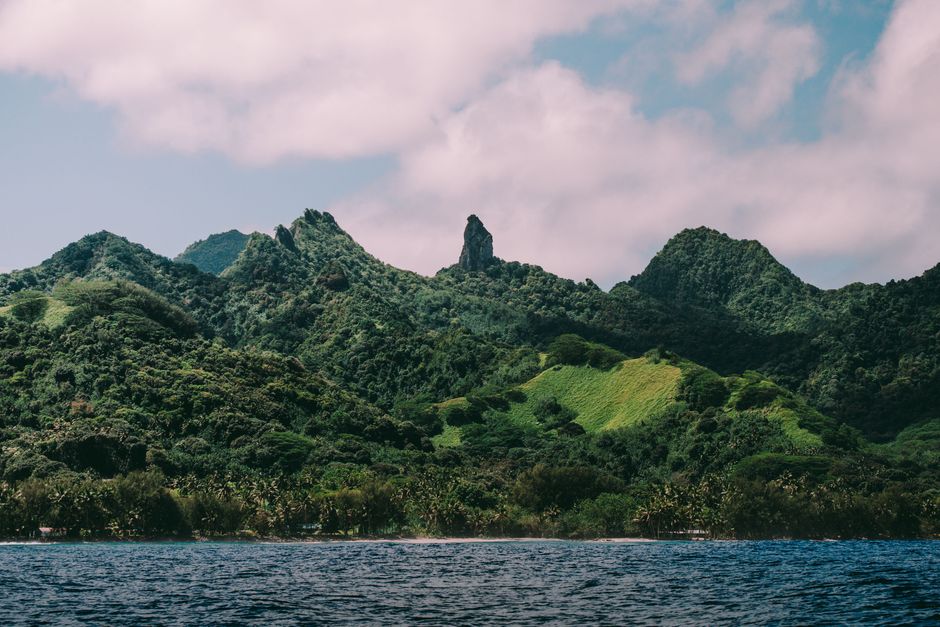
Rarotonga is the main island of the Cook Islands and, for most visitors, the whole trip: a compact, mountainous volcanic island just 32 km (20 miles) around, wrapped in a shallow, sheltered lagoon and a ring of reef. Its interior is a jumble of jungle-clad peaks and valleys, crowned by the rock spire of Te Rua Manga, while the coastal plain is a mix of villages, taro patches, churches, resorts and beach bungalows. A single road, the Ara Tapu, circles the island, and an inland road, the Ara Metua, built on an ancient path, runs parallel to it; a bus goes clockwise and anticlockwise, and you are never more than a few minutes from the water. Rarotonga is relaxed and friendly, with no building taller than a coconut palm, a vibrant Saturday market in the capital, Avarua, lively island nights with drumming and dance, a Sunday hush broken only by church hymns, and plenty to do in the water, from kayaking to Muri’s motus to snorkeling in marine reserves. It is the jumping-off point for Aitutaki and the outer islands. The cooler, drier months from May to October are the most popular.
Right now in Rarotonga
- Tue 19–21°C 66–69°F 3 mm Light showers
- Wed 19–21°C 66–70°F 5 mm Showers
- Thu 20–21°C 67–70°F 1 mm Mostly clear
Weather: MET Norway (CC BY 4.0) · Sea temperature: NOAA CoastWatch
Top tours in Rarotonga
See all tours for Rarotonga →
From local operators, with prices and reviews; you check availability and book on Viator, our partner. We may earn a commission at no extra cost to you. How we earn money
Rarotonga at a glance
- Best months: May to October for cooler, drier weather; July to October for humpback whales passing the reef. November to April is hotter and wetter, and the cyclone season.
- Where to stay: Muri for the lagoon and restaurants; Titikaveka for snorkeling and quiet; Arorangi on the west coast for sunsets and family resorts; Avarua for town life.
- Getting there: Rarotonga International Airport (RAR), on the edge of Avarua, has flights from Auckland (about 3 hours 45 minutes), Sydney and Honolulu.
- Time needed: four to seven days.
- Costs (as of October 2026): the round-island bus costs NZ$5 for a single ride and NZ$8 for a full circle; NZ$1 = about US$0.56.
- Before you go: entry rules, money, the departure tax and Aitutaki flights are covered in our Cook Islands travel guide.
Rarotonga’s areas and who each one suits
Avarua and the north coast
Avarua, the capital, is a small town of shops, cafés, banks, government offices and the harbor, a few minutes east of the airport. It is busiest on Saturday morning, when the Punanga Nui Market fills the waterfront. The north coast has fewer swimming beaches, but it is close to the airport, the Cross-Island Track and town services.
Muri and the southeast
Muri Beach faces Rarotonga’s widest and most beautiful section of lagoon, with four small motus (Taakoka, Koromiri, Oneroa and Motutapu) a short paddle away. This is the island’s water sports center, with kayak, paddleboard and glass-bottom boat rentals, a busy night market and many restaurants, resorts and bungalows. It is the best all-round base, though the lagoon can be shallow at low tide.
Titikaveka and the south coast
The south coast is quieter, with some of the island’s best snorkeling at Aroa Marine Reserve and the Fruits of Rarotonga lagoon area, where the water is deeper close to shore. Adults-only resorts and beachfront villas line this side.
Arorangi and the west coast
The west coast around Arorangi catches the sunsets and has family resorts, restaurants and Black Rock beach. The lagoon is narrower here, with good snorkeling at high tide.
Top things to see on Rarotonga
Punanga Nui Market
The Saturday-morning market on the Avarua waterfront is Rarotonga’s social event of the week. Locals and visitors come for fresh fruit, coconuts, ika mata, barbecued fish, crepes, coffee and smoothies, island music and dance performances, black pearls, carvings, pareu, rito hats and woven crafts. Arrive early, from about 7 a.m., as it winds down by noon.
Muri Lagoon and its motus
Paddle a kayak or paddleboard across to the motus, which have small beaches, palm trees and good bird-watching, or join a glass-bottom boat cruise that combines snorkeling, a barbecue lunch on a motu and a demonstration of coconut husking and pareu tying. Kitesurfers and windsurfers use the lagoon when the trade winds blow.
Aroa Marine Reserve and the south-coast snorkeling
At the Aroa Marine Reserve, a protected ra’ui area on the south coast, colorful reef fish, giant clams and sometimes turtles are found just off the beach, where the lagoon is deeper and clearer. Nearby, the Fruits of Rarotonga area is another favorite spot. Watch for currents near reef passages and swim only inside the lagoon.
Te Rua Manga and the Cross-Island Track
The Cross-Island Track crosses the island’s spine from Avatiu Valley on the north coast to the base of Te Rua Manga (the Needle), a 413 m (1,355 foot) rock spire, then descends to Wigmore’s Waterfall on the south coast. Allow three to four hours; the trail is steep, muddy and rooty, with fixed ropes in places, and should be avoided after heavy rain. Guided walks add stories about plants, medicine and history.
Cook Islands Christian Church, Avarua
Built of coral lime in 1853, the CICC church in Avarua is the oldest standing church on the island, set among graves of early missionaries and island leaders. Visitors are welcome at Sunday services, where the a capella hymn singing is extraordinary; dress modestly, with shoulders covered, and men in long trousers.
Arai-te-tonga marae
On the Ara Metua inland road near Avarua, this ancient ceremonial site was the most sacred marae on the island, where chiefs were invested and tribute was presented. Low stone structures remain; treat the site with respect.
Black Rock (Tuoro)
On the northwest coast, this volcanic outcrop is said to be the place from which the spirits of the dead depart for the ancestral homeland. The rocks and lagoon here are good for snorkeling at high tide and for watching the sunset.
Cultural shows and island nights
Several venues host evening cultural shows with a buffet dinner, drumming, dance and fire dancing, including a reconstructed village at the foot of the mountains and a hilltop marae site that tells the story of the Tinomana tribe. Resorts host their own island nights on set days of the week.
Other things to do on Rarotonga
- Glass-bottom boat and lagoon cruises: from Muri, with snorkeling and lunch on a motu.
- Diving: outside the reef, with canyons, swim-throughs, turtles, reef sharks and the wreck of the Maitai; visibility often exceeds 30 m (100 feet) in the dry season.
- Whale watching: from about July to October, humpbacks pass close to the reef; trips run from Avarua harbor, and whales can often be seen from shore.
- Fishing charters: deep-sea fishing for tuna, mahi-mahi and wahoo leaves from Avarua.
- E-bike and 4×4 tours: guided rides along the Ara Metua and into the valleys.
- Golf: a nine-hole course near the airport, famous for its radio masts.
- Day trip to Aitutaki: Air Rarotonga’s Aitutaki Day Tour runs Monday to Saturday; see our Aitutaki guide.
Food and drink
Rarotonga has a surprisingly good café scene, plus beach shacks, food trucks, the Muri Night Market (several evenings a week) and the Saturday market. Try ika mata (raw fish with coconut cream and lime), rukau (taro leaves in coconut cream), tuna and wahoo grilled or in burgers, fresh coconut, papaya and passion fruit, and a Sunday umu feast. A local brewery and coffee roasters supply cafés around the island. Supermarkets in Avarua and Muri stock food for self-catering; prices are higher than in New Zealand, as most goods are imported. Tipping is not customary.
Nearby destinations
- Aitutaki265 km
Getting there and getting around
By air
Rarotonga International Airport is on the north coast, about 2 km (1 mile) west of Avarua. Air New Zealand and Jetstar fly from Auckland, with flights also from Sydney and Hawaiian Airlines from Honolulu; Air Rarotonga flies to Aitutaki and the outer islands from the domestic terminal. Arrive with your passenger arrival card completed; the departure tax is included in your ticket. An ATM in the arrivals hall dispenses New Zealand dollars, and the Vodafone store sells SIM cards.
The island bus
The round-island bus is cheap and easy. The clockwise bus leaves Avarua hourly from 7 a.m. to 5 p.m., and the anticlockwise bus hourly from 8:30 a.m. to 4:30 p.m., Monday to Saturday (anticlockwise only until 1:30 p.m. on Saturday). A night bus runs hourly from 6 p.m. to 11 p.m. On Sundays, only a reduced clockwise service runs, from 8 a.m. to noon and 2 p.m. to 4 p.m. Wave the bus down anywhere along the road. Adult fares are NZ$5 for a single ride and NZ$8 for a full circle; large bags cost NZ$2.
Scooters, cars and bikes
Scooters are the classic way to get around, and cars, e-bikes and bicycles are widely available. You can drive with a full license from Australia, New Zealand, the US, Canada, the UK or the EU for up to six months, but only for vehicle classes you hold at home. If you don’t have a motorcycle license, you need a Cook Islands visitor license from the police station in Avarua, after a theory test (NZ$10) and a practical test (NZ$10), for a license fee of NZ$20. Helmets are compulsory for riders and passengers on Rarotonga, with a NZ$250 fine. Drive on the left and keep speeds low, as dogs, chickens, children and pedestrians share the road.
Taxis
Licensed taxis charge about NZ$3 per kilometer, with airport transfers from NZ$15 to NZ$40 depending on distance. Book ahead for late-night flights.
When to go and how long to stay
Rarotonga’s climate is warm and tropical but milder than islands closer to the equator. From May to October, days are sunny and pleasant, around 25 to 27 °C (77 to 81 °F), with cool nights near 19 °C (67 °F) in July and August. From November to April, it is hotter and more humid, with heavy showers and the risk of tropical cyclones; most of the year’s rain falls in this season.
| Month | Average high | Average low | Rain |
|---|---|---|---|
| Jan | about 29 °C (84 °F) | about 24 °C (74 °F) | about 235 mm (9.3 in) |
| Feb | about 29 °C (85 °F) | about 24 °C (75 °F) | about 200 mm (7.9 in) |
| Mar | about 29 °C (85 °F) | about 24 °C (74 °F) | about 190 mm (7.4 in) |
| Apr | about 28 °C (83 °F) | about 23 °C (73 °F) | about 210 mm (8.3 in) |
| May | about 27 °C (81 °F) | about 21 °C (71 °F) | about 175 mm (6.9 in) |
| Jun | about 26 °C (78 °F) | about 20 °C (68 °F) | about 105 mm (4.1 in) |
| Jul | about 25 °C (77 °F) | about 19 °C (67 °F) | about 85 mm (3.3 in) |
| Aug | about 25 °C (77 °F) | about 19 °C (67 °F) | about 135 mm (5.2 in) |
| Sep | about 26 °C (78 °F) | about 20 °C (68 °F) | about 115 mm (4.5 in) |
| Oct | about 26 °C (79 °F) | about 21 °C (69 °F) | about 105 mm (4.1 in) |
| Nov | about 27 °C (81 °F) | about 22 °C (71 °F) | about 150 mm (5.9 in) |
| Dec | about 28 °C (82 °F) | about 23 °C (73 °F) | about 200 mm (8.0 in) |
| Year | about 27 °C (81 °F) | about 22 °C (71 °F) | about 1,910 mm (75 in) |
Figures are long-term averages for Rarotonga from the Cook Islands Meteorological Service, as published in the Pacific Climate Change Science Program’s climate profile of the Cook Islands; values are read from its chart and rounded, and the base period is not stated. The mountains are much wetter than the coast.
Events worth planning around
- Te Maeva Nui (late July to early August): the national festival of dance, song and drumming in Avarua, around Constitution Day on 4 August.
- Round Rarotonga Road Race (usually October): a run around the island’s 32 km (20 mile) coast road.
- New Zealand and Australian school holidays: July and late September to early October are busy.
How long to stay: 3, 5 and 7 days
- Three days: the Saturday market, a lagoon cruise from Muri, snorkeling at Aroa and an island night show.
- Five days: add the Cross-Island Track, a circle-island scooter or bus trip, a dive or whale-watching trip and Sunday church.
- Seven days: add the Aitutaki Day Tour or two to three nights on Aitutaki.
Where to stay on Rarotonga
- Resorts: family resorts with pools and kids’ clubs on the west and south coasts, and adults-only boutique resorts around Muri and Titikaveka.
- Beach bungalows and villas: self-catering bungalows directly on the lagoon, a Rarotonga specialty, good for families and longer stays.
- Motels and backpackers: budget options around the island, some with shared kitchens.
- Holiday homes: larger houses for groups.
You need booked accommodation for your entire stay to enter the Cook Islands. Book early for July, September and Christmas.
Typical costs on Rarotonga
| Item (as of October 2026) | New Zealand dollars | About US dollars |
|---|---|---|
| Round-island bus, adult single / full circle | NZ$5 / NZ$8 | US$2.80 / US$4.50 |
| Bus luggage fee, per large bag | NZ$2 | US$1.10 |
| Taxi, per kilometer / airport transfer | NZ$3 / NZ$15–40 | US$1.70 / US$8.40–22 |
| Visitor license: theory and practical tests, license | NZ$10 + NZ$10, NZ$20 | US$5.60 + US$5.60, US$11 |
| Helmet fine | NZ$250 | US$140 |
| Scooter rental, per day | about NZ$25–35 | about US$14–20 |
| Lagoon cruise with lunch | about NZ$90–130 | about US$50–75 |
| Island night show with buffet | about NZ$90–130 | about US$50–75 |
| Ika mata or fish burger at a café | about NZ$15–25 | about US$8.40–14 |
| Beach bungalow, per night | about NZ$150–300 | about US$85–170 |
| Resort room, per night | about NZ$300–700 | about US$170–395 |
Bus fares, taxi rates and license fees come from the Cook Islands Airport Authority and Cook Islands Tourism. Other prices are typical ranges, not official figures. Conversions use about US$0.56 to NZ$1 (European Central Bank reference rates, 2 October 2026).
Safety on Rarotonga
- Cyclone season (November to April): follow the Cook Islands Meteorological Service and your accommodation’s instructions; low-lying coastal areas can be hit by storm surge.
- Reef passages: strong currents run out through the passages in the reef (avaavaroa), especially on a falling tide; check signs, ask locals, and never swim near them or beyond the reef.
- Reef cuts and stonefish: wear reef shoes and treat coral cuts quickly.
- Sun: UV is high; wear a hat and reef-safe sunscreen.
- Mosquitoes: dengue occurs in the Cook Islands; use repellent, especially at dawn and dusk.
- Scooters: most visitor injuries involve scooters. Wear a helmet, ride slowly, don’t drink and ride, and watch for dogs.
- Hiking: go with a guide or tell someone your plans; avoid the Cross-Island Track after rain.
- Emergencies: 999 for police, 998 for ambulance, 996 for fire. Rarotonga Hospital is open 24 hours (+682 22664); serious cases are flown to New Zealand.
Practical tips for Rarotonga
- Sunday: many shops and restaurants close; buses run a reduced service. Plan meals and activities ahead.
- Cash: ATMs are in Avarua, Muri and at the airport; New Zealand dollars only.
- Water: many visitors drink filtered or bottled water; ask your accommodation.
- Ra’ui: respect the signs marking protected lagoon areas, where fishing and taking shells are banned.
What to pack for Rarotonga
Swimwear, a rash vest, reef shoes, a mask and snorkel, hiking shoes for the Cross-Island Track, a hat, reef-safe sunscreen, insect repellent, a light rain jacket, a modest outfit for church, your driver’s license and a Type I plug adapter.
Rarotonga travel FAQ
How big is Rarotonga?
Small: the coast road around the island is about 32 km (20 miles), and you can drive around it in about 45 minutes without stops.
Is there public transport on Rarotonga?
Yes. The round-island bus runs clockwise and anticlockwise every hour, Monday to Saturday, with a night bus and a reduced Sunday service. Fares are NZ$5 for a single ride and NZ$8 for a full circle.
Do I need a license to ride a scooter on Rarotonga?
You can ride with a full overseas motorcycle license from Australia, New Zealand, the US, Canada, the UK or the EU. Otherwise, you need a Cook Islands visitor license from the police station in Avarua, after a theory and practical test. Helmets are compulsory.
Where is the best snorkeling on Rarotonga?
At the Aroa Marine Reserve and the Fruits of Rarotonga area on the south coast, where the lagoon is deeper close to shore. Muri Lagoon is better for kayaking and paddleboarding.
Where should I stay on Rarotonga?
Muri for the lagoon, water sports and restaurants; Titikaveka for snorkeling and peace; Arorangi for sunsets and family resorts.
How long is the Cross-Island Track?
About three to four hours from the north coast to Wigmore’s Waterfall on the south coast, via the base of Te Rua Manga. It is steep and muddy; avoid it after heavy rain.
When is the Punanga Nui Market?
On Saturday mornings, from about 7 a.m. to noon, on the Avarua waterfront.
Can I see whales from Rarotonga?
Yes, from about July to October, when humpbacks pass close to the reef. Whale-watching boats leave from Avarua harbor.
What is the best time to visit Rarotonga?
May to October, the cooler, drier season. November to April is hotter and wetter and the cyclone season.
Is Rarotonga safe?
Very safe. The main risks are scooter accidents, currents near reef passages, coral cuts, the sun and mosquitoes.
Sources and last review
Researched and last reviewed on 5 October 2026. Bus timetables and fares, taxi rates, airport services and the departure tax come from the Cook Islands Airport Authority; license rules and fees from Cook Islands Tourism, the Ministry of Transport and Te Marae Ora; Air Rarotonga’s Aitutaki Day Tour from Air Rarotonga and Cook Islands Tourism; climate from the Pacific Climate Change Science Program’s profile of the Cook Islands, prepared with the Cook Islands Meteorological Service; the exchange rate from the European Central Bank; coordinates, area and population from Wikidata. Descriptions of sights and walks, heights, event dates, emergency numbers and all rental, tour, show, meal and room prices are general references or estimates and should be checked locally. For entry rules, money and Aitutaki flights, see our Cook Islands travel guide.
Plan your trip
Partner links: TravelerCenter may earn a commission if you book, at no extra cost to you.