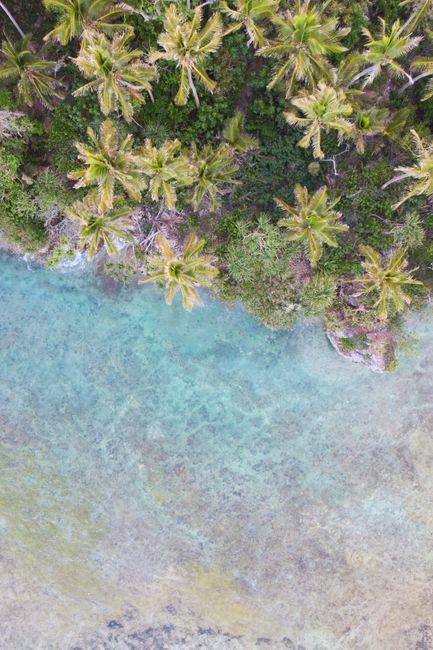
Vanuatu is a Y-shaped chain of more than 80 islands in the southwest Pacific, about 1,750 km (1,090 miles) east of Australia and 500 km (310 miles) northeast of New Caledonia. It is one of the most culturally rich and adventurous destinations in the Pacific: active volcanoes you can stand on the rim of, the “land diving” of Pentecost that inspired bungee jumping, blue holes and white-sand beaches on Espiritu Santo, one of the world’s most famous wreck dives, and villages where traditional custom, or kastom, still shapes daily life. More than 100 languages are spoken among a population of about 300,000, with Bislama, a creole of English words, as the common tongue. Most visitors arrive in Port Vila, the relaxed capital on the island of Efate, with its market, harbor, cascades and island resorts, then fly to Tanna to see Mount Yasur erupting at dusk, or to Santo for Champagne Beach and the SS President Coolidge. Vanuatu has had difficult years, with powerful cyclones, the collapse of its national airline in 2024 and a strong earthquake near Port Vila in December 2024, but it welcomes visitors warmly. Citizens of many countries can visit visa-free, and the drier season from May to October is the most comfortable time to travel.
Right now in Vanuatu
- Wed 21–28°C 69–82°F 1 mm Cloudy
- Thu 22–29°C 71–84°F 2 mm Partly cloudy
- Fri 22–30°C 71–85°F 1 mm Mostly clear
Weather: MET Norway (CC BY 4.0)
Multi-day tours of Vanuatu
Multi-day tours from local operators. You check dates and book on Viator, our partner; we may earn a commission at no extra cost to you. How we earn money
Vanuatu at a glance
- Capital: Port Vila, on the island of Efate. Luganville, on Espiritu Santo, is the second town.
- Population and size: about 300,000 people on 12,190 km² (4,707 sq miles) of land, spread over more than 80 islands, about 65 of them inhabited, in six provinces.
- Languages: Bislama, English and French are official; more than 100 Indigenous languages are spoken. “Halo” means hello, “tankyu tumas” thank you very much.
- Currency: the vatu (VT or VUV). On 2 October 2026, the Reserve Bank of Vanuatu’s rate was US$1 = 118.27 VT, so 1,000 VT was worth about US$8.46.
- Time zone: Vanuatu Time, UTC+11, with no daylight saving time.
- Driving: on the right.
- Entry: citizens of many countries, including Australia, New Zealand, the EU, the UK and the United States, can stay up to 120 days without a visa.
- Emergency numbers: 111 for police, 112 for ambulance, 113 for fire.
Vanuatu’s islands
The archipelago runs about 1,300 km (800 miles) from the Torres and Banks islands in the north to Aneityum in the south. Efate, in the center, has Port Vila and most of the hotels. Espiritu Santo, the largest island, has beaches, blue holes, cattle farms and World War II history. Tanna, in the south, is home to Mount Yasur. Pentecost, Malekula and Ambrym, in the central north, are the strongholds of traditional culture, with land diving, the Nambas peoples and the volcanoes and rom dances of Ambrym. Much of the country has no roads, electricity grid or regular transport beyond small planes and boats.
Where to go: Efate, Tanna, Santo and the outer islands
Port Vila and Efate
Port Vila is the capital and the starting point for most trips: a small harbor town with a lively market house, waterfront, cafés and duty-free shops, and resorts on the lagoon and islands nearby. Around Efate, a sealed ring road of about 130 km (80 miles) passes the Mele Cascades, swimming spots such as the Blue Lagoon and Eton Beach, villages and the islands of Hideaway, with its underwater post office, and Lelepa, part of the UNESCO-listed Chief Roi Mata’s Domain.
Tanna and Mount Yasur
Tanna, a 40-minute flight south of Port Vila, is famous for Mount Yasur, one of the world’s most accessible active volcanoes. Visitors climb from a parking area to the crater rim, usually in the late afternoon, to watch explosions of lava and ash against the darkening sky. Tanna also has strong kastom villages, the John Frum movement, coffee plantations, hot springs and black-sand beaches. Visits to the volcano are only allowed with licensed guides, under the volcano alert level set by the Vanuatu Meteorology and Geo-hazards Department.
More on Tanna
Beyond the volcano, Tanna rewards a few days. Many villages, especially in the interior, follow kastom ways of life by choice, wearing traditional dress and living without money, and some welcome visitors on guided walks. The John Frum movement, a cargo cult that emerged in the 1930s, still holds Friday-night gatherings with music and dance at Sulphur Bay. The island also has a giant banyan tree, hot springs, coffee plantations and black-sand beaches with snorkeling. Accommodation ranges from simple tree-house bungalows near the volcano to resorts on the west coast near the airport; transfers to Yasur take about an hour by 4×4 on rough roads.
Espiritu Santo
Santo, about 50 minutes’ flight north of Port Vila, has some of the Pacific’s most beautiful beaches, including Champagne Beach and Port Olry, freshwater blue holes for swimming, and world-class diving on the wreck of the SS President Coolidge, a troopship that sank in 1942, and at Million Dollar Point, where US forces dumped equipment into the sea after World War II. Luganville, the main town, is the base.
Pentecost, Malekula and Ambrym
On Pentecost, the Naghol (land diving), in which men leap from tall wooden towers with vines tied to their ankles, takes place on Saturdays from about April to June, when the vines are strong. Malekula has the Big and Small Nambas peoples, cannibal sites and dugong areas, and Ambrym has the volcanoes Marum and Benbow and the rom dance. These islands have only basic guesthouses and limited flights; go with a local operator.
Aneityum, the Banks Islands and other outer islands
Aneityum, the southernmost inhabited island, is best known for Mystery Island (Inyeug), a tiny, uninhabited islet with a grass airstrip and white beaches that is a regular cruise-ship stop. In the far north, the Banks and Torres islands have water music performed by women standing in the sea, volcanic lakes and very few visitors; flights are infrequent and stop in Santo. Ambae and Maewo have crater lakes, waterfalls and village guesthouses. Travel to the outer islands requires flexibility, cash and patience, and the rewards are some of the most authentic experiences in the Pacific.
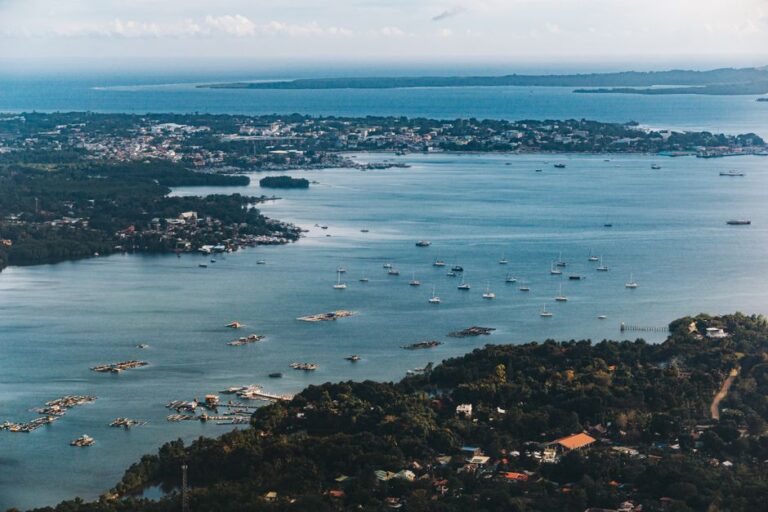
Port Vila Travel Guide
Plan a trip to Port Vila, Vanuatu: the Market House and waterfront, the Mele Cascades, Hideaway Island's underwater post office, Chief Roi Mata's Domain,…
Where to stay: resorts, island bungalows and village guesthouses
- Port Vila and Efate: resorts on the Erakor and Pango lagoons and on small islands such as Iririki, many with overwater or beachfront bungalows; boutique hotels and apartments in town; and backpackers’ lodges.
- Espiritu Santo: beach resorts on the east coast, dive lodges in Luganville and bungalows near Champagne Beach.
- Tanna: bungalows and small resorts near the volcano and on the west coast, plus simple guesthouses.
- Outer islands: community-run bungalows and village guesthouses, often with meals included and cold showers; electricity may be solar or generator-powered.
- Cruise ships: Port Vila, Mystery Island (Aneityum), Champagne Bay and other islands are regular cruise stops.
Accommodation is limited on the outer islands, so book ahead and confirm by phone or email; payment is often in cash. On Efate, choose a lagoon resort near Port Vila if you want restaurants and markets within a short taxi ride, or a resort on the north or east coast of the island for seclusion, beaches and snorkeling, about 45 to 60 minutes from town. On Santo, stay near Luganville for diving on the Coolidge, or on the east coast for Champagne Beach and the blue holes.
Best time to visit Vanuatu
Vanuatu has a tropical climate with two seasons. The dry season, from about May to October, is cooler and less humid, with sunny days and pleasant nights. The wet season, from about November to April, is hot and humid, with heavy rain, especially from January to March, and the tropical cyclone season. The north of the archipelago is hotter and wetter than the south, and the windward east coasts of the high islands get the most rain.
| Month | Average high | Average low | Rain |
|---|---|---|---|
| Jan | about 30 °C (86 °F) | about 23 °C (74 °F) | about 295 mm (11.7 in) |
| Feb | about 30 °C (86 °F) | about 24 °C (74 °F) | about 310 mm (12.2 in) |
| Mar | about 30 °C (86 °F) | about 23 °C (74 °F) | about 330 mm (13.0 in) |
| Apr | about 29 °C (84 °F) | about 22 °C (72 °F) | about 215 mm (8.5 in) |
| May | about 28 °C (82 °F) | about 21 °C (70 °F) | about 150 mm (5.9 in) |
| Jun | about 27 °C (80 °F) | about 21 °C (69 °F) | about 160 mm (6.3 in) |
| Jul | about 26 °C (79 °F) | about 20 °C (67 °F) | about 105 mm (4.1 in) |
| Aug | about 26 °C (79 °F) | about 19 °C (67 °F) | about 100 mm (3.9 in) |
| Sep | about 27 °C (80 °F) | about 20 °C (67 °F) | about 85 mm (3.4 in) |
| Oct | about 28 °C (82 °F) | about 21 °C (69 °F) | about 115 mm (4.6 in) |
| Nov | about 29 °C (84 °F) | about 22 °C (71 °F) | about 155 mm (6.1 in) |
| Dec | about 30 °C (85 °F) | about 22 °C (72 °F) | about 195 mm (7.7 in) |
| Year | about 28 °C (83 °F) | about 21 °C (71 °F) | about 2,220 mm (87 in) |
Figures are long-term averages for Port Vila published by the Vanuatu Meteorology and Geo-hazards Department (VMGD) in its seasonal rainfall and temperature chart, prepared with the Australian Bureau of Meteorology and CSIRO; values are read from the chart and rounded, and the base period is not stated. VMGD reported in September 2026 that an El Niño was fully established and forecast below-normal rainfall for October to December 2026; El Niño years tend to bring drier conditions, a late start to the wet season and cooler dry seasons to southern Vanuatu.
Crowds and prices through the year
Australian and New Zealand school holidays, especially July and late September to early October, and Christmas are the busiest times. Cruise ships bring thousands of day visitors to Port Vila several times a week. May, June, September and October are good shoulder months.
Festivals and events
- Pentecost land diving: Saturdays from about April to June.
- Independence Day (30 July): parades, sports and celebrations, especially in Port Vila, marking independence from the British-French condominium in 1980.
- Back to My Roots Festival (Ambrym) and the Toka dance on Tanna: traditional festivals whose dates vary; ask local operators.
- Fest’Napuan: a music festival in Port Vila, usually in the second half of the year.
How long to stay: sample itineraries
5 days: Efate and Tanna
Three nights in Port Vila for the market, the Mele Cascades, Hideaway Island and a round-island drive, then two nights on Tanna for Mount Yasur and a kastom village.
10 days: Efate, Tanna and Santo
Port Vila (3 nights), Tanna (2) and Espiritu Santo (4) for Champagne Beach, the blue holes and a dive on the SS President Coolidge, with a final night in Port Vila.
2 weeks or more: kastom islands
Add Pentecost for land diving (April to June), Malekula or Ambrym with a local operator, and plenty of buffer days for weather and flight changes.
Entry, money and costs
Entry requirements (as of October 2026)
According to the Vanuatu Tourism Office and the Department of Immigration and Passport Services:
- Citizens of many countries, including Australia, New Zealand, the EU, the UK and the United States, do not need a visa for stays of up to 120 days. Check the official list of visa-exempt countries on the Department of Immigration’s website before you travel.
- Your passport must be valid for at least six months beyond your intended stay.
- You may be asked to show a return or onward ticket.
- Visitors from countries that are not exempt must have approval in advance; a visa can be obtained on request from the principal immigration officer for a fee of 5,150 VT.
- On arrival, you complete arrival and biosecurity declarations and declare any food or plant items.
Money, cards and tipping
The vatu is the currency. Cards are accepted at most hotels, larger restaurants and tour operators in Port Vila and Luganville, but cash is essential on Tanna and the outer islands, where there are few or no ATMs. Banks and ATMs are found in Port Vila, Luganville and at Bauerfield airport. Tipping and bargaining are not part of local culture; prices are fixed, even at the market.
Typical travel costs
| Item (as of October 2026) | Vatu | About US dollars |
|---|---|---|
| Visa on request (non-exempt nationalities) | 5,150 VT | US$44 |
| Provincial departure tax on domestic flights (paid at the airport) | 200 VT | US$1.70 |
| Bus ride around Port Vila | about 150–300 VT | about US$1.30–2.50 |
| Market lunch plate (laplap, fish or chicken) | about 500–1,000 VT | about US$4.20–8.45 |
| Restaurant main in Port Vila | about 2,000–3,500 VT | about US$17–30 |
| Shell of kava at a nakamal | about 100–200 VT | about US$0.85–1.70 |
| Mount Yasur volcano tour with entry fee | about 10,000–15,000 VT | about US$85–125 |
| Village bungalow on an outer island, per person with meals | about 4,000–8,000 VT | about US$34–68 |
| Resort room in Port Vila, per night | about 20,000–45,000 VT | about US$170–380 |
The visa fee and domestic departure tax come from the Vanuatu Tourism Office. Other prices are typical ranges, not official figures. Conversions use the Reserve Bank of Vanuatu’s rate of 118.27 VT to US$1 on 2 October 2026.
Getting there and getting around
Arriving by air
Most visitors fly into Bauerfield International Airport (VLI) in Port Vila; a few international services reach Santo-Pekoa (SON) in Luganville. Airlines listed by the Vanuatu Tourism Office include Fiji Airways (via Nadi, with connections from Los Angeles, San Francisco, Vancouver, Tokyo and New Zealand), Qantas, Virgin Australia, Jetstar, Solomon Airlines and Aircalin (via Nouméa). Flights from Brisbane take about 2.5 hours and from Sydney about 3.5. Air Calédonie also flies between Nouméa and Port Vila.
Air Vanuatu and domestic flights
Air Vanuatu, the national airline, went into voluntary liquidation in May 2024, ending its international flights; its domestic network has continued in reduced form. The ATR 72 links Port Vila with Santo and Tanna, and smaller planes fly to about 25 other airstrips, many of them grass strips with no facilities. Flights to northern islands, including the Banks Islands, stop in Santo, sometimes overnight. Schedules change often, especially with the weather, so book early, reconfirm and leave a buffer night in Port Vila before any international flight. A provincial departure tax of 200 VT is not included in domestic tickets and is paid after check-in at Port Vila, Luganville, Tanna and some other airports. Baggage allowances on domestic routes may be lower than on international ones.
Boats
Inter-island cargo ships and passenger boats link many islands, but schedules are irregular and conditions basic. Small boats and water taxis serve islands close to Efate and Santo.
Getting around the islands
- Buses in Port Vila: privately run minibuses with a “B” on the number plate stop when waved down and take you anywhere in town for a fixed fare; tell the driver your destination.
- Taxis: marked with a “T” plate; agree on the fare first.
- Rental cars: available in Port Vila and Luganville; drive on the right. Efate’s ring road is sealed; roads on other islands are often rough tracks needing a 4×4.
- Trucks and tours: on Tanna and other outer islands, transport is by 4×4 truck, usually arranged by your bungalow.
Culture, food and everyday etiquette
A short history
People of the Lapita culture settled the islands about 3,000 years ago, and Melanesian societies developed hundreds of distinct languages and traditions. The Portuguese navigator Pedro Fernandes de Queirós, sailing for Spain, reached Espiritu Santo in 1606, and James Cook charted the islands in 1774, naming them the New Hebrides. In the 19th century, thousands of islanders were recruited, often by force, to work on plantations in Queensland and Fiji, a practice known as blackbirding. From 1906, Britain and France ruled jointly in an unusual condominium, with two of everything, from police forces to school systems. During World War II, Santo became a huge US base. The country became independent as the Republic of Vanuatu on 30 July 1980; the name means “land eternal”. The British-French heritage lives on in the three official languages and the English- and French-language schools.
Kastom and village life
Most ni-Vanuatu live in villages, and kastom, traditional knowledge, ceremonies, land rights and chiefly authority, is respected alongside Christianity. Land almost everywhere is owned by local families, so many beaches, waterfalls and viewpoints charge a small custom fee to visitors, which goes to the landowners; pay it politely. Ask permission before entering a village or taking photographs, dress modestly away from resorts (cover shoulders and knees, and women should avoid shorts and swimwear in villages), and follow your guide’s lead at sacred sites. Sand drawing, a tradition of drawing intricate patterns in sand with one continuous line, is on UNESCO’s list of Intangible Cultural Heritage.
A few words of Bislama
Bislama mixes mostly English vocabulary with Melanesian grammar, and visitors quickly pick up a few phrases. “Halo” or “gud moning” are greetings; “tankyu tumas” means thank you very much; “plis” is please; “hamas?” asks how much; and “lukim yu” means see you later. A “smol haos” is a toilet, “kakae” is food, and “mi no save” means I don’t understand. People appreciate any effort, and English and French are widely understood in Port Vila and Luganville, though less so in remote villages, where your guide or host will translate.
Kava and the nakamal
Vanuatu’s kava is famously strong. In the evening, men and increasingly women gather at nakamals, kava bars often marked by a colored light, to drink it from coconut shells. Drink it quickly, then sit quietly; kava is relaxing and mildly numbing, and mixing it with alcohol is not a good idea.
Food and drink
Try laplap, the national dish, a pudding of grated yam, taro or manioc baked with coconut cream in banana leaves; tuluk, a similar dish filled with meat; Santo beef, among the best in the Pacific; fresh fish and lobster; and tropical fruit from the markets. Local coffee from Tanna and Santo and chocolate made from Vanuatu cocoa make good souvenirs. Coconut crab is a local delicacy, but it is protected by size limits and seasonal bans; avoid it if in doubt.
Safety, health and connectivity
Safety
- Cyclone season (November to April): Vanuatu is one of the countries most exposed to tropical cyclones. Severe Tropical Cyclone Pam caused widespread devastation in 2015, and Judy and Kevin struck within days of each other in 2023. Follow VMGD’s warnings and your accommodation’s instructions, and have travel insurance that covers disruption.
- Earthquakes: Vanuatu sits on an active plate boundary. On 17 December 2024, a magnitude 7.3 earthquake struck about 30 km (19 miles) west of Port Vila, killing 14 people and damaging buildings, roads and the water supply. In a strong quake, drop, cover and hold on; near the coast, move to high ground in case of a tsunami.
- Volcanoes: several volcanoes are active, and VMGD sets alert levels from 0 to 5. In early October 2026, Mount Yasur on Tanna was at alert level 2, with explosions ejecting lava bombs and degassing; visitors may approach only within the permitted zone with licensed guides. Check VMGD’s volcano pages before you go.
- Reef cuts and sea currents: wear reef shoes, treat coral cuts promptly, and watch for strong currents in passes and on exposed coasts; swim where locals recommend.
- Sun: use reef-safe sunscreen, a hat and a rash vest, and drink plenty of water.
- Dengue and malaria: dengue occurs throughout Vanuatu, and malaria is present on some islands outside Port Vila, mainly in the north; use repellent, sleep under nets where provided and ask a travel doctor about malaria tablets if you plan to visit outer islands.
- Theft: petty theft occurs in Port Vila; keep valuables secure, especially at night.
Health
Medical facilities are basic, with Vila Central Hospital and private clinics in Port Vila and limited care elsewhere; serious cases are evacuated to Australia or New Zealand. Travel insurance with medical evacuation is essential. Drink bottled or boiled water outside the main hotels.
Connectivity and power
Digicel and Vodafone sell SIM cards at Bauerfield airport and in town; coverage is good in Port Vila and Luganville but patchy on outer islands. Power is 220 to 240 volts, 50 Hz, with Type I angled plugs, as in Australia; many outer-island bungalows have limited solar power.
Things to do: volcanoes, diving, culture and beaches
Stand on the rim of Mount Yasur at dusk; dive the SS President Coolidge and Million Dollar Point; swim in Santo’s blue holes and at Champagne Beach; watch land diving on Pentecost; snorkel at Hideaway Island and post a waterproof card from its underwater post office; swim under the Mele Cascades; take a boat to Lelepa and Chief Roi Mata’s Domain; join a kastom village tour on Tanna; visit a nakamal; and hike or kayak on Efate.
Diving the SS President Coolidge
The SS President Coolidge, a luxury liner converted into a troopship, struck mines at the entrance to Santo’s harbor in October 1942 and sank close to shore; almost everyone on board survived. Lying on its side in about 20 to 70 m (65 to 230 feet) of water, the 200 m (650 foot) wreck can be dived from the beach, with cargo holds full of trucks, guns and helmets, and “The Lady”, a porcelain relief of a woman on a unicorn, in the former first-class dining room. Many divers spend several days exploring it with Santo’s dive centers; deeper sections need advanced training and decompression planning.
Shopping and souvenirs
Look for carvings such as tamtam slit drums and masks from Ambrym and Malekula, woven pandanus mats and baskets, sand-drawing art, Tanna coffee, Vanuatu chocolate, coconut and tamanu oils and kava. The Port Vila handicraft market and stalls on the waterfront sell crafts directly from makers. Check customs rules at home before buying wooden items, seeds or kava, and don’t buy products made from turtle shell, coral or protected species.
Traveling responsibly
Respect custom fees and village rules, and ask before photographing people. Carry a reusable water bottle and take your rubbish with you, as many islands have little or no waste collection. Don’t touch or stand on coral, use reef-safe sunscreen, and choose operators who keep their distance from dugongs, turtles and whales. Buying local food, crafts and village tours puts money directly into communities.
Families, cruise visitors and accessibility
Efate and Santo suit families well, with calm lagoons, the Mele Cascades and the Hideaway Island marine reserve, but the outer islands are better for older children used to basic conditions. Cruise passengers usually have a day in Port Vila or on Mystery Island; book tours with licensed local operators and allow time to return to the ship. Accessibility is limited: footpaths are uneven, boarding small boats and planes can be difficult, and few buildings outside the main resorts have ramps.
What to pack
Light clothes, swimwear, a rash vest, reef shoes, a mask and snorkel, sturdy shoes and a warm layer for Mount Yasur (the rim is windy and ash can fall), a headlamp, a light rain jacket, insect repellent, reef-safe sunscreen, a hat, modest clothes for villages, a dry bag, cash in vatu for the outer islands and a Type I plug adapter.
Vanuatu travel FAQ
Do I need a visa for Vanuatu?
Not if you are a citizen of Australia, New Zealand, the EU, the UK, the US or another exempt country: you can stay up to 120 days without a visa. Your passport must be valid for six months beyond your stay, and you may need to show an onward ticket.
What currency is used in Vanuatu?
The vatu (VT). On 2 October 2026, US$1 was worth 118.27 VT. Bring cash for the outer islands, which have few or no ATMs.
Is Air Vanuatu still flying?
Air Vanuatu’s international flights ended when it went into liquidation in 2024, but it continues to run domestic flights between Port Vila, Santo, Tanna and smaller islands. International flights are operated by Fiji Airways, Qantas, Virgin Australia, Jetstar, Solomon Airlines and Aircalin.
Can you visit Mount Yasur?
Yes, with a licensed guide, as long as the volcano’s alert level allows it. In early October 2026, Yasur was at alert level 2, and visits continued within the permitted zone. Check VMGD before you go.
Is Vanuatu safe after the 2024 earthquake?
Port Vila is open to visitors in 2026, with its airport, hotels and cruise port operating. The earthquake damaged buildings in the city center, so ask your accommodation about any repairs nearby. Vanuatu remains an active earthquake zone, so learn what to do in a quake and a tsunami.
When is the best time to visit Vanuatu?
May to October, the drier, cooler season. November to April is hot, humid and the cyclone season.
What is land diving?
The Naghol of Pentecost, in which men jump from wooden towers up to about 30 m (100 feet) high with vines tied to their ankles. It takes place on Saturdays from about April to June.
Do I need to tip in Vanuatu?
No. Tipping and bargaining are not part of local culture.
What is a custom fee?
A small fee paid to landowners for visiting a beach, waterfall, viewpoint or village. Land in Vanuatu is owned by local families, and the fee is how visitors show respect and contribute.
Is there malaria in Vanuatu?
Malaria is present on some islands outside Port Vila, mainly in the north. Dengue occurs throughout the country. Ask a travel doctor before visiting outer islands, and use repellent.
How do I get around between the islands?
By domestic flights with Air Vanuatu, which link Port Vila with Santo, Tanna and smaller airstrips, or by irregular inter-island boats. Allow buffer days, as schedules change with the weather.
What language is spoken in Vanuatu?
Bislama, English and French are official, and more than 100 local languages are spoken. English is widely understood in tourism.
What plug adapter do I need for Vanuatu?
Type I, the same as in Australia and New Zealand; the supply is 220 to 240 volts.
Sources and last review
Researched and last reviewed on 5 October 2026. Visa-free entry, passport validity, onward tickets, the visa fee, arrival declarations, domestic flights, the provincial departure tax and the airlines serving Vanuatu come from the Vanuatu Tourism Office and the Department of Immigration and Passport Services; the exchange rate from the Reserve Bank of Vanuatu; Mount Yasur’s alert level, the El Niño status, the rainfall outlook and climate from the Vanuatu Meteorology and Geo-hazards Department (VMGD); the December 2024 earthquake from the National Disaster Management Office as reported by ReliefWeb; area and population from Wikidata. Air Vanuatu’s 2024 liquidation and domestic operations, cyclone history, emergency numbers, festival dates, malaria areas and all meal, tour and room prices are general references or estimates. Prices and rules change, so check the official sites before you go.
Plugs and power in Vanuatu
Vanuatu uses 220 V, 50 Hz and these plugs (left) and wall sockets (right):
All plug types and voltages by country → · Check what you need to pack →
Plan your trip
Partner links: TravelerCenter may earn a commission if you book, at no extra cost to you.